
Reviewed · COMMUNIST HISTORY TOURS
Communist History Evening Walking Tour of Budapest
Communism still shapes Budapest today. This two-hour evening walk makes that past easier to see, linking former monuments, protest sites, religion, football, and daily life under the old system. I especially like the small group limit of 15 and the way the route connects several central districts instead of keeping you inside one museum. The provided bottled water is a small but useful touch on a three-kilometre walk.
I also like the chance to hear present-day Hungarian context from a local guide. Victoria, who led several highly praised outings, is described as a university history professor with clear English, humor, and a strong command of the subject. The main drawback is that some stops are simply street corners or open squares, so noise, smells, and passing crowds can occasionally make listening harder.
The $36.01 price is fair if you want a focused guide to Budapest’s communist period rather than a general city walk. You will not enter the Parliament or St. Stephen’s Basilica, and the tour does not replace a museum visit. Instead, it helps you understand what happened in the streets outside those famous buildings.
In This Review
- Key points before you book
- Starting at Blaha Lujza tér at 6:00 pm
- Andrassy Avenue and the changing face of Budapest
- St. Stephen’s Basilica and religion under communism
- Liberty Square and the memory of protest
- Parliament Square and the 1956 uprising
- A guide-led story rather than a museum substitute
- Small-group size, walking demands, and comfort
- Is $36.01 good value?
- Who will enjoy this walk most?
- Practical advice for a better evening
- Should you book the Communist History Evening Walking Tour?
- FAQ
- Where does the tour start?
- Where does the tour end?
- What time does the tour begin?
- How long is the Communist History Evening Walking Tour?
- How far do you need to walk?
- What language is the tour offered in?
- What is included in the price?
- How large is the group?
- Can I cancel for a full refund?
Key points before you book
- A 6:00 pm start gives the walk a reflective mood: You see central Budapest after the day’s heat, with the route ending at Parliament Square.
- The walk covers about three kilometres: You need to be comfortable walking or using a wheelchair over that distance.
- Victoria receives especially strong praise: Her university teaching background, polished English, stories, and humor are major reasons this tour works so well when she is guiding.
- The route reaches 22 locations and monuments: The main named stops include St. Stephen’s Basilica, Liberty Square, and the Parliament area.
- The group is capped at 15 people: That makes it easier to ask questions than on a large coach tour.
- This is an outdoor history lesson: Bring weather-appropriate clothing, since poor weather can lead to a rescheduled tour or refund.
Starting at Blaha Lujza tér at 6:00 pm
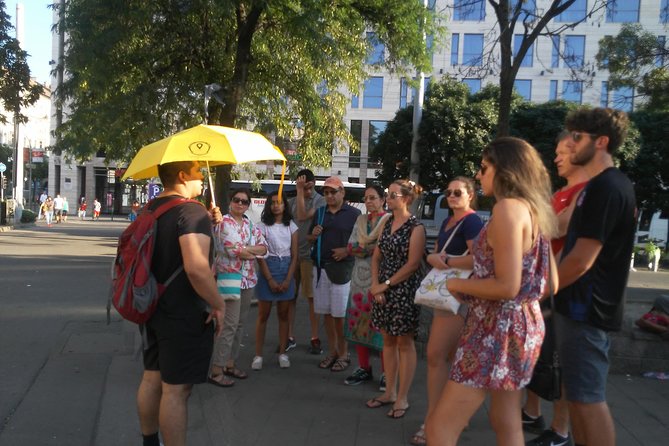
The meeting point is Blaha Lujza tér in central Budapest, and the walk ends at Kossuth Lajos tér beside the Parliament. That point-to-point design is useful. You begin away from the grandest sights and gradually work toward one of the city’s most important political spaces.
The route takes you down Andrassy Avenue, where the guide explains how the area and its monuments changed through different political periods. This opening section helps set the tone. You are not only looking at attractive buildings. You are considering how governments rename places, remove symbols, replace statues, and reshape public memory.
Because the tour starts at 6:00 pm and lasts about two hours, the timing suits a day when you have already seen Budapest’s major sights. You can spend the afternoon on a general sightseeing route, then use this walk to examine the political story behind some of the same streets.
You should arrive ready to walk rather than expecting a series of indoor visits. The tour covers about three kilometres, and some explanations take place in open public areas. Comfortable shoes matter more than smart clothes.
More communist-era history walks:
- Budapest: Communist History Tour with House of Terror Option
★ 4.8 · 182 reviews - Communism in Hungary with a Historian
★ 5.0 · 70 reviews - Budapest: 3-Hour Walking Tour About Communism (Small Group)
★ 4.7 · 70 reviews
Andrassy Avenue and the changing face of Budapest
Andrassy Avenue is a useful place to begin a communist history walk because its appearance has changed with the politics around it. Along the route, the guide explains former monuments and the changes made to particular areas.
This approach gives you a better sense of how political history appears in ordinary city space. A monument may be gone, a building may have a different role, or a public square may carry memories that are not obvious to someone seeing Budapest for the first time.
I like this part because it encourages you to look beyond the postcard view. Budapest can seem like a city of grand architecture and elegant avenues. The guide adds the less polished story: power, fear, public protest, and the long effect of political decisions on daily life.
The quality of this section depends heavily on the guide. A guide who simply lists dates would make the walk feel dry. Victoria’s teaching experience, clear speech, and sense of humor are particularly valuable here. Her style, as described by the people who joined her walks, keeps the subject accessible without making it childish.
St. Stephen’s Basilica and religion under communism
The first named stop is St. Stephen’s Basilica, or Szent Istvan Bazilika. You spend about 10 minutes here, with no admission fee included or required for the outdoor stop.
The focus is not the basilica interior. Instead, the guide explains how communism affected the Hungarian church and religious life. That is an important subject because political control was not limited to elections, businesses, and monuments. Religious institutions also had to operate under a system that viewed independent centers of influence with suspicion.
This stop also brings in the story of a famous Hungarian football player who fled the communist system and was later buried at the basilica. That connection gives the history a human scale. You are not only hearing about institutions. You are hearing how political conditions affected individual careers, loyalties, and choices.
The basilica makes a good setting for this discussion because it is one of Budapest’s most recognizable landmarks. You can connect a major religious building with the broader question of how the communist state dealt with faith, public identity, and people who left the country.
The limitation is simple: 10 minutes is not enough for a full treatment of Hungarian religion or the footballer’s life. Think of this as one strong chapter in the wider walk, not a complete religious history lesson.
Liberty Square and the memory of protest
Liberty Square is one of the most important stops on the route, with about 15 minutes set aside for the visit. The square once held the Stock Exchange, which was closed when communism began. It also became the site of bloody protests.
This is where the tour’s method becomes especially useful. A general sightseeing walk might point out the architecture and move on. Here, the square becomes evidence of political change. The guide explains how an economic institution disappeared, how public space was controlled, and how resistance could turn violent.
Liberty Square also shows why location matters in historical study. You are hearing about political decisions in the same public area where those decisions affected real people. That can make the subject more immediate than a list of events in a museum display.
The guide also places Hungarian resistance within the larger path toward freedom. The emphasis is on the sacrifices made by people who opposed communist rule, not just on the eventual end of the system. That balance is valuable. It prevents the story from becoming a tidy tale in which communism simply vanished one day.
You might encounter street noise here. One useful practical point is to stand close to the guide and avoid the edge of a fountain, a smelly corner, or a busy thoroughfare when possible. The subject deserves concentration, and open squares are not always quiet classrooms.
More history-led tours:
- Budapest: Historic Cruise with Welcome Drink
★ 4.7 · 6,512 reviews - Budapest Historical Sightseeing – Free Walking Tour
★ 5.0 · 1,302 reviews - Buda Castle District Dark History, Legends and Vampire Night Tour
★ 4.5 · 1,240 reviews - BloodThirsty Hungary: Walking tour & Dark Historical Stories
★ 4.9 · 633 reviews
Parliament Square and the 1956 uprising
The walk finishes at the Hungarian Parliament Building, on Kossuth Lajos tér. This is the emotional center of the route. The Parliament area was the site of the 1956 uprising against the ruling Communist Party, and considerable blood was shed there.
The guide explains what happened in this space and why the uprising remains so important to Hungarian memory. You are standing beside one of Budapest’s great symbols of government while hearing about people challenging the political system that controlled their lives.
Ending here makes practical sense as well as historical sense. Kossuth Lajos tér is close to Kossuth red-line metro station and tram 2, so you have straightforward transport after the walk. It is also a useful place to continue your evening independently, although the tour itself ends outside rather than taking you inside Parliament.
The Parliament stop is not a guided interior visit. If you want the building’s architecture, chambers, and ceremonial spaces, you need a separate admission and visit. This tour gives you the political setting and the story of protest, which is a different kind of experience.
I find that distinction important when judging value. You are paying for interpretation in public spaces, not entry tickets or access to restricted interiors. For someone interested in political history, that can be more useful than another standard building tour. For someone seeking grand interiors, it may feel incomplete.
A guide-led story rather than a museum substitute
The strongest feature of this walk is the way it links buildings with current life. The guide does not stop at what happened during communism. The discussion also considers how that period still affects Hungarian society today.
That present-day connection is what sets the experience apart from a basic list of monuments. You may learn why a place matters, but you also hear how political systems can leave habits, memories, tensions, and attitudes behind long after the regime has ended.
Victoria is praised for answering questions, speaking clear English, and giving detailed background that is difficult to find in a quick online search. Her university teaching role is especially relevant. It suggests a structured approach, but the feedback also points to humor and personal stories, which keep two hours from feeling like a lecture.
Still, a walking tour can only cover so much. The route includes 22 locations and monuments across Budapest’s eighth, seventh, sixth, and fifth districts, but the supplied schedule highlights only the major named stops. You should expect a broad survey with several short explanations rather than a lengthy discussion at every place.
If you want a more sustained look at state violence, secret police activity, and the terror of the communist period, add the House of Terror Museum to your Budapest plans. The walk and the museum serve different purposes. The walk places events in the city streets; the museum offers a concentrated indoor presentation.
Small-group size, walking demands, and comfort
The maximum group size is 15 people. That is small enough for a more personal exchange, especially when the guide pauses in public spaces and you have a question about a building, event, or political figure.
A smaller group also helps with sound and movement. You are less likely to lose the guide at a crossing or feel like part of a large procession. The benefit is greatest when the guide is as engaging as Victoria, since a good question-and-answer rhythm can make the historical material much easier to follow.
The physical demand is modest but real. You need to walk or wheel yourself for roughly three kilometres. The information says most people can participate, and service animals are allowed. The route is near public transportation, but you should still plan for an outdoor walk rather than a ride between stops.
The tour provides bottled water. That is welcome, though you should not treat one bottle as a complete plan for hydration. Budapest’s weather can vary, and the experience requires good weather. If conditions force a cancellation, you are offered another date or a full refund.
Is $36.01 good value?
At $36.01 per person, this is a sensible price for a two-hour, English-language history walk with a small group. You are paying mainly for the guide’s interpretation, not for attractions or transport.
The value is strongest if you want help making sense of Budapest’s public spaces. Liberty Square and Parliament Square may look impressive on a normal city walk, but the guide gives them political meaning. You also get connections between religion, football, economic life, protest, and present-day society.
The value is weaker if you want included admissions, a long museum visit, or a broad introduction to all of Budapest. No food, alcoholic drinks, parking, or attraction tickets are included. The bottled water is the only listed inclusion.
A free walking tour may cover some of the same central sights, but this experience has a narrower subject and a paid, capped format. That focus can be worth the money if communist-era Hungary is a main reason you came to Budapest.
Who will enjoy this walk most?
I would recommend it to anyone who has already seen the basic Budapest sights and wants a stronger sense of how the city became what it is today. It is particularly suitable for people interested in twentieth-century Europe, protest movements, religion under state control, or the personal cost of political change.
It also works well for families with older children and teenagers who can manage three kilometres and follow a serious subject. The football story and the guide’s humor may help younger history fans connect with the material.
It is less suitable if you dislike walking, want to spend the evening inside, or expect a light sightseeing tour with only a few historical facts. The subject includes bloodshed, repression, resistance, and sacrifice. It is thoughtful rather than carefree.
You should also allow for variation in guiding style. Victoria is warmly praised, but a particular date may have a different guide. The experience depends on clear explanations and good positioning in noisy public spaces.
Practical advice for a better evening
Meet at Blaha Lujza tér before the 6:00 pm start. Keep the confirmation available on your phone, since the booking is mobile-ticket friendly.
Wear shoes suited to a three-kilometre city walk. Carry a light layer or rain protection, since the experience is outdoors and weather can affect the schedule. You receive bottled water, but bringing your own is sensible if you normally drink often while walking.
At each stop, stay close enough to hear. If the group gathers near a fountain, a strong smell, or a busy passage, move toward the guide when possible. That small choice can make a real difference to your understanding.
Plan your onward route from Parliament Square. The ending is close to Kossuth red-line metro station and tram 2, which makes it easy to continue your evening or return to your accommodation.
Cancellation is free up to 24 hours before the start time. Changes or cancellations inside that window are not accepted for a refund. The tour may also be canceled if too few people book, in which case you are offered another option or a full refund.
Should you book the Communist History Evening Walking Tour?
Book it if you want Budapest’s communist past explained through the actual streets where political change, protest, and repression unfolded. The small group, focused route, useful end point, and strong praise for Victoria make $36.01 reasonable for a history-minded visitor.
Do not book it expecting indoor admissions, a complete account of Hungarian history, or a relaxed stroll with little walking. Add the House of Terror Museum if you want more detail, and use this tour for the city-based context that a museum cannot provide.
For many people, the best time to take it is after a day of general sightseeing. By then, you will recognize Budapest’s grand buildings, and this evening walk can show you the difficult stories behind them.
FAQ
Where does the tour start?
The tour starts at Blaha Lujza tér in Budapest, Hungary.
Where does the tour end?
It ends at Kossuth Lajos tér 1-3, beside the Hungarian Parliament Building. The end point is close to Kossuth red-line metro station and tram 2.
What time does the tour begin?
The start time is 6:00 pm.
How long is the Communist History Evening Walking Tour?
The tour lasts approximately two hours.
How far do you need to walk?
You need to be able to walk or wheel yourself for about three kilometres.
What language is the tour offered in?
The tour is offered in English.
What is included in the price?
Bottled water is included. Alcoholic beverages, parking fees, facility fees, and scuba equipment are not included.
How large is the group?
The tour has a maximum of 15 people.
Can I cancel for a full refund?
Yes. You can cancel at least 24 hours before the local start time for a full refund. Cancellations or changes made less than 24 hours before the start are not accepted for a refund.
More Walking Tours
- Budapest: Buda Castle Walk with Saint Stephen’s Hall
★ 4.5 · 3,012 reviews - Big Bus Budapest Hop-On Hop-Off Bus and Walking Tour
★ 3.5 · 2,206 reviews - Budapest: Buda Castle District Walking Tour
★ 4.6 · 2,108 reviews - Budapest City Landmarks Walking Tour in 2 Hours
★ 5.0 · 2,048 reviews
Just added around Budapest
- Lake Balaton and Herend Guided Tour★ 4.7 · 3 reviews
- Audio visual multi-sensory chefs journey dinner experience★ 5.0 · 3 reviews
- Hollókő Ethnographic Village: Day Tour from Budapest★ 3.7 · 3 reviews
- Tapolca Cave Lake and Tihany/ Balaton private tour from Budapest★ 4.5 · 3 reviews
- Budapest Art Nouveau Walking Tour★ 5.0 · 3 reviews
- SzentEndre-SaintAndrew City Privately Shopping and Picturesque★ 4.5 · 3 reviews
- Budapest Drinks and Piano Show Cruise★ 4.5 · 3 reviews
- Horseshow on the Hungarian Puszta, private tour from Budapest with entry!★ 5.0 · 3 reviews
Communist History Tours, compared.
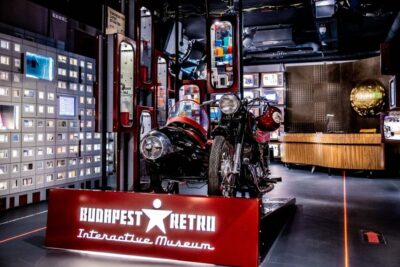
Communist History Tour with House of Terror Option
What we thought →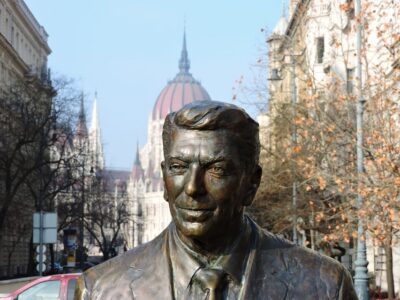
3-Hour Walking Tour About Communism (Small Group)
What we thought →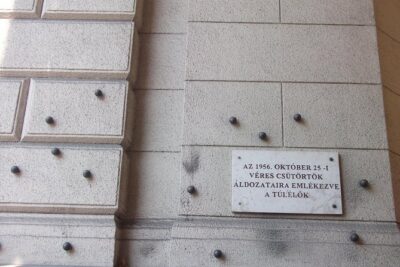
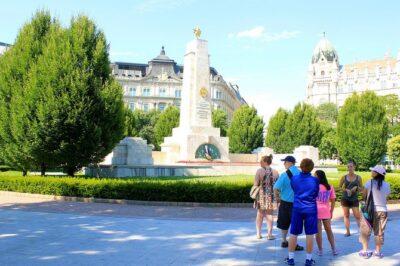
Lives of Hungarians Under Communist and Capitalist system
What we thought →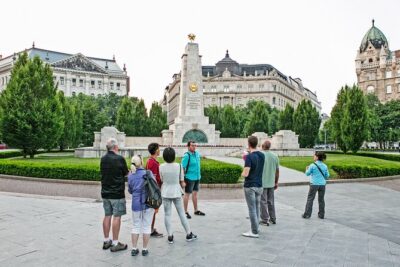
Private Budapest Hammer & Sickle Communist Times Tour
What we thought →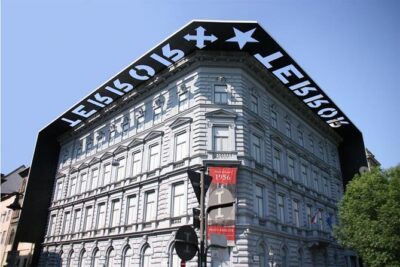
Browse the lists this tour appears in