
Reviewed · COMMUNIST HISTORY TOURS
Communist Budapest Walking Tour
Budapest’s Cold War story hides in plain sight. I like the way this three-hour walking tour links statues, squares, sports grounds, and memorials into one clear story, and I like that a local historian explains how political events affected daily life. The main consideration is its price: at $126.50 per person, it costs far more than a standard city walk, though the small group and specialist subject may justify it for history-minded visitors.
This is not a sightseeing stroll with a few communist-era facts added on. You will use the Budapest Metro and walk between sites tied to the 1956 uprising, Soviet power, American influence, and socialist propaganda. Guides such as Andras and Kata have earned especially warm praise for answering questions in detail and helping visitors picture life in Communist Hungary.
In This Review
- Key points to know before booking
- Why Communist Budapest is best understood on foot
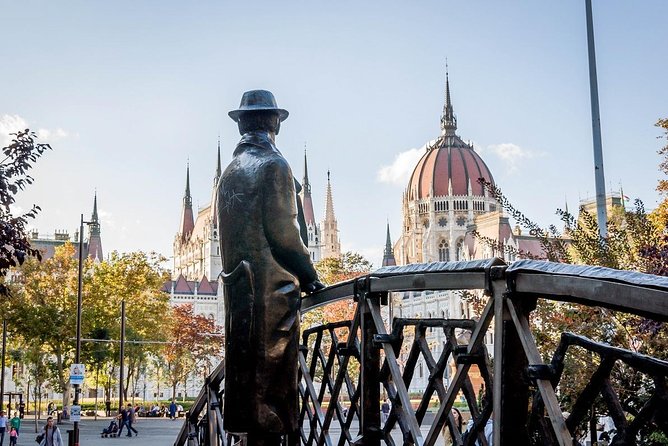
- Starting near Parliament and Kossuth Square
- Freedom Square, where Cold War symbols face one another
- Ronald Reagan and Hungary’s view of the Iron Curtain
- Puskás Stadium and socialist realist propaganda
- Bem József Square and the first major protest
- Ending outside the House of Terror
- How the three-hour format works
- Is $126.50 a fair price?
- Who should book this Budapest history walk?
- Cancellation and practical booking advice
- Should you book the Communist Budapest Walking Tour?
- FAQ
- How long is the Communist Budapest Walking Tour?
- What language is the tour offered in?
- Where does the tour start?
- Where does the tour finish?
- Is admission to the House of Terror Museum included?
- Does the tour visit the Hungarian Parliament Building?
- Are public transportation tickets included?
- What sites are visited during the tour?
- How many people can join the tour?
- Can I cancel for a full refund?
Key points to know before booking
- The tour connects scattered Cold War sites: Parliament, Freedom Square, Puskás Stadium, Bem József Square, and the House of Terror appear as parts of one story rather than isolated sights.
- It begins with a subway ride: Your guide helps you buy tram or Metro tickets if you do not already have a Budapest transit pass.
- Freedom Square offers the sharpest political contrast: You see the Soviet War Memorial, the US Embassy, and the Ronald Reagan statue in one area.
- The House of Terror is an exterior finish: Museum admission is not included, but the location gives you an excellent next stop for further study.
- The group is designed to stay small: The tour is promoted as limited to six people, while the additional booking information lists a maximum of eight, so confirm the exact group size when reserving.
- This is history first, sightseeing second: You should book it for context, discussion, and interpretation, not just for attractive city views.
Why Communist Budapest is best understood on foot
Communist-era Budapest can be hard to read at first. A statue may look like a simple monument. A broad square may seem like an ordinary public space. A stadium may appear to be only a sports venue. The value of this tour is that the guide explains what these places meant, who placed them there, and how people lived around them.
The route focuses on the period of Soviet influence, the Cold War, and the 1956 Hungarian uprising. You will hear about state propaganda, the presence of Soviet power, Hungary’s relationship with the United States, and the gradual collapse of the Iron Curtain.
I find this subject especially useful early in a Budapest visit. It gives you a better frame for monuments and public buildings you may pass later. It also helps separate Hungary’s earlier imperial history from the more recent experience of one-party rule, surveillance, and political pressure.
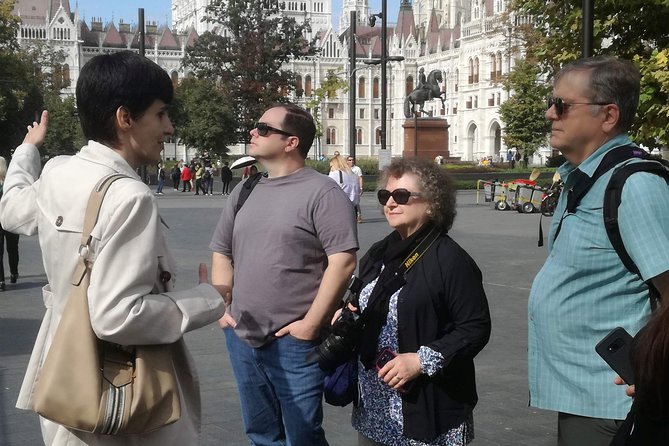
The format suits anyone who likes to ask questions. The guides are local historians and enthusiastic hosts, and the strongest praise has gone to their ability to explain difficult subjects in a human way. Andras, in particular, is described as offering detailed answers and lively discussion about key moments in Hungarian history. Kata is praised for giving clear historical explanation and helping visitors understand what everyday life under communism felt like.
More communist-era history walks:
- Budapest: Communist History Tour with House of Terror Option
★ 4.8 · 182 reviews - Communism in Hungary with a Historian
★ 5.0 · 70 reviews - Budapest: 3-Hour Walking Tour About Communism (Small Group)
★ 4.7 · 70 reviews
Starting near Parliament and Kossuth Square
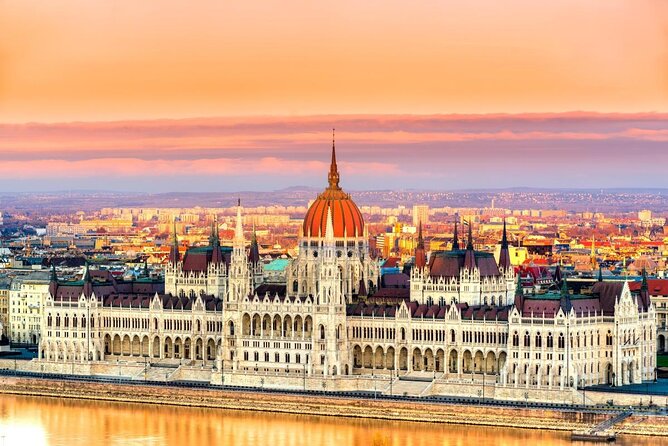
The meeting point is at Frankel Leó út 2-4 in Budapest’s District II. From there, you travel by Metro to Kossuth Square, the grand public space in front of the Hungarian Parliament Building.
The journey by subway matters because it gets you out of the sightseeing bubble quickly. You are not simply looking at Parliament from a postcard angle. Instead, you begin with the political center of modern Hungary and connect it to the events of the 1956 revolution.
Around Kossuth Square, the guide discusses monuments connected with the uprising. This opening stop lasts about 25 minutes and requires no admission fee. Expect interpretation rather than a formal interior visit to Parliament. The tour uses the square and its memorials as a starting point for understanding the revolt and the conflict between Hungarian independence and Soviet control.
You will need a valid tram or Metro ticket. If you do not already have a visitor pass, the guide can help you purchase the necessary ticket. That assistance is useful, but the cost of public transportation is not included in the tour price.
Freedom Square, where Cold War symbols face one another
From Kossuth Square, the route continues to Liberty Square, usually called Freedom Square in English. This is one of the most rewarding sections because several powerful symbols sit close together.
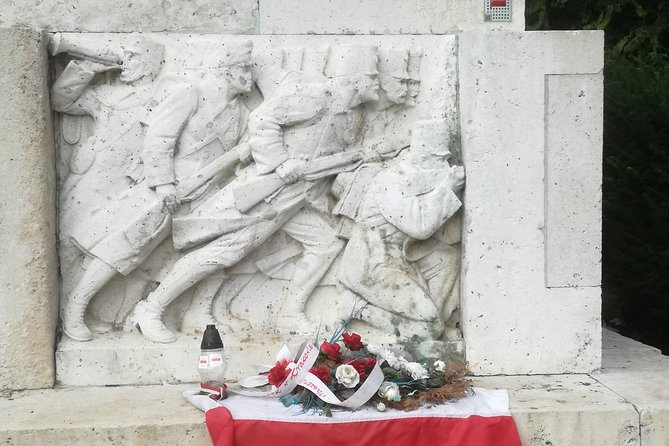
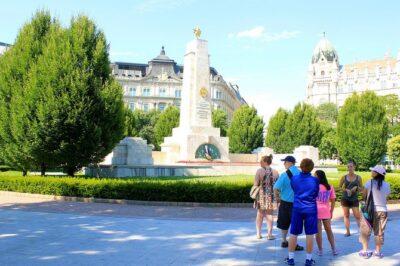
The guide discusses the Cold War outside the US Embassy, then points out the monument to the Soviet Army, the statue of Ronald Reagan, and an atomic shelter. These sites create a striking contrast. One represents Soviet military power. Another honors an American president associated with opposition to the Iron Curtain. The embassy adds a reminder of international tension and American involvement in the region.
The Soviet War Memorial is a particularly important stop. It gives you a physical reminder of the Soviet role in Hungary, while the surrounding public space reflects the changing way Budapest has dealt with that legacy. The tour does not treat the subject as a simple contest between heroes and villains. You get a chance to ask about memory, political symbolism, and why monuments remain in public places after the system that created them has disappeared.
The atomic shelter adds another layer. It connects the Cold War to the fear of nuclear conflict, rather than treating the era as only a story of party politics. You may find this section more interesting than a conventional monument tour because the guide can tie visible objects to the fears and choices of ordinary people.
Ronald Reagan and Hungary’s view of the Iron Curtain
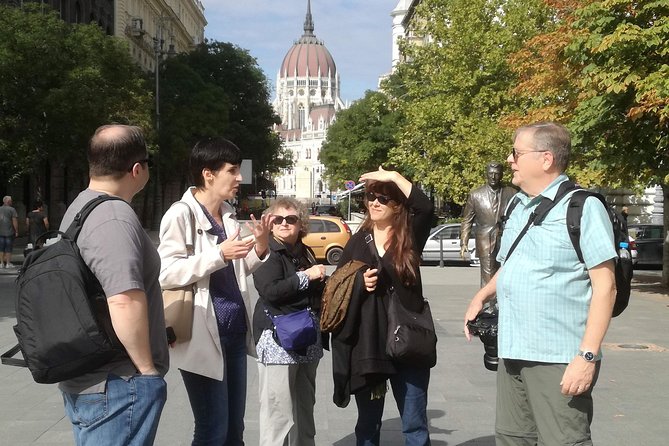
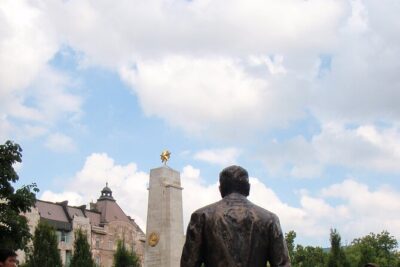
The Ronald Reagan statue receives its own short stop of about 10 minutes. The monument reflects a Hungarian sense of gratitude toward the US president for his efforts to bring down the Iron Curtain.
This is a good example of how the tour avoids a narrow, purely local story. Hungarian communism was shaped by decisions made in Moscow, Washington, and Budapest. The guide can explain why Reagan has a place in this part of the city and how American political pressure is remembered in Hungary.
Do not expect a long formal lecture at every monument. The stop is brief, but it gives you a useful way to connect Hungarian memory with the wider Cold War. If you enjoy political history, this may prompt some of the best questions of the day.
More walking tours:
- Budapest: Buda Castle Walk with Saint Stephen’s Hall
★ 4.5 · 3,012 reviews - Big Bus Budapest Hop-On Hop-Off Bus and Walking Tour
★ 3.5 · 2,206 reviews - Budapest: Buda Castle District Walking Tour
★ 4.6 · 2,108 reviews - Budapest City Landmarks Walking Tour in 2 Hours
★ 5.0 · 2,048 reviews
Puskás Stadium and socialist realist propaganda
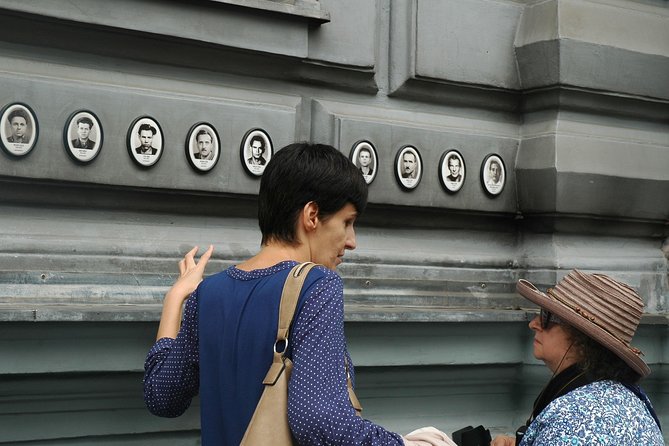
The route then reaches the former People’s Stadium, now Puskás Ferenc Stadium. The stop lasts about 20 minutes and includes a look at classic socialist realist statues that remain near the stadium.
This is where the tour turns from revolt and international politics to propaganda. Socialist realist art favored strong bodies, confident workers, athletes, and heroic public figures. The message was clear: the state wanted to project strength, order, discipline, and collective purpose.
A sports stadium was an ideal place for that message. It could host large public events and display symbols meant to shape public feeling. The guide helps you see the heavy-handed style rather than treating the statues as decorative background.
There is no admission charge for this stop. You should also know that this part of the route may appeal more to people interested in architecture, public art, and political symbolism than to those seeking classic Budapest attractions. It is useful precisely because it takes you away from the usual palace-and-church circuit.
Bem József Square and the first major protest
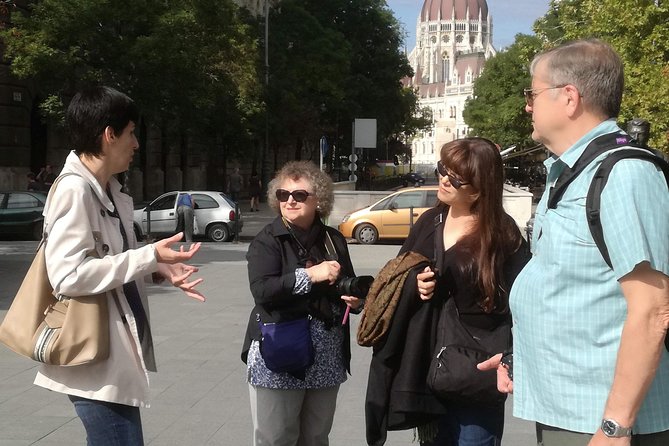
Another important stop is Bem József Square, where the first large demonstration of the 1956 uprising began. The square offers a direct link between public space and political action.
Here, your guide can explain how a demonstration grew into a national revolt. The focus is not only on dates and leaders. The larger question is how people used familiar streets and squares to express opposition when open criticism was dangerous.
The square also has a coffeehouse that has preserved its original 1960s interior. That detail gives the stop a welcome human scale. You are not only hearing about state power and revolution. You are also seeing a surviving piece of ordinary urban life from the period.
The stop lasts around 25 minutes and has no admission fee. It is the kind of place that can feel ordinary until the guide explains what happened there. I like that balance. The tour keeps returning history to real public spaces instead of confining it to museums.
Ending outside the House of Terror
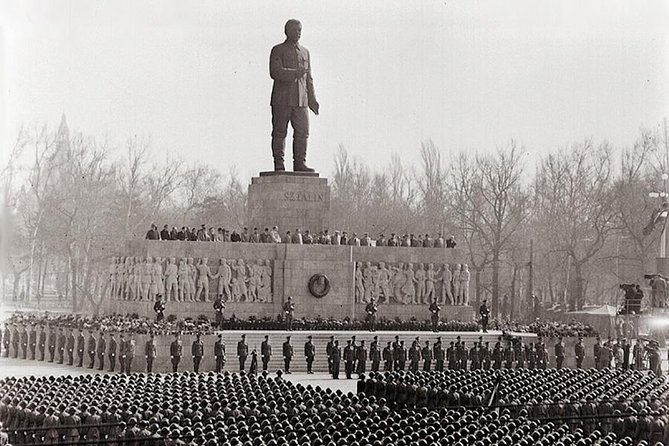
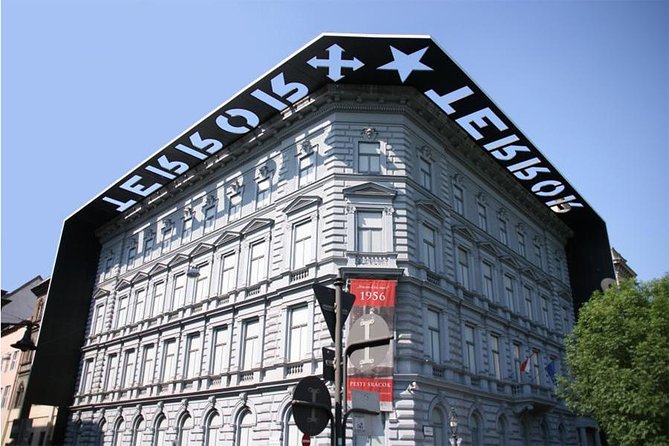
The walk concludes outside the House of Terror Museum at Andrássy út 60. The building once served as the headquarters of Hungary’s communist secret services, and a slab of the Berlin Wall is displayed in front.
The museum interior is not included. That is both a limitation and a practical advantage. The tour remains focused on its outdoor route, while you can choose to return later if you want a more intense museum experience about Hungary’s Nazi and communist dictatorships.
Ending here makes sense. The House of Terror is one of Budapest’s most direct places for examining state violence, imprisonment, and political control. After three hours of discussion, you will have enough background to understand why the building matters.
Allow extra time if you plan to visit the museum on the same day, but do not assume admission is part of the tour. The confirmed endpoint is outside the building, not inside its exhibits.
How the three-hour format works
The tour lasts about three hours, with morning and afternoon departure options. That gives you flexibility, especially if you are fitting it around Parliament, a museum visit, or an evening program.
The listed stops add up to roughly 95 minutes of scheduled time, with the remaining time used for walking, subway travel, explanations, and discussion. The pace should feel more like a guided urban lesson than a nonstop march from one photo stop to another.
Wear good walking shoes and carry water. That advice comes directly from the practical nature of the route. You will walk between several parts of Budapest and use public transportation, so comfortable footwear will make a real difference.
The group size deserves a closer look. The tour is described as limited to six people for a personal experience, while the additional information gives a maximum of eight. Either size is still much smaller than a standard city tour, but I would confirm the expected number when booking if personal discussion is a major reason you are paying the higher price.
The tour is offered in English. Confirmation arrives when you book, and the route is near public transportation. Most people can participate, though the provided information does not give a specific accessibility assessment for every section.
Is $126.50 a fair price?
At $126.50 per person, this is an expensive three-hour walk. You are not paying for museum admissions, food, or private vehicle transport. You also need to pay separately for Metro or tram tickets unless you already have a visitor pass.
The price makes more sense if you value specialist guidance and a very small group. A general walking tour may show you Budapest’s main sights for less, but it is unlikely to spend three hours connecting the 1956 uprising, Soviet memorials, US diplomacy, socialist realist art, nuclear fear, and secret police headquarters.
The historian leading the tour is the main product. If the guide gives the same level of detailed explanation praised in connection with Andras and Kata, the experience can save you hours of reading and help you notice details you would otherwise miss.
I would not recommend it to someone who wants only attractive streets and major landmarks. One direct comment about the experience makes the point clearly: if you want sightseeing alone, this is not the right choice. The route includes major places, but its purpose is interpretation.
The high satisfaction level is encouraging, with a five-star rating and full recommendation from the people who have booked it. Still, a perfect score from a small number of participants cannot guarantee that every guide or group dynamic will suit every person. Your own interest in modern European history matters more than the rating.
Who should book this Budapest history walk?
I would choose this tour if you enjoy:
- The 1956 Hungarian uprising and Cold War politics
- Memorials, monuments, and public art with political meaning
- Learning how ordinary life was affected by a political system
- Small groups where you can ask detailed questions
- Seeing parts of Budapest beyond the usual central sights
- Pairing an outdoor tour with a later visit to the House of Terror
It also suits visitors who are not history specialists but want a clearer sense of modern Hungary. One guide has been praised for helping people feel what life under communism was like, which is often more useful than a string of dates.
I would skip it if you have only a short time in Budapest and want to see the Parliament interior, Buda Castle, the thermal baths, or the city’s main architectural highlights. None of those is the focus here.
Cancellation and practical booking advice
You can cancel for a full refund up to 24 hours before the local start time. Changes or cancellations made less than 24 hours ahead are not accepted for a refund.
Book as early as you need if your dates are fixed. The experience is booked on average 27 days in advance, which suggests that the small-group format can make popular departure times less flexible.
Choose the morning or afternoon departure that leaves room for questions rather than squeezing the tour between two rushed appointments. If you want to visit the House of Terror afterward, check its opening arrangements separately and allow enough time at the end of the walk.
Should you book the Communist Budapest Walking Tour?
Book it if you want Budapest’s communist period explained by a local historian rather than reduced to a few plaques. The route is strong because it links Parliament, Freedom Square, Puskás Stadium, Bem József Square, and the House of Terror into one connected story.
The cost is high, and public transport and museum admission are extra. But the small group, specialist subject, and praised guides make it a worthwhile choice for curious visitors who want context and conversation.
My advice is simple: history first, sightseeing second. If that sounds like your kind of afternoon, this is one of the better ways to understand modern Budapest.
FAQ
How long is the Communist Budapest Walking Tour?
The tour lasts approximately three hours.
What language is the tour offered in?
The tour is offered in English.
Where does the tour start?
It starts at Frankel Leó út 2-4, 1027 Budapest, Hungary.
Where does the tour finish?
It finishes outside the House of Terror Museum at Andrássy út 60, 1062 Budapest.
Is admission to the House of Terror Museum included?
No. The tour concludes outside the museum, and admission to the interior exhibit is not included.
Does the tour visit the Hungarian Parliament Building?
The tour travels by subway to Kossuth Square in front of Parliament and explores monuments connected with the 1956 revolution. The provided information does not state that the Parliament interior is visited.
Are public transportation tickets included?
No. The guide can help you purchase Budapest tram and Metro tickets if you do not already have a visitor pass.
What sites are visited during the tour?
The route includes Kossuth Square, Freedom Square, the Soviet War Memorial, the Ronald Reagan statue, the former People’s Stadium, Bem József Square, and the exterior of the House of Terror.
How many people can join the tour?
The experience is promoted as a small group limited to six people, while the additional tour information lists a maximum of eight travelers.
Can I cancel for a full refund?
Yes. You can cancel at least 24 hours before the local start time for a full refund. Cancellations or changes made less than 24 hours before the start are not refunded or accepted.
Just added around Budapest
- Lake Balaton and Herend Guided Tour★ 4.7 · 3 reviews
- Audio visual multi-sensory chefs journey dinner experience★ 5.0 · 3 reviews
- Hollókő Ethnographic Village: Day Tour from Budapest★ 3.7 · 3 reviews
- Tapolca Cave Lake and Tihany/ Balaton private tour from Budapest★ 4.5 · 3 reviews
- Budapest Art Nouveau Walking Tour★ 5.0 · 3 reviews
- SzentEndre-SaintAndrew City Privately Shopping and Picturesque★ 4.5 · 3 reviews
- Budapest Drinks and Piano Show Cruise★ 4.5 · 3 reviews
- Horseshow on the Hungarian Puszta, private tour from Budapest with entry!★ 5.0 · 3 reviews
Communist History Tours, compared.
Communist History Tour with House of Terror Option
What we thought →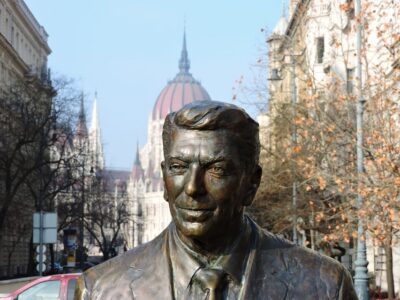
3-Hour Walking Tour About Communism (Small Group)
What we thought →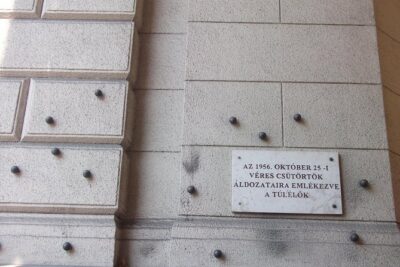
Lives of Hungarians Under Communist and Capitalist system
What we thought →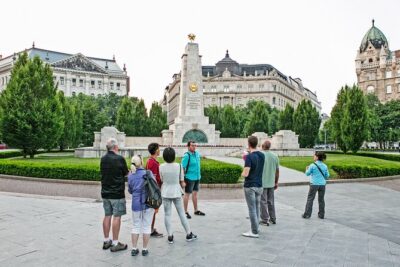
Private Budapest Hammer & Sickle Communist Times Tour
What we thought →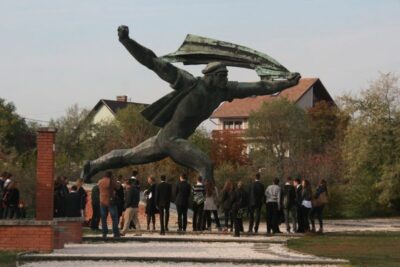
Communist History Evening Walking Tour of Budapest
What we thought →Browse the lists this tour appears in