
Reviewed · HISTORICAL TOURS
Budapest Historical Sightseeing – Free Walking Tour
Budapest rewards a good first walk. This 2.5-hour Pest tour links the National Museum, Jewish Quarter, Parliament, Liberty Square, Chain Bridge, and Shoes on the Danube Bank, while explaining the city’s difficult past and lively present. I like the broad route and the useful local advice, especially for a first visit. The main drawback is the amount of walking, roughly three miles over cobblestones, with groups that can reach 50 people.
I also like the pay-what-you-feel structure, which makes this a strong choice for a tight budget, provided you plan to tip the guide. Guides such as Peter, Victoria, George, and Sabi have received praise for clear explanations, humor, and practical help with food, transport, customs, and sightseeing. Just remember that guide quality can vary, and one sharply negative account described a poor experience with Victoria, so the human element is not entirely predictable.
In This Review
- Key points before you book
- Why this walk works well on your first day
- Meeting the yellow-shirted guide at Kálvin tér
- The National Museum and the old VIII District
- Unger’s House and Budapest’s architectural mix
- Elizabeth Square, Astoria, and the Jewish Quarter
- St. Stephen’s Basilica and central Budapest
- Liberty Square and the difficult twentieth century
- The Stock Exchange Palace and the Reagan statues
- Parliament Square and the view across the Danube
- Looking across to Fisherman’s Bastion and Buda
- Chain Bridge and the final riverfront stretch
- Shoes on the Danube Bank: a quiet final stop
- What the $3.63 price really means
- Weather, walking, and group comfort
- Who should book this Budapest walk?
- Should you book it?
- FAQ
- Where does the Budapest Historical Sightseeing Free Walking Tour start?
- Where does the tour finish?
- How long does the walking tour last?
- What language is the tour offered in?
- How much does the tour cost?
- Does the tour enter Parliament or St. Stephen’s Basilica?
- Does the tour visit Buda Castle or Fisherman’s Bastion?
- How much walking is involved?
- Are drinks or food included?
- Can I cancel for a full refund?
Key points before you book
- A Pest-side orientation: You see many major central sights without crossing to Buda or climbing Castle Hill.
- History with a modern edge: The route covers the Communist era, Jewish Budapest, nightlife, architecture, and present-day customs.
- Low upfront cost: The listed price is $3.63 per person, but tips are an important part of the guide’s income.
- A brisk outdoor walk: Expect cobblestones, changing weather, limited sitting, and about three miles on foot.
- Mostly exterior sightseeing: Parliament, the Basilica, the museum, and other buildings are explained from outside.
- A useful finish: The walk ends near the Chain Bridge, with easy access to central Budapest afterward.
Why this walk works well on your first day

Budapest can feel like two cities stitched together by the Danube. Buda rises on the west bank, while Pest spreads across the flatter east side. This tour stays on the Pest side, but it gives you views toward Buda Castle, Fisherman’s Bastion, Matthias Church, Gellért Hill, and Margaret Island.
That makes it a practical orientation walk rather than a complete Budapest tour. You will not tour the interiors of Parliament or the Basilica, and you will not visit Castle Hill. Instead, you will learn how the city fits together, where the main districts sit, and which places deserve a longer visit later.
I would take this tour near the start of a Budapest stay. Guides often add advice on restaurants, public transport, local rules, and places to explore after the walk. Sabi, for example, helped explain where to obtain a 72-hour transport pass. Victoria has been praised for discussing Hungarian customs as well as history and for offering lunch suggestions.
The route also gives you a useful sense of walking distances. Budapest’s center is compact enough for much of this sightseeing on foot, but the cobbles and long stretches beside busy streets make comfortable shoes essential.
More history-led tours:
- Budapest: Historic Cruise with Welcome Drink
★ 4.7 · 6,512 reviews - Buda Castle District Dark History, Legends and Vampire Night Tour
★ 4.5 · 1,240 reviews - BloodThirsty Hungary: Walking tour & Dark Historical Stories
★ 4.9 · 633 reviews
Meeting the yellow-shirted guide at Kálvin tér
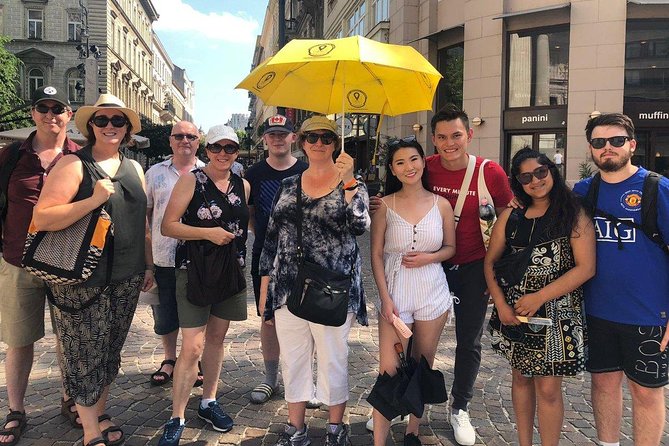
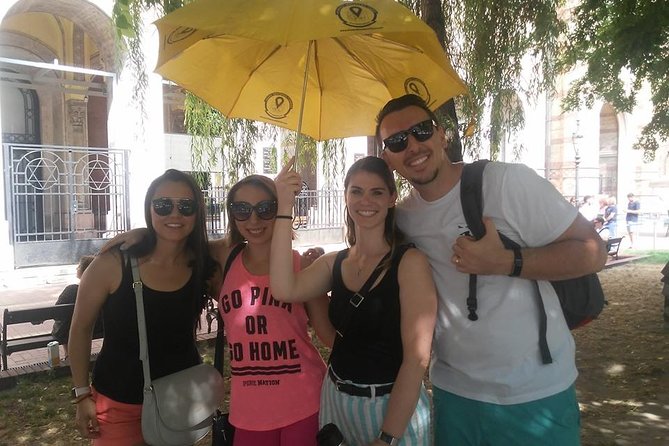
The formal meeting point is OTP Bank at Kálvin tér 12 to 13. Guides wear yellow, which should help you find the group in a busy square. Kálvin Square has places to sit and some shelter, making it a sensible meeting point in uncertain weather.
The square is named after John Calvin, the French Protestant reformer. This brief stop does not require an admission ticket, but it gives the guide a chance to explain the setting and gather the group before the main walk.
The group limit is 50 people. That is a fairly large maximum for a walking tour, although actual groups may be smaller. A group of around 25 can still work well, but crowded streets and traffic noise may make it harder to hear. Stay close, and tell the guide at once if you cannot hear. Do not wait until the group has moved several blocks.
The National Museum and the old VIII District
The gardens of the Hungarian National Museum provide an early lesson in national identity. You will see the mythical turul bird, a creature linked with Hungarian origin stories, and hear about the museum’s founder, its collections, and the 1948 uprising.
The museum area also opens the door to the VIII District, once known for grand palaces and a more complicated reputation. A guide can point out how this part of Budapest changed over time, from aristocratic architecture to a district associated with poverty, student life, and urban renewal.
The museum itself is not included as an interior visit. That matters if you hoped for galleries and exhibits. You are getting context and an exterior look, not museum admission.
Unger’s House and Budapest’s architectural mix
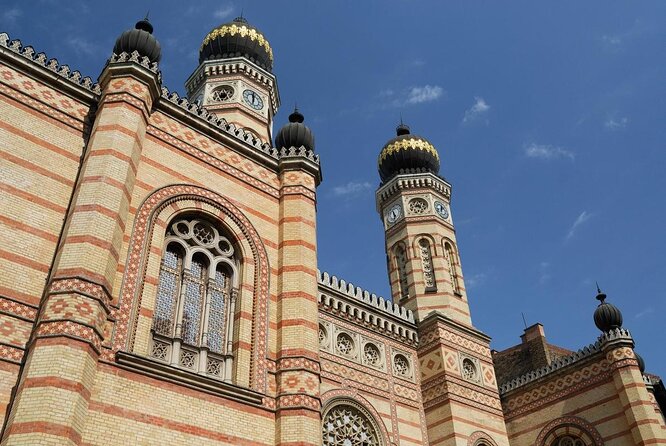
At Unger’s House, the route pauses in the courtyard of a building associated with architect Miklós Ybl. Its design brings together Byzantine, Gothic, Moorish, Renaissance, and Romantic influences.
That mixture is one of the pleasures of Budapest. Buildings here do not always fit neatly into one style, and the city’s grand streets often reveal several architectural moods in a single block. The palace is described as fading, which adds a note of realism. Not every historic building has been restored to postcard perfection.
The stop is short, around five minutes. You should expect a quick explanation and a look at the courtyard rather than a long architectural study.
More walking tours:
- Budapest: Buda Castle Walk with Saint Stephen’s Hall
★ 4.5 · 3,012 reviews - Big Bus Budapest Hop-On Hop-Off Bus and Walking Tour
★ 3.5 · 2,206 reviews - Budapest: Buda Castle District Walking Tour
★ 4.6 · 2,108 reviews - Budapest City Landmarks Walking Tour in 2 Hours
★ 5.0 · 2,048 reviews
Elizabeth Square, Astoria, and the Jewish Quarter
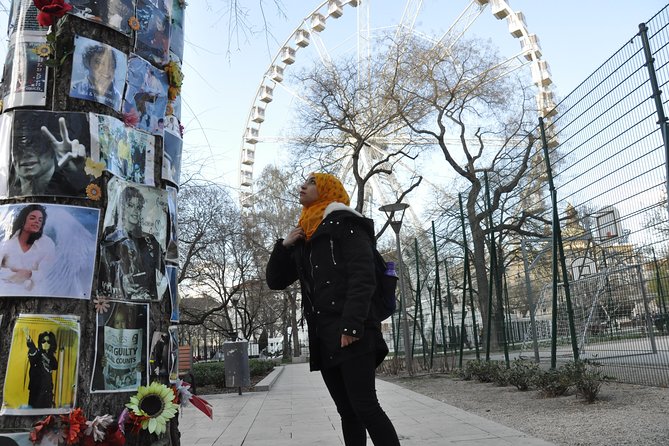
Elizabeth Square introduces a younger side of Budapest. You will see the Budapest Eye, hear about the square’s past, and learn why the area is linked with some of the city’s popular bars and nightlife.
This is where the tour shifts from monuments to daily life. You get a sense of how central Budapest changes after dark and where the city’s social energy gathers. The guide may also offer suggestions for later evenings, although restaurant and bar recommendations naturally reflect personal taste.
The route then passes the Danubius Hotel Astoria, an elegant French Empire-style building. Its cosmopolitan past includes international stars and film productions, including The Josephine Baker Story directed by Brian Gibson. The stop itself is only about two minutes, so think of it as a quick architectural and cultural footnote.
The Jewish Quarter receives more attention. Its story moves from a flourishing Jewish community to the wartime ghetto, then toward its present role as a district of independent shops, designers, artists, students, bars, and tourist activity.
This is one of the most valuable sections of the tour because it avoids presenting the area as only a nightlife zone. You hear how politics, persecution, war, population changes, and redevelopment reshaped the streets. The short format cannot cover every memorial or synagogue in depth, but it gives you a reason to return and explore more carefully.
St. Stephen’s Basilica and central Budapest
Outside St. Stephen’s Basilica, the guide explains the building’s name and its connection with Hungary’s first king, Stephen I. The basilica is one of the city’s most recognizable landmarks, but this tour does not include interior admission.
That arrangement keeps the walk affordable. If you want to enter, climb, or spend time studying the interior, you will need to do that separately. The tour works best as a first look, followed by your own return visit.
The stop also helps connect Budapest’s religious and political story. The walk is not just a procession of pretty buildings. It repeatedly asks you to consider who built the city, who controlled it, and how older symbols have been reused by modern Budapest.
Liberty Square and the difficult twentieth century
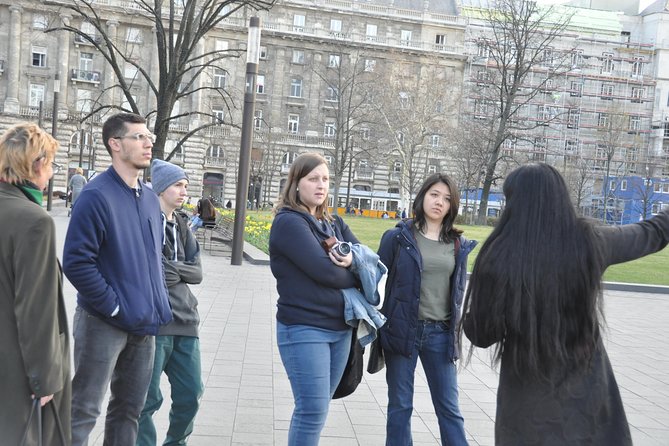
Szabadság tér, or Liberty Square, is an important pause. You will see the Communist memorial and hear about Hungary’s twentieth-century political struggles.
This is where the tour’s tone becomes darker. Hungary’s past includes foreign rule, lost independence, war, fascism, Soviet influence, and the 1956 uprising. The guides appear willing to discuss those subjects directly rather than smoothing them into a cheerful sightseeing story.
That approach will suit you if you want political context. It may feel heavy if you prefer architecture and light anecdotes. One guide’s response to a complaint made clear that the company sees Hungarian history as painful and real, and that its humor can be dry and direct. I would come prepared for frank discussion, not a polished entertainment show.
The Stock Exchange Palace and the Reagan statues

The Stock Exchange Palace is described as a 50,000-square-meter historic landmark and the largest privately owned historic landmark in Budapest. You see it from outside, and admission is not included.
The route then reaches the Ronald Reagan statue. The guide explains why Reagan appears to be walking away from Parliament and why George H. W. Bush is positioned nearby, waiting for him. These statues provide a lighter way into the end of the Communist period and the political relationship between Hungary and the United States.
The stops are brief, so the value comes from the story rather than from a long visual examination. Keep your expectations realistic: the tour gives you a well-told introduction, not a full political lecture.
Parliament Square and the view across the Danube
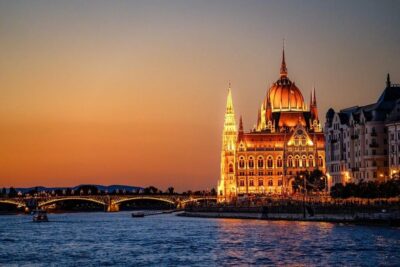
Outside the Hungarian Parliament Building, you get the tour’s major architectural moment. The building’s Neo-Gothic and eclectic exterior faces the Danube, and the square offers one of the defining views in Budapest.
The guide also points out other important buildings nearby, including the former Ministry of Justice, an agricultural museum, and a chocolate museum. Some of these references may be more useful later, when you are deciding which sights to visit on your own.
Parliament is one of the places where a large group can become awkward. The guide may be only a few meters from the building, but the square can be busy and noisy. You will get the best experience by standing near the guide and asking questions rather than drifting toward the edge.
The building is not visited inside. If you want an interior tour, you will need a separate ticket and arrangement. Still, the exterior explanation is worthwhile because Parliament anchors the riverfront and helps you understand the relationship between Pest, Buda, and the Danube.
Looking across to Fisherman’s Bastion and Buda
At the Pest-side viewpoint, the guide turns your attention across the river to Fisherman’s Bastion, Buda Castle, Matthias Church, and the former royal palace. You may also see Margaret Island and Gellért Hill from afar.
This is a good reminder that the tour is deliberately a Pest introduction. You receive orientation toward Buda without going there. That saves time and keeps the route manageable, but it also means you should set aside another half-day for Castle Hill if those sights are high on your list.
The view is especially useful early in a stay because it helps you plan your next outings. You can identify the hilltop buildings from ground level before tackling the climb or arranging transport.
Chain Bridge and the final riverfront stretch
The Széchenyi Chain Bridge is another short but important stop. The guide explains its original role, its history, and its reconstruction.
The bridge is more than a photogenic crossing. It represents the physical connection between Buda and Pest and helps explain how the modern city developed. The tour finishes nearby, at Id. Antall József rkp. 1, close to the bridge.
From the finish, you can walk back toward the starting area or continue into central Budapest. The ending is convenient because you are not left in a distant neighborhood with a long return journey.
Shoes on the Danube Bank: a quiet final stop
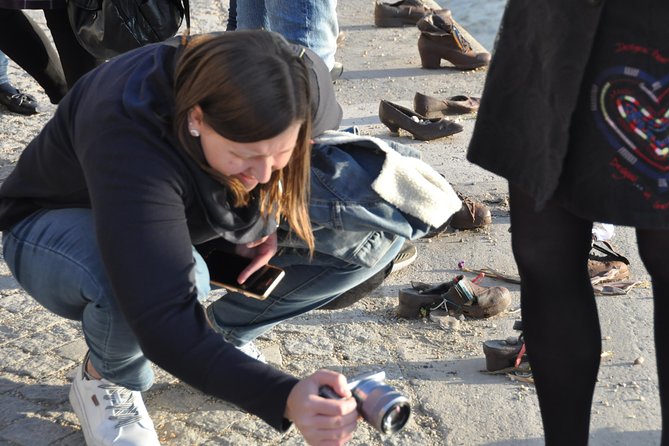
The tour ends with the Shoes on the Danube Bank memorial, a simple and haunting line of 60 pairs of metal shoes. It honors Jewish people who were forced to remove their shoes before being shot beside the river during the Second World War.
This is not a stop for hurried chatter or casual sightseeing. The monument is powerful precisely because it is so spare. A good guide should give you enough historical background to understand it, then leave room for silence.
Ending here gives the walk emotional weight. You have moved from national myths and grand buildings through occupation, Jewish life, Communism, and modern Budapest, arriving at a memorial that asks you to remember the human cost behind the city’s elegant riverfront.
What the $3.63 price really means
At $3.63 per person, the booking price is unusually low for two and a half hours with an in-person guide. The value is excellent if you use the tour as an orientation and then follow up with your own museum visits, interior tours, and neighborhood walks.
But this is not a fully paid conventional tour. Tips are not included, and the guides depend on them for their income. Budget for a tip that reflects the time and quality of the experience. One review also noted that cashless tipping was not always possible, so carrying Hungarian forints is sensible.
There is no food or drink provided. A short five-minute break allows you to buy something and use the toilet, but if a large group stopped for coffee, the walk could become much longer. Buy coffee before the start if you want it, and carry water.
Public toilets may cost 100 to 500 HUF. The company also states that guides cannot carry luggage or equipment, so arrive with only what you can comfortably carry.
Weather, walking, and group comfort
The tour needs good weather and takes place outdoors. Bring water, sunscreen, an umbrella, or a warm jacket according to the forecast. Winter conditions can be severe, and one response from the operator referred to temperatures as low as minus 25 degrees Celsius.
You should be comfortable walking about three miles. The route includes cobblestones and limited opportunities to sit. Most people who can manage a long urban walk should be fine, but anyone with mobility limits should think carefully before booking.
Children over 12 are considered the best fit, although younger children are welcome. Service animals are allowed, but ordinary dogs are not. Guide dogs require official papers, and the owner must carry the dog when required by the stated rules. There is no hearing induction loop.
The tour can hold up to 50 people. A smaller group makes questions and hearing easier, while a full group may feel crowded at busy sights. If personal attention is your priority, a private paid tour would be a better match.
Who should book this Budapest walk?
I would recommend it to first-time visitors who want a quick grasp of Pest, a serious look at Hungarian history, and practical advice for the rest of the trip. It also suits budget visitors who understand that the low price comes with a tipping expectation.
You will likely enjoy it if you like political history, architecture, local stories, and a guide who speaks frankly. Guides Peter, Victoria, George, and Sabi have all been praised for clear delivery, humor, patience, and useful advice, with Victoria receiving especially strong praise for her historical detail and local perspective.
I would hesitate if you dislike outdoor walks, large groups, difficult subjects, or exterior-only sightseeing. Guide style can vary. Most feedback is highly positive, with a 4.9 rating from 1,303 ratings and 97 percent of participants recommending the experience, but one detailed complaint described a late start, a harsh manner, and a fast delivery. That is unusual beside the broader praise, but it is worth acknowledging.
Should you book it?
Yes, if you want a low-cost introduction to Budapest and can manage the walking. Book it early in your stay, wear sturdy shoes, bring water, and carry some cash for a tip. Treat the tour as your city map and history primer, not as a substitute for entering Parliament, the Basilica, the National Museum, or Buda Castle.
The best reason to book is the range. In one morning or afternoon, you move from the turul bird and grand palaces to the Jewish Quarter, Communist memorials, Parliament, the Chain Bridge, and the Shoes on the Danube Bank. That is a lot of Budapest in 150 minutes, and at this price, it is a very fair bargain.
FAQ
Where does the Budapest Historical Sightseeing Free Walking Tour start?
It starts at OTP Bank, Budapest, Kálvin tér 12 to 13, 1085 Hungary.
Where does the tour finish?
The tour finishes near the Chain Bridge at Id. Antall József rkp. 1, 1052 Budapest.
How long does the walking tour last?
It lasts approximately 2 hours and 30 minutes.
What language is the tour offered in?
The tour is offered in English.
How much does the tour cost?
The listed price is $3.63 per person. Tips for the guide are not included and are an important part of the tour’s payment model.
Does the tour enter Parliament or St. Stephen’s Basilica?
No. The tour explains both buildings from outside. Admission is not included.
Does the tour visit Buda Castle or Fisherman’s Bastion?
No. You see Fisherman’s Bastion, Buda Castle, Matthias Church, and other Buda sights from the Pest side of the Danube.
How much walking is involved?
The tour is not recommended for people unable to walk about three miles. Comfortable shoes are advised because parts of Budapest have cobblestones.
Are drinks or food included?
No. Food and drinks are not provided. There is a short break to buy refreshments and use the toilet, and you pay for any purchases yourself.
Can I cancel for a full refund?
Yes. You can cancel at least 24 hours before the experience start time for a full refund. Poor weather or failure to reach the minimum number of participants may also lead to a rescheduled tour or full refund.
Just added around Budapest
- Lake Balaton and Herend Guided Tour★ 4.7 · 3 reviews
- Audio visual multi-sensory chefs journey dinner experience★ 5.0 · 3 reviews
- Hollókő Ethnographic Village: Day Tour from Budapest★ 3.7 · 3 reviews
- Tapolca Cave Lake and Tihany/ Balaton private tour from Budapest★ 4.5 · 3 reviews
- Budapest Art Nouveau Walking Tour★ 5.0 · 3 reviews
- SzentEndre-SaintAndrew City Privately Shopping and Picturesque★ 4.5 · 3 reviews
- Budapest Drinks and Piano Show Cruise★ 4.5 · 3 reviews
- Horseshow on the Hungarian Puszta, private tour from Budapest with entry!★ 5.0 · 3 reviews
Historical Tours, compared.
Buda Castle District Dark History, Legends and Vampire Night Tour
What we thought →
BloodThirsty Hungary: Walking tour & Dark Historical Stories
What we thought →
Budapest Jewish Heritage Memorial Walking Tour & Synagogue Entry
What we thought →
Jewish Heritage Guided Tour with Synagogue Ticket
What we thought →
Budapest Historic Downtown Bicycle Tour in small groups
What we thought →
Historic Downtown ride on E-Bicycles Buda & Pest
What we thought →
Jewish History Guided Walking Tour with Historian
What we thought →Browse the lists this tour appears in