
Reviewed · COMMUNIST HISTORY TOURS
Budapest: Memento Park and Icons of Communism Guided Tour
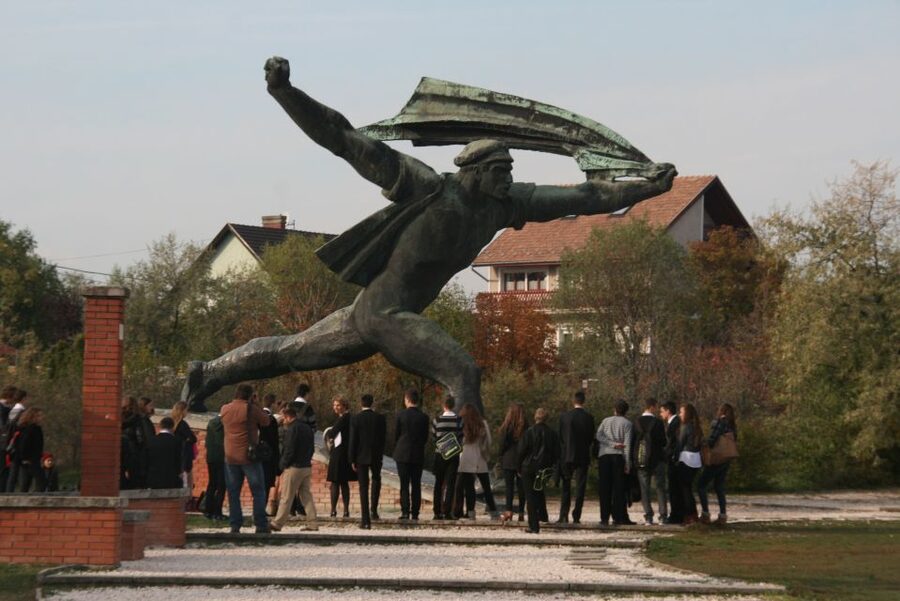
Communism left some very large reminders behind. Budapest’s Memento Park gathers 41 statues and memorials from Hungary’s socialist period, including Marx, Engels, Lenin, and the famous Boots of Stalin. I like the small group of up to seven and the fact that transport, admission, and a live English-speaking guide are included. The main drawback is the travel time: about 45 minutes each way, leaving roughly 90 minutes in the park.
Guide Victor receives especially strong praise for making a difficult subject clear, human, and even occasionally funny. I also like that he drives you himself, helps with photos, and may add sights such as Gellért Hill or the Poets’ Circle on the return trip. Still, this is not a light sightseeing stop. The material deals with intimidation, propaganda, dictatorship, and political violence.
In This Review
- Key points to know before you go
- Why Memento Park matters in Budapest
- Meeting at Batthyány Square
- Seeing the statues after the system fell
- Stalin’s boots and the memory of revolt
- How propaganda and fear shaped daily life
- What the return journey adds
- Is the $63 price fair?
- Who will get the most from this tour?
- What to bring and how to approach the visit
- Should you book this Memento Park tour?
- FAQ
- Where does the tour begin?
- How can I reach the meeting point?
- How long does the activity last?
- How far is Memento Park from central Budapest?
- What is included in the price?
- Is the tour conducted in English?
- How large is the group?
- Can I cancel or pay later?
Key points to know before you go
- Memento Park sits 10 miles from central Budapest, so the private car saves you the trouble of arranging transport.
- Stalin’s boots are the emotional centerpiece, marking the place where a huge statue of the dictator once towered over the city.
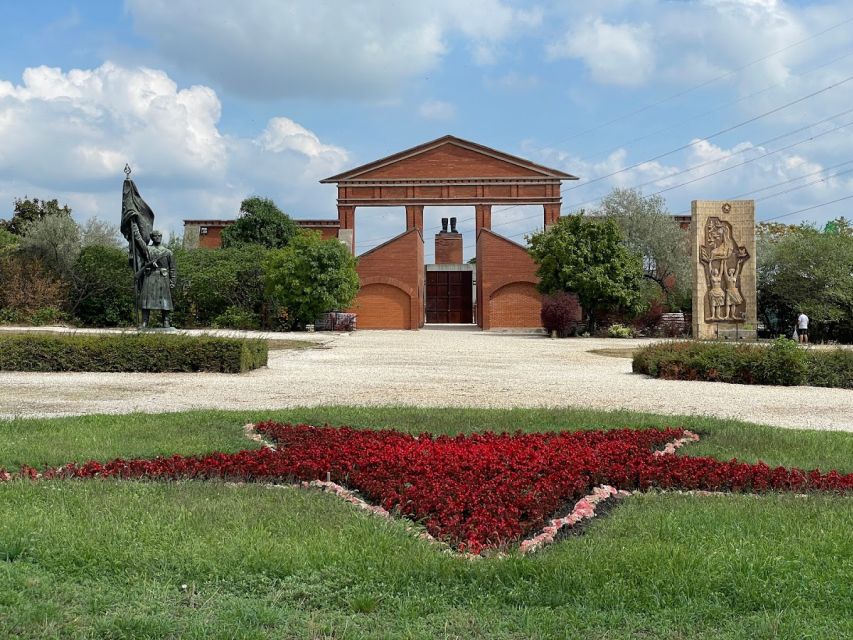
- The park holds 41 Communist-era monuments, giving you a rare chance to stand beside the symbols once used to shape public opinion.
- Victor is praised for clear, personal storytelling, especially when explaining how ordinary people lived under Soviet rule.
- The tour lasts three hours, including about 90 minutes of driving and 1.5 hours at the museum.
- The $63 price includes transport, admission, guiding, and water, making it most useful for visitors who want context rather than a quick photo stop.
Why Memento Park matters in Budapest
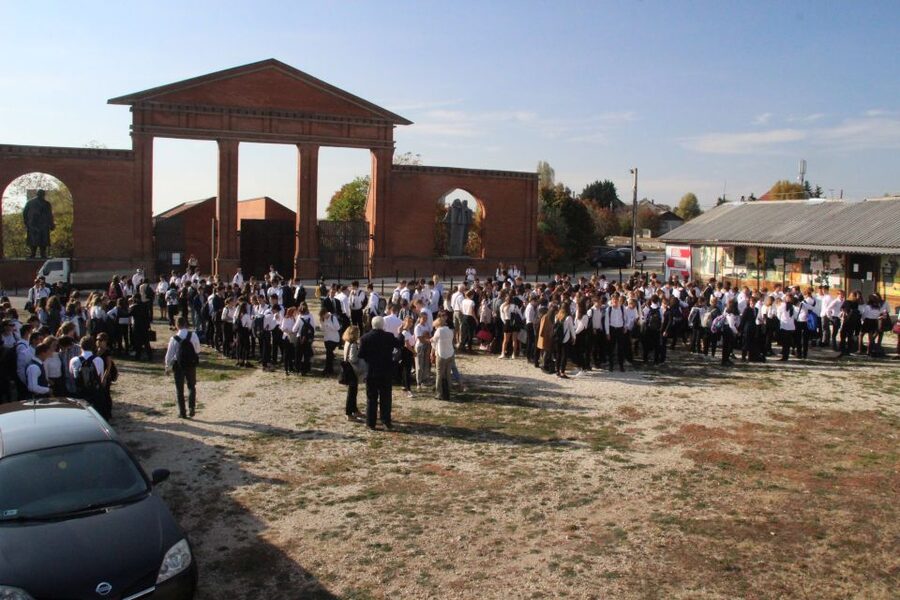
Memento Park is not a conventional museum. It is an open-air collection of statues removed from Budapest and other Hungarian public spaces after the Communist system fell. Instead of destroying every monument, Hungary moved these symbols to one place, where you can look at them without the old political message controlling the setting.
That change in setting matters. A statue that once dominated a public square had a job: it told people what to admire, whom to obey, and which version of history was acceptable. At Memento Park, the same statue becomes evidence. You can study its scale, posture, and expression while your guide explains how it once worked on the public mind.
I find this approach more useful than seeing Communist symbols only in old photographs. You are close enough to notice their size and theatrical quality. The monuments were built to impress. In the park, they also reveal how much effort a government put into turning political theory into daily public spectacle.
The tour also addresses a basic question: why did Communist ideology gain room in Hungary after World War II? You will hear how Marxist theory was presented as a promise of equality, then changed under one-party rule into a system that restricted law, speech, movement, and personal choice.
That explanation is important because the park can otherwise feel like a collection of strange concrete figures. With context, you begin to see the connection between the statues and the lives of people who had to work, speak, and plan within a tightly controlled system.
More communist-era history walks:
- Budapest: Communist History Tour with House of Terror Option
★ 4.8 · 182 reviews - Communism in Hungary with a Historian
★ 5.0 · 70 reviews - Budapest: 3-Hour Walking Tour About Communism (Small Group)
★ 4.7 · 70 reviews
Meeting at Batthyány Square
The tour begins at Batthyány Square, beside the Danube in central Budapest. Look for St. Anne’s Church, the church with two towers, and meet in front of it. The square is easy to reach by Metro Line 2 or by trams 19 and 41.
This is a practical meeting point, especially if you are already sightseeing on the Buda side of the river. Give yourself enough time to find the church, since the meeting instruction is tied to the building rather than a large transportation terminal.
From there, you ride in a private car to Memento Park. The trip is listed as about 45 minutes each way. That may sound long for a three-hour activity, but the transport is part of the value. Memento Park is about 10 miles, or 16 kilometers, from the city center, and you do not have to work out the route or arrange a return journey.
The car is also useful for a small group. With no more than seven participants, the ride should feel more personal than a large coach transfer. The vehicle is described as clean and comfortable, and a bottle of water is included.
The time on the road is still a consideration. If you have only one day in Budapest, or if you prefer to remain within the city center, Memento Park may not be your best use of three hours. If the history interests you, the guided drive turns an out-of-the-way museum into a straightforward half-day plan.
Seeing the statues after the system fell
You have about 1.5 hours at Memento Park for a guided walk, sightseeing, and personal time. The park contains 41 statues and Communist-era icons, including Marx, Engels, and Lenin.
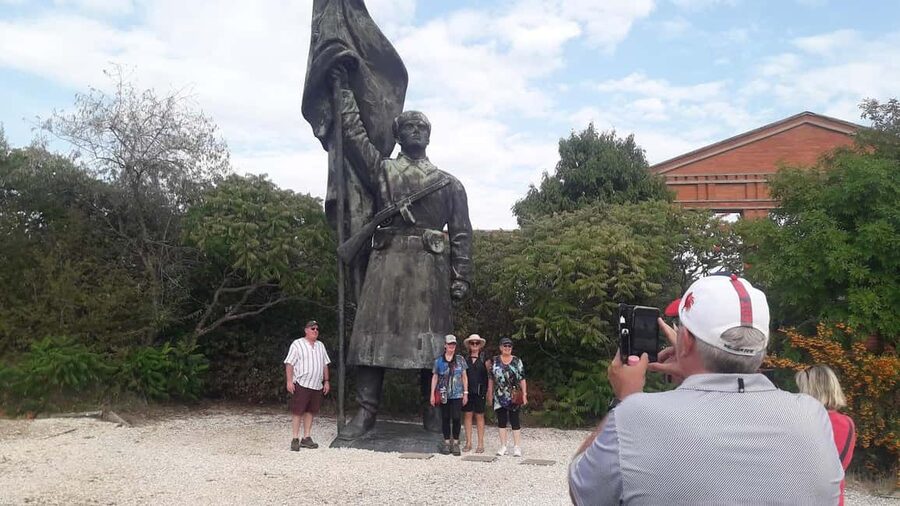
The size of the monuments is part of the lesson. These are not small plaques tucked into a gallery. They were designed to be seen from a distance and to make political power look permanent. You can stand beside them, compare your own height with their scale, and take photographs without the original public ceremony surrounding them.
The chance to photograph the statues is one of the lighter parts of the visit. The guide will help take your picture with the monuments at no extra charge. That may sound like a small service, but it is useful in an outdoor museum where the best framing often requires someone else to hold the camera.
I would treat the photo opportunity as a way to examine the statues, not as the main reason to come. Memento Park is most effective when you first listen to the explanation, then take time to look at the figures yourself. The odd contrast between monumental political art and casual tourist photos is part of the park’s character.
Some visitors may find the collection emotionally cold. The park does not recreate ordinary homes, workplaces, or family life under Communism in a detailed way. Its strength is political symbolism. If you want personal stories, everyday objects, or a broad social history museum, you may need another Budapest museum as well.
Stalin’s boots and the memory of revolt
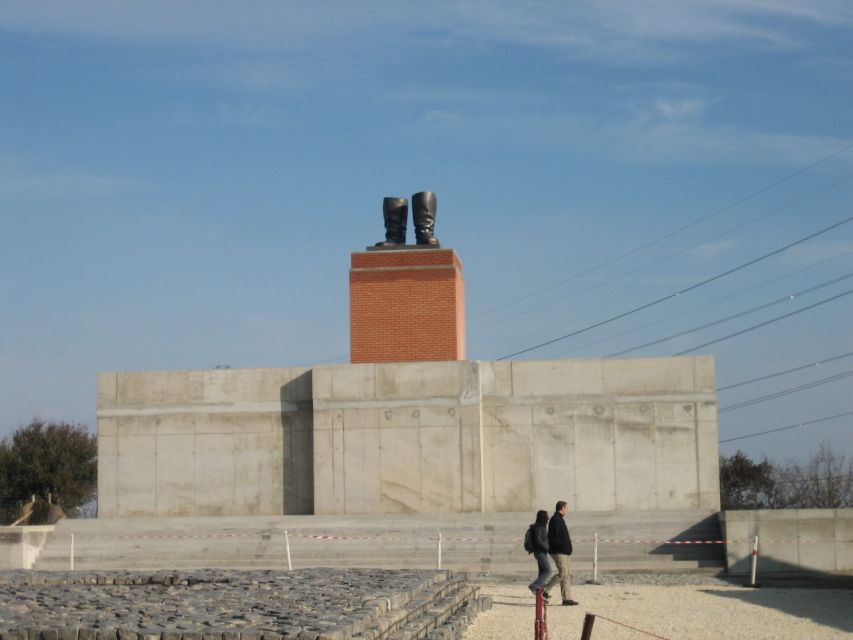
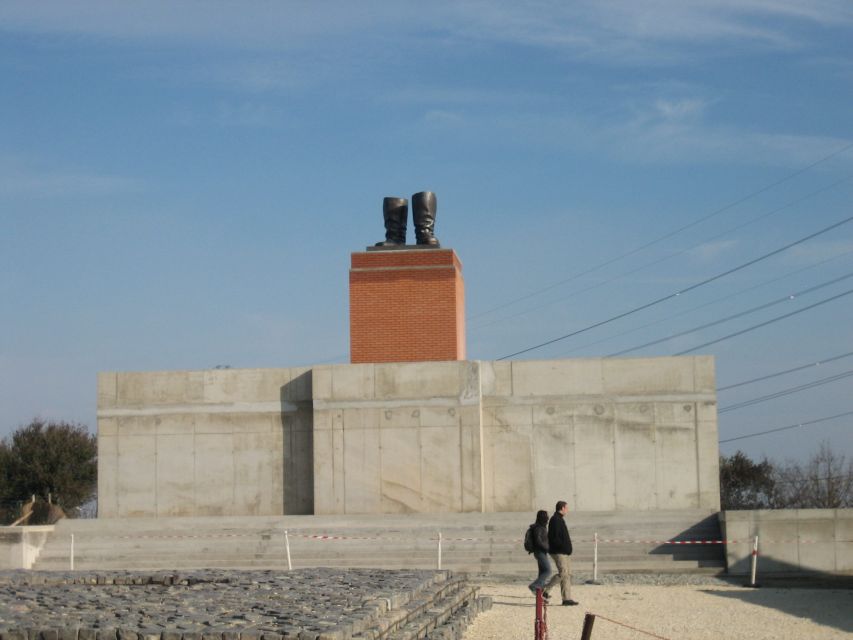
The most recognizable sight is Stalin’s Boots. They are all that remains of a huge statue of Stalin that angry Hungarians pulled down during the 1956 uprising.
The boots are powerful because they look incomplete. A dictator who once appeared physically enormous has been reduced to two empty shoes on a platform. Your guide explains the story behind the statue and why its destruction became a symbol of resistance and the desire for freedom.
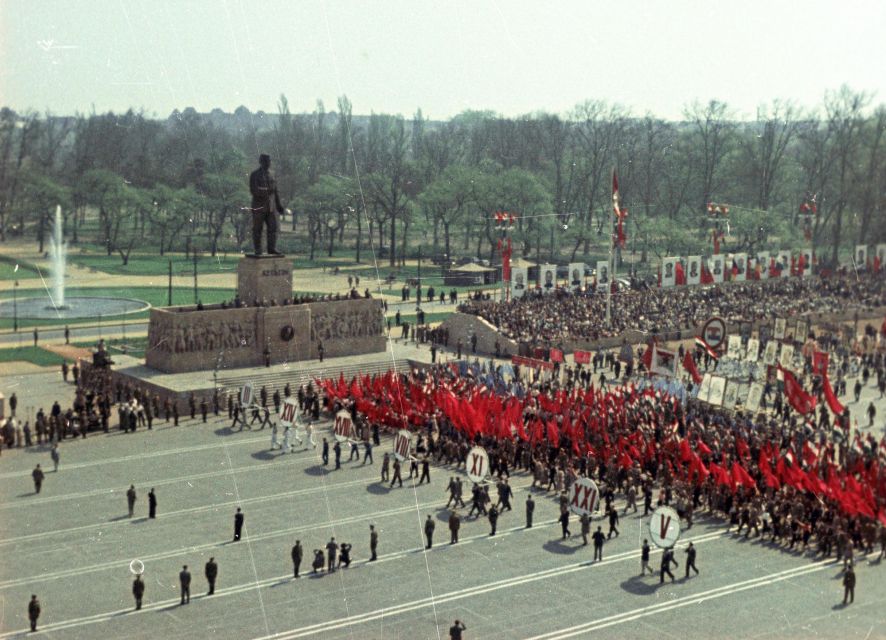
You also see Stalin’s Grandstand, the place associated with the former monument and with Communist public ceremonies. From there, it is easier to picture crowds gathered beneath a leader’s image, surrounded by official speeches and carefully staged displays.
This section gives the tour a human center. The subject is not only Marx, Lenin, or the design of monuments. It is also about what happens when people stop accepting the story imposed on them. The boots represent a political system losing control, though the decades of control behind them were not simple or harmless.
Do not expect a full account of the 1956 uprising within this short visit. The tour uses Stalin’s monument to explain a wider story about power, revolt, and public memory. You will get the most from it if you see the boots as an entry point rather than a complete history lesson.
A few more trips worth weighing up before you book
- Budapest: Parliament Building Entry Ticket and Audio Guide
★ 4.5 · 3,844 reviews - Budapest: Opera House Guided Tour
★ 4.6 · 1,533 reviews - Budapest Small-Group Guided Tour on MonsteRoller e-Scooter
★ 5.0 · 1,517 reviews - Budapest: Guided Tour of the Parliament Building in Spanish
★ 4.6 · 1,240 reviews
How propaganda and fear shaped daily life
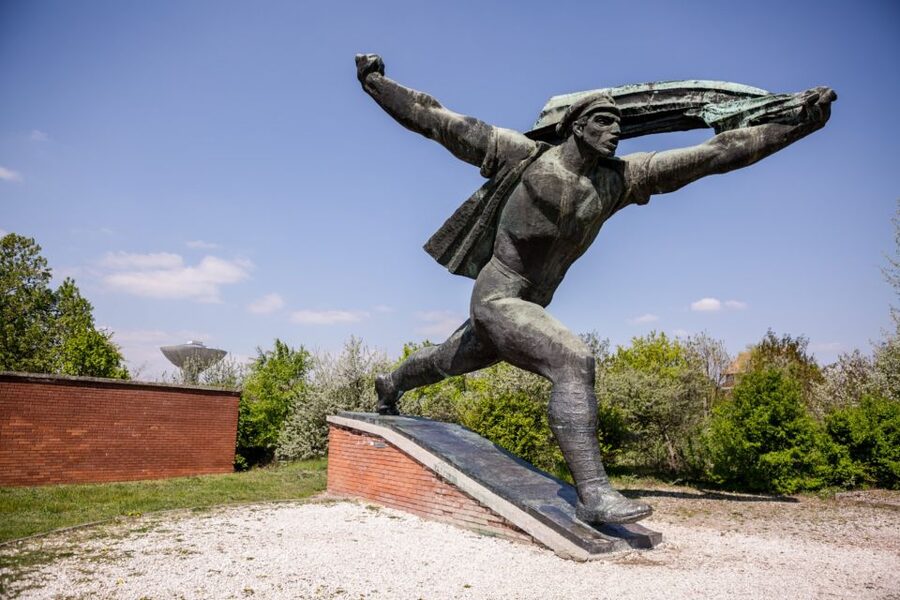
A strong part of the tour is the explanation of propaganda. You learn how public images, slogans, ceremonies, and official versions of events helped the Communist government present itself as necessary and permanent.
The guide also discusses how the rule of law changed after the Communists gained power. That subject may sound abstract, but it becomes more understandable when connected to ordinary decisions: what you could say, whom you could trust, and how much attention you attracted from officials.
The tour covers the secret police and the recruitment of new members under Soviet rule. You hear how an ordinary person could be intimidated and how fear could spread beyond the person directly questioned or threatened. This is one reason a live guide matters here. A label beside a statue can identify a figure, but it cannot easily explain how a political system reached into private life.
Victor is singled out for being smart, friendly, and easy to follow. He is also praised for answering basic questions without making people feel foolish. That quality matters on a subject filled with unfamiliar names and political terms. You can ask how the system worked, why people complied, or how someone might escape its pressure.
His local connection is another advantage. The tour is not presented as a distant political lecture. It is tied to Hungary and to the country’s experience of four decades under Communist rule. One review describes Victor as making a sad and cold place feel alive, which captures the value of a guide who can connect large events with human choices.
What the return journey adds
After the museum, the car returns to Batthyány Square, with another journey of about 45 minutes. The planned endpoint is the same place where you began.
The return ride can be more than a transfer. Victor has sometimes added sights such as Gellért Hill and the Poets’ Circle on the way back. These additions are not guaranteed parts of the stated itinerary, so I would regard them as possible extras rather than something to book the tour for.
Even without an extra stop, the drive gives you time to continue the conversation. A small group makes it easier to ask follow-up questions or clarify something that seemed confusing in the park. That is a useful contrast with an audio guide, where your questions simply wait unanswered.
The timing also helps set expectations. The park itself receives about 90 minutes, not an entire afternoon. You will get an organized introduction, a guided walk, time for photos, and some room to look around. You will not have unlimited time to inspect every monument in detail.
Is the $63 price fair?
At $63 per person, this tour is not the cheapest way to visit an outdoor museum. The admission fee is only one part of what you are paying for. The price also covers private car transport from central Budapest and back, a licensed English-speaking guide, a small group capped at seven, a bottle of water, and help with photographs.
That package makes the price reasonable for you if you value convenience and explanation. Reaching a site outside the center can take planning, and an unguided visit may leave you with impressive statues but little sense of how they functioned as propaganda.
The value is weaker if you already know Hungary’s Communist period well, have your own transport, or prefer to read at your own pace. You can also find the park’s outdoor setting less comfortable than an indoor museum, particularly if the weather is poor, though no specific weather arrangements are given.
I especially like the small-group limit. A group of seven allows the guide to respond to individual interests, and that is where this tour earns its keep. The subject raises sensitive questions. A personal guide can adjust the explanation instead of delivering one fixed speech to a large crowd.
Flexible booking adds some practical value. You can reserve now and pay later, and cancellation is free up to 24 hours before the activity for a full refund. Those terms do not change the experience itself, but they help if your Budapest plans are still moving around.
Who will get the most from this tour?
I would recommend it to you if you enjoy political history, Cold War stories, or museums that explain how governments shape public behavior. It is also a good choice if you want to understand Budapest beyond its grand architecture, cafés, and Danube views.
Families with older children and teenagers may find the monuments memorable, especially with an engaging guide. One family found Victor able to hold the attention of two teenagers while explaining the statues and their meaning. The subject is serious, but the personal style keeps it from becoming a dry classroom lesson.
This tour also suits you if you want to visit Memento Park without handling transport. The private car removes the practical nuisance of getting to a site well outside the central sightseeing zone.
I would be more cautious about recommending it to very young children. The tour deals with dictatorship, secret police activity, intimidation, and the destruction of legal protections. It is not advertised as a children’s program, and the value depends on being able to follow that difficult material.
It may also disappoint you if you expect a large museum filled with rooms and artifacts. Memento Park is an open-air display of monumental sculpture. The guide supplies much of the meaning, so this is a tour where listening matters as much as looking.
What to bring and how to approach the visit
Wear shoes suitable for walking outdoors. The scheduled museum portion includes a guided walk and free time among the statues, so you should not plan to remain in the car or treat the stop as a quick roadside photograph.
Bring curiosity and a few questions. You might ask how propaganda affected schoolchildren, how the secret police recruited people, or how Hungarians could resist and escape pressure. The guide is specifically included to make these connections clear.
Keep your camera ready, but do not rush through the explanations. The statues are large and easy to photograph, yet their importance comes from knowing where they once stood and what they were meant to communicate.
The park shop sells souvenirs, pictures, and postcards. Food is not included, and the supplied details do not describe a meal stop, so plan to eat separately before or after the activity.
Should you book this Memento Park tour?
Book it if you want the park to make sense, not simply to see a row of Communist statues. The private car, admission, water, photo help, and small group make the $63 reasonable, while a strong guide such as Victor can turn a remote open-air museum into one of Budapest’s most thought-provoking history stops.
Skip it if your schedule is tight, you dislike spending 90 minutes in transit, or you want a broader museum about daily life under Communism. For the right visitor, though, Stalin’s boots and the surrounding monuments offer something a standard city tour cannot: a direct look at the symbols a dictatorship used, and at what happened when people tore those symbols down.
FAQ
Where does the tour begin?
It begins at Batthyány Square in central Budapest, in front of St. Anne’s Church, the church with two towers.
How can I reach the meeting point?
You can reach Batthyány Square by Metro Line 2 or by trams 19 and 41.
How long does the activity last?
The total duration is three hours. The drive to Memento Park takes about 45 minutes, the museum visit lasts about 1.5 hours, and the return drive takes about 45 minutes.
How far is Memento Park from central Budapest?
Memento Park is about 10 miles, or 16 kilometers, from the city center.
What is included in the price?
The price includes transport by private car from the meeting point and back, entry to Memento Park, a live English-speaking licensed guide, a bottle of water, and help taking photographs.
Is the tour conducted in English?
Yes. The tour has a live English-speaking guide.
How large is the group?
The tour is limited to seven participants.
Can I cancel or pay later?
You can reserve now and pay later. Free cancellation with a full refund is available up to 24 hours before the activity.
Just added around Budapest
- Lake Balaton and Herend Guided Tour★ 4.7 · 3 reviews
- Audio visual multi-sensory chefs journey dinner experience★ 5.0 · 3 reviews
- Hollókő Ethnographic Village: Day Tour from Budapest★ 3.7 · 3 reviews
- Tapolca Cave Lake and Tihany/ Balaton private tour from Budapest★ 4.5 · 3 reviews
- Budapest Art Nouveau Walking Tour★ 5.0 · 3 reviews
- SzentEndre-SaintAndrew City Privately Shopping and Picturesque★ 4.5 · 3 reviews
- Budapest Drinks and Piano Show Cruise★ 4.5 · 3 reviews
- Horseshow on the Hungarian Puszta, private tour from Budapest with entry!★ 5.0 · 3 reviews
Communist History Tours, compared.
Communist History Tour with House of Terror Option
What we thought →
3-Hour Walking Tour About Communism (Small Group)
What we thought →
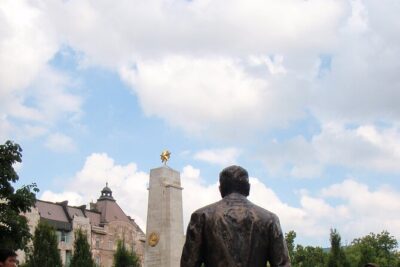
Lives of Hungarians Under Communist and Capitalist system
What we thought →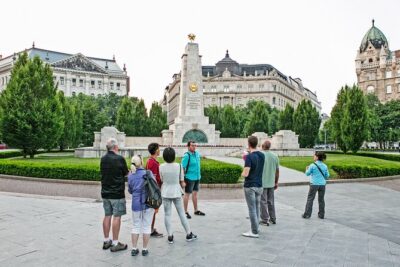
Private Budapest Hammer & Sickle Communist Times Tour
What we thought →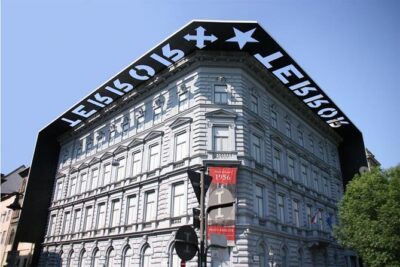
Communist History Evening Walking Tour of Budapest
What we thought →Browse the lists this tour appears in