
Reviewed · CITY TOURS
Budapest City Landmarks Walking Tour in 2 Hours
Budapest makes a strong first impression. This low-cost walk links major Pest sights with useful local context, from the Basilica and Chain Bridge to Holocaust memorials and Parliament. I like the excellent orientation and the way guides mix architecture, food, Hungarian customs, and basic language lessons. I also like that the final stop leaves you beside Parliament, ready to continue exploring.
The main consideration is simple: this is an outdoor overview, not a museum tour. You will not enter St. Stephen’s Basilica, and the group may include as many as 30 people. The advertised price is only $3.63, but the guide depends on your donation at the end, so the true cost is up to you.
In This Review
- Key points at a glance
- Why this is a smart first look at Budapest
- Finding the blue flag at Erzsébet Square
- St. Stephen’s Basilica and the edible side of Budapest
- Habsburg connections, porcelain, and Vörösmarty Square
- The Danube Embankment and the best city views
- Little Princess, Vigadó, and the Chain Bridge
- Gresham Palace and the grand age of Budapest
- Hungarian words, inventions, and national pride
- Shoes on the Danube Bank: the tour’s most serious stop
- Parliament and the useful finish
- What the low price really means
- Who should book this walk?
- Should you book it?
- FAQ
- How long does the Budapest City Landmarks Walking Tour take?
- Where does the tour begin?
- Where does the tour end?
- Does the tour enter St. Stephen’s Basilica?
- Is the guide’s tip included in the price?
- How large can the group be?
- Can I cancel for a full refund?
Key points at a glance

- Starts beside the Budapest Eye: Meet the guide 20 meters from the Ferris wheel on Erzsébet Square, marked by a small blue flag.
- Covers Pest’s headline sights: The route includes St. Stephen’s Basilica, the Danube Embankment, Chain Bridge, Gresham Palace, Shoes on the Danube Bank, and Parliament.
- More than dates and building names: Expect food advice, Hungarian phrases, local customs, public art, politics, and stories about famous Hungarians.
- A useful first-day walk: Guides such as Gary, Dora, Esther, Rita, and Judit have been praised for clear storytelling, humor, practical advice, and good answers to questions.
- Donation-based pricing: The $3.63 booking fee handles administration and does not pay the guide. Tips are not included.
- Easy to pair with your own plans: The walk ends at Parliament, and the rest of the day remains free for interior visits, meals, markets, or a separate Buda excursion.
Why this is a smart first look at Budapest
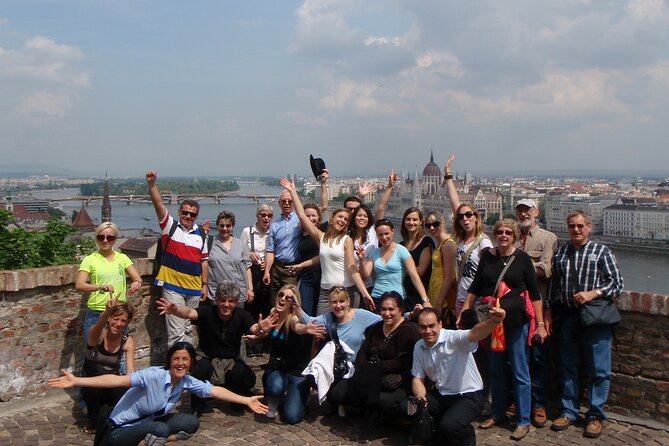
Budapest can feel like several cities at once. Pest gives you grand boulevards, cafés, public squares, a dramatic riverfront, and political landmarks. Across the Danube, Buda rises toward Castle Hill and Gellért Hill. A short walk cannot explain every corner, but it can give you a useful mental map.
That is the real value here. You are not simply collecting photographs. You are learning which buildings deserve a return visit, how Pest and Buda fit together, what foods to seek, and how Hungary’s past still shapes daily life.
The walk is especially helpful on your first day. Several guides, including Gary, Dora, Esther, and Judit, have been praised for giving visitors enough background without turning the tour into a lecture. Gary is also noted for teaching Hungarian along the way and offering advice on restaurants, shopping, nightlife, and budget-friendly choices.
The pace is described as comfortable and the walking as easy, but you should still wear sensible shoes. You will be outside for around two hours, with stops ranging from two to 15 minutes. Build in extra time if the guide takes questions or the group moves slowly.
More walking tours:
- Budapest: Buda Castle Walk with Saint Stephen’s Hall
★ 4.5 · 3,012 reviews - Big Bus Budapest Hop-On Hop-Off Bus and Walking Tour
★ 3.5 · 2,206 reviews - Budapest: Buda Castle District Walking Tour
★ 4.6 · 2,108 reviews
Finding the blue flag at Erzsébet Square
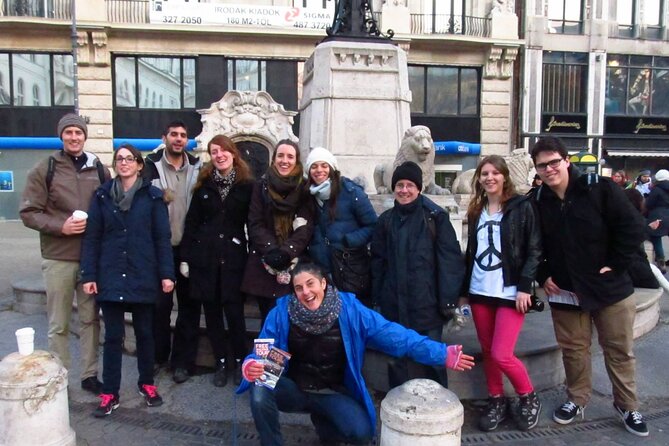
The meeting point is the Budapest Eye, also called the Ferris Wheel of Budapest, at Erzsébet tér. The guide waits about 20 meters from the wheel with a small blue flag.
This detail matters. Erzsébet Square is an open public area, and a large meeting place can be confusing if you arrive at the last minute. Go early, look for the blue flag, and keep your phone available. One person once missed the group after searching for a blue jacket and later learning the guide had a blue umbrella, so it is wise to follow the stated meeting instructions closely and contact the operator before departure if you are lost.
The opening talk sets the tone. Your guide explains the route on a map and introduces the mix of subjects ahead: history, architecture, public art, society, food, Hungarian language, and the character of modern Hungary. That broad approach is a strength if you want context instead of a parade of disconnected monuments.
St. Stephen’s Basilica and the edible side of Budapest
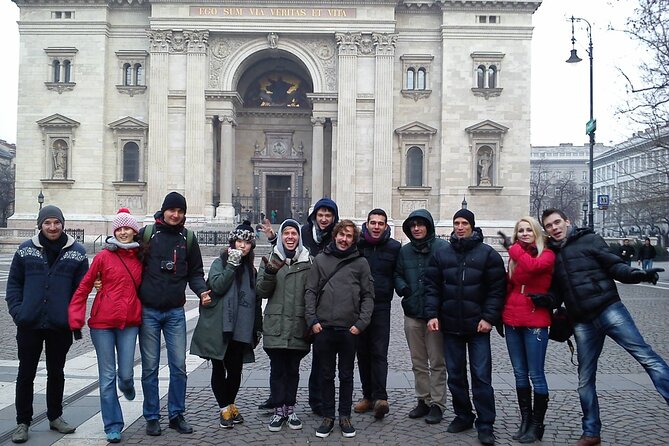
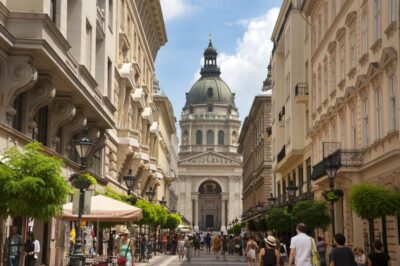
The first major stop is St. Stephen’s Basilica, Budapest’s largest church. Your guide discusses its capacity of about 8,500 people and points out how its architecture reflects different periods of the city’s success and change.
You remain outside. That is worth knowing before you book. If you want to see the interior, dome, or treasury, you will need to return independently. The stop lasts only about eight minutes, so it works as an introduction rather than a full architectural visit.
At nearby St. Stephen’s Square, the subject shifts from stone to food. Public art featuring the famous shiny-bellied policemen provides a light moment, then the guide explains Hungarian cooking and suggests what to eat in Budapest. You also get advice on avoiding tourist traps.
This practical layer is one of the best features of the walk. A history lesson tells you what happened. Food advice helps you make better choices that same afternoon. Ask questions here if you are curious about local dishes or dining areas, since the guides are encouraged to share recommendations.
Habsburg connections, porcelain, and Vörösmarty Square
At József Nádor Square, you hear about the Habsburg figure considered especially Hungarian and see examples connected with two respected ceramic traditions. Herendi porcelain is known for hand-painted luxury pieces, while Zsolnay is associated with colorful glazed ceramics.
The stop is brief, about eight minutes, but it adds a useful detail often missed on a quick city walk. Budapest’s grand center is not just a collection of pretty façades. It also reflects royal connections, craft, trade, and the artistic confidence of the city’s golden period.
The route continues to Vörösmarty Square, a popular place for people-watching at the end of Váci Street. This is also where the second-oldest underground railway in the world has one of its terminals. The guide points out the neoclassical surroundings, the elegant Gerbeaud café, and Budapest’s Christmas market traditions.
Only about five minutes are scheduled here, so do not expect time for coffee or shopping during the walk. Instead, treat it as a recommendation for later. The square is a natural place to revisit after the tour, especially if you want a café stop or a look at seasonal market stalls.
A few more trips worth weighing up before you book
- Buda Hills 2-Hour Segway Live-Guided Tour
★ 5.0 · 218 reviews - Budapest: 2-Hour Private TukTuk Tour
★ 4.9 · 103 reviews - Budapest 2-Hour Night Segway Experience
★ 5.0 · 35 reviews - 2-Hour Private Night Tour of Budapest
★ 5.0 · 17 reviews
The Danube Embankment and the best city views
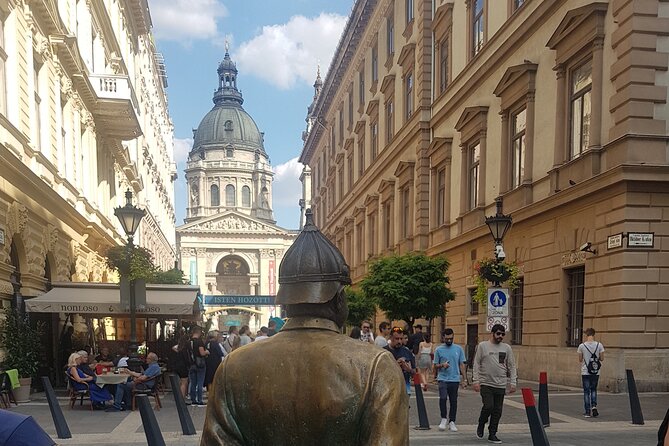
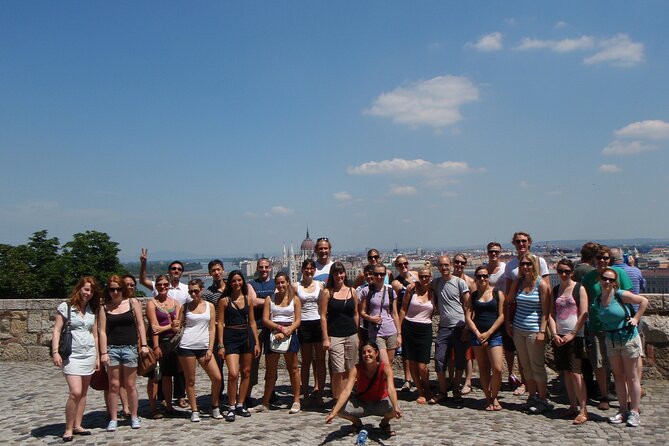
The walk reaches the Korzó, or Danube Embankment, where Budapest opens up in front of you. From the Pest side, you get views toward Buda Castle, Matthias Church, Fisherman’s Bastion, and Gellért Hill with its Citadel. The route also introduces the main riverside buildings and the famous tram line along the river.
This is the point where the tour becomes visually rewarding. The earlier squares show Budapest’s urban fabric. The riverfront shows how the city’s two halves work together.
The guide also points out Budapest’s first non-Communist statue. That reference gives the waterfront a political dimension, not just a scenic one. The city’s public art often carries a message, and a local guide can explain why a seemingly ordinary statue matters.
Bring water. One person specifically advised carrying a drink, and that is sensible for a walk with repeated outdoor stops. The tour depends on good weather, and poor conditions can lead to cancellation with an offer of another date or a full refund.
Little Princess, Vigadó, and the Chain Bridge
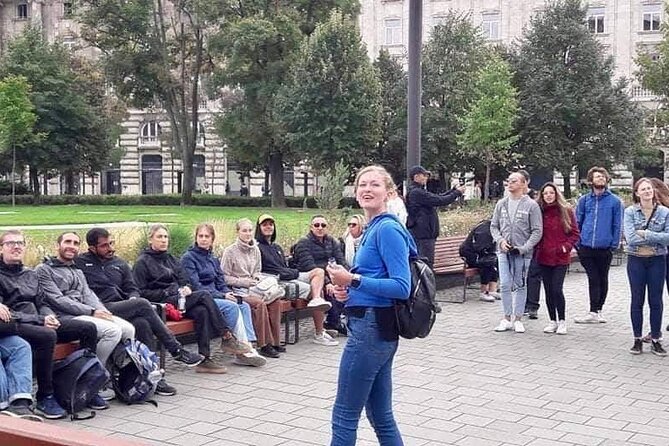
At the Little Princess Statue, you stop for a playful Budapest ritual: touch the statue’s shiny knees and make a secret wish. It takes only two minutes, but it breaks up the heavier historical material and gives you a small local tradition to remember.
Vigadó Square follows with another short stop. This is associated with the coronation banquet held for Franz Joseph and Sissi in the 19th century. It also has a musical connection, with major Central European composers such as Franz Liszt, Debussy, and Brahms performing there.
The Chain Bridge receives about five minutes. Its importance is easy to understand: it was the first permanent bridge connecting Pest and Buda. The bridge’s story gives your guide a simple way to explain the city’s development and why the two sides are often discussed together.
These stops are quick, so the benefit comes from the explanation rather than lengthy sightseeing. If a bridge crossing or a concert venue interests you, note it for a later visit.
Gresham Palace and the grand age of Budapest
Gresham Palace is one of the route’s architectural highlights. Your guide introduces the secessionist style, Budapest’s local form of Art Nouveau, and the ornaments that mark the building’s turn-of-the-century design.
The eight-minute stop is long enough to study the façade and understand what to look for. Art Nouveau can seem decorative at first glance, but details such as curves, plant forms, mosaics, and ironwork reveal the ambition of Budapest during its golden age.
The building is a good example of why a guided walk helps. Without explanation, you might admire the exterior and move on. With context, you begin to see how architecture reflects money, confidence, and changing taste.
Hungarian words, inventions, and national pride
Near the Hungarian Academy of Sciences, the focus shifts to language and identity. You learn simple Hungarian words and phrases, hear about famous people of Hungarian origin, and get an explanation of why Hungary has a high number of Nobel Prize winners per capita.
The guide also covers Hungarian inventions that affect everyday life. This section is useful because it moves beyond royal history and famous buildings. You get a sense of how Hungarians see their country and what achievements they take pride in.
Basic Hungarian can also make your own visit friendlier. Even a few words help you read signs and greet people, though the tour does not promise a full language lesson. Guides such as Gary have been praised for making these phrases fun and easy to remember.
Shoes on the Danube Bank: the tour’s most serious stop
The mood changes sharply at Shoes on the Danube Bank. Sixty pairs of metal shoes commemorate Jewish people murdered along the river during the Holocaust. The guide explains the deportations, wartime events, and the recent history of Hungary’s Jewish community.
This is not a stop for quick jokes or casual chatter. The guide asks you to close your eyes and picture the people who died here, including synagogue-goers, assimilated Jewish families, workers, business owners, grandparents, and children. The description is deliberately personal, and it gives the memorial human weight.
You should expect a respectful pause rather than a long museum-style presentation. The eight-minute stop cannot cover every detail of the Holocaust in Hungary, but it places the memorial within the city’s modern story. If this subject matters deeply to you, use the tour as a starting point and return later for a more focused visit.
Parliament and the useful finish
The final stop is the Hungarian Parliament Building on Kossuth Lajos Square. Your guide discusses the building’s neo-Gothic design and Hungary’s recent history, including elections and political change.
Parliament is a fitting end because it brings together the walk’s main themes: architecture, national identity, government, memory, and the relationship between past and present. The building also makes a strong final photograph.
You receive orientation for the rest of your stay, along with suggestions for restaurants, nightlife, and things to do on later days. This is where the experience earns its keep. A good walking tour should help you make decisions after it ends, and guides such as Sophie and Judit have been praised for practical food recommendations. One pair followed Judit’s restaurant advice twice and enjoyed both choices.
The walk ends at Parliament rather than returning to the starting point. That is convenient if you plan to visit the building, stroll the river, or continue toward nearby sights. It also means you should not leave bags or plans that depend on returning to Erzsébet Square.
What the low price really means
The listed price of $3.63 per person is unusually low for a two-hour guided introduction. It covers the booking fee and administration, not the guide’s earnings.
The guides depend entirely on donations at the end. You choose the amount, but you should budget for a tip if the guide gives you a useful, engaging experience. Thinking of the $3.63 as an administrative charge rather than the complete price gives you a more accurate picture.
The value can be excellent. You receive roughly two hours of orientation, landmark explanations, local food advice, language tips, and a route that would take effort to assemble alone. You also keep the rest of the day free.
The value is less clear if you want interior access, a private guide, or detailed treatment of every monument. This is a broad city introduction, and the group may contain up to 30 people. A speaker has helped some guides, including Marton, remain easy to hear, but your position in the group can still affect how much you see and hear.
Who should book this walk?
I would choose this experience if you are new to Budapest, want to understand Pest quickly, or prefer a guide who mixes history with everyday advice. It suits people who enjoy walking, asking questions, and choosing their own follow-up visits.
It also works well for visitors who are not usually tour people. Judith has been praised for combining personal stories, humor, and history in a way that felt welcoming rather than formal. Dora is noted for handling a larger group calmly, encouraging questions, and keeping the pace comfortable.
You may want something else if you have limited mobility, need a private pace, or want to spend substantial time inside churches and museums. The information says most people can participate and that service animals are allowed, but the activity remains an outdoor walking tour with several stops.
Book ahead if your dates are fixed. It is booked on average 14 days in advance, and confirmation arrives at booking. Free cancellation is available until 24 hours before the start time. Changes or cancellations inside that window are not accepted for a refund.
Should you book it?
Book this walk if you want a friendly first-day map of Budapest for very little upfront cost. The strongest reasons are the route, the practical restaurant and food advice, the clear historical framework, and the guides’ lively teaching styles.
Just remember what it is not. You will see the Basilica but not enter it, spend limited time at each sight, and rely on a donation to support the guide. If that arrangement suits you, this is a sensible and economical way to begin exploring Budapest, with plenty of time left afterward to return to the places that caught your attention.
FAQ
How long does the Budapest City Landmarks Walking Tour take?
The tour is advertised as approximately two hours. Depending on the pace, questions, and group, you should allow closer to two and a half hours.
Where does the tour begin?
It begins at the Budapest Eye on Erzsébet Square, about 20 meters from the Ferris wheel. Look for the licensed local guide holding a small blue flag.
Where does the tour end?
The walk ends at the Hungarian Parliament Building at Kossuth Lajos tér 1-3.
Does the tour enter St. Stephen’s Basilica?
No. The guide explains the Basilica’s architecture and history from outside, but admission inside is not included.
Is the guide’s tip included in the price?
No. The listed $3.63 covers the booking fee and administration. Guides depend on donations, and the amount is your choice.
How large can the group be?
The maximum group size is 30 people.
Can I cancel for a full refund?
Yes. You can cancel at least 24 hours before the experience start time for a full refund. If bad weather causes the operator to cancel the tour, you will be offered another date or a full refund.
Just added around Budapest
- Lake Balaton and Herend Guided Tour★ 4.7 · 3 reviews
- Audio visual multi-sensory chefs journey dinner experience★ 5.0 · 3 reviews
- Hollókő Ethnographic Village: Day Tour from Budapest★ 3.7 · 3 reviews
- Tapolca Cave Lake and Tihany/ Balaton private tour from Budapest★ 4.5 · 3 reviews
- Budapest Art Nouveau Walking Tour★ 5.0 · 3 reviews
- SzentEndre-SaintAndrew City Privately Shopping and Picturesque★ 4.5 · 3 reviews
- Budapest Drinks and Piano Show Cruise★ 4.5 · 3 reviews
- Horseshow on the Hungarian Puszta, private tour from Budapest with entry!★ 5.0 · 3 reviews
City Tours, compared.

City Sightseeing Hop-On Hop-Off Bus Tour & Extras
What we thought →

Hungarian Chimney Cake Workshop in the City Center
What we thought →
Browse the lists this tour appears in