
Reviewed · COMMUNIST HISTORY TOURS
Communism in Hungary with a Historian
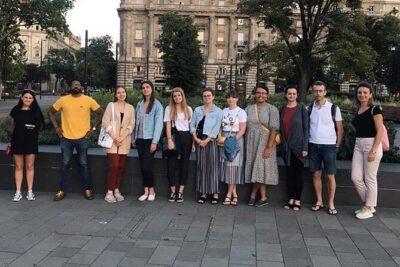
History feels different when it is tied to family life. This three-hour Budapest walking tour connects monuments, churches, memorials, and the 1956 revolution with personal stories from guides such as Judit, Raymond, Gábor, Greg, András, and Virág. I like the small group of no more than 10 people, which gives you room to ask questions, and I like that metro tickets and coffee are included. The main consideration is that several stops are viewed from outside, so this is a story-led walk rather than a museum tour.
You begin at Elizabeth Square in central Pest and finish across the river at Bambi Café, usually near Margaret Bridge. The route covers both sides of Budapest and includes a metro ride, so comfortable shoes and a little protection from rain will help. At $59.13 per person, the price is fair if you want context and conversation rather than a quick parade of famous buildings.
In This Review
- Key Details Before You Book
- Why This Tour Works for History-Minded Visitors
- Starting at Elizabeth Square at 2:00 pm
- St. Stephen’s Basilica and Religious Life
- Szabadság tér: Budapest’s Most Concentrated History Lesson
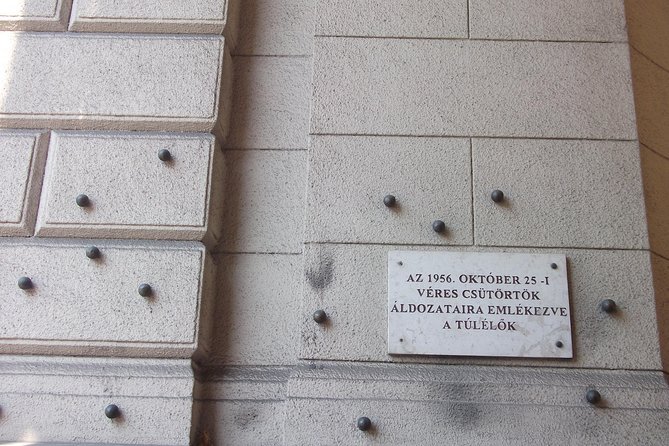
- Parliament and Bloody Thursday
- Riding the Metro and Crossing to Buda
- Coffee at Bambi Café, Open Since 1961
- What the $59.13 Price Delivers
- What to Expect From the Guides
- Weather, Walking, and Practical Comfort
- Who Should Book This Budapest Tour?
- Should You Book Communism in Hungary with a Historian?
- FAQ
- Where does the tour begin?
- What time does the tour start?
- How long does the experience last?
- Where does the tour usually end?
- Can the ending point change?
- Is the tour offered in English?
- How large is the group?
- Are metro tickets included?
- Is coffee included?
- Can I cancel for a full refund?
Key Details Before You Book
- Personal stories make the politics human: Guides explain national events through family experiences of nationalization, housing controls, church life, work, and fear under the party system.
- Elizabeth Square opens the story: The meeting point was once linked with Stalin-era public space and offers an immediate look at how political power shaped Budapest.
- Szabadság tér is the main history stop: Memorials, statues, embassies, and the visible remains of a bunker help explain conflict, occupation, and memory.
- The 1956 revolution comes alive at Parliament: You hear about Bloody Thursday on Kossuth Square, one of the key moments in Hungary’s uprising.
- Bambi Café is part of the experience: The tour usually ends in a cafe opened in 1961, where coffee and conversation provide a fitting finish.
- The tour is built for questions: Guides including Gábor, Raymond, Gabriel, Greg, András, Peter, Virág, and Judit are praised for patient explanations and balanced discussion.
Why This Tour Works for History-Minded Visitors
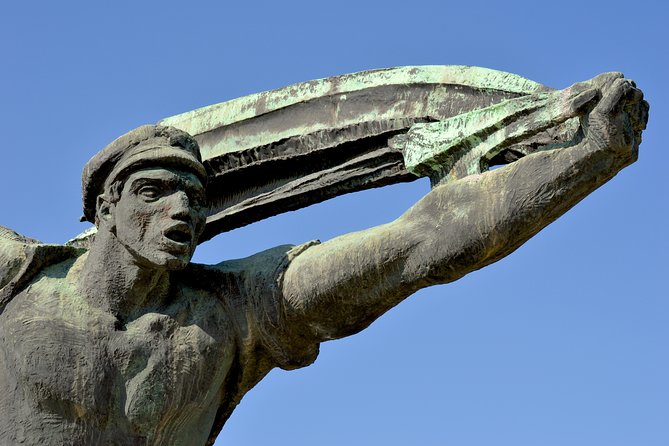
Budapest is full of grand buildings, but its 20th-century story can be hard to read from the streets alone. The architecture often survives while the meaning has changed. A statue may represent Soviet power, a square may recall a massacre, and a church may tell a quieter story of pressure and compromise.
This tour gives you a way to connect those pieces. It is not limited to the years after 1945. Guides place communism beside the interwar years, the Second World War, the Kingdom of Hungary, and the 1956 revolution. That wider frame matters because Hungary’s communist period did not appear from nowhere. The route helps you see how war, occupation, political control, and the later search for freedom affected one another.
I especially like the use of family memories. Raymond has described how his family business was taken by the state, leaving his grandfather working in his own former factory for very low pay under a party-appointed manager. He also explained how his family lost apartments and was assigned to poorer housing shared with another family.
Stories like this give meaning to dry political terms. Nationalization becomes a question of who owns your work. Housing policy becomes a question of privacy and security. Party loyalty becomes something that can affect your job, home, and family.
The guides also explain how churches functioned during communism, including stories of religious institutions making financial concessions to the party. You hear about working conditions, daily life, education, and the fear that an acquaintance might report you. These details are useful because they show that authoritarian rule was not only about big speeches and official statues. It reached into kitchens, workplaces, churches, and family conversations.
More communist-era history walks:
- Budapest: Communist History Tour with House of Terror Option
★ 4.8 · 182 reviews - Budapest: 3-Hour Walking Tour About Communism (Small Group)
★ 4.7 · 70 reviews - Budapest Hammer & Sickle Communist Times Tour
★ 4.5 · 68 reviews
Starting at Elizabeth Square at 2:00 pm
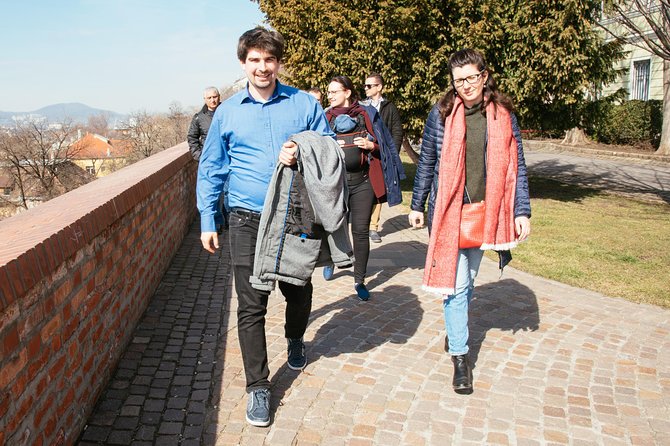
The meeting point is outside Kempinski Hotel Corvinus Budapest at Elizabeth Square, or Erzsébet tér, in central Pest. The tour begins at 2:00 pm, a practical time for a half-day activity after a morning of sightseeing.
Elizabeth Square is more than a convenient place to meet. The tour uses its former Stalin-era identity to begin a discussion about public space and political power. You spend about 15 minutes here, hearing about monuments and stories connected with the square.
This is a good opening because you do not begin with a long lecture in a room. You start outdoors, in a central part of modern Budapest, and learn how the same place could carry very different meanings under different governments.
There is no admission charge at this stop. Since the tour begins outside, arrive ready to walk rather than expecting an indoor welcome area. If you are using public transportation to reach the meeting point, the tour is near transit.
St. Stephen’s Basilica and Religious Life
From Elizabeth Square, the route continues toward St. Stephen’s Basilica, known in Hungarian as Szent István Bazilika. You see the church from outside and spend about 15 minutes discussing religion and churches during the communist period.
The basilica itself is not an interior visit on this tour, and admission is not included. That distinction matters if you hoped to explore the church’s interior. The value here is the interpretation, not the building visit.
This stop adds an important layer to the tour. Political control does not operate only through police, factories, and government offices. It also affects worship, religious education, church finances, and the relationship between religious leaders and the state.
The family stories shared by guides help keep this part grounded. You can ask questions about how religious life continued under pressure and how churches adapted to the political system. It is a short stop, but it helps broaden the tour beyond the usual Cold War symbols.
Szabadság tér: Budapest’s Most Concentrated History Lesson
Allow about 45 minutes at Szabadság tér, or Liberty Square. This is the longest formal stop and the heart of the route.
Here, the guide points out memorials, statues, embassies, and part of a bunker visible from the outside. Each object carries a different political message. Together, they show how the square has been shaped by war, occupation, Soviet influence, national memory, and later attempts to reinterpret the past.
This is where a good guide matters most. Without explanation, you might see a collection of unrelated monuments. With context, the square becomes a conversation about who controls public memory and how governments use symbols to explain their version of history.
You do not enter the bunker, and the tour does not present this as a museum visit. Instead, you look at what can be seen from the street while the guide fills in the missing pieces. That format keeps the walk moving, but visitors who want extensive interior access should plan separate museum visits.
Guides such as Virág have been praised for bringing academic study to the subject. She wrote a thesis on communism, and her approach adds depth for anyone who wants more than a basic overview. Other guides, including Gábor and András, are noted for careful storytelling and for connecting the communist years with the Second World War and earlier Hungarian history.
A completely different kind of day out around Budapest:
- Budapest: City Highlights Cruise with Welcome Drink
★ 4.6 · 35,610 reviews - Budapest: Unlimited Prosecco, Beer and Aperol Spritz Cruise
★ 4.8 · 25,310 reviews - Budapest: Széchenyi Spa Day Ticket with Optional Upgrades
★ 4.3 · 23,911 reviews - Budapest: Nighttime or Daytime Sightseeing Cruise
★ 4.2 · 21,062 reviews
Parliament and Bloody Thursday
The route then reaches the Hungarian Parliament Building and Kossuth Square. You spend about 15 minutes learning about Bloody Thursday, one of the most important episodes of the 1956 revolution.
Again, this is an exterior visit. You do not enter the Parliament building as part of the tour, and admission is not included. The focus is the square itself and the events that took place there.
This stop works because the setting gives scale to the story. A revolution is easier to understand when you are standing in the actual public space where crowds gathered and violence took place. The guide explains the political climate and the events surrounding the shooting, helping you place 1956 within Hungary’s struggle for greater freedom.
The 1956 discussion also shows why the tour reaches beyond a simple definition of communism. Hungary’s experience included occupation, party rule, resistance, reform hopes, and the eventual end of the system. The guide’s job is to connect those stages without flattening them into a simple good-versus-bad story.
That balance is one of the tour’s strongest features. Gabriel, also called Gábor in Hungarian, has been praised for presenting more than one side of the period. That does not mean avoiding judgment. It means explaining how political systems affected different people in different ways.
Riding the Metro and Crossing to Buda
Metro travel is part of the route, and the ticket is included in the tour price. This is useful for two reasons. First, you cover more ground than you could on foot alone. Second, you use the same public transportation that shaped daily life in the city.
The exact movement between stops may vary with conditions, but the route connects Pest landmarks with a finish on the Buda side. That gives you a broader sense of Budapest than a walk confined to one district.
The tour usually ends at Bambi Café on Frankel Leó út, near the center and Margaret Bridge. In cold or wet weather, the guide may finish on the Pest side near the starting area instead. This flexible ending is practical, but do not arrange a tight appointment across town immediately afterward.
Coffee at Bambi Café, Open Since 1961
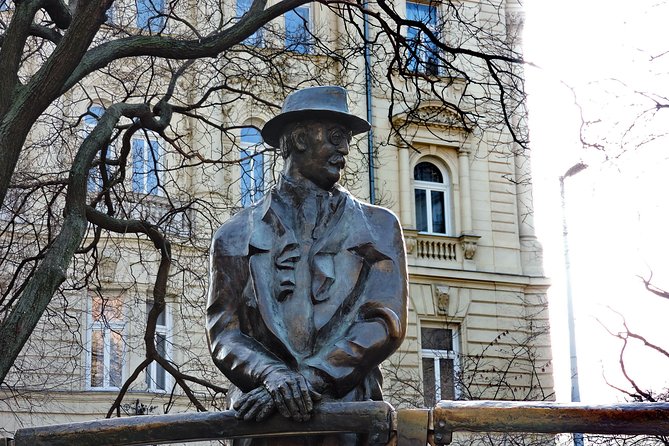
The final stop is Bambi Café, a Communist-era cafe opened in 1961. Coffee is included, and the cafe gives the tour a relaxed place to discuss what you have seen.
The appeal is not luxury. Bambi is valued for its connection to the period and for retaining much of its older character. The setting helps move the discussion from monuments and revolutions to ordinary social life.
Several guides use the cafe to connect history with current events. You can talk through the afternoon, ask follow-up questions, and consider how the communist past still affects Hungarian politics and public memory.
This ending is one of the most distinctive parts of the experience. Many history walks finish at a landmark and send you on your way. Here, the final drink gives the subject time to settle. Just remember that the stop is usually at Bambi Café, but weather can change the ending point.
What the $59.13 Price Delivers
At $59.13 per person, this is not the cheapest way to see central Budapest. You are paying for a three-hour guided experience, a group capped at 10 people, metro tickets, and coffee.
The value depends on what you want from a city tour. If you only want exterior photographs of Parliament, St. Stephen’s Basilica, and central squares, you can see those places independently for less. You will not, however, get the connected explanation, family stories, or opportunity to ask detailed questions.
The small group improves the value. With no more than 10 people, it is easier to hear the guide and ask about subjects that interest you. That matters on a topic as broad as communism, where you may want to focus on religion, education, secret police activity, housing, business, or the 1956 revolution.
The tour is also priced more reasonably if you treat it as a history seminar that happens to move through the city. The guides have backgrounds in Hungarian history and, in some cases, direct experience of the communist period. Their personal accounts are a central part of what you are buying.
What to Expect From the Guides
The provider uses several guides, so your experience may differ slightly depending on who leads the walk. Names connected with the tour include Judit, Raymond, Gabriel, Gábor, Greg, András, Peter, and Virág.
The strongest common quality is storytelling. Guides explain difficult subjects in clear English and invite questions. One guide was praised for speaking slowly and clearly, which can help if English is not your first language.
Judit has been praised for warmth, strong answers, and stories that made major monuments feel personal. Raymond is associated with family accounts of nationalized businesses, lost apartments, and church pressure. Greg is described as friendly and easy to talk with, while András is praised for turning historical detail into a clear narrative.
You should still expect some variation. A personal guide can shape the balance of the discussion, and a group’s questions may influence how much time goes to each subject. If you want a tour focused only on the secret police, this route may not be narrow enough. The emphasis is broader: how communism affected Hungarian society and how its memory remains visible in Budapest.
Weather, Walking, and Practical Comfort
The tour lasts about three hours and combines walking with metro travel. Wear shoes suited to city streets, and bring a coat or rain layer if the forecast looks uncertain. Much of the experience takes place outdoors, including the views of the church, bunker, monuments, Parliament, and squares.
Cold weather does not automatically ruin the tour. A guide named Gabriel received praise for keeping the group engaged during rain and cold. Still, your comfort will depend on the day, so avoid underdressing for a winter afternoon.
The route is near public transportation, and most people can participate. Service animals are allowed. Because this is a walking tour with standing at several outdoor sites, you should consider your own mobility and comfort, since detailed accessibility information is not provided.
Confirmation arrives when you book. Free cancellation is available if you cancel at least 24 hours before the 2:00 pm start time. Changes or cancellations made later are not accepted for a refund.
Who Should Book This Budapest Tour?
I would choose this tour if you want Budapest to make more sense beyond its famous churches, bridges, and river views. It suits history students, politically curious visitors, and anyone whose family lived through the Cold War period.
It is also a good choice if you have already seen the main sights and want a different angle. The guide reveals details you may miss on a standard city walk: the social cost of nationalization, the pressure on churches, the role of fear, the meaning of public monuments, and the scars left by 1956.
You may want another activity instead if you strongly prefer indoor museums, long sightseeing stops, or a tour devoted only to one subject such as the secret police. The basilica, Parliament, and bunker are not entered, and several stops are fairly brief.
Should You Book Communism in Hungary with a Historian?
Book it if you want a focused, human explanation of Budapest’s communist past and value a small group over a packed sightseeing bus. The 4.9 rating from 70 ratings and 99 percent recommendation rate match the tour’s clear strengths: strong guides, personal stories, thoughtful answers, and an unusual finish at Bambi Café.
I would especially recommend it early in your Budapest stay. The history can sharpen your understanding of later sights, from statues and memorials to churches and government buildings.
For $59.13, you receive more than a route between landmarks. You receive a guided way to read the city, with enough time for real questions and enough personal detail to make the politics stick.
FAQ
Where does the tour begin?
It begins at Kempinski Hotel Corvinus Budapest, Budapest, Erzsébet tér 7-8, 1051 Hungary.
What time does the tour start?
The tour starts at 2:00 pm.
How long does the experience last?
It lasts approximately three hours.
Where does the tour usually end?
It usually ends at Bambi Café, Frankel Leó út 2-4, 1027 Budapest, on the Buda side near central Budapest and Margaret Bridge.
Can the ending point change?
Yes. On colder or wet days, the tour often ends on the Pest side in the center, close to the starting area.
Is the tour offered in English?
Yes. English is the offered language.
How large is the group?
The group has a maximum of 10 people.
Are metro tickets included?
Yes. Metro travel is part of the route, and tickets are included.
Is coffee included?
Yes. Coffee is included at the usual ending at Bambi Café.
Can I cancel for a full refund?
Yes. You can cancel at least 24 hours before the start time for a full refund. Cancellations or changes made less than 24 hours before the tour are not refunded or accepted.
Just added around Budapest
- Lake Balaton and Herend Guided Tour★ 4.7 · 3 reviews
- Audio visual multi-sensory chefs journey dinner experience★ 5.0 · 3 reviews
- Hollókő Ethnographic Village: Day Tour from Budapest★ 3.7 · 3 reviews
- Tapolca Cave Lake and Tihany/ Balaton private tour from Budapest★ 4.5 · 3 reviews
- Budapest Art Nouveau Walking Tour★ 5.0 · 3 reviews
- SzentEndre-SaintAndrew City Privately Shopping and Picturesque★ 4.5 · 3 reviews
- Budapest Drinks and Piano Show Cruise★ 4.5 · 3 reviews
- Horseshow on the Hungarian Puszta, private tour from Budapest with entry!★ 5.0 · 3 reviews
Communist History Tours, compared.
Communist History Tour with House of Terror Option
What we thought →
3-Hour Walking Tour About Communism (Small Group)
What we thought →
Lives of Hungarians Under Communist and Capitalist system
What we thought →
Private Budapest Hammer & Sickle Communist Times Tour
What we thought →
Communist History Evening Walking Tour of Budapest
What we thought →Browse the lists this tour appears in