
Reviewed · COMMUNIST HISTORY TOURS
Budapest: 3-Hour Walking Tour About Communism (Small Group)
History feels different when it is still on the street. This three-hour walk connects Budapest’s bullet holes, monuments, squares, and everyday details to Hungary’s Communist era, with a historian guide explaining how the system arrived, worked, and finally unraveled. I especially like the personal family stories and the drink in a café that has changed little since 1961. The main consideration is that the tour covers a broad stretch of Hungarian history, so anyone wanting a tightly chronological account may find the story occasionally wide-ranging.
The small group, limited to 10 people, gives you room to ask serious questions rather than simply follow a flag through Pest. Guides such as Judit, Gergely, Greg, Virág, Dániel, Monica, and Zsuzsanna have brought different personal angles to the walk. I also like that a subway ride is built into the experience, though three hours on foot may feel long if you prefer indoor sightseeing or have limited stamina.
In This Review
- Key points at a glance
- Starting at Deák tér, Budapest’s crossroads
- Why the tour begins before Communism
- Reading Budapest through bullet holes and monuments
- Personal stories make the political history human
- The red M2 subway ride
- A drink in a café frozen around 1961
- How the guides shape the experience
- Is $57 a fair price for three hours?
- Who should book this Budapest history walk?
- Should you book the Communism walking tour?
- FAQ
- Where does the Budapest Communism walking tour meet?
- How long does the tour last?
- What language is the tour conducted in?
- How many people are in the group?
- Is a subway ride included?
- Is a drink included?
- What period of Hungarian history does the tour cover?
- Can I cancel the booking for a refund?
Key points at a glance
- Start beside the Ferris wheel at Deák tér: The meeting point is easy to reach by Budapest’s M1, M2, or M3 metro lines, plus several buses and trams.
- Put Communism into context: The discussion begins before the Communist takeover and reaches through the 1956 revolution, 1989, and the early 1990s.
- Hear lived experience, not only political theory: Family anecdotes explain shortages, pressure, compromise, humor, and ordinary life under the system.
- Ride the red M2 subway: The included transportation ticket adds a small but fitting piece of everyday Budapest life to the walk.
- Pause in a 1961 retro café: Your drink comes with an informal conversation in a place that has changed very little since the Communist period.
- Expect discussion: The strongest guides invite questions about politics, religion, media, daily life, and the way the past still affects Hungary.
Starting at Deák tér, Budapest’s crossroads
The tour begins in front of Kempinski Hotel Corvinus Budapest, at Erzsébet tér 7, facing the Ferris wheel. This is Deák Ferenc tér, one of central Budapest’s most useful transport points, so you can reach it without much trouble from almost anywhere in the city.
Starting here makes sense. Pest’s central squares and streets bring together modern shopping, grand architecture, public art, monuments, and traces of the twentieth century. You are not being taken to a single isolated memorial and told that it explains everything. Instead, the guide uses the city around you as a set of clues.
That approach matters because Communist history is rarely visible in one neat block. You might notice bullet holes, a statue, a plaque, a building, or an oddly placed monument. On its own, each detail can seem minor. With the right explanation, it becomes part of a story about war, occupation, political control, resistance, and public memory.
The meeting point is also convenient for a first-day activity. If you are still learning Budapest’s layout, Deák tér gives you an immediate sense of how the Pest side works. Just allow a little time to find the correct spot in front of the hotel and orient yourself near the Ferris wheel.
More communist-era history walks:
- Budapest: Communist History Tour with House of Terror Option
★ 4.8 · 182 reviews - Communism in Hungary with a Historian
★ 5.0 · 70 reviews - Budapest Hammer & Sickle Communist Times Tour
★ 4.5 · 68 reviews
Why the tour begins before Communism
A useful feature of this walk is its refusal to treat Hungarian Communism as an isolated chapter. The guide sets the period against the upheavals that came before it, including the Second World War and the political forces that reshaped Hungary afterward.
You will hear about the arrival of Communist rule, its ideology, the way it operated, and the changes that followed. The route also addresses the 1956 revolution, the gradual move toward a less severe form of socialism, the opening of the Hungary-Austria border, and the collapse of the system in 1989 and the early 1990s.
That wider frame helps you avoid a common mistake: assuming that life under Communism was one unchanging experience from beginning to end. Hungary’s system shifted over time. The tone of political control, the relationship with the Soviet Union, and the choices available to ordinary people were not identical in the 1950s, 1960s, 1970s, and 1980s.
One past participant wanted a particularly detailed account of post-1956 Communism, softer socialism, and the border opening. That is a good clue for how to use the tour well. Come with a few topics in mind, then ask. The format is designed for questions, and a small group makes it easier to steer part of the discussion toward your interests.
Reading Budapest through bullet holes and monuments
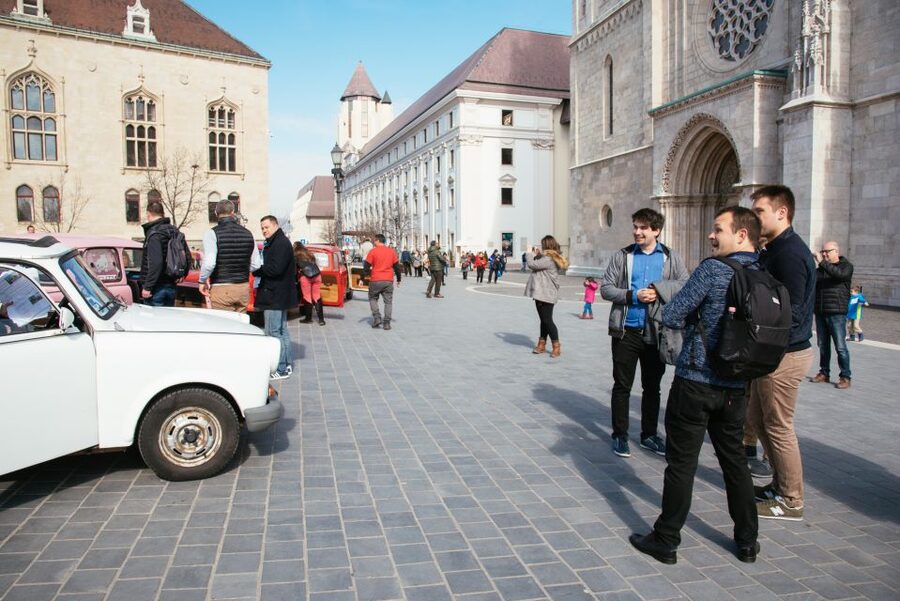
The walk passes through one of Pest’s pleasant central areas, but the setting is not merely decorative. The streets contain reminders of war and revolt, alongside more ordinary signs of how public space gets reused and reinterpreted.
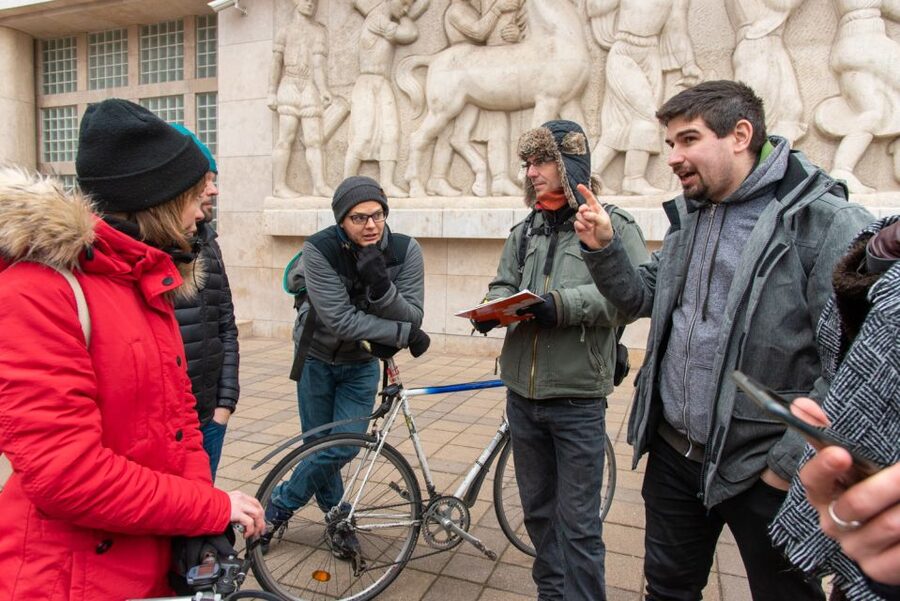
The guides have pointed out monuments, important buildings, central squares, street art, pop culture references, and small daily details. These observations give the tour a local texture. You are not only hearing about government policy. You are being shown how history can sit beside a café, appear in a statue, or survive in the way a public object is understood.
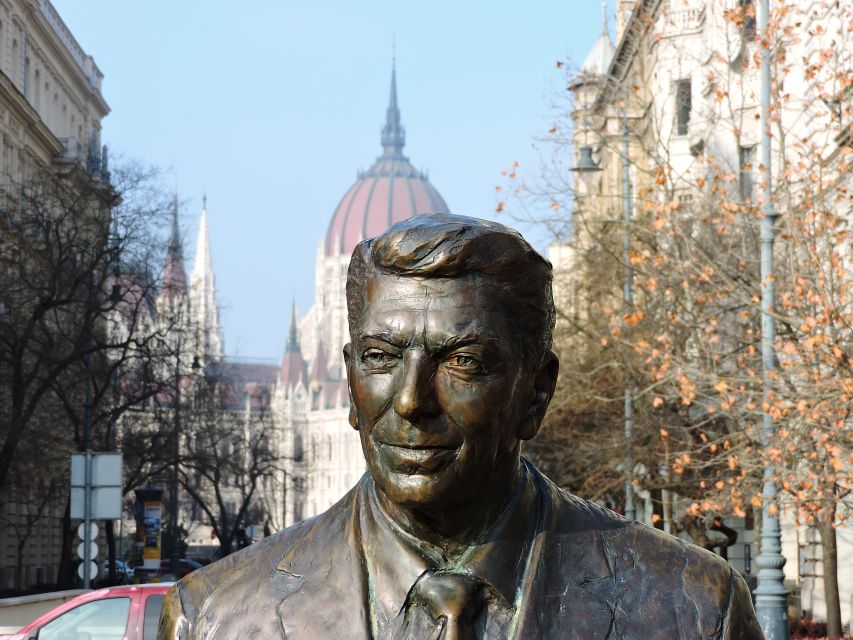
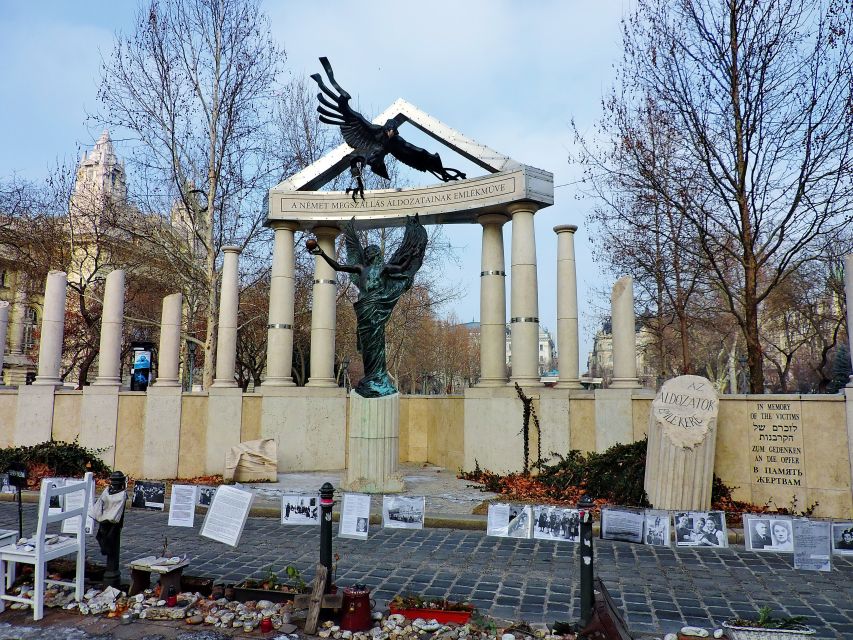
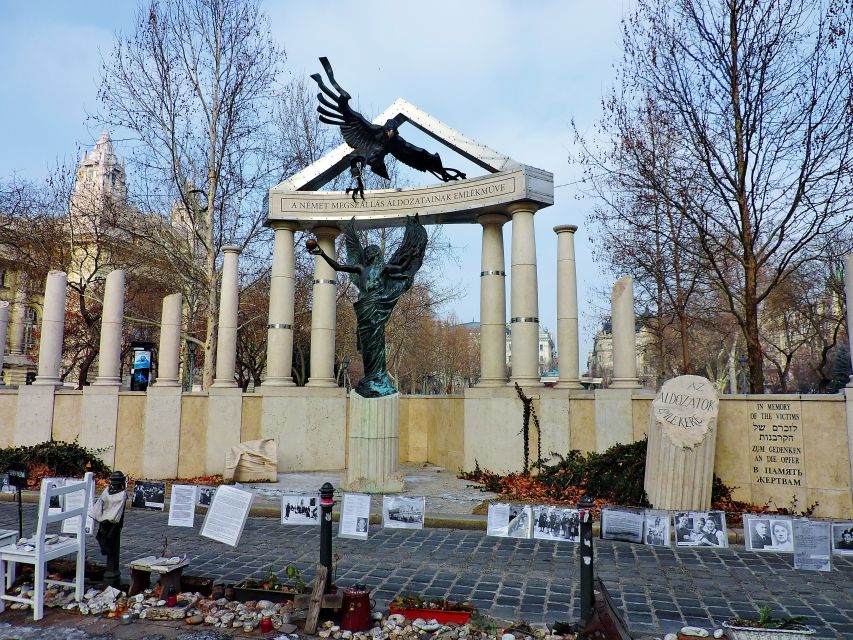
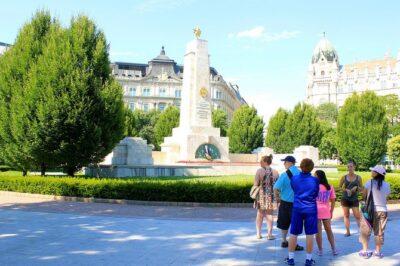
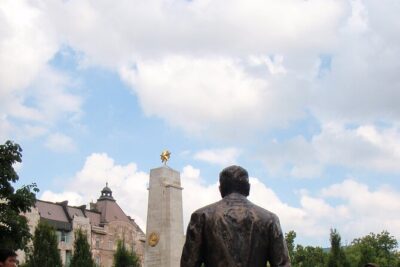
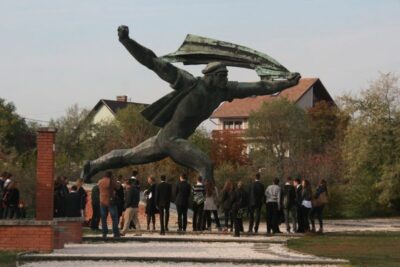
A particularly useful point concerns Soviet-era monuments and the way Hungarians view them. A visitor may see an old Soviet monument as a photogenic relic, while a local may see it as a reminder of occupation, political pressure, or a complicated liberation. The guide can explain why certain symbols remain, why others moved, and why public reactions are not always simple.
That kind of explanation is one of the tour’s strongest features. It helps you avoid treating Budapest as an open-air museum filled with attractive old objects. You begin to notice the difference between a monument’s official purpose and its meaning today.
The walk also appears to connect the past with current politics and public debate. That can make the tour more demanding than a standard sightseeing stroll. You may need to hold several competing interpretations at once, but that is also where the experience becomes useful.
Personal stories make the political history human
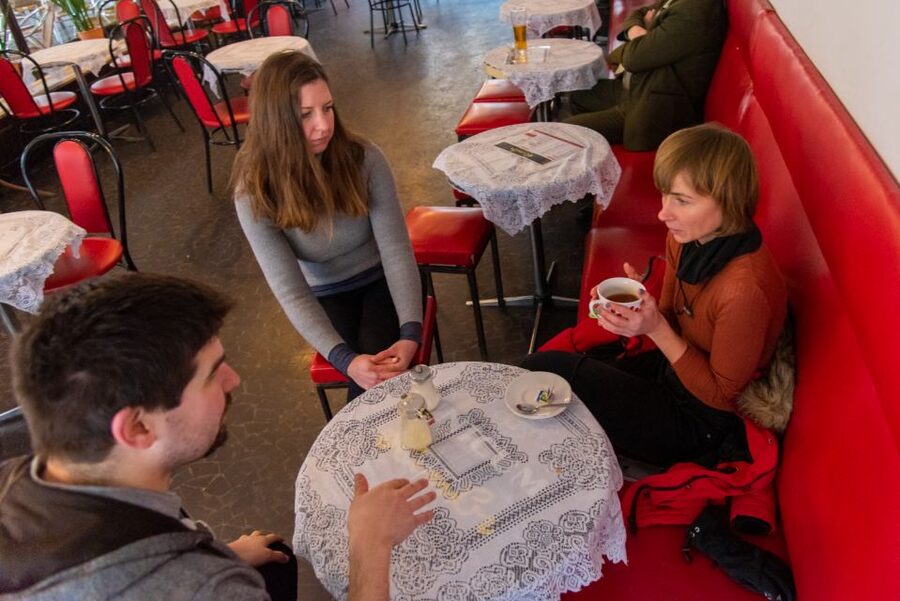
Political history can become a list of dates, leaders, and slogans. This tour tries to keep it grounded in family experience. Guides share stories from their own families, friends, and childhood memories, along with accounts of ordinary life during and after socialism.
These stories are valuable because they show the gap between ideology and daily reality. You may learn how a system presented itself in theory, then hear what it meant in practice for work, family choices, media, religion, shopping, and personal behavior. The humor matters too. People did not respond to an oppressive or restrictive system in only one way. They adapted, joked, kept quiet, pushed back, and found small areas of control.
Several guides have been praised for making the period feel tangible rather than merely academic. Monica was described as passionate about helping people understand what living under Communism felt like. Dániel’s use of family stories helped explain the different degrees of Communist rule in Hungary. Zsuzsanna connected personal memories with street art, popular culture, and small details in the city.
Those accounts suggest that your experience may vary slightly depending on the guide. That is not a flaw. A historian who grew up in Budapest may emphasize personal memory, while another guide may focus more on political structure or the international setting.
You should also expect personal stories to come with limits. One family’s experience cannot represent every Hungarian. The best way to use these anecdotes is as windows into the period, not as a complete survey of every class, region, or political viewpoint.
More walking tours:
- Budapest: Buda Castle Walk with Saint Stephen’s Hall
★ 4.5 · 3,012 reviews - Big Bus Budapest Hop-On Hop-Off Bus and Walking Tour
★ 3.5 · 2,206 reviews - Budapest: Buda Castle District Walking Tour
★ 4.6 · 2,108 reviews - Budapest City Landmarks Walking Tour in 2 Hours
★ 5.0 · 2,048 reviews
The red M2 subway ride
The included ride on the red M2 line is a modest part of the itinerary, but it adds a useful everyday element. Budapest’s metro is not only a way to move between sights. It is part of the city’s daily rhythm, and the M2 line fits naturally into a tour about how people lived under state socialism.
The subway ticket is included, so you do not need to arrange that part separately. The ride also gives your legs a brief change from walking, although you should still expect an active three-hour outing.
Do not expect the subway journey to function as a major sightseeing attraction. Its value is mainly practical and atmospheric. It helps link the central streets with the broader story of ordinary movement through the city.
Because the route uses public transportation, the experience is more connected to real Budapest than a sightseeing bus would be. You are walking, riding, stopping, talking, and observing rather than viewing the city from behind glass.
A drink in a café frozen around 1961
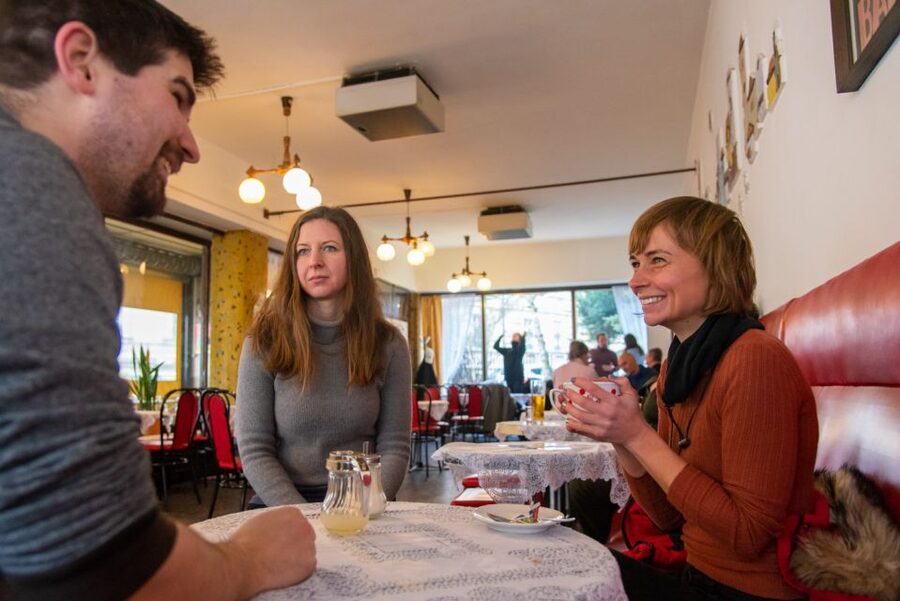
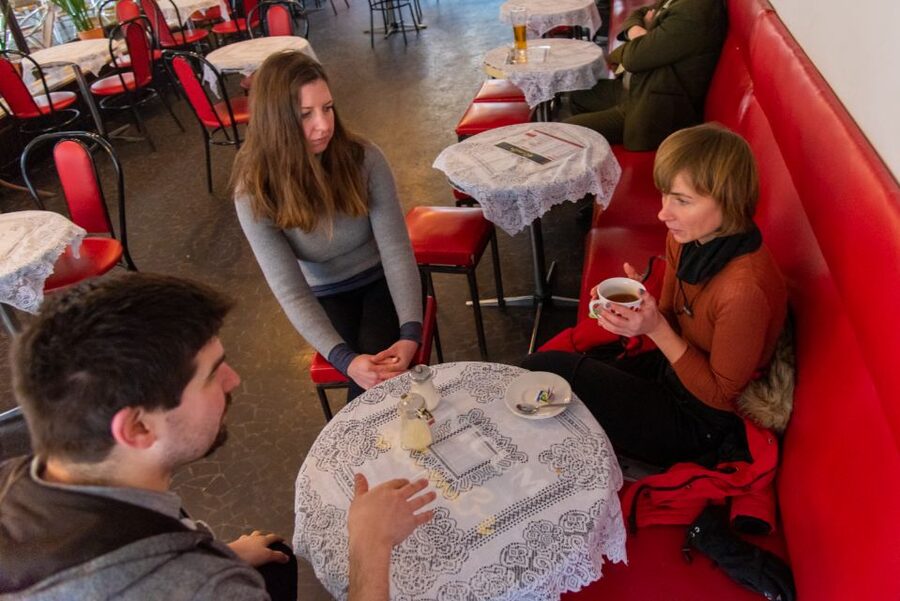
The retro café stop is the tour’s most distinctive change of pace. You receive a drink and sit down for a conversation in a bar that has changed very little since it opened in 1961.
That date gives the stop real weight. You are not simply visiting a place decorated with vintage furniture for effect. The café provides a setting for discussing the period while surrounded by a surviving piece of it. Even a short pause can help you picture the difference between official political language and ordinary social life.
The stop is also useful at the end of a serious walk. History, especially history involving dictatorship, revolution, occupation, and political memory, can become heavy. Sitting with the guide gives you time to ask follow-up questions and sort through the ideas that came up along the route.
Past participants especially valued this informal finish. One described the café conversation as the best part after a detailed historical explanation. Another appreciated the chance to enjoy a beer while continuing the discussion.
The drink is included, but the exact beverage is not specified in the tour information. You should think of the café as a conversation stop rather than a food tour or a long restaurant visit.
How the guides shape the experience
The strongest praise for this tour centers on the guides, and that is understandable. A subject like Communism depends heavily on tone. The guide must explain ideology without turning the walk into a lecture, discuss painful events without flattening them, and handle political questions without pretending that every issue has one easy answer.
Judit has been praised for her warmth, historical skill, and willingness to answer questions. Gergely and Greg have been noted for personal insight and long, thoughtful discussions about Budapest and Hungary. Virág has been described as animated and able to keep a participant involved throughout the three hours.
Zsuzsanna’s approach appears especially broad. She connected major events with street art, pop culture, and everyday visual details. That is helpful if you want to understand not just what happened, but how the past continues to appear in modern Budapest.
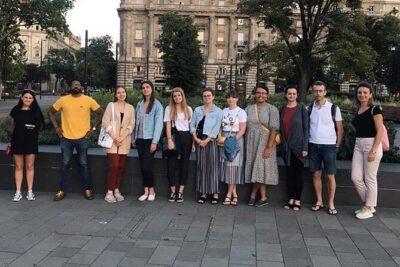
The tour is in English, and the group is limited to 10 people. That is a useful size for discussion. If you are alone or in a pair, you may find it easier to ask questions than on a large city tour. In one case, a participant had a nearly private experience with the guide, allowing the discussion to become highly specific.
The small-group promise does not guarantee a private tour. It simply keeps the group from becoming unwieldy. If you prefer a quiet walk with little conversation, this may not suit you. The tour works best when you take part.
Is $57 a fair price for three hours?
At $57 per person, this is not the cheapest walking tour in Budapest. The price includes the historian guide, the subway ticket, and a drink at the retro café.
I think the value depends on what you want from a city walk. If you are looking only for a quick introduction to central Budapest, you can find less expensive options. If you want a focused explanation of Communist Hungary, personal context, and time for questions, the three-hour format makes more sense.
You are paying mainly for interpretation. The public streets, subway, and café are not costly attractions by themselves. The value comes from knowing what you are looking at and having someone connect the pieces without reducing the subject to a few famous dates.
The rating is 4.7 from 70 reviews, with praise repeatedly directed at the guides’ command of the subject, personal stories, and ability to keep the walk engaging. The one clear criticism was that the history could be presented in a broader, more structured chronological order. I think that is fair to keep in mind. The tour aims to show how history lives in the city, so it may move between themes rather than follow a perfectly straight timeline.
You can cancel up to 24 hours before the start for a full refund, and you can reserve without paying immediately. Those policies are useful if your Budapest schedule is still shifting, but the main price question remains simple: do you value explanation and conversation enough to spend part of your sightseeing budget on them?
Who should book this Budapest history walk?
I would recommend it most strongly if you are interested in:
- Hungarian history beyond the standard castle and Parliament sights
- The 1956 revolution and the transition of 1989
- Political systems and how they affect ordinary families
- Public monuments, symbols, and contested memory
- Personal accounts of life under socialism
- Small-group tours where questions are welcome
It also works well early in a Budapest visit. The guide gives you context that can change how you see later monuments and museums. If you plan to visit the House of Terror Museum, this walk can provide useful background and a wider city setting, though the tour itself is not a replacement for that museum.
You may want to skip it if your main goal is a general overview of Budapest’s architecture, a food-focused outing, or a short route with frequent indoor stops. The subject is serious, the schedule lasts three hours, and the walk depends on listening and discussion.
Wear comfortable shoes and bring questions. The tour is most rewarding when you treat it as a conversation with a local historian, not a passive march from one photo stop to another.
Should you book the Communism walking tour?
Book it if you want to understand why Budapest’s streets, monuments, and public debates carry so much twentieth-century weight. The combination of a historian guide, family stories, the M2 subway ride, and a café that opened in 1961 gives the experience a strong sense of place.
I would not choose it simply because you have three spare hours. Choose it because you want to think, ask questions, and look more carefully at the city. At $57, it offers good value for a focused history experience, especially in a group of no more than 10.
The main choice is between breadth and order. You will receive a wide account of Hungary from the Second World War through the early 1990s, with links to present-day culture and politics. If you need a strictly chronological lecture, ask the guide to organize the story that way at the start. If you prefer history tied to real streets and real families, this is an excellent fit.
FAQ
Where does the Budapest Communism walking tour meet?
It meets in front of Kempinski Hotel Corvinus Budapest at Erzsébet tér 7, 1051, facing the Ferris wheel on Erzsébet Square.
How long does the tour last?
The walking tour lasts three hours.
What language is the tour conducted in?
The live tour guide speaks English, and English is the listed tour language.
How many people are in the group?
The group is limited to 10 participants.
Is a subway ride included?
Yes. The experience includes a ride on Budapest’s red M2 subway line and the required transportation ticket.
Is a drink included?
Yes. The tour includes a drink at a retro café that has changed very little since opening in 1961.
What period of Hungarian history does the tour cover?
The tour focuses on Communism in Hungary, including its arrival, rule, and legacy. It also covers context from the Second World War, the 1956 revolution, 1989, and the early 1990s.
Can I cancel the booking for a refund?
Yes. You can cancel up to 24 hours in advance for a full refund. You can also reserve now and pay later.
Just added around Budapest
- Lake Balaton and Herend Guided Tour★ 4.7 · 3 reviews
- Audio visual multi-sensory chefs journey dinner experience★ 5.0 · 3 reviews
- Hollókő Ethnographic Village: Day Tour from Budapest★ 3.7 · 3 reviews
- Tapolca Cave Lake and Tihany/ Balaton private tour from Budapest★ 4.5 · 3 reviews
- Budapest Art Nouveau Walking Tour★ 5.0 · 3 reviews
- SzentEndre-SaintAndrew City Privately Shopping and Picturesque★ 4.5 · 3 reviews
- Hungary today: a no-taboo conversation★ 5.0 · 3 reviews
- Budapest Drinks and Piano Show Cruise★ 4.5 · 3 reviews
Communist History Tours, compared.
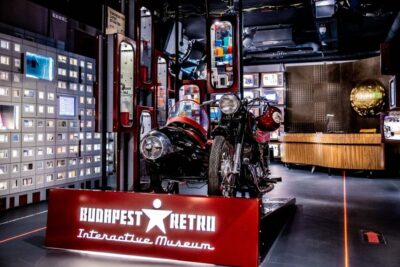
Communist History Tour with House of Terror Option
What we thought →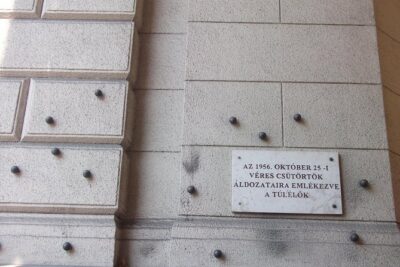
Lives of Hungarians Under Communist and Capitalist system
What we thought →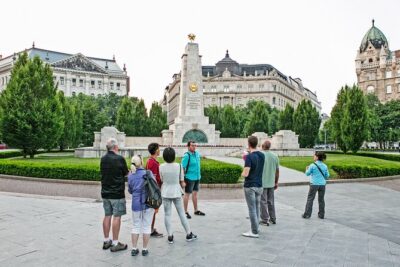
Private Budapest Hammer & Sickle Communist Times Tour
What we thought →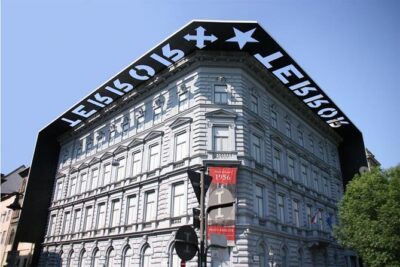
Communist History Evening Walking Tour of Budapest
What we thought →Browse the lists this tour appears in