
Reviewed · COMMUNIST HISTORY TOURS
Budapest Hammer & Sickle Communist Times Tour
History gets personal in Budapest. This small-group walking tour connects the 1956 Revolution, Soviet rule, and ordinary family life through city landmarks and a hands-on communist-era exhibition. I like the personal stories and household objects that make politics easier to understand, and I like the compact group size, capped at 10 people. The main drawback is that outdoor commentary can be hard to hear, since the tour has no audio equipment or headphones.
The 2-hour-30-minute experience costs $79.65 per person and begins at 3 p.m. near Deák Ferenc Square. I also like that it ends in central Liberty Square, close to public transport and useful sights. Still, this is not a light sightseeing stroll. It deals with war, occupation, repression, executions, and the Holocaust, so it suits mature visitors who want serious context.
In This Review
- Key points to know before booking
- Why this tour helps explain modern Budapest
- Starting near Deák Ferenc Square
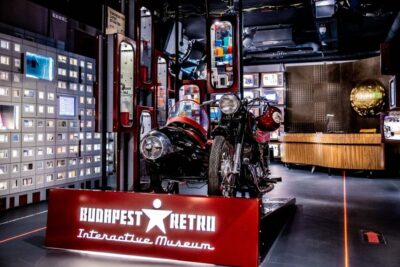
- An indoor look at ordinary communist life
- St. Stephen’s Basilica and religion under communism
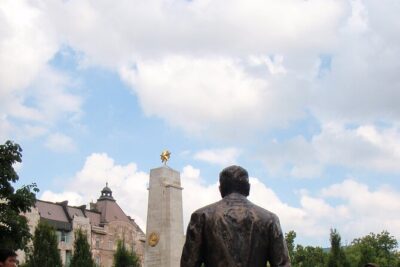
- Liberty Square and the Soviet memorial
- Parliament Square and the first days of 1956
- The October 25 memorial and the cost of protest
- Imre Nagy and the path toward freedom
- The Shoes on the Danube Bank memorial
- What the guides do best
- Walking conditions, sound, and timing
- Is $79.65 a fair price?
- Who should book this experience?
- Should you book the Budapest Hammer & Sickle Communist Times Tour?
- FAQ
- How long does the Budapest Hammer & Sickle Communist Times Tour last?
- What time does the tour begin?
- Where does the tour start?
- Where does the tour end?
- Is the tour offered in English?
- What is included in the price?
- Does the tour use audio equipment?
- Can I cancel for a full refund?
Key points to know before booking
- Personal stories bring communism down to household level: You learn about passports, travel limits, food shortages, black markets, banana queues, children’s games, and family life.
- The 1956 Revolution comes alive on location: Parliament Square, the October 25 memorial, and Imre Nagy’s statue help connect events to real places.
- An indoor exhibition adds useful context: The Budapest Retro Interactive Museum or related communist-era display uses furniture, books, toys, photographs, and everyday objects.
- The group stays small: With no more than 10 people, you have a better chance to ask questions and speak with your guide.
- The route covers more than communism: Your guide sets the stage with Hungary’s role in World War I, World War II, and the fall of the Iron Curtain.
- Expect a serious afternoon: The tour includes the Soviet occupation, the Holocaust memorial at Shoes on the Danube Bank, political executions, and the suppression of the 1956 uprising.
Why this tour helps explain modern Budapest
Budapest can look like a grand imperial capital, full of cafés, thermal baths, and ornate government buildings. Yet much of the city’s modern character was shaped by the 20th century: two world wars, fascism, Soviet control, the 1956 uprising, and the long wait for open borders.
I like this tour because it does not treat communism as a single chapter that began and ended with a date. Instead, it links political change to daily choices. How did a family travel? What could children play with? How difficult was it to get a passport? Why did a line for bananas become a small but telling part of memory?
That approach gives you more than a list of dates. It helps you understand why the 1956 Revolution still matters on October 23 each year, why Imre Nagy remains such a charged figure, and why the end of Soviet control was both joyful and complicated.
The tour also gives needed background before reaching the communist period. Hungary’s experience in World War I and World War II affected its borders, politics, and postwar options. Your guide explains how the Communist Party took power after World War II and how Soviet influence shaped public life.
More communist-era history walks:
- Budapest: Communist History Tour with House of Terror Option
★ 4.8 · 182 reviews - Communism in Hungary with a Historian
★ 5.0 · 70 reviews - Budapest: 3-Hour Walking Tour About Communism (Small Group)
★ 4.7 · 70 reviews
Starting near Deák Ferenc Square
The meeting point is the Lutheran Church of Ferenc Deák Square, at Deák Ferenc tér 4. This is a central location with nearby public transport, so it should be straightforward to reach from other parts of Budapest.
The tour starts at 3 p.m. Since the experience runs about two and a half hours, it fills much of the afternoon and finishes around early evening. You should arrive ready to walk outside in changing weather. The tour operates in all conditions, and there is no audio system to help carry the guide’s voice.
One practical point deserves attention: the supplied route lists the tour as ending at Szabadság tér 1 near Liberty Square, while several detailed accounts describe an indoor presentation at the beginning or during the experience. The exact order may vary, but you should expect both indoor material and outdoor stops.
An indoor look at ordinary communist life
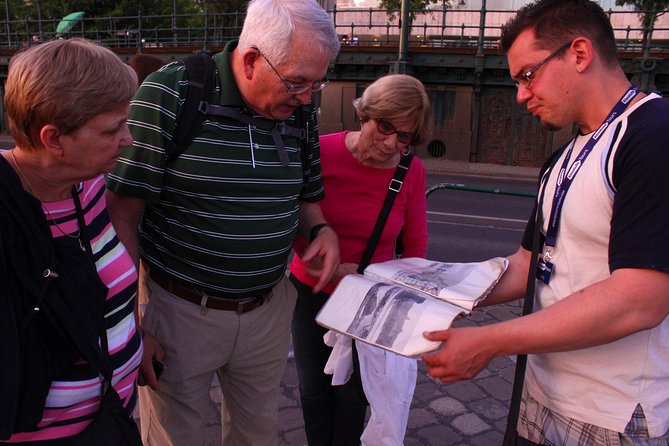
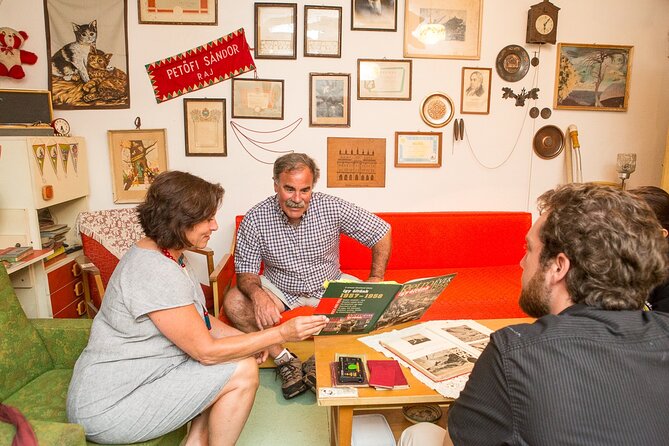
The most unusual part of the experience is the interactive exhibition devoted to life behind the Iron Curtain. Accounts of the tour describe a mock-up apartment or living room, often presented with books, games, photographs, soda, household objects, and other items from the period.
This setting matters because political history can feel distant when you only see statues and government buildings. A living room changes the scale. You can picture how children were raised, how families spent time at home, and how limited choices affected routine decisions.
The display also covers travel. Your guide explains where people could go, how long it could take to obtain a passport, and why foreign travel was difficult. That is a useful contrast for anyone who has crossed into Hungary with little thought beyond showing a document at the airport.
Food shortages and informal trade also enter the discussion. Black markets and banana lines may sound like amusing details, but they reveal how people adapted when shops lacked goods and official systems moved slowly. The best guides use these examples without turning hardship into a joke.
This indoor section can last longer than some visitors expect. One account found the communist-era apartment portion a bit long, while other accounts considered it the strongest part of the tour. If you mainly want outdoor sightseeing, you may find the balance too weighted toward discussion and artifacts. If you want to understand how people actually lived, the time is well spent.
St. Stephen’s Basilica and religion under communism
The first listed outdoor stop is St. Stephen’s Basilica, where you hear how communist policy affected religious life and the operation of different churches.
The stop lasts about 15 minutes, and an admission ticket is not included. The tour does not present the basilica as a standard church visit. Instead, it uses the building and its religious role to show how the state dealt with institutions outside party control.
This is a helpful early stop because it widens the subject beyond politics and military force. Communism also affected worship, church administration, public expression, and the relationship between families and religious institutions. You should not expect an extended interior visit based on the supplied details.
A completely different kind of day out around Budapest:
- Budapest: City Highlights Cruise with Welcome Drink
★ 4.6 · 35,610 reviews - Budapest: Unlimited Prosecco, Beer and Aperol Spritz Cruise
★ 4.8 · 25,310 reviews - Budapest: Széchenyi Spa Day Ticket with Optional Upgrades
★ 4.3 · 23,911 reviews - Budapest: Nighttime or Daytime Sightseeing Cruise
★ 4.2 · 21,062 reviews
Liberty Square and the Soviet memorial
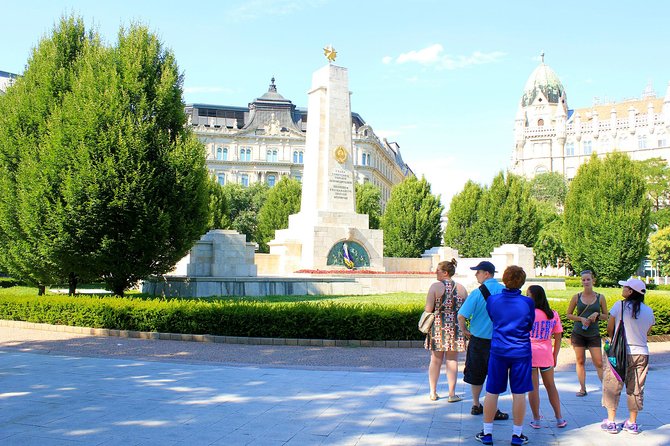
At Szabadság tér, or Liberty Square, the tour turns to the end of World War II, the beginning of Soviet occupation, and the Communist Party’s rise to power.
The Soviet Memorial remains an important point of discussion because it represents a period that many Hungarians remember with mixed feelings. The square also contains several layers of political memory, making it a fitting place to talk about how public spaces can carry competing messages.
The stop lasts about 15 minutes and is free. Your guide explains how the postwar situation developed rather than presenting the Soviet takeover as an isolated event. This is where the earlier World War I and World War II background begins to pay off.
Liberty Square is also the tour’s listed ending point. That makes it convenient if you want to continue exploring central Pest afterward, although you should not assume that the experience ends at every site described in the broader tour overview. Route details may shift with timing, weather, or local conditions.
Parliament Square and the first days of 1956
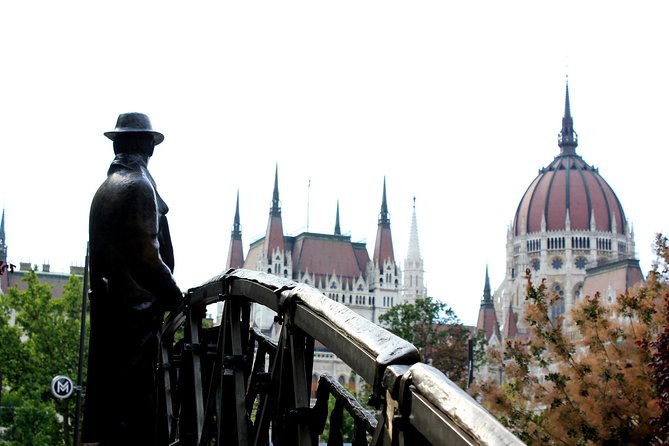
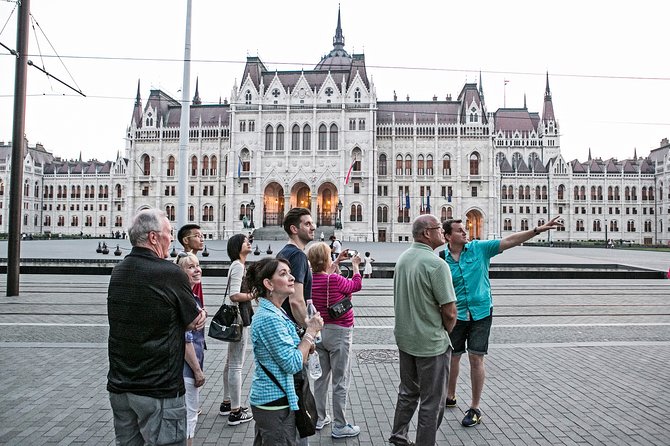
The Hungarian Parliament Building is one of the most powerful settings on the route. The square in front of Parliament played a major role in the opening days of the 1956 Revolution, and your guide explains what led to the uprising and how the party leadership responded.
The listed visit lasts about 20 minutes. Admission to the Parliament building is not included, and this is an exterior history stop rather than a standard Parliament tour.
The setting helps you imagine the scale of the protests. Speeches, demonstrations, and marches were not abstract acts taking place somewhere in the capital. They happened in recognizable public spaces, in front of the country’s most important political building.
The tour also discusses Imre Nagy, the communist leader who defied Soviet leaders in Moscow and was later executed for treason. His story shows how quickly political loyalty could change during the uprising and how harshly the Soviet-backed government responded afterward.
The October 25 memorial and the cost of protest
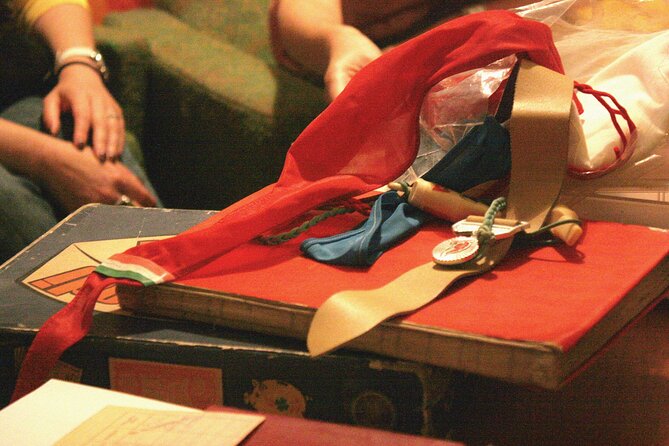
The In Memoriam 1956 October 25 Memorial and Exhibition focuses on one of the darkest moments of the revolution. On October 25, 1956, military authorities and Soviet tanks fired into a gathering crowd.
The stop lasts around 15 minutes and is free. Archive footage and personal recollections help explain what happened. This is one of the more emotionally direct parts of the tour, and you should allow yourself time to take in the material rather than treating it as another quick photo stop.
The memorial makes the uprising easier to grasp because it joins a specific date to a specific place. You hear about the protests, speeches, and marches, then confront the consequences of military force. For many people, this is the point when the story stops feeling like distant Cold War history.
Imre Nagy and the path toward freedom
The statue of Imre Nagy provides another short stop, listed at about 15 minutes. Nagy led Hungary during the 1956 Revolution, was later executed, and was eventually reburied in a ceremony that became an important moment in the change of regime.
His reburial matters because it symbolized a public reassessment of the communist period. The tour uses his life to explain the prelude to freedom and the political changes that led to the fall of the Iron Curtain.
I appreciate this focus on transition. The story does not end with the Soviet invasion. You also hear how Hungary moved toward a different political era and how public memory shifted along the way.
The Shoes on the Danube Bank memorial
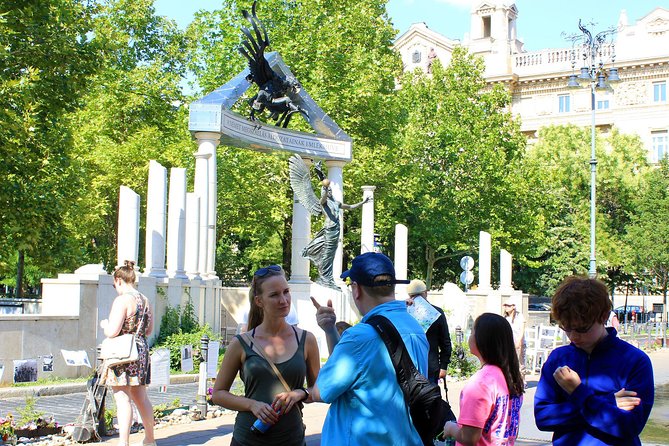
The wider tour description includes a visit to Shoes on the Danube Bank, the Holocaust memorial made of iron shoes along the river. The memorial recalls Jewish people who were ordered to remove their shoes before being shot beside the Danube during World War II.
This stop adds necessary context to the 20th-century story. Hungary’s wartime history cannot be separated from the later occupation and communist period, and the memorial gives you a quiet place to consider the human cost of fascism and war.
The supplied stop-by-stop schedule does not list the memorial as one of the five timed stops, so the exact placement may vary. If seeing Shoes on the Danube Bank is especially important to you, confirm the route when booking or ask your guide at the start.
What the guides do best
The strongest feature of this experience is the guide. Several named guides receive especially warm praise, including Anna, Celeste, Andrea, Rebecca, Bálint Alkonri, Bogata, Tomas, László, and George. The repeated strengths are clear: strong command of Hungarian history, easy-to-follow English, warmth, humor, and a willingness to answer questions.
Personal experience is particularly valuable on a subject like this. Some guides lived through communism and the transition away from Soviet control. Their family stories can add texture that a textbook cannot, especially when explaining travel restrictions, home life, political fear, and the small pleasures people found in ordinary routines.
The best guide for you will be one who can keep the story balanced. The tour is not designed as political propaganda. It aims to explain how the system worked, what people endured, and how individuals adapted. One especially praised approach was to ask what the group already knew and shape the discussion around those interests.
Because the group is limited to 10, you may have a near-private experience. In some departures, only two or three people joined. That allows more questions and makes it easier to focus on your interests, though the experience could feel less energetic if you prefer a larger group.
Walking conditions, sound, and timing
You will spend time walking between central Budapest sites, with indoor discussion included. The tour is not described as strenuous, and most people can participate, but sensible shoes and weather-appropriate clothing are important.
The lack of headphones is the clearest practical weakness. Aircraft, helicopters, street noise, and crowds can make outdoor explanations difficult to hear. If your hearing is sensitive to background noise, stay close to the guide and ask for pauses when needed.
The tour is offered in English. A coffee, tea, or soft drink is included. Some detailed accounts also describe snacks or a late meal at the indoor venue, but the official inclusion is the beverage, so you should not book this as a substitute for lunch.
The minimum recommended age is 14. That makes sense given the discussion of executions, wartime violence, the Holocaust, and political repression.
Is $79.65 a fair price?
At $79.65 per person, this is not the cheapest way to see central Budapest. You can visit many landmarks independently, and free walking tours may cover parts of the same political story.
The value comes from the combination of a small group, an English-speaking guide, indoor exhibition access, personal accounts, and a route tied to the 1956 Revolution. You are paying for interpretation, not simply transportation or entry to a famous building.
I think the price is fair if you want a focused lesson in modern Hungarian history and appreciate the chance to ask questions. It is less appealing if you want a broad city tour, interior access to Parliament, or a quick introduction with lots of photo time.
The experience is booked an average of 36 days ahead, which suggests planning early is wise, especially if you want a particular afternoon during a short Budapest visit. Free cancellation is available up to 24 hours before the start time. Changes or cancellations inside that window are not accepted for a refund.
Who should book this experience?
I would recommend it to:
- First-time visitors who want political context early in their stay
- History fans interested in World War I, World War II, communism, and the Cold War
- Adults and older teenagers who prefer serious city walks
- People who enjoy personal stories, artifacts, and small-group conversation
- Visitors who want to understand Hungary beyond grand architecture and cafés
I would hesitate to recommend it to young children, visitors who dislike emotionally difficult subjects, or anyone seeking a relaxed sightseeing loop. You also need to be comfortable walking outdoors in all weather and listening without headphones.
Should you book the Budapest Hammer & Sickle Communist Times Tour?
Book it if you want Budapest’s recent past explained through real streets, political monuments, and the objects of everyday life. The indoor display, the Parliament Square discussion, the October 25 memorial, and the Imre Nagy story give the afternoon a clear shape.
Skip it if you only want major attractions, a Parliament interior tour, or the lowest-cost option. For the right audience, though, this is a useful and unusually personal way to understand how war, Soviet control, and the 1956 Revolution still shape Hungary today.
FAQ
How long does the Budapest Hammer & Sickle Communist Times Tour last?
The tour lasts approximately 2 hours and 30 minutes.
What time does the tour begin?
The scheduled start time is 3 p.m.
Where does the tour start?
It starts at the Lutheran Church of Ferenc Deák Square, Deák Ferenc tér 4, 1052 Budapest, Hungary.
Where does the tour end?
The tour concludes near Liberty Square at Szabadság tér 1, 1054 Budapest, in central Budapest.
Is the tour offered in English?
Yes. The tour is offered in English and includes an English-speaking guide.
What is included in the price?
The price includes the English-speaking guide and a coffee, tea, or soft drink. Entry to the St. Stephen’s Basilica and Hungarian Parliament Building is not included.
Does the tour use audio equipment?
No. Audio equipment and headphones are not available, so you should stay near the guide during outdoor explanations.
Can I cancel for a full refund?
Yes, if you cancel at least 24 hours before the scheduled start time. Cancellations made less than 24 hours in advance are not refunded.
Just added around Budapest
- Lake Balaton and Herend Guided Tour★ 4.7 · 3 reviews
- Audio visual multi-sensory chefs journey dinner experience★ 5.0 · 3 reviews
- Hollókő Ethnographic Village: Day Tour from Budapest★ 3.7 · 3 reviews
- Tapolca Cave Lake and Tihany/ Balaton private tour from Budapest★ 4.5 · 3 reviews
- Budapest Art Nouveau Walking Tour★ 5.0 · 3 reviews
- SzentEndre-SaintAndrew City Privately Shopping and Picturesque★ 4.5 · 3 reviews
- Budapest Drinks and Piano Show Cruise★ 4.5 · 3 reviews
- Horseshow on the Hungarian Puszta, private tour from Budapest with entry!★ 5.0 · 3 reviews
Communist History Tours, compared.
Communist History Tour with House of Terror Option
What we thought →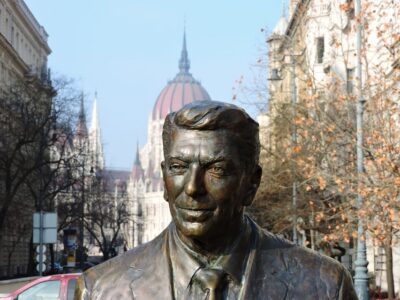
3-Hour Walking Tour About Communism (Small Group)
What we thought →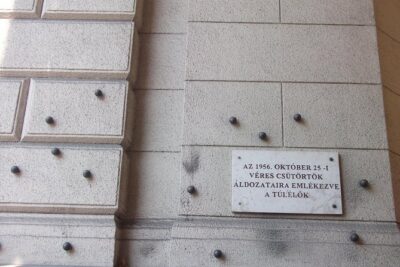
Lives of Hungarians Under Communist and Capitalist system
What we thought →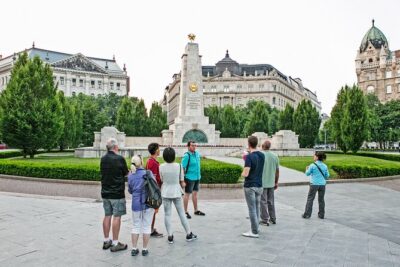
Private Budapest Hammer & Sickle Communist Times Tour
What we thought →
Communist History Evening Walking Tour of Budapest
What we thought →Browse the lists this tour appears in