
Reviewed · COMMUNIST HISTORY TOURS
Lives of Hungarians Under Communist and Capitalist system
Budapest’s past is written on its streets. I like the way this 90-minute walk connects major sights with personal memories of Communist life, and I especially like that it covers ordinary concerns such as housing, travel, school, health care, and media. The stop at Parliament also gives the 1956 uprising a human scale, with bullet holes and childhood memories rather than only dates in a textbook.
The main drawback is the payment structure. The advertised $4.65 covers administration and your place, but the guide’s income comes from tips, with €10 per person suggested as a typical amount. That means the real cost is higher, though still fair for a small-group history walk led by people who lived through the period.
In This Review
- Key points to know before you go
- Why this Budapest history walk feels different
- Starting near the Budapest Eye
- Travel, passports, and Communist cars at Fröccsterasz
- Religion and family life at St. Stephen’s Basilica
- Housing, schools, health care, and propaganda in District V
- Controversial monuments at Szabadság tér
- The 1956 uprising beside Parliament
- What the $4.65 price really means
- Timing, group size, and practical comfort
- Who will get the most from this experience
- Should you book the Communist and Capitalist Life tour?
- FAQ
- How long does the tour last?
- What is the starting time?
- Where does the tour begin?
- Where does the tour end?
- Is the tip included in the $4.65 price?
- How many people can join the tour?
- Can I cancel for a full refund?
- Are service animals allowed?
Key points to know before you go
- Personal Communist-era stories: Guides who experienced the system explain how it affected homes, schools, travel, religion, and family life.
- A 90-minute route through central Budapest: The walk begins near the Budapest Eye and ends beside Parliament and the M2 red metro line.
- 1956 receives serious attention: The final stop covers the uprising, local heroes, bullet marks, and memories of growing up under Communism.
- More than political history: You hear about Trabant-style Communist cars, travel documents, sport, Olympic ambitions, propaganda, and Communist nostalgia.
- Small group size: The tour accepts a maximum of 20 people, which should make questions easier than on a large city walk.
- Budget price with a required tip decision: The booking fee is low, but tips are not included and are central to the guides’ pay.
Why this Budapest history walk feels different
Many city tours give you names, dates, and monuments. This one tries to explain how a political system reached into the kitchen, classroom, passport office, church, and apartment block.
That focus matters in Hungary, where the Communist period lasted for decades and still shapes family memories. You are not simply hearing that the state controlled travel or media. You are hearing how those controls affected daily choices and why some people later felt nostalgia for parts of the system.
I like this approach because it avoids treating Communism as a museum subject sealed in the past. You get the official story, but you also get the smaller questions: Could a family travel abroad? What kind of car could an ordinary person own? How did housing work? What happened to religion? Why might someone miss a system that also restricted freedom?
The walk is also useful for families with teenagers. One parent described the guide’s personal account as a way to bring school history to life for their children. That is a strong reason to choose this tour if your family has studied the Cold War or 1956 but needs a clearer sense of daily life.
More communist-era history walks:
- Budapest: Communist History Tour with House of Terror Option
★ 4.8 · 182 reviews - Budapest: 3-Hour Walking Tour About Communism (Small Group)
★ 4.7 · 70 reviews - Communism in Hungary with a Historian
★ 5.0 · 70 reviews
Starting near the Budapest Eye
Meet your guide about 20 meters from the Budapest Eye in Erzsébet tér at 3:30 pm. The location is central, easy to reach, and close to public transport, so it works well as the first activity of an afternoon in Budapest.
The opening lesson lasts about 15 minutes and sets up the wider story of Hungarian and Central European Communism. Expect an interactive introduction rather than a long lecture. The guide explains the basic political background, then uses the rest of the walk to show how that system worked in practice.
This opening is important because Hungarian Communism changed over time. The experience is not presented as one single block of history. It leads into the post-Communist period too, helping you compare life before and after the political changes.
The Budapest Eye is a busy meeting area, so arrive a few minutes early and look for a licensed guide near the stated meeting point. The ticket is mobile, which keeps the arrival simple.
Travel, passports, and Communist cars at Fröccsterasz
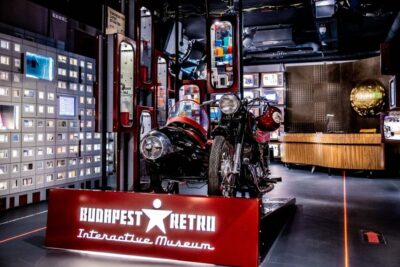
The next stop at Fröccsterasz turns an abstract subject into something tangible. You hear about travel into and out of Hungary, examine basic travel documents, and learn about the cars and other transport associated with the Communist period.
This section should appeal to anyone interested in ordinary objects. A passport or identity document can say a lot about the limits placed on movement. Cars do the same. The guide uses transport to explain access, status, and practical life under the old system.
The stop lasts about 10 minutes, so it is brief. That is useful if you want a lively pace, but it also means you should ask questions while you can. If cars, borders, or family travel are your main interests, this is a good place to speak up.
You also hear about both incoming and outgoing travel from Hungary. That wider view helps show that the country was not simply cut off from the rest of Europe, but movement was shaped by rules, documents, and political conditions.
Religion and family life at St. Stephen’s Basilica
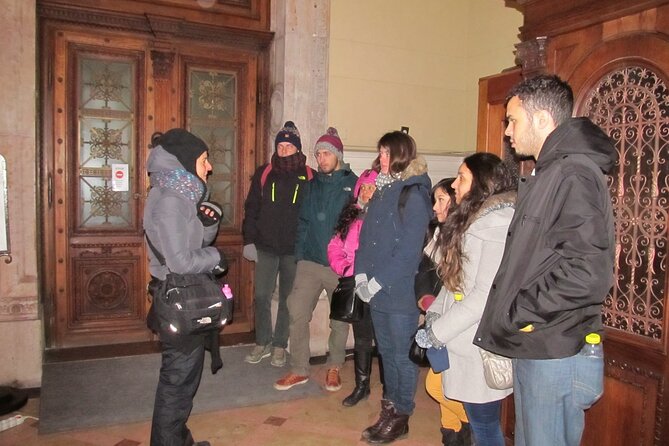
At St. Stephen’s Basilica, the subject shifts from government control to religious life. The guide explains the difficulties faced by different denominations and shows how religious practice could vary from one family to another.
This is one of the most useful stops because it avoids a simple claim that religion either disappeared or continued unchanged. The experience points toward a more personal reality. One family might stay closely tied to its faith, while another might keep religious practice private or reduce it under pressure from the state.
The basilica gives the discussion a clear setting, but the focus is not limited to architecture. You are using the church as a place to consider how public policy affected private belief.
The stop lasts around 15 minutes. It is a good moment to think about the difference between official policy and what people actually did at home. That distinction returns throughout the walk.
A completely different kind of day out around Budapest:
- Budapest: City Highlights Cruise with Welcome Drink
★ 4.6 · 35,610 reviews - Budapest: Unlimited Prosecco, Beer and Aperol Spritz Cruise
★ 4.8 · 25,310 reviews - Budapest: Széchenyi Spa Day Ticket with Optional Upgrades
★ 4.3 · 23,911 reviews - Budapest: Nighttime or Daytime Sightseeing Cruise
★ 4.2 · 21,062 reviews
Housing, schools, health care, and propaganda in District V
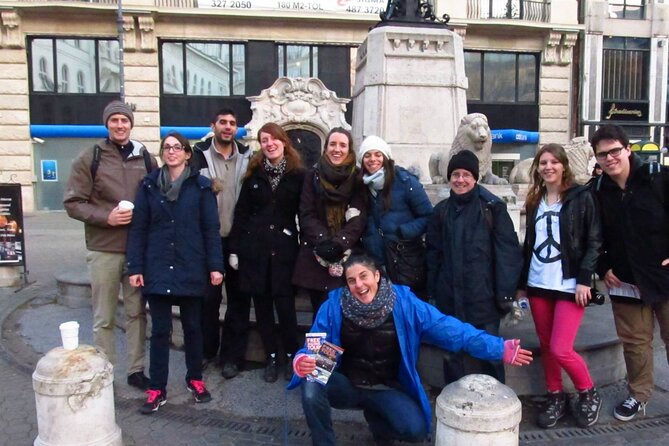
The longest section takes place in District V, Budapest’s Inner City. For about 20 minutes, the guide covers housing, health care, education, media, propaganda, sport, the Olympic Games, and the years after Communism.
This is the heart of the tour for me. Political history can feel distant until you connect it to an apartment, a doctor, a school lesson, or a newspaper. Here, you are encouraged to consider both the benefits and limits people associate with the old system.
Housing is a particularly practical subject. It helps explain how families lived and why apartments, ownership, and access to space could become major social issues. Health care and education show another side of the period, including the services people may remember positively.
The discussion of propaganda and media culture adds balance. You hear how public information was shaped, while the personal accounts help explain how people interpreted official messages in daily life.
Sport and the Olympic Games may seem like a change of subject, but they fit the larger picture. International competition could serve national pride and political messaging. This part also helps explain why memories of Communism are not always purely negative.
The guide addresses nostalgia directly. Some people remember security, predictable services, or social arrangements with affection, even while acknowledging restrictions and hardship. You do not have to agree with that nostalgia to understand it. That is one of the tour’s strongest features.
Controversial monuments at Szabadság tér
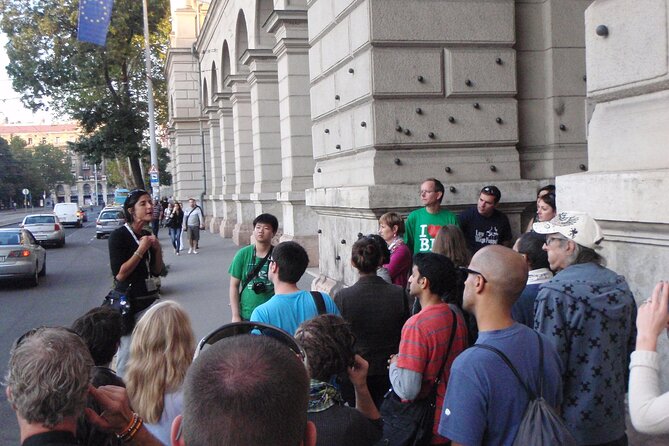
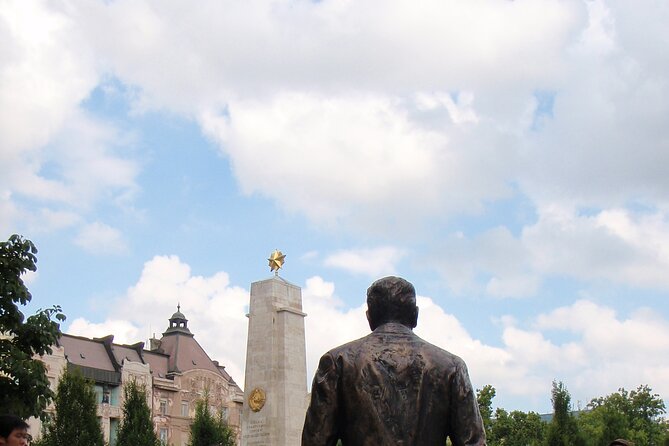
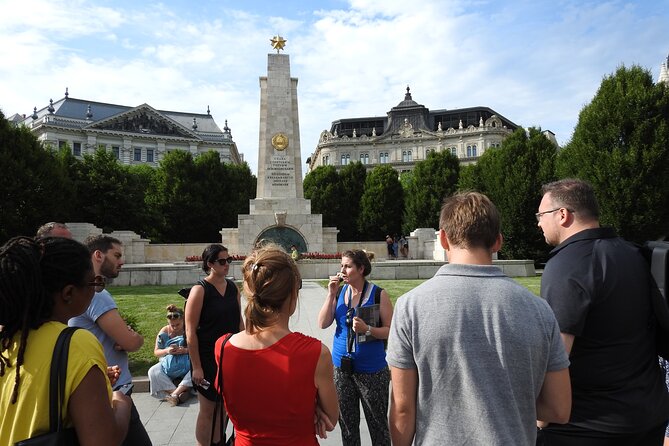
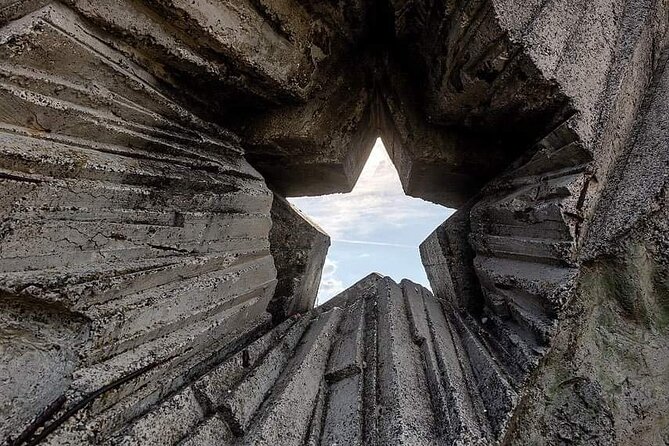
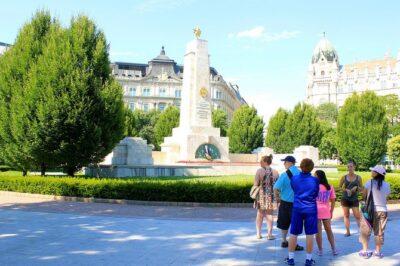
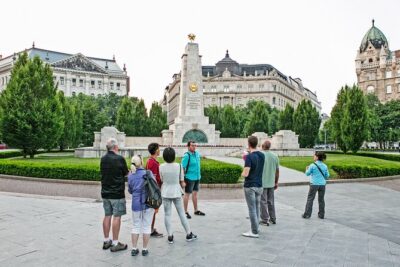
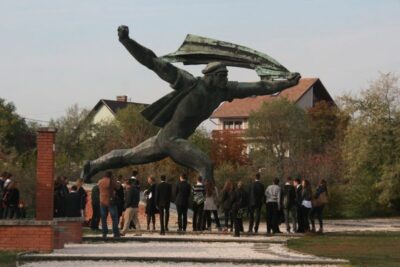
Szabadság tér brings the past into the open through monuments, public art, and security sites. The guide shows two controversial monuments, points out guerilla statues, and identifies the emergency exit of the F4 military nuclear bunker.
The square is a good setting for a discussion of memory. Monuments do not simply record history. They present an argument about what should be remembered, honored, or blamed. Seeing conflicting symbols in one public space makes that point easier to grasp.
The bunker reference adds another layer. It reminds you that the Cold War was not only about speeches and ideology. Governments planned for military crisis, and Budapest had secure facilities connected to that fear.
You also hear about the second most guarded building in Budapest and the prominent Hungarian person who was sheltered there for more than 15 years. The details add a sense of secrecy and political tension, though the supplied tour information does not identify the person in advance. If that story interests you, ask the guide to explain the full background on site.
This stop lasts around 10 minutes. It packs in several subjects, so the pace may feel quick. Still, the mix of monuments, bunker history, and urban art makes it one of the more visually varied parts of the walk.
The 1956 uprising beside Parliament
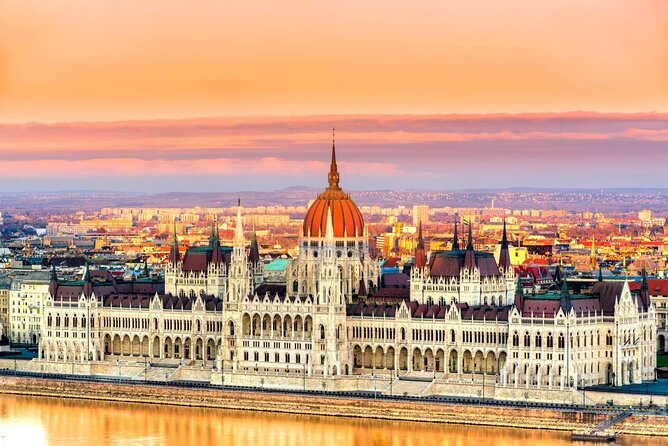
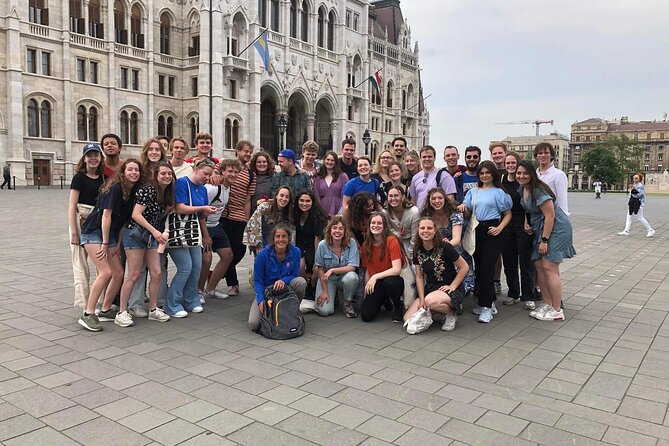
The final stop is at the Hungarian Parliament Building, where the tour spends about 15 minutes on the 1956 uprising. You see bullet holes on the facades of nearby residential buildings and hear about the people who resisted, as well as childhood memories from the period.
This is the emotional center of the route. The physical marks matter because they connect a national revolt to ordinary streets and homes. Parliament is a powerful place to finish, but the nearby buildings keep the story grounded in civilian life.
The guide covers the heroes of 1956 and the experience of living through the uprising as a child. That personal angle can be especially helpful for younger people, who may understand the event as a political turning point but not picture what it meant for families.
The route ends at Kossuth Lajos tér, about 50 meters from the M2 red metro line. That makes it easy to continue sightseeing, return to your hotel, or connect with another part of Budapest.
What the $4.65 price really means
The $4.65 price is not the full amount you should budget. It is an administrative and marketing fee that reserves your place, and it does not go toward the guide’s earnings.
You are expected to decide on a tip at the end. The suggested reference point is €10 per person, with some people giving more. Since the guides depend entirely on donations, I would treat the tip as part of the tour price rather than as an optional afterthought.
At around €10 plus the small booking fee, the value is good if you want a focused history lesson with personal testimony and a central walking route. You are not paying for museum admission or transport. Instead, you are paying for interpretation, access to personal stories, and a carefully chosen path through Budapest.
The value is weaker if you want a conventional sightseeing tour focused on grand buildings, photographs, or architectural detail. The major sights are mainly settings for the history discussion.
Timing, group size, and practical comfort
The experience lasts approximately 1 hour and 30 minutes. The scheduled sections add up to that length, even though one description refers to a longer two-hour itinerary. Plan around 90 minutes.
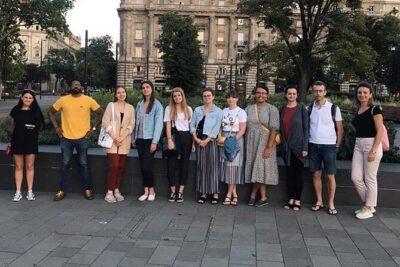
The maximum group size is 20 people. That is not a private tour, but it is small enough to keep the guide within speaking distance and allow some questions. The walk includes several stops, so comfortable shoes are sensible, though no special equipment is required.
The start time is 3:30 pm. This suits an afternoon plan and lets you combine the walk with morning sightseeing elsewhere in Budapest. The endpoint near the M2 metro also makes the tour easy to fit into a larger day.
Most people can take part, and service animals are allowed. Public transport is nearby at both the central starting area and the Parliament endpoint. The tour includes no admission tickets because the history is explained outdoors at public locations.
Free cancellation is available if you cancel at least 24 hours before the start time. Cancellations or changes made inside that period are not refunded or accepted.
Who will get the most from this experience
I would choose this walk if you want to understand Budapest through personal stories rather than only through monuments. It suits first-time visitors who want political context, families with older children, and anyone interested in the Cold War, the 1956 uprising, or life after state socialism.
It also works well if you have already seen Budapest’s major sights and want a different angle. The route uses familiar central places, but the subjects change what you notice about them.
You may want another tour if you prefer a fast overview of Budapest’s architecture, a food walk, or a visit inside the Parliament building. This experience is about explanation and memory. The sights support the story, rather than taking center stage.
Should you book the Communist and Capitalist Life tour?
Book it if you want a thoughtful, personal account of how political systems shaped everyday Hungarian life. The strongest parts are the guide’s lived experience, the practical subjects such as travel and housing, and the final discussion of 1956 beside visible bullet marks.
Just budget for the tip. The low booking fee can make the tour look almost free, but €10 per person is the practical amount to keep in mind. If you are comfortable with that payment model and want history told in plain human terms, this is a smart use of 90 minutes in central Budapest.
FAQ
How long does the tour last?
The tour lasts approximately 1 hour and 30 minutes.
What is the starting time?
The tour starts at 3:30 pm.
Where does the tour begin?
The meeting point is about 20 meters from the Budapest Eye in Erzsébet tér, Budapest 1051, Hungary.
Where does the tour end?
The walk ends at the Hungarian Parliament Building at Kossuth Lajos tér 1-3, Budapest 1055, Hungary.
Is the tip included in the $4.65 price?
No. The booking fee does not contribute to the guide’s earnings. Tips are not included, and €10 per person is the typical suggested amount.
How many people can join the tour?
The maximum group size is 20 people.
Can I cancel for a full refund?
Yes, if you cancel at least 24 hours before the experience start time. Cancellations made less than 24 hours in advance are not refunded.
Are service animals allowed?
Yes. Service animals are allowed, and most people can participate.
Just added around Budapest
- Lake Balaton and Herend Guided Tour★ 4.7 · 3 reviews
- Audio visual multi-sensory chefs journey dinner experience★ 5.0 · 3 reviews
- Hollókő Ethnographic Village: Day Tour from Budapest★ 3.7 · 3 reviews
- Tapolca Cave Lake and Tihany/ Balaton private tour from Budapest★ 4.5 · 3 reviews
- Budapest Art Nouveau Walking Tour★ 5.0 · 3 reviews
- SzentEndre-SaintAndrew City Privately Shopping and Picturesque★ 4.5 · 3 reviews
- Budapest Drinks and Piano Show Cruise★ 4.5 · 3 reviews
- Horseshow on the Hungarian Puszta, private tour from Budapest with entry!★ 5.0 · 3 reviews
Communist History Tours, compared.
Communist History Tour with House of Terror Option
What we thought →
3-Hour Walking Tour About Communism (Small Group)
What we thought →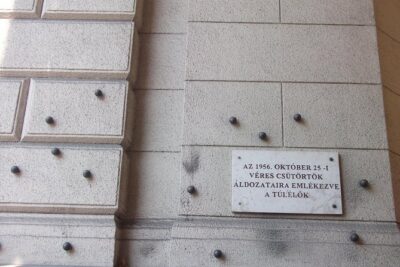
Private Budapest Hammer & Sickle Communist Times Tour
What we thought →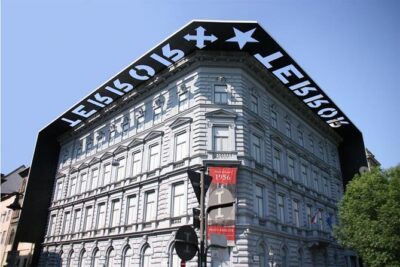
Communist History Evening Walking Tour of Budapest
What we thought →Browse the lists this tour appears in