
Reviewed · COMMUNIST HISTORY TOURS
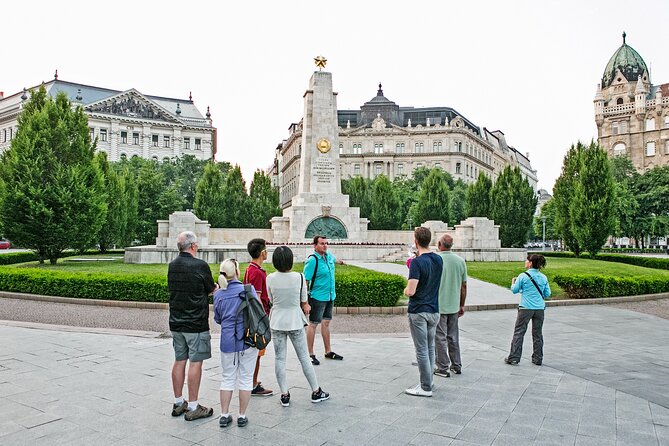
Private Budapest Hammer & Sickle Communist Times Tour
The past is still written on Prague’s streets. This private history walk brings you to Wenceslas Square and National Avenue, where the Prague Spring and Velvet Revolution unfolded, and I like the way it connects famous squares with darker, less obvious places. I also like the small private format, which gives you room to ask questions and request more focus on Nazi or communist history.
The main drawback is the amount of standing and walking outdoors. You may spend long stretches listening on cold, hot, or wet days, and the route includes stairs, high curbs, and slippery surfaces. One more important point: the supplied booking information calls this a Budapest tour, but every described stop is in Prague, so confirm the city and meeting point before paying.
In This Review
- Key points to know before booking
- What this Prague tour actually covers
- Bartolomejska Street and the city’s darker machinery
- National Avenue and two generations of protest
- Wenceslas Square and the Prague Spring
- Republic Square and the 1945 Prague Uprising
- Old Town, Gottwald’s balcony, and Einstein’s Prague
- The old Jewish quarter and former headquarters
- Letna Park and the vanished Stalin monument
- Guide quality can make or break the experience
- Walking conditions, weather, and comfort
- Is $133.67 per person a fair price?
- Who should book this walk?
- Booking details worth checking
- Should you book the Private Budapest Hammer & Sickle Communist Times Tour?
- FAQ
- Is this tour in Budapest or Prague?
- How long does the tour last?
- Is the tour private?
- Is pickup included?
- Is the tour suitable for children?
- Can people with limited mobility participate?
Key points to know before booking
- Prague’s 20th-century story: Follow the city through Nazi occupation, World War II resistance, Soviet control, and the 1989 Velvet Revolution.
- Personal guide format: This is described as a private activity for your group, while other details mention a maximum of 15 people. Confirm the exact group arrangement when booking.
- Important public squares: Wenceslas Square, National Avenue, and Republic Square give the tour a clear connection to major political events.
- Powerful but demanding route: Expect about three hours, or roughly three and a half hours according to the tour description, with around two hours of continuous walking.
- Strong guide potential: Guides such as Honza, Martina, Mike, Mikel, Martin, and Yonas received warm praise for their personal stories, old photographs, and ability to answer questions.
- Price and value: At $133.67 per person, this makes the most sense for a private group that cares deeply about modern European history and wants a tailored discussion.
What this Prague tour actually covers
This is not a general introduction to Prague’s castles, churches, or medieval legends. It is a walking lesson in how the city endured Nazi occupation, Soviet influence, and communist rule, with the streets themselves serving as the classroom.
The route begins in central Prague and moves through the Old Town, the old Jewish quarter, the New Town, and toward Letna Park by the Vltava River. Along the way, you see former police and government buildings, political gathering places, memorials, and squares where public power changed hands.
The emphasis is on events and people. You hear about student protests, secret police, resistance broadcasts, political speeches, Soviet tanks, and the final collapse of communist rule. For me, that focus is the tour’s greatest strength. Prague can feel almost too polished in its historic center, but this walk explains the fear and pressure that shaped ordinary life during the 20th century.
The route description gives a duration of about 3.5 hours, while the main tour summary lists approximately three hours. Plan for a long half-day rather than a quick stroll. The physical notes also say that about two hours involve continuous walking, so comfortable shoes are essential.
More communist-era history walks:
- Budapest: Communist History Tour with House of Terror Option
★ 4.8 · 182 reviews - Communism in Hungary with a Historian
★ 5.0 · 70 reviews - Budapest: 3-Hour Walking Tour About Communism (Small Group)
★ 4.7 · 70 reviews
Bartolomejska Street and the city’s darker machinery
The first major stop is Bartolomejska Street, home to a former World War II prison used by secret police to torture prisoners. It is not the sort of place that appears on every first-time sightseeing route, and that is precisely why it matters.
Your guide sets the tone here by explaining how repression worked behind ordinary-looking walls. The value is less about a grand building or dramatic view and more about understanding that terror operated through offices, prisons, interrogations, and paperwork.
This section can be difficult, especially for younger children. The operator does not recommend the subject matter for children under 14, and I agree that families should think carefully about the tone before booking.
National Avenue and two generations of protest
National Avenue divides Prague’s Old Town and New Town. It became a place of protest first against Nazi occupation and later against communist rule.
The tour connects student demonstrations in 1939 with the protests of 1989. That pairing helps you see a repeated pattern in Czech history: young people stepping into public spaces, taking serious risks, and challenging a stronger state.
This is also one of the places where the quality of the guide matters most. A guide who simply recites dates may leave the avenue feeling like another broad city street. A guide who can explain the mood, danger, and human choices behind the protests can make the location memorable.
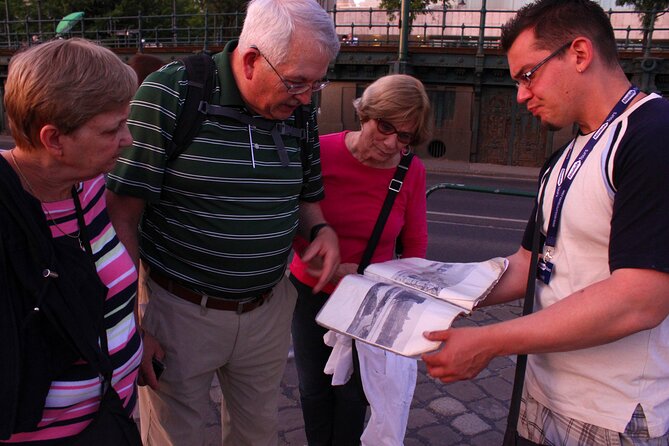
Several guides were praised for bringing extra material, including old photographs and newspaper articles displayed on a tablet. That is useful here because historical images help you compare the present-day street with the same place filled with police, demonstrators, or official crowds.
Wenceslas Square and the Prague Spring
Wenceslas Square is one of Prague’s best-known public spaces, but this tour asks you to see it as the center of the Czech struggle against outside control.
The guide discusses the Prague Spring of 1968, when reformers tried to loosen communist restrictions and create a more open form of socialism. Soviet-led forces sent tanks into Czechoslovakia to crush the reforms, and the square became a stage for public resistance and political pressure.
The story continues into early 1969, when Jan Palach set himself on fire in protest against the occupation and the growing passivity that followed it. The supplied tour description does not specifically name Palach, so your guide’s treatment of this part may vary, but the square’s connection to that period is central to the route.
Wenceslas Square also returns later in the story as a place connected with the 1989 Velvet Revolution. I like this chronological reach, even though the route itself may not always present events in strict order. One guide was praised for enthusiasm but criticized for moving from issue to issue rather than following a clean timeline. If you prefer a date-by-date structure, ask your guide at the start to keep the story chronological.
A few more trips worth weighing up before you book
- Private Budapest TukTuk Tour: Custom Route, Hotel Pickup
★ 5.0 · 1,307 reviews - Budapest Essentials Private Tour Highlights and Hidden Gems
★ 5.0 · 861 reviews - Budapest Private Tuk Tuk Half-Day Tour
★ 5.0 · 606 reviews - Budapest One Way Private Transfer to or from Airport
★ 4.5 · 548 reviews
Republic Square and the 1945 Prague Uprising
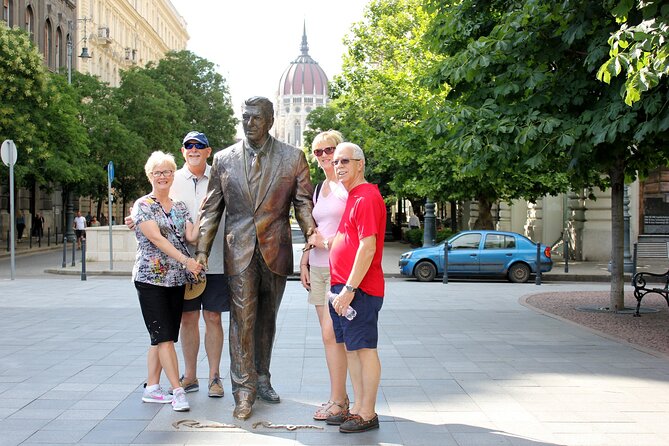
Republic Square takes you back to the creation of independent Czechoslovakia in 1918. The tour then shifts to World War II, when the Czech resistance used secret broadcast stations to communicate and help spark the 1945 Prague Uprising.
That uprising is an important part of the city’s story because it shows resistance continuing even as Nazi control weakened. The square also presents an ironic change in political ownership: three years later, the Communist Party made this same area its home.
This stop is a good example of the tour’s method. Rather than treating Prague as a series of attractive public spaces, it shows how the meaning of a square can change with each government. A place named for independence could later become linked with a very different kind of power.
Old Town, Gottwald’s balcony, and Einstein’s Prague
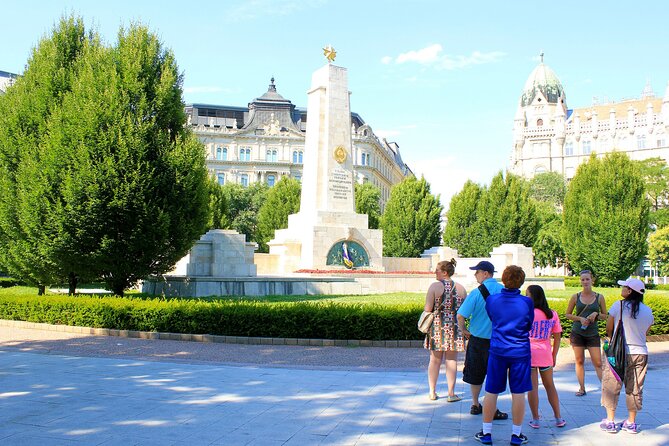
In the Old Town, you see the balcony from which communist leader Klement Gottwald announced the takeover of the Czech government in 1948. This is one of the route’s clearest moments of political theater. A speech from a balcony can make a transfer of power appear orderly, but your guide explains the pressure and uncertainty behind the public display.
The route also points out where Albert Einstein lived while working at Prague’s Charles University. The tour connects his theories with the later invention of the atom bomb, adding a scientific thread to an otherwise political walk.
This portion may feel less tightly connected to the Nazi and communist theme, depending on how your guide presents it. One guide took a librarian into Prague’s public library because of that guest’s interest, showing the benefit of a private format. That kind of adjustment is a real advantage if you share a particular academic, family, or professional interest.
The old Jewish quarter and former headquarters
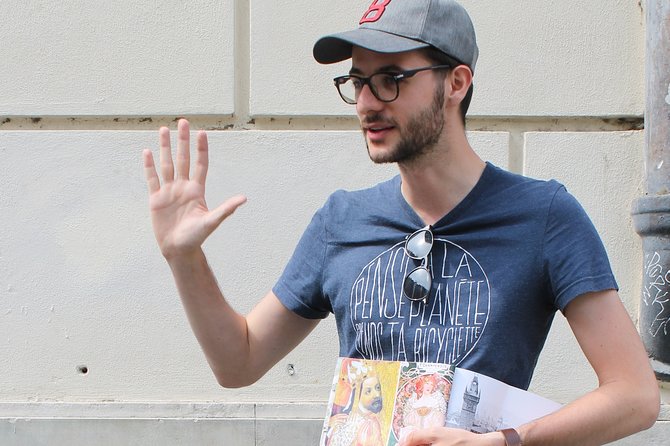
The walk continues toward the old Jewish quarter and the former headquarters of the Nazi SS, communist-era KGB, Gestapo, and other secret police organizations. The supplied material refers to several former headquarters, while the exact interior access is not clearly promised.
That distinction matters. You should expect to view important buildings and hear their stories, not assume that every stop includes entry inside. The tour is primarily an outdoor walking experience, with a refreshment stop and beverage included.
The old Jewish quarter adds another layer to the route. It helps place Nazi persecution within the broader history of Prague’s Jewish community, though the tour’s main focus remains 20th-century political events rather than a full Jewish heritage program.
One point worth clarifying before you go is the mention of a museum. A guide was praised for a thoughtful presentation but criticized for spending too much time in the museum and not leaving that option until the end. If museum time matters to you, ask whether it is included, optional, or part of the current route.
Letna Park and the vanished Stalin monument
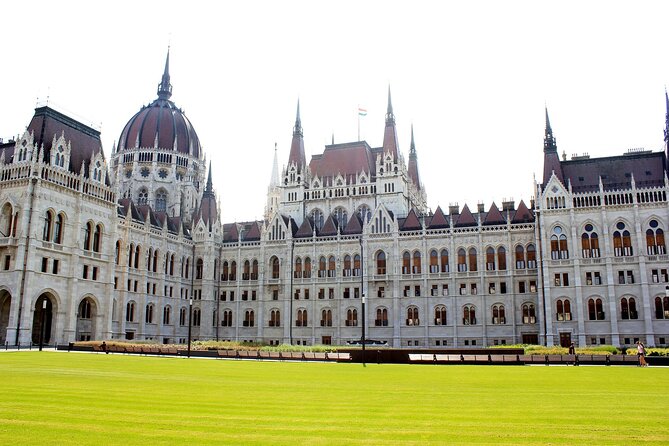
The final major section leads to Letna Park beside the Vltava River. Here, the guide discusses the world’s largest statue of Stalin, built in 1955 and destroyed in 1962.
The monument’s short life says a great deal about the shifting political climate. It was built as a huge public symbol of loyalty to Stalin, then removed after his reputation collapsed within the Soviet system. Today, the absence of the statue is part of the story.
Ending near the river gives the tour a more open setting after several hours in dense central streets. The walk then returns to central Prague, but drop-off is not included. Make sure you know where the guide plans to finish, especially if you have a restaurant booking or evening train.
Guide quality can make or break the experience
This tour depends heavily on the person leading it. The best guides bring personal memory, clear explanation, and visual material to a subject that can otherwise become a list of dates.
Martina received especially warm praise because she had lived through the communist period. A guide with that personal connection can explain not only what happened, but what daily life felt like under the system.
Mike was praised for giving useful perspective on both Nazi and communist rule, answering questions, and adapting to special interests. Mikel was described as passionate about Czech 20th-century history, while Yonas was praised for patience, courtesy, and a friendly manner. Martin earned praise for his historical knowledge and for taking a librarian into the city’s public library.
The picture is not perfect. One guide was difficult for some people to understand because of limited English. Another spent 75 minutes talking in one spot before the walking portion began, which was especially unpleasant in hot weather. A separate experience was criticized for unclear meeting directions and an aimless route.
These problems are not minor on a private tour costing $133.67 per person. At the beginning, tell your guide what you want: more World War II, more Cold War life, a strict timeline, fewer museum stops, or more personal stories. A private booking should allow a useful conversation rather than a fixed speech.
Walking conditions, weather, and comfort
You need a reasonable level of mobility for this experience. The route includes stairs, high curbs, and slippery surfaces, and the operator says it is unsuitable for people with limited mobility.
The tour runs in all weather. That is easy to overlook when booking a history walk, but the subject requires long periods outside. In cold weather, you may spend a lot of time standing still while listening. In heat, a long introduction in one location can also become tiring.
Dress for the forecast and wear shoes with a firm sole. Bring water even though a beverage is included at the refreshment stop. If rain or cold is likely, ask whether the guide can include more indoor discussion or adjust the pace.
The route is not described as strenuous hiking, but three-plus hours on city pavement can feel demanding. Build in enough time afterward rather than scheduling a tight appointment.
Is $133.67 per person a fair price?
The price is high for a walking tour, but this is presented as a private experience rather than a standard large-group outing. The value depends on how many people share the cost and how much you use the guide’s flexibility.
For two people, $133.67 each is a serious expense. You are paying for a specialist subject, an English-speaking licensed guide, pickup, a beverage stop, and the chance to shape the discussion. You are not paying for a long list of admissions or a guaranteed indoor museum program.
For a family or small group with a strong interest in modern European history, the price may work better. The guide can respond to questions, slow down for difficult subjects, or bring in extra photographs and articles. That personal attention is the feature most likely to justify the cost.
The group information needs checking. The description says numbers are limited to 15, but the additional details call it a private activity in which only your group participates. Those descriptions do not mean exactly the same thing, so confirm whether you receive a genuinely private guide or a small shared group.
Who should book this walk?
I would recommend it to adults and older teenagers who want more than Prague’s medieval center. It suits people interested in World War II, the Cold War, Soviet power, protest movements, political speeches, or the fall of communism.
It is also a good early-Prague activity for history-focused visitors because it helps orient you to the Old Town, New Town, Jewish quarter, and Letna area. One guide even used the walk to connect a guest’s professional interest with a spontaneous library visit.
I would be cautious if you dislike long outdoor explanations or prefer a tightly organized timeline. The route covers a great deal, and different guides may give different weight to the Nazi period, communist rule, museums, personal stories, and modern politics.
Families with children under 14 should choose another outing. The subject includes torture, occupation, political repression, and the atom bomb, and the operator specifically advises against bringing younger children.
Booking details worth checking
Pickup is offered, and the tour is near public transportation. Drop-off is not included, so plan your route after the final stop.
Confirmation is provided at booking, and free cancellation is available if you cancel at least 24 hours before the start time. Changes or cancellations inside that 24-hour window are not accepted for a refund.
Most people can take part, but the mobility warning is important. Also verify the city, since the supplied title says Budapest while the entire route, landmarks, and historical content describe Prague.
Should you book the Private Budapest Hammer & Sickle Communist Times Tour?
Book it if you want a serious, place-based look at Prague’s Nazi and communist past, especially if you can share the private cost with several people. The strongest guides, including Martina, Mike, Mikel, Martin, and Yonas, appear to bring warmth, visual material, and personal insight to a difficult subject.
Skip it if you want a relaxed sightseeing stroll, lots of indoor time, or a perfectly chronological lecture. Before booking, confirm that the experience is in Prague, ask about the private group size, and request the balance of Nazi and communist history you want.
For the right audience, this is a valuable way to see Prague beyond its pretty facades. Just arrive ready to walk, listen outdoors, and ask the guide to make the route fit your interests.
FAQ
Is this tour in Budapest or Prague?
The supplied title says Budapest, but the described route is entirely in Prague. Its stops include Wenceslas Square, National Avenue, Republic Square, the Old Jewish quarter, and Letna Park, so you should confirm the destination before booking.
How long does the tour last?
The tour summary lists approximately three hours, while the detailed description says about 3.5 hours. Plan for a three to three-and-a-half-hour experience.
Is the tour private?
The additional information says this is a private activity for your group only. The description also mentions a maximum of 15 people, so confirm the exact group arrangement with the provider.
Is pickup included?
Yes. Pickup is offered, and the tour also includes a licensed English-speaking guide and a refreshment stop with a beverage. Drop-off is not included.
Is the tour suitable for children?
The operator does not recommend it for children under 14 because of the subject matter. The tour covers torture, Nazi occupation, communist rule, political repression, and related events.
Can people with limited mobility participate?
The tour is not suitable for people with limited mobility. It involves about two hours of continuous walking, along with high curbs, stairs, and slippery surfaces.
Just added around Budapest
- Lake Balaton and Herend Guided Tour★ 4.7 · 3 reviews
- Audio visual multi-sensory chefs journey dinner experience★ 5.0 · 3 reviews
- Hollókő Ethnographic Village: Day Tour from Budapest★ 3.7 · 3 reviews
- Tapolca Cave Lake and Tihany/ Balaton private tour from Budapest★ 4.5 · 3 reviews
- Budapest Art Nouveau Walking Tour★ 5.0 · 3 reviews
- SzentEndre-SaintAndrew City Privately Shopping and Picturesque★ 4.5 · 3 reviews
- Horseshow on the Hungarian Puszta, private tour from Budapest with entry!★ 5.0 · 3 reviews
- Hungary today: a no-taboo conversation★ 5.0 · 3 reviews
Communist History Tours, compared.
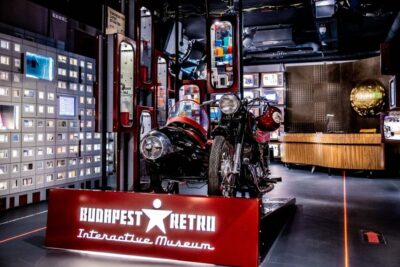
Communist History Tour with House of Terror Option
What we thought →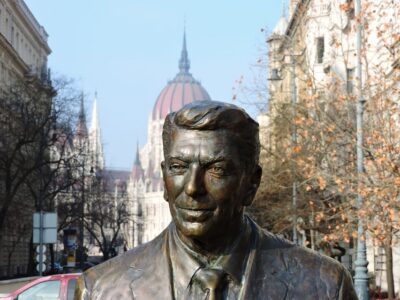
3-Hour Walking Tour About Communism (Small Group)
What we thought →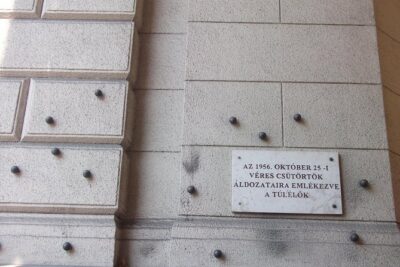
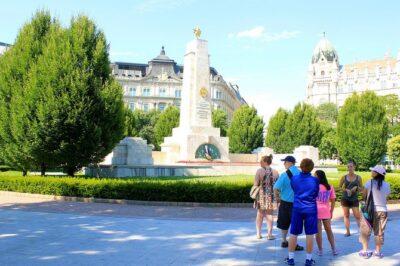
Lives of Hungarians Under Communist and Capitalist system
What we thought →
Communist History Evening Walking Tour of Budapest
What we thought →Browse the lists this tour appears in