Reviewed · TOURS
Hollókő Ethnographic Village: Day Tour from Budapest
A village where old Hungary still has a pulse. Hollókő offers a rare look at Palóc culture, with 67 preserved peasant houses dating from the 17th to 19th centuries. I like the village’s deliberate preservation, and I like that this day trip adds local food, craft demonstrations, museums, and traditional performances to a simple walk through the streets.
I also appreciate the convenience of private transport from Budapest, especially for a group of up to six people. The main caution is timing: cultural programs may not run every day, and one disappointing visit found museums closed, no costumes or dancing, and modern cars lining the streets. Your experience can depend heavily on the date.
In This Review
- Key points
- Why Hollókő feels different from a Budapest day trip
- The 80-minute road from Budapest
- Walking through 67 protected village houses
- Meeting the Palóc people and seeing living tradition
- Museums, dolls, and working crafts
- Lunch and the Palóc way of cooking
- Easter, weddings, and the best time to go
- Is $681 good value for up to six people?
- Who will enjoy this private day trip
- Should you book Hollókő from Budapest?
- FAQ
- Where does the Hollókő tour pick up in Budapest?
- How long does the tour last?
- How many people can join the private group?
- What is included in the tour?
- Which languages are available for the guide?
- Is Hollókő wheelchair accessible?
Key points
- UNESCO village with 67 historic houses: Hollókő preserves a traditional rural settlement rather than a single monument.
- Palóc culture remains central: Residents retain distinctive customs, songs, crafts, costumes, and a local dialect.
- Private group of up to six: The $681 price is shared by the group, not charged per person.
- About 80 minutes by coach: The drive gives you a full day beyond Budapest, with open-country views along the way.
- Season matters: Easter brings special programs and customs, while weddings and performances depend on the calendar.
- Program availability needs checking: Ask specifically about dances, working craftspeople, open museums, and entrance costs before booking.
Why Hollókő feels different from a Budapest day trip
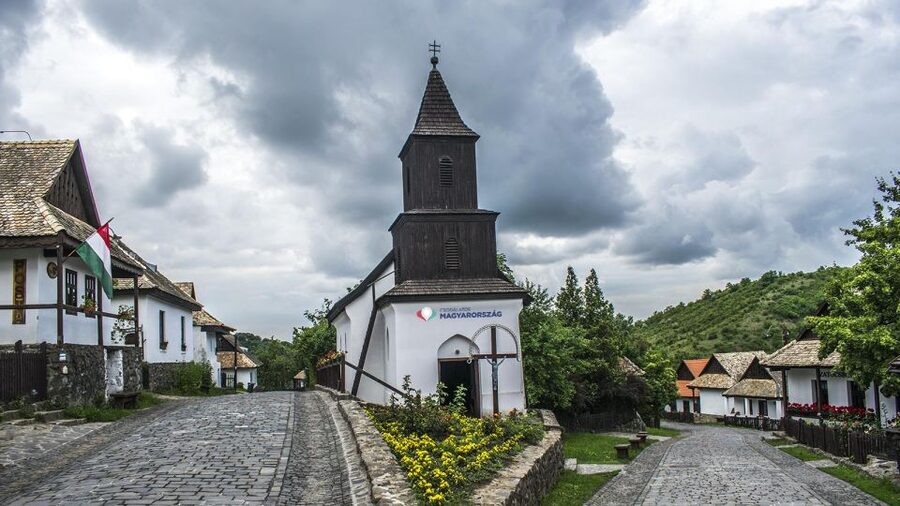
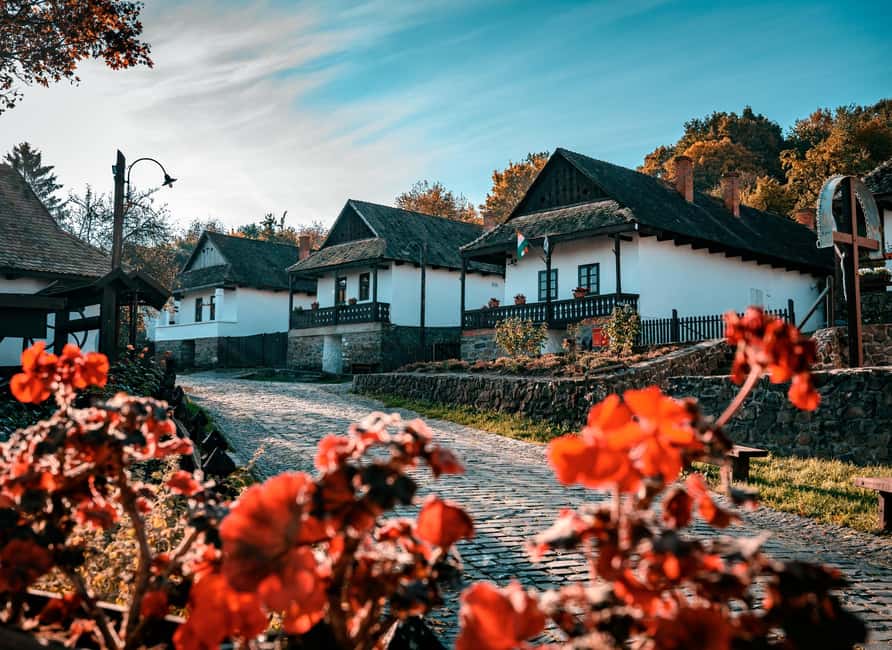
Hollókő is not simply a museum with a village facade. About 400 Palóc people live there, and the settlement is presented as a working example of rural life before the agricultural changes of the 20th century. That gives the visit more meaning than a quick stop at a reconstructed folk park.
The village became a UNESCO World Heritage Site in 1987 because its protected buildings form a complete traditional settlement. The 67 houses are characteristic of the 17th to 19th centuries, with the kind of compact, practical design associated with village life in central Hungary.
I like this focus. You are not just looking at one old farmhouse and then returning to a modern town. You can walk through a whole preserved setting and think about how homes, work, food, religion, and community fit together.
Still, it is important to set your expectations correctly. Hollókő is a living village, not a permanently staged folk show. People do not wear traditional clothing every hour of every day, and cultural performances are not guaranteed unless they are scheduled. The most successful visit is one that values the buildings and setting even if the day’s demonstrations are modest.
Other Budapest days people book alongside this one:
- Budapest: City Highlights Cruise with Welcome Drink
★ 4.6 · 35,610 reviews - Budapest: Unlimited Prosecco, Beer and Aperol Spritz Cruise
★ 4.8 · 25,310 reviews - Budapest: Széchenyi Spa Day Ticket with Optional Upgrades
★ 4.3 · 23,911 reviews
The 80-minute road from Budapest
The drive by bus or coach takes about 80 minutes according to the stated schedule. Pickup is available from three central Budapest points: Király Street, Széchenyi Tér, and Deák Ferenc tér. Return drop-off is offered at the same three locations.
That arrangement is practical if you are staying in central Budapest. You avoid arranging a train connection or trying to coordinate local transport once you reach the countryside. For a private group, the ride also gives you a chance to ask your guide questions and shape the day around your interests.
The drive is a real part of the experience, not dead time. You leave the capital behind and reach a very different part of Hungary, with country views along the way. One especially positive account praised the views from a ruined castle, although the supplied details do not identify that castle or confirm it as a fixed stop on every departure. I would treat it as a possible extra, not a promise.
At eight hours, this is a full day. That matters when you are choosing between Hollókő and another Budapest side trip. You will spend a fair portion of the day on the road, but that is the price of reaching a rural UNESCO site rather than another attraction in the capital.
Walking through 67 protected village houses
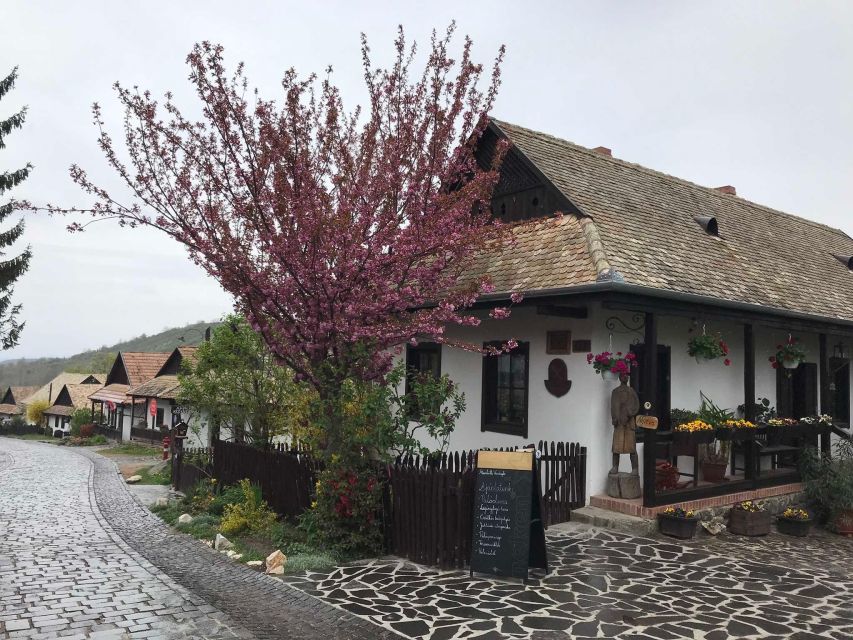
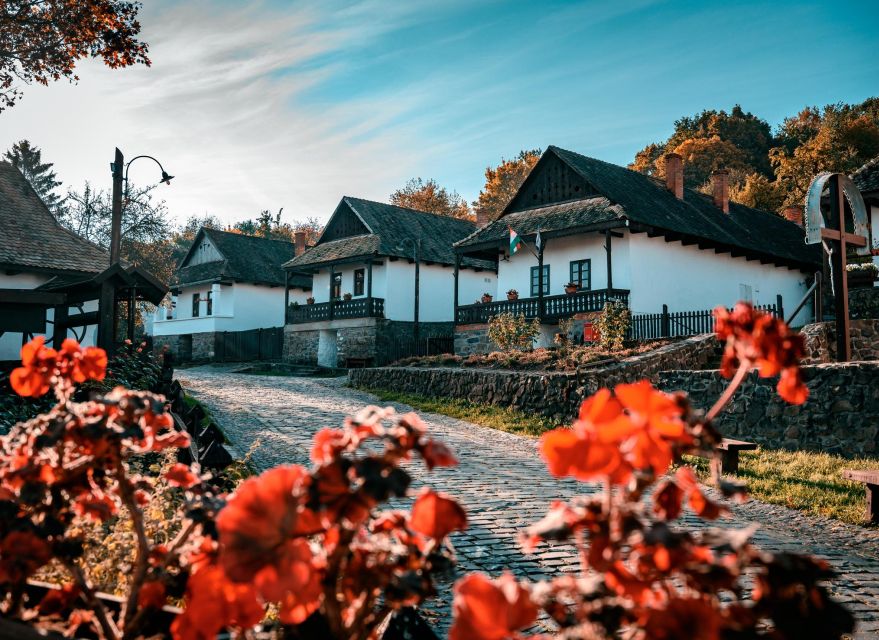
The heart of the visit is the old village itself. The protected buildings are traditional peasant houses from the 17th to 19th centuries, preserved as part of a complete settlement rather than isolated historic objects.
I would take time to look closely at the repeating forms of the houses and the way the village works as a whole. The value is in the overall picture: streets, homes, workshops, and community spaces showing how rural residents lived before modern farming and construction changed village life.
The preservation also helps explain why Hollókő attracts people interested in architecture and social history. You can see the physical setting in which Palóc traditions developed, then connect that setting with the costumes, food, crafts, songs, and dialect described by the guide.
Do not expect every doorway to lead to an open exhibit. Some buildings are private homes or businesses, and the museums and workshops may operate on different schedules. One poor experience found most museums closed and modern cars parked along the streets, which made photography less convincing. That is a serious concern for anyone expecting a fully staged historical setting.
I would ask before departure which buildings will be open and how much time is planned for the village walk. If your main aim is photography, also ask whether a festival or special event is taking place. The everyday village can be attractive, but it will not always look like the postcard version.
Meeting the Palóc people and seeing living tradition
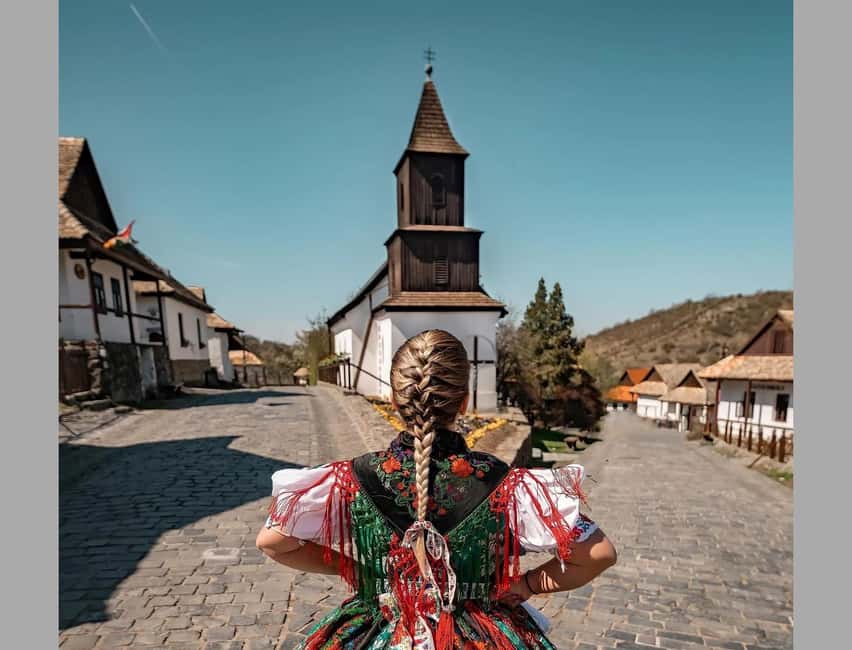
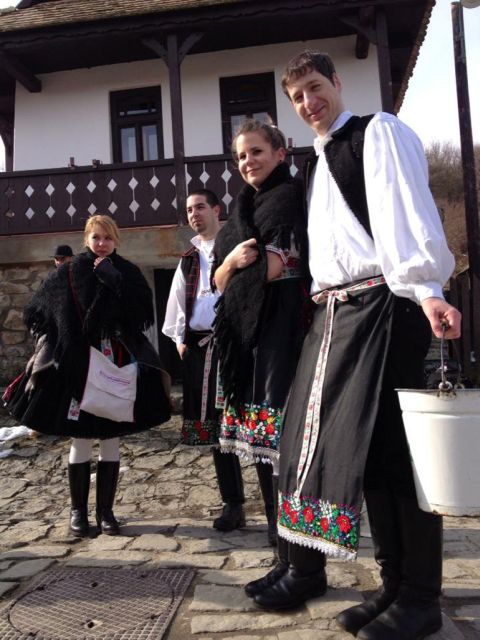
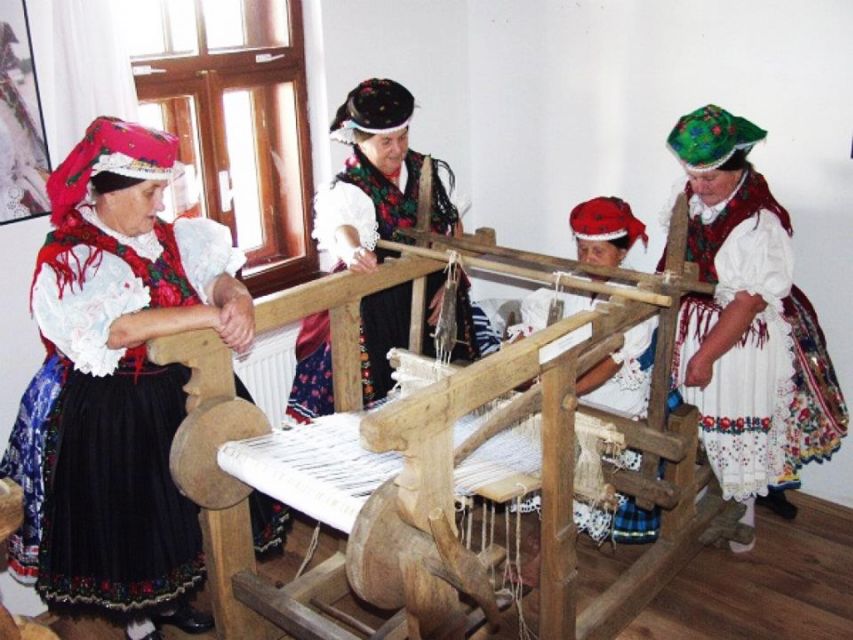
The Palóc identity is the reason this excursion has more depth than a standard architecture tour. The community retains folk traditions, crafts, songs, colorful costumes, and a special dialect. The plan may include meeting residents in Palóc clothing and seeing aspects of daily village life.
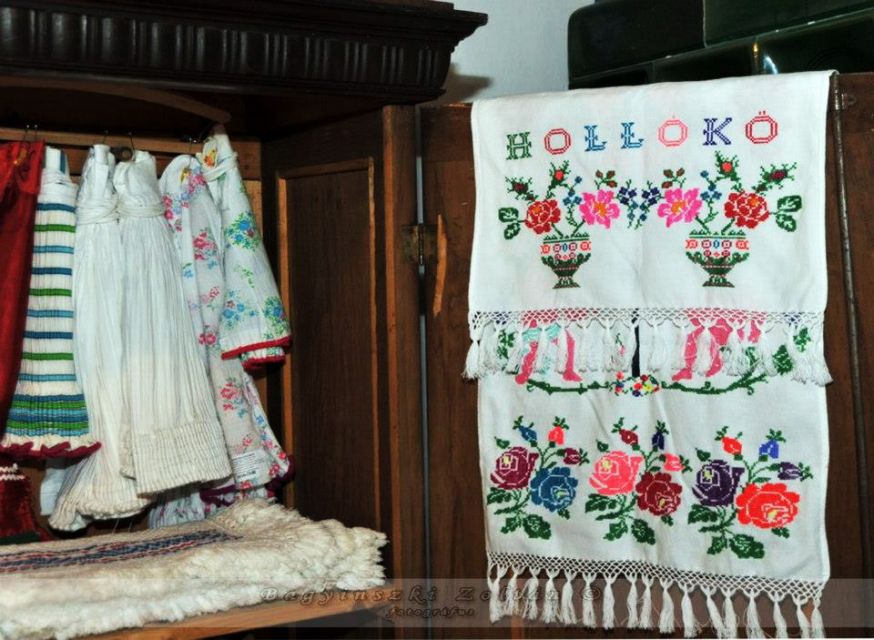
Traditional dress is especially striking. The costumes are richly decorated and colorful, and they help you see that folk culture is not only a set of old objects in glass cases. It can also express age, community, ceremony, and local pride.
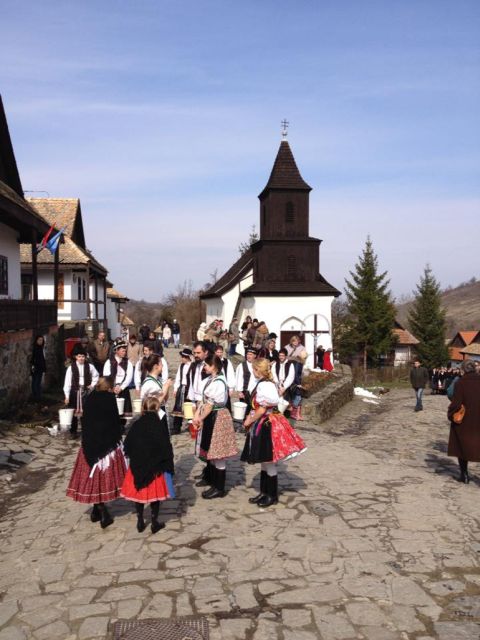
The wording around this experience needs care. Costumed residents and performances are part of the proposed program, but they are not necessarily available every day. One highly successful visit included children in ethnic clothing, Hungarian dances from different regions, live music, and food stalls. That sounds like a festival day, not a normal quiet weekday.
Another visit had the opposite experience: no people in costume, no dances, closed museums, and only one modern leather craft demonstration. Both outcomes are possible enough that I would contact the operator before booking and ask for the exact program on your date.
The guide can make a large difference here. Kinga received specific praise for her guiding, and another account credited both the guide and driver with taking very good care of the group. Since this is a private tour, a good guide can add context to details you might otherwise miss and help you understand which traditions are still practiced and which are presented for visitors.
A completely different kind of day out around Budapest:
- Budapest: Nighttime or Daytime Sightseeing Cruise
★ 4.2 · 21,062 reviews - Budapest: 1-Hour Evening Sightseeing Cruise with Drink
★ 4.5 · 8,330 reviews - Budapest Danube Cruise and Dinner Options, Live Music and Dance
★ 4.5 · 7,428 reviews - Budapest: Historic Cruise with Welcome Drink
★ 4.7 · 6,512 reviews
Museums, dolls, and working crafts
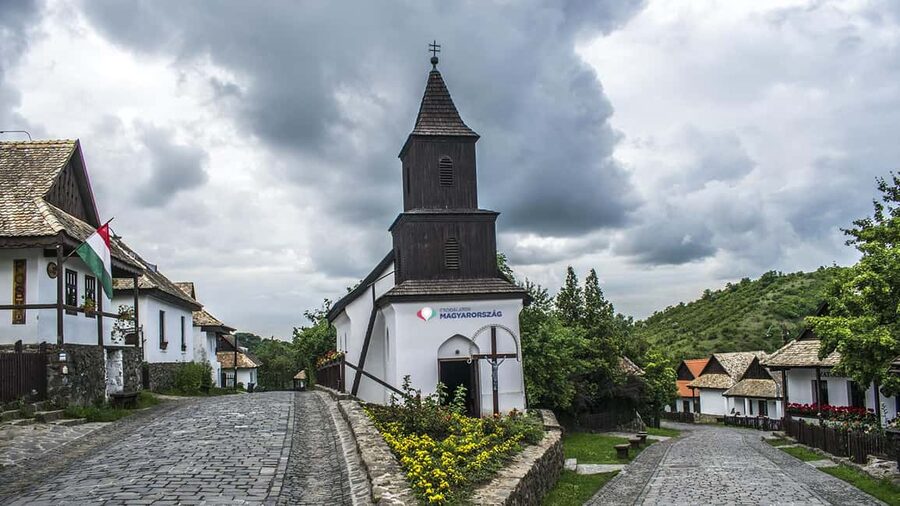
The Palóc Folk Museum is included, along with transportation, a guide, and hotel pickup. The museum should help place the village buildings in context by showing how local people lived and worked.
The Doll Museum adds another angle. It focuses on figures in traditional clothing, making it useful for seeing the fine details of Palóc dress. One particularly positive day called the Doll Museum wonderful, so I would make time for it if it is open.
The village may also include craft demonstrations. Leatherwork was specifically mentioned, with one modern leatherworker demonstrating the craft. You might find other artisans at work, but the available information does not guarantee a set number of workshops or a full craft schedule.
This is where the tour’s value depends on your interests. If you enjoy folk museums, costume, and handmade work, even a quiet day can be worthwhile. If you want a busy sequence of live demonstrations, you need to confirm what is operating before you pay.
There is also an important ticket detail. Entry to the Palóc Folk Museum is included, but that does not clearly mean every museum or attraction in Hollókő is covered. One account complained about entrance fees, so ask which admissions are included and which require extra payment. That small question can prevent a costly misunderstanding.
Lunch and the Palóc way of cooking
The day includes a stop for lunch and the chance to taste regional food made in the Palóc way. Food is one of the better ways to connect the houses and costumes with ordinary life. A village is easier to understand when you consider what people grew, cooked, preserved, and served to family and guests.
I like that the meal is part of the cultural focus rather than an unrelated restaurant break. One positive visit also found delicious Hungarian food at many booths, suggesting that special-event days may offer more choices than an ordinary departure.
The available details do not specify the restaurant, menu, or whether lunch is included in the $681 price. Treat lunch as a planned stop, not a prepaid meal, unless the operator confirms otherwise. If you have dietary needs, ask ahead.
Cheese tasting was another positive detail from one visit. It may be connected with a special program rather than every standard tour, so I would not book expecting it unless it is confirmed for your date.
Easter, weddings, and the best time to go
Easter is presented as the best time to visit if you can arrange it. Special programs and Easter traditions take place then, giving you a better chance of seeing costumes, customs, food, and performances together.
Colorful Palóc weddings are sometimes held in the village as well. These are special events, not a daily feature, and dates need to be checked in advance. If you can match your trip to one, the visit could have far more energy and cultural detail than a regular weekday.
The practical lesson is simple: calendar choice matters more than brochure language. A festival date can turn Hollókő into a lively cultural outing. A quiet date may give you an attractive village walk, a museum visit, lunch, and perhaps a craft demonstration, but not the full show.
I would ask four direct questions before booking:
- Are folk dances scheduled on my date?
- Will residents appear in Palóc costumes?
- Which museums and workshops will be open?
- Are all entrance fees and lunch included?
The answers will tell you what kind of day you are buying.
Is $681 good value for up to six people?
The price is $681 for a private group of up to six. That works out to about $113.50 per person if six people share the cost. For two people, the effective price rises to $340.50 each, so group size is central to the value calculation.
For six people, the price can make sense if you want private hotel pickup, a dedicated vehicle, a guide, and a full day outside Budapest without arranging the details yourself. You are paying for convenience as much as admission or transport.
For a couple, I would compare the cost carefully with other ways to reach Hollókő. The price may still be justified if you value a private guide and simple door-to-door handling, but it is not a budget excursion.
The mixed results also affect value. A day with dances, costumes, open museums, food, and strong guiding could feel special. A day with closed museums and no scheduled cultural activity would make the same price feel steep, especially if additional entrance fees and lunch are not included.
Free cancellation up to 24 hours before departure and the reserve-now, pay-later option reduce booking risk. They do not solve the program issue, so I would still confirm the day’s schedule before committing.
Who will enjoy this private day trip
I would recommend Hollókő to you if you enjoy traditional architecture, small communities, folk costume, craft, food, and cultural explanation. Families may also appreciate the Doll Museum and the possibility of seeing children and adults in traditional dress during a festival.
It is a particularly good fit for a group of friends or relatives who can share the private price. English, German, Russian, Spanish, Italian, French, and Portuguese guiding is available, and the tour is wheelchair accessible.
I would be more cautious if you want a guaranteed performance or a fully empty historic village for photographs. Modern cars, closed museums, and an ordinary weekday schedule can weaken the effect. The tour is also less suitable if you dislike spending much of a day on the road.
Should you book Hollókő from Budapest?
I would book this private tour if you have a group of four to six, want a guide, and can secure a date with open museums or a festival program. Easter is the clearest choice, while a confirmed Palóc wedding or dance event could make the day exceptional.
I would not book without asking about performances, costumes, museum hours, lunch, and every entrance fee. Hollókő itself is worthwhile, but the cultural extras are not guaranteed every day. If the operator confirms a strong program, the tour offers a memorable view of rural Hungary. If not, you may be paying a high private-tour price for a village walk and a few open exhibits.
FAQ
Where does the Hollókő tour pick up in Budapest?
Pickup is available from Király Street, Széchenyi Tér, and Deák Ferenc tér. Return drop-off is offered at those same three locations.
How long does the tour last?
The full experience lasts eight hours. The listed bus or coach journey takes about 80 minutes.
How many people can join the private group?
The price covers a private group of up to six people.
What is included in the tour?
Hotel pickup, transportation, a guide, and entry to the Palóc Folk Museum are included.
Which languages are available for the guide?
Guiding is available in English, German, Russian, Spanish, Italian, French, and Portuguese.
Is Hollókő wheelchair accessible?
Yes. The activity is listed as wheelchair accessible. You should still confirm the practical route and access arrangements when booking.
Just added around Budapest
- Lake Balaton and Herend Guided Tour★ 4.7 · 3 reviews
- Audio visual multi-sensory chefs journey dinner experience★ 5.0 · 3 reviews
- Tapolca Cave Lake and Tihany/ Balaton private tour from Budapest★ 4.5 · 3 reviews
- Budapest Art Nouveau Walking Tour★ 5.0 · 3 reviews
- SzentEndre-SaintAndrew City Privately Shopping and Picturesque★ 4.5 · 3 reviews
- Budapest Drinks and Piano Show Cruise★ 4.5 · 3 reviews
- Horseshow on the Hungarian Puszta, private tour from Budapest with entry!★ 5.0 · 3 reviews
- Hungary today: a no-taboo conversation★ 5.0 · 3 reviews
Tours, compared.
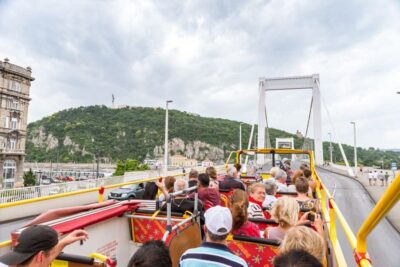
City Sightseeing Hop-On Hop-Off Bus Tour & Extras
What we thought →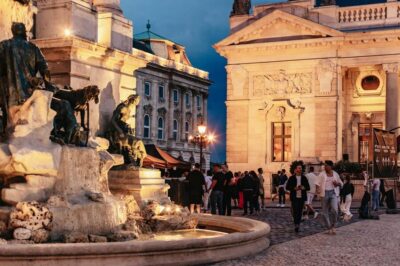
Buda Castle District Vampires and Myths Night Tour
What we thought →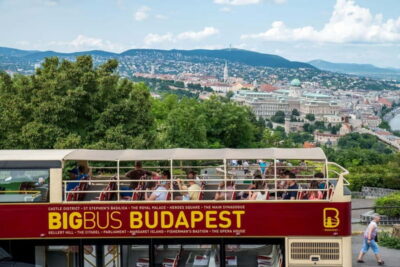
Big Bus Hop-On Hop-Off Tour & Danube River Cruise
What we thought →
Big Bus Budapest Hop-On Hop-Off Bus and Walking Tour
What we thought →