
Reviewed · COMMUNIST HISTORY TOURS
Communist Budapest Walking Tour
Budapest’s past is hiding in plain sight. This three-hour tour makes the city’s communist decades easier to understand through Bem József Square, Parliament, Cold War landmarks, housing blocks, and Socialist Realist statues. I like the route’s mix of major political sites and ordinary places, especially the preserved 1960s coffeehouse and the 1970s apartment district.
I also like the guide lineup: professors, historians, journalists, art critics, doctoral students, and published authors. The best feedback praises the relaxed pace and the way guides adapt to what you already know, as Andras did for one visitor. The main caution is that the tour can feel basic if you already understand Hungary between 1945 and 1989, and the $123 price does not include public transport tickets.
In This Review
- Key points about the Communist Budapest tour
- Why this tour helps explain Goulash Communism
- Starting at Bem József Square and the first 1956 protest
- Kossuth Square and the violent turn of 1956
- Freedom Square’s four Cold War symbols
- The metro ride to 1970s housing estates
- Puskás Stadium and Socialist Realist figures
- Riding a Stalin-era trolley bus along Dózsa György Street
- The House of Terror and the final look at repression
- Guide quality and the question of depth
- Is $123 a fair price for three hours?
- Who should book this Budapest history walk?
- Should you book the Communist Budapest tour?
- FAQ
- Where does the Communist Budapest Walking Tour start?
- How long does the tour last?
- What language is the tour offered in?
- How much does the tour cost?
- Are public transport tickets included?
- Is the House of Terror admission included?
- Is the tour private or shared?
- Who leads the tour?
- Which historic places are included?
- Can I cancel the tour for a refund?
Key points about the Communist Budapest tour
- The 1956 uprising begins at Bem József Square: You start where one of the first large demonstrations took place.
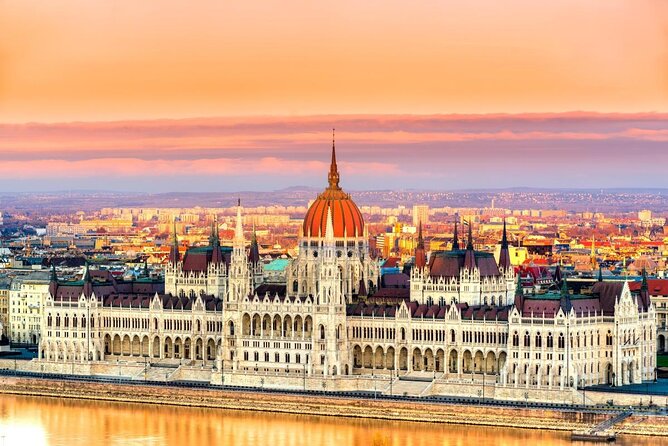
- Kossuth Square connects politics with bloodshed: The Parliament area carries the story of the revolution’s protests, armed conflict, and later memory.
- A 1960s coffeehouse offers daily-life context: Its original interior helps shift the focus from leaders and slogans to ordinary routines.
- 1970s housing blocks reveal the practical side of communism: Their gray appearance hides the excitement these modern apartments once brought to young families.
- Freedom Square compresses the Cold War into four sites: The American embassy, Soviet monument, Ronald Reagan statue, and atomic shelter entrance sit within a short walk.
- The route ends with Stalin-era imagery and the House of Terror: Socialist Realist statues and a former secret-police headquarters give the final stretch a darker tone.
Why this tour helps explain Goulash Communism
Hungary’s communist period is not easy to reduce to a simple story of fear and resistance. After the harsh Stalinist years and the crushed 1956 revolution, the state gradually allowed small personal freedoms while keeping firm control over major political matters. This arrangement became known as Goulash Communism.
That balance is the central idea of the tour. You are not only shown monuments to oppression. You also see the apartments, cafés, public transport, sports venues, and broad parade routes that formed everyday life.
That makes the route useful for anyone who knows the big dates but wants to understand how the system felt on the ground. You will hear about political control, yet you will also consider why some Hungarians valued a new apartment, a modern elevator, or modest private freedoms.
The route is especially good for first-time students of Hungarian history. If you already know a great deal about the period, you may want to tell the guide at the start. One of the tour’s strengths is its ability to adjust the conversation, but the depth may depend on your background and the guide assigned to your group.
More communist-era history walks:
- Budapest: Communist History Tour with House of Terror Option
★ 4.8 · 182 reviews - Communism in Hungary with a Historian
★ 5.0 · 70 reviews - Budapest: 3-Hour Walking Tour About Communism (Small Group)
★ 4.7 · 70 reviews
Starting at Bem József Square and the first 1956 protest
The tour begins at Bambi Espresso, at Frankel Leó út 2/4, in Bem József Square. This is more than a convenient meeting point. The square was the site of the first large demonstration of the 1956 uprising, making it a fitting place to begin with the moment when public anger became mass action.
Your guide uses the location to set up the political story. The square helps you picture how a demonstration could grow from a public gathering into a national challenge to Soviet-backed rule.
The nearby coffeehouse adds a welcome change of scale. Its interior has been preserved from the 1960s, giving you a rare visual link to the period. Rather than looking only at official monuments, you get a sense of the rooms, furnishings, and social spaces associated with ordinary urban life.
I find this opening especially helpful because communist history can become too abstract. A square tells you where public conflict happened. A café helps you think about how people spent an ordinary afternoon between those major events.
The tour is described as a walking experience, but you will also use Budapest’s metro and trolley bus. Wear comfortable shoes, since the route includes several walks and the amount of information can make the three hours feel full. A German-speaking participant noted that the combination of walking and information became tiring by the end, even though the content was interesting.
Kossuth Square and the violent turn of 1956
From Bem József Square, you take the metro to Kossuth Square, in front of the Hungarian Parliament. This is one of the tour’s most important stops because it places the 1956 revolution in the heart of state power.
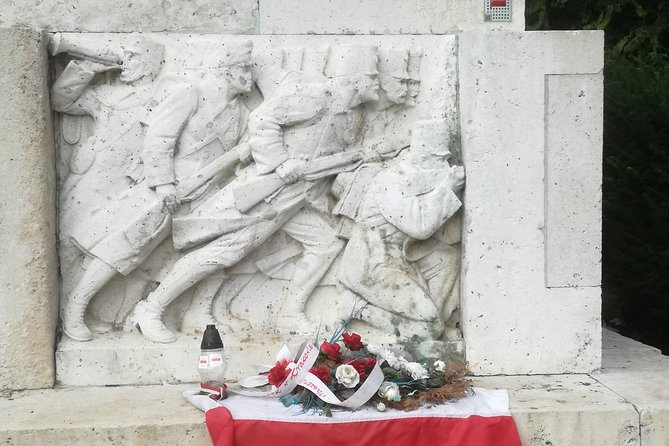
The square witnessed crucial political events, including demonstrations and armed conflict. Your guide points out monuments connected with the revolution and explains how the area bears witness to the clash between public demands and the machinery of the state.
Parliament gives the stop visual weight, but the real value comes from the explanation around it. Without context, Kossuth Square can look like another grand civic space. With the history in place, you see it as a setting where hopes for change met force and repression.
This section should appeal to you if you want political history tied to physical places. The guide can show how the square’s layout, monuments, and nearby buildings connect to the events of 1956.
Still, do not expect a museum visit here. The tour explains the sites from the outside and keeps moving. If you prefer long indoor exhibits with documents and film, this route offers less of that. Its strength is connecting several places across the city.
Freedom Square’s four Cold War symbols
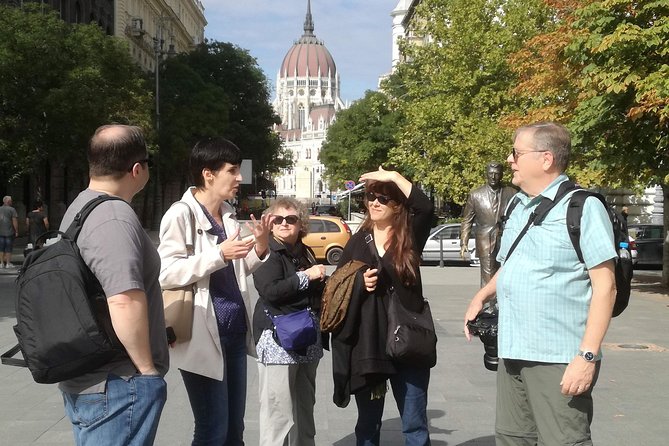
A short walk brings you to Freedom Square, where four very different structures symbolize the Cold War:
- The United States embassy
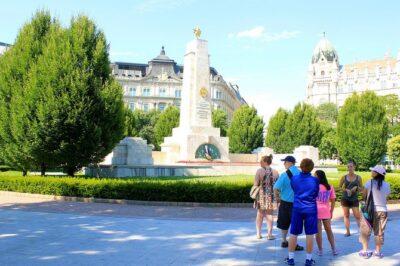
- A monument to the Soviet army
- A statue of President Ronald Reagan
- The entrance to a secret atomic shelter
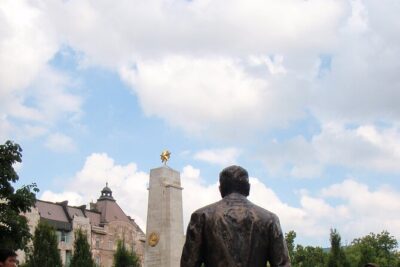
Few short stops put so many competing political messages together. The Soviet monument represents the military power that shaped Hungary after the Second World War. The American embassy points toward the Western power that many Hungarians looked to, though political realities limited what the United States could do in 1956.
The Ronald Reagan statue adds a later chapter. It reflects the American president’s association with the final phase of the Cold War and the changing relationship between East and West. The atomic shelter entrance brings the story back to fear and preparedness, reminding you that Cold War politics was not only about speeches and borders. It also shaped what people imagined might happen in a crisis.
I like this part of the route because the symbols are close together but do not tell the same story. You can compare Soviet authority, American influence, anti-communist memory, and the fear of nuclear conflict without crossing half the city.
The stop also gives you a useful warning about Budapest’s historical memory. Political symbols have been added, removed, and reinterpreted over time. Your guide’s job is to explain those layers rather than treat every monument as a fixed statement.
More walking tours:
- Budapest: Buda Castle Walk with Saint Stephen’s Hall
★ 4.5 · 3,012 reviews - Big Bus Budapest Hop-On Hop-Off Bus and Walking Tour
★ 3.5 · 2,206 reviews - Budapest: Buda Castle District Walking Tour
★ 4.6 · 2,108 reviews - Budapest City Landmarks Walking Tour in 2 Hours
★ 5.0 · 2,048 reviews
The metro ride to 1970s housing estates
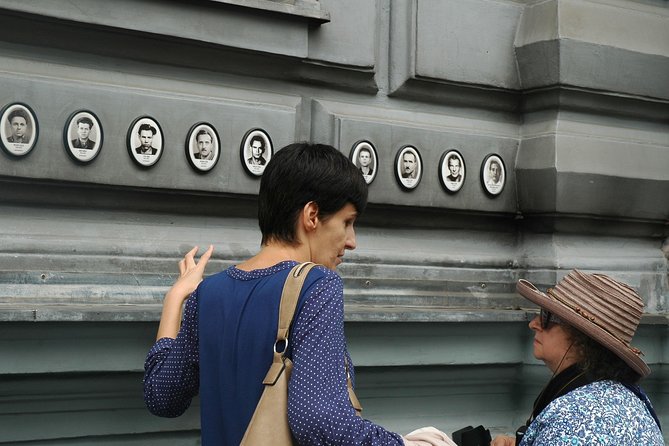
The route then returns to the metro and heads toward one of the housing estates built in the 1970s at the edge of the city center. This is where the tour shifts from political conflict to social policy and daily life.
Today, the blocks may look plain, gray, and repetitive. That first impression can be misleading. When these apartments were assigned to young Hungarian families, they offered modern conveniences that many older Budapest buildings lacked. Elevators were one benefit. Newer facilities and a purpose-built apartment layout mattered, too.
This is a useful correction to the usual picture of communist housing. The buildings were part of a system that restricted choice and produced uniform neighborhoods, but they also solved real housing problems. For a young family, receiving one could mean more space, improved comfort, and a better standard of living.
The housing estate is one of the most authentic sections because it is not arranged for visitors. You are looking at the kind of place where people lived, raised children, and adjusted to the limits and benefits of the system.
At the same time, this stop may feel less dramatic than Parliament or Freedom Square. If you want famous monuments at every turn, the apartment blocks could seem ordinary. That is precisely their value, though. They help you understand why some people tolerated the system, even while political obedience remained compulsory.
Puskás Stadium and Socialist Realist figures
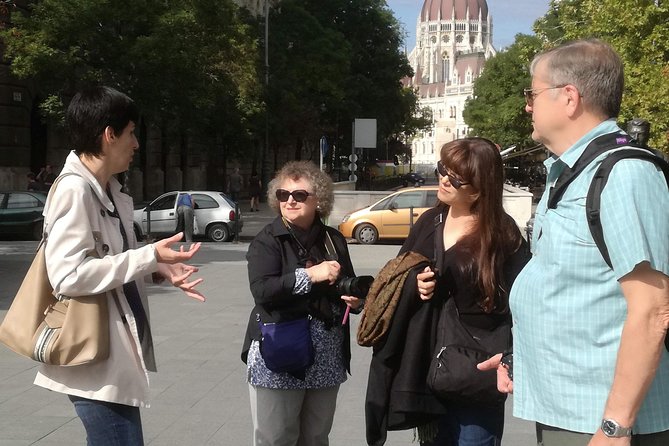
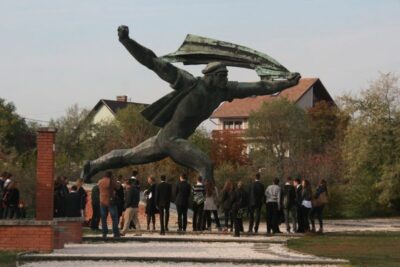
Next comes the former People’s Stadium, now Puskás Soccer Stadium. The site is one of the few places in Budapest where you can see typical Socialist Realist statues in a concentrated group.
The figures show heroic workers, soldiers, and intellectuals. Their poses point toward progress and a bright future, as communist art demanded. The message is direct: productive citizens, loyal defenders, and educated thinkers were presented as the builders of a better society.
Look closely at the scale and body language. These statues are not casual portraits. They present idealized public roles, with strength and purpose replacing private uncertainty. The style tells you what the state wanted citizens to admire.
This is also a good stop for readers interested in art and propaganda. The statues are visual evidence of how politics entered public space. You do not need an art-history background to understand the basic message, but an art critic or historian as your guide could add useful detail about style and symbolism.
The stadium itself links the political system to mass entertainment and national pride. Sports venues gave people shared public experiences, while also providing a stage for official displays. You will not get a full stadium tour from the information provided, so expect the emphasis to remain on the statues and the former People’s Stadium’s role in the city.
Riding a Stalin-era trolley bus along Dózsa György Street
A short ride on one of Stalin’s trolley buses takes you to Dózsa György Street. The transport is not just a way to save walking time. It connects you with the public infrastructure and ceremonial life of the period.
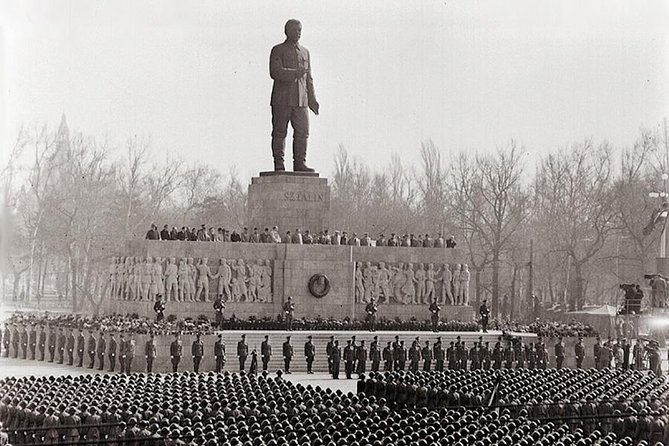
Dózsa György Street was used for May Day parades, when broad avenues became stages for organized displays of workers, soldiers, banners, and state power. Your guide uses an iPad loaded with old photographs to compare the street as it appears now with its Stalin-era appearance.
This before-and-after method is one of the tour’s most useful teaching tools. Old photographs can show you the scale of a parade far better than a verbal description. You can compare buildings, street activity, and the carefully arranged public image of communist Budapest with the city you see today.
The trolley bus ride also keeps the tour from becoming a string of isolated monuments. You move through the city as people once did, using public transport and passing through spaces shaped by official ceremonies.
Transport tickets are not included, so bring or buy the required metro and tram tickets separately. The description specifically notes tram and metro tickets as an extra cost. The trolley bus is part of the route, so ask your guide how the necessary ticket applies to that ride.
The House of Terror and the final look at repression
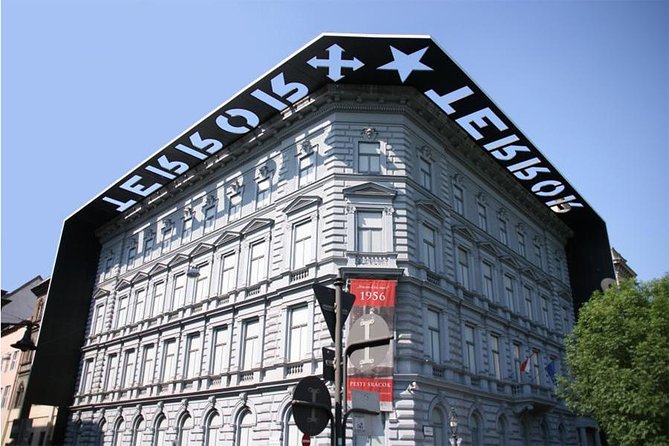
The tour finishes around the House of Terror, housed in the former headquarters of Hungary’s secret services. The museum commemorates crimes committed under communism, with particular attention to the Stalinist period.
The building’s purpose gives the ending a darker mood than the earlier housing and transport stops. You have just seen the public face of the system, including statues, apartment blocks, and parade routes. Here, the focus shifts to the machinery used to intimidate, imprison, and punish.
In front of the building is a slab from the Berlin Wall. It adds an international Cold War link to the final stop and reminds you that Hungary’s story was part of a wider division across Europe.
The tour does not state that admission to the House of Terror is included. Treat this as an exterior stop unless your guide tells you otherwise. If you want to visit the museum inside, plan it as a separate activity and allow additional time.
Ending here works well because it brings the tour back to the human cost of political control. The route has shown you why the system could appear practical or stable to some people, but the House of Terror makes clear what obedience could require.
Guide quality and the question of depth
The guide is the most important variable on this tour. The published guide pool includes professors, doctoral students, historians, journalists, art critics, and authors, so the experience is built around interpretation rather than simple sightseeing.
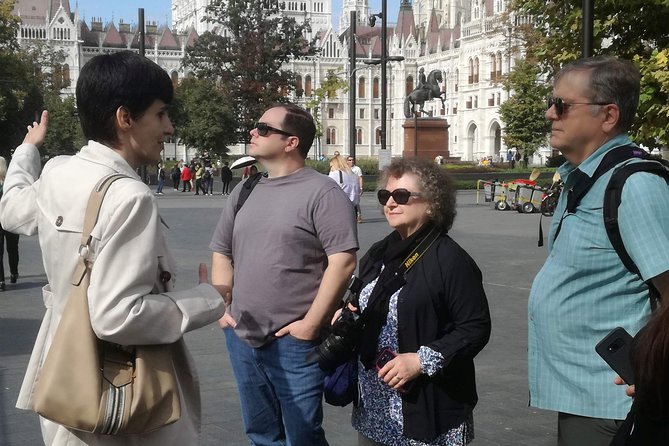
Andras received especially strong praise for his conversational manner, relaxed pace, and ability to adjust the route when his group had already seen some of the main sites. That sort of flexibility matters on a private or small-group tour. You can explain your interests and ask for more detail about politics, architecture, art, or daily life.
The overall rating is 4.9 from six ratings, with most responses giving the highest score. One participant called the tour a highlight of a Budapest visit and valued the historian’s insider perspective. Another described it as very informative, while a Spanish-speaking participant found it highly illustrative of Hungary’s communist era.
The less positive response is worth taking seriously. An American participant with prior knowledge of Hungary after 1968 felt the guide stayed close to the basics and did not add enough about daily life or the transition to democracy. That person also found the tour less satisfying than similar experiences in Prague and Berlin.
My advice is simple: tell the guide what you already know. If you have studied the period, ask for more on Goulash Communism, the slow move toward democracy, or the difference between Hungary’s gradual changes and more dramatic events elsewhere. If you are starting from scratch, the basic level may be exactly right.
Is $123 a fair price for three hours?
At $123 per person, this is not a budget walk. The value depends on what you want from a history tour and how many people are in your group.
You are paying for a historian-led experience that covers several parts of Budapest and includes metro and trolley bus travel between them. The route would be difficult to understand as a self-guided list of stops because the main benefit is the connection between political events, housing, public art, transport, and memory.
The price is easier to justify for a private or small group, especially if you care about asking questions and adjusting the conversation. It is less attractive if you only want to see the locations quickly or already have strong knowledge of Hungarian communism.
Remember to budget separately for public transport tickets. Admission to the House of Terror is not listed among the inclusions, so do not assume the museum entry is covered.
The tour lasts three hours, but the amount of walking, public transport, and historical explanation makes it feel substantial. One participant found the combination tiring. Plan it for a time when you can pay attention, rather than squeezing it between several major attractions.
Who should book this Budapest history walk?
I would recommend it most strongly to:
- First-time visitors who want a clear introduction to Hungary from the end of the Second World War to 1989
- People interested in the 1956 uprising and its effect on Budapest
- Anyone curious about how political systems shape housing, art, transport, and public space
- Visitors who prefer a historian’s explanation to a standard sightseeing script
- Private groups that want to set the level of detail before the walk begins
I would be more cautious if you have already studied Hungary’s communist period in depth. In that case, the tour could still work, but only if you request a more specialized discussion at the start.
Comfortable shoes are sensible, and you should expect a steady flow of information. The pace is described as relaxed, but the route covers many locations. Bringing a little prior reading, even just a basic timeline of 1956, 1968, and 1989, will help you get more from the guide.
Should you book the Communist Budapest tour?
Book it if you want to understand how communism shaped ordinary Budapest, not just where famous political events happened. The strongest parts are the contrast between the 1956 sites, the 1970s housing blocks, the public art, and the final stop at the House of Terror.
The tour is a particularly good match for a small group that can speak openly with a historian and ask for added context. Andras’s ability to adapt the route shows what the format can offer at its best.
Skip it if you already know the period well and expect a highly specialized account of the transition to democracy. At $123, a basic overview may not feel like enough. For everyone else, this is a thoughtful way to see Budapest’s communist past through both grand political sites and the less dramatic places where daily life carried on.
FAQ
Where does the Communist Budapest Walking Tour start?
It starts at Bambi Espresso, Frankel Leó út 2/4, Budapest 1027, Hungary.
How long does the tour last?
The tour lasts three hours.
What language is the tour offered in?
The live tour guide speaks English.
How much does the tour cost?
The listed price is $123 per person.
Are public transport tickets included?
No. Tram and metro tickets are not included in the tour price.
Is the House of Terror admission included?
Admission to the House of Terror is not listed among the included services.
Is the tour private or shared?
Private or small-group options are available.
Who leads the tour?
Guides include professors, doctoral students, historians, journalists, art critics, and published authors. Andras is one guide specifically praised for a conversational pace and flexible approach.
Which historic places are included?
The route includes Bem József Square, Kossuth Square, Freedom Square, a 1970s housing estate, the former People’s Stadium, Dózsa György Street, and the exterior area around the House of Terror.
Can I cancel the tour for a refund?
Yes. You can cancel up to 24 hours in advance for a full refund.
Just added around Budapest
- Lake Balaton and Herend Guided Tour★ 4.7 · 3 reviews
- Audio visual multi-sensory chefs journey dinner experience★ 5.0 · 3 reviews
- Hollókő Ethnographic Village: Day Tour from Budapest★ 3.7 · 3 reviews
- Tapolca Cave Lake and Tihany/ Balaton private tour from Budapest★ 4.5 · 3 reviews
- Budapest Art Nouveau Walking Tour★ 5.0 · 3 reviews
- SzentEndre-SaintAndrew City Privately Shopping and Picturesque★ 4.5 · 3 reviews
- Budapest Drinks and Piano Show Cruise★ 4.5 · 3 reviews
- Horseshow on the Hungarian Puszta, private tour from Budapest with entry!★ 5.0 · 3 reviews
Communist History Tours, compared.
Communist History Tour with House of Terror Option
What we thought →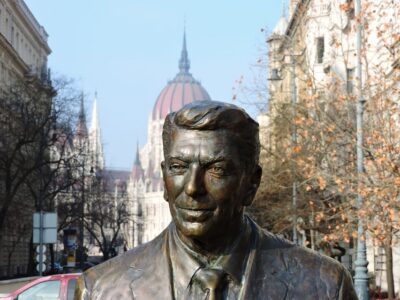
3-Hour Walking Tour About Communism (Small Group)
What we thought →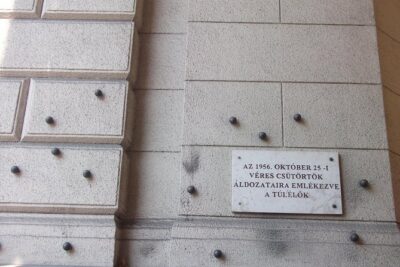
Lives of Hungarians Under Communist and Capitalist system
What we thought →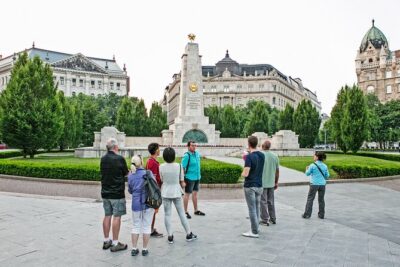
Private Budapest Hammer & Sickle Communist Times Tour
What we thought →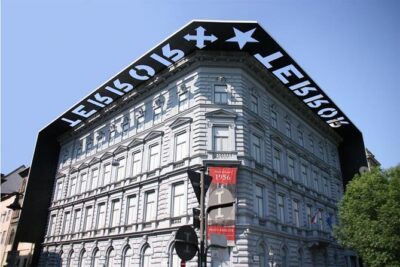
Browse the lists this tour appears in