

Reviewed · COMMUNIST HISTORY TOURS
Born Under The Red Star – Communist tour with Coffee in a Retro Bar
Budapest’s past is hiding in plain sight. Born Under The Red Star connects Soviet memorials, the 1956 uprising, communist-era politics, and present-day Budapest in a compact three-hour walk. I like the sharp historical focus and the chance to see places many city tours skip, especially Liberty Square and the 1956 memorial. The main drawback is that the tour moves quickly, with about 15 minutes at most listed stops.
I also like the personal touch of a classic soda in a communist-themed bar, plus coffee or tea and advice for exploring on your own. The tour costs $90.31 per person, so it offers fair value mainly for anyone who wants interpretation and context rather than a simple stroll past monuments.
In This Review
- Key points about Born Under The Red Star
- Why this Budapest communist tour is different
- Starting at the Opera and entering the story
- The Soviet Heroic Memorial in a park
- House of Terror and the cost of a short visit
- St. Stephen’s Basilica and the city beyond communism
- The Freedom Statue and the meaning of independence
- Liberty Square’s competing memorials
- The 1956 memorial and Hungary’s revolt
- Parliament as a grand political backdrop
- The retro bar, soda, coffee, and conversation
- Is $90.31 a fair price?
- Who should book this walk?
- Final verdict: book it for context, not entry tickets
- FAQ
- How long does the Born Under The Red Star tour last?
- What language is the tour offered in?
- Where does the tour start?
- Where does the tour end?
- Is a drink included?
- Are admission tickets included?
- Can I cancel the tour for a full refund?
Key points about Born Under The Red Star
- A focused look at 20th-century Hungary: The walk links fascism, Soviet influence, communism, the 1956 revolt, and modern national memory.
- A small maximum group of 15: This should make it easier to hear the guide and ask questions than on a large city tour.
- A retro bar stop with a classic soda: The drink adds a social, everyday detail to a tour centered on serious political subjects.
- Several central Budapest landmarks: You see the Opera, House of Terror, St. Stephen’s Basilica, Parliament, Liberty Square, and major memorials.
- A useful end point at Liberty Square: The tour finishes near one of Budapest’s most politically charged public spaces, a handy place for further independent sightseeing.
- Guide Ferenc receives special praise: A private booking with Ferenc became a highlight for one couple, thanks to his historical and political explanations.
Why this Budapest communist tour is different

Many Budapest walks concentrate on grand architecture, thermal baths, Jewish heritage, or the medieval city. This experience takes a harder route through the 20th century. It asks you to look at monuments, buildings, and public squares as evidence of changing power.
That matters in Budapest. The city’s streets carry memories of the Second World War, fascist rule, Soviet military presence, communist government, and the 1956 Hungarian Revolution. Those subjects can feel complicated when you meet them one at a time. The tour’s value comes from connecting them into one readable story.
You are not simply shown a statue and told its name. The stated focus is on commentary, places that many visitors miss, and practical suggestions for the rest of your stay. That makes this a good choice early in a Budapest visit, when you want a clearer sense of what you are seeing later.
The tour is offered in English and lasts about three hours. The group limit is 15, which is small enough to keep the experience personal without making it a private tour. One booking ended up being only a couple with Ferenc, who helped them understand Budapest’s political setting during a weekend visit. A small group is not guaranteed, but the maximum is reassuring.
More communist-era history walks:
- Budapest: Communist History Tour with House of Terror Option
★ 4.8 · 182 reviews - Communism in Hungary with a Historian
★ 5.0 · 70 reviews - Budapest: 3-Hour Walking Tour About Communism (Small Group)
★ 4.7 · 70 reviews
Starting at the Opera and entering the story

The meeting point is the Hungarian State Opera at Andrássy út 22. This gives the experience a central starting point on one of Budapest’s grandest avenues, but the subject quickly shifts from decorative city life to political memory.
The Opera area is also a useful location for a walking tour because it is near public transportation. You should arrive ready to walk for three hours and keep the schedule in mind. With roughly 15 minutes assigned to several stops, the guide will need to keep the group moving.
That brisk pace can be a strength. You cover a broad section of central Budapest without spending half a day in one museum. It can also be a limitation if you prefer long periods for photographs, private reflection, or detailed museum visits.
The tour is most useful when you treat it as an introduction. You get the framework and the guide’s explanation, then decide which places deserve a longer return visit.
The Soviet Heroic Memorial in a park
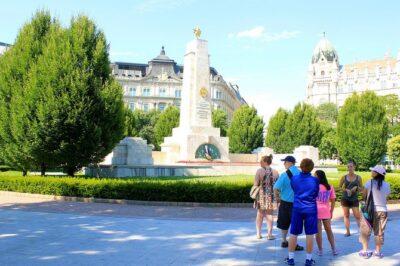
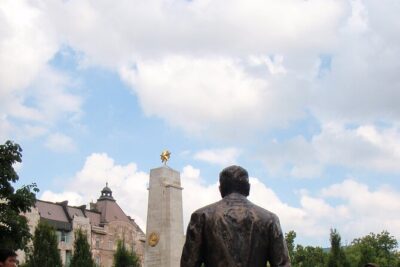
The first listed stop is a white obelisk in a landscaped park, dedicated to Russian military personnel who served during the Second World War. The setting is open and calm, which contrasts with the weight of the monument’s political meaning.
A memorial like this is not just a marker of wartime sacrifice. In Budapest, Soviet remembrance can raise difficult questions about liberation, occupation, national independence, and the way governments shape public memory. The guide’s commentary is especially important here because the monument itself cannot explain those tensions.
You have about 15 minutes and no admission charge. That is enough time to view the obelisk, hear the explanation, and consider how a public monument can mean different things to different generations.
Do not expect a major museum stop. This is an outdoor introduction to the themes that follow. Comfortable shoes will help, and you should avoid treating the short visit as a chance to wander far from the group.
House of Terror and the cost of a short visit
The House of Terror Museum at Andrássy út 60 examines Hungary’s fascist and communist regimes. It also serves as a memorial to people detained, questioned, tortured, or killed in the building.
This is one of the most emotionally serious points on the route. The address matters because the building itself is tied to state violence. Even a short exterior discussion can help you understand why the museum occupies such an important place in Budapest’s public memory.
The tour lists about 15 minutes here, with admission not included. That is a crucial detail. You are not being promised a full museum visit. Instead, you receive context and can decide if you want to return independently with enough time for the exhibits.
I like this arrangement for a three-hour walking tour. A full museum visit would change the whole shape of the experience and likely require several additional hours. Still, if the House of Terror is a priority, plan a separate visit. The tour’s short stop will not replace it.
The subject matter may be difficult, so this part suits people who want a serious account of 20th-century Hungary. It is less suitable if you are looking for a light sightseeing walk with only occasional historical notes.
A few more trips worth weighing up before you book
- Grand Segway Tour of Budapest – Private Tour with Coffee Stop
★ 5.0 · 163 reviews - Budapest: City Bike Tour with Coffee Stop
★ 5.0 · 37 reviews - Castle District tour with Matthias Church Ticket & Cake & Coffee
★ 5.0 · 31 reviews - Buda Castle Walking Tour with Matthias church entry, Cake&Coffee
★ 4.5 · 21 reviews
St. Stephen’s Basilica and the city beyond communism

St. Stephen’s Basilica, or Szent István Bazilika, brings another layer to the route. This Roman Catholic basilica is named for Stephen, Hungary’s first king, and its reliquary houses his right hand.
The basilica is not a communist memorial, and that is precisely why it belongs in the wider story. Budapest’s identity did not begin in the 20th century. The church points to Hungary’s older religious and national traditions, while the surrounding route shows how later governments tried to reshape public life.
The stop is listed at about 15 minutes, and admission is not included. You should think of this as an outside introduction unless your tour arrangements say otherwise. If you want to enter, see the interior, or visit the reliquary, allow separate time and budget for admission.
This brief stop also helps break up the political material. After memorials and stories of repression, a major church offers a different view of the city’s cultural identity. You will not get a full basilica visit in 15 minutes, but you will see how close Budapest’s religious, civic, and political landmarks sit to one another.
The Freedom Statue and the meaning of independence

The route also includes Budapest’s Freedom Statue, or Szabadság-szobor, on Gellért Hill. It commemorates people who gave their lives for Hungary’s independence, freedom, and prosperity.
The information provided does not assign a specific duration or admission detail to this stop, so you should expect the guide to use it as part of the broader political discussion rather than assume a long visit. Its theme of freedom fits the tour’s central questions: Who controlled Hungary, what did independence mean, and how did public symbols change over time?
The location on Gellért Hill is important, but the supplied meeting and ending details do not describe a separate transport arrangement for reaching every stop. Confirm the exact route and walking plan when you book, particularly if you have limited mobility or want to avoid steep sections.
This is one place where the guide’s interpretation adds real value. A monument about freedom can sound simple until you place it beside Soviet memory, the 1956 uprising, and the competing stories told in other Budapest memorials.
Liberty Square’s competing memorials

Liberty Square, or Szabadság tér, is the final meeting point and one of the strongest stops on the walk. The square includes controversial memorials connected with Hungarian Jewish victims of the Holocaust and Soviet soldiers who liberated Budapest from the Nazis in 1945.
The square also sits near the United States Embassy and the historicist headquarters of the Hungarian National Bank. In a small area, you encounter memorial art, international power, national finance, and arguments over how Hungary remembers the past.
This is the sort of place that can pass unnoticed if you are simply walking between major sights. The tour gives you a reason to stop and read the square as a political space. I especially like that the experience ends here. You can continue exploring independently after the guide leaves, and the included maps and recommendations should help you choose what to see next.
The square is also a good place to pause after the tour. You may want to examine the memorials more carefully, compare their wording and design, or return later when you have had time to think about the guide’s explanation.
The 1956 memorial and Hungary’s revolt

Another listed stop is the memorial to the 1956 Hungarian Revolution and War of Independence. It honors the people who rose against the communist regime.
The 1956 uprising is essential to understanding modern Hungary. It was a direct challenge to communist rule and remains a powerful part of the country’s national memory. A memorial can make the event visible, but the guide’s explanation should help you understand why it still carries political weight.
The stop is listed at about 15 minutes and is free. That keeps the tour moving while giving the guide time to explain the monument’s purpose, the revolt it remembers, and its place in the route.
I would pay close attention here. This is not simply another statue for your camera. It is one of the clearest points where the tour turns from general Soviet-era history toward Hungarian resistance and the desire for self-government.
Parliament as a grand political backdrop
The Hungarian Parliament Building is another major landmark on the route. It is the seat of Hungary’s National Assembly and one of Budapest’s most recognizable buildings.
The Parliament stop is listed at about 15 minutes, and admission is not included. As with the House of Terror and St. Stephen’s Basilica, this is not a full interior tour. You receive a short visit and historical framing, then continue.
Parliament works well as a final architectural counterpoint to the memorials. It represents the country’s national government, while the earlier stops show the forces that challenged or controlled Hungarian political life. You begin to see Budapest not as a collection of beautiful façades, but as a city where power has repeatedly changed hands.
If Parliament is high on your personal list, arrange a separate interior visit. This walking tour can explain why the building matters, but 15 minutes will not cover a full guided visit.
The retro bar, soda, coffee, and conversation
The included refreshment is a classic soda in a bar with communist-themed decor. Coffee and tea are also included. This is a small feature, but it gives the tour a welcome human scale.
Political history can become heavy. Sitting down with a familiar soft drink in a retro setting provides a pause and a chance to connect public events with ordinary daily life. A themed bar also offers a different kind of evidence: not a monument or official memorial, but an atmosphere built around the visual language of an earlier period.
Food and other drinks are not included unless specifically stated, so do not treat the refreshment stop as a meal. The listed inclusion is limited to the classic soda, coffee, and tea. If you need lunch or more substantial food, plan separately.
I like this part because it keeps the experience from feeling like a string of solemn plaques. It also gives you time to ask questions. If you are curious about Budapest beyond the formal route, this is a good moment to ask the guide for further recommendations.
Is $90.31 a fair price?
At $90.31 per person, this is not a cheap orientation walk. You are paying for a three-hour English-language experience, a small maximum group, a guide’s interpretation, a retro soda, coffee or tea, maps, and suggestions for independent sightseeing.
The value depends on what you want. If you only need directions to Budapest’s main sights, you can walk through central areas on your own for far less. If you want the political connections explained as you go, the price becomes easier to justify.
The tour also covers several stops where admission is free, but that does not mean the experience has little value. The central service is the guide’s context. Museum and basilica admission are not included, and the Parliament stop also does not include entry, so budget for those separately if you decide to return.
Group discounts may help reduce the cost for eligible bookings. The experience is also booked about 18 days ahead on average, which suggests planning early is sensible, particularly if you want a certain date or a smaller group.
Who should book this walk?
I would choose this experience if you want to understand Budapest’s modern political story and prefer walking to a standard sightseeing bus. It suits history-minded visitors, first-time visitors who want useful orientation, and anyone interested in the relationship between monuments and public memory.
It is also a good fit if you enjoy asking questions. The small group limit and the example of Ferenc guiding only two people show how personal the outing can become when numbers are low.
You should think twice if you want long museum visits, plenty of free time at each monument, or a relaxed café crawl. The 15-minute stops create a brisk rhythm, and several major sites are seen without included admission.
Children can join, but they must be accompanied by an adult. Service animals are allowed, the tour is near public transportation, and most people can participate. The Freedom Statue on Gellért Hill may deserve extra planning if walking conditions are a concern, since the supplied details do not spell out the exact route between every stop.
Free cancellation is available up to 24 hours before the start time for a full refund. Changes made less than 24 hours ahead are not accepted, and poor weather can lead to a new date or full refund. That weather rule matters because this is an outdoor walking experience.
Final verdict: book it for context, not entry tickets
Book Born Under The Red Star if you want Budapest’s communist past explained through real streets, memorials, public squares, and political landmarks. The strongest features are the focused subject, the small group cap, the stop at Liberty Square, and the practical recommendations you can use after the walk.
The experience is less compelling if you expect full access to the House of Terror, St. Stephen’s Basilica, or Parliament. Those are short orientation stops, not included admissions. Still, the walk can make later visits more meaningful by showing how each place fits into Hungary’s difficult 20th-century story.
At $90.31, I see it as a specialist tour with a clear purpose. The excellent feedback for Ferenc points to the value of a guide who can turn a complicated past into a connected story. If that is the Budapest you want to understand, this is a worthwhile three-hour addition to your plans.
FAQ
How long does the Born Under The Red Star tour last?
The tour lasts approximately three hours.
What language is the tour offered in?
The tour is offered in English.
Where does the tour start?
The tour starts at the Hungarian State Opera, Budapest, Andrássy út 22, 1061 Hungary.
Where does the tour end?
The tour ends at Liberty Square, Budapest, Szabadság tér, Hungary.
Is a drink included?
Yes. The tour includes a classic soda at a communist-themed bar, plus coffee and/or tea. Other food and drinks are not included unless specified.
Are admission tickets included?
Admission is free at the Soviet Heroic Memorial, Liberty Square, and the memorial to the 1956 Hungarian Revolution. Admission is not included for St. Stephen’s Basilica or the Hungarian Parliament Building. The House of Terror stop is listed without an included admission ticket.
Can I cancel the tour for a full refund?
Yes. You can cancel at least 24 hours before the experience start time for a full refund. Cancellations or changes made less than 24 hours before the start time are not accepted, and poor weather may result in a different date or a full refund.
More Drinking Tours
- Budapest: Unlimited Prosecco, Beer and Aperol Spritz Cruise
★ 4.8 · 25,310 reviews - Budapest: Unlimited Prosecco, Beer & Aperol Spritz Cruise
★ 4.5 · 3,371 reviews - Budapest: Bar Crawl with a Local Guide
★ 4.9 · 1,112 reviews - Budapest: Ruin Bar Pub Crawl with Entry Tickets
★ 4.7 · 1,028 reviews
Just added around Budapest
- Lake Balaton and Herend Guided Tour★ 4.7 · 3 reviews
- Audio visual multi-sensory chefs journey dinner experience★ 5.0 · 3 reviews
- Hollókő Ethnographic Village: Day Tour from Budapest★ 3.7 · 3 reviews
- Tapolca Cave Lake and Tihany/ Balaton private tour from Budapest★ 4.5 · 3 reviews
- Budapest Art Nouveau Walking Tour★ 5.0 · 3 reviews
- SzentEndre-SaintAndrew City Privately Shopping and Picturesque★ 4.5 · 3 reviews
- Hungary today: a no-taboo conversation★ 5.0 · 3 reviews
- Budapest Drinks and Piano Show Cruise★ 4.5 · 3 reviews
Communist History Tours, compared.

Communist History Tour with House of Terror Option
What we thought →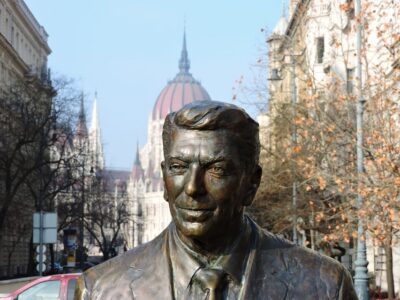
3-Hour Walking Tour About Communism (Small Group)
What we thought →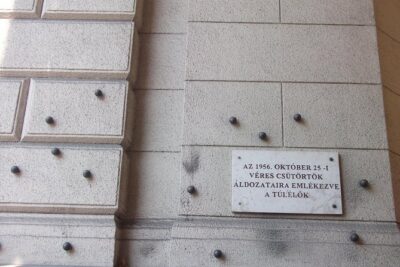
Lives of Hungarians Under Communist and Capitalist system
What we thought →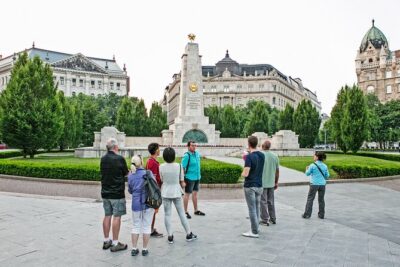
Private Budapest Hammer & Sickle Communist Times Tour
What we thought →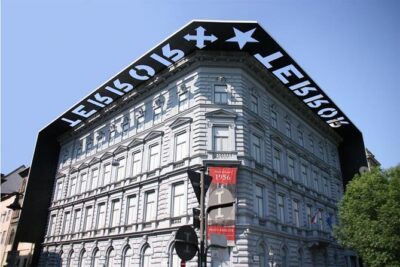
Browse the lists this tour appears in