
Reviewed · COMMUNIST HISTORY TOURS
Private Communist Budapest Tour
Budapest’s past is closer than it looks. This private four-hour tour turns streets, monuments, and public spaces into a personal lesson in communist Budapest, with hotel pickup, time on foot, and a guide who can explain both major events and everyday life. I like the private format, which lets your group ask questions and shape the discussion. I also like the focus on personal experience, especially with guides such as Martin and Bogota, rather than a history lecture delivered from a script.
The main drawback is the price: $361.23 per person is a serious spend, especially for a four-hour tour. The value depends on your group size and your interest in modern Hungarian history. It is also a walking-based experience, so cold, rain, and the amount of time on your feet matter.
In This Review
- Key points to know before booking
- Why communist Budapest deserves a dedicated tour
- Starting at 10:30 a.m. with hotel pickup
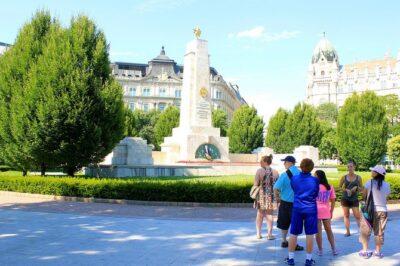
- Szabadság tér and the Soviet memorial
- Walking through the city and using public transport
- Major sights with a communist-era lens
- The guides are the heart of the experience
- What the $361.23 price means
- Who will enjoy this tour most
- Practical details that affect your day
- Should you book the Private Communist Budapest Tour?
- FAQ
- How long is the Private Communist Budapest Tour?
- What time does the tour start?
- Is hotel pickup available?
- What language is offered?
- Is the tour private?
- What is the main named stop?
- What happens if the weather is bad?
Key points to know before booking
- Szabadság tér sets the tone: You visit the Soviet Red Army memorial beside the American Embassy, a striking and politically charged pairing.
- Personal stories are central: Your guide can discuss what communist rule meant for ordinary people in Budapest, not just dates and political leaders.
- Hotel pickup and drop-off save time: You do not need to find an unfamiliar meeting point at 10:30 a.m.
- The route can change with your interests: As a private activity, your group has room to ask questions and request more attention to certain subjects.
- Walking and public transit may both be used: One four-hour experience covered considerable ground on foot and by public transport.
- You need weather-ready clothing: The tour operates in all weather, and the supplied feedback includes a cold-weather outing that remained enjoyable because the subject held attention.
Why communist Budapest deserves a dedicated tour
Budapest is often introduced through the Parliament building, the Danube, thermal baths, and grand churches. Those sights matter, but they do not fully explain the city. To understand modern Budapest, you also need to look at the decades when Hungary lived under a communist system and when Soviet power shaped public life.
That period is not always easy to read from the city at first glance. A monument may look like a simple memorial. A broad square may seem like a pleasant place for a short walk. A guide can show you how those spaces carry political meaning, old loyalties, public arguments, and memories that have not disappeared.
This tour suits you if you want more than a quick list of dates. The strongest part is the chance to connect national events with the experience of citizens. One guide explained both the city’s political history and the personal side of life under communism, helping the past feel less remote.
I also like the subject because it gives you a different way to see familiar Budapest. The route may include major sights such as Parliament and St. Stephen’s Basilica, but the focus is not simply taking photographs of them. You learn how the city’s public spaces fit into a longer story.
More communist-era history walks:
- Budapest: Communist History Tour with House of Terror Option
★ 4.8 · 182 reviews - Communism in Hungary with a Historian
★ 5.0 · 70 reviews - Budapest: 3-Hour Walking Tour About Communism (Small Group)
★ 4.7 · 70 reviews
Starting at 10:30 a.m. with hotel pickup
The tour begins at 10:30 a.m., and the guide picks you up at your hotel. You need to provide the hotel details when arranging the tour. That simple step matters in Budapest, where a private pickup can save you from finding a new address, locating a meeting point, or losing part of the morning to navigation.
Pickup also makes the start feel more personal. You meet your guide at your accommodation and begin with an immediate chance to explain what interests you. If you care most about daily life, political events, architecture, or the city’s connection with the Soviet Union, say so early.
The tour lasts about four hours. That gives you enough time for conversation and several stops, but it is not an all-day survey of every communist-era site in Budapest. You should think of it as a focused introduction, not a complete history course.
The private setup is important here. Only your group participates, so the guide does not need to split attention between strangers with different interests. You can pause for questions, spend longer on a difficult subject, or move along when you feel you have understood a point.
Szabadság tér and the Soviet memorial
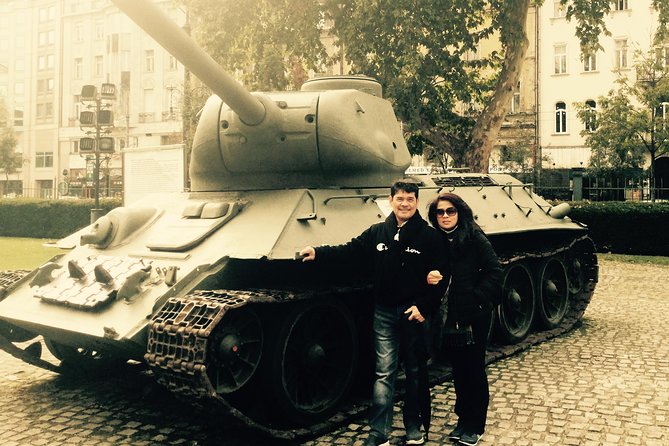
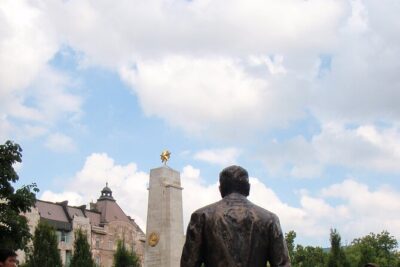
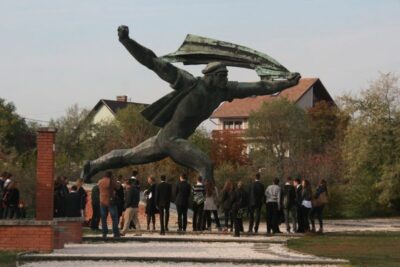
The clearest named stop is Szabadság tér, or Liberty Square. Here you see the memorial to the Soviet Red Army soldiers who died during the Siege of Budapest in the Second World War.
The memorial is interesting not only because of what it commemorates, but also because of where it sits. The American Embassy is directly beside it, creating an unusual visual and political contrast. A Soviet memorial next to an American diplomatic building is not a random detail. It gives your guide a natural opening to discuss power, memory, and the changing political order in Hungary.
You should allow about 20 minutes at this stop. Admission is not included, although this is an outdoor public-space visit rather than a museum admission in the details provided. The value comes from the explanation around the site, so listen closely and ask questions rather than treating it as a quick photograph stop.
Szabadság tér also shows why a walking tour can work well for this subject. You are not only hearing about the past inside a vehicle. You are looking at the actual setting and noticing how history occupies the city today.
The square may be especially useful if you have already seen Budapest’s standard attractions. It gives you a more complicated view of the city, one where memorials can be admired, questioned, or viewed differently depending on family experience and political background.
Walking through the city and using public transport
The experience is described as a walking tour, but one four-hour outing also covered ground by public transport. That combination is useful. Walking lets you notice buildings, streets, and public spaces at a human pace. Public transport can help your group reach another area without spending the whole tour crossing the city on foot.
You should expect to be active. The exact route beyond Szabadság tér is customizable, so the amount of walking can vary. Ask about the planned route when booking if you have mobility concerns or want to limit the time outdoors.
The tour operates in all weather conditions. Bring clothing that matches the forecast, including comfortable shoes and protection from rain or cold. The cold-weather feedback is worth taking seriously: the subject remained engaging, but that does not make winter clothing optional.
I would choose practical clothing over stylish city clothes for this outing. Four hours can pass quickly when you are talking, but standing and walking in poor footwear will make the final hour feel longer. Since hotel pickup is offered, you can also prepare properly before leaving instead of trying to buy supplies on the way.
A few more trips worth weighing up before you book
- Private Budapest TukTuk Tour: Custom Route, Hotel Pickup
★ 5.0 · 1,307 reviews - Budapest Essentials Private Tour Highlights and Hidden Gems
★ 5.0 · 861 reviews - Budapest Private Tuk Tuk Half-Day Tour
★ 5.0 · 606 reviews - Budapest One Way Private Transfer to or from Airport
★ 4.5 · 548 reviews
Major sights with a communist-era lens
The experience can include major Budapest landmarks such as Parliament and St. Stephen’s Basilica. These are not described as separate formal stops with fixed visit times, so you should not assume that the tour includes interior admission or an extended guided visit inside either building.
Their value is visual and historical. Parliament is one of the city’s best-known symbols, and its presence can help frame discussions about the state, political authority, and national identity. St. Stephen’s Basilica offers a different kind of setting, allowing the guide to explain how public life, religion, and political systems interacted across changing periods.
The point is not to replace a standard sightseeing tour. If you want detailed architectural commentary or time inside every famous building, you will need another tour. Here, the familiar sights become reference points in a broader conversation about the city’s recent past.
I like that balance. You can see some of Budapest’s essential landmarks while also moving beyond the usual postcard version of the city. For a first visit, that may be a smart way to connect standard sightseeing with a subject that many short city tours ignore.
The guides are the heart of the experience
The strongest praise centers on the guides. Martin is described as personable, thoughtful, and well prepared, with the ability to cover a fair amount of ground while using both walking and public transit. That mix matters because a good history tour needs more than facts. It needs a guide who listens and knows when to explain, pause, or let you look.
Bogota guided a cold-weather walk that still left a strong impression. The lesson here is useful: the quality of the guide can make a major difference when conditions are not ideal. A thoughtful guide can turn an ordinary street corner into a place worth stopping for.
Another guide was praised for speaking perfect English and for explaining both public events and personal experiences of Budapest residents. Those first-person stories can help you understand the difference between official history and lived history.
The provider, CurioCity Budapest, is also represented by Suzy, who handled communication and arrangements well. That is a practical plus. Private tours require clear coordination, especially when pickup depends on the hotel information you provide.
You should still remember that guides can differ. The supplied details name Martin and Bogota, but they do not promise which guide you will receive. When booking, you can ask who is available and mention the type of history discussion you want.
What the $361.23 price means
At $361.23 per person, this is not a budget sightseeing walk. You are paying for a private four-hour service, hotel pickup and drop-off, an English-speaking guide, and a route that can respond to your group.
The per-person price becomes easier to assess when you consider group size. A private tour can make sense for a family or small group that values privacy and discussion. If you are alone or traveling as a pair, the same figure feels much heavier than the cost of a large group walk.
I would book it for the quality of conversation, not for the number of sights checked off a list. The tour has one specifically named stop, Szabadság tér, and the wider route is flexible. That means the value lies in interpretation, access to a thoughtful guide, and the ability to ask questions.
If your main goal is to see as many famous buildings as possible, cheaper sightseeing options may suit you better. If you want to understand why certain memorials and public spaces remain sensitive, the private format offers something a standard city orientation often cannot.
The four-hour duration is also a useful middle ground. It is long enough to develop a subject without taking your whole day. You can schedule another activity afterward, although you should allow extra time if your group has many questions or spends longer at a stop.
Who will enjoy this tour most
I would recommend this experience to you if you have an interest in twentieth-century Europe, political change, personal testimony, or the way history shapes a city’s public spaces. It should also suit repeat visitors who have already seen the major monuments and want a different angle on Budapest.
Families with older children may find the private format helpful because questions can be handled at the right level. The subject may be too specialized if your group only wants light sightseeing, but the guide can make the material easier to follow through stories and visible places.
This is also a good choice if you dislike large groups. You will not be sharing the activity with strangers, and your group can take part in a more natural conversation. English is the offered language, so you should be comfortable discussing history in English.
You may want to skip it if a four-hour walking outing sounds tiring, if you want museum interiors, or if the price is outside your budget. The tour operates in all weather, so a rainy or cold forecast should factor into your decision.
Practical details that affect your day
Confirmation arrives at booking. Hotel pickup is offered, but your hotel must be specified. The start time is 10:30 a.m., and the activity lasts about four hours.
Mobile tickets make it easier to keep the booking available on your phone. Service animals are allowed, and the tour is near public transportation. Most people can participate, but the walking element means you should raise any specific needs before the day begins.
Free cancellation is available if you cancel at least 24 hours before the local start time. Cancellations or changes made less than 24 hours before the start are not accepted for a refund. That policy is fairly clear, but keep the cutoff in mind when weather, illness, or schedule changes are possible.
The tour is private, so only your group takes part. That is the main practical advantage over a standard group outing. You can ask direct questions, request more detail on a subject, and avoid spending the morning waiting for people you do not know.
Should you book the Private Communist Budapest Tour?
Book it if you want Budapest explained through personal stories and political memory, and if you value a private guide enough to justify the cost. The memorial at Szabadság tér, the nearby American Embassy, and the chance to connect famous sights with communist-era events give the tour a clear focus.
I would be more cautious if you want a low-cost introduction, a fixed list of monuments, or a museum-heavy schedule. The price is high, and the exact route can change. Still, for a small group that wants an honest conversation about Budapest’s recent past, hotel pickup and a guide such as Martin or Bogota can make this a worthwhile four-hour use of your morning.
FAQ
How long is the Private Communist Budapest Tour?
The tour lasts approximately four hours.
What time does the tour start?
The start time is 10:30 a.m.
Is hotel pickup available?
Yes. Pickup and drop-off are offered from your hotel, which must be specified when arranging the tour.
What language is offered?
The tour is offered in English.
Is the tour private?
Yes. Only your group participates in the activity.
What is the main named stop?
The tour visits Szabadság tér, where you see the Soviet Red Army memorial commemorating soldiers who died during the Siege of Budapest in the Second World War.
What happens if the weather is bad?
The tour operates in all weather conditions, so you should dress appropriately for the forecast.
Just added around Budapest
- Lake Balaton and Herend Guided Tour★ 4.7 · 3 reviews
- Audio visual multi-sensory chefs journey dinner experience★ 5.0 · 3 reviews
- Hollókő Ethnographic Village: Day Tour from Budapest★ 3.7 · 3 reviews
- Tapolca Cave Lake and Tihany/ Balaton private tour from Budapest★ 4.5 · 3 reviews
- Budapest Art Nouveau Walking Tour★ 5.0 · 3 reviews
- SzentEndre-SaintAndrew City Privately Shopping and Picturesque★ 4.5 · 3 reviews
- Budapest Drinks and Piano Show Cruise★ 4.5 · 3 reviews
- Horseshow on the Hungarian Puszta, private tour from Budapest with entry!★ 5.0 · 3 reviews
Communist History Tours, compared.
Communist History Tour with House of Terror Option
What we thought →
3-Hour Walking Tour About Communism (Small Group)
What we thought →
Lives of Hungarians Under Communist and Capitalist system
What we thought →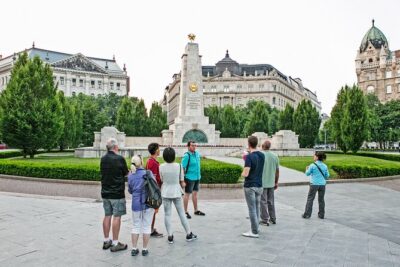
Private Budapest Hammer & Sickle Communist Times Tour
What we thought →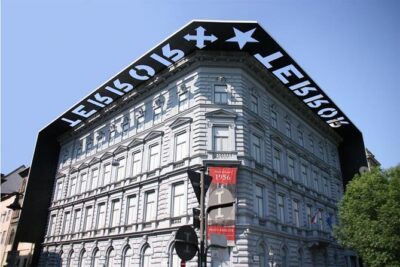
Browse the lists this tour appears in