
Reviewed · COMMUNIST HISTORY TOURS
Life Under Communism” with optional visit to the House of Terror
Budapest still carries reminders of its Communist past. This private tour connects Soviet memorials, 1956 revolution sites, personal stories, and a coffee stop at Bambi Presszó, giving you a useful way to read the city beyond its grand architecture. I especially like the firsthand accounts from guides such as Miklós and Balázs, plus the chance to see political memory in ordinary streets. The private format also lets your group ask questions freely. One caution: confirm your chosen option before arrival, since the city walk, Memento Park, and House of Terror are separate versions of the experience.
I also like the way this tour links the 1956 uprising to places such as Kossuth Square and Corvin köz instead of treating Communism as a distant textbook subject. The main drawback is value: at $280.33 for up to five people, you will want a full, engaged tour and clear guidance about transport, coffee, and included admission.
In This Review
- Key points to know before booking
- Why Budapest’s Communist past deserves an afternoon
- Liberty Square and the Soviet memorial
- Kossuth Square and the 1956 massacre
- Petőfi Statue and Március 15. Square
- Corvin köz, where young fighters resisted in 1956
- Crossing the Danube to St. Gellért Square
- Choosing Memento Park and its Soviet statues
- Choosing the House of Terror Museum
- Bambi Presszó and the everyday side of Communism
- The private format and guide quality
- Is $280.33 good value for up to five people?
- Who should book this experience?
- Should you book it?
- FAQ
- How long does the experience last?
- How many people can join the private tour?
- Is the House of Terror Museum always included?
- Is Memento Park included?
- Is coffee at Bambi Presszó included?
- Does the tour provide hotel pickup?
- What level of fitness is required?
Key points to know before booking
- Bambi Presszó adds a human touch: Sip coffee at one of Budapest’s last cafés associated with Communist-era culture, though food and drinks are not included.
- The 1956 revolution comes alive at street level: Kossuth Square and Corvin köz connect political events with the actual places where people protested and fought.
- You choose the final focus: The route can include Memento Park or the House of Terror Museum, but these are options rather than automatic stops.
- It is a private experience: Only your group participates, with a maximum of five people and room for questions.
- Public transportation may be part of the lesson: Guides have helped visitors learn how to use Budapest’s transit system, but some transport costs may be extra.
- The guide matters greatly: Miklós, Balázs, Agy, and Fungarian guides have received strong praise, while two low ratings point to problems with audibility, enthusiasm, and itinerary clarity.
Why Budapest’s Communist past deserves an afternoon
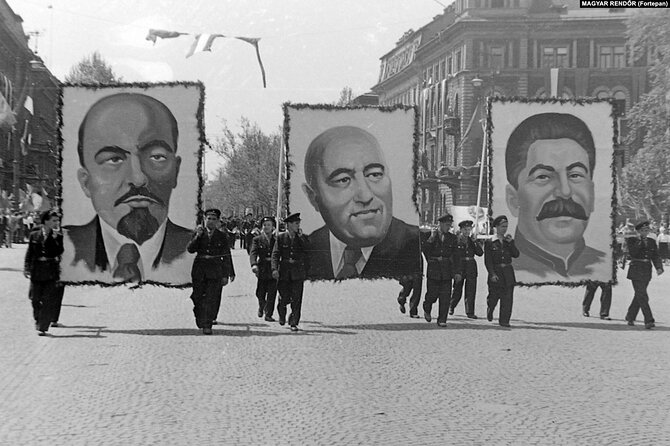
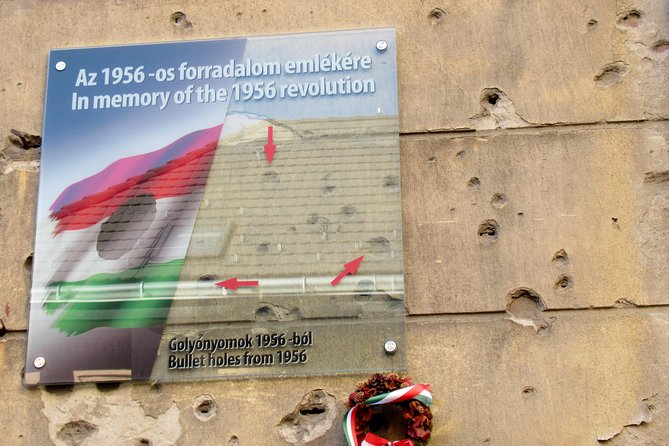
Budapest’s Communist era is not confined to a museum. It appears in memorials, renamed squares, old cafés, bullet-marked buildings, public statues, and the stories families still carry. That makes a walking tour useful here. You are not only looking at objects from the past. You are learning why they were placed there and how people lived around them.
The experience lasts about three hours, though one reported outing lasted more than four hours after the guide adapted the pace and route for the group. The advertised route moves across central Budapest and toward Buda, so this is more than a short stroll around one square.
The format suits you best if you want conversation rather than a set audio script. Your guide can explain unfamiliar names, answer questions about Soviet influence, and connect the 1956 uprising to modern Hungarian memory. Strong guides have also helped visitors use public transportation for the rest of their stay, a practical bonus if you are still finding your way around Budapest.
The subject is serious, but the tour does not appear to treat the city as a museum piece. A coffee at Bambi Presszó gives you a pause and a look at a surviving piece of everyday culture. Just remember to pay for extra drinks yourself.
More communist-era history walks:
- Budapest: Communist History Tour with House of Terror Option
★ 4.8 · 182 reviews - Communism in Hungary with a Historian
★ 5.0 · 70 reviews - Budapest: 3-Hour Walking Tour About Communism (Small Group)
★ 4.7 · 70 reviews
Liberty Square and the Soviet memorial
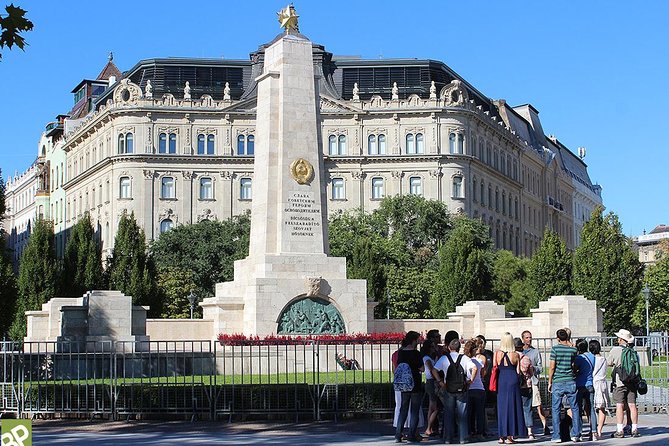
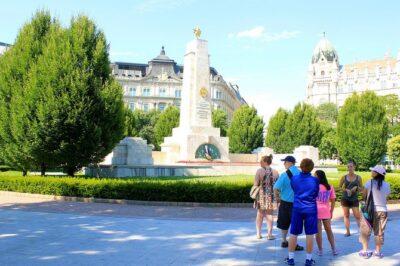
The tour begins at Liberty Square, or Szabadság tér. The square is large and formal, with its present scale shaped by the Habsburg period. It once held Újépület, a fortress-like complex often compared to the Bastille.
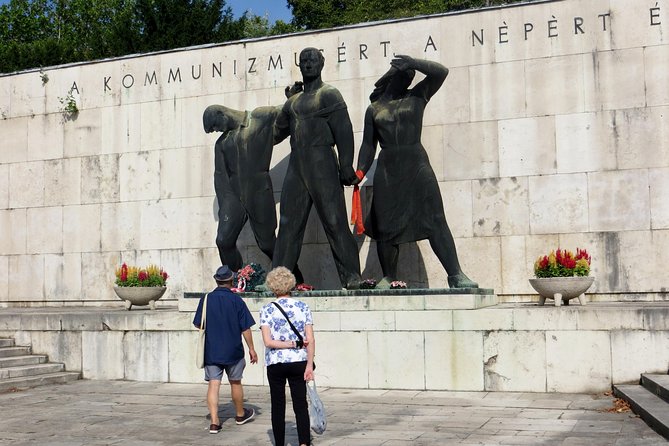
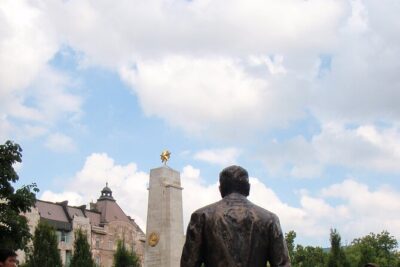
Today, the square mixes open lawns, monuments, and political symbolism. The Soviet army memorial is the key opening stop. It commemorates the siege of Budapest near the end of World War II, when Soviet forces encircled the city for roughly 50 days.
This is a useful place to begin because the memorial can provoke mixed feelings. It refers to Soviet forces as liberators from Nazi Germany, yet Soviet control later became the force shaping Hungary’s political life. Your guide can help explain that tension instead of presenting the monument as a simple celebration.
I would allow time here for questions. The value is not the memorial’s size alone. It is the way the monument opens the larger subject of liberation, occupation, dictatorship, and public memory.
Kossuth Square and the 1956 massacre
From Liberty Square, the route continues to Kossuth Square, home of the Hungarian Parliament Building. The square was renamed in 1927 for Lajos Kossuth, an important figure in Hungarian political history, and it has also been known as Parliament Square.
The 1956 events here are among the tour’s most serious subjects. A civilian crowd gathered in front of Parliament during the revolution. A firefight followed, and the exact number of people killed remains uncertain. The crowd included women, children, and older people as well as men, a detail that makes the event feel less like a military episode and more like a national trauma.
You can expect about 20 minutes at the Parliament area. Admission to the square is free, but the focus is the history, not an interior visit to the Parliament building.
This stop works best with a guide who can explain uncertainty carefully. The massacre helped push Budapest and the rest of Hungary toward open revolt and armed resistance. If your interests are political history or memorial culture, this may be one of the strongest parts of the walk.
The practical limitation is that public access or local conditions can affect the stop. One unhappy customer reported that the Parliament stop was closed, so you should ask the operator what happens if a planned location cannot be entered or viewed properly.
Petőfi Statue and Március 15. Square
The route then heads to the Petőfi Statue and Március 15. Square, near the foot of Erzsébet Bridge. The area sits in front of one of Budapest’s oldest churches and was renovated in 2011.
This stop is less severe in mood. It places political memory beside an ordinary public space used for social life. That contrast is worthwhile. Communist history was not lived only in government offices or on battlefields. It unfolded in streets, squares, cafés, workplaces, and family homes.
The route’s movement through central Budapest is another advantage. You get a sense of the city while the guide explains its recent past, instead of spending three hours indoors. On the other hand, the walking portions require a moderate level of fitness, and the experience is not designed as a purely seated sightseeing tour.
A completely different kind of day out around Budapest:
- Budapest: City Highlights Cruise with Welcome Drink
★ 4.6 · 35,610 reviews - Budapest: Unlimited Prosecco, Beer and Aperol Spritz Cruise
★ 4.8 · 25,310 reviews - Budapest: Széchenyi Spa Day Ticket with Optional Upgrades
★ 4.3 · 23,911 reviews - Budapest: Nighttime or Daytime Sightseeing Cruise
★ 4.2 · 21,062 reviews
Corvin köz, where young fighters resisted in 1956
Corvin köz is one of the most meaningful stops. During the 1956 revolution, young local fighters used Molotov cocktails and guns taken from soldiers to resist Soviet tanks. The area became a major center of resistance.
This is a strong example of the tour’s approach. Rather than discussing 1956 only as a date, the guide brings you to the place where resistance took shape. You can hear about the invasion, the fighting, and the aftermath while looking at the urban setting itself.
The subject can be difficult, especially because many of the fighters were young. A good guide needs to balance military facts with the human cost. Past groups have praised guides for personal stories and clear context, but one group found its guide too quiet and detached. That difference matters here. Corvin köz needs explanation, since the physical surroundings will not tell you the full story on their own.
Crossing the Danube to St. Gellért Square
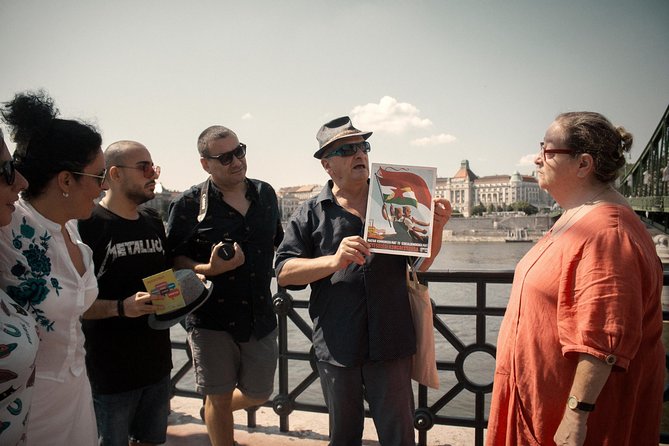
After the Pest-side stops, the route crosses one of Budapest’s bridges toward Gellért Hill and St. Gellért Square. The crossing gives you a change of view and a break from the memorial-heavy sections of the tour.
St. Gellért Square is named for Bishop Gellért, also known as the Martyr. From here, you can see the Liberty Statue on Gellért Hill. The statue was erected in 1947 to commemorate the Soviet liberation of Hungary.
Again, the symbolism is complicated. A monument that once honored Soviet liberation later became part of a city dealing with the end of Communist rule. This is the sort of political contradiction that makes the tour more useful than a simple list of monuments.
The walk across the river also has practical importance. You are covering a fair amount of ground in three hours, so comfortable shoes are sensible. If you have limited mobility, tell the operator in advance. One longer private tour was adjusted to include a participant with a mobility impairment, but that kind of accommodation should be discussed before the start.
Choosing Memento Park and its Soviet statues
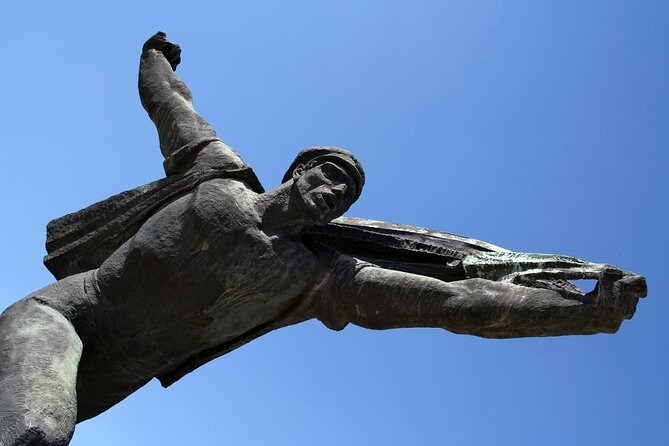
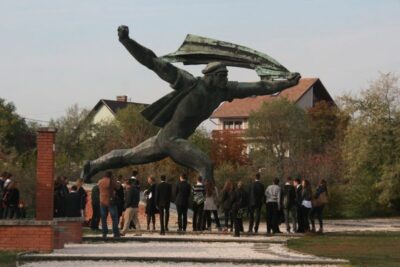
If you select the Memento Park option, expect about an hour at the park. When Communism collapsed in 1989, Budapest was left with statues celebrating the former system. Rather than destroying all of them, the city decided in 1993 to preserve them in one location.
The result is a deliberate collection of Communist-era public art removed from the city center. It gives you a chance to consider how monuments change meaning when their original setting disappears. A statue built to command a public square feels different when grouped with other symbols of a fallen political order.
Memento Park is likely the better choice if you enjoy statues, propaganda, and the visual side of history. It also received especially strong praise from people who wanted detailed historical explanation. The tradeoff is time and transport. Memento Park is outside the central walking route, and one lower rating objected to paying separately for transportation and admission.
The supplied details say an entrance ticket is included for selected visit options, but public transportation may still cost extra. Ask exactly what your quoted price covers before you book. This is particularly important for a group of five, where small additional costs can add up.
Choosing the House of Terror Museum
The House of Terror Museum option also allows about an hour. The museum occupies a renovated building on Andrássy Avenue associated with both Nazi and Communist terror. Its exterior was redesigned with dark architectural elements, including blade walls, a decorative entablature, and a granite walkway. A T-54 tank is displayed inside.
This option suits you if you want a formal museum experience after the street walk. It can give structure to the tour’s broader discussion of dictatorship, repression, and the machinery of state power.
Do not assume that choosing the tour title automatically guarantees a House of Terror visit. The experience has several versions, including a city tour, a Memento Park visit, and a House of Terror visit. The operator has stated that one disputed booking was for the city option rather than the museum option, so check your confirmation carefully and contact Fungarian if the wording is unclear.
The museum can also change the balance of the tour. You may spend less time on the original walking route if you ask to prioritize the museum. That is not necessarily bad, but you should agree on the plan at the beginning. One group felt the museum visit received too little explanation, while other groups praised the guides’ historical background.
Bambi Presszó and the everyday side of Communism
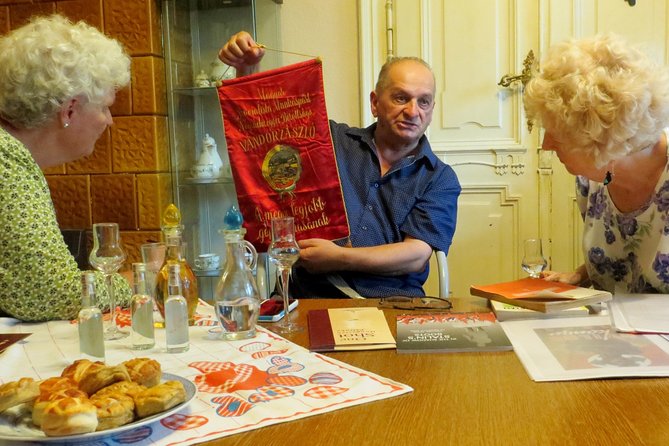
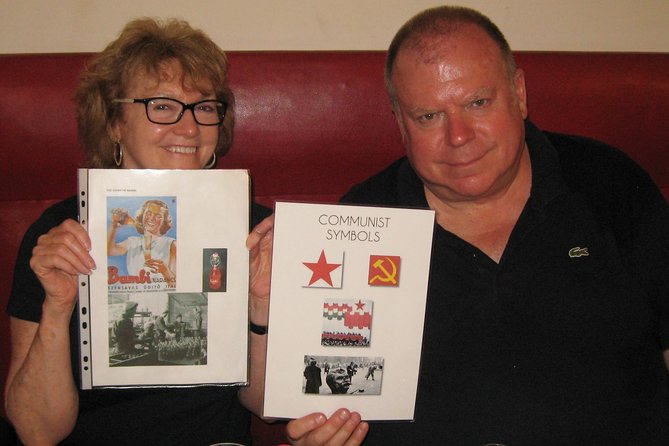
A coffee stop at Bambi Presszó is one of the experience’s most appealing details. The café is described as the last stronghold of Communist culture, giving you a chance to sit in a place linked to the everyday atmosphere of the period.
This is not a grand monument. That is exactly why it adds something. Political systems are experienced through ordinary routines, including where people meet, drink coffee, and spend time with friends. A café stop also breaks up the serious material and gives you a chance to talk with your guide.
Budget for your own coffee or other drinks. Food and beverages are not included in the listed price, despite one complaint that expected coffee to be covered. Clarify this before ordering, especially if your group is large.
The private format and guide quality
The private setup is a real advantage. Your group of up to five does not have to follow the questions or pace of strangers. You can ask for more detail about 1956, spend less time on monuments, or request help with Budapest’s transit system.
Several guides have been praised by name. Miklós is described as polite, attentive, and able to condense a large amount of Hungarian history into a manageable tour. Balázs has been praised for adjusting the schedule, adding personal stories, and creating a friendly atmosphere. Agy has been described as willing to answer questions and able to offer personal insight into life under dictatorship. Fungarian, the guide name used by one customer, was also praised as an engaging historian.
Still, the guide’s delivery is the main variable. Two low ratings describe a guide who was soft-spoken, difficult to hear, insufficiently enthusiastic, or smoking throughout the walk. One customer said the guide asked whether smoking was acceptable, while the customer reported discomfort with the experience afterward. If you are sensitive to smoke or need a louder speaker, state that clearly at the start.
The private format does not automatically guarantee a perfect tour. It gives you more room to shape the experience, but you need to speak up if the pace, volume, or emphasis is not working.
Is $280.33 good value for up to five people?
At $280.33 per group, the headline price works out to about $56 per person for five people. For a couple or a solo visitor, the per-person cost is much higher, so the value depends heavily on group size and guide quality.
The price includes a local guide, informative handouts, and admission for the selected visit option. It does not include additional food and drink, hotel pickup or drop-off, or entrance fees not specifically listed. Transportation may also be an extra cost, particularly for Memento Park.
I see the strongest value for a group of four or five with a serious interest in Hungarian history. You are paying for private attention, not just a route between landmarks. The value is weaker if you only want quick facts, dislike walking, or expect every museum and transport cost to be bundled into one fee.
The experience is often booked about 28 days ahead, so popular dates may require planning. Free cancellation is available up to 24 hours before the start time. After that, the payment is not refunded, and late changes are not accepted.
Who should book this experience?
I would choose this tour if you want to understand how Budapest’s recent past still shapes its public spaces. It is especially suitable for history enthusiasts, first-time visitors who want context, and private groups who prefer discussion over a large guided crowd.
Choose Memento Park if statues and political symbolism interest you most. Choose the House of Terror if you want a museum-based look at dictatorship and repression. Choose the city walking option if you prefer streets, squares, monuments, and the Bambi café.
I would be cautious if you need a tightly scripted tour, guaranteed access to every advertised stop, or a guide who speaks loudly without prompting. Confirm the exact option, admission, transport, coffee arrangements, and meeting plan before the day.
Should you book it?
Book it if you are five people sharing the cost and want a personal, serious look at Budapest’s Communist past. The strongest parts are the 1956 locations, the guide’s firsthand perspective, and the unusual coffee stop at Bambi Presszó.
For a smaller group, compare the total price with other Budapest history tours. If you book, choose your museum option carefully and contact Fungarian in advance with your interests. A good guide can turn the route into a memorable lesson in Hungarian life. A poor match in volume or enthusiasm can leave you paying a premium for a walk that feels thin.
FAQ
How long does the experience last?
The advertised duration is approximately three hours. A private tour may run longer if the guide adapts the pace or itinerary for the group.
How many people can join the private tour?
The price covers one private group of up to five people.
Is the House of Terror Museum always included?
No. The House of Terror is an optional version of the experience. The city walking route and Memento Park are other options, so confirm your selection before arrival.
Is Memento Park included?
Memento Park is included when you choose that visit option. Transportation costs may be separate.
Is coffee at Bambi Presszó included?
No. Additional food and drinks are not included in the tour price.
Does the tour provide hotel pickup?
Hotel pickup and drop-off are not included. Pickup may be offered in some form, so confirm the arrangements with the operator before the tour.
What level of fitness is required?
You should have a moderate level of physical fitness. The experience includes walking through several Budapest neighborhoods and crossing the Danube area. Children must be accompanied by an adult, and service animals are allowed.
Just added around Budapest
- Lake Balaton and Herend Guided Tour★ 4.7 · 3 reviews
- Audio visual multi-sensory chefs journey dinner experience★ 5.0 · 3 reviews
- Hollókő Ethnographic Village: Day Tour from Budapest★ 3.7 · 3 reviews
- Tapolca Cave Lake and Tihany/ Balaton private tour from Budapest★ 4.5 · 3 reviews
- SzentEndre-SaintAndrew City Privately Shopping and Picturesque★ 4.5 · 3 reviews
- Budapest Art Nouveau Walking Tour★ 5.0 · 3 reviews
- Budapest Drinks and Piano Show Cruise★ 4.5 · 3 reviews
- Horseshow on the Hungarian Puszta, private tour from Budapest with entry!★ 5.0 · 3 reviews
Communist History Tours, compared.
Communist History Tour with House of Terror Option
What we thought →
3-Hour Walking Tour About Communism (Small Group)
What we thought →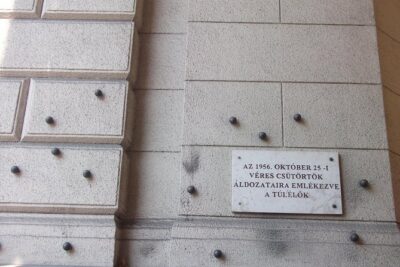
Lives of Hungarians Under Communist and Capitalist system
What we thought →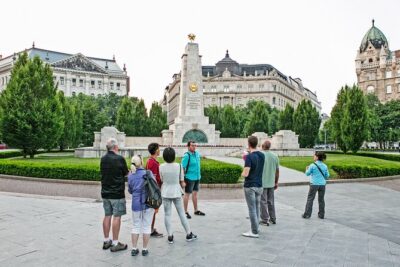
Private Budapest Hammer & Sickle Communist Times Tour
What we thought →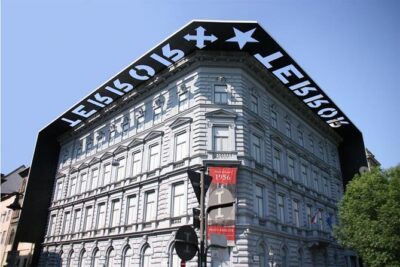
Browse the lists this tour appears in