
Reviewed · COMMUNIST HISTORY TOURS
Life Under Communism with House of Terror or Statue Park
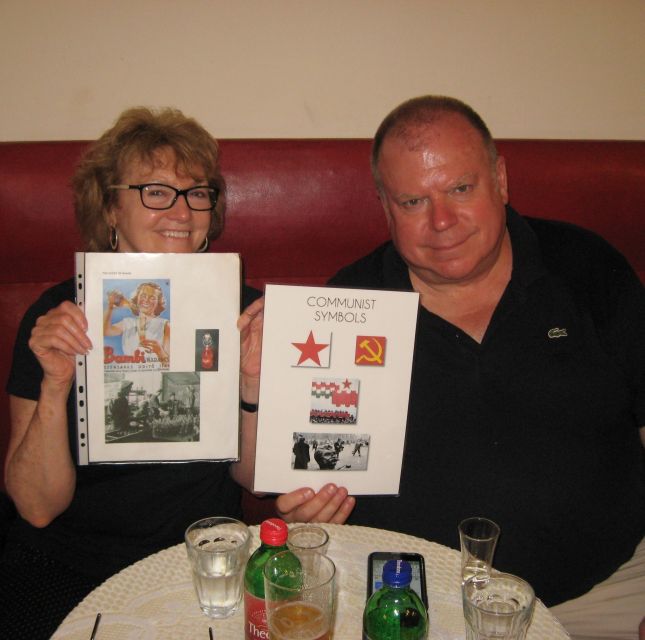
The past still has a voice. This private Budapest tour uses personal stories and open conversation to explain daily life under communism from the 1960s through the late 1980s. Beginning at Bambi Eszpresszó, an emblematic 1980s meeting place, it gives you more than dates and political labels.
I like the flexible format, especially the way the guides can adjust the discussion to your interests and knowledge. I also like that the tour includes a chance to use public transportation and see parts of Budapest you might otherwise miss. The main consideration is the $282 group price, which makes the most sense for a full group of five rather than one or two people.
In This Review
- Key points to know before booking
- Why communist-era Budapest is worth exploring
- Starting at Bambi Eszpresszó in the 1980s
- A personal explanation of how the system worked
- Seeing Budapest beyond the usual route
- House of Terror or Statue Park: two different ways to frame the past
- The value of a private group of up to five
- What makes the guide-led format work
- Who will get the most from this experience
- How to prepare for a better three hours
- Should you book Life Under Communism?
- FAQ
- How long does the tour last?
- How much does the private tour cost?
- Where does the tour begin?
- Can the guide pick me up at my Budapest accommodation?
- Which languages are available?
- Is transportation included?
- Are food and drinks included?
- Can I cancel the booking?
Key points to know before booking
- Bambi Eszpresszó sets the tone: Begin at a symbolic Budapest meeting place tied to everyday life in the 1980s.
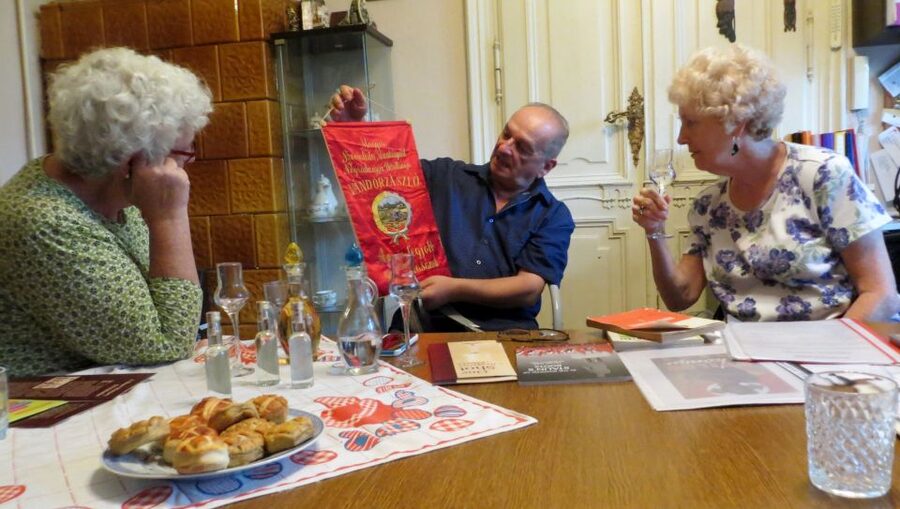
- Annamaria and Miklos lead the program: The guides offer an interactive presentation, printed materials, notebooks, and pens.
- The route can be adapted: The discussion and touring style can respond to your group’s interests and level of background knowledge.
- House of Terror or Statue Park may be part of the plan: Confirm the exact focus and stops with the local partner before booking.
- Private groups get room for honest questions: This is better suited to conversation than a fixed, one-size-fits-all lecture.
- Plan for three hours on foot and by transit: Comfortable shoes and weather-ready clothing matter, and the tour is not suitable for people with mobility impairments.
Why communist-era Budapest is worth exploring
Budapest is often introduced through its Austro-Hungarian boulevards, thermal baths, and grand cafés. Those sights matter, but they tell only part of the city’s story. From the end of the Second World War until 1989, daily life was shaped by a political and economic system that affected housing, work, shopping, travel, education, and private speech.
This tour focuses on those ordinary details. You are not simply shown a monument and handed a date. You get an explanation of how the system worked at several levels, then connect that system to the choices people made in daily life.
That is the useful part. Political history can feel remote when it is reduced to leaders and slogans. It becomes easier to understand when you consider what people could buy, where they could go, how they found information, and what they said in public compared with what they said at home.
The period covered, from the 1960s to the late 1980s, is also long enough to show change within communism. Life in the 1960s was not exactly the same as life in the 1980s. A good discussion can help you see how the system shifted while remaining firmly controlled.
More communist-era history walks:
- Budapest: Communist History Tour with House of Terror Option
★ 4.8 · 182 reviews - Budapest: 3-Hour Walking Tour About Communism (Small Group)
★ 4.7 · 70 reviews - Communism in Hungary with a Historian
★ 5.0 · 70 reviews
Starting at Bambi Eszpresszó in the 1980s
The meeting point at Bambi Eszpresszó is one of the most appealing details of the experience. Rather than beginning at a grand government building, the tour starts at a place associated with social life and memory.
Bambi is described as an emblematic meeting place of the 1980s. That gives the opening a human scale. You begin with the setting of a café, then use it as a doorway into a broader conversation about how Budapest functioned during the final decades of communist rule.
The start also gives your guide a natural way to learn what interests you. You may already know the broad outline of the Cold War, or you may want a basic explanation from the beginning. The tour is designed to accommodate different levels of background knowledge, so you should say what you want to understand.
One practical point: the guide can meet you at your accommodation in Budapest and go with you to the first stop. That is helpful if you do not know the city well, and it may reduce the stress of finding Bambi on your own. Tell the local partner your preferred pickup location when you book.
Food and drinks are not included. Bambi is a setting and meeting point, not a meal package, so budget separately if you want to order something.
A personal explanation of how the system worked
The central feature is a three-hour interactive presentation and tour. You receive printed materials, a notebook, and a pen, which suggests a session built around listening, asking questions, and taking notes rather than simply following a guide from one photo stop to another.
I would approach the presentation with a few questions ready. Ask how political rules affected ordinary households. Ask what changed between the 1960s and the late 1980s. Ask how people understood official information, and what kinds of conversations were kept private.
The supplied details do not promise a fixed list of lecture topics, so the exact balance depends on your group. That is a strength for an inquisitive private party, but it also means you should not expect a tightly scripted museum tour with identical content every time.
The guides are Annamaria and Miklos, and the program is available in English, German, and French. Personal experience appears to be an important part of the presentation. One particularly useful feature is the chance to hear about the era from someone with direct experience of communist Hungary, rather than receiving only a distant textbook account.
That personal angle needs some care. Individual memories are valuable, but they are also individual. I like using them alongside the wider explanation of how the system operated. If you want a purely academic treatment, ask how much time will be given to personal recollections and how much to political and economic context.
Seeing Budapest beyond the usual route
This is not only a sit-down history lesson. The experience includes movement through Budapest, and one past tour account specifically valued the chance to ride public transportation and see parts of the city that might otherwise be missed.
That matters because the city itself can help explain the period. Streets, public spaces, transport, and remaining symbols can all become prompts for discussion about what changed after 1989 and what did not disappear at once.
The information does not provide a precise transit route, so you should not book this expecting a particular tram, metro line, or neighborhood. Instead, think of transportation as part of the experience of seeing Budapest through a historical lens.
The three-hour length is well judged for a focused subject. It gives enough time for explanation and conversation without turning the tour into a full-day commitment. Still, you should wear comfortable shoes and clothes suitable for the weather. The tour involves moving between places, and it is not suitable for people with mobility impairments.
A completely different kind of day out around Budapest:
- Budapest: City Highlights Cruise with Welcome Drink
★ 4.6 · 35,610 reviews - Budapest: Unlimited Prosecco, Beer and Aperol Spritz Cruise
★ 4.8 · 25,310 reviews - Budapest: Széchenyi Spa Day Ticket with Optional Upgrades
★ 4.3 · 23,911 reviews - Budapest: Nighttime or Daytime Sightseeing Cruise
★ 4.2 · 21,062 reviews
House of Terror or Statue Park: two different ways to frame the past
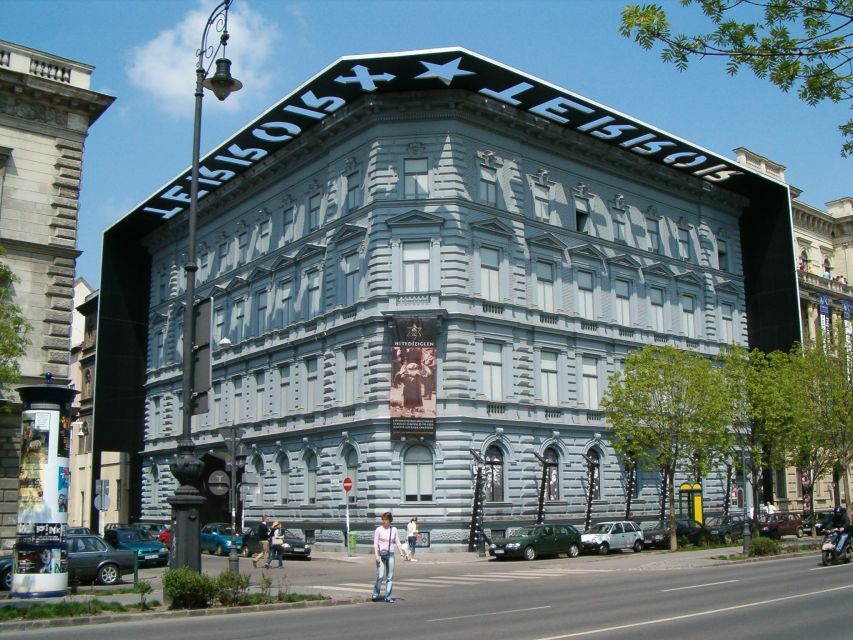
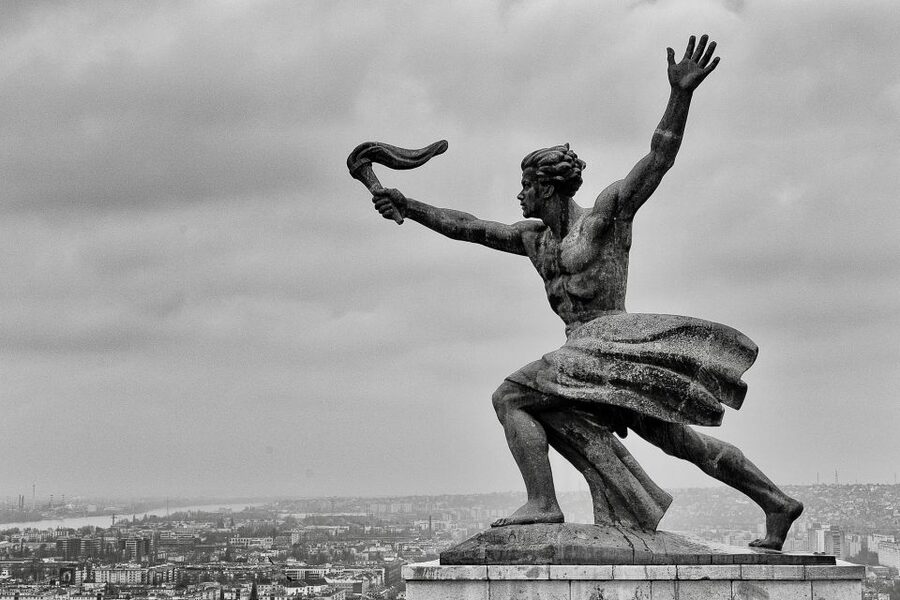
The experience is presented with a choice involving House of Terror or Statue Park. These options point toward two distinct ways of looking at communist Hungary, but the supplied details do not spell out whether both are visited, how long is spent at either one, or how the choice is made.
House of Terror is associated with the darker machinery of twentieth-century dictatorship. A visit there would likely give the tour a more focused setting for discussing repression, political control, and the experience of living under fear. If that is the emphasis you want, ask the local partner whether House of Terror is included in your version of the program and whether admission is part of the $282 price.
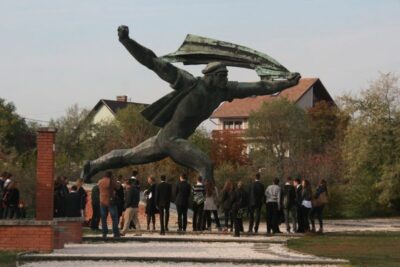
Statue Park offers a different angle. Its subject is the public legacy of political monuments and what happens to them when a political system collapses. That can lead to a useful conversation about memory, public space, and the physical remains of a former ideology.
Do not assume the two sites are interchangeable. One is a museum setting centered on the experience of dictatorship; the other is an outdoor collection of monuments connected to the communist era. Your preference may depend on whether you want a more intense museum visit or a discussion based on statues and public memory.
Because the exact arrangement is not provided, confirm the chosen stop, entry arrangements, and any admission costs before you finalize your plans. This is one of the few points where a quick message to the local partner can prevent mismatched expectations.
The value of a private group of up to five
The price is $282 for a private group of up to five people. At the full capacity, that works out to $56.40 per person. For four people, the effective cost is $70.50 each; for three, it is $94 each. A couple would pay $141 per person, so the economics are much less attractive for a small party.
The private format is the reason the price can still make sense. You are paying for a guide who can tailor the conversation, answer your questions, adjust the route as much as possible, and meet you at your accommodation. A large group tour may cost less, but it is less likely to pause for your family’s questions or adapt to your background.
I would recommend filling the group if possible. Friends, relatives, or a small history-minded party can share the cost and make good use of the discussion format. If you are booking alone or as a couple, compare the price with other private history tours in Budapest before committing.
Food, drinks, and transportation costs are not included. The guide meeting you at your accommodation is included as a pickup service, but that does not mean every transport expense is covered. Ask what admission and local transit costs, if any, you should pay separately.
What makes the guide-led format work
The strongest praise for this experience centers on the guides’ communication, kindness, flexibility, and ability to adapt. One guide was praised for tailoring the tour to the group’s interests and knowledge level. Another account singled out the opportunity for honest dialogue, while another valued the guide’s personal experiences of the communist era.
Those details tell you how to use the tour well. Do not remain a passive listener. Tell Annamaria or Miklos what you already know, then ask for the gaps to be filled. If your interest is shopping and domestic life, say so. If you want political structure, censorship, or the transition after 1989, say that instead.
A flexible route is also useful for repeat visitors. You may have already seen central Budapest’s main sights, but this tour can connect familiar places to a less familiar period. The guide can explain remnants of the era and how the past fifty years changed Hungary.
The four-star score in the supplied feedback also matters. Most of the recorded ratings are five stars, but one four-star account praised the guide’s responsiveness and adaptability. That is a good reminder that the quality of a private tour depends partly on communicating your expectations early.
Who will get the most from this experience
I would choose this tour if you enjoy history that connects politics to ordinary routines. It is especially suitable for:
- People who want a personal explanation of communist-era Hungary
- Families or friends who can share the cost of a private group
- Visitors interested in how Budapest changed after 1989
- History buffs who prefer discussion over a standard sightseeing script
- Repeat visitors looking for a different way to see the city
- People who want a guide able to work in English, German, or French
It may be less suitable if you want a short photo stop, a fixed itinerary, or a light introduction to Budapest. Three hours devoted to communist life is a serious block of time, and the subject can be emotionally heavy depending on the route and discussion.
It is also a poor fit if walking and public transportation are difficult for you. Comfortable shoes and suitable clothing are required, and the experience is specifically listed as unsuitable for people with mobility impairments.
How to prepare for a better three hours
Before the tour, decide what you want to learn. The phrase everyday life can cover a great deal, from food and housing to work, school, travel, and private conversation. A short list of questions will help the guide use the private format to your advantage.
Wear shoes you can comfortably use for three hours. Check the forecast and dress for the conditions, since the program includes moving around Budapest. Comfortable clothing is more useful here than anything formal.
Tell the local partner about special requests in advance. The organizers say they will adapt the tour as much as they can, but the more specific you are, the easier it will be to shape the experience.
You can also choose your preferred language from English, German, and French. Make sure the requested language is available at your desired starting time.
Finally, confirm the House of Terror or Statue Park arrangement. That single question will clarify the tone of your tour and help you decide if it matches your interests.
Should you book Life Under Communism?
Book it if you want a private, conversational look at Budapest from the 1960s through the late 1980s, especially if your group is close to five people. The Bambi Eszpresszó beginning, public transportation, adaptable route, and personal memories give the experience a more human shape than a basic museum visit.
I would hesitate only if the price is too high for your party size, if you need a fully accessible route, or if you want a precise, guaranteed itinerary. For the right group, this is a strong choice for understanding the everyday side of Hungary’s communist past. Confirm the final stop and any admission details, arrive ready with questions, and you should get far more from the three hours than a list of dates and political slogans.
FAQ
How long does the tour last?
The tour lasts three hours.
How much does the private tour cost?
The price is $282 for a private group of up to five people.
Where does the tour begin?
The program starts at Bambi Eszpresszó, an emblematic meeting place associated with Budapest in the 1980s.
Can the guide pick me up at my Budapest accommodation?
Yes. The guide will meet you at your accommodation in Budapest and travel with you to the first stop. You need to tell the local partner where you want to be picked up.
Which languages are available?
The live tour guide is available in English, German, and French.
Is transportation included?
Transportation is listed as not included, although the guide meets you at your accommodation and accompanies you to the first stop. Ask the local partner about any transport costs connected with your route.
Are food and drinks included?
No. Food and drinks are not included in the tour price.
Can I cancel the booking?
Yes. You can cancel up to 24 hours in advance for a full refund. Reserve now and pay later is also available.
Just added around Budapest
- Lake Balaton and Herend Guided Tour★ 4.7 · 3 reviews
- Audio visual multi-sensory chefs journey dinner experience★ 5.0 · 3 reviews
- Hollókő Ethnographic Village: Day Tour from Budapest★ 3.7 · 3 reviews
- Tapolca Cave Lake and Tihany/ Balaton private tour from Budapest★ 4.5 · 3 reviews
- Budapest Art Nouveau Walking Tour★ 5.0 · 3 reviews
- SzentEndre-SaintAndrew City Privately Shopping and Picturesque★ 4.5 · 3 reviews
- Budapest Drinks and Piano Show Cruise★ 4.5 · 3 reviews
- Horseshow on the Hungarian Puszta, private tour from Budapest with entry!★ 5.0 · 3 reviews
Communist History Tours, compared.
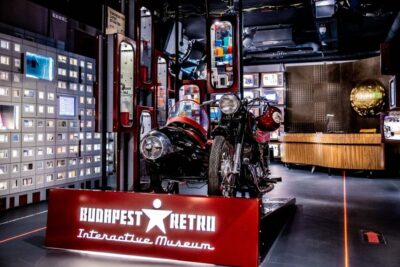
Communist History Tour with House of Terror Option
What we thought →
3-Hour Walking Tour About Communism (Small Group)
What we thought →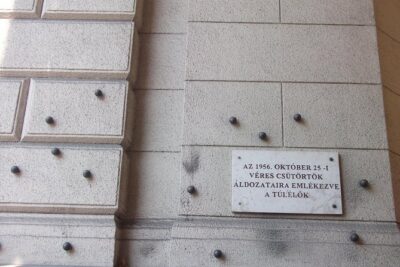
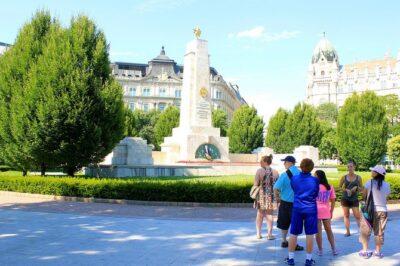
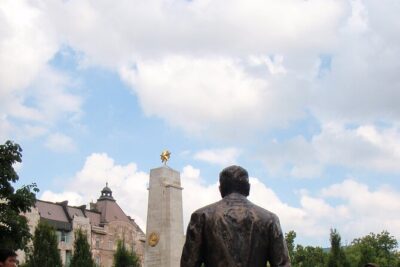
Lives of Hungarians Under Communist and Capitalist system
What we thought →
Private Budapest Hammer & Sickle Communist Times Tour
What we thought →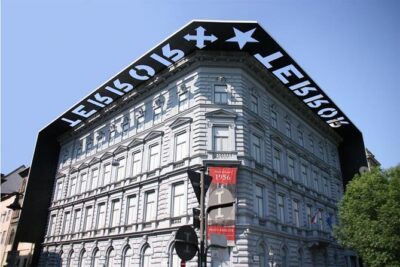
Browse the lists this tour appears in