
Reviewed · JEWISH QUARTER TOURS
Jewish Heritage / Full tour
Budapest’s Jewish story asks you to look twice. I like the way this private tour links the Shoes on the Danube Bank with the Dohány Street Synagogue, and I appreciate having Edith, a licensed guide, explain both the wartime past and Jewish life today. The main consideration is cost: at $48 per person, you still pay separately for the synagogue entrance and public transport tickets.
The route mixes moving memorials, difficult political questions, and one of Budapest’s most important religious sites. Edith has been praised for being prepared and available, and even a rainy outing remained interesting and memorable. Dress carefully, though: shorts, short skirts, and sleeveless shirts are not allowed at the synagogue complex.
In This Review
- Key points at a glance
- Why this three-hour route works
- Meeting Edith and getting started
- The Shoes on the Danube Bank, 15 minutes
- The German Occupation Memorial, 15 minutes
- Reaching the Dohány Street Synagogue
- Inside the Dohány Street complex, 90 minutes
- Dress rules and the practical side of entry
- Is $48 per person good value?
- Who will get the most from this tour?
- My call: book it for context, not just monuments
- FAQ
- How long does the Jewish Heritage tour last?
- What language is the tour offered in?
- Is this a private tour?
- Where can pickup take place?
- Is the Dohány Street Synagogue entrance included?
- Are public transport tickets included?
- What clothing is not allowed?
- Can I cancel the tour and receive a refund?
Key points at a glance
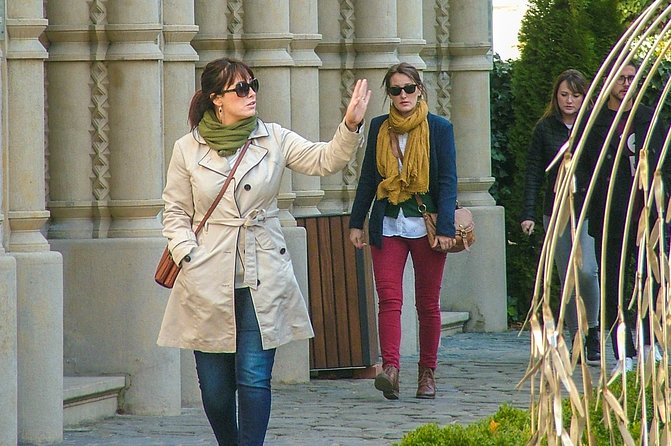
- A private tour with Edith: You receive a personal, English-language tour from a licensed guide rather than joining a large group.
- Three powerful memorial sites: The Shoes on the Danube Bank and the Memorial for Victims of the German Occupation offer different views of Hungary’s wartime history.
- Ninety minutes at Dohány Street: The synagogue complex includes the synagogue, Tree of Life, Heroes’ Temple, graveyard, and Jewish Museum.
- Public transport is part of the route: Two short public transport rides connect the riverfront and Jewish District, but tickets are not included.
- A careful dress code matters: You cannot enter in shorts, short skirts, or sleeveless shirts.
- A useful lunch finish: The tour ends beside the Jewish District, where you can easily continue with lunch, street art, or evening plans.
Why this three-hour route works
This experience is strongest when you want more than a quick look at Budapest’s Jewish District. It connects places that are often visited separately: the Danube memorial, the controversial German Occupation Memorial, and the major synagogue complex on Dohány Street.
That connection matters. The Shoes on the Danube Bank speaks about terror during the final years of World War II. The German Occupation Memorial raises questions about responsibility and national memory. Dohány Street then gives you a physical place where Jewish religious and community life can be discussed in a much broader setting.
I like the private format here. You can ask questions, pause for clarification, and tell Edith what interests you most. The tour is not only about dates and monuments. It is meant to explain current Jewish life as well as the past, which gives the experience a more personal tone.
You should also understand what this is not. It is not a slow, all-day neighborhood walk with long stretches inside museums. The first half uses public transport and includes short photo stops. The most detailed visit comes at Dohány Street, where the guided portion lasts about an hour and a half.
More Jewish Quarter walks:
- Budapest Jewish Heritage Memorial Walking Tour & Synagogue Entry
★ 5.0 · 568 reviews - Budapest: Jewish Heritage Guided Tour with Synagogue Ticket
★ 4.8 · 533 reviews - Jewish Quarter of Budapest Walking Tour
★ 4.7 · 369 reviews
Meeting Edith and getting started
Pickup is available at listed central points near the Lutheran church, Deák tér, and Kossuth Lajos tér. Central hotel pickup may also be arranged by agreement, which is useful if you prefer not to find a meeting place before breakfast.
The route begins with public transport. One ride takes about ten minutes, so allow time to board, move through stations or stops, and stay with your private group. Transport tickets are not part of the $48 price, so keep that small extra cost in mind.
This setup is practical rather than fancy. You are not paying for a private car or a luxury transfer. You are paying for Edith’s time, guiding, and access to a focused route. If you already understand Budapest’s public transport system, the short rides should be easy. If not, having a guide lead the way removes some city-navigation work.
The tour is offered in English and is not suitable for children under six. Its subject matter also calls for a certain level of maturity. The memorials deal with persecution, murder, occupation, and painful disputes over public memory.
The Shoes on the Danube Bank, 15 minutes
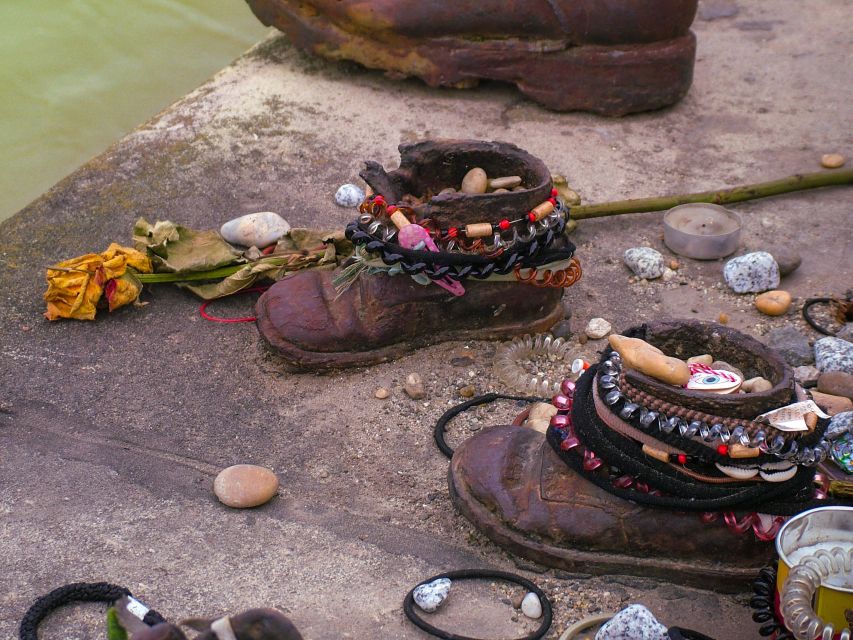
The first major stop is one of Budapest’s most affecting memorials. A row of metal shoes sits at the edge of the Danube, recalling people who were forced to remove their shoes before they were killed during the final years of World War II.
You get about 15 minutes here for a photo stop and explanation. That may sound brief, but the location does not require a long visit to make an impression. The simple form of the memorial makes the violence feel personal. Shoes are ordinary objects. Seeing them lined up beside the river turns a large historical crime into something close to home.
This is a place where you should slow down and listen. It is not a cheerful sightseeing pause, and the tour treats it accordingly. Edith can help place the memorial within the wider story of Budapest’s Jewish population and the terror of the war’s closing years.
The drawback is that this is an outdoor stop. Rain, wind, or cold along the river can affect the experience. One outing continued through rain and was still described as unforgettable, but bring suitable clothing if the forecast looks poor. The stop is also intended for photographs and interpretation, not a long period of shelter or indoor study.
The German Occupation Memorial, 15 minutes
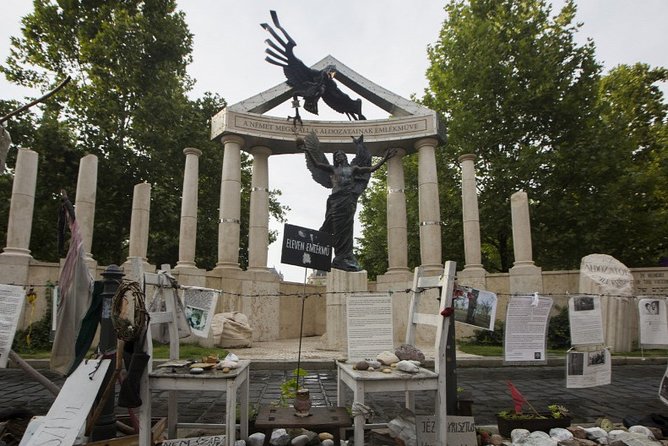
After roughly 30 minutes on foot, you reach the Memorial for Victims of the German Occupation. This is one of the most debated monuments in Budapest, and the tour uses it to explain the present-day situation of the Jewish community as well as the past.
The memorial’s importance comes partly from the argument around it. It offers a version of Hungary’s wartime experience that has been challenged by many people, including members of the Jewish community. You do not need to arrive with a settled opinion. The value of this stop is hearing why the monument remains politically sensitive.
You get another 15-minute photo stop here. Edith’s role is especially useful because the site needs context. A quick photograph alone will not tell you why the memorial has caused such strong reactions. This is one of the moments when a private guide has an advantage over a self-guided walk. You can ask direct questions rather than trying to sort out the dispute later.
Still, the format has limits. Fifteen minutes is enough for an introduction, not a full seminar on Hungarian politics or historical responsibility. If this subject is your main interest, ask Edith early in the tour how much time can be given to it.
More history-led tours:
- Budapest: Historic Cruise with Welcome Drink
★ 4.7 · 6,512 reviews - Budapest Historical Sightseeing – Free Walking Tour
★ 5.0 · 1,302 reviews - Buda Castle District Dark History, Legends and Vampire Night Tour
★ 4.5 · 1,240 reviews - BloodThirsty Hungary: Walking tour & Dark Historical Stories
★ 4.9 · 633 reviews
Reaching the Dohány Street Synagogue
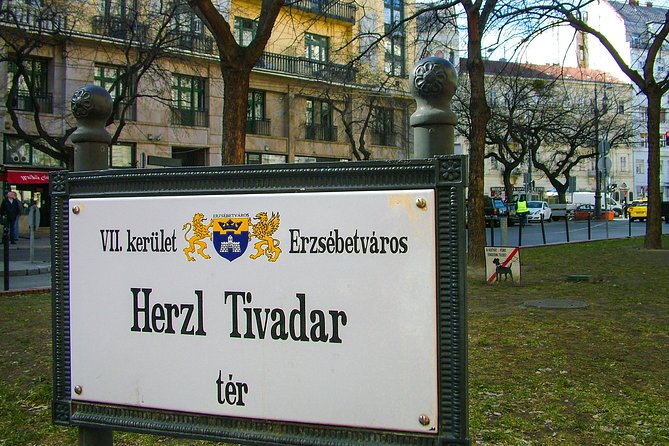
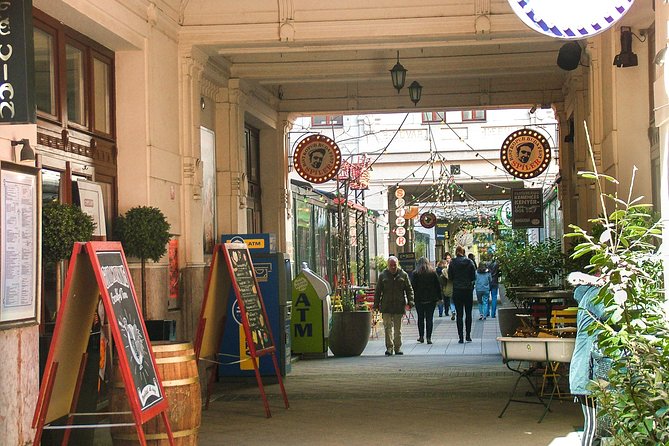
A second public transport ride takes about ten minutes and brings you to the Jewish District. The district is part of Budapest’s UNESCO heritage and is also known for street art and nightlife. That contrast is central to the area’s character.
The neighborhood is not preserved as a silent historical exhibit. It is a living part of the city, with old religious landmarks beside modern restaurants, painted walls, and evening entertainment. That makes the district worth seeing after the formal tour ends. You can walk around, find lunch, or return later when the streets take on a different mood.
The tour finishes at Dohány Street Synagogue, so you are well placed to continue on foot. The endpoint is convenient for a meal, but remember that the guided experience itself is focused on heritage rather than a food tasting or nightlife visit.
Inside the Dohány Street complex, 90 minutes
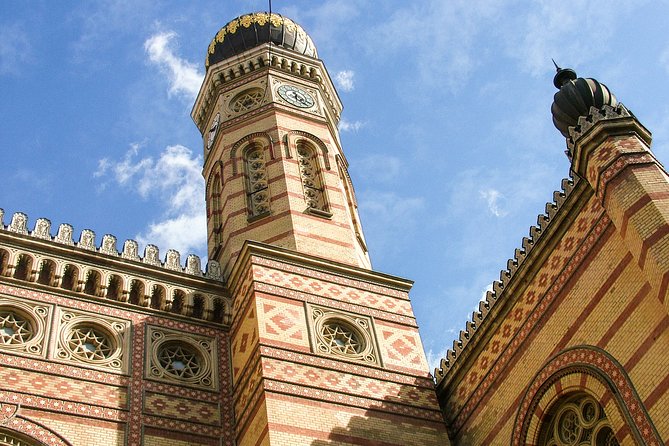
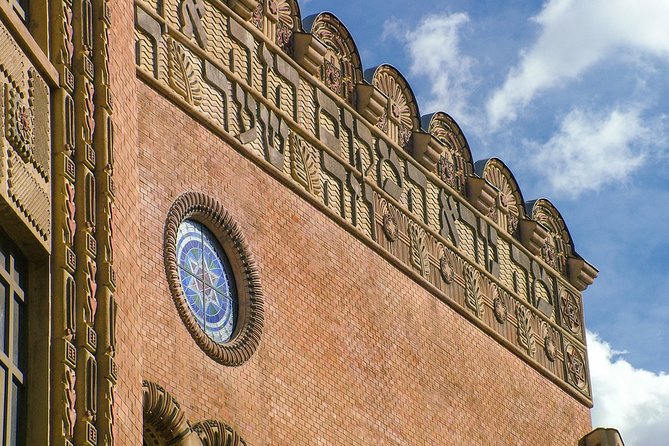
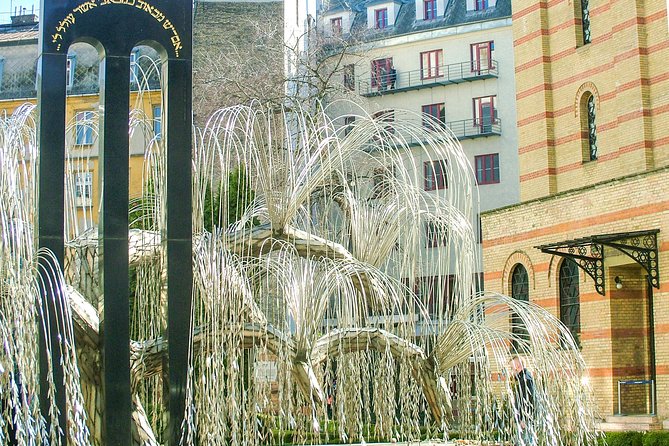
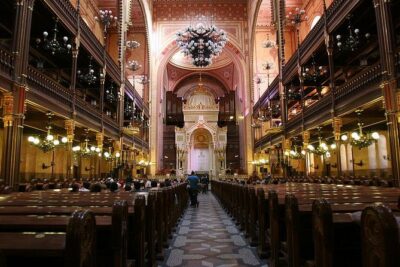
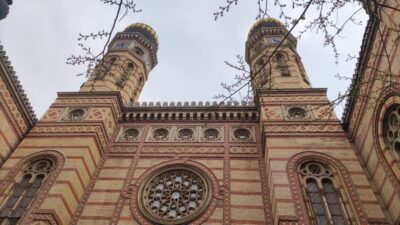
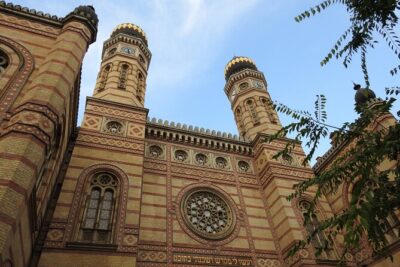
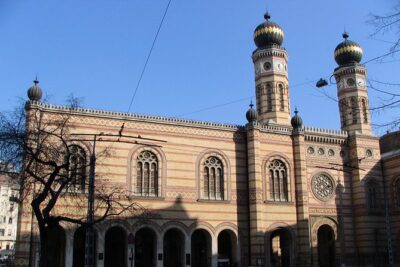
The longest and most detailed portion lasts about an hour and a half at the Dohány Street Synagogue complex. The synagogue is described as the second largest in the world, making it the central sight of this experience.
The complex contains several important elements:
- The main Dohány Street Synagogue
- The Memorial Garden
- The Tree of Life
- Heroes’ Temple
- The graveyard
- The Jewish Museum
The Tree of Life is the best-known feature for many people. Its metal leaves carry the names of victims, making the memorial both visually striking and deeply personal. You should expect Edith to connect this garden with the community’s wartime losses rather than treat it as a simple photo backdrop.
Heroes’ Temple and the graveyard add another layer to the visit. Together, these spaces show how the complex works as a place of worship, remembrance, and community memory. The guided visit gives you time to understand how the separate parts fit together.
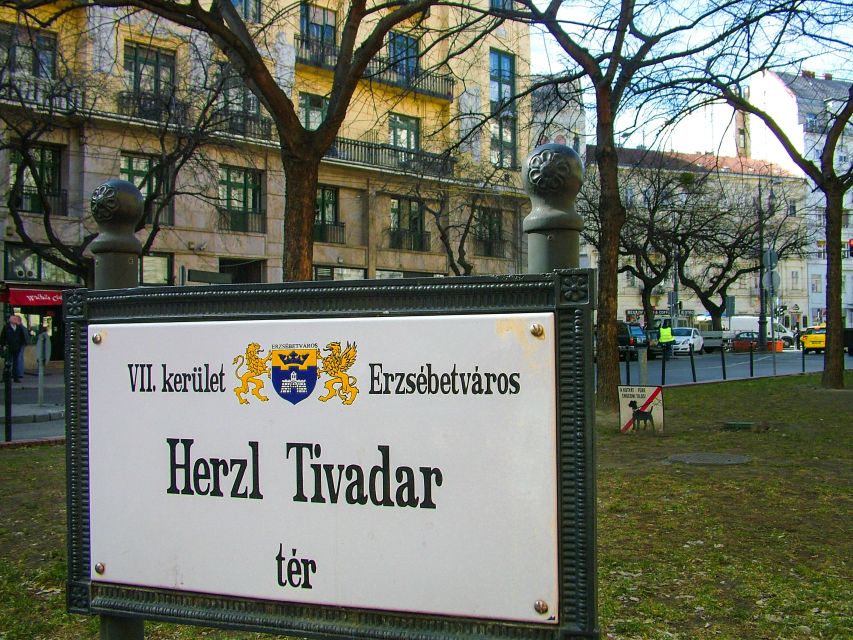
The Jewish Museum was built on the site where Theodor Herzl’s birthplace once stood. That detail gives the complex an important link to modern Jewish political history. You are not simply visiting an impressive building. You are walking through a site tied to religion, memory, identity, and the development of Jewish public life.
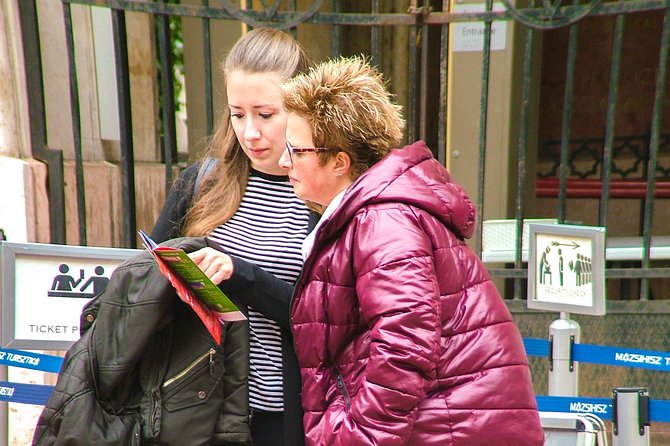
Your synagogue entrance ticket is not included. The activity includes guiding in the Dohány Street complex and advertises skip-the-line entry, but you should budget separately for admission. Check the final ticket arrangements when booking so you know exactly how and where the entrance fee is handled.
Dress rules and the practical side of entry
The dress code is not a minor footnote. Shorts, short skirts, and sleeveless shirts are not allowed. Choose respectful clothing before leaving your hotel, especially in warm weather when Budapest sightseeing often calls for casual clothes.
The rule applies to the synagogue complex, which is a religious site as well as a major attraction. You will have a smoother visit if you arrive dressed appropriately rather than relying on a last-minute solution.
The tour lasts three hours, but allow a little flexibility for walking, public transport, and the pace of discussion. Starting times vary, so check availability for the day you want. Free cancellation is available up to 24 hours before the tour, and you can reserve now and pay later, which helps if your Budapest schedule is still changing.
Is $48 per person good value?
The answer depends on how many people are in your private group. At $48 per person, the price is reasonable if you want a dedicated English-speaking guide and plan to ask questions. It is less attractive if you only want to see the synagogue and take a few pictures, since admission and transport are extra.
The strongest value comes from the connections between the stops. A self-guided visit can show you the shoes, the occupation memorial, and Dohány Street, but it may not explain how these places relate to present-day Jewish identity and arguments about Hungary’s wartime past.
A private tour also lets you set the tone. You can ask Edith to spend more time on the Tree of Life, the German Occupation Memorial, or current Jewish life. A larger group would usually offer less room for that sort of exchange.
For a couple or small private group, the cost buys focus and flexibility. For a solo visitor, the per-person price may feel higher, especially after adding the synagogue ticket and transport. Compare it with the cost of a general city tour, but remember that this experience is much narrower and more personal.
Who will get the most from this tour?
I would recommend it to you if you want historical context with your sightseeing. It suits adults, couples, families with older children, and anyone who prefers a private conversation to a large scheduled group.
It is especially useful if you have limited time in Budapest. Three hours covers several important places without taking up a full day, and the finish beside the Jewish District makes it easy to continue with lunch.
You should choose another format if you want a relaxed food walk, a nightlife tour, or extensive museum time. The route is serious, and the memorials can be emotionally difficult. It also involves walking and public transport, so anyone seeking a completely indoor or vehicle-based outing should take that into account.
Edith appears to be the main strength. She is described as prepared and available, and the perfect rating from four submitted ratings supports the impression that her personal guiding style is a major part of the experience. The French praise for Edith is brief but warm, while the English feedback specifically points to preparation and availability.
My call: book it for context, not just monuments
I would book this tour if I wanted Budapest’s Jewish District explained with care, especially the difficult link between wartime memory and current public debate. The Shoes on the Danube Bank gives the tour emotional force, while Dohány Street provides the time and setting for fuller historical context.
Before booking, confirm that the $48 price fits your group size and add the synagogue admission and transport tickets to your budget. Wear respectful clothing, allow for rain at the river, and choose this experience when you are ready to give the subject your attention.
If those conditions suit you, this is a focused and worthwhile way to understand a part of Budapest that cannot be reduced to pretty buildings and nightlife.
FAQ
How long does the Jewish Heritage tour last?
The tour lasts three hours. Starting times vary, so check availability for your preferred date.
What language is the tour offered in?
The live tour is offered in English.
Is this a private tour?
Yes. It is arranged for a private group and led by Edith, a professional licensed guide.
Where can pickup take place?
Listed pickup points include the area near the Lutheran church, Deák tér, and Kossuth Lajos tér. Central hotel pickup may also be possible by prior agreement.
Is the Dohány Street Synagogue entrance included?
No. The entrance ticket to the synagogue is not included in the tour price. Guiding in the Dohány Street complex is included.
Are public transport tickets included?
No. The route uses public transport, but you must pay for the transportation tickets separately.
What clothing is not allowed?
Shorts, short skirts, and sleeveless shirts are not allowed at the synagogue complex.
Can I cancel the tour and receive a refund?
Yes. You can cancel up to 24 hours in advance for a full refund. You can also reserve now and pay later.
Just added around Budapest
- Lake Balaton and Herend Guided Tour★ 4.7 · 3 reviews
- Audio visual multi-sensory chefs journey dinner experience★ 5.0 · 3 reviews
- Hollókő Ethnographic Village: Day Tour from Budapest★ 3.7 · 3 reviews
- Tapolca Cave Lake and Tihany/ Balaton private tour from Budapest★ 4.5 · 3 reviews
- Budapest Art Nouveau Walking Tour★ 5.0 · 3 reviews
- SzentEndre-SaintAndrew City Privately Shopping and Picturesque★ 4.5 · 3 reviews
- Budapest Drinks and Piano Show Cruise★ 4.5 · 3 reviews
- Horseshow on the Hungarian Puszta, private tour from Budapest with entry!★ 5.0 · 3 reviews
Jewish Quarter Tours, compared.
Budapest Jewish Heritage Memorial Walking Tour & Synagogue Entry
What we thought →
Jewish Heritage Guided Tour with Synagogue Ticket
What we thought →
Past and Present of Budapest Jewish District Tour
What we thought →
Budapest Dohany Synagogue & Hungarian Jewish Museum & free extras
What we thought →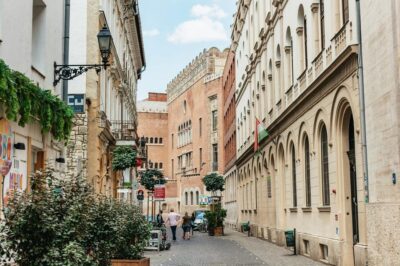
Jewish History Guided Walking Tour with Historian
What we thought →Browse the lists this tour appears in