
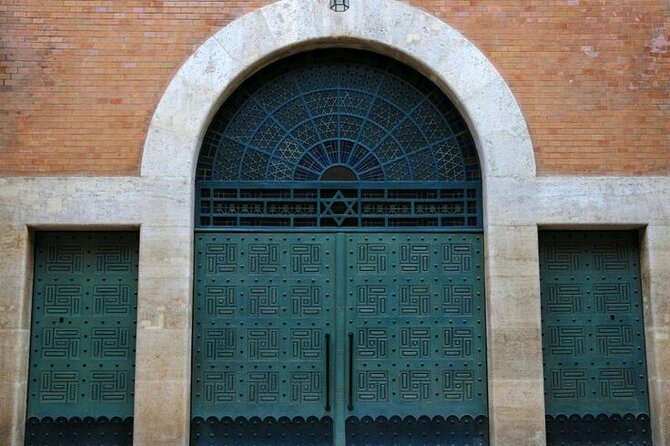
Reviewed · JEWISH QUARTER TOURS
Budapest City Walk in Jewish Quarter
History is written into these streets. This four-hour private walk through Budapest’s Jewish Quarter brings together grand synagogues, quiet courtyards, WWII memorials, local cafés, and stories about Jewish life in Hungary before and after the Holocaust. I especially like the flexible route, which lets you spend more time on subjects that matter to you, and the guide’s personal connection to Budapest’s Jewish community. The main consideration is cost: at $356.90 for a group of up to six, plus possible synagogue admission of up to €46 per person, this is best value for a small group rather than a solo visitor.
Guide Timea Tarjani receives especially warm praise for her clear English, patience, humor, and personal approach. She is described as a history teacher, a descendant of Holocaust survivors, and an active member of Budapest’s Jewish community. The walk involves a moderate amount of walking, and some sites may require respectful dress, including a hat or scarf if you prefer not to use the coverings supplied at the synagogues.
In This Review
- Key points to know before booking
- Why Budapest’s Seventh District works so well on foot
- Starting with Budapest’s synagogue triangle
- Memorials that give the quarter its moral weight
- From wartime streets to Jewish life today
- Gozsdu Courtyard, cafés, and the modern quarter
- The value of a private four-hour walk
- What makes Timea Tarjani an important part of the experience
- Practical details that affect your day
- Who should book this Budapest walk?
- FAQ
- How long is the Budapest Jewish Quarter walk?
- What is the price for the tour?
- Is hotel pickup available?
- Is hotel drop-off included?
- Is the tour conducted in English?
- Are synagogue admission fees included?
- How much walking is involved?
- Can kosher meals or snacks be arranged?
- Should you book it?
Key points to know before booking
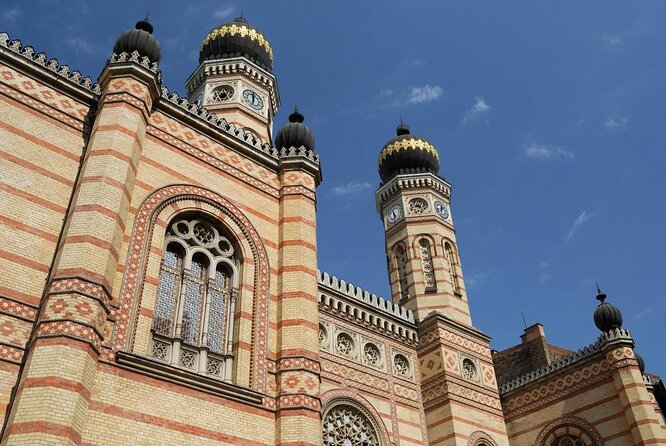
- Three very different synagogues: The Dohány Street, Rumbach, and Kazinczy synagogues show how varied Jewish worship and architecture can be within a small area.
- Personal guiding from Timea Tarjani: Her family connection, teaching background, and knowledge of present-day Jewish life give the tour a human tone.
- WWII sites are handled with care: Expect the Raoul Wallenberg Memorial Garden, stumbling stones, the remaining ghetto wall, and the Shoes Monument by the Danube.
- A flexible private walk: You can ask to linger at one place, skip another, or shape the conversation around family history, architecture, religion, or wartime Budapest.
- Local life is part of the route: Gozsdu Courtyard, cafés, small shops, eateries, galleries, the Kazinczy mikveh, and ruin bars help connect the past with modern Budapest.
- Hotel pickup simplifies the morning: Pickup and return are offered, along with help booking a local restaurant or arranging kosher food if needed.
Why Budapest’s Seventh District works so well on foot
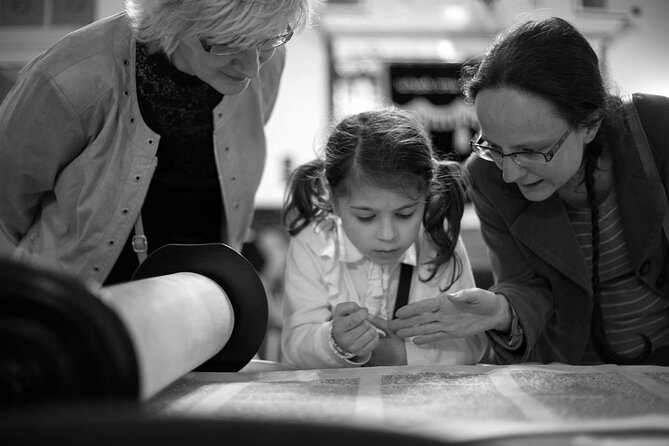
The Jewish Quarter is in Budapest’s Seventh District, a compact part of Pest where major sights sit close to ordinary residential streets. That makes walking the right choice. You are not spending half the tour in a vehicle, and the short distances leave room for conversation.
The area can feel like several neighborhoods at once. One block may hold a grand synagogue, a worn apartment façade, and a fashionable café. A narrow courtyard may lead to shops or restaurants, while a memorial plaque quietly marks a painful event. The contrast is part of the appeal, but it also means you should expect an emotionally varied morning.
Your guide can use the streets themselves as a classroom. The tour is not limited to dates and architectural labels. It aims to explain how Jewish residents lived, worshipped, suffered, survived, and continue to build community in Budapest.
That personal scale is important. A large group can easily turn the quarter into a procession from one photo stop to the next. A private walk gives you time to ask why a building matters, how a memorial came to be, or what Jewish life looks like in Budapest today.
More Jewish Quarter walks:
- Budapest Jewish Heritage Memorial Walking Tour & Synagogue Entry
★ 5.0 · 568 reviews - Budapest: Jewish Heritage Guided Tour with Synagogue Ticket
★ 4.8 · 533 reviews - Jewish Quarter of Budapest Walking Tour
★ 4.7 · 369 reviews
Starting with Budapest’s synagogue triangle
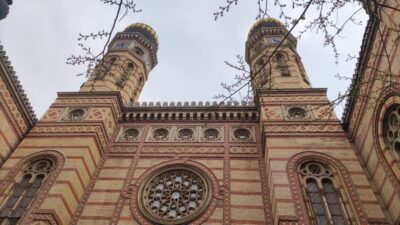
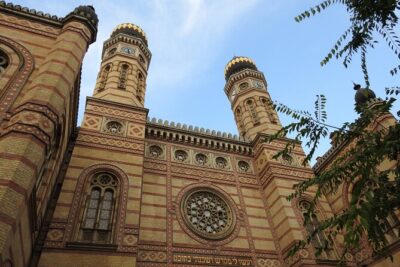
The main synagogue area is often described as Budapest’s synagogue triangle: Dohány Street, Rumbach, and Kazinczy. Seeing all three, if opening times and your pace allow, gives you a much better sense of the city’s Jewish religious and architectural variety.
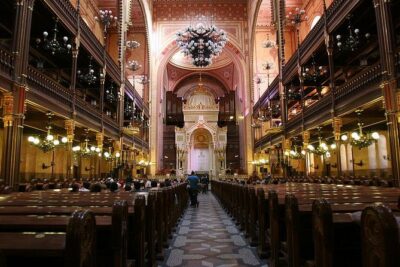
Dohány Street Synagogue is the grandest stop. It is the second-largest non-Orthodox synagogue in the world, and its size immediately changes your sense of scale. The building is also tied closely to the story of Budapest’s Jewish population and the wartime ghetto.
The practical catch is admission. You can choose to enter one synagogue, and discounts may be available for families, seniors, and other eligible visitors. The maximum listed extra cost is €46 per person, so ask your guide which interior visit best matches your interests before paying for several sites.
Rumbach Street Synagogue offers a different mood and design. It is one of the three main synagogue stops, and its distinct character makes it worth seeing alongside Dohány rather than treating the synagogues as interchangeable.
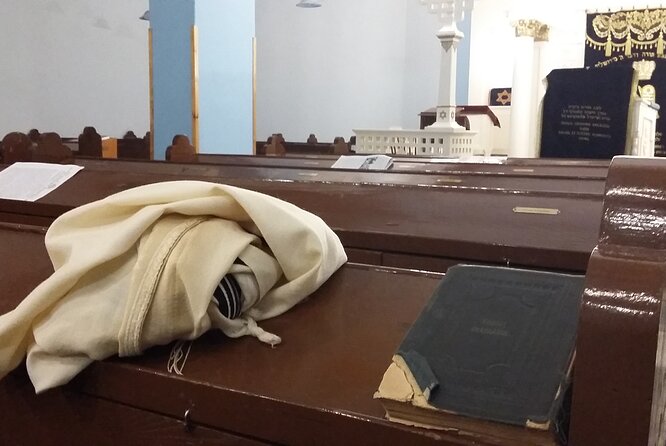
Kazinczy Street Synagogue adds another perspective, especially for those interested in Orthodox Jewish life. The street also brings you near a mikveh, or ritual bath, and smaller prayer spaces. These places help show that the quarter was not built around one single Jewish tradition.
The smaller houses of prayer may be less imposing than Dohány, but that is precisely why they matter. You get a glimpse of a neighborhood made up of many communities, practices, and levels of public visibility.
Synagogue visits require respectful behavior and suitable clothing. You should bring your own hat or cap and scarf if you do not want to wear the coverings provided on site. Since this is a working religious setting as well as a historic building, your guide can help you understand the customs without making the visit feel stiff.
Memorials that give the quarter its moral weight
The tour’s WWII material is not a decorative side note. It is one of the main reasons to take this walk with a careful guide. Budapest’s Jewish Quarter contains memorials that ask you to stop, look closely, and think about individual lives rather than only military events.
At the Raoul Wallenberg Memorial Garden, the Emmanuel tree is especially moving. Its leaves carry the names of Holocaust victims, turning a familiar memorial form into a record of people. The effect is quiet and direct. You are not simply told how many died, you are reminded that each number represents a person.
Stumbling stones are set into the streets of the quarter. These small markers identify people who lived at particular addresses before they were deported or killed. They are easy to miss if you walk alone, which is one reason a local guide adds real value here. Look down as you move between larger sights.
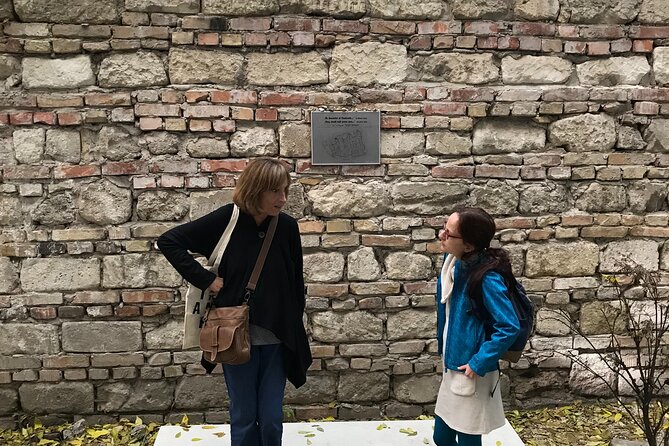
A remaining section of the WWII ghetto wall gives the period a physical presence. It is not a grand monument, and that is part of its force. A fragment of wall can make the confinement of the ghetto easier to picture than a paragraph in a guidebook.
The route may also include the Shoes Monument on the Danube. This memorial lies outside the compact center of the quarter, but it connects the neighborhood’s wartime story to the riverbank. The shoes represent people murdered at the river during the Holocaust. Expect this part of the walk to be solemn.
The guide’s role matters at these stops. Timea Tarjani is praised for combining Hungarian history, Jewish history, and family stories without losing sight of the people involved. Her personal connection to Holocaust survivors gives the subject a human voice, but you should also know that this makes the tour emotionally serious. It is not a light sightseeing stroll from start to finish.
From wartime streets to Jewish life today
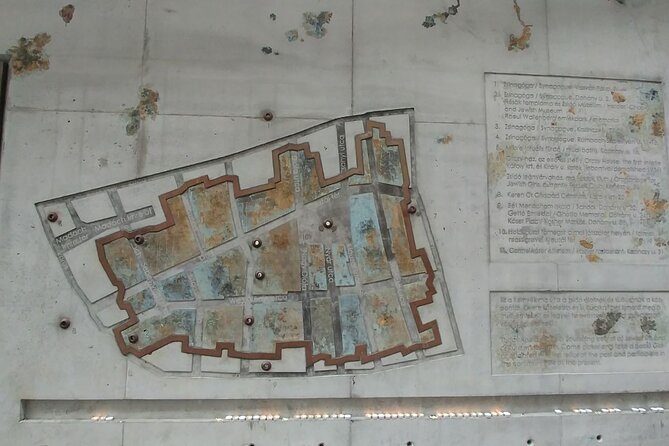
One strength of this walk is that it does not stop in 1945. You also hear about Jewish life in Budapest today, including the community’s continuing presence and religious practice.
That balance can correct an easy misconception: that Jewish life in Hungary ended after the Holocaust. The tour presents the community as diminished and marked by loss, but still active. For anyone tracing Hungarian family roots, this present-day focus may be as meaningful as the memorials.
The Jewish Museum and Jewish Archives add context to the buildings and streets. They can help you connect community life, family records, religious objects, and historical events. Admission arrangements may affect what you see, so discuss your priorities with the guide early in the walk.
Because the route is private, you can ask for more time on genealogy, religious practice, family migration, or the postwar period. You can also request less detail on a subject that feels too heavy. The stated aim is to build an overall picture through stories, not to deliver a rigid list of facts.
More walking tours:
- Budapest: Buda Castle Walk with Saint Stephen’s Hall
★ 4.5 · 3,012 reviews - Big Bus Budapest Hop-On Hop-Off Bus and Walking Tour
★ 3.5 · 2,206 reviews - Budapest: Buda Castle District Walking Tour
★ 4.6 · 2,108 reviews - Budapest City Landmarks Walking Tour in 2 Hours
★ 5.0 · 2,048 reviews
Gozsdu Courtyard, cafés, and the modern quarter
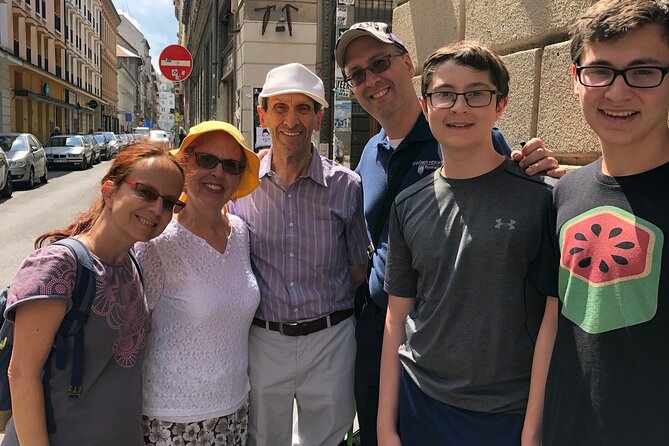
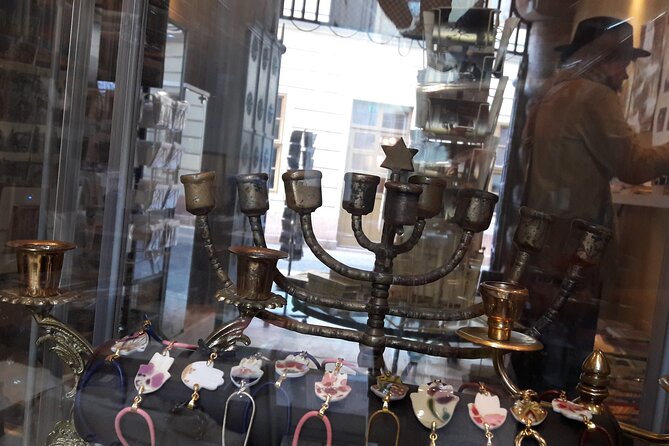
The Jewish Quarter is not only a memorial district. It is one of Budapest’s popular areas for food, nightlife, design, and everyday errands. The tour brings you into that modern layer through courtyards, shops, cafés, galleries, eateries, and confectioneries.
Gozsdu Courtyard is a useful example. Its connected passageways show how older urban spaces have been adapted for contemporary life. Depending on the day and time, you might find shops, food options, or a more social atmosphere. It can feel lively, but it may also be crowded and less reflective than the memorial sites.
Szimpla, the iconic ruin bar, is another contrast. Its improvised interiors and old-building setting are part of the quarter’s modern identity. Visiting it during a daytime walk gives you context for the ruin-bar culture without requiring you to plan a late night around it.
You may also pass festival spaces, small local businesses, and newer cafés. These stops are not filler. They show that the quarter is a lived-in neighborhood rather than an open-air museum.
Still, your expectations should be sensible. This is a Jewish history walk that includes modern local life, not a dedicated food tour or nightlife crawl. Food and drinks are not included, although the guide can recommend restaurants, book a table, arrange a restaurant drop-off, and help organize kosher meals or snacks.
The value of a private four-hour walk
The listed price is $356.90 per group of up to six people. Split six ways, that is about $59.50 each before admission. For a couple, the per-person price is much higher, but the private format gives you control that a standard group tour cannot.
You are paying for a licensed local guide, hotel pickup and drop-off, route flexibility, and time for questions. That matters particularly here, because the subject includes personal loss, religion, family history, and difficult moral questions. A guide who can adjust the pace is more useful than one who simply covers a fixed checklist.
The four-hour duration is long enough to cover the main synagogues, memorials, and modern quarter without making the walk feel rushed. Several people who feared four hours would be excessive found that the time passed easily, especially when the walk included conversation and spontaneous questions.
The flip side is that four hours on foot requires a moderate fitness level. You can ask for a break, but wear comfortable shoes and avoid treating this as a quick orientation walk. Hotel pickup helps you begin without navigating Budapest first, while restaurant drop-off can make the tour fit neatly into a longer day.
The maximum group size is listed as 10, while the price is advertised for up to six people. If your party is larger, confirm the exact arrangement before booking. For a group of six or fewer, the private format is the clearest value.
What makes Timea Tarjani an important part of the experience
The strongest praise is directed at the guide, particularly Timea Tarjani. Her background as a history teacher helps explain why the tour is organized around meaning rather than a string of disconnected facts.
You can expect a conversational style. Several accounts describe feeling as if they were walking with a warm family friend rather than listening to a formal lecture. That does not mean the tour lacks structure. It means questions and personal interests can shape the discussion.
Timea is also described as having a family connection to the Holocaust and as remaining active in Budapest’s Jewish community. She shares personal stories when they help explain the area, while also discussing Jewish life in the city today.
Her care extends beyond the planned route. She has helped with restaurant suggestions, local stores, additional reading, and practical problems such as arranging COVID tests. One family also appreciated her help when a member felt faint from dehydration, and she spent extra time completing the walk.
Those examples are not promises that every tour will run for a full day or include personal assistance beyond the itinerary. They do show the kind of attentive, flexible service that makes this private format different from a standard scheduled walk.
Practical details that affect your day
Pickup is offered from your hotel lobby or from in front of a rented flat. The tour is offered in English and includes a mobile ticket. It is scheduled daily in the supplied booking information, though the displayed opening hours show Monday from 9:00 AM to 2:00 PM for the listed operating period, January 1, 2026 through January 2, 2027. Confirm your preferred date and start time before you finalize plans.
Bring comfortable walking shoes, water, and a hat or scarf if you prefer your own synagogue covering. You can request a break, and service animals are allowed. The route is near public transportation, though pickup reduces the need to work out the first connection.
Admission is not included. You can choose one synagogue rather than entering every site, and the maximum possible extra cost is €46 per person. Discounts may apply, so ask before assuming the full amount.
Free cancellation is available up to 24 hours before the start time. Changes or cancellations made inside that window are not refunded, and the cutoff follows Budapest local time.
Who should book this Budapest walk?
I would choose this tour if you want history explained through places, people, and present-day life. It is especially suited to families exploring Hungarian Jewish roots, visitors who want a serious WWII history lesson, and anyone who prefers a private conversation to a large group lecture.
It also works for mixed-interest groups. One person can ask about synagogue architecture, another about family history, and another about ruin bars or restaurants. The guide can adjust the balance.
I would hesitate if you want a cheap orientation tour, a food-focused outing, or a short route with little walking. Admission can add a large amount to the price, and the emotional subject matter requires attention and respect.
FAQ
How long is the Budapest Jewish Quarter walk?
The experience lasts approximately four hours.
What is the price for the tour?
The listed price is $356.90 per group for up to six people.
Is hotel pickup available?
Yes. Pickup is offered from the lobby of your hotel or in front of your rented accommodation.
Is hotel drop-off included?
Yes. Hotel drop-off is included, and restaurant drop-off for lunch or dinner is also offered.
Is the tour conducted in English?
Yes. The experience is offered in English.
Are synagogue admission fees included?
No. Entrance fees are separate. The maximum additional cost listed is €46 per person, and you may choose to visit one synagogue. Discounted prices may be available.
How much walking is involved?
A moderate amount of walking is involved. You can ask for a break, and a moderate level of physical fitness is recommended.
Can kosher meals or snacks be arranged?
Yes. Kosher meals or snacks can be arranged if required. The guide can also recommend and book a table at a local restaurant.
Should you book it?
Book this walk if you want Budapest’s Jewish Quarter to become more than a set of impressive buildings and memorials. The strongest reason to choose it is the guide, especially if you can tour with Timea Tarjani and value personal stories, patient answers, and a clear link between the past and Jewish life today.
The price is easiest to justify for a small group, particularly when shared among four to six people. Add admission costs to your budget, wear good shoes, and set aside enough emotional space for the WWII memorials. If that sounds like the kind of morning you want, this is a thoughtful and unusually personal way to understand Budapest.
Just added around Budapest
- Lake Balaton and Herend Guided Tour★ 4.7 · 3 reviews
- Audio visual multi-sensory chefs journey dinner experience★ 5.0 · 3 reviews
- Hollókő Ethnographic Village: Day Tour from Budapest★ 3.7 · 3 reviews
- Tapolca Cave Lake and Tihany/ Balaton private tour from Budapest★ 4.5 · 3 reviews
- Budapest Art Nouveau Walking Tour★ 5.0 · 3 reviews
- SzentEndre-SaintAndrew City Privately Shopping and Picturesque★ 4.5 · 3 reviews
- Budapest Drinks and Piano Show Cruise★ 4.5 · 3 reviews
- Horseshow on the Hungarian Puszta, private tour from Budapest with entry!★ 5.0 · 3 reviews
Jewish Quarter Tours, compared.
Budapest Jewish Heritage Memorial Walking Tour & Synagogue Entry
What we thought →
Jewish Heritage Guided Tour with Synagogue Ticket
What we thought →
Past and Present of Budapest Jewish District Tour
What we thought →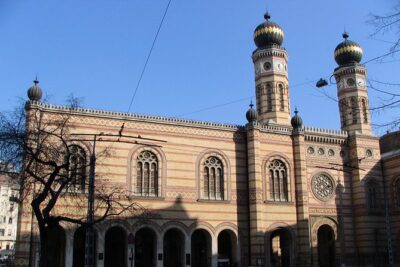
Budapest Dohany Synagogue & Hungarian Jewish Museum & free extras
What we thought →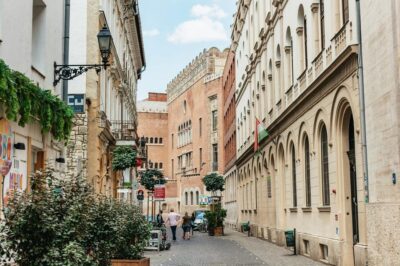
Jewish History Guided Walking Tour with Historian
What we thought →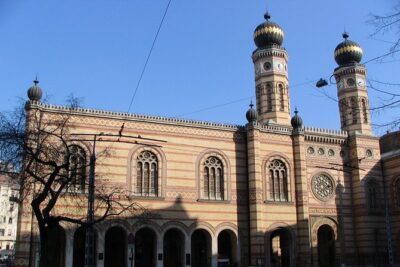
Budapest Dohany, Heroes’, Rumbach synagogues & Jewish Ghetto Tour
What we thought →Browse the lists this tour appears in