
Reviewed · JEWISH QUARTER TOURS
Budapest: Jewish History Guided Walking Tour with Historian
History gets personal on these streets. This 2.5-hour walk through Budapest’s Jewish Quarter combines clear historical storytelling with a coffee and slice of flódni, a traditional Jewish-Hungarian cake. I especially like the focus on both Jewish life before World War II and the district’s present-day culture, including kosher shops, synagogues, street art, and ruin-pub streets.
I also like the small-group format, limited to 10 people, which makes it easier to hear the guide and ask questions. The main limitation is important: the three major synagogues are viewed from the outside, and entrance tickets are not included. If you want to see their interiors, you’ll need a separate visit.
The tour begins in central Budapest and covers the 7th District at a steady walking pace. Guides such as Noémi, Gábor, András, Barbara, Maggie, and Daniel have been praised for making difficult subjects understandable without softening the truth. Plan for outdoor walking in all weather, and wear sensible shoes.
In This Review
- Key Points to Know Before You Go
- Starting Beside Deák Ferenc tér
- Walking Through More Than 200 Years of Jewish Life
- The Three Synagogues Seen From the Street
- The Former Ghetto and the Winter of 1944 and 1945
- Gozsdu Passage, Street Art, and the Modern Quarter
- Flódni and a Short Café Break
- Why the Small Group Makes a Difference
- Is $63 a Fair Price?
- Who Should Book This Walk?
- Should You Book the Budapest Jewish History Tour?
- FAQ
- Where does the tour start?
- How can I reach the meeting point?
- How long does the walking tour last?
- Is the tour conducted in English?
- How large is the group?
- Can I enter the three synagogues during the tour?
- Is food included?
- Does the tour include synagogue admission?
- Does the tour run in bad weather?
- Can I cancel for a full refund?
Key Points to Know Before You Go
- The tour covers more than World War II: You’ll hear about Jewish life, migration, religious restrictions, Hungarian politics, and the community today.
- All three major synagogues are seen from outside: The route includes the Kazinczy Street Orthodox Synagogue, Rumbach Street Synagogue, and Dohány Street Synagogue.
- The guide brings the past to specific places: Memorials to Raoul Wallenberg and Carl Lutz help connect wartime events to real streets and buildings.
- Flódni is part of the experience: A local Jewish cake and coffee or a soft drink are included at a café.
- The group stays small: With no more than 10 participants, questions and conversation are easier than on a large bus tour.
- The neighborhood has two very different faces: You’ll see solemn memorials and traces of the former ghetto alongside Gozsdu Passage, street art, restaurants, and nightlife.
Starting Beside Deák Ferenc tér
The meeting point is in front of the Kempinski Hotel Corvinus Budapest, facing the Ferris wheel on Erzsébet Square. This is a useful central starting point, not an out-of-the-way hotel tucked into a residential corner.
Getting there is straightforward. Deák Ferenc tér is served by the M1, M2, and M3 subway lines, along with several buses and trams. Give yourself enough time to find the hotel entrance and the Ferris wheel, especially if you are arriving just before the start.
The first minutes are likely to place the Jewish Quarter within the larger story of Budapest and Hungary. This matters because the district can look like a simple entertainment zone if you walk through it alone. Cafés, bars, shops, and colorful walls now attract a young crowd, but the same streets also hold traces of confinement, deportation, religious life, and survival.
A strong guide helps you read the city in layers. Several guides have used maps or visual material to explain how Hungary’s borders and political position changed over time. That background gives the later stories more meaning, especially when the discussion turns to laws affecting Jewish people and the movement of Jewish communities in Central Europe.
More Jewish Quarter walks:
- Budapest Jewish Heritage Memorial Walking Tour & Synagogue Entry
★ 5.0 · 568 reviews - Budapest: Jewish Heritage Guided Tour with Synagogue Ticket
★ 4.8 · 533 reviews - Jewish Quarter of Budapest Walking Tour
★ 4.7 · 369 reviews
Walking Through More Than 200 Years of Jewish Life
The Jewish Quarter is in Budapest’s 7th District, often called Erzsébetváros. Jewish culture has been part of this area for more than 200 years, and the neighborhood remains home to an active Jewish community.
The route is not limited to one period. You should expect a broad account of Jewish life in Budapest, including the growth of the community, religious divisions, changing laws, and the pressures that encouraged some people to convert or leave. That wider view is one of the tour’s best features.
It is easy to reduce Budapest’s Jewish past to the Holocaust alone. That would leave out too much. Before the catastrophe of 1944 and 1945, Jewish residents played a major part in the city’s commercial, cultural, and civic life. The tour helps you understand the community as a living part of Budapest rather than as a subject defined only by destruction.
The guides are also willing to discuss uncomfortable parts of Hungarian history. That includes political choices, social prejudice, and the way Jewish people were treated before and during the war. The tone is serious, but the tour is not described as a dry lecture. Gábor, for example, has been praised for mixing facts with humor and answering questions about Budapest beyond the stated topic.
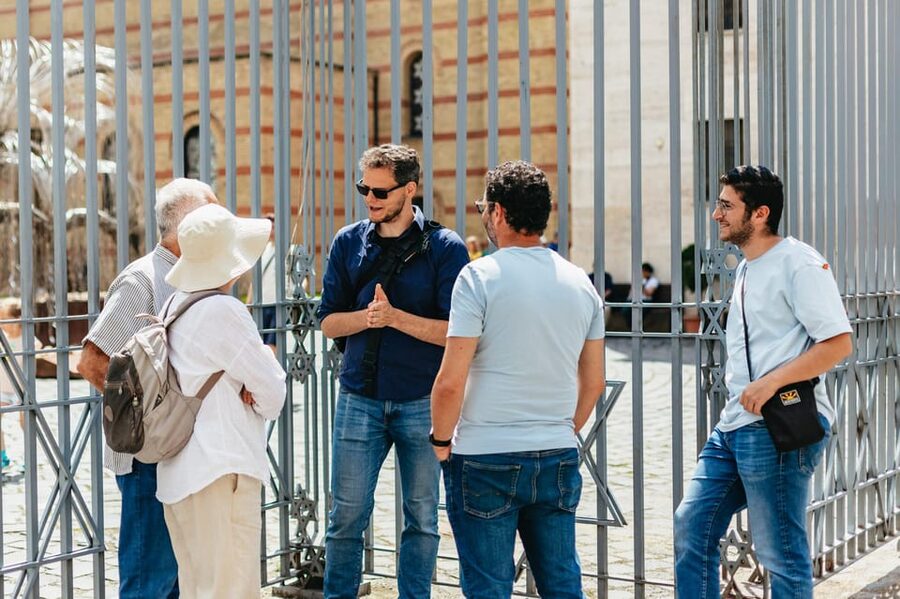
Expect the pace to be active but manageable. One guide adjusted the speed for individual needs, and the group size makes it easier to pause when someone has a question. Still, this is a walking tour, not a short stroll between cafés. A participant described it as a lot of walking, especially on a hot day, so bring water and protect yourself from the weather.
The Three Synagogues Seen From the Street
The tour introduces you to three of the district’s most important synagogues:
- The Dohány Street Synagogue, the largest of the three and one of the most important Jewish buildings in Budapest
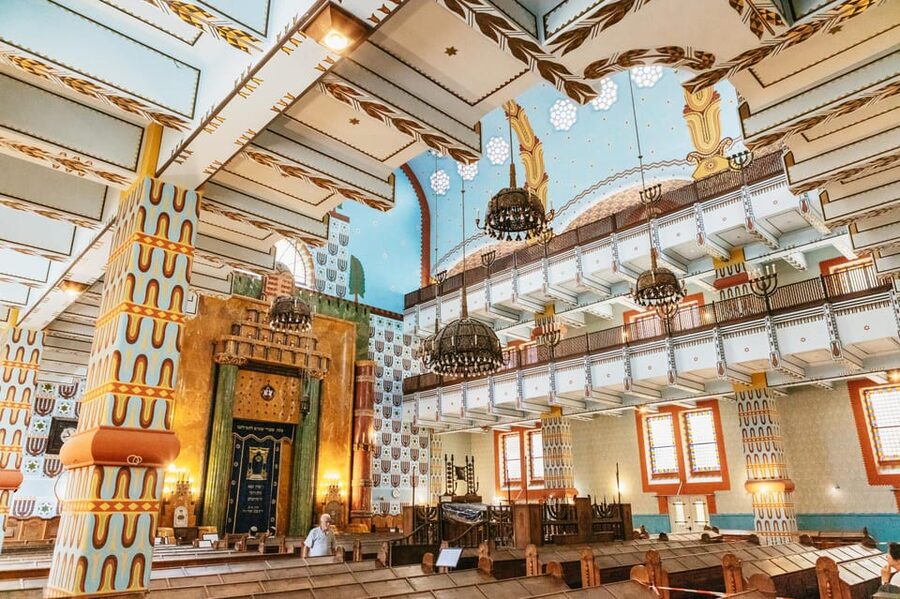
- The Rumbach Street Synagogue, built in 1872 by Viennese architect Otto Wagner
- The Kazinczy Street Orthodox Synagogue, associated with the Orthodox Jewish community
Seeing these buildings from the outside gives you a useful architectural overview. You can compare the different religious traditions and the scale of the buildings while hearing how each fits into the district’s past and present.
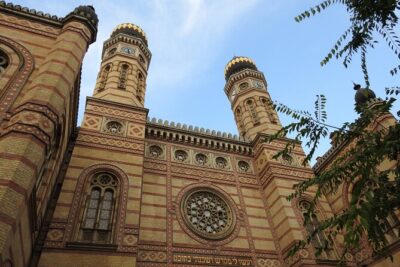
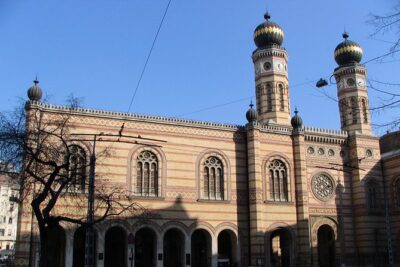
Dohány Street Synagogue is the grandest exterior stop. It is often described as the largest synagogue in Europe, and its size helps explain the scale and importance of Budapest’s Jewish population when it was built. From the street, you can appreciate the building’s presence, but you will not receive the full interior experience on this tour.
Rumbach Street Synagogue offers a different architectural story. Its connection with Otto Wagner makes it especially interesting for anyone who enjoys Budapest’s turn-of-the-century buildings. The precise condition of the site on a particular day may affect how close you can get or what you can see, so do not treat this walk as a guaranteed substitute for an interior visit.
The key practical point is simple: synagogue entry is not included. The stated plan is to view all three from outside. If you want to enter Dohány, Rumbach, or Kazinczy, check opening hours and admission arrangements separately, and allow extra time on another part of your Budapest schedule.
This limitation may disappoint you if your main goal is synagogue architecture. But if you want a guided account of the neighborhood and the people connected to it, the exterior visits fit well into the walking route.
The Former Ghetto and the Winter of 1944 and 1945
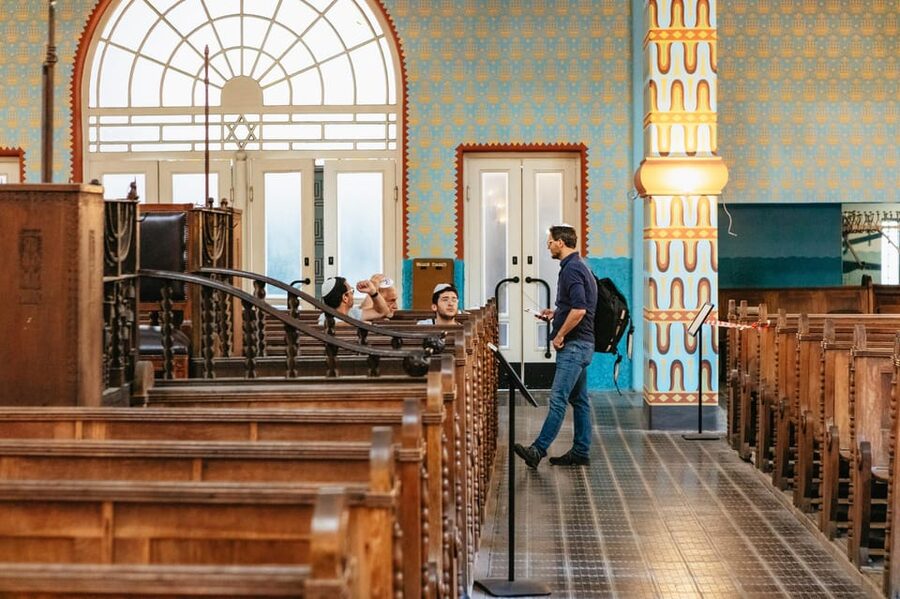
The most difficult section of the walk concerns the former Budapest ghetto and the persecution of the city’s Jewish population during World War II. The tour takes you along streets connected with the former ghetto and points out a remaining section of the original wall.
One particularly striking detail is how briefly the ghetto existed as a formal enclosed area, for less than two months, despite the enormous consequences for the people forced inside. A short timeline does not mean a small story. The guide uses the streets, surviving structures, and memorials to show how quickly conditions changed.
The discussion does not stop at general facts. You’ll hear about local people who helped save Jewish lives during the winter of 1944 and 1945, including Raoul Wallenberg and Carl Lutz. Both are remembered among those honored as Righteous Among the Nations.
Their memorials give the story a strong sense of place. Instead of hearing only about distant officials and abstract numbers, you learn about actions taken in Budapest during a period of extreme danger. This is where the guide’s role becomes especially valuable. The subject requires accuracy, care, and the willingness to explain both courage and complicity.
Several guides have been praised for not glossing over the truth. That is an important strength. You should expect an honest account of Hungary’s role in the treatment of Jewish people, not a polished version designed merely to flatter the city.
The emotional weight can be considerable. Families with older children may want to prepare them for a serious discussion. The tour is suitable for adults who want historical context, but it is not simply a sightseeing walk with a few memorials added.
More history-led tours:
- Budapest: Historic Cruise with Welcome Drink
★ 4.7 · 6,512 reviews - Budapest Historical Sightseeing – Free Walking Tour
★ 5.0 · 1,302 reviews - Buda Castle District Dark History, Legends and Vampire Night Tour
★ 4.5 · 1,240 reviews - BloodThirsty Hungary: Walking tour & Dark Historical Stories
★ 4.9 · 633 reviews
Gozsdu Passage, Street Art, and the Modern Quarter
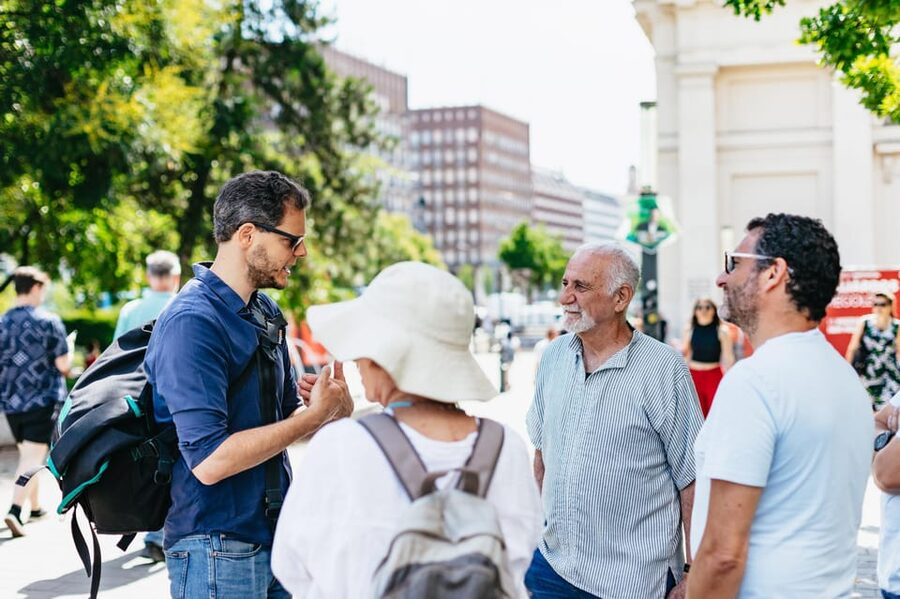
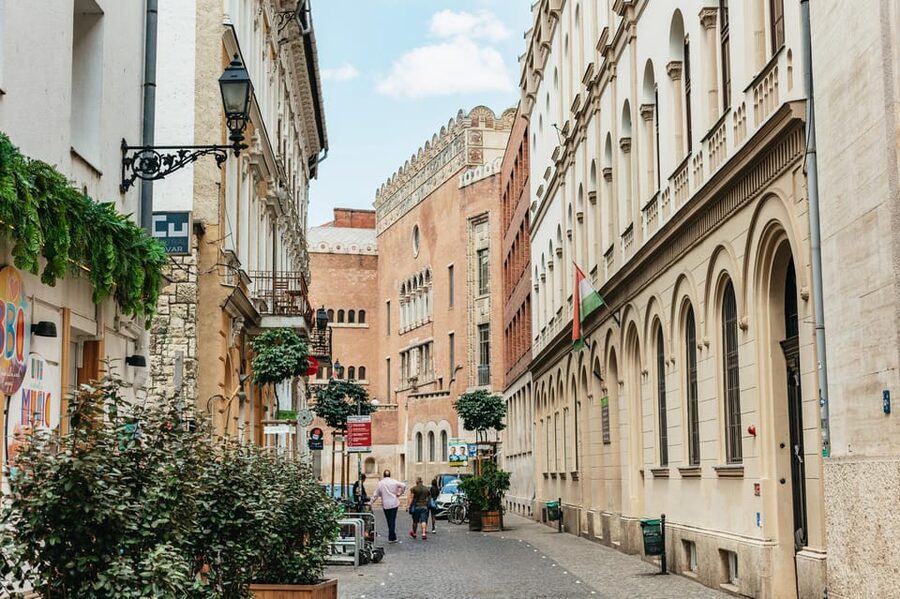
Budapest’s Jewish Quarter is not frozen in the past. The route passes lively Gozsdu Passage and points out street art, restaurants, kosher shops, and nightlife streets.
This contrast is one of the walk’s most useful features. You can see how a neighborhood shaped by religious life and wartime trauma has become one of Budapest’s busiest social districts. The guide explains the famous ruin pubs and offers local context for the area’s evening scene.
The street art adds another layer. Murals and painted walls can look like decoration when you walk by quickly, but a guide can point out how the modern district uses public space to express identity, memory, and humor. The supplied details do not promise a dedicated street-art tour, so think of these examples as part of the broader neighborhood story.
Gozsdu Passage is also a good reminder that this tour is not confined to memorials and synagogues. You’ll get practical orientation for returning later, perhaps for dinner or a drink, while understanding what existed here before the current nightlife arrived.
I appreciate that the modern material is included without pushing the historical subject aside. The tour gives you a way to enjoy the area later with more awareness. At the same time, if you are looking for a focused food, bar, or street-art experience, this is not that. Those features support the main subject rather than replace it.
Flódni and a Short Café Break
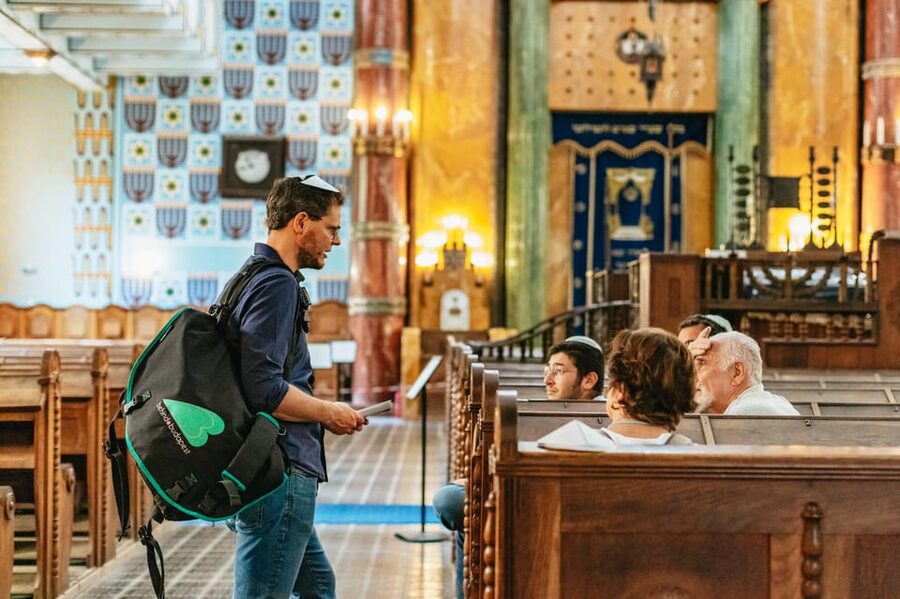
Near the end, the group stops for about 15 minutes at a local café for coffee or a soft drink and a slice of flódni. This traditional Jewish cake is made with layers associated with apple, walnut, poppy seed, and plum filling, although the exact preparation can vary.
The break is modest, but it works well. After more than two hours of walking and listening, you get a chance to sit, ask follow-up questions, and consider what you have seen. Food gives the history a human scale, especially when the subject has been so heavy.
Do not book this expecting a full meal or a food tour. The included item is a Jewish cake with coffee or a soft drink. If you need lunch, plan that separately.
The café stop also gives the guide a less formal setting for questions. Guides such as Noémi and András have been praised for taking time with questions and connecting Hungarian history to current life. In a small group, this can become one of the most useful parts of the experience.
Why the Small Group Makes a Difference
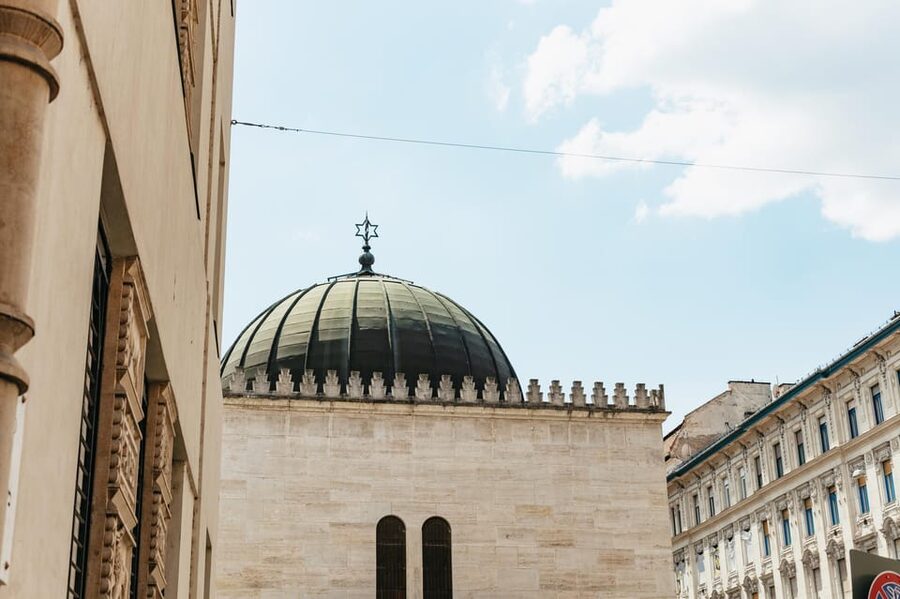
The group is limited to 10 participants. That number is large enough to create conversation but small enough for the guide to monitor the pace and respond to individual interests.
This matters on a history walk. If you cannot hear the explanation beside a busy street, the most important part of the tour is lost. A 10-person limit reduces that risk, though normal city noise can still be present.
The small format also makes follow-up questions realistic. Past guides have handled questions about Jewish history, Hungarian politics, architecture, nightlife, and the city more generally. Some groups have been much smaller, even just a couple or three people, which can make the walk feel almost private.
The guide quality is central to the experience. Names that have received especially strong praise include Noémi, Gábor, András, Barbara, Maggie, Daniel, Gabriel, Judit, and Zsolt. The recurring strengths are clear explanations, enthusiasm, a good sense of humor, and the ability to tell personal or local stories without losing the larger historical picture.
Because guides can vary, you should expect the route to have a common framework but a slightly different feel depending on who leads it. One guide was praised for her strong structure and use of maps, while another received criticism for a less organized presentation when synagogue access was unclear. That is a useful reminder to stay flexible if conditions at a site change.
Is $63 a Fair Price?
At $63 per person, this is not the cheapest way to walk around the Jewish Quarter. You can visit parts of the district independently for free, and synagogue entrance fees are not included.
The value comes from the interpretation. You are paying for 2.5 hours with a historian guide, a small group, a planned route, local stories, and a café stop with flódni. If you already know Hungarian and Jewish history well, the price may feel less attractive. If the subject is new to you, the guide can save you hours of piecing together disconnected information.
The strongest value is for someone who wants context rather than a checklist. The tour explains why the synagogues are there, how the district changed, what the former ghetto meant, and how wartime rescue efforts fit into Budapest’s story.
I would also factor in the group size. A large, inexpensive tour can be frustrating when you cannot hear or ask questions. Ten people is a sensible limit for a serious walking tour, especially when the guide has visual material or points out details on narrow streets.
For the best value, pair this experience with a separate synagogue visit if interiors matter to you. That way, you get both the historical walk and the architecture you paid to see.
Who Should Book This Walk?
I would recommend this tour to you if you want:
- A serious introduction to Jewish life and history in Budapest
- Context for World War II and the former ghetto
- A guide who can explain Hungarian history in plain language
- A small group rather than a large coach tour
- Local orientation for the 7th District, Gozsdu Passage, and ruin-pub area
- A thoughtful experience that includes both tragedy and present-day community life
It suits first-time visitors especially well, since the walk helps you understand one of Budapest’s most visited districts before returning on your own. It is also useful for repeat visitors who have seen the nightlife but missed the neighborhood’s deeper story.
You may want another option if you dislike serious historical subjects, cannot manage 2.5 hours of outdoor walking, or mainly want to tour synagogue interiors. The pace is reasonable, but the content is substantial and the weather will not cancel the walk. Dress for the forecast.
Should You Book the Budapest Jewish History Tour?
Yes, if you want a thoughtful introduction to Budapest’s Jewish Quarter and are comfortable with a frank discussion of persecution, survival, and political responsibility.
The tour’s best qualities are its small groups, strong guides, broad historical scope, and clear connection between past and present. The flódni stop is a pleasant local touch, while the memorials to Wallenberg and Lutz give the wartime story a strong human focus.
Just remember what you are buying: a guided neighborhood walk, not a synagogue admission package. Book it early in your Budapest stay if you want useful orientation, then return to the district for a synagogue interior, a meal, or an evening at a ruin pub.
FAQ
Where does the tour start?
It starts in front of the Kempinski Hotel Corvinus Budapest, facing the Ferris wheel on Erzsébet Square.
How can I reach the meeting point?
You can reach the hotel using Budapest’s M1, M2, or M3 subway lines, as well as several buses and trams. Get off at Deák Ferenc tér.
How long does the walking tour last?
The full experience lasts about 2.5 hours. The guided portion in the Jewish Quarter takes about 2 hours and 15 minutes, followed by a café stop of about 15 minutes.
Is the tour conducted in English?
Yes. The live guide conducts the tour in English.
How large is the group?
The group is limited to 10 participants.
Can I enter the three synagogues during the tour?
No. The stated tour plan includes outside views of the Kazinczy Street Orthodox Synagogue, Rumbach Street Synagogue, and Dohány Street Synagogue. Entry is not included.
Is food included?
Yes. You receive a local Jewish cake called flódni, along with coffee or a soft drink at a local café.
Does the tour include synagogue admission?
No. Admission to all synagogues is excluded from the price.
Does the tour run in bad weather?
Yes. The tour starts in all weather conditions, so you should dress appropriately.
Can I cancel for a full refund?
Yes. You can cancel up to 24 hours in advance for a full refund. You can also reserve now and pay later, which keeps your plans flexible.
More Walking Tours
- Budapest: Buda Castle Walk with Saint Stephen’s Hall
★ 4.5 · 3,012 reviews - Big Bus Budapest Hop-On Hop-Off Bus and Walking Tour
★ 3.5 · 2,206 reviews - Budapest: Buda Castle District Walking Tour
★ 4.6 · 2,108 reviews - Budapest City Landmarks Walking Tour in 2 Hours
★ 5.0 · 2,048 reviews
Just added around Budapest
- Lake Balaton and Herend Guided Tour★ 4.7 · 3 reviews
- Audio visual multi-sensory chefs journey dinner experience★ 5.0 · 3 reviews
- Hollókő Ethnographic Village: Day Tour from Budapest★ 3.7 · 3 reviews
- Tapolca Cave Lake and Tihany/ Balaton private tour from Budapest★ 4.5 · 3 reviews
- Budapest Art Nouveau Walking Tour★ 5.0 · 3 reviews
- SzentEndre-SaintAndrew City Privately Shopping and Picturesque★ 4.5 · 3 reviews
- Budapest Drinks and Piano Show Cruise★ 4.5 · 3 reviews
- Horseshow on the Hungarian Puszta, private tour from Budapest with entry!★ 5.0 · 3 reviews
Jewish Quarter Tours, compared.
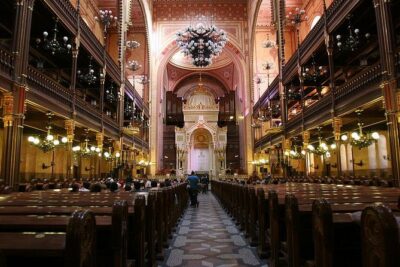
Budapest Jewish Heritage Memorial Walking Tour & Synagogue Entry
What we thought →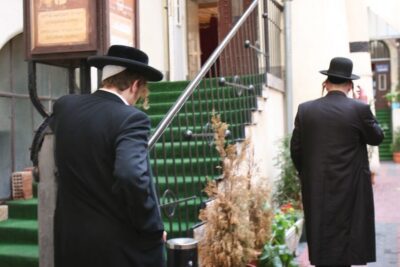
Jewish Heritage Guided Tour with Synagogue Ticket
What we thought →
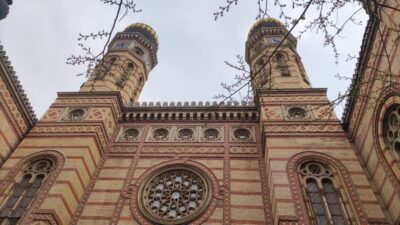
Past and Present of Budapest Jewish District Tour
What we thought →
Budapest Dohany Synagogue & Hungarian Jewish Museum & free extras
What we thought →
Budapest Dohany, Heroes’, Rumbach synagogues & Jewish Ghetto Tour
What we thought →Browse the lists this tour appears in