
Reviewed · JEWISH QUARTER TOURS
Past and Present of Budapest Jewish District Tour
Budapest’s Jewish District carries its history in plain sight. This 105-minute walk connects the city’s Belle Epoque Jewish life, wartime destruction, surviving religious sites, and modern District VII. I like the clear route from Erzsébet tér to Szimpla Kert, and I like that guides such as Gary, Eszter, Dora, Edith, and Edi are praised for making difficult subjects understandable. The main drawback is simple: you do not enter any synagogue, so this is an exterior tour and historical introduction, not a full religious-site visit.
I also like the small details along the way, including the last visible piece of the ghetto wall, urban murals, Gozsdu Udvar, and the explanation of Schutzpass documents that saved Jewish lives. You should expect to stand while listening, walk at a steady pace, and make your own donation at the end, since the low booking price does not pay the guide directly.
In This Review
- Key points to know before you book
- What this Budapest Jewish District walk is really about
- Starting at Erzsébet tér and the Ferris wheel
- Deák Ferenc Square, medieval walls, and Gaudiopolis
- The Great Synagogue from the outside
- Rumbach Street Synagogue and the changing quarter
- Gozsdu Udvar and the last piece of the ghetto wall
- Kazinczy Street and the Orthodox community
- Szimpla Kert, street art, and the modern district
- How the guides shape the experience
- Price, donations, and what you receive
- Who should book this walk?
- Should you book the Past and Present of Budapest Jewish District Tour?
- FAQ
- How long does the Past and Present of Budapest Jewish District Tour last?
- Where does the tour begin?
- Where does the tour end?
- Does the tour enter the synagogues?
- Is there an admission fee for the tour stops?
- Is the tour offered in English?
- How large can the group be?
- Is the guide’s tip included in the price?
- Can I cancel for a full refund?
- Is the tour suitable for most people?
Key points to know before you book
- The tour links past and present: You move from Jewish life during Budapest’s Golden Age to wartime persecution and today’s food, art, nightlife, and religious communities.
- All three major synagogues are viewed from outside: The Great Synagogue, Rumbach Street Synagogue, and Kazinczy Street Synagogue are explained, but none is entered.
- The route ends at Szimpla Kert: This famous ruin bar provides a useful final orientation and puts the modern Jewish District directly in view.
- Schutzpass and Gaudiopolis add unusual depth: These subjects move beyond general Holocaust dates and show how people tried to protect and shelter Jewish children.
- Guides are the heart of the experience: Gary, Eszter, Dora, Edith, Edi, Judith, Christine, Andy, Jude, and David have all been praised for warmth, clarity, humor, or passion.
- The walk is inexpensive but donation-based: The listed price is about $3.63 for the booking fee, while the guide depends on your voluntary tip afterward.
What this Budapest Jewish District walk is really about
This is not a synagogue admission tour. It is a guided walk through Budapest’s District VII, built around the Jewish community’s changing place in the city.
You begin with the period often called the Belle Epoque, when Budapest was growing quickly and Jewish residents played an important part in its cultural and commercial life. The route then moves toward the destruction of the community during the Nazi occupation of Hungary, before turning to the district you see today: religious buildings, restaurants, markets, street art, nightlife, and ruin bars.
I find that structure useful because it prevents the Jewish Quarter from being treated as only a memorial site or only a nightlife zone. You see both. The old synagogues and traces of the ghetto remain, but so do cafés, murals, markets, and young people heading toward Szimpla Kert.
The subject is serious. One part of the walk deals with persecution, danger, and the destruction of Hungarian Jewish life. Still, the tour also covers survival, rescue efforts, religious differences, and the district’s current identity. Several guides have been praised for handling this material with care while keeping the walk approachable.
More Jewish Quarter walks:
- Budapest Jewish Heritage Memorial Walking Tour & Synagogue Entry
★ 5.0 · 568 reviews - Budapest: Jewish Heritage Guided Tour with Synagogue Ticket
★ 4.8 · 533 reviews - Jewish Quarter of Budapest Walking Tour
★ 4.7 · 369 reviews
Starting at Erzsébet tér and the Ferris wheel
The meeting point is beside the Budapest Ferris Wheel in Erzsébet tér. This is a central place to begin, close to Deák Ferenc Square and public transportation.
Your guide introduces the route here and sketches the main themes: Jewish life in Hungary, the three synagogues, the Golden Age, and the destruction that followed. This opening matters because the tour covers a long period in less than two hours. A clear framework helps you understand why each later stop is included.
The first stop lasts about 10 minutes. There is no admission charge, and the main task is orientation. You should arrive ready to listen rather than expecting a formal building visit.
The guide may vary. Gary is often praised for his friendly, passionate presentation, while Eszter and Esther have been described as organized and engaging. Dora has also received warm marks for making the subject accessible. Since the actual guide depends on the date, book this for the route and subject first, then treat the individual guide as a welcome bonus.
Deák Ferenc Square, medieval walls, and Gaudiopolis
At Deák Ferenc Square, the walk turns toward less obvious parts of Budapest’s Jewish story. You hear about Gaudiopolis, a name meaning City of Joy, and about Schutzpass documents that saved thousands of Jewish lives.
These details give the wartime section a human scale. Instead of hearing only about laws, dates, and destruction, you learn about efforts to protect people in a dangerous period. The guide also points out remains of the former medieval city wall.
That wall carries its own uncomfortable lesson. Jewish people were excluded from trading within the city limits, a reminder that discrimination existed long before the twentieth-century catastrophe. I appreciate this stop because it shows that the story did not begin with the Nazi occupation. It places later events within a much longer pattern of exclusion and changing rights.
The stop lasts around 15 minutes. You will be standing in an open urban setting, so clear speech matters. One less positive account described difficulty following a strong Hungarian accent, and another complained that a guide moved too fast. Those are not the general pattern of the feedback, but they are fair reasons to stay near the guide and speak up if you cannot hear.
The Great Synagogue from the outside
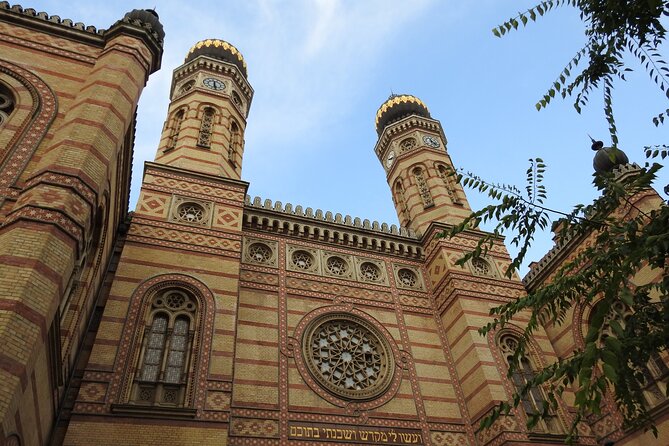
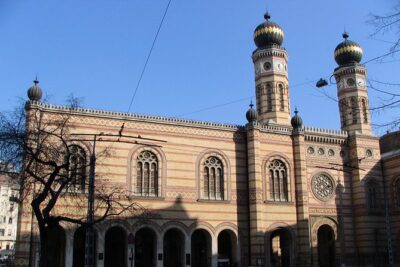
The Great, or Central, Synagogue on Dohány Street is the tour’s biggest visual landmark. It is described as the largest synagogue in Europe, and the guide explains its place in the Neologue movement, the Orthodox movement, and the development of Zionism.
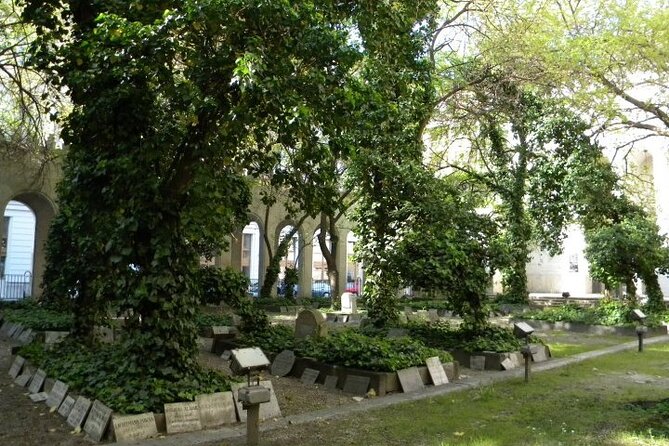
You also see the Memorial Courtyard and the cemetery from outside. The courtyard and cemetery help shift the focus from architecture to memory. This is a place where the story of Budapest’s Jewish community becomes especially weighty.
The stop lasts about 20 minutes, making it the longest single stop on the route. You have time to ask questions, but not time for a full visit.
This limitation needs to be clear before you book. The tour does not enter the Great Synagogue, and the same applies to the other synagogues. If you want to see the interiors, exhibitions, or religious spaces, you will need to arrange a separate visit. One person felt the description could have made this point more prominent, though the tour details do state that the synagogue is viewed from outside.
For a first look, the exterior explanation is useful. For a serious architectural or religious study, it is not enough on its own.
A completely different kind of day out around Budapest:
- Budapest: City Highlights Cruise with Welcome Drink
★ 4.6 · 35,610 reviews - Budapest: Unlimited Prosecco, Beer and Aperol Spritz Cruise
★ 4.8 · 25,310 reviews - Budapest: Széchenyi Spa Day Ticket with Optional Upgrades
★ 4.3 · 23,911 reviews - Budapest: Nighttime or Daytime Sightseeing Cruise
★ 4.2 · 21,062 reviews
Rumbach Street Synagogue and the changing quarter
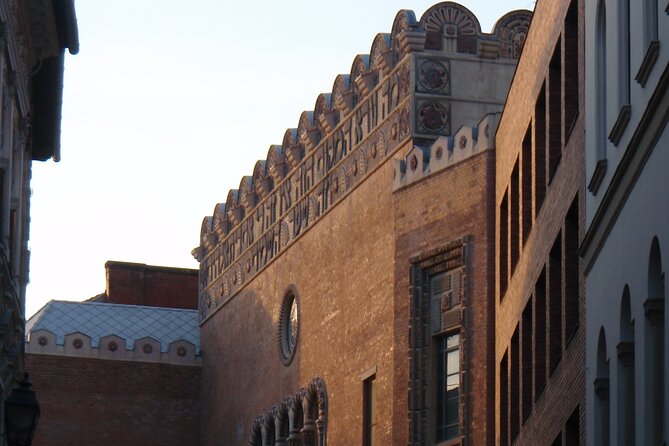
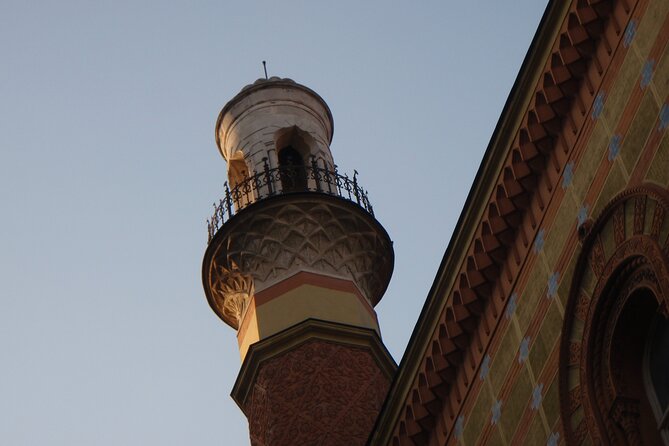
The next stop is Rumbach Street Synagogue. You hear about its restoration, murals, and role in the district. The building is not entered, but the exterior provides another way to compare Budapest’s Jewish traditions and architectural styles.
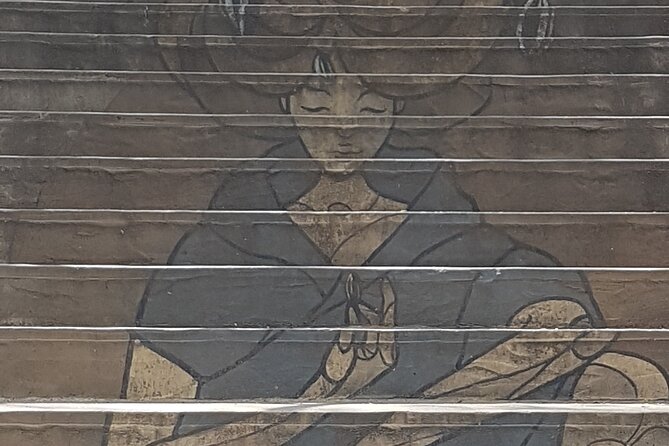
This is also where the route begins to blend historical buildings with present-day street culture. Murals and other urban art appear along the way, often close to older façades and religious landmarks. That contrast is part of the district’s identity today.
The stop is about 15 minutes. I would treat it as a visual pause rather than a full architectural tour. You get context and a chance to notice the building, but you should not expect a detailed interior examination.
The best guides use this point to connect the old quarter with current life. Gary has been praised for providing background and stories, while Edith and Jude have received strong praise for making the district easy to understand in a short time.
Gozsdu Udvar and the last piece of the ghetto wall
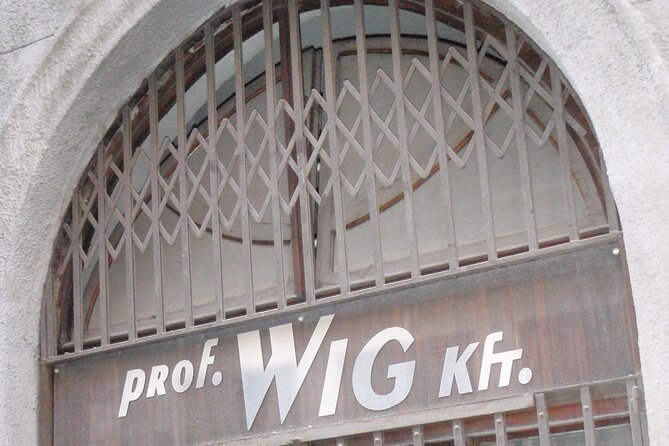
Gozsdu Udvar is one of the route’s clearest examples of past and present sharing the same address. The passage now combines entertainment, food, culture, markets, and nightlife. You walk through or alongside this active complex while hearing about its earlier role in the district.
The stop also includes the last piece of the ghetto wall. That small surviving fragment can be easy to miss without a guide. It gives the tour a physical marker for a period that otherwise might feel distant or abstract.
I like this part because the setting is not arranged as a quiet museum. You are surrounded by ordinary city activity. That can feel jarring, but it is also honest. Budapest’s Jewish Quarter is not frozen in wartime memory. People live, eat, shop, work, and go out here today.
The stop lasts about 15 minutes. Gozsdu Udvar can be lively, so keep close to the group. The maximum group size is 25, which is manageable, though the quality of the experience will still depend on how well the guide handles pauses and street movement.
Kazinczy Street and the Orthodox community
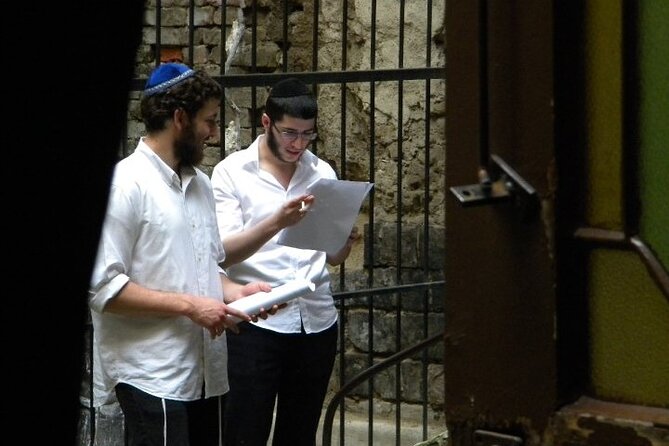
Outside Kazinczy Street Synagogue, the tour turns to the Orthodox community. You hear that the congregation belongs to an Orthodox group of about 50 to 60 families.
The guide also discusses kosher food, the Jewish ritual bath, and other parts of religious life. This is important because the district is not simply a collection of old buildings. Jewish practice continues here, even as the surrounding streets have changed.
Again, there is no synagogue entry. The 15-minute stop gives you an introduction to the community and its traditions, but it cannot replace a dedicated visit or a longer cultural program.
I find this one of the most useful stops for people who know only the broad outline of Jewish life in Budapest. The Neologue and Orthodox movements are introduced earlier, and Kazinczy Street helps you understand that these were not just abstract labels. They represented different religious communities and ways of organizing Jewish life.
Szimpla Kert, street art, and the modern district
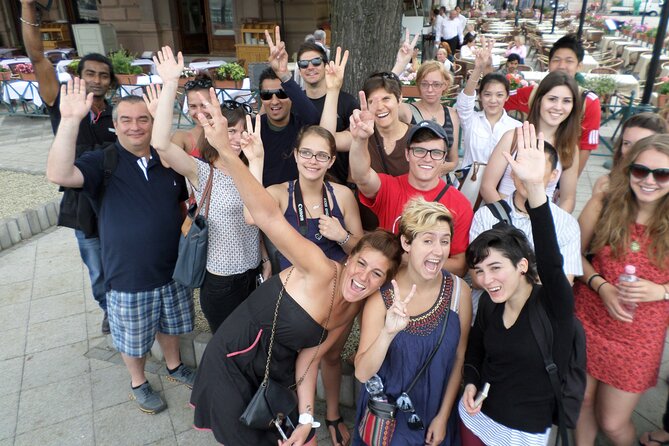
The walk finishes at Szimpla Kert, the well-known ruin bar on Kazinczy Street. There is no entry fee, and the tour ends outside or at the venue area with a final orientation.
You see more murals and urban art on the way. Inside Szimpla Kert, pop-up exhibitions may be on view, though the experience does not promise a particular exhibition. The ending is deliberately modern. After hearing about synagogues, walls, rescue documents, and wartime persecution, you finish in one of Budapest’s best-known nightlife spaces.
That contrast can feel strange, but it helps make the central point. District VII has not disappeared. It has changed. Religious communities, memorial sites, street art, food, culture, and nightlife now share the same compact area.
The finish is practical, too. You can continue exploring the quarter from here, eat nearby, or return later for the ruin-bar scene. The tour does not include food or drinks, so any further visit is at your own expense.
How the guides shape the experience
The strongest part of this tour is the guide. The route is fixed, but the tone and depth can vary with the person leading it.
Gary is repeatedly praised for warmth, humor, passion, and strong historical background. Eszter and Esther are described as organized, friendly, and attentive to questions. Dora receives praise for making the subject both educational and approachable. Edith, Edi, Judith, Christine, Andy, Jude, and David are also praised for clear explanations, good pacing, enthusiasm, or an engaging style.
One especially useful account describes Edi guiding a group of 18 at a comfortable pace for older walkers, with a clear voice and practical suggestions for exploring Budapest. That is worth noting if you are concerned about speed or standing time.
The feedback is not perfect. One person found the history too general and wanted more personal Budapest stories or pictures. Another felt the walk covered only the southern part of the district. A separate complaint described a guide who walked too quickly and left people behind, though the operator said this did not match its policy or the guide identified in the complaint.
My advice is simple: stay close, ask questions, and tell the guide if you need a slower pace or clearer repetition. The tour is designed as a compact overview, not a private seminar.
Price, donations, and what you receive
The listed price is about $3.63 per person. That amount is a booking and administration fee, and it does not contribute to the guide’s earnings.
The guide depends on donations at the end. You choose the amount, and no compulsory tip is stated. This model can offer excellent value if you want a low-cost introduction and are comfortable deciding what the walk was worth afterward.
The price should not lead you to expect a private guide, a small group, or synagogue admission. The group can include up to 25 people, and the walk lasts roughly one hour and 45 minutes. You are paying for a guided overview of the district, not tickets to monuments.
I would budget for a fair tip if the guide gives you useful context, answers questions, and handles the difficult material well. The booking cost is low, but the guide’s work is supported by your donation.
Who should book this walk?
I would recommend it if you want a first orientation to Budapest’s Jewish District, especially early in your stay. The route points out sites you might otherwise pass, including the ghetto wall fragment, the synagogue exteriors, Gozsdu Udvar, murals, and the route toward Szimpla Kert.
It suits you best if you:
- Want Jewish history and present-day district life in one walk
- Prefer explanation from a local guide to a self-guided route
- Have about two hours available
- Are comfortable standing outdoors and walking between stops
- Want practical ideas for further exploration
- Understand that the synagogue interiors are not included
It may disappoint you if you want a quiet memorial tour, a detailed Holocaust study, or entry to the synagogues. It may also feel too general if you already know Budapest’s Jewish history well.
Wear comfortable walking shoes. The pace is described as easy by some, but you will be on your feet and moving through city streets. The tour is offered in English, service animals are allowed, and most people can participate. Confirmation arrives at booking, and free cancellation is available up to 24 hours before the start time.
Should you book the Past and Present of Budapest Jewish District Tour?
Book it if you want a low-cost, well-organized introduction to District VII and can accept exterior-only synagogue visits. The route is compact, the subject is important, and the best guides bring warmth, humor, and care to a difficult chapter of Hungarian history.
I would not book it as your only synagogue experience. Use it first to understand the district, then return independently to any site you want to enter or study in greater detail. For about $3.63 plus a voluntary guide donation, it offers strong value, provided you arrive expecting a walking overview rather than a full museum tour.
FAQ
How long does the Past and Present of Budapest Jewish District Tour last?
The tour lasts approximately 1 hour and 45 minutes.
Where does the tour begin?
It begins at the Budapest Ferris Wheel in Erzsébet tér, Budapest 1051, Hungary.
Where does the tour end?
It ends at Szimpla Kert on Kazinczy u. 14, Budapest 1075.
Does the tour enter the synagogues?
No. The tour discusses the Great Synagogue, Rumbach Street Synagogue, and Kazinczy Street Synagogue from outside, but it does not enter them.
Is there an admission fee for the tour stops?
The listed stops have no admission ticket charge. Szimpla Kert also has no entry fee.
Is the tour offered in English?
Yes. The tour is offered in English.
How large can the group be?
The maximum group size is 25 people.
Is the guide’s tip included in the price?
No. The booking fee covers administration and does not contribute to the guide’s earnings. Donations to the guide are optional and decided by you.
Can I cancel for a full refund?
Yes, if you cancel at least 24 hours before the experience start time. Cancellations made less than 24 hours in advance are not refunded.
Is the tour suitable for most people?
Most people can participate, and service animals are allowed. You should expect to walk and stand during the tour.
Just added around Budapest
- Lake Balaton and Herend Guided Tour★ 4.7 · 3 reviews
- Audio visual multi-sensory chefs journey dinner experience★ 5.0 · 3 reviews
- Hollókő Ethnographic Village: Day Tour from Budapest★ 3.7 · 3 reviews
- Tapolca Cave Lake and Tihany/ Balaton private tour from Budapest★ 4.5 · 3 reviews
- Budapest Art Nouveau Walking Tour★ 5.0 · 3 reviews
- SzentEndre-SaintAndrew City Privately Shopping and Picturesque★ 4.5 · 3 reviews
- Budapest Drinks and Piano Show Cruise★ 4.5 · 3 reviews
- Horseshow on the Hungarian Puszta, private tour from Budapest with entry!★ 5.0 · 3 reviews
Jewish Quarter Tours, compared.
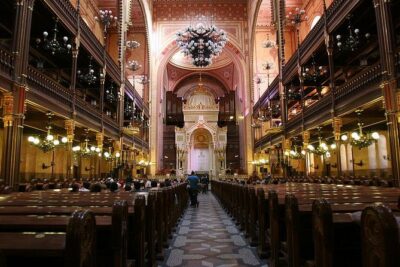
Budapest Jewish Heritage Memorial Walking Tour & Synagogue Entry
What we thought →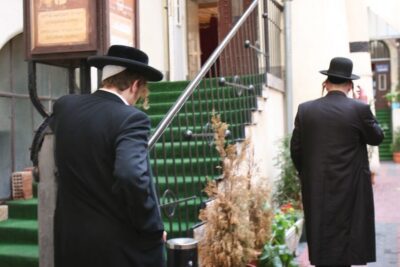
Jewish Heritage Guided Tour with Synagogue Ticket
What we thought →
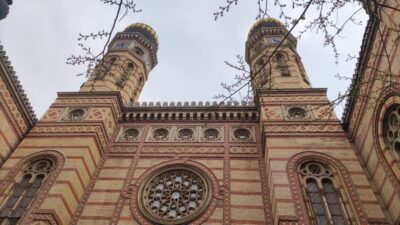
Budapest Dohany Synagogue & Hungarian Jewish Museum & free extras
What we thought →
Jewish History Guided Walking Tour with Historian
What we thought →
Budapest Dohany, Heroes’, Rumbach synagogues & Jewish Ghetto Tour
What we thought →Browse the lists this tour appears in