
Reviewed · JEWISH QUARTER TOURS
Budapest Dohany, Heroes’, Rumbach synagogues & Jewish Ghetto Tour
Budapest’s Jewish quarter rewards a slower look. This 2-hour-20-minute walking tour connects the city’s grandest synagogue with Holocaust memorials, former ghetto streets, and Jewish life today. I especially like the included entry to the Great Synagogue and the chance to compare different Jewish traditions through several striking buildings. The tour also brings history down to street level, with stops at Kiraly Street, Gozsdu Udvar, and the Carl Lutz Memorial.
The main thing to consider is the pace and subject matter. Much of the experience involves listening to detailed historical explanation, so it suits you best if you want context rather than a quick photo walk. The title includes Heroes’, yet the stated route does not visit Heroes’ Square, an important point if that is a major reason for booking.
Guides such as Milan, David, Micky, and Daniel have been praised for clear explanations, personal stories, warmth, and good handling of difficult subjects. I also like that the tour can introduce you to Neologue, Orthodox, and modern Jewish Budapest in one compact outing. Access to synagogue interiors can change, however, and one stop may be viewed from outside if admission is not available.
In This Review
- Key points to know before booking
- Why this Budapest Jewish quarter tour is worth your time
- Starting at the Great Synagogue on Dohány Street
- Raoul Wallenberg Park and the Budapest ghetto cemetery
- Rumbach Street Synagogue and its Moorish design
- Kiraly Street and the old commercial heart of Pest
- Gozsdu Udvar, Spinoza, and a taste of Jewish Budapest today
- Carl Lutz Memorial and the people who resisted
- Dob Street and Kazinczy Street’s Orthodox community
- What the guide adds to the experience
- Time, comfort, and practical details
- Who should book this synagogue tour?
- Should you book the Budapest synagogue and ghetto tour?
- FAQ
- How long does the Budapest synagogue and Jewish ghetto tour last?
- What is included in the tour price?
- Where does the tour begin and end?
- Is the tour offered in English?
- What should I wear to enter the synagogues?
- Can the synagogues close unexpectedly?
Key points to know before booking
- The Great Synagogue anchors the tour: Entry is included, and you learn about Hungary’s Neologue Jewish community inside one of Europe’s largest Jewish temples.
- The Holocaust memorial section is serious and moving: Raoul Wallenberg Holocaust Memorial Park includes the Emmanuel Tree of Life and a cemetery connected to the Budapest ghetto.
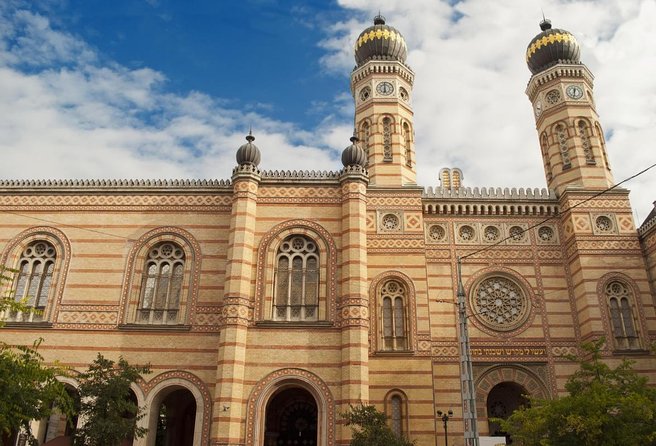
- Rumbach Street Synagogue is a major highlight: Otto Wagner’s 1872 Moorish design gives this lesser-known building a very different feel from the Great Synagogue.
- You walk through the former ghetto, not just past monuments: Kiraly Street, Dob Street, and Kazinczy Street connect the past to Jewish life and culture in Budapest today.
- The guide matters greatly: Milan, David, Micky, and Daniel are praised for personal stories, careful pacing, humor, and answers to detailed questions.
- The route is compact but talk-heavy: Most people can take part, yet you should expect a history-focused walk rather than a long-distance city hike.
Why this Budapest Jewish quarter tour is worth your time
Budapest’s Jewish district is easy to visit without a guide. You can walk its streets, photograph the synagogues, and stop at a ruin pub. What is harder is understanding how religious divisions, architecture, commerce, the Holocaust, and present-day Jewish life all fit together.
That is where this tour earns its price. For $63.52 per person, you receive about 2 hours and 20 minutes of guided time, entry fees and taxes, and access to a sequence of places that would otherwise feel disconnected. The value is not simply in entering buildings. It is in learning why the Great Synagogue looks so different from the Orthodox synagogue on Kazinczy Street, and why the former ghetto can feel both lively and painful at once.
I would not choose this tour if you want a broad Budapest introduction. It stays in the Jewish quarter and concentrates on one subject. But if you want to understand Hungarian Jewish life and the Holocaust in Budapest, this is a strong use of one morning or afternoon.
The maximum group size is 35 people. That is not intimate, but it is still manageable for a walking tour if the guide uses a clear voice and keeps the group together. The strong ratings reflect how much depends on the guide. Several guides have received praise, with Milan appearing especially often for his preparation, personal connection to the subject, humor, and ability to adapt explanations to different levels of background knowledge.
More Jewish Quarter walks:
- Budapest Jewish Heritage Memorial Walking Tour & Synagogue Entry
★ 5.0 · 568 reviews - Budapest: Jewish Heritage Guided Tour with Synagogue Ticket
★ 4.8 · 533 reviews - Jewish Quarter of Budapest Walking Tour
★ 4.7 · 369 reviews
Starting at the Great Synagogue on Dohány Street
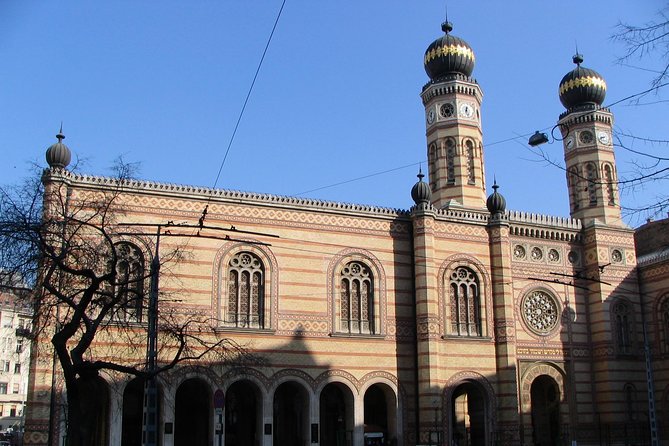
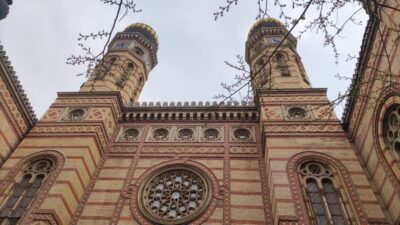
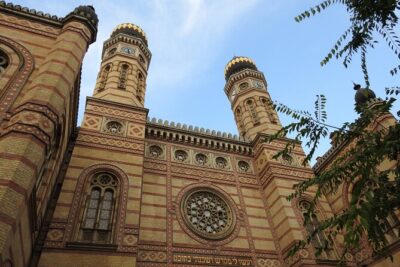
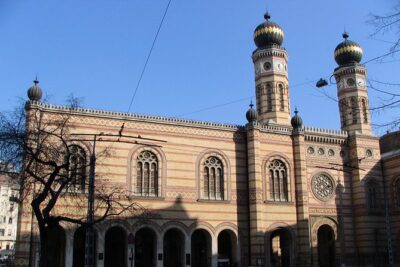
The tour begins at Budapest’s Great Synagogue, also called the Central Synagogue, at Dohány u. 2-4. This is the essential first stop because it gives you the architectural and religious framework for everything that follows.
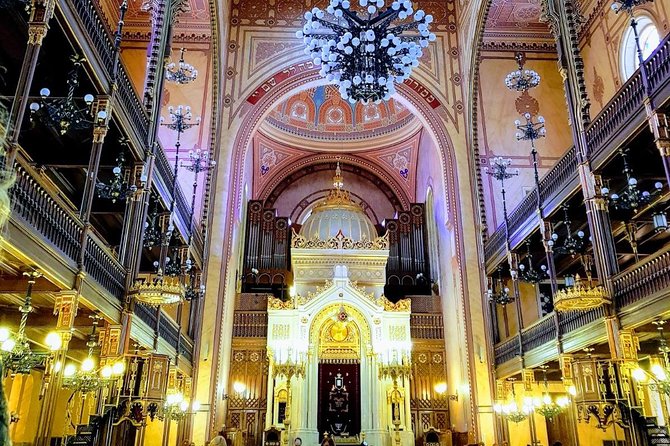
The building dates from the 1850s and is a spectacular example of Budapest’s grand nineteenth-century style. Inside, your guide explains Neologue Judaism, the Hungarian Jewish movement that adopted some features associated with modern European synagogue life while retaining Jewish religious practice.
You also hear about the history of Hungarian Jewry and the synagogue’s place in Budapest. The organ, associated with performances by Franz Liszt, adds another layer to the building’s story. It is a detail that helps explain how this synagogue occupied a distinctive position in the city’s religious and cultural life.
The scheduled visit lasts about 30 minutes. That is enough time for a structured introduction, though not enough for every museum display or architectural detail. One useful tip comes directly from the tour experience: ask about the museum in the basement of the Great Synagogue. At least one person wished the guide had pointed it out, so do not assume the main interior visit covers every part of the complex.
Dress with care. Regular clothing is fine, but your shoulders must be covered, and clothing must reach the knee or be covered before entering. A covering can be purchased on site, and men can obtain a head covering at the entrance.
Raoul Wallenberg Park and the Budapest ghetto cemetery
The next major stop is Raoul Wallenberg Holocaust Memorial Park. This section shifts the tone from architecture and religious history to the destruction of Budapest’s Jewish community during the Holocaust.
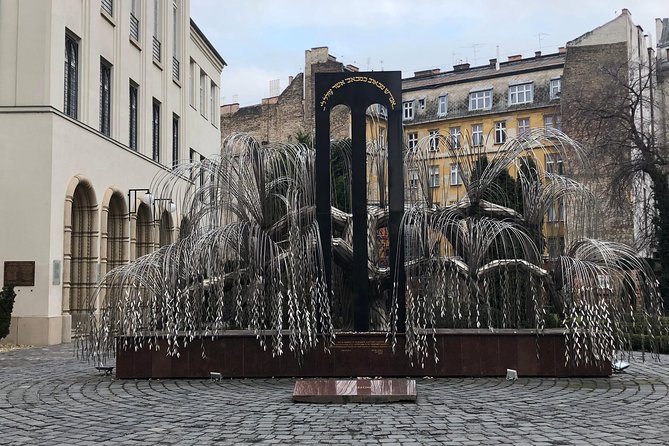
The Emmanuel Tree of Life Memorial is the central visual feature. Its metal leaves carry the names of victims, creating a memorial that is both large and personal. Your guide also discusses the Righteous Gentiles who risked their own lives to save Hungarian Jews, including Swedish diplomat Raoul Wallenberg.
The nearby cemetery was created on the grounds of the Budapest ghetto. More than 2,000 victims are buried there. This location matters because it keeps the history tied to the actual district you are walking through. You are not hearing about a distant event in an abstract museum room. You are standing in the neighborhood where people were confined, suffered, and died.
The scheduled stop lasts about 20 minutes. That may feel brief for such a serious subject, but a good guide can provide a clear structure and leave you with the key facts without turning the visit into a long lecture. Milan and David have been praised for handling personal stories and difficult material with care. The subject remains heavy, so plan some quiet time afterward if you need it.
Rumbach Street Synagogue and its Moorish design
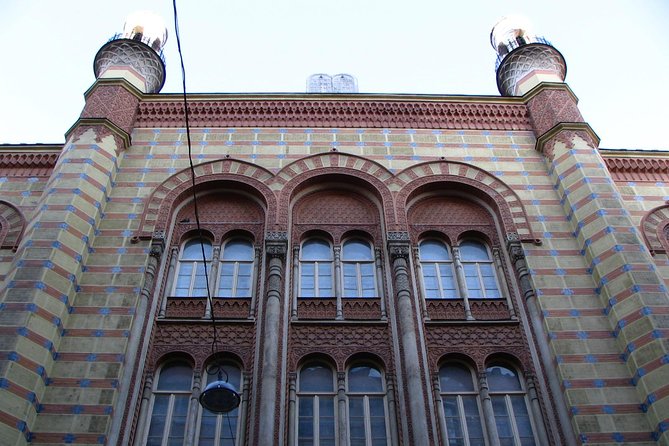
Rumbach Street Synagogue is one of the tour’s most rewarding stops. Located at Rumbach Sebestyén u. 13, it was designed by Viennese architect Otto Wagner in 1872 and has a Moorish architectural style.
The contrast with the Great Synagogue is the point. You see how different Jewish communities expressed their identity through religious buildings, decoration, and design. Rumbach is also a reminder that the district once contained several Jewish communities, not one uniform group.
The building reopened after years of renovation and is described as a remarkable restoration. Its location along the streets of the former ghetto gives the visit extra force. The exterior is easy to appreciate, but the interior is where the design has its greatest effect.
The stated visit lasts about 45 minutes, making it one of the longest stops. The program ends here, which is practical if you want to continue exploring central Pest afterward. Check the day’s arrangements carefully, since synagogue access can change without notice. If one synagogue closes unexpectedly, an alternate visiting time may be offered, but a refund is not offered when only one part of the package is affected.
A completely different kind of day out around Budapest:
- Budapest: City Highlights Cruise with Welcome Drink
★ 4.6 · 35,610 reviews - Budapest: Unlimited Prosecco, Beer and Aperol Spritz Cruise
★ 4.8 · 25,310 reviews - Budapest: Széchenyi Spa Day Ticket with Optional Upgrades
★ 4.3 · 23,911 reviews - Budapest: Nighttime or Daytime Sightseeing Cruise
★ 4.2 · 21,062 reviews
Kiraly Street and the old commercial heart of Pest
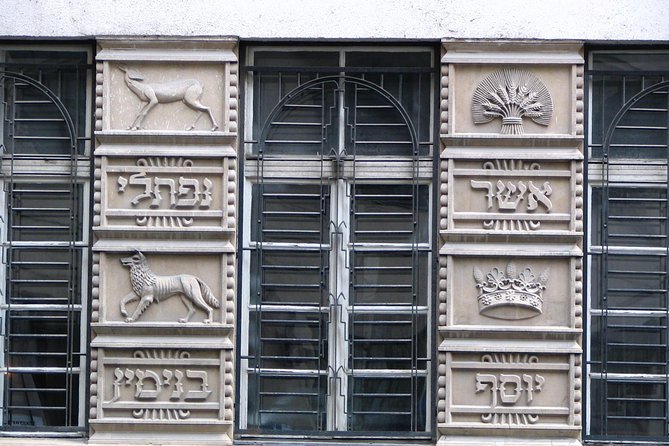
After the main synagogue visits, the route becomes more of a neighborhood walk. Kiraly Street was a major commercial street in Pest during the eighteenth and early nineteenth centuries. It became a center of trade and Jewish life, and the tour uses it to explain how Jewish communities shaped the district beyond their houses of worship.
This is a useful change of scene. You are no longer looking only at monuments. You are walking through streets where businesses, homes, food shops, and cultural institutions once supported daily life.
Today, Kiraly Street again has shops, restaurants, and cultural activity. The scheduled stop is only about 10 minutes, so expect a short orientation rather than a full street tour. I would note places you want to revisit, since the group will not stop for extended shopping or food tasting.
Gozsdu Udvar, Spinoza, and a taste of Jewish Budapest today
Gozsdu Udvar is one of the district’s most colorful passages. In earlier times, it held kosher salami shops, food stores, and apartments. Today it is associated with dining, entertainment, local artists, artisan goods, and antiques.
This stop helps you see the district as a living place rather than only a memorial zone. It also shows the tension that can exist in old neighborhoods: a place with a serious Jewish past now serves as a popular nightlife and cultural center.
The stop lasts roughly 10 minutes. You may want to return later, because the short visit is enough to get oriented but not enough to browse everything. The tour is not designed as a food tour, though you pass places associated with Hungarian Jewish specialties, including flodni, a layered Jewish Hungarian cake made with fillings such as poppy seed, walnut, and apple.
Spinoza Szinhaz adds another cultural reference. Named for the seventeenth-century Jewish Dutch philosopher Baruch Spinoza, the venue combines a restaurant, gallery, cultural stage, and theatre. The stop takes about five minutes, but the name gives your guide a chance to explain how Jewish identity and intellectual life reach beyond synagogue walls.
Carl Lutz Memorial and the people who resisted
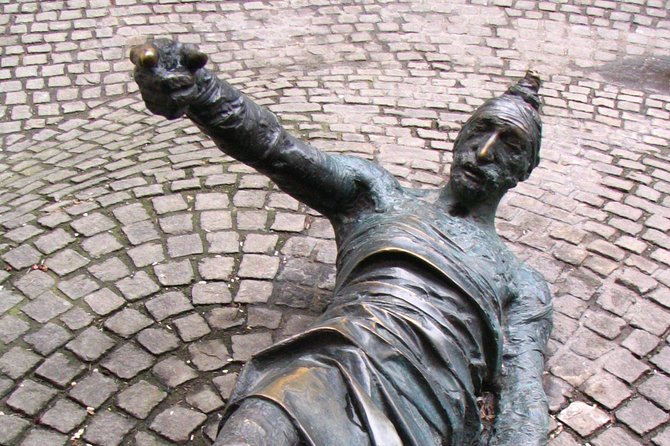
The Carl Lutz Memorial honors another Righteous Gentile who helped save thousands of Hungarian Jews during the Holocaust. The stop is brief, about five minutes, but it places a human face on the story of rescue.
This part of the tour is valuable because it avoids reducing the Holocaust to numbers alone. Your guide can explain the choices and risks faced by people who used official positions, forged documents, safe houses, or other means to help those under threat.
The memorial is also easy to miss if you explore the quarter by yourself. A guide helps you notice these smaller markers and understand why they matter.
Dob Street and Kazinczy Street’s Orthodox community
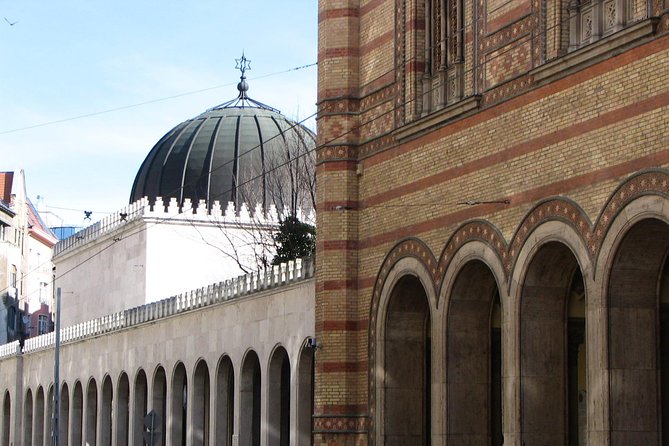
Dob Street runs parallel to Kiraly Street and was once central to the Jewish district and the Budapest ghetto. Today it is part of the area’s renewal and remains linked with Hungarian Jewish Orthodoxy.
The tour then reaches Kazinczy Street, sometimes called a cultural street of Budapest. It contains ruin pubs and nightlife, but it is also home to the Hungarian Orthodox Jewish Center, with a synagogue, mikveh, kosher restaurants and cafes, schools, a butcher, and kosher food shops.
This mix is one of the most useful parts of the walk. You can see how the same streets hold religious institutions, nightlife, food businesses, and memorial sites. Budapest’s Jewish quarter is not frozen in 1944, nor is it only a nightlife district. It is a place where several eras occupy the same blocks.
The Kazinczy Street Synagogue reflects early twentieth-century Budapest Art Nouveau, known locally as Secession architecture. Admission is not included for this stop, so do not assume that the tour guarantees an interior visit. Some tour experiences have included interiors of two of the three synagogues, while access to the third has not always been available.
What the guide adds to the experience
The best reason to book a guided version is the human explanation. Guides have covered geographic, cultural, and religious differences within Hungarian Jewry, then connected those distinctions to architecture and street life.
Milan has been praised for careful research, personal family stories, patience with questions, and a calm but engaging manner. David has been described as friendly, funny, and able to make historical knowledge feel immediate. Micky has been appreciated for clear explanations and a gentle style, while Daniel has been praised for his grasp of the Jewish quarter and its history.
Personal stories can be especially powerful here. One guide’s family connection to a Holocaust survivor added meaning for those who heard it. That kind of background should be treated as a supplement to historical evidence, not a replacement for it, but it can make the past feel less remote.
The tour is also adaptable in small ways. Guides have adjusted timing, answered questions from people with different levels of knowledge, and allowed for a bathroom break between sections when needed. One person with a recent hip surgery found the walking manageable, though that does not guarantee the same experience for everyone.
Time, comfort, and practical details
The tour is offered in English and is generally suitable for most people. It is near public transportation, and service animals are allowed. The route is described as a walking tour, but the actual distance appears modest. One person felt there was more talking than walking, so choose this experience for explanation rather than exercise.
Wear comfortable shoes and bring an extra layer. One person found the synagogue interiors chilly. You should also dress modestly from the start so you do not need to arrange a covering at the entrance.
The tour is often booked about 32 days ahead. That suggests you should reserve early if your Budapest dates are fixed, especially if you want a particular day or time. Confirmation arrives when you book.
Free cancellation is available up to 24 hours before the start time. Changes or cancellations inside that window are not accepted for a refund. If poor weather causes the activity to be canceled, you can receive another date or a full refund.
Who should book this synagogue tour?
I would recommend it to anyone with a serious interest in Jewish history, Budapest architecture, religious communities, or Holocaust memorials. It is also a good choice if you want a guided introduction before exploring the quarter on your own.
It suits solo visitors well. One person who attended alone had a particularly positive experience, and the group format provides company without requiring a private tour.
Families with older children may find the route useful, but the Holocaust section requires maturity and attention. People who prefer brief commentary, independent museum time, or a food-focused outing may find the pace too lecture-heavy.
The title can also create confusion. Heroes’ Square is not included in the described stops, so book this for the Jewish quarter, not as a general Heroes’ Square sightseeing tour.
Should you book the Budapest synagogue and ghetto tour?
Book it if you want meaning as well as monuments. The Great Synagogue and Rumbach Street Synagogue provide exceptional architecture, while the ghetto streets, cemetery, and memorials give the district moral and historical weight.
At $63.52, the price is fair if the included synagogue access goes ahead and you value an expert English-speaking guide. It is less compelling if you plan to rush through interiors or mainly want food, nightlife, and photographs.
The strongest choice is to reserve this early in your stay, then return later to Kazinczy Street, Gozsdu Udvar, or the places that caught your eye. The tour gives you the framework. Your second walk lets you explore at your own speed.
FAQ
How long does the Budapest synagogue and Jewish ghetto tour last?
The tour lasts approximately 2 hours and 20 minutes.
What is included in the tour price?
All fees and taxes are included. Entry to the Great Synagogue, Raoul Wallenberg Holocaust Memorial Park, and Rumbach Street Synagogue is included in the stated program. Admission for the Kazinczy Street Synagogue is not included.
Where does the tour begin and end?
It begins at Budapest, Dohány u. 2-4, 1075 Hungary. The program ends at Rumbach Street Synagogue on Rumbach Sebestyén u. 13, 1074 Hungary.
Is the tour offered in English?
Yes. The experience is offered in English.
What should I wear to enter the synagogues?
Regular clothing is acceptable, but shoulders must be covered and clothing must reach the knee or be covered before entry. A covering can be purchased on site, and a head covering for men is available upon entry.
Can the synagogues close unexpectedly?
Yes. The synagogues may close temporarily without notice. If one synagogue is affected, an alternate visiting time may be offered, but no refund is offered because the tour is sold as a package. If all the synagogues close, an alternate date or time, or a full refund, will be offered.
Just added around Budapest
- Lake Balaton and Herend Guided Tour★ 4.7 · 3 reviews
- Audio visual multi-sensory chefs journey dinner experience★ 5.0 · 3 reviews
- Tapolca Cave Lake and Tihany/ Balaton private tour from Budapest★ 4.5 · 3 reviews
- Hollókő Ethnographic Village: Day Tour from Budapest★ 3.7 · 3 reviews
- Budapest Art Nouveau Walking Tour★ 5.0 · 3 reviews
- SzentEndre-SaintAndrew City Privately Shopping and Picturesque★ 4.5 · 3 reviews
- Budapest Drinks and Piano Show Cruise★ 4.5 · 3 reviews
- Horseshow on the Hungarian Puszta, private tour from Budapest with entry!★ 5.0 · 3 reviews
Jewish Quarter Tours, compared.
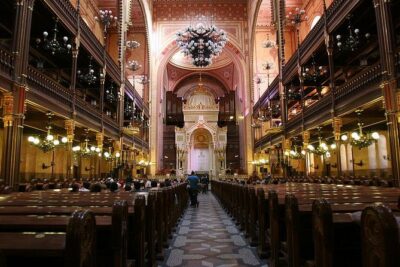
Budapest Jewish Heritage Memorial Walking Tour & Synagogue Entry
What we thought →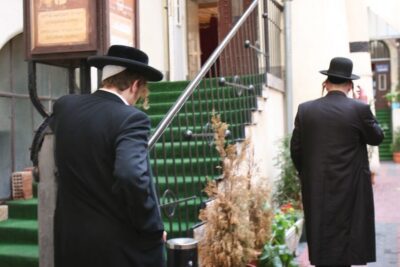
Jewish Heritage Guided Tour with Synagogue Ticket
What we thought →
Past and Present of Budapest Jewish District Tour
What we thought →
Budapest Dohany Synagogue & Hungarian Jewish Museum & free extras
What we thought →
Jewish History Guided Walking Tour with Historian
What we thought →Browse the lists this tour appears in