
Reviewed · JEWISH QUARTER TOURS
A Journey through Jewish Budapest – Walking Tour
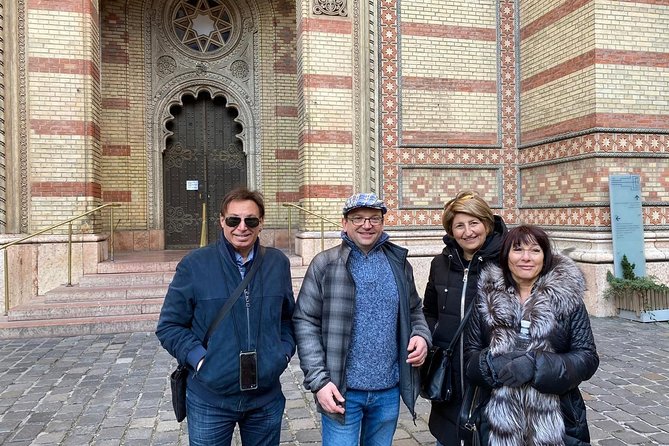
History has footsteps. This three-hour Budapest walk links synagogues, memorials, and vanished neighborhoods to explain how Jewish life shaped the city before World War II. I especially like the historian-led commentary and the chance to see several Jewish traditions represented, not just one grand building. I also value the quiet ending at the Shoes on the Danube Bank, where the tour shifts from architecture to personal loss. The main consideration is cost: at $123 per person, you must also pay separately for entry to the Dohány Synagogue.
This is a serious tour, not a quick photo walk. Guides may be professors, doctoral students, historians, journalists, art critics, or published authors, and past tours led by Orsolya and Endres were praised for their care and detail. I would choose it if you want context and conversation, but less so if you prefer a broad sightseeing tour with little discussion of difficult history.
In This Review
- Key points about the Budapest Jewish history walk
- Why this route matters in Budapest
- Starting at Theodor Herzl’s birthplace
- Inside the Dohány Street Synagogue
- The Ghetto Wall Memorial and a vanished boundary
- Kazinczy Street and the Orthodox tradition
- Rumbach Street and the Status Quo Ante tradition
- Ending at the Shoes on the Danube Bank
- The guides make or break the experience
- Is $123 per person good value?
- Who should book this walk?
- Practical details before you go
- Should you book A Journey through Jewish Budapest?
- FAQ
- How long does the walking tour last?
- What language is the tour offered in?
- Where is the meeting point?
- Is entry to Dohány Synagogue included?
- What sites does the tour visit?
- Do visitors need a particular dress code?
- Is the tour private or shared?
- Can I cancel the booking?
Key points about the Budapest Jewish history walk
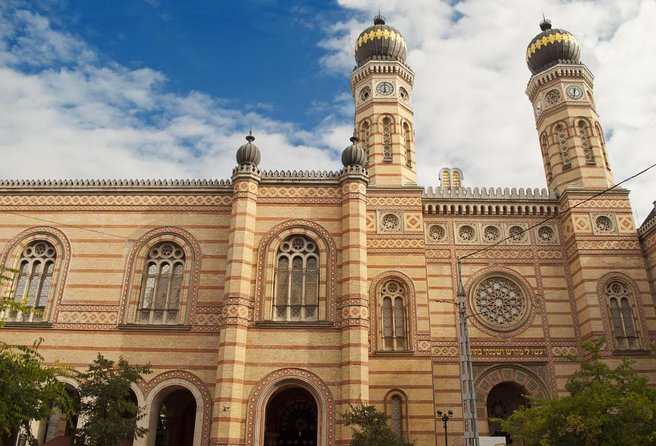
- A three-hour route connects six major sites, including Dohány Street Synagogue, Kazinczy Street Synagogue, Rumbach Street Synagogue, the Ghetto Wall Memorial, and the Shoes on the Danube Bank.
- The tour begins near Theodor Herzl’s birthplace, giving the walk a personal link to modern Zionism from its first steps.
- Dohány Synagogue entry costs extra, with an individual ticket listed at 14,500 Hungarian forints.
- Three Jewish traditions appear along the route, including the Neolog setting at Dohány, the Orthodox synagogue on Kazinczy Street, and the Status Quo Ante tradition at Rumbach Street.
- The final memorial stop is deliberately reflective, focusing on Jewish lives lost during the Holocaust and the renewal of Budapest’s Jewish community.
- Private and small-group options are available, useful if you want time to ask questions or discuss family history.
Why this route matters in Budapest
Before World War II, roughly one quarter of Budapest’s population was Jewish. That single fact changes how you read the city. Jewish life was not confined to one synagogue or one street. It shaped commerce, culture, religious practice, politics, scholarship, and ordinary urban life.
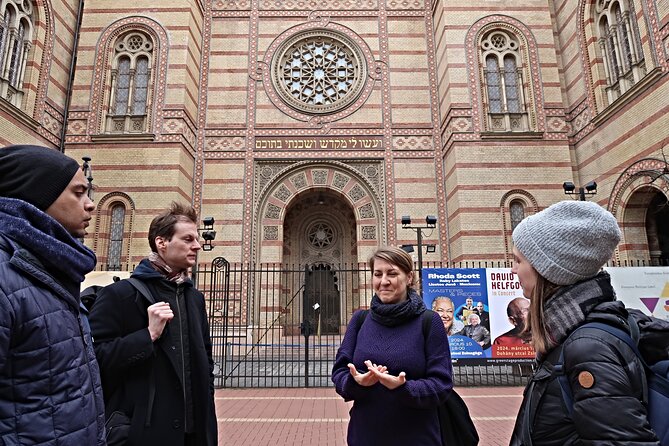
This walk helps you see those different experiences side by side. You are not given one tidy version of Jewish Budapest. Instead, the route introduces competing religious traditions, grand institutions, wartime destruction, and the community’s continuing presence.
I like that approach. A synagogue tour by itself can leave you with a beautiful building and a few dates. A walk through several sites gives you a better sense of how a neighborhood worked, how different Jewish groups worshipped, and how quickly daily life was broken apart.
The pace also suits Budapest well. Three hours is long enough for explanation without turning the experience into an exhausting full-day commitment. You will be on foot, so comfortable shoes matter. The route includes indoor and outdoor stops, with the final section at the Danube.
More Jewish Quarter walks:
- Budapest Jewish Heritage Memorial Walking Tour & Synagogue Entry
★ 5.0 · 568 reviews - Budapest: Jewish Heritage Guided Tour with Synagogue Ticket
★ 4.8 · 533 reviews - Jewish Quarter of Budapest Walking Tour
★ 4.7 · 369 reviews
Starting at Theodor Herzl’s birthplace
The precise starting option can vary, but the listed meeting point is Kamara Café at Dohány utca 1/A. This puts you close to one of the Jewish Quarter’s major sights and gives you a practical place to meet your guide before setting off.
The opening stop is the square where Theodor Herzl, often called the father of modern Zionism, was born. That is a smart beginning. Herzl is not introduced as an abstract historical figure in a textbook. His story starts in the city itself, in a neighborhood where Jewish identity, Hungarian citizenship, European culture, and political ideas met.
Your guide can use this setting to explain the range of Jewish life in Budapest before the war. Some people were deeply religious. Others were secular or strongly identified with Hungarian culture. Some supported Zionism, while others imagined their future entirely within Hungary.
That variety is one of the most useful parts of the tour. It prevents you from treating Budapest’s Jewish population as a single group with one outlook. The walk is really about different ways of being Jewish in the same city.
Inside the Dohány Street Synagogue
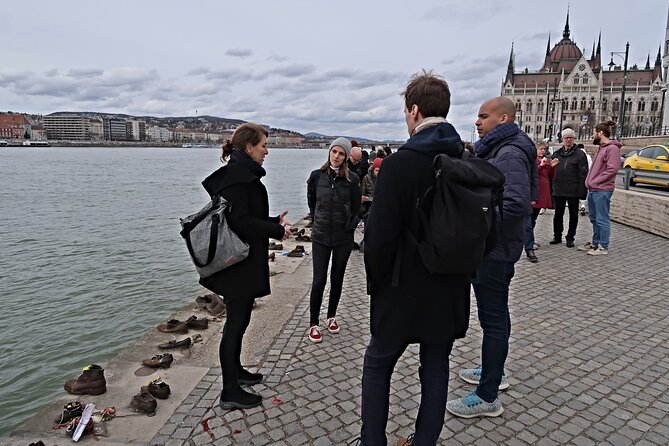
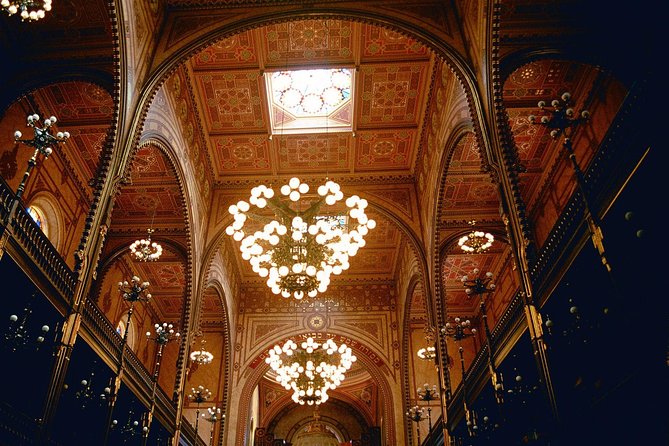
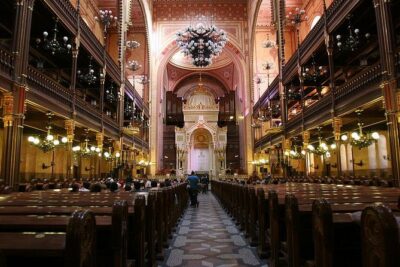
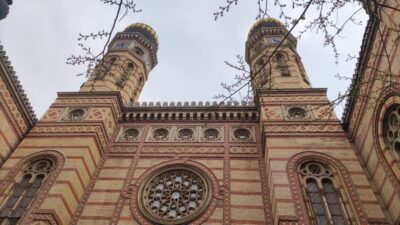
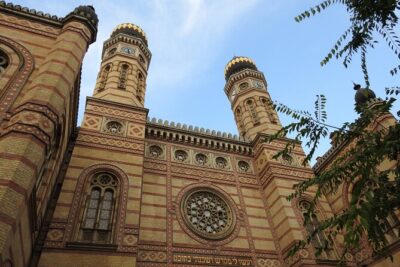
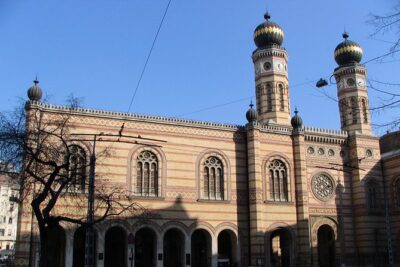
The Dohány Street Synagogue is the visual centerpiece of the experience. It is described as the largest Jewish house of worship in Europe, and its Moorish Revival design makes it unlike most Christian churches and familiar European synagogues.
The exterior gives you an immediate sense of scale and ambition. Inside, the decoration is lavish, and the building feels connected to Budapest’s nineteenth-century city life as much as to religious practice. Your guide is accompanied by a Jewish Studies scholar for this portion, adding useful detail to the architecture and customs.
The synagogue complex includes more than the main sanctuary. You are scheduled to see the Temple of Heroes, the Jewish Museum, and a memorial park. Each space changes the mood and adds another layer.
The Jewish Museum can help you understand how worship, family life, objects, and community institutions fit together. The Temple of Heroes and memorial areas shift attention toward those lost in the First World War and the Holocaust era. The combination means you are not simply admiring a grand facade before moving on.
There is an important practical catch. Dohány Synagogue admission is not included in the walking tour, and the listed individual price is 14,500 Ft. Confirm the current entry arrangement when booking, since the tour description also presents the complex as a scheduled stop. Budget for this separate ticket if you want to enter.
You should also dress with the site rules in mind. Visitors are asked to keep shoulders and knees covered. This is easy to manage, but it is worth planning before you leave your hotel, especially in warm weather.
The Ghetto Wall Memorial and a vanished boundary
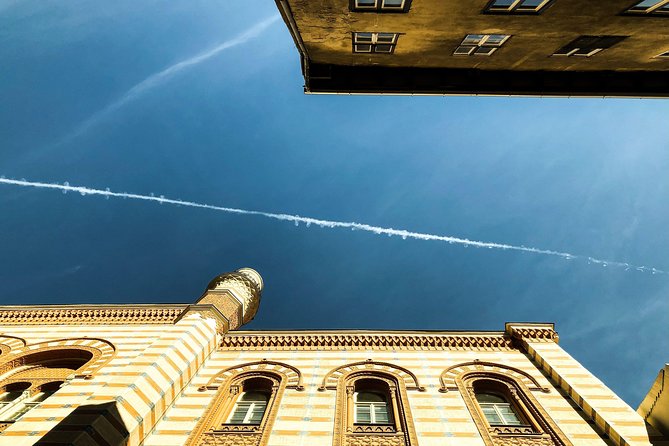
After Dohány, the walk moves to the neighboring Ghetto Wall Memorial, erected in 2014. The site marks the former boundary of the Budapest ghetto and helps connect the grand synagogue to the far more compressed and frightening reality of wartime Jewish life.
The memorial is not simply another old building. It points to a space that was controlled, enclosed, and forced into a radically different use. Your guide’s explanation matters here because the physical city can hide what happened. Streets may look ordinary now, while their earlier role was anything but ordinary.
I find this stop valuable because it gives the Holocaust section a clear place in the urban fabric. You are not hearing only about distant events. You are standing near the synagogue and neighborhood where people lived through those changes.
The tour also passes a luxurious mikve, a Jewish ritual bath. That detail is easy to miss if you walk alone. It shows how religious infrastructure could exist alongside elegant residential and commercial streets, and it adds another glimpse of Jewish practice beyond the famous synagogues.
More walking tours:
- Budapest: Buda Castle Walk with Saint Stephen’s Hall
★ 4.5 · 3,012 reviews - Big Bus Budapest Hop-On Hop-Off Bus and Walking Tour
★ 3.5 · 2,206 reviews - Budapest: Buda Castle District Walking Tour
★ 4.6 · 2,108 reviews - Budapest City Landmarks Walking Tour in 2 Hours
★ 5.0 · 2,048 reviews
Kazinczy Street and the Orthodox tradition
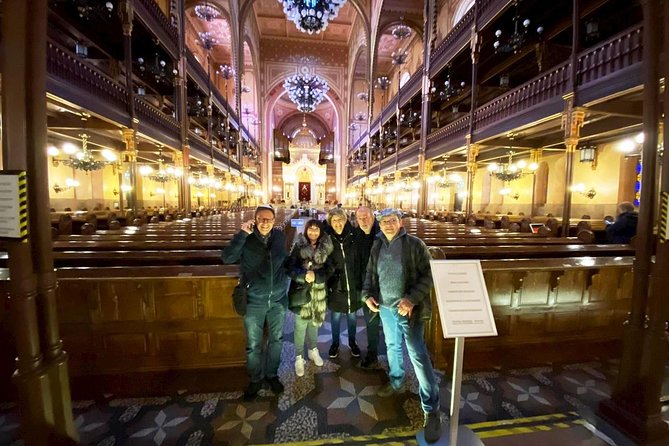
The exterior of the Art Nouveau Orthodox Synagogue on Kazinczy Street is next. You should not expect every stop to offer the same kind of interior visit. Here, the stated focus is the impressive exterior, so the value comes from the guide’s explanation and the building’s place in the neighborhood.
Kazinczy helps explain that Jewish Budapest included internal religious differences. The Orthodox community maintained its own customs and institutions, and its synagogue looks different from Dohány’s Moorish Revival design.
The Art Nouveau facade also gives the walking tour welcome visual variety. Dohány is monumental and ornate. Kazinczy is more closely tied to the street and its local setting. Seeing both in one morning or afternoon makes the architectural and religious contrasts easier to grasp.
This is a good point to ask questions if you choose a private or small group. Guides such as Orsolya and Endres have been praised for giving detailed answers and adjusting their pace to the people with them. That flexibility is likely more useful here than on a large group outing, where the guide must keep moving.
Rumbach Street and the Status Quo Ante tradition
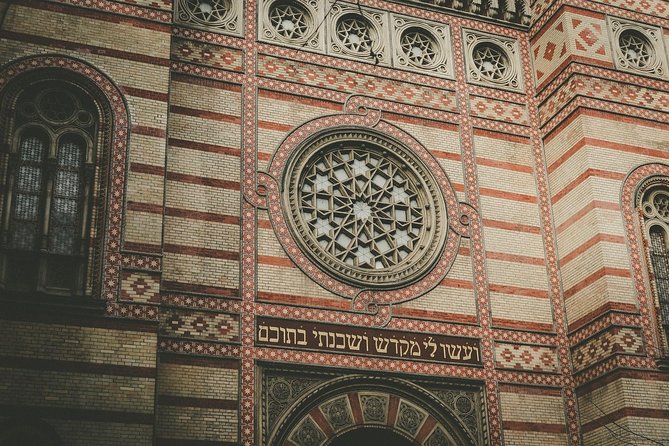
Rumbach Street Synagogue adds a third strand to the story. The walk focuses on the impressive facade and introduces the Status Quo Ante stream of Judaism, a tradition that does not fit neatly into the Orthodox or Neolog categories.
That distinction may sound technical, but it is exactly the sort of detail that makes this tour worthwhile. Budapest’s Jewish community had several religious groupings, each with its own institutions and identity. If you only visit one major synagogue, you can miss this internal map.
The exterior also works well as a reminder that religious buildings are part of the city’s visual history. You see how Jewish congregations expressed identity through architecture while living within a broader Hungarian urban culture.
For me, this section is less about collecting another landmark and more about learning to notice differences. Your guide can explain why the synagogues were separate, what their names mean, and how those communities related to one another.
Ending at the Shoes on the Danube Bank
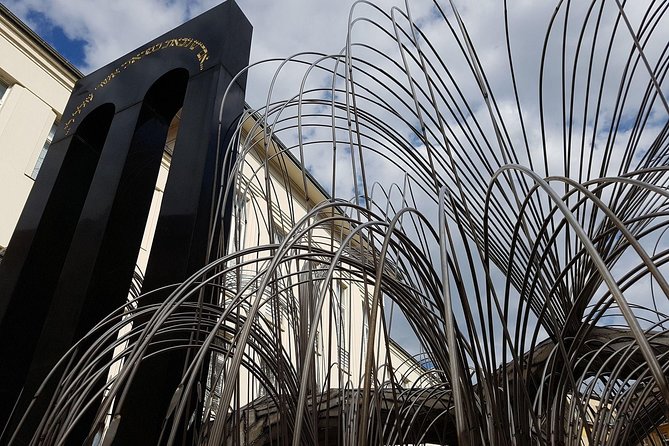
The route concludes at the Shoes on the Danube Bank memorial. This is the most emotionally direct stop, and it deserves time rather than a quick photograph.
The memorial recalls Jewish people who were killed along the river during the Holocaust. Iron shoes line the bank, pointing to the personal act of removing footwear before execution and leaving the shoes behind. The objects are simple, which is part of their force.
Ending here changes the rhythm of the tour. Earlier stops ask you to look at architecture and religious organization. At the Danube, you are asked to pause and remember individual lives. The guide can also connect the memorial to Budapest’s Jewish community today and its efforts to rebuild and renew.
That ending is one reason I would not schedule this walk immediately before a rushed restaurant booking or another timed attraction. Give yourself a few quiet minutes after the formal tour ends. The listed return point is an unnamed road rather than a major attraction, so plan your next stop independently.
The guides make or break the experience
The strongest feature here is the quality of the guide. This is not a script-heavy sightseeing circuit led by someone who only points at facades. The guides are drawn from academic and writing backgrounds, including professors, doctoral students, historians, journalists, art critics, and published authors.
That range explains the very high 4.9 rating from 26 reviews, but the useful point is not the number alone. Past guests specifically praised the friendly manner, careful explanations, and personal attention of guides including Orsolya and Endres.
Endres, in particular, provided a detailed account of the Great Synagogue and the Jewish community’s experience during the Nazi era. He also helped a group honor Holocaust victims by cleaning several Stolpersteine, or stumbling stones, and supplied the materials for that activity. That kind of response shows how the tour can become personal when you have a specific interest or family connection.
Orsolya was praised for being thoughtful and thorough, while checking with a group before moving to the next stop. A Spanish-speaking guest also received help changing the tour time, though the advertised language for the tour itself is English.
You should still understand what the guide cannot do. No historian can make three hours cover every part of Budapest’s Jewish past. If you want a detailed account of postwar communism, contemporary politics, or every synagogue in the city, you will need another visit or a longer program.
Is $123 per person good value?
At $123 per person, this is a premium walking tour. The listed price includes three hours and a historian guide, but not the 14,500 Ft individual ticket for Dohány Synagogue. That extra charge matters when you compare the total cost with a standard city walk.
I think the price can make sense for the right person. You are paying for a specialist guide, a carefully connected route, and access to explanations that are hard to assemble from plaques and guidebooks. The private or small-group format can also give you room to ask about family names, religious traditions, wartime events, or the architecture.
The value is weaker if you mainly want photographs of the synagogues. You can see several exteriors on your own for much less, and the separate synagogue admission makes the total outlay higher.
A useful question is how you normally visit places of painful history. If you want someone to establish context, correct oversimplified assumptions, and leave room for reflection, the cost is easier to justify. If you prefer reading independently and setting your own pace, use the neighborhood as a self-guided walk instead.
Who should book this walk?
I would recommend it to first-time visitors who want to understand Budapest’s Jewish Quarter beyond its restaurants and nightlife. It is also a strong choice for anyone with an interest in European Jewish history, religious architecture, Zionism, or Holocaust memorials.
Families with older teenagers may find the route useful, provided they are ready for difficult subject matter. The combination of buildings, streets, and memorials gives the history a clear physical setting.
It suits people who prefer discussion to entertainment. The tone is thoughtful and academic, though the guides are also described as friendly and engaging. That balance matters during a serious subject.
I would hesitate to recommend it to anyone with limited walking tolerance unless they confirm the route details directly. The experience is explicitly a walking tour, and no accessibility information is provided. I would also choose another activity if you have only a short window and cannot spare three hours plus synagogue entry time.
Book it when you can give the subject your attention. Wear clothing that covers shoulders and knees for Dohány, bring comfortable shoes, and leave space afterward for a quiet meal or an unhurried walk.
Practical details before you go
The tour lasts three hours and is offered in English with a live guide. Private and small-group formats are available, but the exact meeting time depends on the option you select.
The listed meeting point is Kamara Café, Dohány utca 1/A. Check the precise starting instructions before setting out, since the starting location can vary.
You can cancel up to 24 hours in advance for a full refund, and a reserve-now, pay-later option is available. These policies are useful if you are arranging a Budapest stay around changing plans, but you should still check the conditions attached to your selected departure.
The tour begins in the Jewish Quarter and finishes at the Shoes on the Danube Bank. That means the ending is not back at the cafe. Plan your next destination from the river rather than assuming you will return to the starting point.
Should you book A Journey through Jewish Budapest?
Book this tour if you want a serious, human account of Jewish Budapest, led by someone who can explain the differences between Dohány, Kazinczy, and Rumbach rather than treating them as interchangeable landmarks. The personal attention, historian guides, and memorial-focused ending give it substance.
Skip it if you want a cheap overview, dislike walking, or are not prepared to pay separately for Dohány Synagogue. For everyone else, especially visitors who want the city’s buildings to carry meaning, this is a thoughtful and well-focused way to spend three hours.
FAQ
How long does the walking tour last?
The tour lasts three hours.
What language is the tour offered in?
The live tour guide speaks English.
Where is the meeting point?
The listed meeting point is Kamara Café at Dohány utca 1/A.
Is entry to Dohány Synagogue included?
No. Individual entry to Dohány Synagogue is listed at 14,500 Hungarian forints and is not included in the tour price.
What sites does the tour visit?
The route includes the area near Theodor Herzl’s birthplace, Dohány Street Synagogue, the Temple of Heroes, the Jewish Museum, a memorial park, the Ghetto Wall Memorial, the exterior of Kazinczy Street Synagogue, the exterior of Rumbach Street Synagogue, and the Shoes on the Danube Bank memorial.
Do visitors need a particular dress code?
Yes. Visitors to Dohány Synagogue are asked to have their shoulders and knees covered.
Is the tour private or shared?
Private and small-group options are available.
Can I cancel the booking?
You can cancel up to 24 hours in advance for a full refund. A reserve-now, pay-later option is also available.
Just added around Budapest
- Lake Balaton and Herend Guided Tour★ 4.7 · 3 reviews
- Audio visual multi-sensory chefs journey dinner experience★ 5.0 · 3 reviews
- Hollókő Ethnographic Village: Day Tour from Budapest★ 3.7 · 3 reviews
- Tapolca Cave Lake and Tihany/ Balaton private tour from Budapest★ 4.5 · 3 reviews
- Budapest Art Nouveau Walking Tour★ 5.0 · 3 reviews
- SzentEndre-SaintAndrew City Privately Shopping and Picturesque★ 4.5 · 3 reviews
- Hungary today: a no-taboo conversation★ 5.0 · 3 reviews
- Budapest Drinks and Piano Show Cruise★ 4.5 · 3 reviews
Jewish Quarter Tours, compared.
Budapest Jewish Heritage Memorial Walking Tour & Synagogue Entry
What we thought →
Jewish Heritage Guided Tour with Synagogue Ticket
What we thought →
Past and Present of Budapest Jewish District Tour
What we thought →
Budapest Dohany Synagogue & Hungarian Jewish Museum & free extras
What we thought →
Jewish History Guided Walking Tour with Historian
What we thought →Browse the lists this tour appears in