
Reviewed · JEWISH QUARTER TOURS
Original Budapest Alternative Street Art & Jewish Tour
Budapest wears its best stories on side streets. This three-hour tour moves through the city’s 6th and 7th districts, pairing street art with Jewish Quarter history, local creative work, and the social feel of modern Budapest. I like the way it gets beyond grand buildings and famous viewpoints, and I like that it is designed to be friendly even if you already know the city center.
The price is appealing at $25.20 per person, especially for a three-hour city walk. The main caution is guide quality. Strong guides can make this tour sharp, lively, and useful, but one poor experience involved a guide who had been trained for only a week and gave an incorrect location for the former Jewish ghetto.
In This Review
- Key points before you book
- What this Budapest alternative tour is really about
- Starting at St. Stephen’s Basilica at 11:00 a.m.
- Lépcső Street Art and Budapest’s creative side
- Terézváros and the city between the monuments
- Andrássy Avenue and the shift toward District 7
- Színes Esernyők and the local art story
- The Jewish Quarter connection
- Guide quality is the biggest unknown
- Is $25.20 good value?
- Who will enjoy this tour most?
- Practical advice for getting more from the experience
- Should you book the Original Budapest Alternative Tour?
- FAQ
- Where does the tour begin?
- What time does the tour start?
- How long does the experience last?
- Where does the tour end?
- What is included?
- Is bottled water included?
- How much does the tour cost?
- How large can the group be?
- Can I cancel for a full refund?
Key points before you book
- The route focuses on the 6th and 7th districts, two central areas known for nightlife, creative projects, Jewish heritage, and informal city life.
- You begin at St. Stephen’s Basilica at 11:00 a.m., a central meeting point that is easy to identify.
- Street art is the main theme, with attention to local projects such as Színes Város, or Colourful City.
- The tour lasts about three hours, with roughly 30 minutes assigned to each listed stop.
- The listed price is $25.20, while the tour description also says guides work for tips and let you choose what to pay.
- The group may include up to 100 people, so ask about the day’s group size if you prefer a more personal walk.
What this Budapest alternative tour is really about

This is not a standard Budapest sightseeing circuit. You are not being led from one grand palace to another. Instead, the focus is on the city between the big sights: side streets, painted walls, creative public projects, neighborhood boundaries, and the changing mood of the 6th and 7th districts.
That makes the tour useful early in your stay. You get a sense of where central Budapest shifts from formal Andrássy Avenue to more casual streets, cafés, bars, and art-covered corners. You also get a framework for exploring the Jewish Quarter on your own later.
The experience is aimed at both visitors and locals, and that tells you something about its style. It is meant to explain the city rather than simply point at monuments. The tone should be social and informal, with time to ask questions and trade ideas with other people in the group.
The tour’s strongest subject is public art. Budapest has plenty of decorative architecture, but street art gives you a different way to read the city. Murals and colorful installations can brighten plain walls, narrow streets, and ordinary urban spaces. The tour connects these works with local artists and the Színes Város movement, which helped push Budapest’s street art into public view.
More Jewish Quarter walks:
- Budapest Jewish Heritage Memorial Walking Tour & Synagogue Entry
★ 5.0 · 568 reviews - Budapest: Jewish Heritage Guided Tour with Synagogue Ticket
★ 4.8 · 533 reviews - Jewish Quarter of Budapest Walking Tour
★ 4.7 · 369 reviews
Starting at St. Stephen’s Basilica at 11:00 a.m.
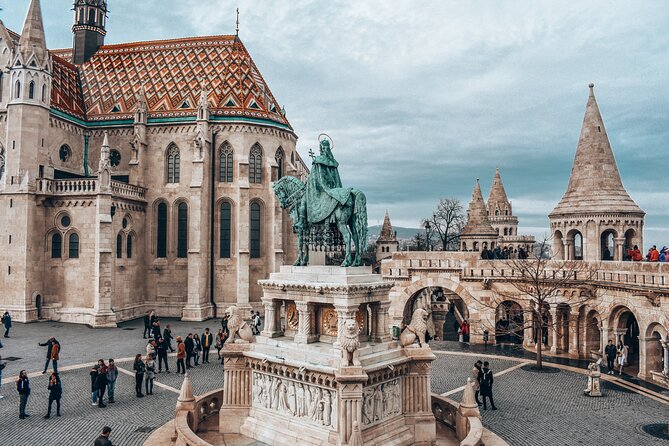
The meeting point is St. Stephen’s Basilica, at Szent István tér 1. It is a sensible place to begin because the square is central and the basilica is hard to miss. Your mobile ticket provides the booking details, so keep it easy to access before the start time.
The 11:00 a.m. departure gives you a practical middle ground. You do not need an early start, but you still have much of the day left afterward. If the tour runs close to three hours, you should finish around lunchtime or shortly after, depending on the pace and the group.
I would arrive a little early. The group limit is listed as 100 people, which is a large possible crowd for a street-based tour. A group that size can make it harder to hear, cross streets together, or ask personal questions. The actual feel may be smaller, but the published maximum is worth keeping in mind.
The tour ends in Budapest, but the exact endpoint varies. That is not a problem if you plan loosely, but it means you should not schedule a timed attraction immediately afterward. Let the guide’s final location shape your next stop.
Lépcső Street Art and Budapest’s creative side
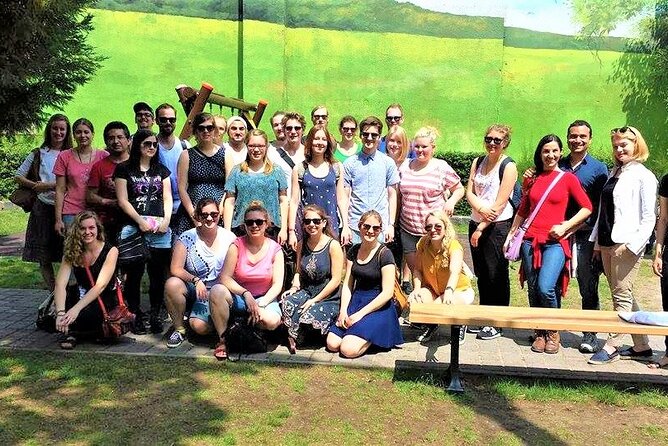
The first listed stop is Lépcső Street Art, with about 30 minutes set aside for it. The title points to art connected with stairs or a stairway setting, giving the tour an early example of how creativity can appear in practical city spaces.
This is a good opening subject because it sets the tone. You begin by looking at Budapest as a living city rather than a museum. The guide can explain what you are seeing, identify local artistic work, and show how an ordinary route can become a public canvas.
The value here depends heavily on explanation. Street art can be easy to glance at and forget if nobody gives you context. A good guide will help you notice color, placement, local references, and the way the work changes a plain street. If the commentary is thin, this stop may feel brief.
Thirty minutes is enough for a focused introduction, but not enough for a long art lecture. Expect a sample of the local scene rather than a full survey of Budapest’s murals.
Terézváros and the city between the monuments
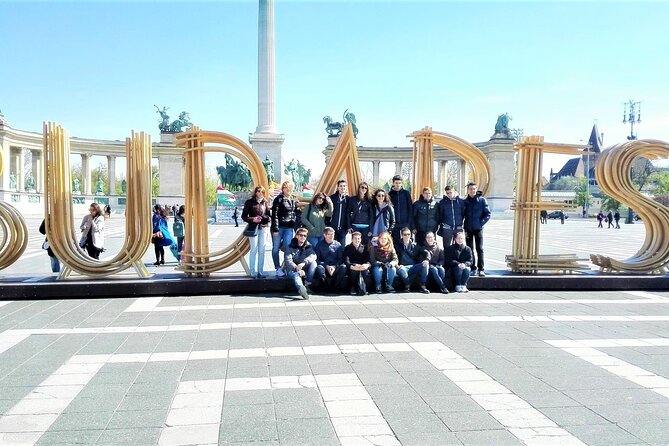
The tour then moves into Terézváros, Budapest’s 6th district. About 30 minutes is assigned to this part of the route. The district is useful for showing how the city’s character changes from one neighborhood to the next.
The tour description presents the 6th and 7th districts as places where younger residents and the young at heart gather. That is a broad phrase, but the basic point is clear: this is central Budapest away from the polished postcard view. You get streets where daily life, nightlife, design, food, and old buildings sit close together.
I like this part because it gives the street art a setting. A mural means more when you understand the kind of neighborhood around it. Terézváros helps you see that alternative culture is not confined to one venue or one wall. It is part of the wider center.
Do not expect every moment to be a major attraction. Some of the pleasure comes from moving through normal streets and hearing how the guide connects them. If you want nonstop famous sights, this tour may feel too loose. If you like seeing how a city works between landmarks, it should be more rewarding.
A few more trips worth weighing up before you book
- Budapest: Street Art and Underground Movements Walking Tour
★ 5.0 · 238 reviews - Alternative Street Art Free Walking Tour of Budapest
★ 4.5 · 53 reviews - Street Art and Alternative Tour in Budapest
★ 5.0 · 52 reviews - Budapest: Alternative Street Art & Jewish Tour
★ 4.8 · 49 reviews
Andrássy Avenue and the shift toward District 7
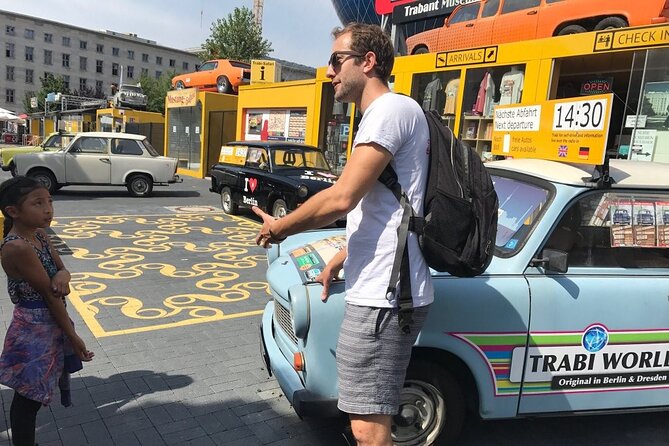
Andrássy Avenue provides one of the clearest geographic transitions on the route. The avenue marks the northern edge of the area described, while Király Street marks the southern boundary. Crossing Király Street takes you into Budapest’s 7th District.
That change matters because District 7 is closely tied to the city’s social scene and Jewish heritage. The tour uses the area to explain Budapest’s current atmosphere, not just its past. You may find that the guide spends as much time discussing the district’s creative life as its buildings.
This section also gives you a chance to orient yourself. Streets that seemed disconnected on your first day begin to fit together. You learn how Andrássy Avenue, Király Street, Terézváros, and District 7 relate to one another. That practical map in your head can save time later.
The itinerary allows about 30 minutes here. That is enough to discuss the district and point out selected details, but it will not cover every major street or landmark. Think of it as a guided introduction, not a complete neighborhood tour.
Színes Esernyők and the local art story
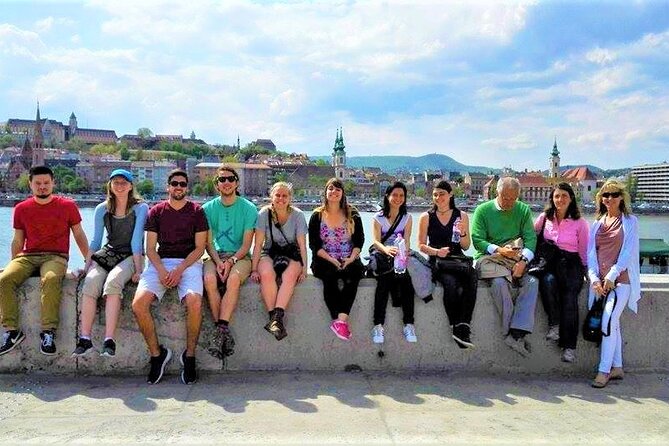
The final named stop is Színes Esernyők, or Colorful Umbrellas. The project is presented as part of Budapest’s local public-art culture, alongside the work of Színes Város, meaning Colourful City.
Colorful umbrellas are a simple idea, but they show how public art can change the mood of a street. The tour uses this kind of installation to explain the broader street-art movement in Budapest. You are not only looking at one display. You are being shown how local artists have added color and personality to common routes and less celebrated parts of the city.
This may be the most visually appealing stop, especially if you enjoy photography. Still, the precise condition or appearance of public art can change. Installations may be altered, removed, or affected by weather and maintenance. The guide’s interpretation is therefore important, since the story behind the work can remain useful even if the display changes.
The final stop also ties the tour’s themes together. You see how Budapest’s alternative culture is linked to local artists, neighborhood identity, and the city’s Jewish Quarter. That combination is what makes this experience different from a simple mural hunt.
The Jewish Quarter connection

The tour is commonly described as an alternative street art and Jewish tour, and the route through District 7 gives it a clear Jewish Quarter connection. That subject needs careful handling. The former Jewish ghetto is a serious historical topic, and an incorrect location can mislead people in a way that matters.
One poor experience involved a guide who had worked for only a week and pointed out the ghetto in the wrong place. That is the most important warning attached to this tour. If Jewish Quarter history is your main reason for booking, ask clear questions and pay attention to the guide’s confidence and accuracy.
A good outing should help you connect the district’s past with its present character without reducing the area to nightlife and murals. Street art is one layer of the neighborhood. Jewish history is another, and the two need to be handled with care.
I would not book this as your only Jewish heritage experience in Budapest. It can serve as a useful introduction, especially if you want art and present-day neighborhood life included. For detailed Holocaust history, memorial sites, or synagogue-focused interpretation, you may want a separate specialist experience.
Guide quality is the biggest unknown
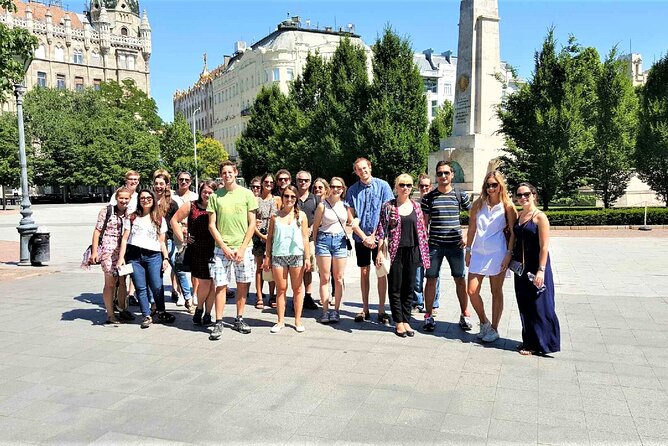
The most praised part of this tour is the guide’s personal approach. One highly positive account describes a guide who was exceptional on art and history, while another praises a friendly, professional leader who offered useful suggestions for other places to visit.
That is exactly what this tour needs. The route itself is free public space, so the guide is the product. A strong leader turns walls, streets, and umbrellas into a readable story. They also make the social side work by helping people talk, ask questions, and feel comfortable in the group.
The downside is inconsistency. Another outing involved a guide with only one week of training who could not answer many questions. That person’s lack of preparation was especially damaging because the tour deals with history as well as art.
You can reduce the risk by asking at the start what the guide specializes in and by checking important historical points yourself later. This is not a criticism of every guide, but it is a fair reason to keep expectations measured.
Is $25.20 good value?
At $25.20 per person, the tour is reasonably priced for three hours of guided city exploration. You are paying for a local guide, route planning, interpretation, and the chance to see parts of the 6th and 7th districts with a social group. There are no admission fees at the listed stops, so the price is mainly for the guiding.
The payment structure needs a little clarification. The tour information gives a price of $25.20, but also says guides work for tips and that you choose your own price. Read the final booking terms carefully so you know whether the amount is a fixed booking price, a suggested contribution, or a combination of the two.
No bottled water is included. Bring your own, especially if the day is warm. Since the experience takes about three hours and depends on outdoor conditions, basic weather planning matters.
The value is strongest if you like art, local neighborhoods, and conversation. It is weaker if you want entry into major museums, famous interiors, or a detailed chronological history lesson.
Who will enjoy this tour most?
I would recommend it to first-time visitors who want a quick sense of Budapest’s alternative culture. It also suits people who have already seen the main sights and want something less formal.
It is a good match for:
- Art fans who enjoy murals and public installations
- People curious about the 6th and 7th districts
- Solo visitors who like meeting other people
- Couples and friends looking for a relaxed daytime activity
- Visitors who want Jewish Quarter context alongside modern city life
- Anyone who likes collecting local suggestions for later
You may want to skip it if you dislike outdoor walking, large possible groups, or uncertain guide quality. It is also not the best single choice for a serious study of Jewish history.
The tour requires good weather. If rain or other poor conditions force a cancellation, you can choose a different date or receive a full refund. The same applies if the minimum number of participants is not reached.
Practical advice for getting more from the experience
Bring water, comfortable shoes, and a fully charged phone for the mobile ticket. You will get more from the tour if you arrive ready to look closely rather than simply follow the group from one point to the next.
Keep your questions specific. Ask how a local art project began, why a particular wall was chosen, or how the 6th and 7th districts differ. If the guide is strong, these questions can turn a pleasant walk into a much more useful city lesson.
Take notes on places you want to revisit. The guide may offer recommendations, and one positive account specifically valued receiving ideas for other interesting places. The tour can work as both an outing and a planning session for the rest of your Budapest stay.
Allow flexibility after the tour because the endpoint varies. Since the route ends somewhere in Budapest rather than at one fixed attraction, you can use the afternoon for nearby food, more street art, or independent exploring.
Should you book the Original Budapest Alternative Tour?
Book it if you want a social, affordable introduction to Budapest’s street art and the modern feel of District 7. The best version of this tour offers strong art and history commentary, useful neighborhood orientation, and recommendations you can use for the rest of your stay.
Go in with realistic expectations. The route is not a museum visit, the group may be large, and guide standards can vary. If the Jewish Quarter history is your central concern, treat this as a broad introduction and not your complete historical account.
At $25.20, the experience is a reasonable gamble for visitors who enjoy public art and city streets. Confirm the payment arrangement, arrive at St. Stephen’s Basilica before 11:00 a.m., bring water, and keep the afternoon open. Those simple steps give you the best chance of getting the thoughtful, friendly tour this route can provide.
FAQ
Where does the tour begin?
It begins at St. Stephen’s Basilica, Budapest, Szent István tér 1, 1051 Hungary.
What time does the tour start?
The listed start time is 11:00 a.m.
How long does the experience last?
The tour lasts approximately three hours.
Where does the tour end?
The endpoint varies and is listed simply as Budapest, Hungary.
What is included?
A local tour guide is included.
Is bottled water included?
No. Bottled water is not included.
How much does the tour cost?
The listed price is $25.20 per person. The description also says guides work for tips and let you choose your own price, so check the booking details for the exact payment arrangement.
How large can the group be?
The activity may have a maximum of 100 participants.
Can I cancel for a full refund?
Yes. You can cancel at least 24 hours before the start time for a full refund. Cancellations or changes made less than 24 hours before the experience are not refunded or accepted. Weather or minimum-participant cancellations offer a different date or a full refund.
Just added around Budapest
- Lake Balaton and Herend Guided Tour★ 4.7 · 3 reviews
- Audio visual multi-sensory chefs journey dinner experience★ 5.0 · 3 reviews
- Tapolca Cave Lake and Tihany/ Balaton private tour from Budapest★ 4.5 · 3 reviews
- Hollókő Ethnographic Village: Day Tour from Budapest★ 3.7 · 3 reviews
- Budapest Art Nouveau Walking Tour★ 5.0 · 3 reviews
- SzentEndre-SaintAndrew City Privately Shopping and Picturesque★ 4.5 · 3 reviews
- Budapest Drinks and Piano Show Cruise★ 4.5 · 3 reviews
- Horseshow on the Hungarian Puszta, private tour from Budapest with entry!★ 5.0 · 3 reviews
Jewish Quarter Tours, compared.
Budapest Jewish Heritage Memorial Walking Tour & Synagogue Entry
What we thought →
Jewish Heritage Guided Tour with Synagogue Ticket
What we thought →
Past and Present of Budapest Jewish District Tour
What we thought →
Budapest Dohany Synagogue & Hungarian Jewish Museum & free extras
What we thought →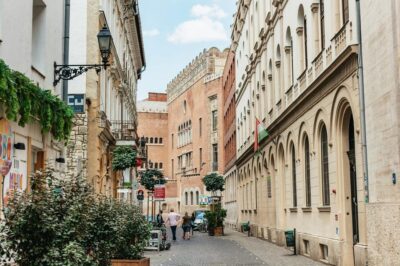
Jewish History Guided Walking Tour with Historian
What we thought →Browse the lists this tour appears in