
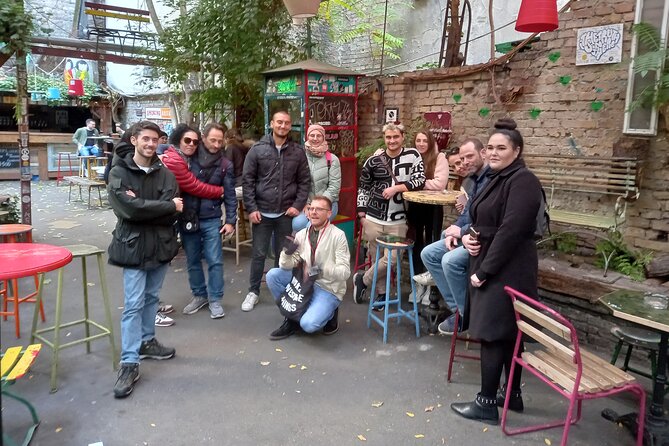
Reviewed · STREET ART
Street Art and Alternative Tour in Budapest
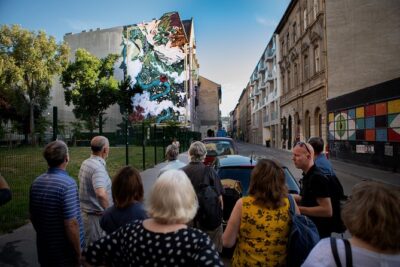
Look up, and Budapest changes. This two-hour walk through District VII introduces you to murals, stickers, small objects, sculptures, and other forms of street art that are easy to miss when you are hurrying between major sights. I like the way guide ET explains both the artwork and the social ideas behind it. I also like the small group limit of eight, which gives the walk a personal, conversational feel.
The main thing to consider is the amount of walking. You move slowly through narrow streets, but you remain on foot for about two hours, with no promise of a seat or a fixed indoor stop. The art is not always a polished wall painting, either. Much of the interest comes from political messages, small stickers, smart-art images, and details tucked into the urban surroundings.
In This Review
- Five things to know before you book
- Starting at Telep-Art Galéria on Madách Imre út
- Walking slowly through District VII
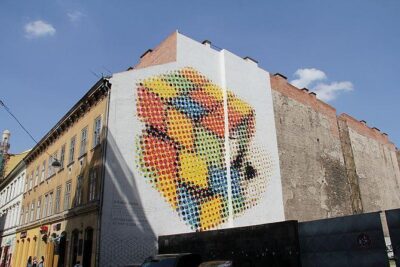
- Murals, stickers, sculptures, and smart-art images
- How Budapest’s politics enter the walk
- District VII beyond the famous sights
- A small group makes a real difference
- Finishing at Szimpla Kert
- What the $36.20 price gets you
- Who should take this walk?
- Practical details before booking
- Should you book the Street Art and Alternative Tour?
- FAQ
- How long is the Street Art and Alternative Tour in Budapest?
- How much does the tour cost?
- What language is the tour offered in?
- Where does the tour start?
- Where does the tour finish?
- How many people can join the tour?
- Can I cancel for a full refund?
Five things to know before you book
- District VII is the main stage: The route explores a part of Budapest known for its alternative culture, changing streets, ruin bars, and independent art.
- The art comes in many forms: Expect murals, stickers, bronze sculptures, smart-art images, and large wall paintings rather than only colorful graffiti.
- ET gives the work a wider meaning: He connects the art to Hungarian culture, local events, politics, and changes taking place in the neighborhood.
- The group is capped at eight: This is a useful size for asking questions and seeing small works without being pushed along by a large crowd.
- The walk ends at Szimpla Kert: You finish at Budapest’s oldest ruin bar, a useful place to continue exploring District VII afterward.
Starting at Telep-Art Galéria on Madách Imre út
The meeting point is Telep-Art Galéria at Madách Imre út 8, in Budapest’s 1075 postal district. That starting place fits the theme well: you begin among art-minded surroundings instead of at one of Budapest’s standard monuments.
The tour is offered in English, which makes the guide’s explanations especially important. Street art can be hard to understand from a quick glance. A sticker may look like a decoration, while a small sculpture may refer to a public issue or a local argument. ET’s role is to slow you down and provide the missing context.
That is the central benefit of this walk. You are not simply being led past painted walls. You are being shown how to look. Several people who took the tour continued noticing small pieces of art around the city afterward, including stickers and other details they might otherwise have ignored.
Arrive with the meeting point details in hand. The guide’s directions have been praised as clear, but a central Budapest address can still be easy to confuse with a nearby street or gallery entrance. The booking confirmation is supplied at the time of booking, so keep that information accessible on your phone.
A few more trips worth weighing up before you book
- Budapest: Street Art and Underground Movements Walking Tour
★ 5.0 · 238 reviews - Alternative Street Art Free Walking Tour of Budapest
★ 4.5 · 53 reviews - Budapest: Alternative Street Art & Jewish Tour
★ 4.8 · 49 reviews
Walking slowly through District VII
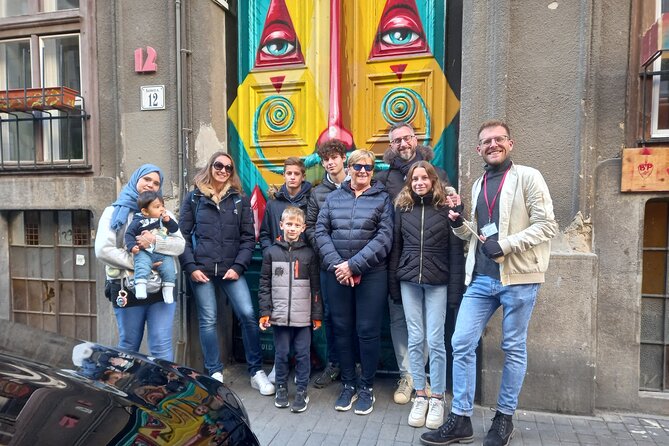
The route is described simply: you walk slowly along narrow streets while ET points out many kinds of street art. That simplicity is part of the appeal. There is no claim that you will be rushed through a long checklist of famous walls.
Instead, the walk depends on observation and conversation. You might stop for a mural, then turn your attention to a sticker on a utility box or a small image placed where most people would never look. The exact selection can vary. ET has explained that he changes the walk according to the audience, and smaller weekday groups may receive a more tailored experience.
This is useful for repeat visitors. You are not limited to a single fixed collection of photo stops. The neighborhood continues to change, and street art can disappear, be painted over, or be replaced. That means the walk is less like visiting a permanent gallery and more like taking a guided reading of the city at a particular moment.
You should also understand the style of art you are signing up for. If you want only beautiful, large-scale murals, this may feel less predictable than expected. The tour gives equal attention to work that carries a message, including political and social commentary. The guide’s job is not just to point out attractive colors. He helps explain what the artist may be responding to and why the piece matters.
Murals, stickers, sculptures, and smart-art images
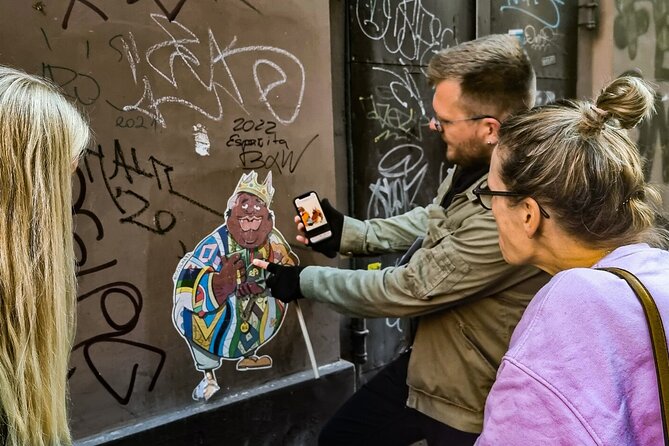
One of the strongest features is the variety. The route can include:
- Large wall paintings
- Small stickers
- Bronze sculptures
- Smart-art images
- Art placed on boxes and other ordinary street fixtures
That range keeps the walk from becoming a search for one type of graffiti. It also shows how artists use public space differently. A mural can dominate an entire wall, while a sticker may work through surprise, humor, or repetition. A sculpture can look like part of the street until someone explains why it is there.
The small works require patience. You may need to stop, look closely, and listen before the piece makes sense. This is where the tour’s slow pace helps. You are not expected to spot everything by yourself while keeping up with a group.
ET is also involved in Budapest’s art scene, which adds a personal angle to his explanations. His enthusiasm is repeatedly clear in the way he discusses the work, but the useful point for you is that he does not treat street art as a collection of disconnected images. He places it within the city’s cultural and political conversation.
Some art will be playful. Some may be critical. Some may be difficult to interpret without background information. The tour appears strongest when you are willing to discuss what you see instead of waiting for one official answer. ET has described the experience as intentionally interactive, and that suits street art, where meaning is often open to debate.
How Budapest’s politics enter the walk
The art is not presented as decoration alone. Political events and public concerns have influenced artists in Budapest, and those subjects form an important part of the tour.
You may hear about the ways artists express criticism through different media. The artwork can be direct, ironic, or subtle. A small sticker might carry a sharper message than a large mural, while an apparently amusing image may refer to something more serious.
This political element is one reason the tour appeals to artists, creative people, and anyone who wants a different view of Budapest. It also gives you a better sense of how public space can become a place for argument. Walls, boxes, and overlooked corners are not neutral when artists use them to comment on current events or social change.
The guide does not reduce the subject to simple answers. The discussion can include competing interpretations and the way a neighborhood is changing. That makes the experience more thoughtful than a standard photo walk, but it also means you should expect conversation rather than a rapid series of facts.
If you prefer sightseeing that stays cheerful and purely visual, parts of this tour may feel more serious. If you enjoy asking why an image exists and what it says about the place around it, this is likely to be one of the walk’s best features.
A completely different kind of day out around Budapest:
- Budapest: City Highlights Cruise with Welcome Drink
★ 4.6 · 35,610 reviews - Budapest: Unlimited Prosecco, Beer and Aperol Spritz Cruise
★ 4.8 · 25,310 reviews - Budapest: Széchenyi Spa Day Ticket with Optional Upgrades
★ 4.3 · 23,911 reviews - Budapest: Nighttime or Daytime Sightseeing Cruise
★ 4.2 · 21,062 reviews
District VII beyond the famous sights
District VII is well known for its alternative character, but the tour aims to show more than its nightlife. The route takes you into streets and spaces that are easy to pass without noticing.
This is a practical choice for a first day in Budapest. You get an introduction to local art, culture, and the way the neighborhood is changing, while also learning how to read the streets for yourself. One person described it as a good first-day activity because it provided useful cultural context and plenty of conversation.
The experience also gives you a break from Budapest’s grand architecture. The city’s famous buildings can dominate an itinerary, but street art shows another side of urban life. Here, the details are smaller and the meaning may be more personal or confrontational.
Do not expect a formal museum visit or a carefully preserved collection. Public art can be temporary, weathered, altered, or gone entirely. That impermanence is part of the subject. It also explains why the exact route and examples may change.
A small group makes a real difference
The maximum group size is eight people. For this kind of tour, that matters more than it might on a bus excursion.
Small stickers and objects are easy to miss in a crowd. With eight or fewer people, you have a better chance of standing close enough to see the detail, hearing the explanation, and asking a question without interrupting a large group.
The group can also shape the walk. ET has adjusted his explanations to the people present, and the experience has been described as warm and welcoming. People with different nationalities, ages, and backgrounds can contribute their own responses to the art, making the conversation part of the activity.
Families can take part, and most people can participate. Service animals are allowed, and the meeting area is near public transportation. Still, the tour is a walking activity, so you should be comfortable spending about two hours on foot through narrow streets.
The group size is not a guarantee of a private tour. It simply keeps the experience intimate enough for direct contact with the guide. At $36.20 per person, that is a fair value if you want interpretation and conversation rather than a self-guided list of locations.
Finishing at Szimpla Kert
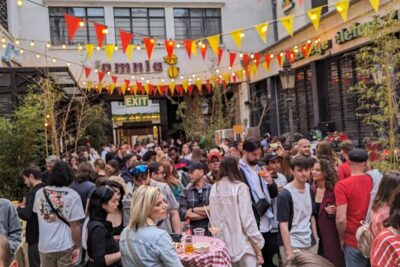
The walk ends at Szimpla Kert on Kazinczy Street. It is described as Budapest’s oldest ruin bar and one of the city’s symbols.
That ending is well chosen. Szimpla Kert is closely associated with District VII’s alternative side, so the tour finishes in a place that matches its subject instead of dropping you beside an unrelated attraction. You can end the afternoon there, or use the location as a convenient point for continuing through the neighborhood.
The tour does not state that admission, food, or drinks are included, so plan on treating Szimpla Kert as the end point rather than part of the paid tour. Its presence is still useful. You finish with an easy next stop and a clearer understanding of the area’s creative atmosphere.
For navigation, remember that the start and end are different locations. You begin at Telep-Art Galéria, Madách Imre út 8, and finish at Szimpla Kert, Kazinczy u. 14. Both are in the same Budapest district, but you should not assume you return to the starting point.
What the $36.20 price gets you
At $36.20, this is not the cheapest way to spend two hours in Budapest. You could walk through District VII independently at no cost. The question is what you want from the experience.
The price pays for a guide who can help you notice work you might miss and explain references that are not obvious. It also buys a small group, an English-language discussion, and a route designed around changing public art rather than major tourist sights.
I see the value most clearly if you are curious about culture, politics, and local creative life. You are paying for interpretation. If you only want a set of impressive backdrops for photographs, the price may feel less convincing because the route includes small and sometimes challenging pieces.
The tour is about two hours, which makes it easy to fit into a Budapest itinerary. It is long enough to provide a real introduction without taking up a full half-day. Booking tends to happen around 25 days ahead on average, so reserve early if your dates are fixed, especially since the group is limited to eight people.
Who should take this walk?
I would recommend it most strongly to:
- First-time visitors who want a different first look at Budapest
- People interested in contemporary art and public messages
- Artists, designers, and creative professionals
- Visitors who enjoy politics and social commentary
- Families who are happy to walk and talk
- Repeat visitors who want a fresh look at District VII
It is also a good choice if you like meeting other people in a small group. The conversation can become part of the experience, especially when people bring different cultural backgrounds and opinions to the art.
I would be more cautious about recommending it to someone who wants a quiet, purely visual outing. The route is not built around famous monuments, and some of the art may require explanation before its point becomes clear. The walking is gentle in pace but still continuous, and the streets are narrow.
Practical details before booking
The experience is offered in English and uses a mobile ticket. Confirmation arrives when you book. It is near public transportation, and service animals are permitted.
You can cancel for a full refund if you do so at least 24 hours before the scheduled start time. Cancellations or changes made within 24 hours are not accepted for a refund, and the cut-off follows Budapest local time.
The tour is capped at eight people, but the exact number in your group can be smaller. The guide may adjust the emphasis depending on who attends, which is especially useful if the group includes artists, families, or people already familiar with street art.
Should you book the Street Art and Alternative Tour?
Book it if you want Budapest to become more readable at street level. ET’s enthusiasm, the small group, and the mix of murals, stickers, sculptures, and political art make this a thoughtful alternative to a standard sightseeing walk.
The best reason to go is not simply to collect photographs. It is to learn where to look and how public art can reflect a neighborhood’s culture and arguments. If two hours of walking through District VII sounds appealing, $36.20 is a reasonable price for that guided perspective.
Skip it if you want grand buildings, a fixed indoor exhibition, or a short ride between sights. But if you like noticing the small things that most people pass by, this is a strong choice, especially near the beginning of your Budapest stay.
FAQ
How long is the Street Art and Alternative Tour in Budapest?
The tour lasts approximately two hours.
How much does the tour cost?
The price is $36.20 per person.
What language is the tour offered in?
The tour is offered in English.
Where does the tour start?
It starts at Telep-Art Galéria, Madách Imre út 8, 1075 Budapest, Hungary.
Where does the tour finish?
The tour ends at Szimpla Kert, Kazinczy u. 14, 1075 Budapest, Hungary.
How many people can join the tour?
The group has a maximum of eight participants.
Can I cancel for a full refund?
Yes. You can cancel at least 24 hours before the start time for a full refund. Cancellations or changes made less than 24 hours before the start are not eligible for a refund.
Just added around Budapest
- Lake Balaton and Herend Guided Tour★ 4.7 · 3 reviews
- Audio visual multi-sensory chefs journey dinner experience★ 5.0 · 3 reviews
- Hollókő Ethnographic Village: Day Tour from Budapest★ 3.7 · 3 reviews
- Tapolca Cave Lake and Tihany/ Balaton private tour from Budapest★ 4.5 · 3 reviews
- Budapest Art Nouveau Walking Tour★ 5.0 · 3 reviews
- SzentEndre-SaintAndrew City Privately Shopping and Picturesque★ 4.5 · 3 reviews
- Budapest Drinks and Piano Show Cruise★ 4.5 · 3 reviews
- Horseshow on the Hungarian Puszta, private tour from Budapest with entry!★ 5.0 · 3 reviews
Street Art, compared.
Street Art and Underground Movements Walking Tour
What we thought →
Alternative Street Art Free Walking Tour of Budapest
What we thought →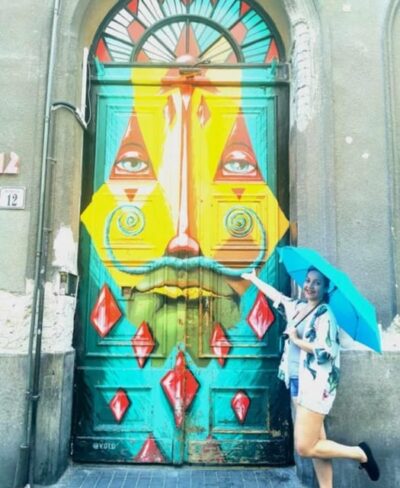
Budapest Vibe: Ruin Bars, Street Art and Culture Tour
What we thought →
Original Budapest Alternative Street Art & Jewish Tour
What we thought →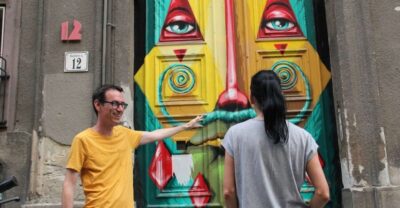
Budapest Urban Art – Private Street Art Tour with a Drink in a Ruin Bar
What we thought →Browse the lists this tour appears in