
Reviewed · JEWISH QUARTER TOURS
Jewish Heritage in Hungary with a Historian
Budapest tells its story one street at a time. This 2.5-hour walking tour connects Jewish history with modern Pest, taking you from Erzsébet tér past three important synagogues, a wartime memorial, Gozsdu Udvar, and Szimpla Kert. I especially like the small-group limit of 10, which gives you room to ask questions, and the tour’s broad time frame, from medieval Pest and early Jewish communities to the 1940s and present-day Budapest. The final taste of flódni, a traditional Jewish-Hungarian cake, is a thoughtful touch.
I also like that the tour does not treat Jewish history as only a story of persecution. Guides such as Gabor, Andrea, Barbi, Noémi, and Andras have been praised for clear explanations, patience, and an honest treatment of Hungary’s difficult past. The main consideration is that the Great Synagogue is not visited inside, and entrance fees at the Kazinczy Street Synagogue and Great Synagogue are not included.
In This Review
- Key points to know before booking
- Why this Jewish heritage walk is worth your time
- Starting at Erzsébet tér and medieval Pest
- Raoul Wallenberg and the people who resisted
- Szimpla Kert, where old buildings meet new Budapest
- Gozsdu Udvar and the international Jewish Quarter
- Kazinczy Street Synagogue and Orthodox Jewish life
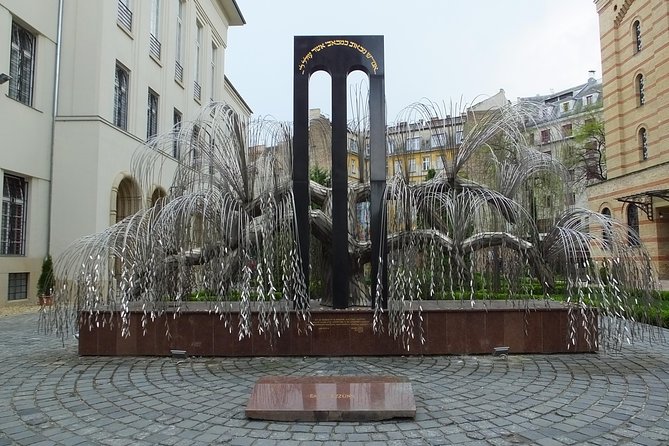
- The Great Synagogue and the Dohány Street complex
- Flódni at Solinfo Café
- What the guides do best
- Who should book this experience?
- Is the Jewish Heritage in Hungary tour a good buy?
- FAQ
- How long does the Jewish Heritage in Hungary tour last?
- What time does the tour begin?
- Where does the tour start?
- Where does the tour end?
- Is the Great Synagogue visited inside?
- Are synagogue admission fees included?
- Is food included?
- How large is the group?
- Is the tour offered in English?
Key points to know before booking
- A historian-led walk through Budapest’s Jewish Quarter: Expect context about Jewish life in Hungary across many centuries, not only the Holocaust.
- Three major synagogues from the outside: The route passes Rumbach Street, Kazinczy Street, and Dohány Street synagogues, with more time given to the latter two.
- A maximum of 10 people: The small group makes this a better setting for questions and personal discussion.
- Szimpla Kert adds modern Budapest to the story: You see the ruin bar credited with starting Budapest’s ruin-bar movement.
- Flódni is included at Solinfo Café: The tour ends with a taste of a traditional Jewish cake.
- A central 10 a.m. start: Meet at the Kempinski Hotel Corvinus on Erzsébet tér and finish outside Dohány Street Synagogue.
Why this Jewish heritage walk is worth your time
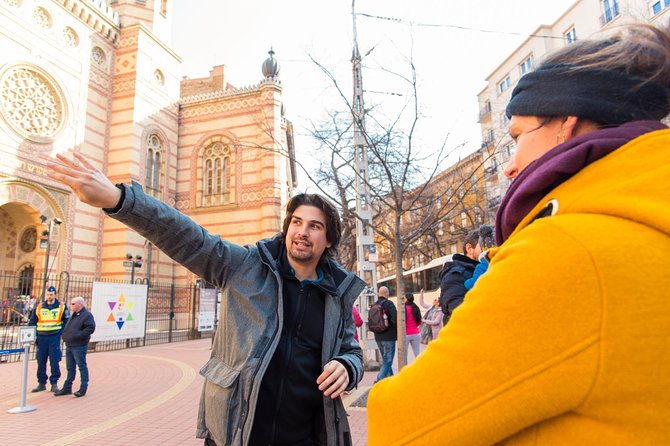
Budapest’s Jewish Quarter can look like a lively entertainment district if you only see its cafés, bars, and restored façades. This walk helps you read the streets differently. Synagogues, memorials, courtyards, and busy gathering places sit close together, yet each points to a different part of the city’s past.
The route is led in English by a historian guide. That matters here. The subject covers religion, urban growth, assimilation, wartime suffering, diplomacy, and the changing identity of the Jewish Quarter. You need more than a list of dates to understand how these layers fit together.
The small format is one of the strongest features. With no more than 10 people, you can ask about family history, architecture, current Jewish life, or the meaning of a memorial without trying to get the guide’s attention across a large crowd. Several guides have earned strong praise for this personal approach. Andrea is described as warm and attentive, while Gabor is praised for a clear and detailed account reaching from the seventeenth century to the present.
The tour costs $64.71 per person. That is not the cheapest way to walk around the Jewish Quarter, but you are paying for a focused guide, a small group, about two and a half hours of interpretation, and the included cake tasting. If you simply want exterior photographs, you can see much of the route on your own. If you want to understand what you are seeing, the price is easier to justify.
More Jewish Quarter walks:
- Budapest Jewish Heritage Memorial Walking Tour & Synagogue Entry
★ 5.0 · 568 reviews - Budapest: Jewish Heritage Guided Tour with Synagogue Ticket
★ 4.8 · 533 reviews - Jewish Quarter of Budapest Walking Tour
★ 4.7 · 369 reviews
Starting at Erzsébet tér and medieval Pest
The meeting point is outside the Kempinski Hotel Corvinus Budapest at Erzsébet tér 7-8. The tour begins at 10 a.m., a useful time for a walking route because you can cover the main sights before the day gets too crowded.
Erzsébet tér is more than a convenient square in central Pest. It began as a medieval market area and later became one of the city’s main public spaces. Your guide uses it to set the scene for the Pest side of Budapest, where commerce, migration, religion, and urban change have always shaped daily life.
This first stop lasts about 20 minutes and requires no admission ticket. It is a gentle start, but do not mistake that for filler. The guide’s opening explanation gives you a framework for the Jewish Quarter ahead, especially the importance of trade and city life in bringing different communities together.
Raoul Wallenberg and the people who resisted
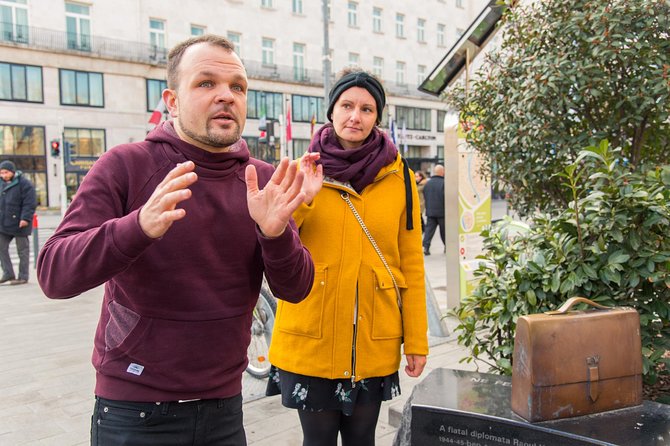
The next stop is the statue of Raoul Wallenberg, one of the most important diplomats associated with saving Jewish lives during the Second World War. You spend about 10 minutes here.
This is a short stop, but its subject is serious. Wallenberg’s work is part of a wider story about rescue, courage, bureaucracy, and the risks faced by people who tried to protect Jewish residents during the Holocaust. The guide’s role is especially important because a statue alone cannot explain the scale or limits of what happened.
The route does not present the past as a simple story of heroes and villains. Gabor has been praised for speaking honestly about both the good and bad sides of Hungary’s history. That frank approach is useful on a subject where polite generalities can leave you with a very incomplete picture.
Szimpla Kert, where old buildings meet new Budapest
At Szimpla Kert, the tour shifts from wartime history to the city’s modern social life. You spend about 20 minutes at the place described as Budapest’s first ruin bar, and the one that started the wider trend.
The appeal is not only the bar itself. Szimpla Kert represents the way abandoned or worn urban spaces were given new life as gathering places. It also shows how the Jewish Quarter has changed from a residential and religious district into one of Budapest’s best-known nightlife areas.
That contrast can feel jarring. You may be standing near sites connected with profound loss, then looking at a place filled with creative reuse and evening entertainment. That is precisely why the stop works. The tour does not freeze the Quarter in the past. It shows you a living neighborhood with a difficult memory and a very active present.
You should keep your expectations practical. This is not a full evening at the ruin bar, and it is not a guided food or nightlife tour. The 20-minute visit is there to explain why Szimpla Kert matters to the modern identity of the district.
More history-led tours:
- Budapest: Historic Cruise with Welcome Drink
★ 4.7 · 6,512 reviews - Budapest Historical Sightseeing – Free Walking Tour
★ 5.0 · 1,302 reviews - Buda Castle District Dark History, Legends and Vampire Night Tour
★ 4.5 · 1,240 reviews - BloodThirsty Hungary: Walking tour & Dark Historical Stories
★ 4.9 · 633 reviews
Gozsdu Udvar and the international Jewish Quarter
Gozsdu Udvar is another brief stop, lasting about 10 minutes. It is described as one of Budapest’s most international streets, and the route uses it to show the Quarter’s present-day mix of people, businesses, and visitors.
The passageways and courtyards help you see how the district functions as more than a collection of religious monuments. Its identity has been shaped by housing, commerce, cultural exchange, and tourism. Your guide can connect that modern activity with the older Jewish community and the neighborhood’s changing role in Budapest.
This stop is short, so it will not provide an exhaustive architectural tour. Think of it as a bridge between the lively public spaces and the synagogues that form the heart of the experience.
Kazinczy Street Synagogue and Orthodox Jewish life
The Kazinczy Street Synagogue receives about 20 minutes. Here, the focus turns to the Orthodox Jewish community.
That distinction is valuable because Budapest’s Jewish population has never been one uniform group. Different religious traditions developed different institutions, practices, and community identities. A stop at Kazinczy Street helps you understand that the Quarter’s synagogues are not interchangeable buildings.
Admission is not included at this stop. The tour information does not promise an interior visit, so you should confirm the day’s arrangements if entering the synagogue is important to you. The main value here is the guide’s explanation of the Orthodox community and the place it holds within Budapest’s Jewish story.
The walk between these locations also matters. You are not being driven from monument to monument. You move through the actual streets of the district, where restaurants, apartments, bars, and religious buildings sit close together. That makes the history feel connected to ordinary city life.
The Great Synagogue and the Dohány Street complex
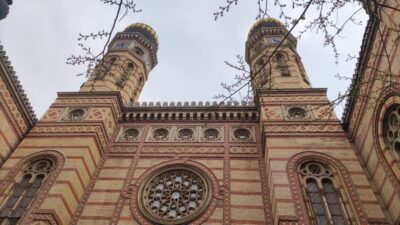
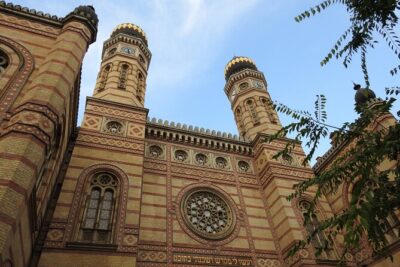
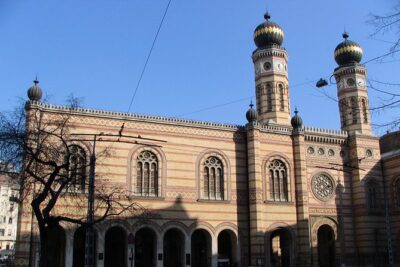
The Great, or Central, Synagogue on Dohány Street is the major historical stop. The scheduled discussion lasts about 45 minutes, making it the longest part of the route.
This is Europe’s largest synagogue, and it carries roughly two centuries of historical meaning. Even from the outside, its scale and location help explain the importance of the Jewish community in Budapest. The guide can place the building within the wider story of Jewish life, urban development, and the events of the twentieth century.
The tour does not enter the Great Synagogue. That is the clearest limitation for anyone hoping to see the interior, museum, or memorial areas as part of the same booking. You will need a separate admission if you want a full visit inside, and that cost is not part of this tour.
Still, 45 minutes devoted to the site is worthwhile if your goal is context rather than a quick photograph. The guide can explain the building’s historical connotations and connect it with the earlier stops. Because the tour ends outside Dohány Street Synagogue, you can also choose to continue on your own afterward if you have time.
Flódni at Solinfo Café
The final stop is Solinfo Café, where you taste flódni. The cake is included in the tour price, and the stop lasts about 20 minutes.
Flódni is a traditional Jewish-Hungarian cake and a favorite for many people in Hungary, Jewish and non-Jewish alike. Ending with food gives the walk a human scale. After discussing institutions, diplomacy, and tragedy, you get to encounter a living part of the culture through something simple and local.
This is not presented as a full meal or a broad tasting session. If you arrive hungry, plan accordingly. The cake is a small but meaningful addition, especially because it links Jewish tradition with Hungarian food culture rather than treating the community only as a subject of history.
The tour ends at Budapest, Wesselényi utca 1, outside Dohány Street Synagogue. That location is convenient for continuing through the Quarter, returning to central Pest, or arranging a separate synagogue visit.
What the guides do best
The strongest praise is directed at the guides rather than at any single stop. Andrea is described as friendly, attentive, and willing to shape the walk around the group’s questions. Gabor receives especially strong praise for a detailed narrative that reaches from the seventeenth century to today, with patience and sensitivity throughout.
Barbi is noted for presenting more than the grim events of the 1940s. That is important. A good heritage tour should explain how a community formed, contributed to city life, adapted to political change, and suffered persecution. The Holocaust must be central to the story, but it should not be the only chapter.
Noémi is praised for enthusiasm and strong knowledge of the Jewish Quarter, while Andras is described as engaging and willing to draw links between past events and current issues. The different guide names suggest that your exact experience may depend on who leads the walk, but the common pattern is clear: expect an interactive tour with plenty of opportunity for questions.
You should also be prepared for an emotionally serious experience. The guide’s honest treatment of Hungary’s past may be uncomfortable at times. That is a benefit if you want a truthful account, but it may not suit someone looking for a light sightseeing stroll.
Who should book this experience?
I would recommend this tour if you want a clear introduction to Budapest’s Jewish history and prefer conversation to a large scripted group. It is especially suitable for first-time visitors who plan to explore the Jewish Quarter afterward, since the route gives you useful background before you return to the area independently.
It also suits people with a family or personal connection to Jewish history. The small group allows you to ask specific questions, although the tour description does not promise genealogical research or family-record assistance.
You may want to choose another option if your priority is entering the Great Synagogue. That visit is not included. You should also think twice if you dislike walking between several central stops or if you want a tour focused mainly on food, architecture, or nightlife.
The 2.5-hour length is manageable for most people, and the route stays in central Budapest. The meeting point is near public transportation, and most people can participate. Service animals are allowed. The experience is offered in English and uses a mobile ticket.
Book at least a little ahead if your dates are fixed. The experience is booked an average of 42 days in advance, which suggests that the small group can fill well before the tour date. Free cancellation is available up to 24 hours before the 10 a.m. start time. Changes or cancellations inside that window are not accepted for a refund.
Is the Jewish Heritage in Hungary tour a good buy?
At $64.71, this is a fair purchase for a historian-led walk capped at 10 people, particularly because the guide is the main attraction and the flódni tasting is included. You are not paying for entry to the Great Synagogue, so factor in a separate visit if that building’s interior matters to you.
I would book it for the honest historical discussion, intimate group size, and range of stops. The route gives you synagogues, a rescue memorial, a ruin bar, a modern courtyard, and a traditional cake, all within one connected story. Skip it only if you want a full interior synagogue tour or a purely casual neighborhood walk.
FAQ
How long does the Jewish Heritage in Hungary tour last?
The tour lasts approximately 2 hours and 30 minutes.
What time does the tour begin?
It begins at 10 a.m.
Where does the tour start?
Meet outside Kempinski Hotel Corvinus Budapest at Erzsébet tér 7-8, 1051 Budapest, Hungary.
Where does the tour end?
The walk ends at Budapest, Wesselényi utca 1, outside Dohány Street Synagogue.
Is the Great Synagogue visited inside?
No. The tour discusses the Great Synagogue from outside and does not include an interior visit.
Are synagogue admission fees included?
Admission is not included for the Kazinczy Street Synagogue or the Great Synagogue. The tour information does not list an interior visit to the Great Synagogue.
Is food included?
Yes. A tasting of flódni at Solinfo Café is included.
How large is the group?
The maximum group size is 10 people.
Is the tour offered in English?
Yes. The tour is offered in English and uses a mobile ticket.
Just added around Budapest
- Lake Balaton and Herend Guided Tour★ 4.7 · 3 reviews
- Audio visual multi-sensory chefs journey dinner experience★ 5.0 · 3 reviews
- Hollókő Ethnographic Village: Day Tour from Budapest★ 3.7 · 3 reviews
- Tapolca Cave Lake and Tihany/ Balaton private tour from Budapest★ 4.5 · 3 reviews
- Budapest Art Nouveau Walking Tour★ 5.0 · 3 reviews
- SzentEndre-SaintAndrew City Privately Shopping and Picturesque★ 4.5 · 3 reviews
- Budapest Drinks and Piano Show Cruise★ 4.5 · 3 reviews
- Horseshow on the Hungarian Puszta, private tour from Budapest with entry!★ 5.0 · 3 reviews
Jewish Quarter Tours, compared.
Budapest Jewish Heritage Memorial Walking Tour & Synagogue Entry
What we thought →
Jewish Heritage Guided Tour with Synagogue Ticket
What we thought →
Past and Present of Budapest Jewish District Tour
What we thought →
Budapest Dohany Synagogue & Hungarian Jewish Museum & free extras
What we thought →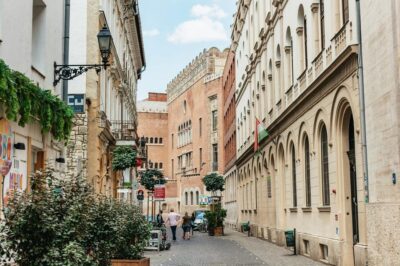
Jewish History Guided Walking Tour with Historian
What we thought →Browse the lists this tour appears in