
Reviewed · JEWISH QUARTER TOURS
Jewish Heritage / Full tour
History feels close here. Budapest’s Jewish Heritage tour links the Dohány Street Synagogue with two powerful memorials, while leaving room for honest conversation about Jewish life in Hungary today. I like the small-group format, which allows a guide to answer questions instead of delivering a fixed speech, and I like the compact three-hour schedule, easy to fit into a busy Budapest day. The main drawback is cost: the $80.86 tour price does not include the synagogue entrance fee of €26, and transportation is also extra.
Guide Edith receives especially strong praise for her clear English, personal stories, patience, and ability to adjust the walk to your interests. You should also know that the route covers painful subjects, including wartime murder, political responsibility, and contested memory. This is not a light sightseeing stroll, though the Jewish Quarter’s street art, cafés, nightlife, and living community keep it from becoming a visit only about the past.
In This Review
- Key points at a glance
- Why this three-hour walk matters
- Starting at Deák Ferenc tér
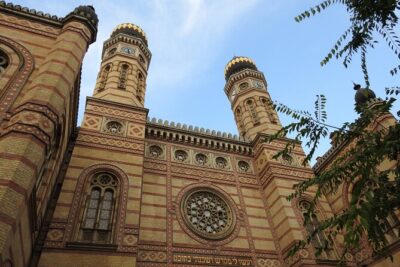
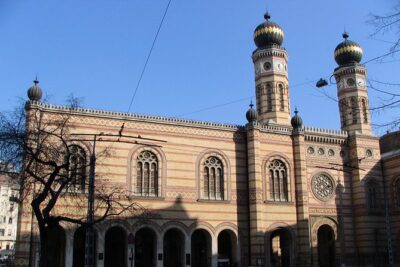
- Dohány Street Synagogue: the tour’s main setting
- The Jewish Quarter beyond the monuments
- Shoes on the Danube Bank
- The German Invasion memorial and Hungary’s argument over memory
- Edith’s guiding style
- Timing, group size, and walking demands
- Who will get the most from this tour?
- Is $80.86 plus €26 a fair price?
- Should you book Budapest Jewish Heritage?
- FAQ
- How long does the Jewish Heritage tour last?
- Where does the tour begin?
- Where does the tour end?
- Is admission to the Dohány Street Synagogue included?
- Is transportation included?
- What group size should I expect?
- What happens if the weather cancels the tour?
Key points at a glance
- Dohány Street Synagogue takes up about two hours, including the synagogue, museum area, cemetery, Raoul Wallenberg Memorial Garden, and Emmanuel Tree.
- The Shoes on the Danube memorial is brief but intensely moving, marking Jews murdered at the river during the Second World War.
- The German Invasion memorial is openly controversial, giving you a chance to discuss how Hungary remembers its past.
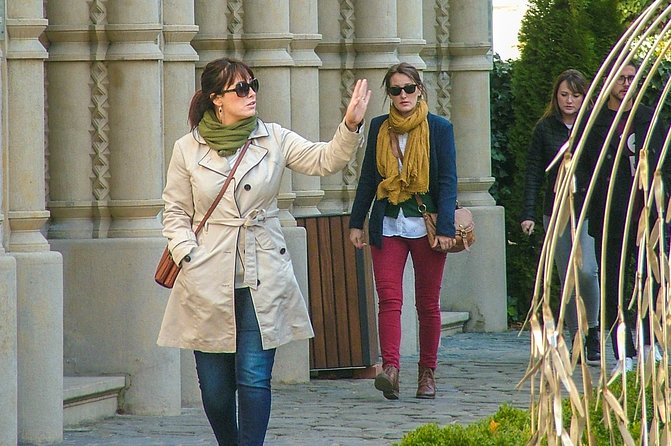
- Edith is the guide most often praised, especially for her personal connection, strong English, emotional storytelling, and flexibility.
- The tour begins at Deák Ferenc tér and ends at Dohány Street Synagogue, with no transportation or admission included.
- The advertised group is small, described as up to ten people in the highlights and up to thirteen in the practical details.
Why this three-hour walk matters
Budapest’s Jewish Quarter can look, at first glance, like a district of ruin bars, nightlife, cafés, and striking street art. That modern energy is real, but it sits among streets shaped by centuries of Jewish life and by the destruction of the Second World War. This tour helps you read both layers at once.
I like that the route does not treat Jewish Budapest as a sealed museum. You visit memorials and historic buildings, but you also hear about what it means to be Jewish in Hungary now. That conversation gives the tour a present-day purpose.
The pace is short enough for most itineraries. You can take it in the morning and still have much of the day for the Parliament, Buda Castle, thermal baths, or another part of the city. At the same time, the three hours are focused. This is not a broad survey of every Jewish site in Budapest. It concentrates on the Dohány complex, the river memorial, and the city’s arguments over memory.
More Jewish Quarter walks:
- Budapest Jewish Heritage Memorial Walking Tour & Synagogue Entry
★ 5.0 · 568 reviews - Budapest: Jewish Heritage Guided Tour with Synagogue Ticket
★ 4.8 · 533 reviews - Jewish Quarter of Budapest Walking Tour
★ 4.7 · 369 reviews
Starting at Deák Ferenc tér
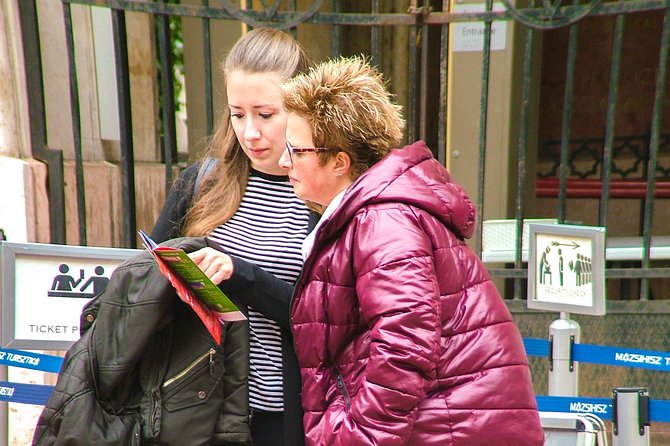
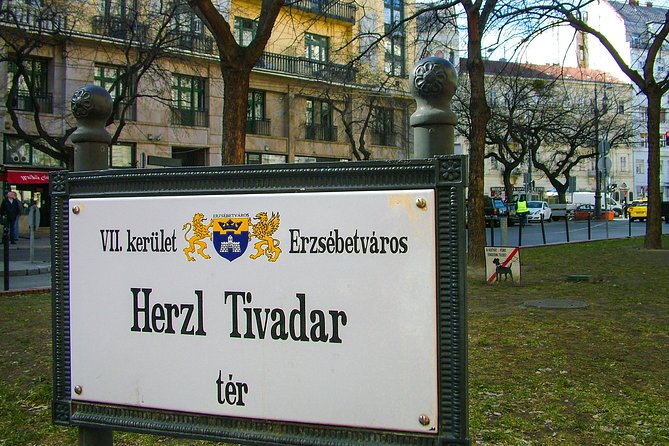
The meeting point is Deák Ferenc tér, a central square and a practical place to begin. It is near public transportation, and the route finishes at Dohány Street Synagogue, Budapest, Dohány u. 2, 1074.
Pay close attention to the meeting instructions sent after booking. Edith has been praised for giving clear directions and making sure people know where to meet. That small bit of care matters in central Budapest, where several churches, squares, and transit exits can look similar if you are rushing.
The tour is on foot, and some outings have also used Budapest’s rapid transit system. Transportation is not included, so any public transport cost is yours. The route is best for you if you can walk between city sights at a comfortable pace. Most people can participate, and service animals are allowed.
Dohány Street Synagogue: the tour’s main setting
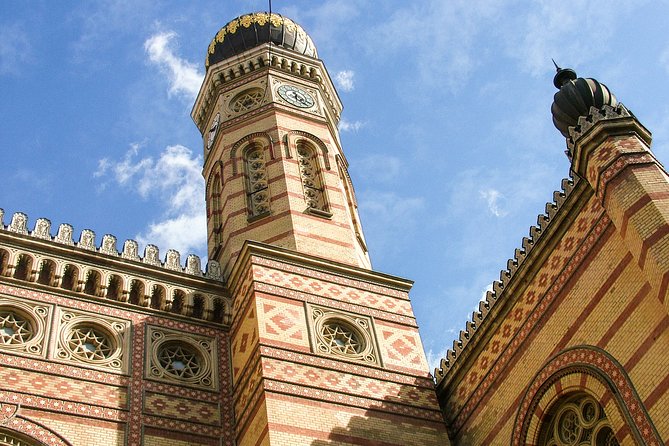
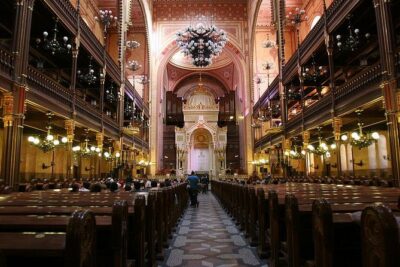
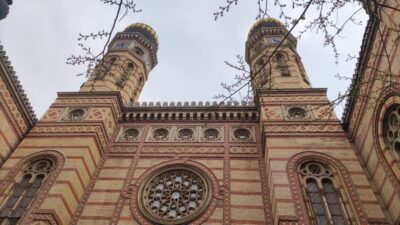
The synagogue is the center of the experience. It is described as the second-largest synagogue in the world and the biggest in Europe, a grand building in the heart of Budapest’s Jewish district. Admission is not included, so allow an additional €26 per person.
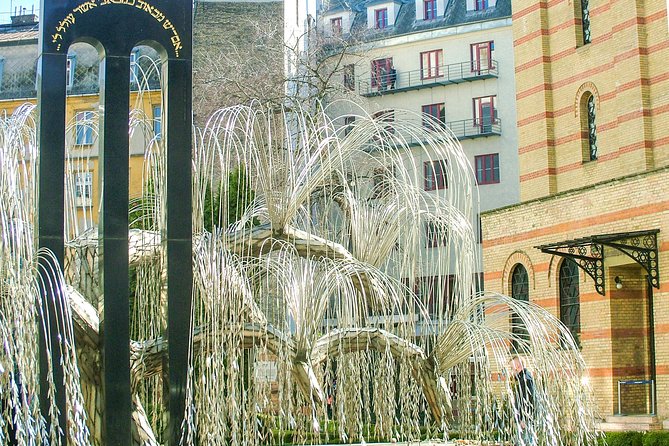
The visit can include the synagogue itself, the Jewish Cemetery, the Raoul Wallenberg Memorial Garden, and the Emmanuel Tree. Plan on roughly two hours here. That is a large share of a three-hour tour, but it makes sense. The complex has several layers, and rushing through it would reduce the visit to a few photographs and a list of dates.
The cemetery is particularly striking because it is located within the synagogue complex. The memorial garden brings the Second World War close to the building, while the Emmanuel Tree offers a sculptural focus for remembrance. The monument was established by Tony Curtis, the actor whose family had Hungarian Jewish roots.
Expect the tone to change from one stop to the next. The synagogue gives you architecture and religious context. The cemetery and garden bring the scale of wartime loss into view. The tree and memorial spaces ask you to pause rather than simply move on.
The synagogue is also the one place where the admission cost has a direct effect on value. At $80.86, the guided experience is not a budget walk once you add €26. Still, the fee pays for more than entry. The guide helps connect the buildings to Jewish life in Budapest, wartime persecution, Soviet-era conditions, and the present community. If you only wanted to see the exterior, this tour would be poor value. If you want the complex explained properly, the extra fee is easier to justify.
The Jewish Quarter beyond the monuments
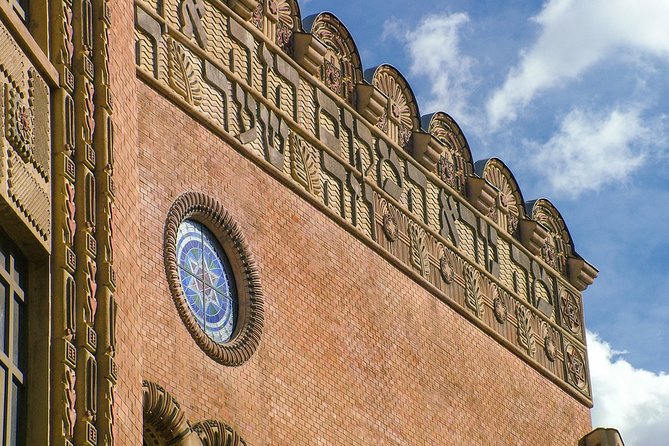
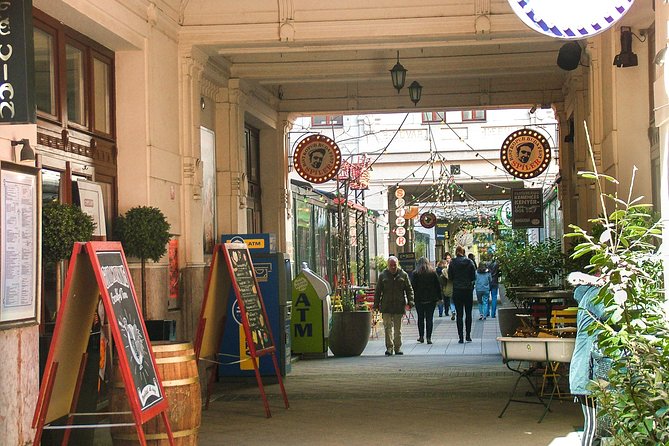
One of the tour’s strengths is that it does not stop at memorials. The historic streets were once home to Jewish communities, and the area still functions as a part of central Budapest rather than a preserved set piece.
You might see how street art and nightlife now occupy the same quarter as synagogues and memorials. The contrast can feel uncomfortable, but it is also honest. Cities continue living around difficult places. A quiet memorial can sit a few minutes from a crowded bar, and both are part of the modern district.
The guide’s role is important here. Edith is praised for explaining Jewish culture and history while also sharing personal reflections about Budapest and Hungary over roughly the past seventy years. She has also offered advice about restaurants and ruin bars. That is useful because it helps you continue exploring the neighborhood after the formal tour ends.
Do not expect the district walk to feel like a separate food or nightlife tour. Its purpose is to place Jewish sites in their urban setting. You get a sense of what survives, what has changed, and how visitors can look beyond the familiar party image of the Jewish Quarter.
More history-led tours:
- Budapest: Historic Cruise with Welcome Drink
★ 4.7 · 6,512 reviews - Budapest Historical Sightseeing – Free Walking Tour
★ 5.0 · 1,302 reviews - Buda Castle District Dark History, Legends and Vampire Night Tour
★ 4.5 · 1,240 reviews - BloodThirsty Hungary: Walking tour & Dark Historical Stories
★ 4.9 · 633 reviews
Shoes on the Danube Bank
The stop at Shoes on the Danube Bank takes about 15 minutes and has no admission fee. It is a simple memorial: metal shoes set along the riverbank, recalling Jewish people who were shot into the Danube.
The short time here is appropriate. This is a place where a long lecture can get in the way. The physical details do the work, and the guide provides the historical frame before allowing you time to look.
Many people find this the most emotionally powerful stop. The memorial’s plain form makes the victims feel individual rather than abstract. Shoes are ordinary objects, which is precisely why the scene is so difficult to face.
The location also links the tour to Budapest’s river. You are not hearing about an event in a distant museum room. You are standing beside the Danube, in the city where the killings took place. Edith has been praised for handling this subject with respect and for sharing family stories when appropriate.
Give yourself permission not to hurry. The official stop is 15 minutes, but your reaction may last longer. If you are planning a packed schedule, leave some mental space after the tour rather than booking another demanding attraction immediately.
The German Invasion memorial and Hungary’s argument over memory
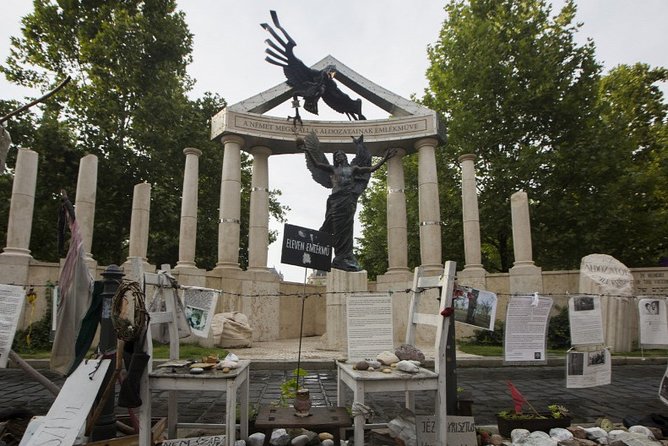
The Memorial to the Victims of the German Invasion is another 15-minute stop, and it is unlike the Shoes memorial in a key way. It is not simply a place of mourning. It is a place of public dispute.
The monument was erected at night and guarded by police, and people have protested it since its creation about a decade ago. The objection centers on how it presents responsibility for wartime suffering. The victims were mostly Jews, and the memorial has been criticized for the way it frames Hungary’s role in that history.
This makes the stop valuable, but it also requires a guide who can explain why the monument causes anger. A quick photograph tells you almost nothing. The discussion is the point.
I appreciate that the tour includes this site rather than offering only comfortable, officially polished memorials. Budapest’s historical memory is contested, and understanding that dispute helps you read the city more carefully. You may find this stop intellectually sharper than the river memorial, even though it is just as unsettling in a different way.
Edith’s guiding style
Edith is the clear strength of this experience. She is repeatedly praised for excellent English, clear speech, punctuality, patience, and warmth. More important, she knows how to turn information into a conversation.
She has tailored walks to specific interests, answered questions without rushing, and adjusted to physical limits. Several accounts describe the outing as private or nearly private, though you should not assume that every departure will be private. The stated maximum ranges from ten people in the tour highlights to thirteen in the practical information.
Her personal connection is another reason the tour feels different from a standard historical walk. Edith has shared stories about her family, Jewish life, Soviet influence, and Budapest over the past seventy years. Personal material can make history more understandable, but it should also be handled with care. Here, the praise centers on her empathy and respect.
I would choose this tour if you want to ask questions. The design encourages discussion about being Jewish in Hungary today, so you are not limited to a memorized account of 1944. If you prefer a silent, highly structured tour with no personal commentary, another option may suit you better.
Timing, group size, and walking demands
The advertised duration is about three hours. The schedule is roughly two hours at Dohány Street Synagogue, 15 minutes at Shoes on the Danube Bank, and 15 minutes at the German Invasion memorial, with walking time and conversation connecting the stops.
A small group matters on a subject like this. You can ask why a memorial is controversial, request more detail about a family story, or pause when a site affects you. In a group of ten or fewer, the guide has a better chance to hear you. The maximum may reach thirteen, so check the confirmed booking details if group size is important.
No transportation is included. The walk begins in the center and ends at the synagogue, while some routes may use rapid transit along the way. Wear comfortable shoes and keep your schedule flexible enough for walking, waiting, and serious conversation.
The experience requires good weather. If poor weather cancels it, you are offered another date or a full refund. You can cancel for a full refund up to 24 hours before the start time, but later cancellations and changes are not refunded or accepted.
Who will get the most from this tour?
I would recommend it to you if you want more than attractive buildings. It suits visitors with a specific interest in Jewish life, the Holocaust in Hungary, memorials, or the politics of historical memory.
It is also a good choice for a first visit to Budapest if you want an early orientation to the Jewish Quarter. The guide can help you understand why the district includes synagogues, memorials, street art, restaurants, and ruin bars in such close quarters.
Families and older participants may appreciate the short format and the option to ask for a comfortable pace. The tour is not presented as a strenuous hike, and most people can take part. Still, the emotional weight may be harder for young children to process, so consider your group carefully.
You may want another activity if your main goal is nightlife, architecture without historical discussion, or a broad city tour. This outing is focused and serious. It gives you a stronger understanding of one part of Budapest, not a complete introduction to the entire city.
Is $80.86 plus €26 a fair price?
The price is fair only if you value a guide. The tour itself costs $80.86 per person, and the Dohány entrance fee adds €26. Transportation is separate. For a self-guided visit to the synagogue and memorials, this is expensive.
For a small group with a guide who can discuss family stories, answer questions, explain the disputed memorial, and adjust the route, the value improves. You are paying for context and conversation, not just access.
I would compare it with the cost of getting the same understanding on your own. You could visit the public memorials without a ticket, but the synagogue complex still requires admission, and the connections between the sites are easy to miss. If Edith is available and you want a focused Jewish Budapest experience, the premium is defensible.
The strongest value comes when you use the tour as a starting point. Ask for suggestions about the district afterward, then spend the afternoon exploring its restaurants, street art, and nightlife with a clearer sense of what lies beneath the modern scene.
Should you book Budapest Jewish Heritage?
Book this tour if you want a personal, serious, and compact look at Jewish Budapest. The combination of the Dohány complex, the Danube shoes, and the disputed German Invasion memorial gives you architecture, mourning, and political memory in one morning.
I would especially choose it when Edith is guiding. Her clear English, personal connection, and willingness to shape the experience around your questions are the qualities most likely to turn a difficult subject into a meaningful visit.
Skip it if you want a cheap walk, a broad Budapest overview, or a casual history lesson. The extra entrance fee and heavy subject matter are real considerations. For the right visitor, though, this is one of the most useful ways to understand the Jewish Quarter as a living part of Budapest, not simply a collection of wartime memorials.
FAQ
How long does the Jewish Heritage tour last?
The tour lasts approximately three hours.
Where does the tour begin?
It begins at Deák Ferenc tér in Budapest, Hungary.
Where does the tour end?
It ends at the Dohány Street Synagogue at Dohány u. 2, 1074 Budapest.
Is admission to the Dohány Street Synagogue included?
No. The entrance fee is listed as €26 per person.
Is transportation included?
No. Transportation is not included. Some versions of the walk may use Budapest’s rapid transit system, with transport costs paid separately.
What group size should I expect?
The tour highlights describe a maximum of ten people, while the additional information gives a maximum of thirteen. The experience is designed as a small-group tour.
What happens if the weather cancels the tour?
Because the experience requires good weather, a cancellation caused by poor weather gives you the choice of another date or a full refund. You can also cancel up to 24 hours before the start time for a full refund.
Just added around Budapest
- Lake Balaton and Herend Guided Tour★ 4.7 · 3 reviews
- Audio visual multi-sensory chefs journey dinner experience★ 5.0 · 3 reviews
- Hollókő Ethnographic Village: Day Tour from Budapest★ 3.7 · 3 reviews
- Tapolca Cave Lake and Tihany/ Balaton private tour from Budapest★ 4.5 · 3 reviews
- Budapest Art Nouveau Walking Tour★ 5.0 · 3 reviews
- SzentEndre-SaintAndrew City Privately Shopping and Picturesque★ 4.5 · 3 reviews
- Budapest Drinks and Piano Show Cruise★ 4.5 · 3 reviews
- Horseshow on the Hungarian Puszta, private tour from Budapest with entry!★ 5.0 · 3 reviews
Jewish Quarter Tours, compared.
Budapest Jewish Heritage Memorial Walking Tour & Synagogue Entry
What we thought →
Jewish Heritage Guided Tour with Synagogue Ticket
What we thought →
Past and Present of Budapest Jewish District Tour
What we thought →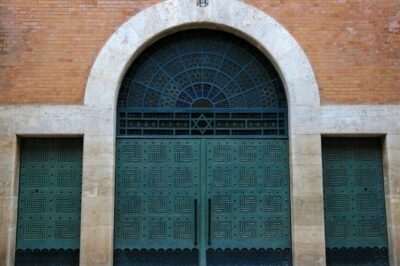
Budapest Dohany Synagogue & Hungarian Jewish Museum & free extras
What we thought →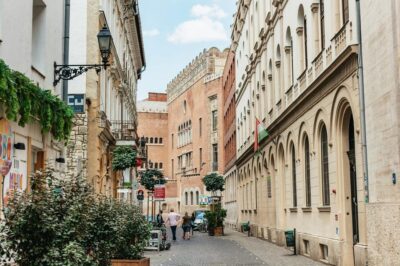
Jewish History Guided Walking Tour with Historian
What we thought →Browse the lists this tour appears in