
Reviewed · JEWISH QUARTER TOURS
Jewish Budapest Private City Walk
Budapest’s streets carry difficult stories. This private four-hour walk brings them together through the Jewish Quarter, its synagogues, wartime memorials, and surviving ghetto walls. I like the flexible route and the chance to ask questions without a large group slowing you down. I also like that the tour reaches both major sights and quieter historical markers, including the yellow-star houses and the Carl Lutz Memorial.
The main catch is cost: $342.93 covers your whole group, up to 15 people, but synagogue entry fees are extra. Saturday is another concern, since Jewish holidays can close the synagogues. You will also walk and listen for several hours, so comfortable shoes and steady energy matter.
In This Review
- Key points to know before you book
- Why this private walk gives Budapest more meaning
- The former ghetto and yellow-star houses
- The Great Synagogue on Dohány Street
- Kazinczy Street’s Art Nouveau exterior
- Rumbach Street Synagogue after renovation
- Carl Lutz and the courage to help
- Szimpla Kert and the changing Jewish Quarter
- The Shoes on the Danube Bank
- Király Street and the Great Ghetto
- Food, breaks, and the pace of four hours
- Is the $342.93 group price good value?
- Who will get the most from this tour?
- FAQ
- How long does the Jewish Budapest private walk last?
- How much does the private tour cost?
- Are synagogue entrance fees included?
- Can I enter Kazinczy Street Synagogue?
- Is the tour available on Saturdays?
- Does the tour include hotel pickup?
- Is food included?
- Is this a private tour?
- Should you book it?
Key points to know before you book
- Private group pricing: The $342.93 rate covers up to 15 people, making the value much better for a family or full small group than for one or two people.
- Synagogue access varies: The Great Synagogue and Rumbach Street Synagogue require separate admission, while Kazinczy Street Synagogue is currently closed for renovation.
- Serious history, handled with care: The route covers the former ghetto, the Arrow Cross terror, deportations, resistance, and individual acts of courage.
- Suzy earns special praise: Her warm, patient style and command of Jewish, Hungarian, and wider European history have made a strong impression.
- Hotel and port pickup: Pickup and drop-off are available, including for cruise passengers who provide their ship and docking details.
- Allow a full half-day: The advertised length is about four hours, though the walk may run longer when questions and synagogue visits take time.
Why this private walk gives Budapest more meaning
Budapest’s Jewish Quarter is not just a district of cafés, nightlife, and handsome old buildings. It is also a place where ordinary addresses carry traces of forced movement, fear, courage, and survival. The tour helps you connect those points instead of seeing them as scattered monuments.
I value the private format here. Your group can pause when a question comes up, spend more time on a memorial, or adjust the route around your interests. The guide can also explain details that are easy to miss when you are moving with a large crowd.
This is not a light sightseeing stroll. You will hear about the wartime ghetto, yellow-star houses, people shot into the Danube, and the role of Hungarian authorities during the Second World War. The subject is painful, but the tour’s focus on real places and named individuals gives it weight without turning it into a dry lecture.
Past participants have singled out Suzy for her patience and passion. Joel was praised for taking care with a group in which most people were over 70. Another guide, Bogato, was described as flexible and easy to spend time with. The quality of the experience will depend partly on who leads your walk, but the guide is clearly central to its value.
More Jewish Quarter walks:
- Budapest Jewish Heritage Memorial Walking Tour & Synagogue Entry
★ 5.0 · 568 reviews - Budapest: Jewish Heritage Guided Tour with Synagogue Ticket
★ 4.8 · 533 reviews - Jewish Quarter of Budapest Walking Tour
★ 4.7 · 369 reviews
The former ghetto and yellow-star houses
The walk begins in Budapest’s Jewish Quarter, where the guide points out remaining pieces of the wall that surrounded the former ghetto. You also see yellow-star houses, places where Jewish people were forced to live under Nazi and Arrow Cross rule.
These are not grand monuments. That is precisely why they matter. A wall remnant or an address can make the history feel close and physical. Instead of hearing only dates, you see the spaces where families were confined and where daily life continued under terrible conditions.
This opening section takes about 20 minutes and has no admission fee. It gives you the background needed for the synagogues that follow. If you arrive expecting only attractive architecture, the first stop quickly sets a more serious tone.
The Great Synagogue on Dohány Street
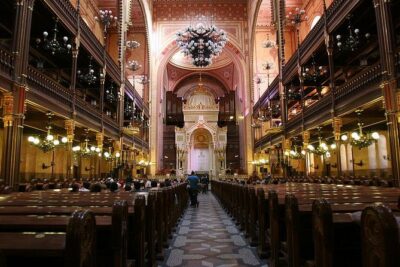
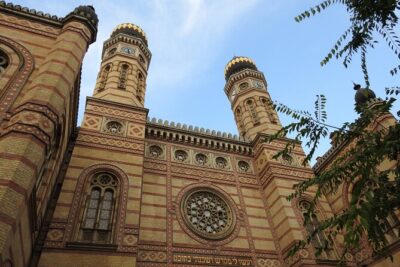
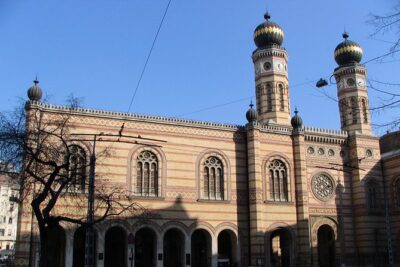
The Great Synagogue, also called the Central or Dohány Street Synagogue, is described as the largest functioning synagogue in Europe. Its scale and architecture make it one of Budapest’s major sights, but the building is more meaningful when you understand its connection to the city’s Jewish community and wartime past.
The planned stop lasts about 30 minutes. The tour does not automatically include admission, so you need to budget for a separate ticket if you want to go inside. The guide can take you through the full building upon request, which is important because the exterior alone cannot explain the synagogue’s role or layout.
One practical warning is easy to miss: the advertised tour price and the synagogue admission are separate costs. One person arrived unprepared for that extra charge. Ask about the current entrance fee before your walk, especially if several people in your group plan to enter.
The building is also not a guaranteed indoor stop on Saturdays. Jewish holidays can close the synagogues, and the tour is specifically not recommended that day. If interior architecture is a priority, schedule another day.
Kazinczy Street’s Art Nouveau exterior
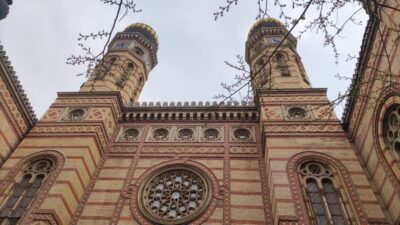
Kazinczy Street Synagogue adds a different architectural note. Built in the 1910s, it reflects the Art Nouveau style that shaped parts of Budapest during that period. The stop takes about 10 minutes.
At present, you cannot go inside because renovation work and a community ban prevent entry. The guide can still explain the building’s place in Budapest’s Jewish life and point out its exterior details.
That limitation matters. If you choose this tour mainly to enter several synagogues, you may find the current route less satisfying than expected. The exterior visit remains useful, but it is brief and cannot replace an interior tour.
More walking tours:
- Budapest: Buda Castle Walk with Saint Stephen’s Hall
★ 4.5 · 3,012 reviews - Big Bus Budapest Hop-On Hop-Off Bus and Walking Tour
★ 3.5 · 2,206 reviews - Budapest: Buda Castle District Walking Tour
★ 4.6 · 2,108 reviews - Budapest City Landmarks Walking Tour in 2 Hours
★ 5.0 · 2,048 reviews
Rumbach Street Synagogue after renovation
Rumbach Street Synagogue is another major architectural stop. The recently renovated building has an important role in the Jewish community and a striking design. Like the Great Synagogue, it is scheduled for about 30 minutes, but entrance is not included in the base price.
The guide can show you inside upon request, provided access is available and you pay the additional ticket. That flexibility is helpful, but you should settle the plan before the walk begins. Ask which synagogues are open on your date and exactly what the added fees will be.
Taken together, the three synagogue stops show different sides of Budapest Jewish life: a vast landmark, an Art Nouveau building viewed from outside, and a restored synagogue with its own historical role. The mix is worthwhile, but the indoor access is less certain than the itinerary might first suggest.
Carl Lutz and the courage to help
The Carl Lutz Memorial gives the walk a personal focus. Lutz was a Swiss diplomat who helped thousands of Jewish people avoid the death camps during the Holocaust.
The stop lasts about 15 minutes and is free. Your guide explains both Lutz’s actions and the brutal setting in which he worked. This is one of the tour’s strongest moments because it shows that the story is not only about institutions and mass suffering. It also includes individuals who chose to act when doing so was dangerous.
A good guide can make this kind of memorial more than a quick photo stop. Suzy, in particular, has been praised for explaining difficult subjects seriously and clearly, without rushing past the human details.
Szimpla Kert and the changing Jewish Quarter
Szimpla Kert is a ruin bar and one of the best-known sights in District VII. Its design and atmosphere draw people from around the world, and the stop lasts about 15 minutes.
Placed within this tour, Szimpla Kert creates a sharp contrast. The same neighborhood now known for nightlife also contains ghetto walls, memorials, and former Jewish homes. That contrast helps you see how Budapest has changed, but it can also feel jarring after the Holocaust material.
Do not expect a long drink stop. The listed visit is brief, and alcoholic drinks are not included, though you can buy them. The point is mainly to see a famous part of the modern district and understand how the area functions today.
The Shoes on the Danube Bank
The Shoes on the Danube Bank memorial is scheduled for a full hour, making it the longest stop on the route. It remembers Jewish people who were shot into the river during the Arrow Cross terror.
The memorial consists of shoes set along the riverbank, a simple design that leaves room for reflection. The guide explains the events behind it and the wider terror of the period. This is a somber visit, and the extra time allows your group to ask questions rather than treating the memorial as a quick stop.
The riverfront is also a useful reminder that Budapest’s wartime story extends beyond the Jewish Quarter. The route links the district’s enclosed ghetto spaces with the open bank where people were murdered. That connection gives the day a clear shape.
If you have limited mobility, ask about the walking demands before booking. The tour is generally suitable for most people, but one participant described it as a lot of walking and listening. Pickup and drop-off help with transportation, but they do not remove the walking itself.
Király Street and the Great Ghetto
At Király Street number 15, the guide points out an original segment of the Budapest Great Ghetto. The stop takes about 15 minutes and returns the focus to the physical remains of the wartime district.
This is the kind of detail you could easily pass without a guide. There may be no grand entrance or obvious museum sign to draw your attention. A local guide explains what you are seeing and places it within the story of the second-largest ghetto in the world during the Second World War.
The stop works especially well after the Shoes memorial. You have seen the consequences of the terror at the river, then return to a surviving piece of the place where people were confined.
Food, breaks, and the pace of four hours
Food tastings are listed as part of the experience, but lunch is not included. Alcoholic drinks are also extra. A past group stopped at the Strudel House during the walk and strongly recommended the break, so you may have an opportunity for a local snack, but you should not treat this as a full meal.
The pace combines walking, explanation, and memorial visits. One group’s tour lasted longer than the advertised four hours because the guide did not rush questions or important sites. That can be a benefit if you want depth, but it may be a problem if you have a tightly timed museum visit or evening reservation.
Pickup from your hotel or port is included. Cruise passengers must provide the ship name, docking time, disembarkation time, and re-boarding time at booking. That information lets the operator judge whether the four-hour experience fits your port schedule.
Is the $342.93 group price good value?
For one person or a couple, $342.93 is a substantial price. For a group of 10 to 15, it becomes much more reasonable because the rate covers the entire private party rather than charging each person separately.
You are paying for a professional local guide, private transportation pickup and drop-off, route flexibility, and several hours of explanation. The value is strongest if you care about context and want to ask direct questions. It is weaker if you only want to see synagogue exteriors and take photographs.
Remember to add synagogue entrance fees. The base price does not include admission to the Great Synagogue or Rumbach Street Synagogue, and Kazinczy Street is currently exterior-only. Ask about all added costs before departure so the price does not surprise you.
The experience is recommended by all recorded participants and carries a five-star average from 21 ratings. The strongest praise centers on the guides’ warmth, patience, seriousness, and ability to connect Jewish Budapest with broader Hungarian and European history.
Who will get the most from this tour?
I would choose this walk if you want a thoughtful introduction to Budapest’s Jewish community, especially if you have only half a day. It suits families, small groups, older visitors who appreciate hotel pickup, and anyone who prefers a conversation over a fixed audio guide.
It is also a good choice if you are interested in architecture as well as wartime history. The Great Synagogue, Rumbach Street Synagogue, and Kazinczy Street Synagogue each offer a different visual experience, even though one is currently closed inside.
You may want another option if you dislike solemn historical material, have difficulty walking for several hours, or need guaranteed indoor synagogue access. Saturday is a poor choice for this particular route because Jewish holidays may close the buildings.
FAQ
How long does the Jewish Budapest private walk last?
The tour lasts approximately four hours. It may take longer if your group asks many questions or spends extra time at the synagogues.
How much does the private tour cost?
The listed price is $342.93 per group, for up to 15 people.
Are synagogue entrance fees included?
No. Entrance fees are not included in the base price. Admission to the Great Synagogue and Rumbach Street Synagogue must be paid separately if you enter.
Can I enter Kazinczy Street Synagogue?
No. Kazinczy Street Synagogue is temporarily closed for renovation and cannot currently be entered. The tour visits its exterior.
Is the tour available on Saturdays?
The tour is not recommended on Saturdays because Jewish holidays may cause the synagogues to close.
Does the tour include hotel pickup?
Yes. Hotel pickup and drop-off are offered. Port pickup and drop-off are also available for cruise passengers who provide their ship and schedule details.
Is food included?
Food tastings are included in the experience, but lunch is not. Alcoholic drinks are available for purchase and are not included.
Is this a private tour?
Yes. Only your group participates in the private activity.
Should you book it?
Book this tour if you want Budapest’s Jewish Quarter explained with care, not simply photographed. The private format, hotel pickup, flexible route, and strong guides make it especially useful for families and groups who want to understand the places they see.
Before paying, confirm the guide, synagogue opening hours, current admission fees, and whether the route works with your walking ability. If you can avoid Saturday and allow more than four hours in your schedule, this is a serious, personal, and worthwhile way to meet one of Budapest’s most important neighborhoods.
Just added around Budapest
- Lake Balaton and Herend Guided Tour★ 4.7 · 3 reviews
- Audio visual multi-sensory chefs journey dinner experience★ 5.0 · 3 reviews
- Hollókő Ethnographic Village: Day Tour from Budapest★ 3.7 · 3 reviews
- Tapolca Cave Lake and Tihany/ Balaton private tour from Budapest★ 4.5 · 3 reviews
- Budapest Art Nouveau Walking Tour★ 5.0 · 3 reviews
- SzentEndre-SaintAndrew City Privately Shopping and Picturesque★ 4.5 · 3 reviews
- Budapest Drinks and Piano Show Cruise★ 4.5 · 3 reviews
- Horseshow on the Hungarian Puszta, private tour from Budapest with entry!★ 5.0 · 3 reviews
Jewish Quarter Tours, compared.
Budapest Jewish Heritage Memorial Walking Tour & Synagogue Entry
What we thought →
Jewish Heritage Guided Tour with Synagogue Ticket
What we thought →
Past and Present of Budapest Jewish District Tour
What we thought →
Budapest Dohany Synagogue & Hungarian Jewish Museum & free extras
What we thought →
Jewish History Guided Walking Tour with Historian
What we thought →Browse the lists this tour appears in