
Reviewed · JEWISH QUARTER TOURS
Budapest Jewish Heritage: Synagogues, Shoes, Secrets & Flódni
Budapest’s Jewish Quarter rewards a slower walk. This private experience links three distinctive synagogues with wartime memorials, ghetto history, and the everyday story of Hungarian Jewish life. I especially like the personal format and the finish with flódni, a traditional Jewish pastry. The main drawback is that synagogue entrance fees are extra, so the final cost can rise beyond the advertised $102.95.
The tour lasts about 2 hours and 45 minutes, with hotel pickup offered and English-speaking guides such as Gabriella, Edith, Kata, Peter, and Miklos. It is a serious history walk, not simply a parade of handsome buildings, and some guests may wish for more time at the memorial sites.
In This Review
- Key points at a glance
- Why this Budapest Jewish heritage walk matters
- Starting at Herzl Square and the Great Synagogue
- Comparing Rumbach and Kazinczy Street Synagogues
- Remembering the victims at the Danube
- Walking through the 1944 ghetto
- Ending with flódni on Dohány Street
- The guides make the biggest difference
- Timing, walking, and what to budget
- Who should choose this experience?
- FAQ
- How long does the Jewish heritage tour last?
- How much does the tour cost?
- Is this a private tour?
- Is the tour offered in English?
- Where does the tour begin?
- Where does the tour end?
- Is hotel pickup available?
- Are synagogue entrance tickets included?
- Is food included?
- Can I cancel for a full refund?
- Should you book this Budapest Jewish heritage tour?
Key points at a glance
- Three Jewish traditions in one walk: Compare the Great Synagogue, Rumbach Street Synagogue, and Orthodox Kazinczy Street Synagogue.
- A personal private tour: Your guide can shape the conversation around your interests, background, and schedule.
- Wartime Budapest is central: Visit the Carl Lutz Memorial, Shoes on the Danube Bank, and remnants of the 1944 ghetto.
- Guides bring different strengths: Gabriella, Edith, Kata, Peter, and Miklos have received particular praise for warmth, personal stories, and strong historical teaching.
- Flódni provides a fitting finish: The tour ends with a traditional Jewish pastry rather than a hurried goodbye.
- Budget for admissions: Entrance tickets are not included at the synagogues, while the Shoes on the Danube Bank memorial is free to visit.
Why this Budapest Jewish heritage walk matters
Budapest’s Jewish Quarter is easy to misunderstand. Today it is known for restaurants, bars, shops, and nightlife, but its streets also formed the center of a major Jewish community. This walk helps you look past the present-day noise and picture the families, religious groups, businesses, and institutions that shaped the city.
I like that the experience treats Jewish Budapest as more than a Holocaust story. The guides explain the community’s place in Hungarian society, the differences between Jewish movements, and the contributions of Hungarian Jews to public life, science, art, and cinema. The Holocaust and the 1944 ghetto are unavoidable parts of the visit, but they are placed within a longer story.
The private format makes a real difference here. You can ask why one synagogue looks different from another, pause over a family question, or discuss how Jewish identity changed under war and Soviet rule. Guides have also adjusted the focus for people with Hungarian Jewish family connections, non-Jewish visitors seeking context, and passengers working within a tight return schedule.
The experience is priced at $102.95 per person. That is not a bargain city walk, especially because synagogue admissions are separate. Still, for a private tour with a historian guide, hotel pickup offered, and nearly three hours of guided time, the price can make sense for couples, families, and small groups who want conversation instead of a standard group presentation.
More Jewish Quarter walks:
- Budapest Jewish Heritage Memorial Walking Tour & Synagogue Entry
★ 5.0 · 568 reviews - Budapest: Jewish Heritage Guided Tour with Synagogue Ticket
★ 4.8 · 533 reviews - Jewish Quarter of Budapest Walking Tour
★ 4.7 · 369 reviews
Starting at Herzl Square and the Great Synagogue
The walk begins at Budapest’s Dohány u. 1, near Herzl Square and the Great Synagogue. Hotel pickup is offered, but the stated meeting point is the synagogue area, so I would confirm the pickup arrangement before booking if you are staying outside central Budapest.
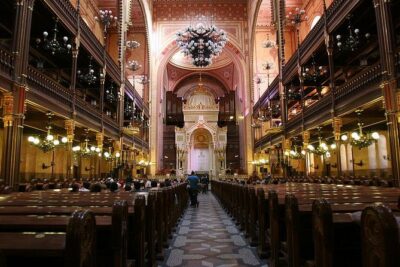
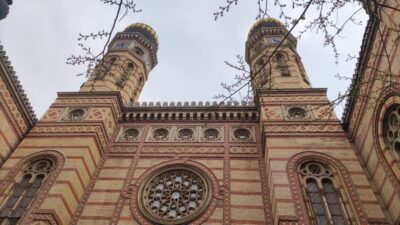
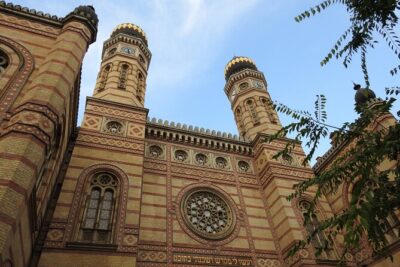
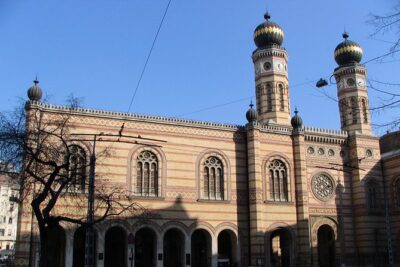
The first stop is the Dohány Street Synagogue, usually called the Great or Central Synagogue. It seats about 3,000 people and is described as the largest synagogue in Europe. It is also a center of Neolog Judaism, a Hungarian Jewish movement with its own historical character.
You spend about 20 minutes here. The guide explains the building’s unusual design and uses it as a doorway into the fate of Hungarian Jewry during the Second World War. You also hear about internationally famous people with Hungarian Jewish backgrounds, a useful reminder that the community’s influence reached far beyond the streets of this quarter.
One practical point matters: the entrance ticket is not included. The stop may be partly exterior or depend on access arrangements, so ask exactly what admission is planned for your date. If entering the building is a priority, budget for the separate ticket and allow enough time to see it properly.
The Great Synagogue area also includes a cemetery and the Raoul Wallenberg Holocaust Memorial Park, according to the experiences described by past participants. The itinerary specifically lists the Great Synagogue, while the guide may incorporate nearby memorial spaces depending on timing and access. Ask at the beginning if these are especially important to you.
Comparing Rumbach and Kazinczy Street Synagogues
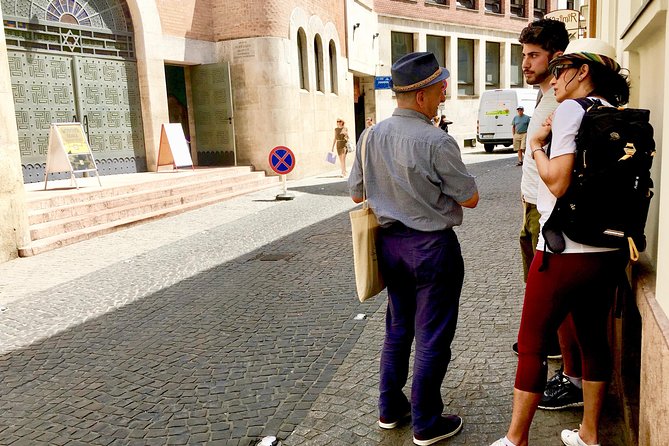
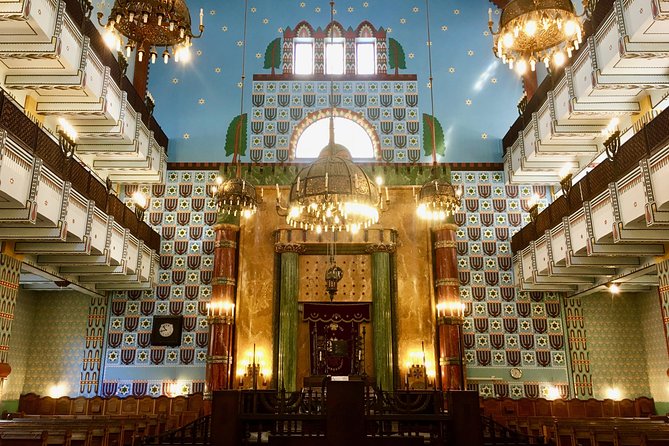
The next synagogue is Rumbach Sebestyén Street Synagogue, about a 15-minute stop. Built in 1872 by Otto Wagner, it has a Moorish appearance and served the more moderate Conservative community. Its restored interior is one of the area’s most unusual spaces.
This stop is valuable because it prevents you from treating all synagogues as interchangeable. Religious divisions affected architecture, worship, community life, and social identity. A good guide will explain those differences in plain terms while helping you notice the patterns, colors, and details inside the building.
Rumbach’s entrance ticket is also not included. The description emphasizes its recent facelift and graceful interior, but access may matter more than the short scheduled visit. If you want a leisurely look at the building, ask whether the 15 minutes includes interior entry or mainly an outside explanation.
The walk then reaches the Carl Lutz Memorial. The Swiss diplomat helped save tens of thousands of Jews in Budapest from persecution and deportation during the war. The monument is in the area of the former ghetto and gives the guide a chance to discuss individual acts of protection amid a much larger system of persecution.
The stop lasts about 10 minutes and is free. It is brief, but its location makes it effective. You are not hearing about Carl Lutz in an abstract museum setting. You are hearing about him in the same part of the city where the ghetto once confined Jewish residents.
Kazinczy Street Synagogue follows, in a small side street. Built in 1913, it served Budapest’s Orthodox community and uses a modern design with late Art Nouveau touches. Bright colors and stained-glass ceiling windows by Miksa Róth give it a different mood from the other two synagogues.
This is another ticketed stop, with admission not included. You may find the comparison between the three communities more useful than any single architectural detail. The route shows how Budapest’s Jewish population contained several religious branches, each with its own institutions and visual language.
Some private tours have also included a small house or tenement synagogue, with a snack shared in a kitchen setting. That visit is not listed as a fixed stop in the supplied route, so do not assume it is guaranteed. If modest neighborhood religious spaces interest you more than formal monuments, mention that when you book.
Remembering the victims at the Danube
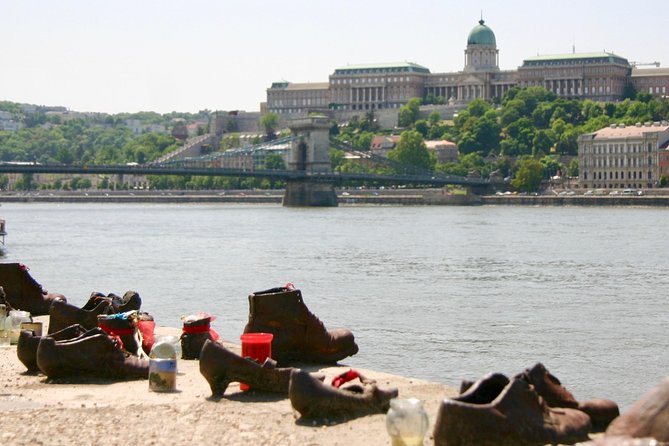
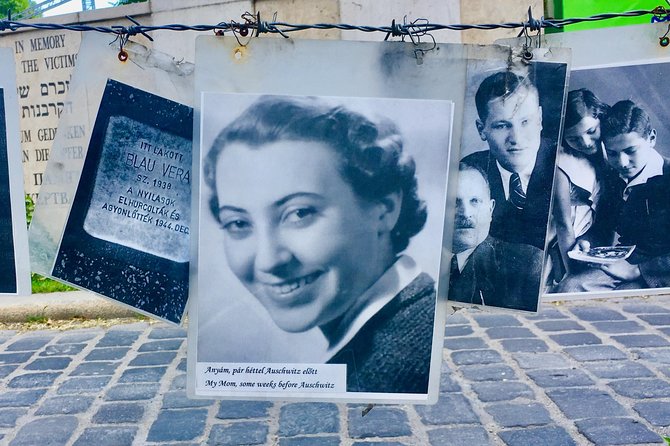
The Shoes on the Danube Bank memorial is the most direct emotional moment of the walk. Bronze shoes line the riverbank, recalling Jewish victims who were ordered to remove their shoes before being shot. Their bodies were carried away by the Danube.
You have about 10 minutes here, and there is no admission charge. The memorial is simple and exposed, which is part of its force. The shoes are ordinary objects, not grand statues. Their small size brings the violence back to individual people and families.
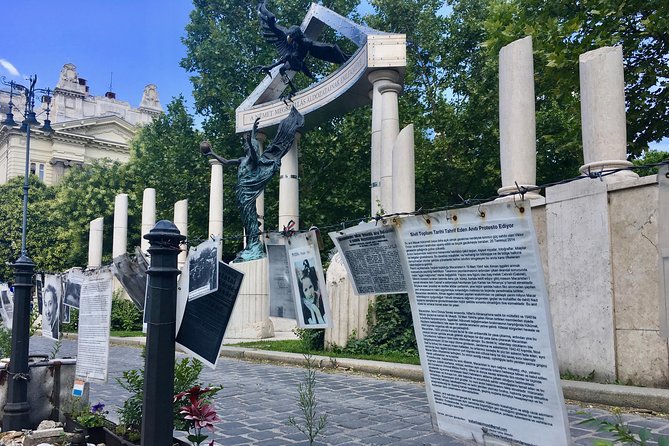
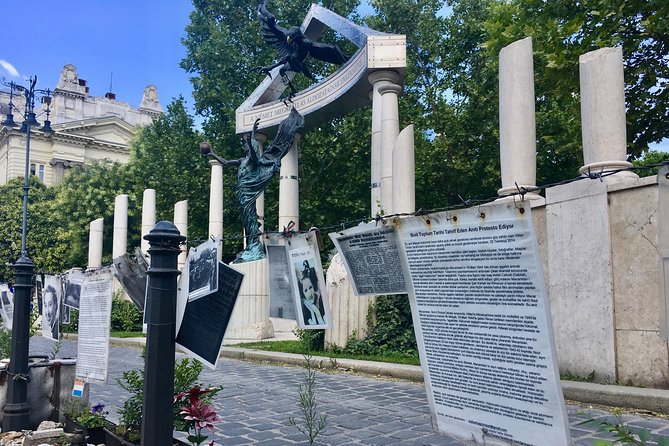
You should expect the guide to give you space here. This is not a place for a rushed photo stop. The memorial can prompt questions about the Arrow Cross period, the role of Hungarian authorities, and the different ways people tried to protect themselves. The available feedback suggests that some visitors wanted even more detailed accounts of resistance, protection, and specific incidents, so ask directly if those subjects matter to you.
The guide’s approach will shape this part of the experience. Kata, for example, has shared personal family connections to Jewish life in Hungary, the Holocaust, and the Soviet occupation. Personal testimony can make the past easier to grasp, but it can also make the walk more intimate and emotionally demanding.
More history-led tours:
- Budapest: Historic Cruise with Welcome Drink
★ 4.7 · 6,512 reviews - Budapest Historical Sightseeing – Free Walking Tour
★ 5.0 · 1,302 reviews - Buda Castle District Dark History, Legends and Vampire Night Tour
★ 4.5 · 1,240 reviews - BloodThirsty Hungary: Walking tour & Dark Historical Stories
★ 4.9 · 633 reviews
Walking through the 1944 ghetto
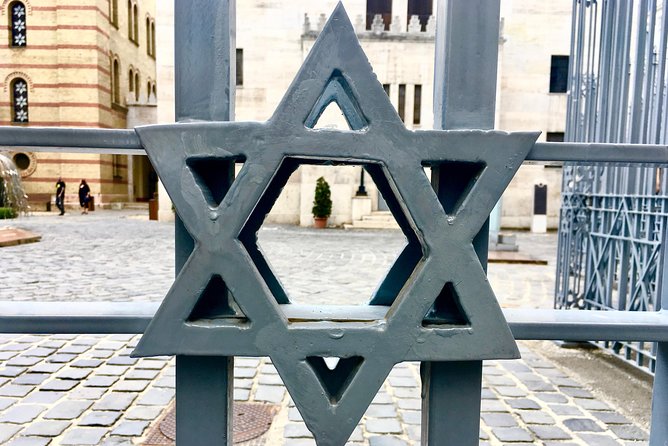
Back in the Jewish Quarter, the tour turns to the ghetto created near the end of the Second World War. A small section of the ghetto wall remains, and the guide explains how residents lived, what the boundaries meant, and what happened to them.
The scheduled stop is about 15 minutes and free. The wall itself is not a grand monument, and you may miss it without a guide. Its value comes from the explanation around it: the quarter you see today has changed, but the guide helps you imagine a confined district under extreme pressure.
This is also where the tour’s wider historical approach pays off. You learn about a community that had been loyal to Hungary and did not expect the state to betray it. That context helps explain why many Hungarian Jews were not prepared for the speed and scale of persecution.
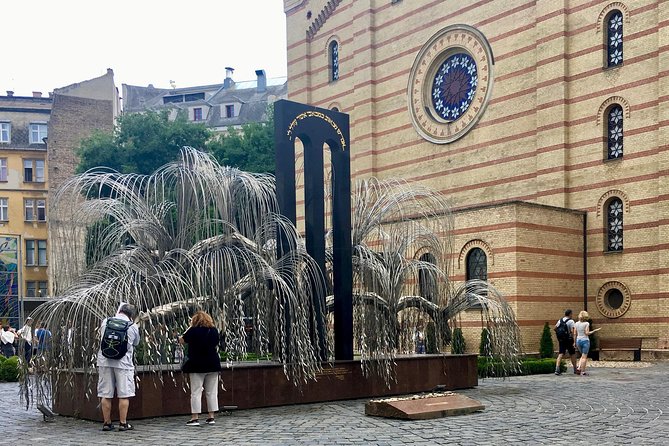
The route may also include the Raoul Wallenberg Holocaust Memorial Park, where metal leaves on the Tree of Life record names of Jews killed during the war. The park includes memorials to Wallenberg and other Righteous Among the Nations. These additional stops have appeared in personal versions of the walk, but timing and guide choices can affect what is included.
One criticism worth taking seriously is that a short tour cannot fully cover the protection networks, deportation process, daily ghetto life, and personal stories behind the memorials. If you want an academic treatment of wartime events, this experience may feel compressed. If you want a clear framework and a chance to ask questions, the private structure helps.
Ending with flódni on Dohány Street
The last stop is a small but welcome change of pace. On Dohány Street, you finish with flódni, a traditional Jewish pastry associated with Hungarian Jewish cooking.
Flódni typically brings together layers and fillings, and the point here is not simply to provide a sweet snack. Food gives the tour a link to ordinary family life, the part of history that can disappear when every stop concerns persecution and death.
The pastry is included. The precise setting can vary, and some guide experiences have ended at a nearby café with coffee and time for discussion. A few participants have also received a short Hungarian Jewish history handout, though that should not be treated as a guaranteed inclusion.
The final snack creates room to ask follow-up questions. You might discuss Jewish life in present-day Hungary, family history, Israel, or the city’s changing quarter. The reviews supplied for this experience repeatedly praise guides who turn the tour into a conversation rather than a one-way speech.
The guides make the biggest difference
The strongest part of this experience is the guide. Gabriella has been praised for her warmth, clear teaching, and strong command of Hungarian Jewish history. Edith is known for combining factual explanation with questions that encourage you to think about what you are seeing.
Kata brings personal experience as a Hungarian Jew and has spoken about raising her daughter in Jewish culture today. Peter has been praised for a carefully chosen route and a conversational approach. Miklos, a retired educator, has led discussions that connect Jewish history in Hungary with wider European events while also responding to visitors’ own knowledge.
That range matters because this is a private tour. The experience can feel personal, but it may not be identical with every guide. You should tell the company if you have family connections, a particular interest in architecture, a focus on Holocaust history, or limited time before returning to a ship.
One less positive experience involved a visitor who wanted more emotional detail and did not receive a promised handout or drink. The guide acknowledged that the handout had been forgotten and explained that a drink is offered when time and preference allow. This is a useful reminder to ask for anything important before the tour ends.
Timing, walking, and what to budget
The advertised length is approximately 2 hours and 45 minutes. The listed stops account for about 100 minutes, leaving the rest for walking, transitions, explanations, and possible discussion. That makes the pace reasonable, but not leisurely if you want long interior visits at all three synagogues.
Public transportation tickets are not included. Hotel pickup is offered, but the official starting point is Budapest, Dohány u. 1, and the activity ends back at the meeting point. Confirm the exact pickup and return plan, especially if you have a cruise departure, train, or timed museum visit.
The tour is offered in English and confirmation is provided at booking. It is near public transportation, service animals are allowed, and most people can participate. Since this is a walking tour with several outdoor memorial stops, practical footwear and weather protection are sensible, though the supplied information does not specify a required dress code or a detailed mobility plan.
The $102.95 price is easiest to justify when you are traveling as a small private group and value flexible conversation. It is less attractive if you mainly want synagogue entry and could organize the sites yourself. Remember to add admission costs and any transport ticket to your budget.
Free cancellation is available up to 24 hours before the start time for a full refund. Changes or cancellations inside that 24-hour window are not accepted or refunded.
Who should choose this experience?
I would recommend it most strongly to people who want historical context with their sightseeing. It suits visitors with Hungarian Jewish ancestry, people trying to understand Budapest beyond its nightlife, and anyone who prefers asking questions instead of listening to a fixed script.
It also works well for non-Jewish visitors. One guide begins by asking why you chose the tour, which allows the discussion to meet you where you are. You do not need prior knowledge, though you should be ready for serious subjects and a candid discussion of wartime persecution.
Families and small groups may appreciate the private format. It is also useful for anyone under a time limit, since the route can be discussed with the guide and may be adjusted. Still, do not book it expecting a relaxed pastry walk. The memorials and ghetto history give the experience a sober center.
FAQ
How long does the Jewish heritage tour last?
The tour lasts approximately 2 hours and 45 minutes.
How much does the tour cost?
The listed price is $102.95 per person.
Is this a private tour?
Yes. Only your group participates in the activity.
Is the tour offered in English?
Yes. English is the stated tour language.
Where does the tour begin?
The stated meeting point is Budapest, Dohány u. 1, 1074 Hungary, near the Great Synagogue and Herzl Square.
Where does the tour end?
The activity ends back at the meeting point.
Is hotel pickup available?
Yes. Hotel pickup is offered, but you should confirm the exact arrangement because the stated meeting point is Dohány u. 1.
Are synagogue entrance tickets included?
No. Entrance tickets for the Great Synagogue, Rumbach Street Synagogue, and Kazinczy Street Synagogue are not included.
Is food included?
Yes. The tour includes an authentic Jewish dessert, flódni. Some guide experiences have also included a café stop or drink, but those details should be confirmed.
Can I cancel for a full refund?
Yes, if you cancel at least 24 hours before the experience start time. Cancellations or changes made less than 24 hours before the start time are not refunded or accepted.
Should you book this Budapest Jewish heritage tour?
Book it if you want the stories behind the buildings, a private guide, and a thoughtful route through Budapest’s Jewish past. The strongest guides turn the walk into an open discussion, and the mix of synagogues, memorials, ghetto traces, and flódni gives you a fuller picture than a synagogue visit alone.
Skip it if you want long, unhurried interior visits or a narrowly focused Holocaust seminar. For everyone else, especially visitors with family ties to Hungary or limited time in Budapest, the experience offers a personal and worthwhile introduction. Just confirm pickup, ask which interiors are included, and budget separately for synagogue admission.
Just added around Budapest
- Lake Balaton and Herend Guided Tour★ 4.7 · 3 reviews
- Audio visual multi-sensory chefs journey dinner experience★ 5.0 · 3 reviews
- Hollókő Ethnographic Village: Day Tour from Budapest★ 3.7 · 3 reviews
- Tapolca Cave Lake and Tihany/ Balaton private tour from Budapest★ 4.5 · 3 reviews
- Budapest Art Nouveau Walking Tour★ 5.0 · 3 reviews
- SzentEndre-SaintAndrew City Privately Shopping and Picturesque★ 4.5 · 3 reviews
- Horseshow on the Hungarian Puszta, private tour from Budapest with entry!★ 5.0 · 3 reviews
- Hungary today: a no-taboo conversation★ 5.0 · 3 reviews
Jewish Quarter Tours, compared.
Budapest Jewish Heritage Memorial Walking Tour & Synagogue Entry
What we thought →
Jewish Heritage Guided Tour with Synagogue Ticket
What we thought →
Past and Present of Budapest Jewish District Tour
What we thought →
Budapest Dohany Synagogue & Hungarian Jewish Museum & free extras
What we thought →
Jewish History Guided Walking Tour with Historian
What we thought →Browse the lists this tour appears in