
Reviewed · JEWISH QUARTER TOURS
A Journey through Jewish Budapest – Walking Tour
Budapest’s Jewish story unfolds one street at a time. I like the three-synagogue route, which links the grand Dohány Synagogue with the more intimate Kazinczy and Rumbach buildings, and I like having a historian guide who can connect architecture with daily life, faith, and Hungary’s past. The main catch is price: at $126.16 per person, admission tickets are extra, so this is a serious spend for a three-hour walk.
The small-group format should make it easier to ask questions, and guides such as Orsolya, Veronika, Agi, and Endre have earned warm praise for their command of Jewish Budapest. You should also prepare for a solemn finish at the Shoes on the Danube Bank, and remember that the advertised group size is described both as limited to six and as a maximum of eight.
In This Review
- Key points to know before you book
- What this Budapest walk is really about
- Starting opposite the Great Synagogue
- Kazinczy Street and the former ghetto
- Rumbach Street and three Jewish traditions
- The walk to the Danube
- Guide quality is the main reason to book
- Is $126.16 good value?
- Who will get the most from this tour?
- Practical details that can save you trouble
- Should you book this Jewish Budapest tour?
- FAQ
- How long is the Jewish Budapest walking tour?
- What language is the tour offered in?
- Where does the tour begin?
- Where does the tour finish?
- What time does the tour start?
- Are synagogue entrance tickets included?
- Is food included?
- How large is the group?
- What should I wear to the synagogues?
- Can I cancel for a full refund?
Key points to know before you book
- Three important synagogues in one walk: Dohány, Kazinczy, and Rumbach each represent a different part of Budapest’s Jewish religious story.
- A historian leads the route: The guide is described as a historian, with Jewish Studies support at the Dohány Synagogue.
- A powerful final memorial: The walk ends at the Shoes on the Danube Bank, honoring Jews murdered there during World War II.
- Tickets cost extra: Admission to the Dohány, Kazinczy, and Rumbach synagogues is not included in the tour price.
- Dress matters: Your shoulders and knees should be covered when entering the Dohány and Kazinczy synagogues.
- Allow three hours on foot: The route begins near the Great Synagogue and finishes by the Danube, with no return transfer included.
What this Budapest walk is really about
This is not simply a tour of old religious buildings. It is a guided attempt to explain how Jewish life developed in Budapest, how different Jewish movements shaped the city, and how the community endured persecution and loss.
You begin in the former Pest Ghetto area, walk among several major synagogues, and finish beside the Danube at one of Budapest’s best-known Holocaust memorials. That order matters. The tour first shows you living religious and cultural traditions, then asks you to confront the violence that nearly destroyed the city’s Jewish population.
I would choose this experience early in a Budapest visit if Jewish history is important to you. A strong guide can give the VII and VIII districts a useful framework, making later walks through the streets more meaningful. You will also hear about the Jewish communities of Budapest beyond the usual postcard sights.
The tour is offered in English and takes about three hours. A morning start is listed at 10:00 a.m., with a choice of morning or afternoon departure described in the tour details. The route is a walking tour, so comfortable shoes are more useful than anything fancy.
More Jewish Quarter walks:
- Budapest Jewish Heritage Memorial Walking Tour & Synagogue Entry
★ 5.0 · 568 reviews - Budapest: Jewish Heritage Guided Tour with Synagogue Ticket
★ 4.8 · 533 reviews - Jewish Quarter of Budapest Walking Tour
★ 4.7 · 369 reviews
Starting opposite the Great Synagogue
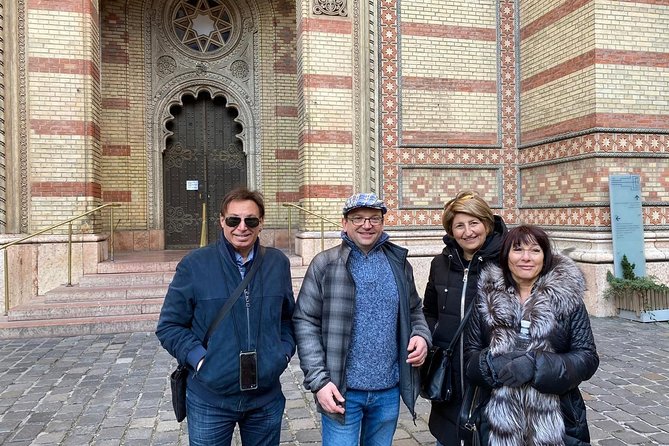
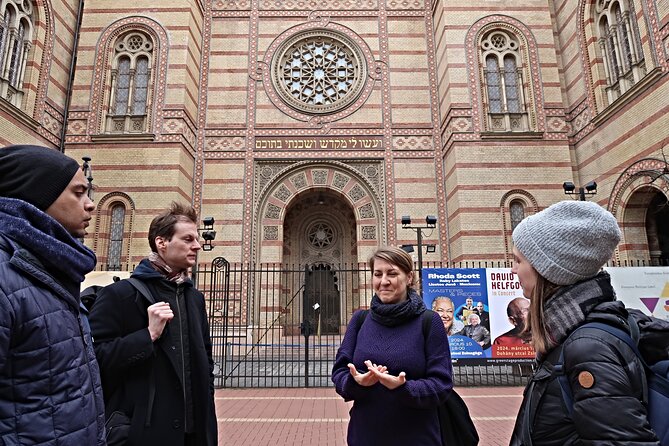
The meeting point is Kamara Café, at Dohány u. 1a or 1b, directly opposite the Great Synagogue. This is a practical place to begin because you are not searching for a guide inside a large station or public square. After booking, you receive the guide’s photograph, phone number, and biography, which should make the meeting easier.
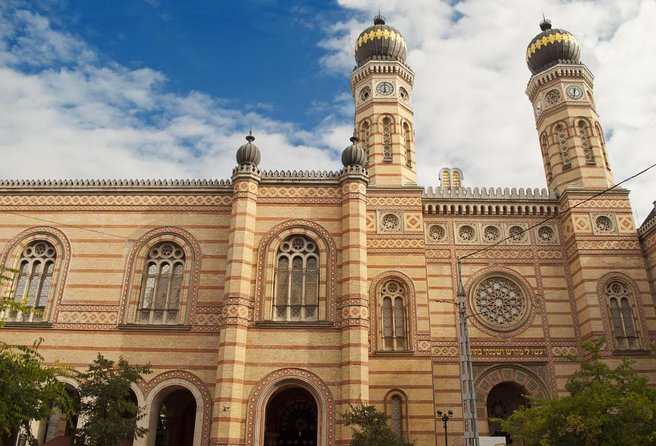
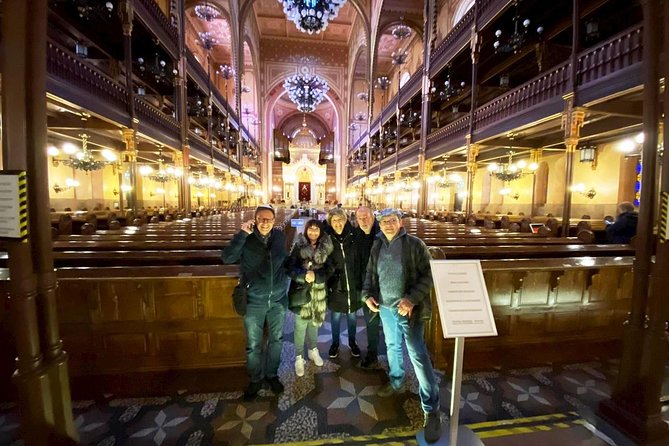
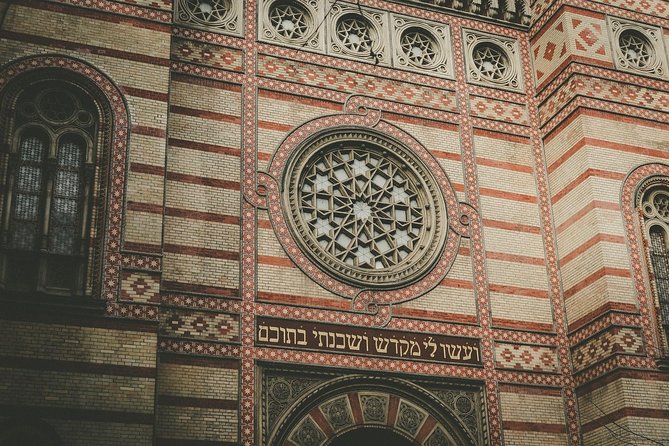
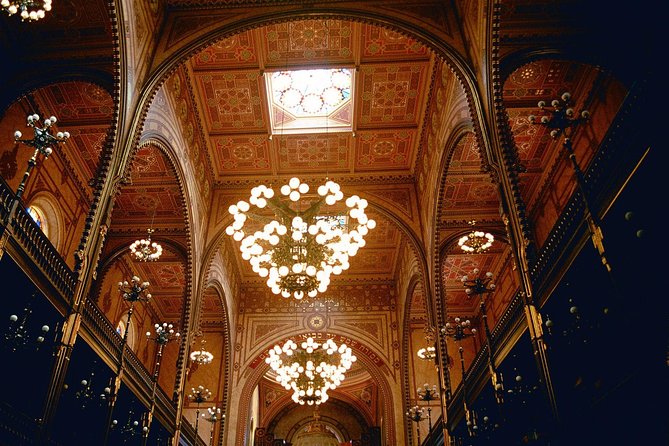
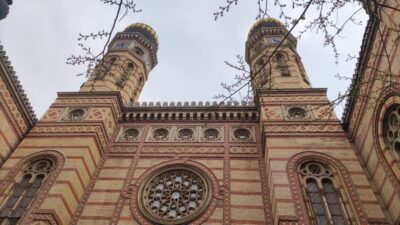
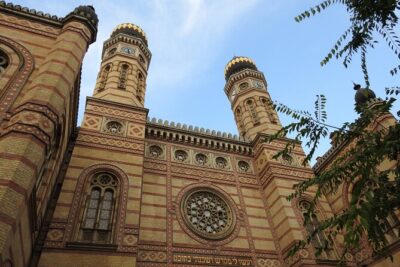
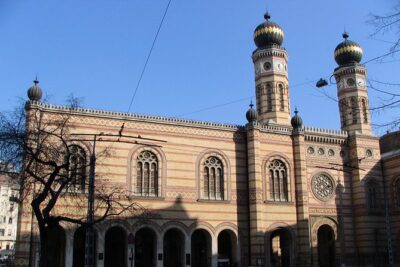
The opening stop is the Dohány Street Synagogue, also called the Great or Central Synagogue. It is described as the largest temple in Europe, and its Moorish Revival design makes an immediate impression. The building is grand, decorative, and very different from the plain image some visitors may have of a synagogue.
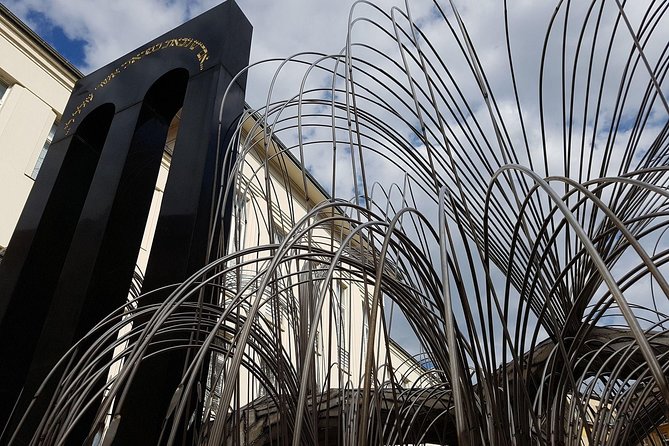
The planned time here is about 30 minutes, though your access depends on opening arrangements and the separate admission ticket. The route includes the synagogue complex, the Temple of Heroes, the Jewish Museum, and a Memorial Park with the Tree of Life.
I especially like this part of the tour because it puts architecture beside memory. The synagogue is not treated as a beautiful shell. The surrounding spaces help explain religious life, community identity, wartime suffering, and remembrance.
A Jewish Studies Scholar assists with this portion according to the tour description. That is valuable in a building where a quick look at the ceiling tells you very little. You want someone to explain what you are seeing and why the complex matters.
The drawback is clear: admission is not included in the $126.16 price. If you want to enter the Dohány Synagogue, budget for that additional cost. The visit may also be affected by opening hours, so you should not assume every interior space will be accessible on every departure.
Kazinczy Street and the former ghetto
From Dohány, you walk toward Kazinczy Street and the Ghetto Wall Memorial, erected in 2014. This section shifts the focus from one major landmark to the urban setting around it. The streets and courtyards here help you think about Jewish life as part of a neighborhood, not just as a collection of monuments.
You pass a luxurious mikve, or Jewish ritual bath, before reaching the Art Nouveau Orthodox synagogue on Kazinczy Street. The tour allows about 35 minutes for this stop, and the interior is visited when it is open to the public.
The distinction between the synagogues matters. Kazinczy represents Orthodox Jewish life, while the other buildings on the route reflect different religious affiliations. A guide can show you that Budapest’s Jewish community was never one single block with one single practice.
The word luxurious may sound surprising for a ritual bath, but it signals the care and expense invested in Jewish institutions. This is the kind of detail you could easily miss while walking alone. You might notice the façade, take a photograph, and move on without understanding the building’s purpose.
Again, admission is extra. You should dress respectfully, with shoulders and knees covered for visits to the Dohány and Kazinczy synagogues. The interior visit is conditional on public opening, so the exterior and neighborhood context remain important parts of the experience even if the doors are closed.
Rumbach Street and three Jewish traditions
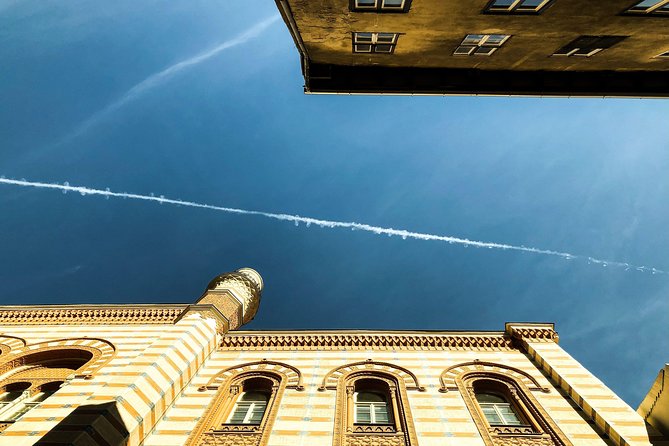
The Rumbach Street Synagogue gives the walk another change of tone. The stop lasts about 25 minutes and introduces the Status Quo Ante stream of Judaism. The synagogue’s inclusion prevents the tour from presenting Budapest’s Jewish past as a single tradition.
The three buildings offer a useful comparison:
- Dohány represents the grand central synagogue and a major community complex.
- Kazinczy brings in Orthodox Jewish identity and Art Nouveau design.
- Rumbach explains the Status Quo Ante tradition.
You visit the Rumbach interior when it is open to the public, but its ticket is not included. I would see this stop as one reason the tour is more useful than a basic neighborhood walk. You are not just counting synagogues. You are learning why several communities built separate institutions within the same part of the city.
The available feedback gives particular credit to guides who explain the buildings in relation to the surrounding streets. Agi, for example, is praised for explaining all three synagogues and the Jewish Museum while connecting them to the wider community. That kind of storytelling is the real value of a specialist walk.
Food can also enter the conversation. Orsolya was praised for linking Jewish culture with Budapest’s culinary traditions, including a recommendation for flódni, a layered Jewish Hungarian cake. It is a small detail, but a useful one. Food can make the subject feel connected to daily life rather than sealed inside museums.
More walking tours:
- Budapest: Buda Castle Walk with Saint Stephen’s Hall
★ 4.5 · 3,012 reviews - Big Bus Budapest Hop-On Hop-Off Bus and Walking Tour
★ 3.5 · 2,206 reviews - Budapest: Buda Castle District Walking Tour
★ 4.6 · 2,108 reviews - Budapest City Landmarks Walking Tour in 2 Hours
★ 5.0 · 2,048 reviews
The walk to the Danube
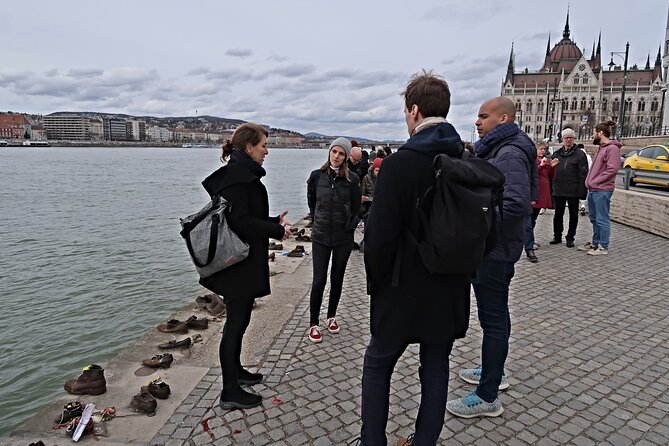
The final stop is the Shoes on the Danube Bank, a free memorial near the water. It was erected on April 16, 2005, to honor Jews murdered during World War II.
The memorial recalls how victims were ordered to remove their shoes before being shot at the edge of the river. Their bodies fell into the water and were carried away, leaving the shoes behind. The metal shoes along the bank make that crime personal and physical without requiring a large monument.
The tour gives about 20 minutes here. That is enough time to pay respects and listen, but this is not a light finale. I would not schedule a noisy lunch or a rushed attraction immediately afterward. Give yourself a few quiet minutes before moving on.
Ending here also provides a clear contrast with the first stop. At Dohány, you begin among active religious symbols, memorial spaces, and the physical presence of a major community. At the Danube, you face the results of organized murder and the absence left behind.
The route ends at the memorial, not back at the starting café. Plan your next step from the Danube side of the city. The end point is convenient for continuing along the river, but you should not expect a return ride or a hotel drop-off from the information provided.
Guide quality is the main reason to book
The strongest feature of this experience is the guide. The tour is designed around a historian, and the praise for Orsolya, Veronika, Agi, and Endre focuses on their ability to explain difficult material clearly and with care.
Orsolya is praised for combining Jewish history with the wider story of Hungary and for explaining how Jewish people lived in the area over the centuries. She also brought culinary knowledge into the walk, which can be helpful if you want a food recommendation alongside the historical context.
Veronika is praised for presenting the tragic history of Hungarian Jews in an enlightening way. The important point is that a guide does not have to be Jewish to handle the subject well, but the guide does need preparation, respect, and a clear understanding of the material.
Endre is described as attentive and helpful, with the ability to use many different spots around the Jewish Quarter to tell its story. Agi is praised for taking the community from past to present and for explaining the three synagogues and museum in detail.
Your guide may be someone else, so you cannot guarantee a particular person. Still, the experience is plainly built around individual expertise rather than a recorded script. In a subject this complex, that is a major advantage.
Is $126.16 good value?
At $126.16 per person, this is not a budget walking tour. The price covers a three-hour guided experience and a historian guide, but food, drinks, and entrance tickets for the three synagogues are excluded.
That changes the calculation. If you plan to enter all three synagogues, your final cost will be higher. If you only want to see the exteriors and hear the neighborhood story, you may feel the price is steep.
I think the value depends on how much help you want interpreting the history. A self-guided walk costs far less, but it will not easily explain the differences among Orthodox, Status Quo Ante, and other Jewish traditions. It will also be harder to connect the synagogues, ghetto memorial, museum, and Danube memorial into one clear story.
A small group improves the value. The tour is described as limited to six people, while the additional information gives a maximum of eight. Either way, it should be much more personal than a large coach excursion. With a group of this size, you have a better chance to ask about family history, religious customs, architecture, or Budapest’s Jewish food traditions.
I would book it if Jewish Budapest is a major reason for your visit and you want a serious guide. I would skip it if you mainly want quick photographs or if the extra synagogue fees push your budget too far.
Who will get the most from this tour?
This experience suits first-time visitors who want an organized introduction to Jewish Budapest. It also works well for anyone who has seen the major buildings but wants help understanding their religious and historical differences.
Families can benefit from the three-hour format, especially if children or teenagers respond better to stories than to a long museum visit. One family found that the time passed quickly, helped by Orsolya’s ability to bring the subject to life and add food connections.
The tour is also a good match for visitors interested in architecture. Dohány’s Moorish Revival design, Kazinczy’s Art Nouveau Orthodox building, and Rumbach’s distinct identity give you three different visual and cultural reference points.
You should think twice if you have difficulty walking for three hours or prefer a tour with extensive seated time. Most people can participate, and the route is near public transportation, but the experience is still a city walk with several stops.
Also consider your emotional bandwidth. The former ghetto, wartime persecution, and Shoes on the Danube memorial are essential parts of the story, but they are painful subjects. That seriousness is not a flaw, but you should know what kind of afternoon you are choosing.
Practical details that can save you trouble
The tour is offered in English and includes mobile ticketing. Confirmation arrives when you book, and the guide’s photo, phone number, and biography are provided afterward.
Wear clothing that covers your shoulders and knees, especially if you expect to enter the Dohány and Kazinczy synagogues. If you are booking in warm weather, this is worth planning before you leave your hotel.
The meeting point is Kamara Café opposite the Great Synagogue. The listed start time is 10:00 a.m., although morning and afternoon departures are described as available. Check your specific booking for the exact time.
Group discounts may be available, and pickup is offered, but the stated meeting point remains the café. Confirm the pickup arrangement if you are not planning to meet there.
Free cancellation is available up to 24 hours before the start time. If you cancel later, the amount paid is not refunded, and changes made inside that 24-hour window are not accepted. The cutoff uses Budapest local time.
Should you book this Jewish Budapest tour?
Book this walk if you want context, not just sightseeing. The three synagogues, Jewish Museum, former ghetto area, and Danube memorial form a strong route, but the guide is what turns separate places into a clear story.
The price is high, and admission tickets add to it. Still, a small group and a specialist guide can make the cost worthwhile for visitors who want to understand Budapest’s Jewish communities, religious divisions, cultural life, and wartime losses.
I would choose it for a first or second day in Budapest, dress respectfully, bring comfortable shoes, and leave room afterward for a quiet pause by the river. It is a focused, serious, and potentially moving introduction to one of the city’s most important parts.
FAQ
How long is the Jewish Budapest walking tour?
The tour lasts approximately three hours.
What language is the tour offered in?
The tour is offered in English.
Where does the tour begin?
It begins at Kamara Café, Dohány u. 1a or 1b, 1074 Budapest, directly opposite the Great Synagogue.
Where does the tour finish?
The tour ends at the Shoes on the Danube Bank memorial in Budapest, postal code 1054.
What time does the tour start?
The listed start time is 10:00 a.m. Morning and afternoon departure options are described, so check the departure selected at booking.
Are synagogue entrance tickets included?
No. Tickets for the Dohány Synagogue, Rumbach Street Synagogue, and Kazinczy Street Synagogue are not included.
Is food included?
No. Food and drinks are not included.
How large is the group?
The tour is described as a small group limited to six people, while the additional information lists a maximum of eight travelers. Confirm the group size when booking if this is important to you.
What should I wear to the synagogues?
Visitors to the Dohány and Kazinczy synagogues are asked to have their shoulders and knees covered.
Can I cancel for a full refund?
Yes. You can cancel at least 24 hours before the experience start time for a full refund. Cancellations or changes made less than 24 hours before the start time are not accepted for a refund.
Just added around Budapest
- Lake Balaton and Herend Guided Tour★ 4.7 · 3 reviews
- Audio visual multi-sensory chefs journey dinner experience★ 5.0 · 3 reviews
- Hollókő Ethnographic Village: Day Tour from Budapest★ 3.7 · 3 reviews
- Tapolca Cave Lake and Tihany/ Balaton private tour from Budapest★ 4.5 · 3 reviews
- Budapest Art Nouveau Walking Tour★ 5.0 · 3 reviews
- SzentEndre-SaintAndrew City Privately Shopping and Picturesque★ 4.5 · 3 reviews
- Budapest Drinks and Piano Show Cruise★ 4.5 · 3 reviews
- Horseshow on the Hungarian Puszta, private tour from Budapest with entry!★ 5.0 · 3 reviews
Jewish Quarter Tours, compared.
Budapest Jewish Heritage Memorial Walking Tour & Synagogue Entry
What we thought →
Jewish Heritage Guided Tour with Synagogue Ticket
What we thought →
Past and Present of Budapest Jewish District Tour
What we thought →
Budapest Dohany Synagogue & Hungarian Jewish Museum & free extras
What we thought →
Jewish History Guided Walking Tour with Historian
What we thought →Browse the lists this tour appears in