
Reviewed · JEWISH QUARTER TOURS
A Journey through Jewish Budapest – Private Walking Tour
Budapest’s Jewish quarter rewards slow walking. This three-hour private tour brings you to the Dohány Street Synagogue, the Kazinczy and Rumbach synagogues, the former Pest Ghetto, and the Shoes on the Danube Bank with a historian focused on Jewish life and Hungarian history. I like the private format, which lets you ask questions freely, and I like the option of hotel pickup by foot, tram, or metro. The main drawback is cost: at $396.52 for up to 10 people, it is good value for a full group but expensive for one or two people, especially since synagogue tickets are extra.
The tour has earned praise for guides such as Andrew, Oshi, and Kata, who brought strong Jewish Studies backgrounds and kept younger members engaged. You should also expect moderate walking, a respectful tone, and some flexibility rather than a rigid sightseeing checklist. The morning departure is offered at 10am year round, while afternoon tours operate in certain seasons.
In This Review
- Key points to know before booking
- Why a private Jewish history tour works well in Budapest
- Starting at the Dohány Street Synagogue
- Kazinczy Street and the former Jewish quarter
- Rumbach Street and the Status Quo Ante tradition
- From the ghetto streets to the Danube memorial
- Pickup, public transport, and the three-hour pace
- How flexible is the private itinerary?
- What the strongest guide feedback tells you
- Small drawbacks to weigh before booking
- Should you book this Jewish Budapest tour?
- FAQ
- How long is the private Jewish Budapest tour?
- What time does the tour begin?
- Is hotel pickup included?
- Where can I meet the guide if I do not use pickup?
- Are synagogue admission tickets included?
- What should I wear to the synagogues?
- Does the tour always include the synagogue interiors?
- Can I cancel for a refund?
Key points to know before booking
- Private attention from a historian: Your guide works only with your group, so the pace and questions can be adjusted to your interests.
- Four powerful Budapest stops: The route includes the Dohány Street Synagogue, Kazinczy Street Synagogue, Rumbach Street Synagogue, and the Shoes on the Danube Bank.
- Synagogue admission costs extra: Tickets for Dohány, Kazinczy, and Rumbach are not included in the tour price.
- Pickup is practical: Your guide can meet you at a central hotel or flat and use public transport when needed.
- The route ends by the Danube: You finish at the Shoes on the Danube Bank, a useful point for continuing around central Pest.
- Dress matters: Shoulders and knees should be covered at the Dohány and Kazinczy synagogues.
Why a private Jewish history tour works well in Budapest
Budapest’s Jewish story is not confined to one museum or one memorial. It appears in grand synagogues, working-class streets, surviving ritual spaces, ghetto traces, and quiet places of remembrance. A walking tour gives these sites a proper order, helping you connect religious life, architecture, neighborhood history, and the destruction of World War II.
I find the private setup especially useful here. Jewish history can raise difficult questions, and a private guide gives you room to pause rather than keep pace with a large group. If you want to ask about different Jewish movements, wartime events, synagogue design, or present-day Jewish life, you can shape the conversation as you go.
The tour is priced at $396.52 per group of up to 10 people. That works out to about $39.65 per person if you fill all 10 places. For a family or a group of friends, that is a reasonable rate for three hours with a dedicated historian and hotel pickup. For two people, the cost is much harder to justify unless this subject is a central part of your Budapest visit.
The guide’s background matters. Oshi was described as a Jewish Studies graduate, while Andrew received praise for making the material engaging for two teenagers and a pre-teen. Kata, also referred to as Kati in the feedback, was praised for explaining the Jewish quarter clearly to a group of 10. These details suggest the tour is not just a route between buildings. The guide’s teaching skill is a major part of what you are paying for.
More Jewish Quarter walks:
- Budapest Jewish Heritage Memorial Walking Tour & Synagogue Entry
★ 5.0 · 568 reviews - Budapest: Jewish Heritage Guided Tour with Synagogue Ticket
★ 4.8 · 533 reviews - Jewish Quarter of Budapest Walking Tour
★ 4.7 · 369 reviews
Starting at the Dohány Street Synagogue
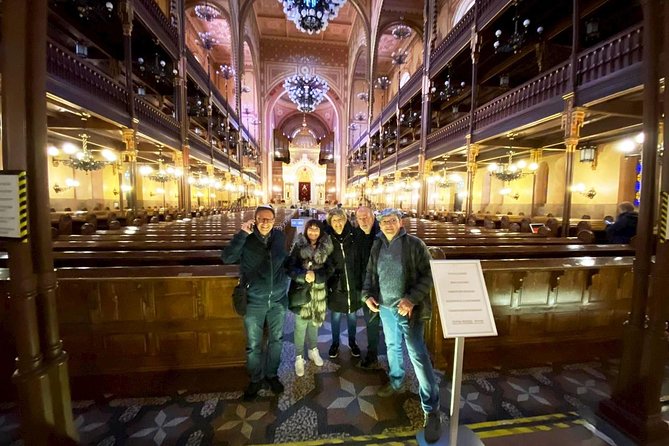
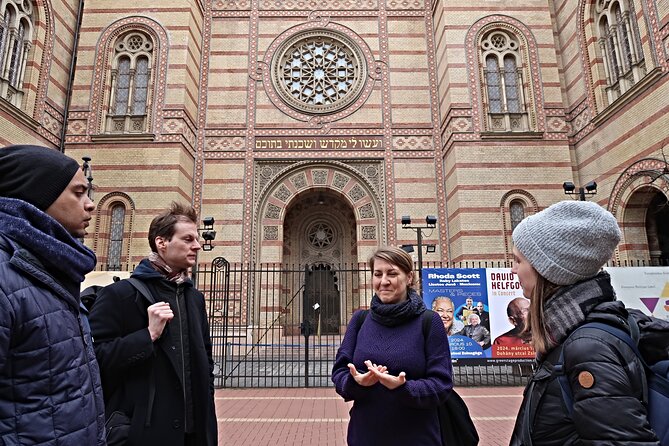
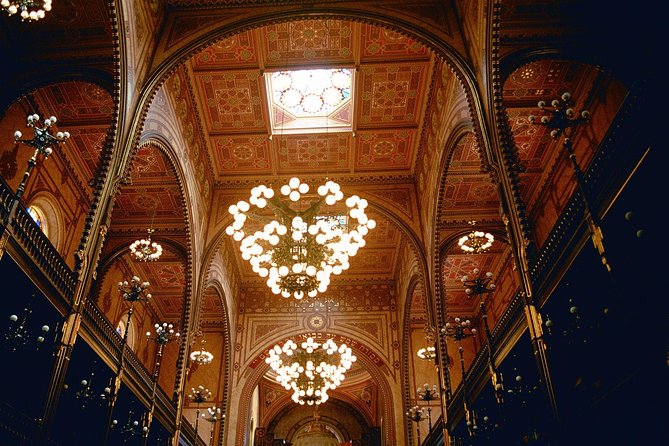
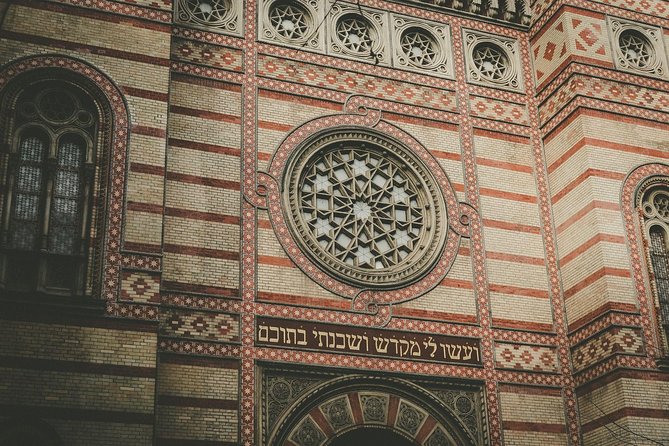
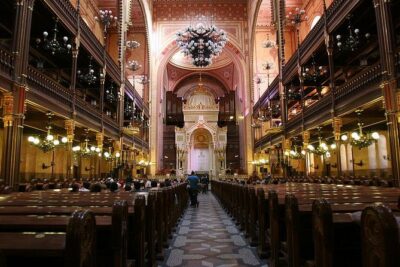
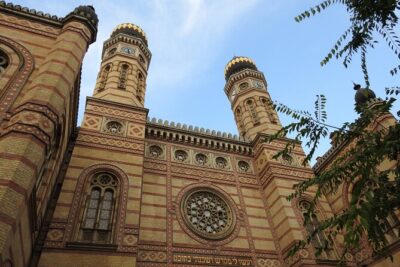
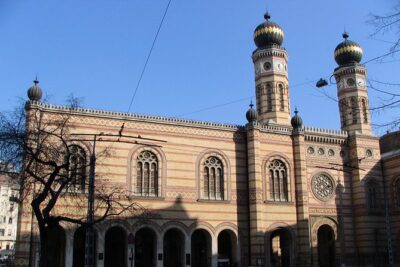
The route begins at the Dohány Street Synagogue, also called the Great or Central Synagogue. It is described as the largest temple in Europe and the second-largest synagogue in the world, so the first impression is architectural and grand.
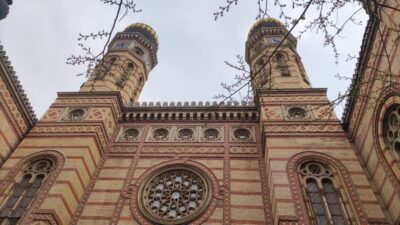
The building’s Moorish Revival design gives it a look unlike most of Budapest’s churches and civic buildings. Your guide helps place the synagogue within the Jewish community of Pest rather than treating it as a striking facade alone.
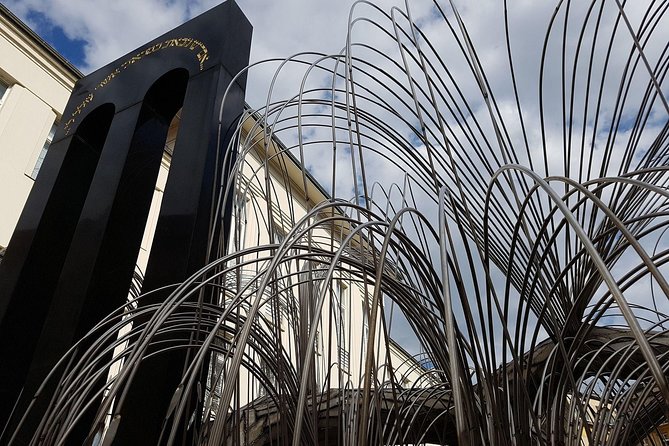
The stop lasts about 30 minutes. Within the complex, you can see the Temple of Heroes, the Jewish Museum, and a memorial park. These parts broaden the visit beyond the main prayer hall, linking religious practice with community memory and the losses of the 20th century.
Admission to the Dohány Synagogue is not included. That is important when comparing the headline tour price with the final cost. The description says the synagogue is visited with the assistance of a Jewish Studies Scholar, but your assigned guide may vary, so confirm the precise entry arrangement when booking.
Plan your clothing before you leave your accommodation. Visitors are asked to cover their shoulders and knees at the Dohány and Kazinczy synagogues. Comfortable shoes matter too, since this is a walking tour with several stops and some public transport.
Kazinczy Street and the former Jewish quarter
From Dohány, the tour continues through District VII, an area that was historically home to Jewish working-class communities. This is where the subject becomes more immediate. You are not only looking at major religious buildings. You are walking through streets connected to ordinary work, worship, family life, and the wartime ghetto.
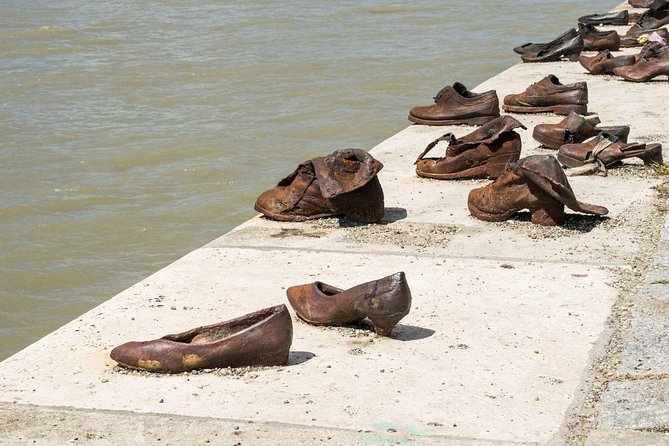
The Kazinczy Street stop lasts about 35 minutes. The route passes the Ghetto Wall Memorial, erected in 2014, and a luxurious mikve, or Jewish ritual bath. You then see the exterior of the Art Nouveau Orthodox synagogue on Kazinczy Street, with an interior visit when it is open to the public.
That opening qualification matters. Synagogue access is not guaranteed at every departure, and Kazinczy admission is not included. If seeing the interior is a priority, ask about opening conditions before you book or shortly before the tour.
The mikve is an especially useful detail because it shows how Jewish practice shaped the neighborhood’s physical spaces. A synagogue is easy to identify. A ritual bath is less obvious, and a guide can explain why it mattered and how it fit into community life.
The former ghetto area also requires a thoughtful pace. Some people will want a clear timeline of the war years. Others may need time to take in the memorials quietly. A private tour lets you signal what you need, which is harder to do in a large party.
Rumbach Street and the Status Quo Ante tradition
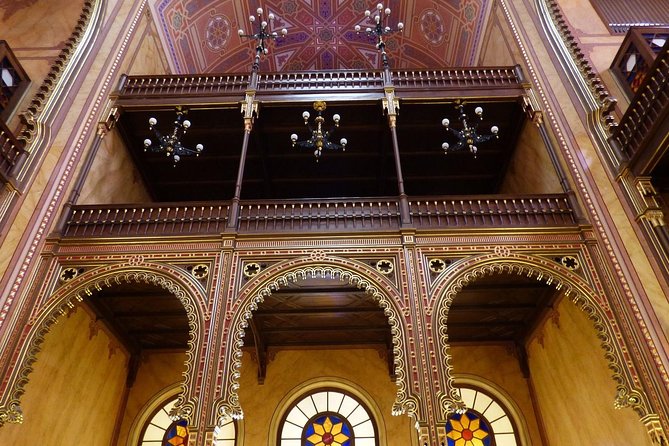
Rumbach Street Synagogue provides a different architectural and religious chapter. Here, the focus is the Status Quo Ante stream of Judaism, a Hungarian Jewish tradition that does not fit neatly into the simple Orthodox versus Reform division many visitors may already know.
The stop lasts about 25 minutes. Your guide discusses the history of the community while you examine the synagogue’s impressive facade. The interior is visited when open to the public, and admission is extra.
This stop is valuable because it prevents the Jewish quarter from becoming a one-building story. The Dohány, Kazinczy, and Rumbach synagogues are close together, yet they represent different communities and approaches to religious life. With a guide, the short walk between them becomes part of the lesson.
Do not expect every interior to be available automatically. The tour description uses conditional wording for both Kazinczy and Rumbach. If your interest is mainly architectural interiors, check access before arrival and keep your expectations flexible.
More walking tours:
- Budapest: Buda Castle Walk with Saint Stephen’s Hall
★ 4.5 · 3,012 reviews - Big Bus Budapest Hop-On Hop-Off Bus and Walking Tour
★ 3.5 · 2,206 reviews - Budapest: Buda Castle District Walking Tour
★ 4.6 · 2,108 reviews - Budapest City Landmarks Walking Tour in 2 Hours
★ 5.0 · 2,048 reviews
From the ghetto streets to the Danube memorial
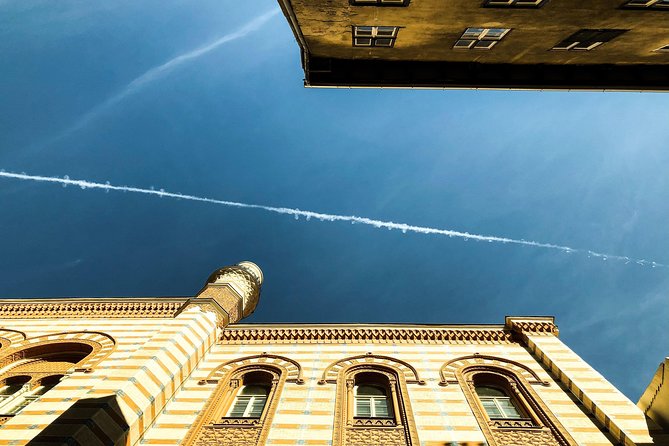
The final listed stop is the Shoes on the Danube Bank. The tour concludes here after approximately 20 minutes at the memorial. It honors Jewish people murdered during World War II by Fascist militia, who were ordered to remove their shoes before being shot at the river’s edge.
The shoes represent what was left behind. That simple image makes the memorial direct and difficult to forget. You may find this is the quietest part of the tour, even though it is outdoors and close to one of Budapest’s busiest central areas.
The ending also has practical value. You finish at the Danube in central Pest, rather than returning to the starting point. From there, you can continue exploring on your own. The end point is listed as Budapest 1054, while the meeting point is near Dohány Street at Cafe Synago Kavehaz, formerly Cafe Zenit.
The route description also refers to the former Pest Ghetto and medieval synagogue ruins on Castle Hill, as well as the classical Óbuda Synagogue. The detailed four-stop schedule focuses on Dohány, Kazinczy, Rumbach, and the Shoes on the Danube Bank. If Óbuda, Castle Hill, or the medieval remains are essential to your plans, ask the provider how they fit into the three-hour route. They may not all be included in the same walking sequence.
Pickup, public transport, and the three-hour pace
Pickup is offered at a central hotel or flat. Your guide may lead you by foot, metro, or tram, and tickets are provided if you do not already have a pass. This saves you from figuring out Budapest’s transport system at the start of the day.
You should send your accommodation address when requested and watch for the guide’s phone number and photo. If you do not provide an address, or prefer to meet in the center, go to Cafe Synago Kavehaz, formerly Cafe Zenit, at Dohány u. 1/A about 10 minutes before the start.
The tour lasts about three hours. That is enough time for a useful introduction, but not enough for long visits inside every building, especially if all three synagogue interiors are open and you want to linger. The route works best when you see it as a guided overview with selected stops, not as a full museum day.
Moderate walking is required. Wear shoes that can handle city streets, and choose clothing suitable for synagogue entry. Food and drinks are not included, though Andrew received praise for recommending a Jewish restaurant after the tour. That sort of suggestion can be useful if you want to continue the subject over lunch, but the meal itself is outside the tour.
How flexible is the private itinerary?
The private format gives the itinerary some room to respond to your interests. The guide’s undivided attention means you can spend longer on religious traditions, architecture, family history, wartime remembrance, or the neighborhood itself.
Flexibility does not mean every stop can be added without limit. Three hours, walking time, synagogue opening hours, and travel between districts all place limits on the route. If your group has a specific focus, explain it when booking so the guide can shape the time sensibly.
This is also a good choice for families with older children and teenagers. Andrew was praised for keeping two teenage and pre-teen boys interested during the walk. That points to a guide-led experience with enough storytelling and variety to avoid becoming a long sequence of dates and names.
For a group of 10, the private arrangement is particularly appealing. You avoid being folded into a large party, and the per-person price becomes much more reasonable. For a small group, consider how much personal attention and subject expertise matter to you before deciding.
What the strongest guide feedback tells you
The most consistent praise centers on the guides’ command of Jewish culture, religion, heritage, and Hungarian history. Oshi’s Jewish Studies training was singled out, while Andrew was praised for both his passion and his ability to explain the material to younger people.
Kata received especially strong praise for helping a group understand the history of the Jewish quarter. That is a useful distinction. Knowing facts is one thing. Making a complex neighborhood understandable as you walk through it is another.
The tour has a rating of 5 from seven reviews, a small sample rather than proof of every future experience. Guide assignment can affect the tone and depth of a private tour, so you should treat the named guides as examples of the standard described, not a promise that one particular person will lead your group.
Small drawbacks to weigh before booking
The largest issue is the extra cost of synagogue tickets. Dohány, Rumbach, and Kazinczy admissions are all listed separately, so budget for those on top of the $396.52 group price.
The second issue is access. Kazinczy and Rumbach interiors are visited when open to the public, not as a guaranteed part of every departure. If the buildings are your main reason for booking, confirm the current schedule.
The route also has a serious subject. The ghetto and Shoes on the Danube Bank are places of persecution and murder. This is not a light sightseeing walk, though the private format lets your group set a comfortable pace.
Finally, the exact route may need clarification. The overview mentions Óbuda Synagogue and Castle Hill remains, while the detailed schedule ends with four stops in Pest. Ask what your specific three-hour departure includes.
Should you book this Jewish Budapest tour?
Book it if you want a focused introduction to Budapest’s Jewish heritage and value a private historian over a cheaper group walk. It is especially good for families, groups of friends, and anyone who wants to ask detailed questions without holding up strangers.
The price makes the most sense for six to 10 people. A full group pays less per person for a private guide, hotel pickup, and three hours of explanation. Solo visitors and couples may prefer a lower-cost shared tour unless this subject is a top priority.
Before paying, confirm synagogue opening hours, the expected ticket costs, and whether Óbuda or Castle Hill is part of your route. If those details suit your plans, this is a thoughtful, well-focused way to connect Budapest’s buildings with the people and communities behind them. Free cancellation is available up to 24 hours before the start time, which gives you some room to adjust plans.
FAQ
How long is the private Jewish Budapest tour?
The tour lasts approximately three hours.
What time does the tour begin?
Morning departures begin at 10am year round. Afternoon departures are available during certain seasons, with the departure time selected when booking.
Is hotel pickup included?
Yes. The guide can meet you at a central hotel or flat. The group may travel by foot, metro, or tram, and tickets are provided if you do not have a pass.
Where can I meet the guide if I do not use pickup?
Meet about 10 minutes before the start at Cafe Synago Kavehaz, formerly Cafe Zenit, at Dohány u. 1/A in Budapest.
Are synagogue admission tickets included?
No. Admission to the Dohány Street, Rumbach Street, and Kazinczy Street synagogues is not included.
What should I wear to the synagogues?
Visitors are asked to cover their shoulders and knees at the Dohány and Kazinczy synagogues. Comfortable shoes and clothing are recommended because moderate walking is required.
Does the tour always include the synagogue interiors?
The Dohány complex is part of the route, while the interiors of the Kazinczy and Rumbach synagogues are visited when open to the public. Confirm current access if interior visits are essential.
Can I cancel for a refund?
Yes. You can cancel at least 24 hours before the experience start time for a full refund. Cancellations or changes made less than 24 hours before the start are not refunded or accepted.
Just added around Budapest
- Lake Balaton and Herend Guided Tour★ 4.7 · 3 reviews
- Audio visual multi-sensory chefs journey dinner experience★ 5.0 · 3 reviews
- Hollókő Ethnographic Village: Day Tour from Budapest★ 3.7 · 3 reviews
- Tapolca Cave Lake and Tihany/ Balaton private tour from Budapest★ 4.5 · 3 reviews
- Budapest Art Nouveau Walking Tour★ 5.0 · 3 reviews
- SzentEndre-SaintAndrew City Privately Shopping and Picturesque★ 4.5 · 3 reviews
- Budapest Drinks and Piano Show Cruise★ 4.5 · 3 reviews
- Horseshow on the Hungarian Puszta, private tour from Budapest with entry!★ 5.0 · 3 reviews
Jewish Quarter Tours, compared.
Budapest Jewish Heritage Memorial Walking Tour & Synagogue Entry
What we thought →
Jewish Heritage Guided Tour with Synagogue Ticket
What we thought →
Past and Present of Budapest Jewish District Tour
What we thought →
Budapest Dohany Synagogue & Hungarian Jewish Museum & free extras
What we thought →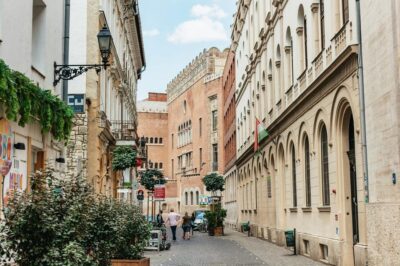
Jewish History Guided Walking Tour with Historian
What we thought →Browse the lists this tour appears in