
Reviewed · WALKING TOURS
Budapest: 3-Hour Walking Tour of Pest with a Historian
Budapest rewards a closer look. I like this small-group Pest walk because it joins the big sights with the stories behind them, and I especially like that a historian guide can explain both Hungary’s past and daily life today. The included visit to St. Stephen’s Basilica is another real plus. The main consideration is pace: three hours covers a lot of ground, so you should expect steady walking rather than long, leisurely stops.
You meet in central Pest, near Deák Ferenc tér, and move between grand squares, riverside landmarks, historic streets, and the Millennium Underground. Guides such as Judit, Greg, Barbara, Monica, Andrea, and Gergely Molnár have been praised for clear storytelling and thoughtful answers. The small group, limited to 10 people, makes it easier to ask about politics, food, history, or anything else that catches your attention.
In This Review
- Key Points at a Glance
- Why Pest Makes a Good First Introduction
- Meeting at Erzsébet Square
- The Danube Promenade and Gresham Palace
- Zrínyi Street and St. Stephen’s Basilica
- Andrássy Avenue and the State Opera
- Riding the Millennium Underground
- Heroes’ Square and a Thousand Years of Hungary
- What the Guides Add
- Pace, Group Size, and Physical Demands
- Is $57 a Fair Price?
- Who Will Get the Most From This Walk?
- Booking Details That Matter
- Should You Book the Pest Historian Tour?
- FAQ
- How long is the Budapest Pest walking tour?
- Where does the tour meet?
- How can I reach the meeting point?
- Is admission to St. Stephen’s Basilica included?
- Are subway tickets included?
- What language is the tour conducted in?
Key Points at a Glance
- St. Stephen’s Basilica inside: Your ticket is included, so you do not just admire Budapest’s largest church from the square.
- A useful history lesson: The tour connects Hungary’s medieval past, the Austro-Hungarian period, World War II, and the Communist era.
- Andrássy Avenue and the M1 metro: You walk along a UNESCO World Heritage site and ride Europe’s oldest continental underground railway.
- Heroes’ Square in context: The monuments become easier to understand when your guide explains the figures and events behind them.
- A compact central route: The Danube Promenade, Gresham Palace, the Academy of Sciences, the Opera, and Zrínyi Street fit into one introduction to Pest.
- Personal guidance: Past guides have adjusted conversations to individual interests, offered restaurant suggestions, and even shared local sweets.
Why Pest Makes a Good First Introduction
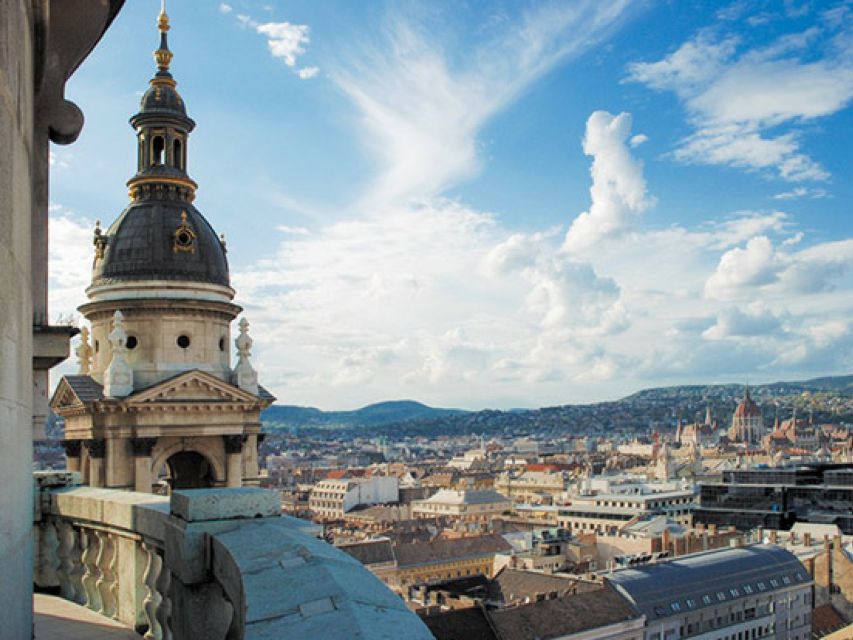
Budapest is split by the Danube. Buda rises on the western side, with hills, the Castle District, and a quieter feel. Pest spreads across the flatter eastern side, where you find much of the city’s civic life, shopping, grand nineteenth-century buildings, cafés, offices, and major avenues.
This tour focuses on Pest, which makes sense if you are new to the city. In three hours, you get a working map of central Budapest rather than a single monument in isolation. Your guide can explain why Buda and Pest developed different characters, how the city changed under different rulers, and what life in Budapest feels like now.
I especially value the chance to ask questions. Several guides have been praised for discussing modern Hungary alongside older events. That matters because Hungarian history is not a neat, one-page story. The country has passed through medieval kingdoms, Ottoman rule, Habsburg power, the Austro-Hungarian Empire, war, dictatorship, and democratic change.
The format also suits a first day in Budapest. You can use the walk to decide which places deserve a return visit. You might leave with a better sense of where to eat, which streets to explore at night, or how Pest relates to the Buda side.
More walking tours:
- Budapest: Buda Castle Walk with Saint Stephen’s Hall
★ 4.5 · 3,012 reviews - Big Bus Budapest Hop-On Hop-Off Bus and Walking Tour
★ 3.5 · 2,206 reviews - Budapest: Buda Castle District Walking Tour
★ 4.6 · 2,108 reviews
Meeting at Erzsébet Square
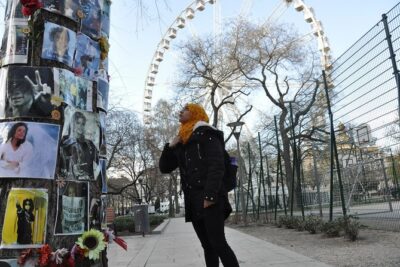
The starting point is in front of the Kempinski Hotel Corvinus Budapest, at Erzsébet tér 7. The guide faces the Ferris wheel in Erzsébet Square, a useful landmark in a busy part of central Budapest.
This is a practical meeting point because Deák Ferenc tér is one of the city’s main transport hubs. You can reach it on the M1, M2, or M3 metro lines, as well as several buses and trams. Give yourself enough time to find the Ferris wheel and the hotel entrance, especially if you are arriving during a busy part of the day.
The location places you near several central sights from the start. It also means you are not spending the first part of the tour on a long transfer from an outer district. Once the group gathers, the guide can begin putting Pest into perspective.
The Danube Promenade and Gresham Palace
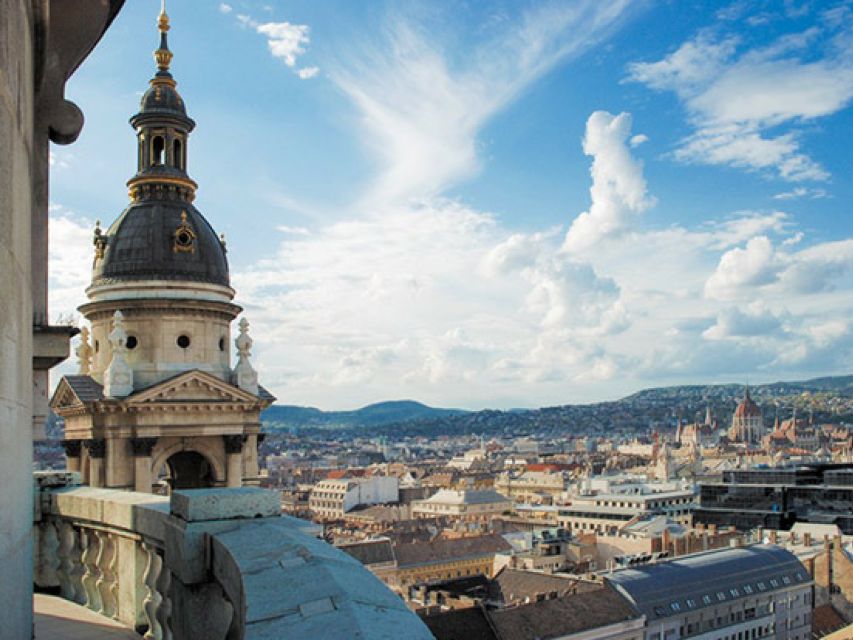
The route includes the Danube Promenade, one of the best places in Budapest to understand the city’s scale. Across the river, Buda’s hills provide a sharp contrast to Pest’s flatter streets. Even if the stop is brief, the riverfront gives you an immediate orientation point.
Your guide can help you read the view rather than simply photograph it. The Danube is not just a scenic strip. It explains the shape of Budapest, the relationship between the two sides, and the city’s importance as a Central European capital.
From there, the route takes in Gresham Palace, an Art Nouveau landmark near the river. Its decorative details reward a slow glance upward, particularly if you like architecture. The building helps show how wealthy and ambitious Budapest was during its late nineteenth and early twentieth-century growth.
The nearby Hungarian Academy of Sciences adds another piece to the picture. Together, the riverfront buildings create a useful lesson in civic Budapest, where finance, culture, scholarship, and government once gathered around monumental public spaces.
Zrínyi Street and St. Stephen’s Basilica
Zrínyi Street brings the tour into a more intimate part of central Pest. Its cobblestones and views toward the basilica make it a pleasant link between the riverfront and the city’s main church.
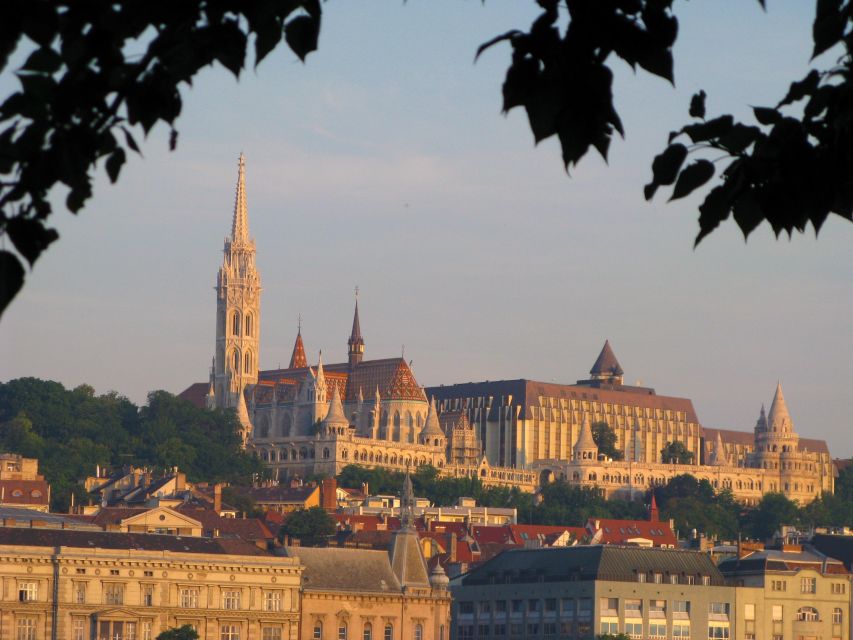
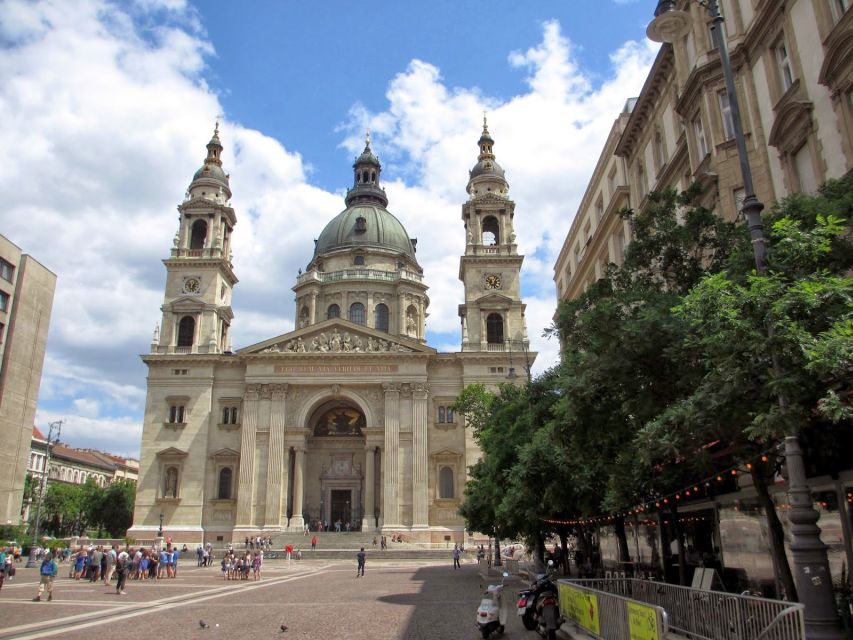
The visit to St. Stephen’s Basilica is one of the clearest practical advantages of this experience. The entrance ticket is included, and you go inside Budapest’s largest church rather than stopping outside for a quick photograph.
The basilica is named for Stephen I, Hungary’s first king, and its name points to the strong connection between Hungarian statehood and Catholic tradition. Your guide can place the building within the wider story of the country, instead of treating it as a stand-alone religious site.
Allow yourself time to look around inside. A guided visit is most useful here when you want help understanding what you are seeing, not just a list of architectural terms. The basilica is also a popular sight, so the group setting can help you focus on the main features without trying to arrange the visit yourself.
One limitation is that a three-hour walk cannot offer an extended architectural study. If you are especially interested in church interiors, you may want to return later for a quieter look.
A few more trips worth weighing up before you book
- 3-Hour Orientation Walking Tour of Buda and Pest
★ 4.8 · 1,834 reviews - Budapest: 3-Hour Grand City Tour and Castle Walk
★ 4.3 · 1,437 reviews - Budapest: 3-Hour Live Guided Sightseeing Tour
★ 4.4 · 1,041 reviews - 3 Hours Budapest Segway Grand City Tour Buda, Margaret and Pest
★ 5.0 · 255 reviews
Andrássy Avenue and the State Opera
Andrássy Avenue is one of Budapest’s defining streets. It is broad, formal, and lined with buildings that reflect the city’s nineteenth-century ambitions. The avenue has UNESCO World Heritage status, which tells you something about its architectural and historical importance, but the guide’s explanation is what makes the walk useful.
You can hear how the avenue fits into Budapest’s growth and how it connects the inner city with Heroes’ Square. The route also includes the Hungarian State Opera, another major cultural landmark. Even without attending a performance, seeing the Opera in its urban setting helps you understand the role of music and public culture in Budapest.
This section is a good example of the tour’s balance. You are not only ticking off famous buildings. You are moving through a planned avenue and hearing why it was created, what it represented, and how it fits into the city today.
The drawback is simple: Andrássy Avenue is long, and the tour includes several other areas. You will see and discuss key sections, but you should not expect to cover every architectural detail along the full avenue.
Riding the Millennium Underground
The Millennium Underground is one of the tour’s most distinctive features. The ride uses the oldest underground railway on the European continent, and subway tickets are included.
This is more than a convenient way to avoid part of the walk. The railway forms part of Budapest’s story of modernization. Its presence under Andrássy Avenue reflects the city’s effort to build a modern capital with fast links between the center and the outer end of the grand avenue.
For you, the ride also gives the three-hour route a welcome change of rhythm. Most of the experience is on foot, but a short metro journey adds local transport to the day. It is a small detail that helps you understand how Budapest works beyond the postcard views.
Because the group uses public transport, you should stay close to the guide and follow instructions at stations. The subway portion is included, but the tour is still primarily a walking experience, not a sightseeing ride.
Heroes’ Square and a Thousand Years of Hungary
Heroes’ Square provides the broadest history lesson on the route. Its statues represent important figures from Hungarian history, and the square is designed to make the country’s past feel monumental.
The tour uses the square to cover about 1,000 years of Hungarian history. That is a lot to fit into one visit, but a strong guide can give you a framework for understanding the names and symbols. Past participants particularly valued guides who began with a short overview of Hungarian history before explaining the sights. That approach can make the rest of the walk easier to follow.
Andrea was praised for balancing major landmarks with less obvious details, while Gergely Molnár was appreciated for connecting historic events with present-day life. Those qualities matter at Heroes’ Square because the statues can otherwise become a blur of unfamiliar rulers and national figures.
You should expect a concise, well-organized explanation rather than a university lecture. If a particular period interests you, ask about it. The small group makes that possible, and the guides are specifically described as open to questions on Hungarian history, politics, and culture.
What the Guides Add
The guide is the heart of this experience. The route itself is good, but you can see many of these places without assistance. The added value comes from a person who can connect the buildings, streets, and historical periods.
Judit has received repeated praise for her personal approach, clear knowledge, and ability to discuss both history and current affairs. One visitor described tasting two popular Hungarian sweets during a private-feeling walk with her. That is not a guaranteed part of every tour, but it shows how the experience can become more conversational when the group is small.
Monica has been praised for energetic storytelling and for adding color through memories of growing up in Hungary. Barbara combined historical information with suggestions about places to eat and things to see, which can be especially useful on a first visit.
Greg has guided several guests through Pest and has been valued for his friendly manner, strong explanations, and ability to make complex history easy to follow. Noemi has also been singled out for an excellent tour, while Andrea was praised for bringing the streets to life without losing the larger historical picture.
The specific guide you receive may vary. That is worth keeping in mind if you have read about a particular person. Still, the repeated praise points to a consistent strength: guides are not simply reciting dates. They answer questions, share local perspective, and adjust the conversation to the group.
Pace, Group Size, and Physical Demands
The tour lasts three hours and is limited to 10 participants. That is a helpful middle ground. You get more personal contact than on a large coach tour, but you are not paying for a fully private experience.
The pace has generally been described as comfortable and well judged. One guide was praised for covering the intended sights without making the group feel rushed. Another tour happened with only one participant, which allowed the guide to change the meeting point and shape the conversation more freely.
You should still prepare for steady walking across central streets, squares, and cobblestones, plus the use of public transport. The exact amount of standing at each stop is not specified, so plan for an active morning or afternoon rather than a seated sightseeing experience.
Weather is another consideration. The tour runs outdoors for much of its duration. A poor-weather day does not erase the value of the stories, but comfortable shoes and suitable clothing will make the experience better.
Is $57 a Fair Price?
At $57 per person, the tour is not Budapest’s cheapest walking option. The price includes a historian guide, the entrance ticket to St. Stephen’s Basilica, subway tickets, and three hours of guided walking.
The value depends on how much context you want. If you are happy to read about the sights on your own, you can see many of them without paying for a tour. If you want a clear introduction to Hungary’s complicated past, the cost is easier to justify.
The small group is important here. With no more than 10 people, you have a realistic chance to ask questions and hear the guide clearly. The included basilica admission and metro tickets also remove two minor extra costs, though the main value remains the guide’s interpretation.
For a first day in Budapest, I consider the price reasonable if you want orientation and historical context in one compact experience. It is less suitable if your priority is entering many buildings, spending long periods at each sight, or moving at your own pace.
Who Will Get the Most From This Walk?
I would recommend this tour to you if you want to understand Budapest rather than simply photograph it. It suits first-time visitors, history fans, people with limited time, and anyone who enjoys asking questions while walking.
It is especially useful if Hungary’s twentieth-century story feels unfamiliar. The guides can connect the Austro-Hungarian Empire, World War II, the Communist period, and modern Hungary in a way that makes the city easier to read.
You may also like it if you are deciding how to spend the rest of your visit. Advice about food and additional sights can help you plan later days.
I would be more cautious if you dislike walking, want a slow architectural tour, or prefer a fixed script with no discussion of politics or present-day life. The guides welcome questions and may enter broad topics, which is a strength for some people and less appealing for others.
Booking Details That Matter
The tour is conducted in English with a live guide. The meeting point is at the Kempinski Hotel Corvinus Budapest, facing the Ferris wheel in Erzsébet Square.
You can cancel up to 24 hours before the activity for a full refund, and you can reserve now while paying later. Starting times vary, so check availability for your date.
The high overall rating of 4.9 from 81 ratings supports the tour’s strongest qualities: clear explanations, engaging guides, a manageable pace, and a personal feel. I would still treat the exact route and guide style as slightly flexible, since a small group may shape the conversation and guides can differ in personality.
Should You Book the Pest Historian Tour?
Book it if you want a smart, efficient introduction to central Budapest with a guide who can explain what the monuments mean. The combination of St. Stephen’s Basilica, the Danube Promenade, Andrássy Avenue, the Opera, the Millennium Underground, and Heroes’ Square gives you a strong first look at Pest.
The best reason to choose it is the human element. Guides such as Judit, Greg, Barbara, Monica, Andrea, and Gergely Molnár have been praised for making history understandable and for connecting it with life in Hungary today.
Skip it if you want a private schedule, very little walking, or long visits at only one or two sights. For most first-time visitors who have three hours to spare, $57 is a fair price for the orientation, included admissions, and chance to ask a local historian what makes Budapest tick.
FAQ
How long is the Budapest Pest walking tour?
The tour lasts three hours.
Where does the tour meet?
The meeting point is in front of the Kempinski Hotel Corvinus Budapest at Erzsébet tér 7, facing the Ferris wheel in Erzsébet Square.
How can I reach the meeting point?
You can reach Deák Ferenc tér by the M1, M2, or M3 subway lines, along with several buses and trams.
Is admission to St. Stephen’s Basilica included?
Yes. The entrance ticket to St. Stephen’s Basilica is included.
Are subway tickets included?
Yes. Subway ticket or tickets are included, allowing the group to ride the Millennium Underground.
What language is the tour conducted in?
The tour is conducted in English with a live guide.
Just added around Budapest
- Lake Balaton and Herend Guided Tour★ 4.7 · 3 reviews
- Audio visual multi-sensory chefs journey dinner experience★ 5.0 · 3 reviews
- Hollókő Ethnographic Village: Day Tour from Budapest★ 3.7 · 3 reviews
- Tapolca Cave Lake and Tihany/ Balaton private tour from Budapest★ 4.5 · 3 reviews
- Budapest Art Nouveau Walking Tour★ 5.0 · 3 reviews
- SzentEndre-SaintAndrew City Privately Shopping and Picturesque★ 4.5 · 3 reviews
- Budapest Drinks and Piano Show Cruise★ 4.5 · 3 reviews
- Horseshow on the Hungarian Puszta, private tour from Budapest with entry!★ 5.0 · 3 reviews
Walking Tours, compared.

Big Bus Budapest Hop-On Hop-Off Bus and Walking Tour
What we thought →
Budapest City Landmarks Walking Tour in 2 Hours
What we thought →
3-Hour Orientation Walking Tour of Buda and Pest
What we thought →
Budapest Historical Sightseeing – Free Walking Tour
What we thought →
Budapest All in One Small Group Walking Tour with Strudel Stop
What we thought →Browse the lists this tour appears in