
Reviewed · CAKE & COFFEE HOUSE TOURS
Hungarian Strudel Making Class: Stretch & Fill Two Ways
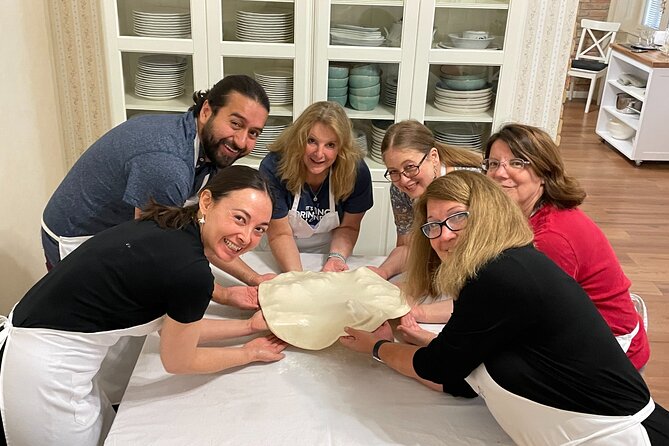
Strudel dough is thinner than your patience. This intimate Budapest cooking class turns that challenge into a hands-on lesson in Hungarian food, with Marti guiding you through a family recipe from mixing and stretching to filling, baking, and eating. You prepare two kinds of strudel, taste Hungarian snacks while the pastry bakes, and learn why this dish matters at the local table.
I especially like the chance to choose your own two fillings and the personal attention that comes with a group capped at 10 people. The warm home kitchen, stories about baking with Marti’s mother, Hungarian wine, and simple local bites give the class more character than a standard demonstration. The main consideration is the price, $95.34 per person, and the requirement for at least four participants, so you should check the booking terms before building your day around it.
In This Review
- Key points at a glance
- Why strudel matters in Hungary
- Arriving at Király u. 77
- A warm kitchen instead of a staged food show
- The opening lesson: dough, habits, and local ingredients
- Choosing two fillings from four Hungarian favorites
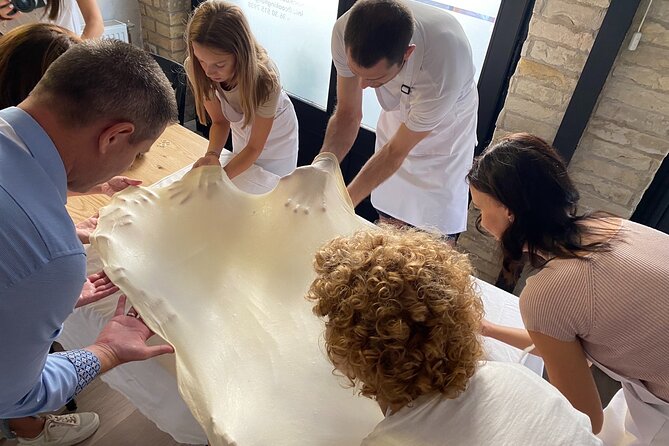
- Stretching the dough is the real event
- Baking, tasting, and the generous final meal
- What makes Marti’s teaching effective
- Morning or afternoon: choosing the right time
- Is $95.34 a fair price?
- Who should book this class?
- Booking details worth knowing
- The final call: book it for the hands-on part
- FAQ
- Where does the Hungarian strudel class begin?
- Where does the experience end?
- How long does the class last?
- How many people can attend?
- What is the minimum number of participants?
- Can I choose the strudel fillings?
- What food and drinks are included?
- Is hotel pickup included?
- Can I cancel for a full refund?
Key points at a glance
- Stretch dough by hand: You practice the central skill of traditional Hungarian strudel rather than simply watching someone else make it.
- Choose two fillings: Pick from apple, sweet farmer cheese with sour cherry, savory cabbage, or poppy-seed with pumpkin, with the first person booking able to choose.
- Learn in Marti’s home kitchen: The class takes place in a clean, cozy kitchen studio in central Budapest, not a basement room.
- Eat more than pastry: Hungarian bites, peppers, sausage, spicy cottage cheese cream, bread, wine, homemade soft drinks, and mineral water are included.
- Small group, personal instruction: The class holds no more than 10 people, and the format is designed for everyone to take part.
- Plan for a meal-sized experience: You arrive with an appetite, since the snacks and two finished strudels add up to a generous amount of food.
Why strudel matters in Hungary
Hungarian strudel, or rétes, is not just a sweet café treat. Its paper-thin dough and varied fillings connect home cooking, family habits, and the Austro-Hungarian food tradition. This class gives you a practical way to understand that tradition because you work with the dough yourself.
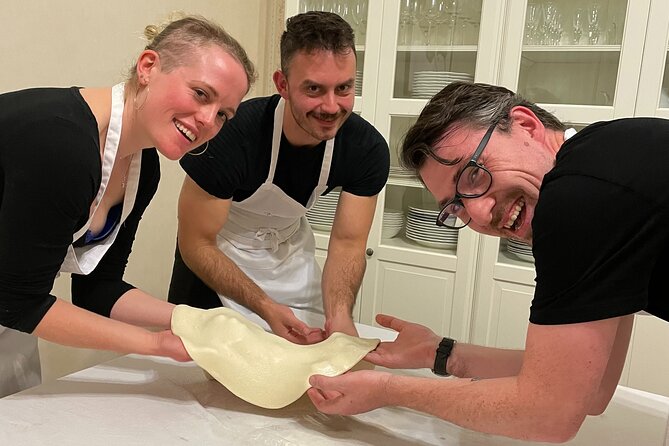
The key lesson is stretching. You begin with dough that seems ordinary, then work it until it becomes remarkably thin. You get useful tricks for handling it, filling it, and preparing it for the oven. That physical process is what separates this class from a pastry tasting.
Marti also explains strudel-related customs and shares family memories, including baking with her mother. Those details give the food a human scale. You are not only learning a recipe. You are hearing how a Hungarian family used the dish and why the method is worth preserving.
More cake and coffee house stops:
- Budapest All in One Small Group Walking Tour with Strudel Stop
★ 5.0 · 1,277 reviews - Budapest: Hungarian Chimney Cake Workshop in the City Center
★ 4.8 · 885 reviews - Chimney Cake Workshop Budapest Downtown – Kürtőskalács Class
★ 5.0 · 220 reviews
Arriving at Király u. 77
The class starts at Budapest, Király u. 77, 1077 Hungary, in a central location near public transportation. The activity ends at the same meeting point, and hotel pickup and drop-off are not included.
You should allow enough time to find the kitchen without rushing. One class member arrived about 10 minutes late after having trouble with local ride arrangements, but Marti was still welcoming. That is reassuring, though punctuality remains the sensible choice for a group cooking session.
The meeting point is easy to reach on foot from some central hotels, and clear directions are provided before the class. Since mobile tickets are accepted and confirmation arrives when you book, you can keep the practical side fairly simple.
A warm kitchen instead of a staged food show
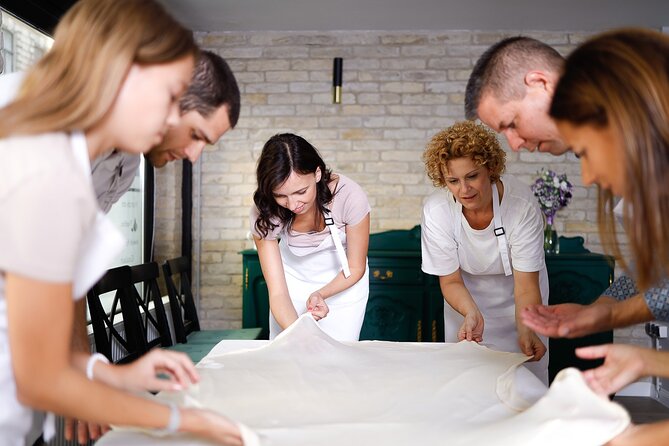
The setting is one of the strongest parts of the experience. You cook in a home-style kitchen studio in the center of Budapest, described as clean, beautiful, and comfortable. The space is not a basement room or an impersonal demonstration hall.
That setting shapes the class. Marti welcomes you into the kitchen, offers snacks and drinks, and creates the relaxed feeling of cooking at a friend’s home. Several people found the conversation as memorable as the food, especially when asking about Hungarian culture and Marti’s childhood.
The intimate atmosphere works particularly well for couples, families, and small groups of friends. It also helps solo participants join the conversation. With a maximum of 10 people, the class is small enough for individual guidance, though the experience remains a shared group activity rather than a private lesson by default.
The opening lesson: dough, habits, and local ingredients
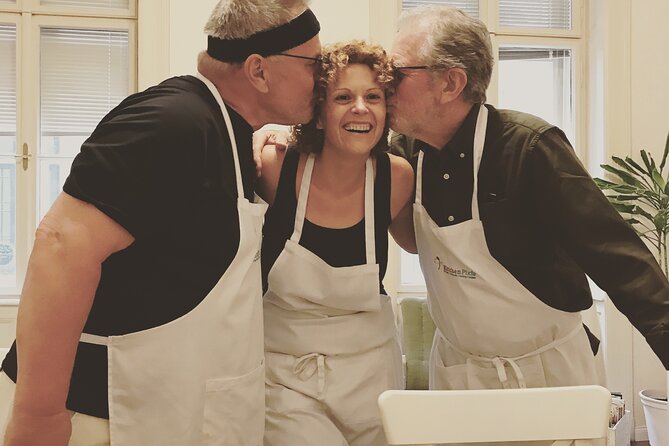
The class runs for about two and a half hours. At the beginning, Marti introduces the strudel method and explains the role of stretched dough. She demonstrates the technique, then expects everyone to participate.
This is a useful balance. You are not left to guess what to do, but you also do not spend the whole session watching a professional work. Clear explanations and repeated practice are central to the class. If your first attempt at stretching feels clumsy, that is part of the point. You have time to get a feel for the dough.
While the pastries bake, you taste local ingredients. The included Hungarian farmer’s plate features different peppers, sausage, spicy cottage cheese cream, and bread. There are also different paprikas to sample, along with Hungarian wine, homemade soft drinks, and mineral water.
These snacks are more than filler while you wait. Paprika, peppers, sausage, and cottage cheese cream help you recognize the flavors used across Hungarian cooking. You can ask about the ingredients as you taste them, making the pause part of the lesson.
A few more trips worth weighing up before you book
- Budapest Cooking Class & Market Tour with Local Guide & Wines
★ 5.0 · 553 reviews - Budapest: Essentials of Hungarian Wine Tasting Class
★ 4.9 · 174 reviews - Budapest: Hungarian Cooking Class and Market Walk
★ 5.0 · 91 reviews - Easy Cooking Class Budapest – with Market Walk (local wine & pálinka included)
★ 5.0 · 62 reviews
Choosing two fillings from four Hungarian favorites
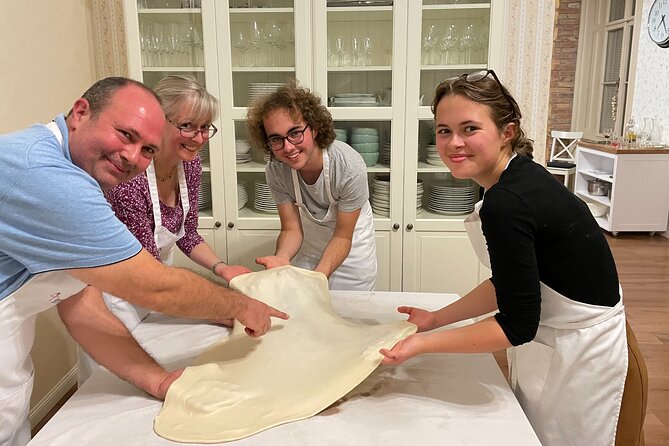
The class includes two different strudels. You choose two fillings from four options:
- Apple
- Sweet farmer cheese with sour cherry
- Savory cabbage
- Poppy-seed with pumpkin
The first person to book gets to choose the fillings, so your preferred pair is not guaranteed if someone else selects first. If a particular combination matters to you, book early and make your preferences clear.
The choices also let you shape the class to your appetite. Apple is the familiar sweet option, while farmer cheese with sour cherry offers a more distinctly Hungarian contrast of creamy, tangy, and fruity flavors. Savory cabbage moves the pastry toward a meal, and poppy-seed with pumpkin gives you a less predictable pairing.
I like the option of combining one sweet and one savory filling. That approach lets you see how the same dough works in different directions. It also helps if you are not interested in spending the entire class on dessert.
Stretching the dough is the real event
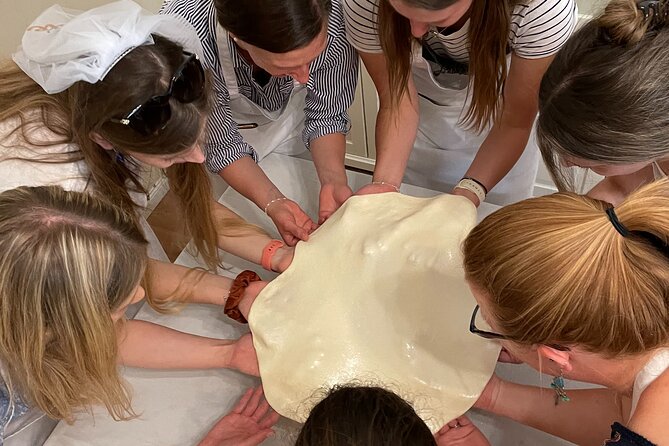
The most memorable part is the dough work. You practice stretching it by hand, with Marti explaining the method and offering corrections as you go. The class is designed so everyone participates, not just the confident cook at the counter.
This can be a little nerve-racking at first. Very thin dough seems fragile, and you may worry about tearing it. But the class treats the process as a skill to practice, not a test you must pass. That makes it suitable for people who enjoy cooking but do not have advanced baking experience.
The technique also gives you something useful to take home. After the class, you can try the recipe again and understand the goal behind each step. Several participants left eager to recreate the strudels in their own kitchens, which is a better measure of a cooking class than simply enjoying a prepared dish.
Baking, tasting, and the generous final meal
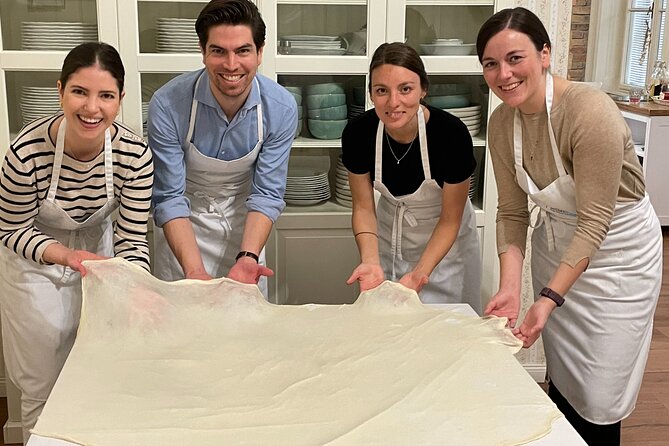
Once the fillings are prepared and the dough is assembled, the strudels go into the oven. While they bake, you continue with the Hungarian bites and drinks. The class then brings everyone together to taste the finished pastries.
You should not plan a large restaurant meal immediately afterward. The farmer’s plate, snacks, drinks, and two types of strudel can amount to a substantial lunch or evening meal. The description sensibly advises arriving hungry.
There may also be leftovers to take home. That is not presented as a guaranteed portion or formal takeaway package, but one participant was pleased to leave with extra strudel. Think of it as a welcome possibility rather than something to count on.
The food is home-style rather than fine dining. That is a strength here. The point is to understand a familiar Hungarian dish, practice a traditional technique, and enjoy what you made in a friendly kitchen.
What makes Marti’s teaching effective
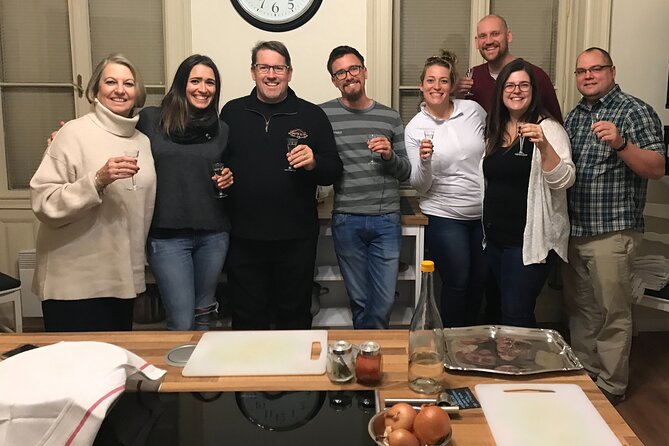
Marti’s role is central to the experience. She explains each stage, asks the group to participate, answers questions, and adds personal stories about food and family. Her approach comes across as warm, organized, and attentive without making the session feel stiff.
A good cooking teacher must handle different confidence levels, and this class appears built for that. You get demonstrations, hands-on practice, practical tips, and time to ask why a step matters. The focus stays on strudel, but the conversation can widen to Hungarian ingredients, customs, and everyday food.
The personal welcome is especially valuable for visitors who want more than a checklist attraction. You spend the afternoon or morning talking with a Budapest host in a real kitchen environment. That exchange gives the class its sense of place.
Morning or afternoon: choosing the right time
You can choose a morning or afternoon start. A morning class works well if you want a substantial meal before sightseeing, or if you prefer to keep the rest of the day free. It can also make a good final-day activity, as one mother and daughter discovered when they scheduled it before leaving Budapest.
The afternoon option may suit you better if you want a slower start or prefer a cooking session that leads into the evening. Wine and snacks make the later time feel social, though you should still check the exact available departure when booking.
The class lasts approximately two hours and 30 minutes, so it is not a quick stop between major attractions. Give it a proper block in your schedule. Cooking involves waiting for the oven, group discussion, and hands-on work, so the pace is part of the experience.
Is $95.34 a fair price?
At $95.34 per person, this is not the cheapest way to eat strudel in Budapest. You could buy pastry for far less. The value comes from the full package: instruction, hands-on practice, two fillings, a meal-like spread of Hungarian bites, drinks, cultural context, and time with Marti.
The small group also matters. A maximum of 10 people gives the class a more personal feel than a large culinary workshop. If the group is smaller, you may receive even more direct help, but the minimum of four participants means the class cannot run with only one or two people unless the provider confirms another arrangement.
I would call the price fair for someone who values participation and conversation. It is less compelling if you only want to sample strudel or are looking for a budget cooking activity. The experience earns its cost through the teaching and hospitality, not through the raw quantity of food alone.
Who should book this class?
You should consider it if you enjoy making food, asking questions, and learning through practice. It suits couples, families, friends, and solo visitors who want a friendly indoor activity in central Budapest.
It is also a strong choice if you have a Hungarian family connection. The stories about home baking can make the class especially meaningful if a parent or grandparent once made strudel.
Food lovers who want both sweet and savory flavors will get the most from the filling choices. The class is less suitable if you have a very restricted diet, since the supplied menu centers on dairy, sausage, bread, and pastry. One participant with many allergies was able to take part after discussing options, but you should raise dietary concerns before booking rather than assume substitutions.
You should also be comfortable with a group format. The teaching is individual in spirit, but the class is not presented as a one-to-one private appointment. Everyone works together, shares the kitchen, and eats as a group.
Booking details worth knowing
The experience is often booked around 66 days ahead, which suggests that you should not leave it until the last moment if your Budapest dates are fixed. Confirmation is provided at booking, and the activity accepts a mobile ticket.
Free cancellation is available if you cancel at least 24 hours before the local start time. Cancellations or changes made within 24 hours are not accepted for a refund. If the minimum number of four participants is not reached and the class is canceled, you are offered another date or experience, or a full refund.
The advertised maximum is 10 participants. Hotel transportation is not included, so you make your own way to Király u. 77 and leave from there when the class ends.
The final call: book it for the hands-on part
I would book the Hungarian Strudel Making Class if you want a personal food experience rather than a quick tasting. The stretching lesson, the choice of two fillings, and the relaxed kitchen setting give you skills and memories to carry beyond the pastry on your plate.
The main reasons to hesitate are the $95.34 price, the two-and-a-half-hour commitment, and the four-person minimum. Still, if you enjoy cooking and can fit the timing into your Budapest plans, this is a thoughtful way to meet Hungarian food through family technique, local ingredients, and a generous host.
FAQ
Where does the Hungarian strudel class begin?
It begins at Budapest, Király u. 77, 1077 Hungary.
Where does the experience end?
The activity ends back at the meeting point.
How long does the class last?
The class lasts approximately two hours and 30 minutes.
How many people can attend?
The class has a maximum of 10 participants.
What is the minimum number of participants?
At least four participants are required for the class to run.
Can I choose the strudel fillings?
Yes. You choose two fillings from apple, sweet farmer cheese with sour cherry, savory cabbage, and poppy-seed with pumpkin. If you book first, you can choose the fillings.
What food and drinks are included?
You receive two stretched strudels, a Hungarian farmer’s plate with peppers, sausage, spicy cottage cheese cream, and bread, plus Hungarian wine, homemade soft drinks, and mineral water.
Is hotel pickup included?
No. Hotel pickup and drop-off are not included.
Can I cancel for a full refund?
Yes, if you cancel at least 24 hours before the experience start time. Cancellations made less than 24 hours in advance are not refunded.
Just added around Budapest
- Lake Balaton and Herend Guided Tour★ 4.7 · 3 reviews
- Audio visual multi-sensory chefs journey dinner experience★ 5.0 · 3 reviews
- Hollókő Ethnographic Village: Day Tour from Budapest★ 3.7 · 3 reviews
- Tapolca Cave Lake and Tihany/ Balaton private tour from Budapest★ 4.5 · 3 reviews
- Budapest Art Nouveau Walking Tour★ 5.0 · 3 reviews
- SzentEndre-SaintAndrew City Privately Shopping and Picturesque★ 4.5 · 3 reviews
- Budapest Drinks and Piano Show Cruise★ 4.5 · 3 reviews
- Horseshow on the Hungarian Puszta, private tour from Budapest with entry!★ 5.0 · 3 reviews
Cake & Coffee House Tours, compared.

Budapest All in One Small Group Walking Tour with Strudel Stop
What we thought →
Hungarian Chimney Cake Workshop in the City Center
What we thought →
Chimney Cake Workshop Budapest Downtown – Kürtőskalács Class
What we thought →
Private Budapest All In One Walking Tour with Strudel Stop
What we thought →
Private Buda Castle Walking Tour with Cake and Matthias Church
What we thought →
Castle District tour with Matthias Church Ticket & Cake & Coffee
What we thought →Browse the lists this tour appears in