
Reviewed · CONCERTS
Budapest: Concert on the Oldest Working Organ in the City
Listen closely: this small organ has a big voice. I like the beautiful Baroque setting and the chance to hear Budapest’s oldest working organ in regular use. I also like the careful mix of famous works and lesser-known Hungarian music.
The main thing to consider is scale. This is a 25-pipe organ, not a giant cathedral instrument, so the sound and spectacle are more intimate than thunderous. The program also changes by date, and some evenings feature chamber music instead of solo organ.
In This Review
- Key points at a glance
- Entering St. Michael’s Church near the Danube
- A 25-pipe organ with an intimate sound
- The short introduction and printed program
- What a Bach-focused program can sound like
- A broader program with Mozart, Liszt, Dubois, and Hungarian works
- Chamber music dates with soprano Nóra Ducza
- Miklós Teleki and the performance itself
- Why 70 minutes is the right length
- Is $24 a fair price?
- Who will enjoy this concert most?
- Should you book the St. Michael’s Church organ concert?
- FAQ
- Where does the concert take place?
- How long does the concert last?
- What kind of music will I hear?
- Who usually performs?
- Are the introduction and program available in English?
- Can I record the concert?
- Is the concert wheelchair accessible?
Key points at a glance
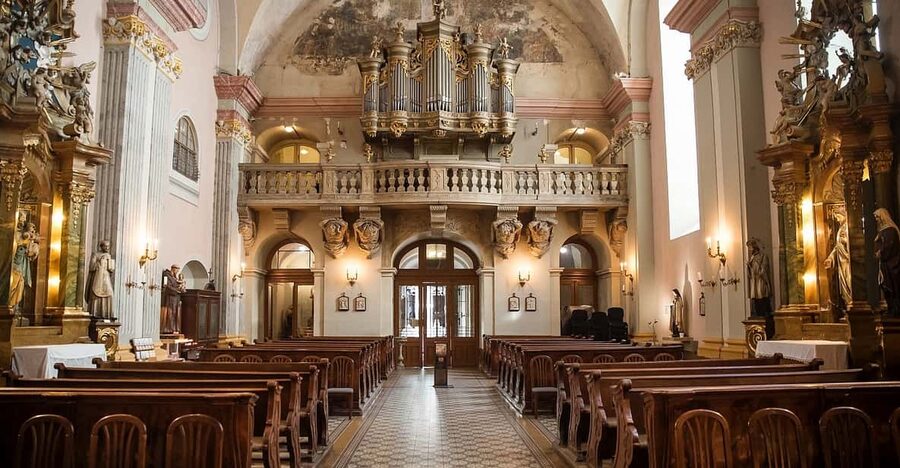
- A historic working instrument: Hear Budapest’s oldest working organ, a 25-pipe instrument in St. Michael’s Church.
- A central location: The white church sits at Váci utca and Nyáry Pál utca in District 5, near the Danube.
- A focused 70 minutes: The concert gives you a polished classical music experience without taking up an entire evening.
- Programs change by date: You may hear Bach alone, a broad mix of composers, or chamber music with soprano Nóra Ducza.
- English support is provided: A short introduction and printed program are available in English and Hungarian.
- A strong artistic draw: Award-winning organist Miklós Teleki performs at almost all concerts in the series.
Entering St. Michael’s Church near the Danube
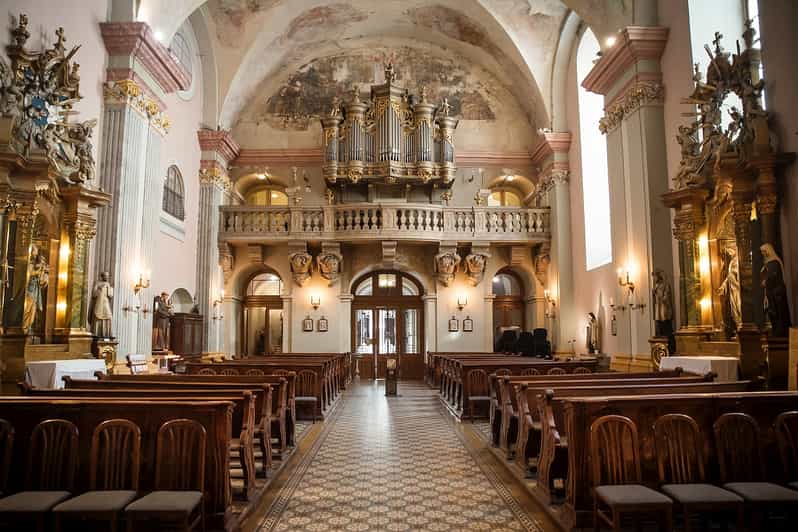
The concert takes place at St. Michael’s Church, a white Baroque church at the corner of Váci utca and Nyáry Pál utca in Budapest’s 5th District. The address is central, with postal code 1056, and the church is quite close to the Danube.
That location makes the concert easy to fit into a Budapest evening. You can spend time around central Pest, walk toward the river, and then settle into the church for a quiet hour of music. Transportation is not included, so you make your own way there, but the meeting point is clear and the activity ends at the same place.
When you arrive, an attendant checks the ticket list at the church entrance. You do not need to join a separate ticket line. That simple arrangement matters because it keeps the arrival calm, especially if you are trying to reach a fixed concert start time.
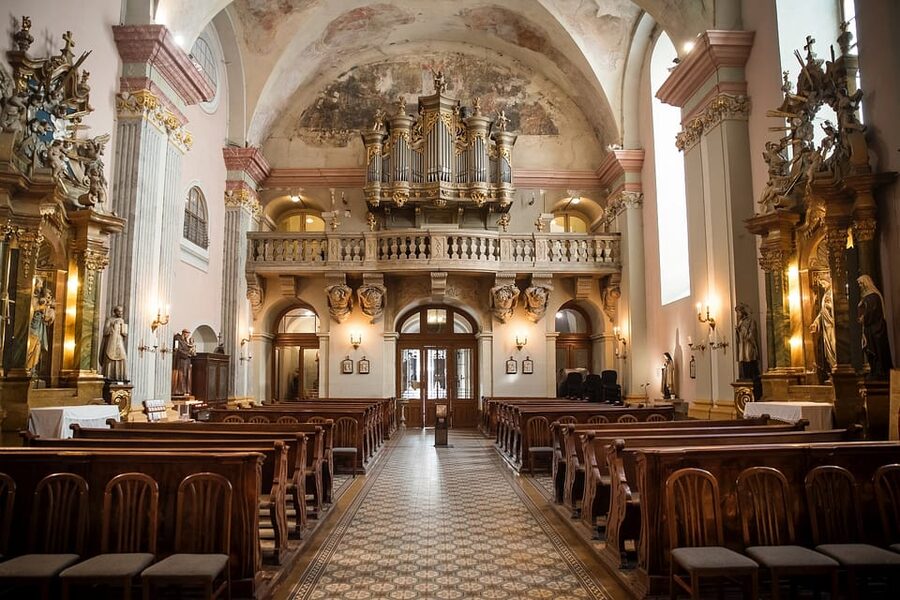
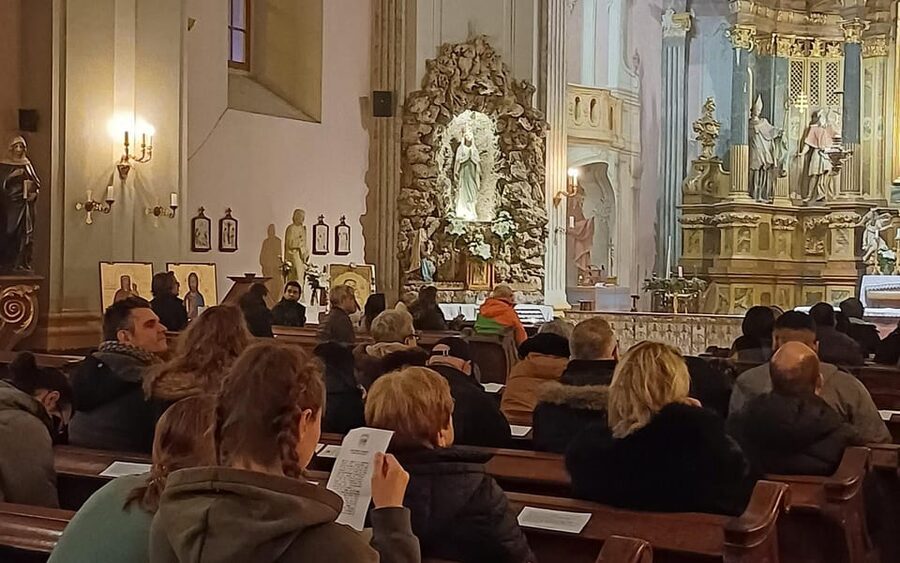
The church itself is part of the experience. You are not entering a modern concert hall with formal stage lighting and rows designed only for acoustics. You are sitting in a historic religious interior where the architecture, silence, and music work together.
A few more trips worth weighing up before you book
- Budapest Danube Cruise and Dinner Options, Live Music and Dance
★ 4.5 · 7,428 reviews - Budapest: Evening Cruise including Drinks and Live Music
★ 4.1 · 5,512 reviews - Budapest: Candlelit Dinner River Cruise with Live Music
★ 4.7 · 2,154 reviews
A 25-pipe organ with an intimate sound
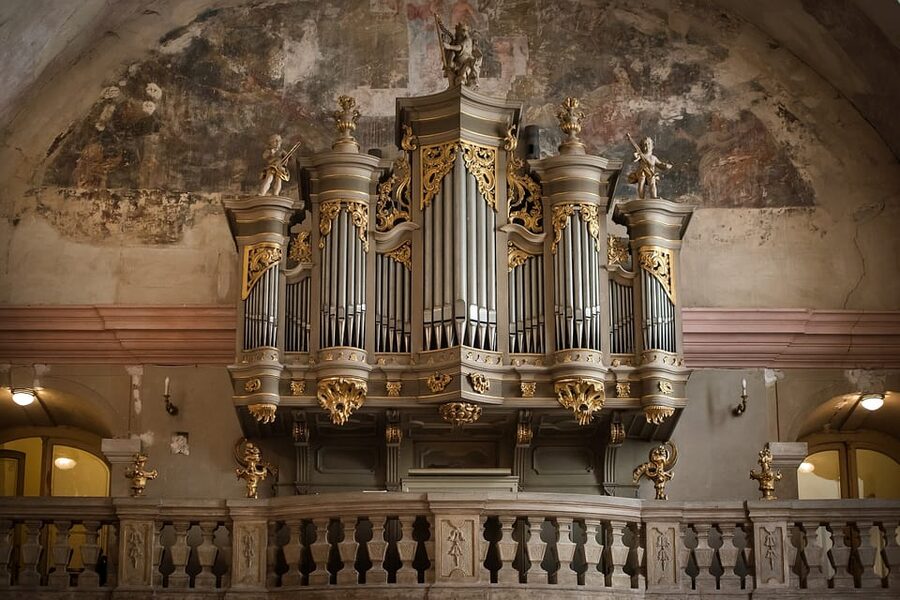
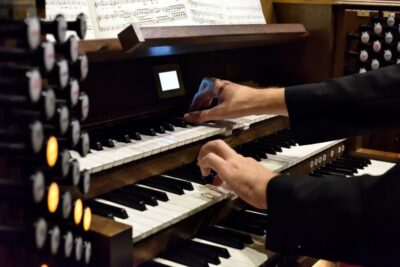
The organ is the star, but it is worth adjusting your expectations before you sit down. This is not a huge cathedral organ with hundreds of pipes and a forceful wall of sound. It is a compact 25-pipe instrument installed in a church where the acoustics and visual setting help shape the performance.
I see that as a strength if you enjoy detail. A smaller instrument can make the music feel closer and more personal. You may pay more attention to the changing tones, the phrasing, and the performer’s control rather than waiting for the loudest possible climax.
The organ’s age and working status also give the concert a clear sense of place. You are not simply hearing Bach or Vivaldi in an interchangeable hall. You are hearing organ music on an instrument tied to Budapest’s church tradition.
The screen showing the organist is a useful touch. From your seat, you may not have a perfect view of the performer’s hands and feet. The screen lets you follow the physical work behind the music, adding a visual element without turning the concert into a spectacle.
The short introduction and printed program
The performance begins with a brief introduction in English and Hungarian. You receive a printed leaflet in both languages, with the program and information about the organ.
This is just enough help for you to follow the evening without turning it into a lecture. You can learn what you are hearing, understand the role of the instrument, and then let the music take over.
I especially appreciate this format for people who do not know much about organ music. You do not need to recognize every composer or understand technical terms. The leaflet gives you a useful frame, while the live performance supplies the real explanation.
The program also helps you judge the concert’s style before booking. Some dates focus on one composer, while others offer a broad selection from several periods. Check the date carefully if you have a strong preference for Bach, romantic organ music, or chamber music.
What a Bach-focused program can sound like
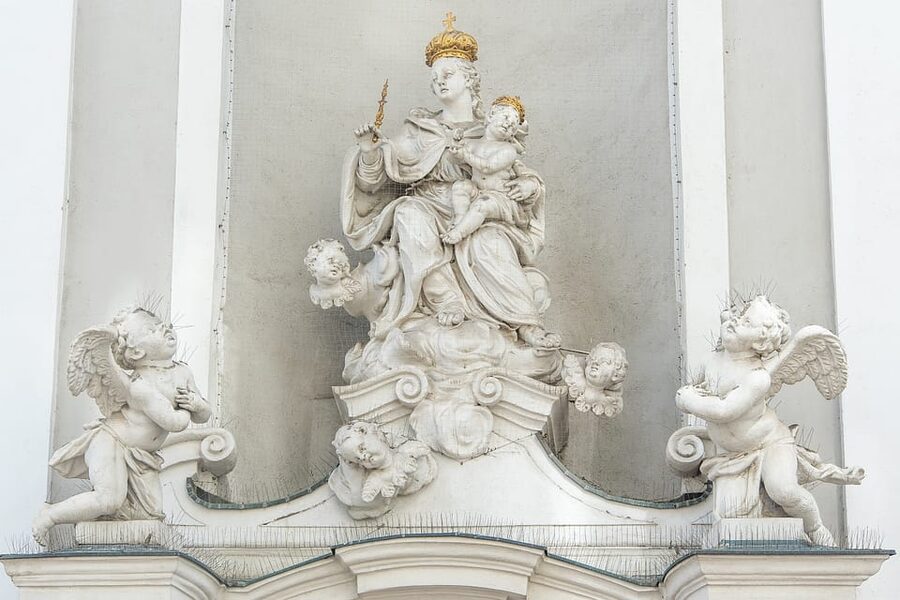
A sample Bach evening includes major works such as the Prelude and Fugue in B minor, BWV 544, and the Prelude and Fugue in E-flat major, BWV 552. These pieces give the concert a serious musical arc, moving from intricate passages to larger, more commanding statements.
You may also hear Bach’s Trio Sonata in E-flat major, BWV 525. This type of work reveals a lighter and more finely divided side of organ music. Instead of relying only on massed sound, the music asks the performer to handle several independent lines with precision.
Another sample selection is the Concerto in A minor, arranged by Bach from Antonio Vivaldi, BWV 593. That pairing gives you a useful reminder that the organ repertoire is not sealed off from the rest of classical music. Bach adapted instrumental ideas and made them work through the organ’s color and power.
The sample program also includes the Pastorella, BWV 590, followed by the E-flat major Prelude and Fugue. The result is a concentrated portrait of Bach’s range, from elegant and pastoral writing to grand architectural form.
You do not need to be a Bach specialist to enjoy this kind of evening. The program offers familiar names, clear variety, and enough substance to reward anyone who wants more than background music.
More city tours:
- Budapest: City Highlights Cruise with Welcome Drink
★ 4.6 · 35,610 reviews - Budapest: City Sightseeing Hop-On Hop-Off Bus Tour & Extras
★ 4.1 · 4,337 reviews - Budapest City Landmarks Walking Tour in 2 Hours
★ 5.0 · 2,048 reviews - Budapest: Danube River City Lights Express Cruise
★ 4.1 · 1,608 reviews
A broader program with Mozart, Liszt, Dubois, and Hungarian works
Other dates take a wider route through the organ repertoire. One sample program begins with Mozart’s Fantasy in F minor and includes six old Hungarian organ compositions from Kilián Szigeti’s collection.
That Hungarian section is one of the most distinctive parts of the offering. It gives the concert a local connection instead of presenting only the standard European favorites. The music may be unfamiliar, but the printed program helps you place it within the evening.
The program then moves to Franz Liszt, with Consolation in D-flat major and Choral, Nun danket alle Gott. Liszt’s organ writing can feel more dramatic and emotionally charged than the delicate lines of some earlier works.
The second half of the sample includes Théodore Dubois’s In Paradisum and Toccata in G major, followed by Bach’s Nun komm, der Heiden Heiland and the famous Toccata and Fugue in D minor, BWV 565.
That final Bach work is one of the best-known pieces in the organ repertory. Hearing it live in a church gives you a chance to experience more than its familiar opening. You can listen for the control, timing, and changes in color that keep a well-known piece from feeling routine.
Chamber music dates with soprano Nóra Ducza
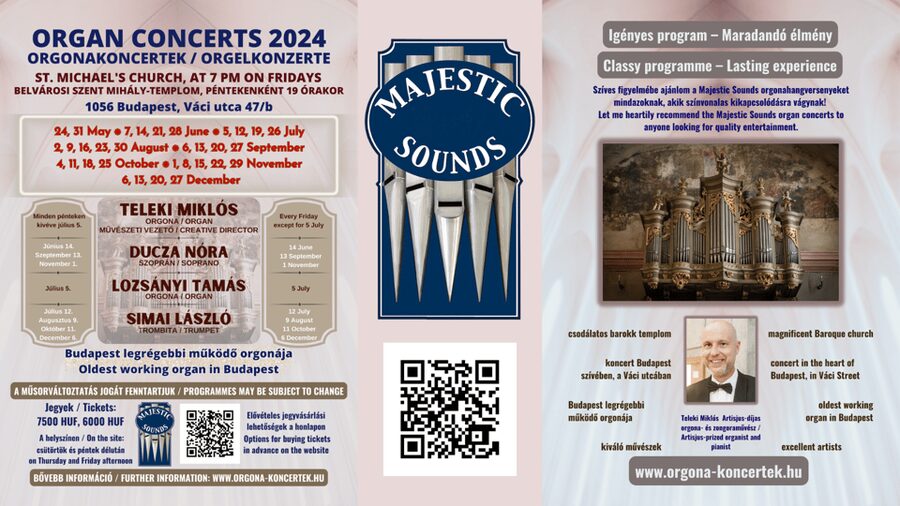
Not every concert is a solo organ recital. On selected dates, the series presents chamber music with soprano Nóra Ducza and Miklós Teleki.
The chamber music evenings are scheduled for May 30, July 18, August 29, October 17, and December 23. The exact program is date-specific, so you should check the schedule before choosing your ticket.
This option may suit you if you want a more varied concert format. A soprano adds a human voice to the church’s acoustics, creating a different kind of intimacy from an organ-only performance.
It also makes the date choice important. If your main goal is to hear extended solo organ works, choose a solo recital. If you enjoy vocal music and a changing texture, one of the chamber music dates could be the better fit.
The series also includes special Tuesday evening concerts on December 23 and December 30, 2025. Those dates offer a useful option if you are in Budapest around the holidays and want a cultural evening that does not require a full night at the opera or theater.
Miklós Teleki and the performance itself
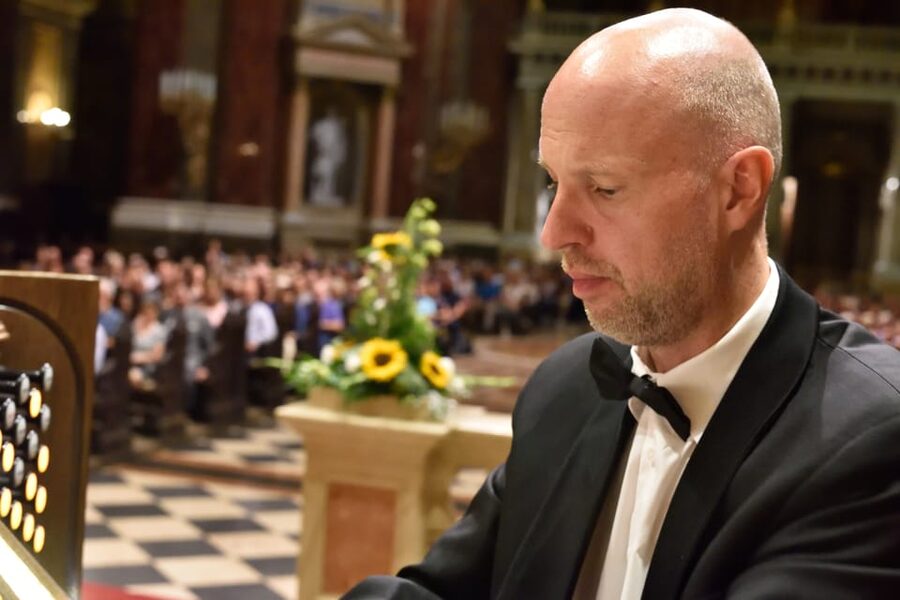
The creative director and main organist of the Majestic Sounds series is Miklós Teleki, an award-winning Hungarian musician who gives about 120 organ and piano recitals each year. He performs at nearly all of the concerts in the series.
That consistency is valuable. You know the series has a clear artistic personality, rather than being a random set of musicians sharing a venue. The performance is built around someone with substantial experience in both organ and piano recital work.
Teleki does not appear on every date. Andres Uibo, an excellent Estonian musician, performs on July 4, and Hungarian organist Tamás Lozsányi performs on October 31. These substitutions give the program some variety while keeping the quality of the evening high.
The strongest praise for this experience centers on the performer’s skill and the artistic level of the concert. The music selection, the virtuosity, and the emotional commitment all matter here. You are paying for a live performance, not simply access to a pretty church.
The screen is especially helpful during complex passages. Watching the organist work while hearing the full sound can make the effort behind the music easier to appreciate.
Why 70 minutes is the right length
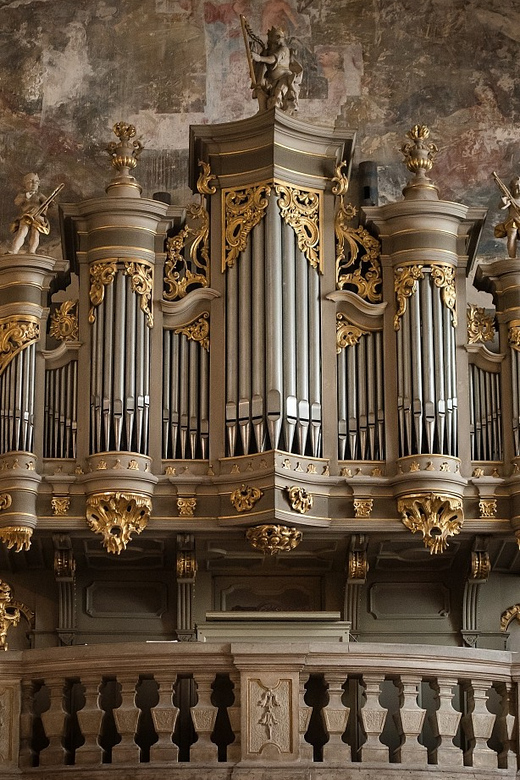
The concert lasts 70 minutes. That is long enough to feel like a real performance, but short enough to fit comfortably between sightseeing plans, dinner, or an evening walk along the Danube.
I think this length works well for a city break. You get a concentrated musical experience without committing to several hours in a concert hall. It is also a sensible choice if you are introducing someone to classical music and do not know how they will respond to a full-length recital.
The short format does mean you should not expect a huge program with every major organ work. The evening is designed around a selected group of pieces. The quality of the choices matters more than sheer duration, and the examples provided show a strong mix of famous and less familiar music.
Concert times vary, so check availability for the date you want. The series is presented mainly as a Friday evening experience, with the two additional Tuesday concerts in December 2025.
Is $24 a fair price?
At $24 per person, this is a good-value cultural activity in central Budapest. The price includes entry, the organ or chamber concert, the printed program, and the short introduction in English and Hungarian.
You are also getting a performance in a historic church and the chance to hear Budapest’s oldest working organ. For many people, that combination makes the price easier to justify than a standard sightseeing stop that lasts only a few minutes.
The value depends on what you want from music. If you are looking for a massive organ in a grand cathedral, this may feel too modest. If you want a polished, intimate recital in a beautiful setting, the price is reasonable.
There is no guide or transportation included. That keeps the cost down, but you are responsible for reaching the church and planning around the start time. Since the location is central, this is more a minor planning task than a serious drawback.
Free cancellation is available up to 24 hours before the concert for a full refund, and you can reserve now and pay later. Those terms are useful if your Budapest schedule is still changing.
Who will enjoy this concert most?
I would recommend this experience to you if you like classical music, church architecture, or short cultural activities with a strong sense of place. It is also a good choice if you already plan to be in central Pest and want a calm break from sightseeing.
You do not need advanced musical knowledge. The introduction and leaflet give you enough context, and the program includes familiar composers such as Bach, Mozart, Handel, Liszt, Mendelssohn, Franck, Purcell, Vivaldi, and Dubois.
Families with older children may also find the 70-minute format manageable, though the concert requires quiet attention. The wheelchair-accessible venue is another practical advantage.
I would be more cautious if you dislike organ music, need a large-scale concert experience, or want to choose the exact works without checking the date. The instrument is compact, and the program changes.
Recording is not allowed. Plan to listen rather than document the event, which is exactly the right approach in a small church where the atmosphere depends on quiet.
Should you book the St. Michael’s Church organ concert?
Book it if you want a focused classical music evening for $24, especially if Bach, Mozart, Liszt, or Hungarian organ music appeals to you. The central location, English introduction, clear 70-minute format, and respected performers make this an easy addition to a Budapest itinerary.
Choose your date with care. Look for a Bach-centered program if you want a full solo organ recital, or select one of the Nóra Ducza dates for chamber music with soprano. If you expect a giant cathedral organ, adjust that expectation before you go.
For the right audience, this is a memorable way to hear serious music in a peaceful Baroque church without spending an entire evening or a large part of your sightseeing budget.
FAQ
Where does the concert take place?
It takes place at St. Michael’s Church, the white church building at the corner of Váci utca and Nyáry Pál utca in Budapest’s 5th District. The postal code is 1056, and the church is near the Danube.
How long does the concert last?
The concert lasts 70 minutes. Starting times vary, so check availability for your selected date.
What kind of music will I hear?
The series offers solo organ or chamber music concerts, depending on the date. Programs may include works by Bach, Mozart, Vivaldi, Liszt, Dubois, Handel, Franck, Mendelssohn, Purcell, and other composers, along with old Hungarian organ music.
Who usually performs?
Miklós Teleki is the creative director and main organist, and he performs at almost all recitals. Andres Uibo performs on July 4, and Tamás Lozsányi performs on October 31. Chamber concerts include soprano Nóra Ducza with Miklós Teleki.
Are the introduction and program available in English?
Yes. The concert begins with a short introduction in English and Hungarian. The printed program leaflet is also available in both languages and includes information about the organ.
Can I record the concert?
No. Video and audio recording are not allowed.
Is the concert wheelchair accessible?
Yes, the activity is listed as wheelchair accessible. Transportation is not included, and the concert ends back at the church meeting point.
Just added around Budapest
- Lake Balaton and Herend Guided Tour★ 4.7 · 3 reviews
- Audio visual multi-sensory chefs journey dinner experience★ 5.0 · 3 reviews
- Hollókő Ethnographic Village: Day Tour from Budapest★ 3.7 · 3 reviews
- Tapolca Cave Lake and Tihany/ Balaton private tour from Budapest★ 4.5 · 3 reviews
- Budapest Art Nouveau Walking Tour★ 5.0 · 3 reviews
- SzentEndre-SaintAndrew City Privately Shopping and Picturesque★ 4.5 · 3 reviews
- Horseshow on the Hungarian Puszta, private tour from Budapest with entry!★ 5.0 · 3 reviews
- Hungary today: a no-taboo conversation★ 5.0 · 3 reviews
Concerts, compared.

Budapest Danube Cruise and Dinner Options, Live Music and Dance
What we thought →
Evening Cruise including Drinks and Live Music
What we thought →
Candlelit Dinner River Cruise with Live Music
What we thought →
Dinner Cruise with Live Music and Folk Dance Show
What we thought →
Budapest Danube River Candlelit Dinner Cruise with Live Music
What we thought →
Classical Music Concerts in St Stephen’s Basilica
What we thought →
Browse the lists this tour appears in