
Reviewed · WALKING TOURS
Budapest Castle Walk
Buda Castle tells Budapest’s story in stone. This three-hour walk brings together medieval ruins, royal halls, Ottoman rule, Habsburg rebuilding, Jewish heritage, and the scars of the 1945 siege. I like the small maximum of eight people and the fact that admission to Matthias Church and a coffee or other drink are included. The Fisherman’s Bastion views and the less obvious courtyards, gardens, and old Jewish sites give the tour more substance than a simple landmark checklist.
The main consideration is the $125 price per person. That is a serious spend for a walking tour, especially since museums are not included. The value depends on how much you want historical explanation and a small group rather than simply walking around the castle district on your own. The 3 p.m. start also means you should plan the rest of your afternoon around it.
In This Review
- Key details that shape the experience
- Why Buda Castle deserves a guided walk
- Starting at the Zero Kilometre Stone
- Fisherman’s Bastion and Budapest from above
- Matthias Church, coronations, and wartime damage
- Royal Palace and the National Széchényi Library
- Jewish Buda beyond the postcard route
- Castle Garden and the Várkert Bazaar
- The coffee break and the pace of the afternoon
- Is $125 a fair price?
- Practical details before you book
- Who will get the most from this walk?
- Should you book Budapest Castle Walk?
- FAQ
- How long is the Budapest Castle Walk?
- What time does the tour start?
- Where does the tour begin?
- Where does the tour end?
- Is admission to Matthias Church included?
- Are museum tickets included?
- Is a drink included?
- How many people are in the group?
- Are private tours available?
- Can I cancel for a full refund?
Key details that shape the experience
- A compact history of Buda: You move from the first royal residence in the 1200s through Ottoman and Habsburg rule, then into the destruction and rebuilding of World War II.
- Matthias Church admission included: You get time inside the church, including a look at its colored roof and coronation history.
- Small-group format: The standard tour allows a maximum of eight people, with private and larger-group options also available.
- Views from Fisherman’s Bastion: The Danube and Budapest panoramas are among the walk’s strongest rewards.
- A coffee break is built in: One coffee, tea, or another drink gives you a pause during the three-hour route.
- A central Buda finish: The tour begins at the Zero Kilometre Stone near Clark Ádám tér and ends at Matthias Church.
Why Buda Castle deserves a guided walk
Budapest is split by the Danube, but Buda Castle feels like a separate town above the river. Its streets curve around the hill, and the buildings reveal several different chapters rather than one tidy period of design. You can see medieval remains beside Baroque façades, Gothic details, rebuilt royal spaces, and modern repairs shaped by wartime damage.
I like this tour because it treats the castle quarter as a living district, not just a royal palace. A few hundred people still live among the old buildings, and the Hungarian president also has a home in the area. That makes the walk feel less like a museum visit and more like a historic neighborhood with an unusually dramatic past.
The guide’s role matters here. Without context, you may see a handsome courtyard or a damaged wall and move on. With explanation, you can connect that spot to the royal court, the Ottoman period, the Habsburg Empire, the Jewish community, or the siege of Budapest. The tour is delivered in English by a local guide, and its small size should make it easier to ask questions.
The route takes about three hours, though it can run longer if the group is not in a hurry. Tell the guide at the start if you need to leave on time. That simple warning matters if you have a dinner reservation, a concert, or another timed activity.
More walking tours:
- Budapest: Buda Castle Walk with Saint Stephen’s Hall
★ 4.5 · 3,012 reviews - Big Bus Budapest Hop-On Hop-Off Bus and Walking Tour
★ 3.5 · 2,206 reviews - Budapest: Buda Castle District Walking Tour
★ 4.6 · 2,108 reviews
Starting at the Zero Kilometre Stone
The meeting point is the Zero Kilometre Stone at Clark Ádám tér, near the base of the castle hill. This location is useful because it places you at a clear transport point and near the route up toward Buda Castle. The tour begins at 3 p.m., so give yourself enough time to find the stone and meet the guide without rushing.
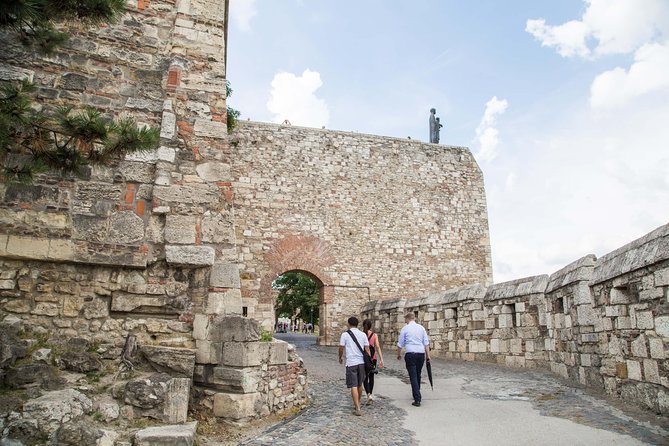
The walk then leads into the castle district, where the streets follow the shape of the hill. Expect cobbled surfaces and a historic setting rather than a flat city stroll. The information says most people can participate, but anyone concerned about walking should keep the hillside route and old paving in mind.
This opening section sets up the central idea of the walk: Buda’s position made it valuable and vulnerable. A royal residence first appeared here in the mid-13th century, and the area later became a courtly center. That same hill was repeatedly fought over, damaged, rebuilt, and changed by the people who controlled it.
Fisherman’s Bastion and Budapest from above
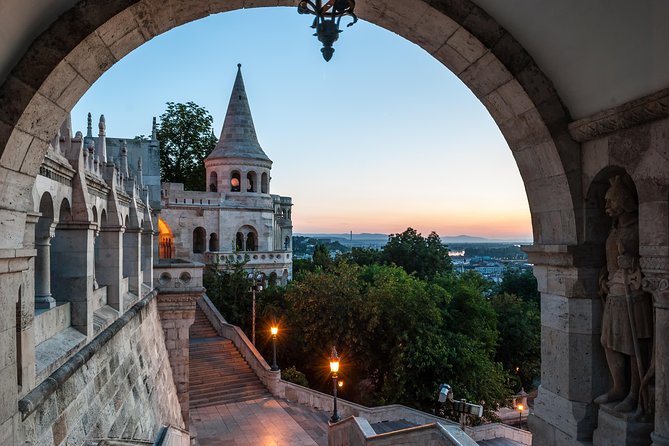
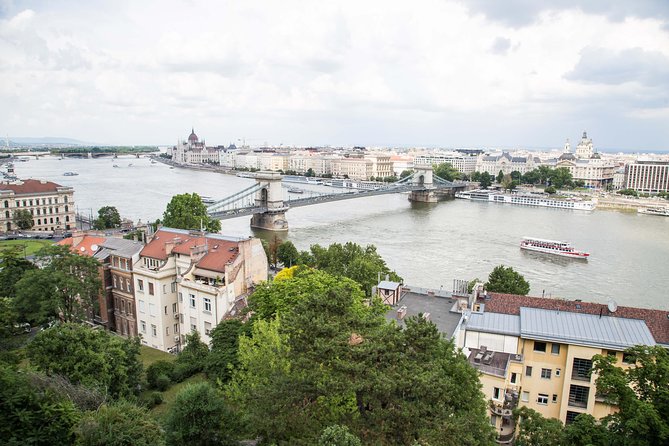
Fisherman’s Bastion is one of the first named stops, with about 10 minutes set aside there. Its main gift is visual. From the terraces, you can look across the Danube toward Budapest and understand the city’s shape in a way that is difficult from street level.
The guide also uses this stop to explain the neighborhood’s long political and social story. You hear about Hungarian royalty, the Habsburg Empire, and the Jewish population that once lived in the district. That combination gives the view some weight. You are not just stopping for a photograph, although you will certainly want one.
The short time listed for this stop suggests that Fisherman’s Bastion is part of a larger walking story, not a long independent visit. If you want to explore every terrace at length, take extra time after the tour if your schedule allows. The walk gives you the setting and the explanation, while independent time lets you linger.
Matthias Church, coronations, and wartime damage
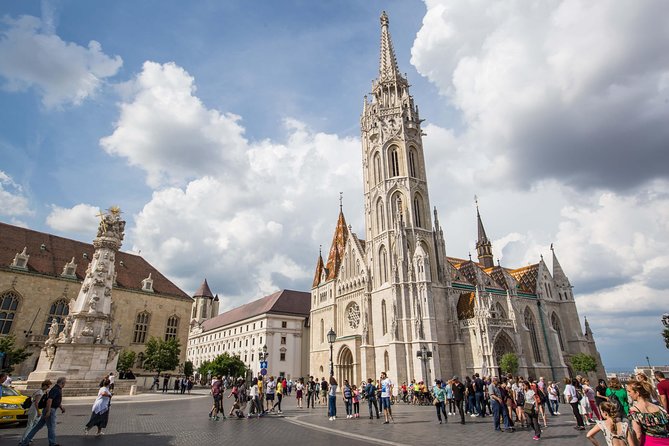
Matthias Church receives about 20 minutes, and admission is included in the tour price. This is one of the clearest financial benefits of booking the walk, since you do not have to arrange a separate ticket for the church portion.
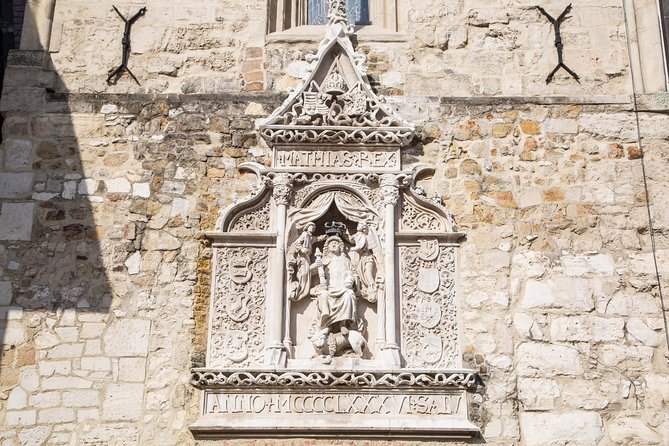
Inside, the guide explains the building’s role as a coronation church for Hungarian kings. You also get a chance to see its interior and its distinctive multicolored tiled roof. The church’s appearance reflects the many changes that shaped the castle district, so it fits the tour’s larger theme of destruction and rebuilding.
This stop also connects to World War II. The castle quarter was heavily damaged during the 1945 Siege of Budapest, when German and Russian forces fought in the streets. The tour discusses the people and events tied to that period, including the heroes and villains who left their mark on the district.
The WWII material is especially useful because much of Buda’s current appearance is not simply medieval survival. The palace and surrounding buildings were destroyed and reconstructed more than once. After the war, rebuilding left new marks on an old setting. A guide can help you separate original fabric from later restoration, though the supplied details do not promise a specialist architectural lecture.
A completely different kind of day out around Budapest:
- Budapest: City Highlights Cruise with Welcome Drink
★ 4.6 · 35,610 reviews - Budapest: Unlimited Prosecco, Beer and Aperol Spritz Cruise
★ 4.8 · 25,310 reviews - Budapest: Széchenyi Spa Day Ticket with Optional Upgrades
★ 4.3 · 23,911 reviews - Budapest: Nighttime or Daytime Sightseeing Cruise
★ 4.2 · 21,062 reviews
Royal Palace and the National Széchényi Library
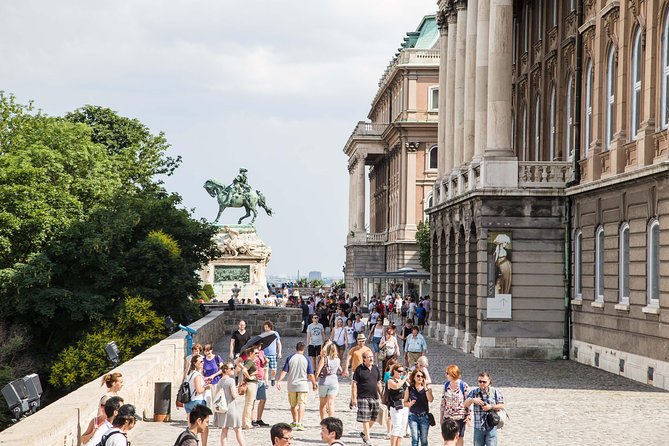
The Royal Palace is one of the major sights along the route. The National Széchényi Library is also included in the exterior discussion, with about 10 minutes listed for that stop. The focus is not a museum visit, since museum admission is excluded, but on how the royal court shaped Buda.
The arrival of the royal court began a long golden period for the city. Yet the palace did not serve as a simple, uninterrupted home for Hungarian rulers. The tour points out that no royals ever resided in the palace in the way you might expect, a useful corrective to the grand title and imposing setting.
The palace has been damaged and rebuilt several times. Each rebuilding period changed the look of the district, especially the major reconstruction after World War II. I appreciate this approach because it avoids pretending that every stone has survived unchanged since the Middle Ages. You get a more honest picture of Buda as a place repeatedly remade by politics, war, taste, and national memory.
Museum entry is not included, so keep your expectations clear. This is a guided walk around the royal area, not a palace museum tour. If the interiors are your main reason for visiting, you may need a separate plan and extra time.
Jewish Buda beyond the postcard route
One of the more unusual parts of the walk is its attention to Jewish Buda. The district became a meeting point for many nationalities, and a significant Jewish population once lived here. You see an old street and the site of a synagogue connected to that community.
This material adds balance to the usual royal and military story. Castles are often presented through kings, sieges, and grand buildings, but neighborhoods are also shaped by the people who worked, worshipped, traded, and raised families there. The old street and synagogue site help make that past more visible, even when little remains.
You should not expect a complete study of Budapest’s Jewish heritage in a single three-hour tour. The value is that this chapter is included at all, alongside the royal and wartime history. If it interests you, use the guide’s explanation as a starting point for further visits elsewhere in Budapest.
Castle Garden and the Várkert Bazaar
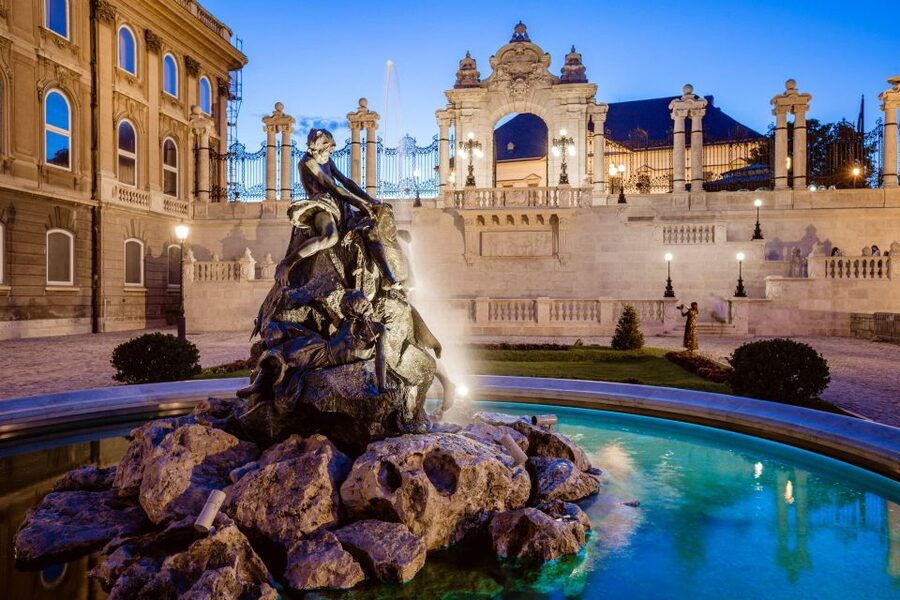
The route continues toward the Castle Garden and the Danube-side Várkert Bazaar. The Várkert Bazaar is a restored neo-Renaissance complex, and its location gives the walk a different feel from the narrow upper streets. You are closer to the river and can appreciate how the castle hill meets the lower city.
The Castle Garden stop lasts about 10 minutes. The area is still connected to daily life, with old buildings occupied by ordinary residents as well as official figures. That detail helps you picture the district as a functioning neighborhood rather than a stage set preserved only for sightseeing.
The Várkert Bazaar also works as a visual bridge between the palace above and the Danube below. You see how royal planning, later restoration, and public space fit together. The information does not promise a full interior visit or museum entry here, so think of it as a guided exterior stop with historical explanation and photo opportunities.
The coffee break and the pace of the afternoon
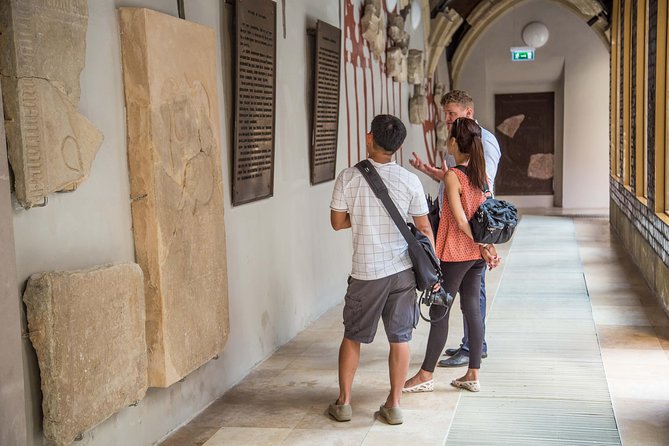
A coffee, tea, or another drink is included. It is a modest feature, but it makes sense on a three-hour walk, especially one with a hillside setting and repeated stops for explanation. You get a chance to sit or pause, ask questions, and let the information settle before continuing.
The tour includes many stops for photographs and questions. That suggests a pace built around conversation rather than a fast march from one sight to the next. Still, the walk covers several parts of the castle quarter, and the cobbled streets may make it feel more active than the word coffee break implies.
The 3 p.m. start has advantages. You can use the morning for the Parliament area, the Great Market Hall, or another part of Budapest, then spend the later afternoon in Buda. It also places the major viewpoints later in the day, though the exact light and sunset conditions depend on the season. The tour is available year-round, so dress and plan for the season rather than assuming the same conditions every month.
Is $125 a fair price?
At $125 per person, this is not a budget walking tour. You are paying for a three-hour English-language guide, a maximum group size of eight, a drink, and admission to Matthias Church. The small group is important: it should be easier to hear, ask questions, and stay connected than on a large coach-style outing.
The price is harder to justify if you only want photographs of the castle and river. You can walk through much of the district independently, and the museums require separate admission in any case. The tour earns its keep through interpretation, especially the connections among the royal court, Jewish Buda, Ottoman and Habsburg rule, and World War II.
Group discounts are available, and larger parties can choose a group option for a minimum of eight people. A private tour is also offered and can be customized, but the supplied information does not give a private-tour price. For couples or small groups who want personal attention, the standard eight-person limit may already be enough without paying for a private arrangement.
The average booking time is 85 days ahead. That is a useful planning signal. If this particular departure fits your Budapest schedule, booking early is sensible, especially if you want the small-group format.
Practical details before you book
The exact meeting point is the Zero Kilometre Stone, Clark Ádám tér, 1013 Budapest. The finish is Matthias Church at Szentháromság tér 2, 1014 Budapest. That means you end in central Buda rather than returning to the starting point, so plan your next stop from the church area.
Mobile tickets are accepted, and confirmation is issued at booking. The tour runs year-round and is near public transportation. Minimum numbers apply, with at least two people required, and the tour can be canceled if that minimum is not met. In that case, you are offered another option or a full refund.
Free cancellation is available up to 24 hours before the 3 p.m. start. Changes or cancellations inside that window are not accepted for a refund. One practical warning comes from the booking experience: the stated start time is important, and a Portuguese-language account described difficulty finding the tour time and reaching the operator from abroad. Check the 3 p.m. departure carefully before leaving home and save the confirmation on your phone.
Who will get the most from this walk?
I would choose this tour if you want your first visit to Buda Castle to have a clear historical spine. It suits you especially well if you care about more than the palace façade and want Jewish heritage, wartime destruction, royal politics, and architectural rebuilding included in one route.
It is also a good match for couples, families, and small groups who prefer questions and conversation to a large crowd. The drink and church ticket make the package more useful, though not inexpensive.
I would skip it if you mainly want unstructured time, museum interiors, or a short photo outing. The route can last longer than three hours, and the hillside cobbles may not suit every walking style. You should also think twice if $125 would leave you wishing you had simply explored the district independently.
Should you book Budapest Castle Walk?
Book it if you want the castle district explained as a place shaped by royal ambition, many nationalities, religious communities, invasion, and war. The strongest parts are the small group, Matthias Church entry, the Jewish history, and the views from Fisherman’s Bastion.
Skip it if you are satisfied with a self-guided stroll and do not plan to enter Matthias Church. For most first-time visitors who value context and a manageable group, the price can be justified. For repeat visitors or museum-focused sightseers, a shorter independent visit may offer better value.
FAQ
How long is the Budapest Castle Walk?
The tour lasts about three hours. It may run longer if the group is not in a hurry, so tell the guide at the beginning if you need to finish at a specific time.
What time does the tour start?
The start time is 3 p.m.
Where does the tour begin?
The meeting point is the Zero Kilometre Stone at Clark Ádám tér, 1013 Budapest.
Where does the tour end?
The tour ends at Matthias Church, Mátyás Templom, Szentháromság tér 2, 1014 Budapest.
Is admission to Matthias Church included?
Yes. Entrance to Matthias Church is included in the tour.
Are museum tickets included?
No. Entrance to museums is not included.
Is a drink included?
Yes. One coffee, tea, or another drink is included during the break.
How many people are in the group?
The standard small group has a minimum of two and a maximum of eight participants.
Are private tours available?
Yes. You can choose a private tour option, which can be customized.
Can I cancel for a full refund?
Yes, if you cancel at least 24 hours before the experience start time. Cancellations or changes made less than 24 hours before the start are not accepted for a refund.
Just added around Budapest
- Lake Balaton and Herend Guided Tour★ 4.7 · 3 reviews
- Audio visual multi-sensory chefs journey dinner experience★ 5.0 · 3 reviews
- Hollókő Ethnographic Village: Day Tour from Budapest★ 3.7 · 3 reviews
- Tapolca Cave Lake and Tihany/ Balaton private tour from Budapest★ 4.5 · 3 reviews
- Budapest Art Nouveau Walking Tour★ 5.0 · 3 reviews
- SzentEndre-SaintAndrew City Privately Shopping and Picturesque★ 4.5 · 3 reviews
- Budapest Drinks and Piano Show Cruise★ 4.5 · 3 reviews
- Horseshow on the Hungarian Puszta, private tour from Budapest with entry!★ 5.0 · 3 reviews
Walking Tours, compared.

Big Bus Budapest Hop-On Hop-Off Bus and Walking Tour
What we thought →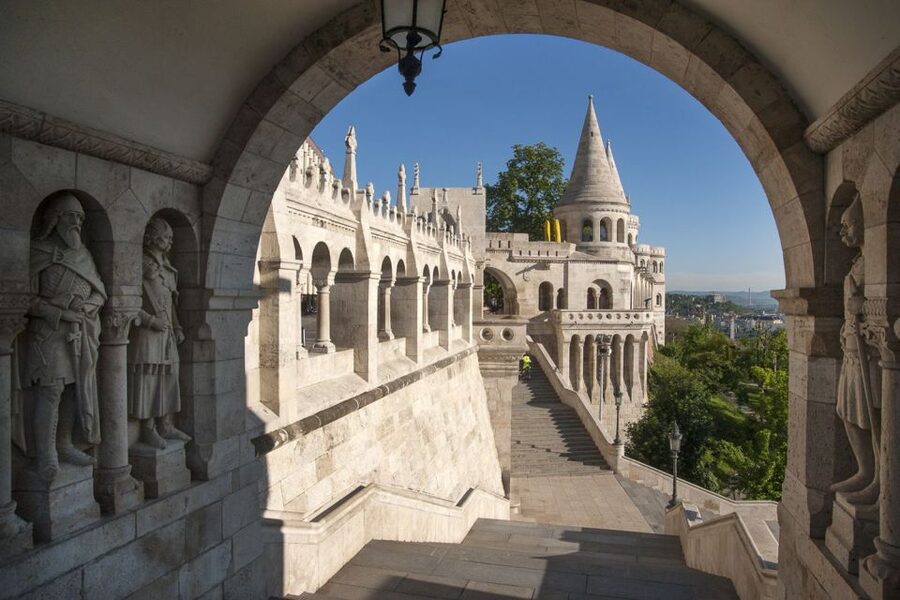
Budapest City Landmarks Walking Tour in 2 Hours
What we thought →
3-Hour Orientation Walking Tour of Buda and Pest
What we thought →
Budapest Historical Sightseeing – Free Walking Tour
What we thought →
Budapest All in One Small Group Walking Tour with Strudel Stop
What we thought →Browse the lists this tour appears in