
Reviewed · WALKING TOURS
Budapest Art Nouveau Walking Tour
Budapest’s buildings have stories to tell. This three-hour walk links grand facades, clever ceramic work, and Ödön Lechner’s unmistakable designs, giving you a clear introduction to the Hungarian version of Art Nouveau. I especially like the small-group format and the chance to see the Royal Postal Savings Bank and Kazinczy Street Synagogue in one focused outing. The main drawback is the $126.16 price, which feels high for a walking tour that does not include public transport or every admission fee.
You will walk a moderate amount, sometimes use public transport, and finish at the Orthodox synagogue on Kazinczy Street. The guide brings an architectural and historical angle rather than simply pointing out pretty buildings, although you should confirm the final group limit because the tour details mention both six and eight people.
In This Review
- Key details before you book
- Why Budapest Art Nouveau deserves a dedicated walk
- Starting at Madal Cafe on Alkotmány Street
- Gresham Palace: a polished opening lesson
- The Royal Postal Savings Bank and Ödön Lechner’s bold style
- Thonet House and the Zsolnay tile connection
- Kazinczy Street Synagogue: Art Nouveau with a religious purpose
- What the small group changes
- Is $126.16 a fair price?
- Who will enjoy this walk most?
- Practical advice for a better morning or afternoon
- Should you book the Budapest Art Nouveau Walking Tour?
- FAQ
- How long is the Budapest Art Nouveau Walking Tour?
- What buildings are visited?
- Is public transportation included?
- Is synagogue admission included?
- Where does the tour start and finish?
- How large is the group?
Key details before you book
- Ödön Lechner takes center stage: Learn why Hungary’s best-known Art Nouveau architect is sometimes called the Gaudi of Hungary.
- Four strong architectural stops: The route includes Gresham Palace, the Royal Postal Savings Bank, Thonet House, and Kazinczy Street Synagogue.
- Ceramic decoration is a major theme: Zsolnay tiles from Pécs help explain the colorful, highly decorated facades that define Hungarian Art Nouveau.
- The walk ends in the Jewish Quarter: The Orthodox synagogue adds a religious and cultural layer to the architecture lesson.
- Plan for extra costs: Public transport passes, food, drinks, and possibly synagogue admission are not included.
- A compact group helps: The published details describe a small group, with one section saying six people and another saying eight, so ask for the current limit when booking.
Why Budapest Art Nouveau deserves a dedicated walk
Budapest is full of impressive buildings, but Art Nouveau can be easy to miss if you only follow the usual sightseeing route. You may notice a fanciful roof or a wall of colorful tiles, yet walk on without understanding why it looks different from the grand classical buildings nearby.
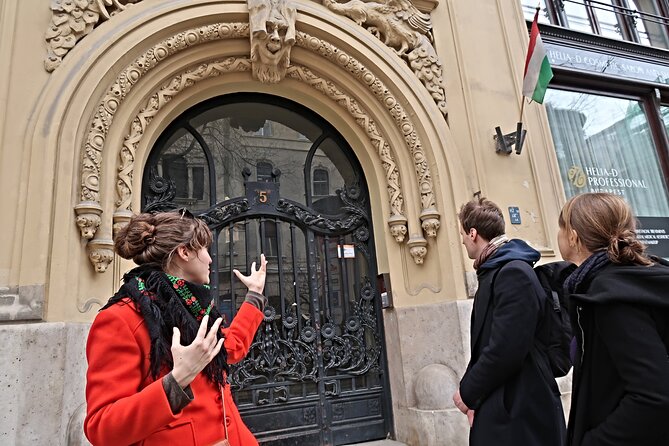
This tour gives you a visual guide to the style. You learn to look for curved lines, plant shapes, unusual roof details, patterned ceramics, and decorative entrances. The point is not just to collect photographs. It is to understand how Hungarian architects adapted a European artistic movement into something with a local character.
I like that the route mixes famous buildings with details you might otherwise pass. Gresham Palace supplies the polished grandeur. The Royal Postal Savings Bank shows Lechner’s bold imagination. Thonet House explains the role of ceramics, and the synagogue brings the walk to a more intimate finish.
The historian guide is the key reason to choose this experience over a self-guided stroll. A good guide can connect a facade to its designer, materials, and period instead of leaving you to wonder why one building has a bird, flower, or tile pattern where another has a column.
More walking tours:
- Budapest: Buda Castle Walk with Saint Stephen’s Hall
★ 4.5 · 3,012 reviews - Big Bus Budapest Hop-On Hop-Off Bus and Walking Tour
★ 3.5 · 2,206 reviews - Budapest: Buda Castle District Walking Tour
★ 4.6 · 2,108 reviews
Starting at Madal Cafe on Alkotmány Street
The meeting point is Madal Cafe at Alkotmány u. 4. This is a useful central starting place, but give yourself time to find the guide. The cafe can be busy, and it is possible to miss one another in the crowd. Arrive early and keep your phone ready for contact at the meeting time.
The route is near public transport, and some movement around the city uses public transport. You pay for your own passes, so do not assume that the tour fee covers the tram, metro, or other rides used during the walk.
The outing lasts about three hours. That is long enough to build a real picture of the subject without turning into an all-day architecture seminar. Still, you should wear comfortable shoes. The walk includes several stops, city streets, and enough standing to make poor footwear an avoidable mistake.
The tour is offered in English, with a morning or afternoon departure. I would choose the time that gives you the best energy for walking and looking upward. Art Nouveau rewards patience, and you do not want to rush past a facade because you are tired or trying to make another appointment.
Gresham Palace: a polished opening lesson
The first major stop is Gresham Palace, one of Budapest’s most celebrated Art Nouveau buildings. The building began as offices and luxury apartments and now operates as Budapest’s most luxurious hotel.
You can expect about 20 minutes here. The focus is on the facade and interior design elements, so this is a chance to examine the building’s decorative language rather than simply take a quick exterior photograph. The stop is listed with no admission fee.
Gresham Palace works well as the opening point because it shows the elegant side of the movement. Its scale and finish make clear that Art Nouveau was not limited to small private homes or experimental studios. It could also shape prestigious commercial and residential buildings.
Pay attention to the contrast between practical purpose and decorative ambition. The building once served offices and apartments, yet its design was meant to impress people entering and passing by. That tension is one of the useful ideas your guide can bring forward: architecture has to work, but it also tells you how a city wanted to present itself.
Do not expect a full hotel visit simply because the building now functions as a luxury property. The tour description promises attention to facades and interior design, but access inside can depend on the site and the tour’s arrangements. Treat the exterior as the certain part of the stop.
The Royal Postal Savings Bank and Ödön Lechner’s bold style
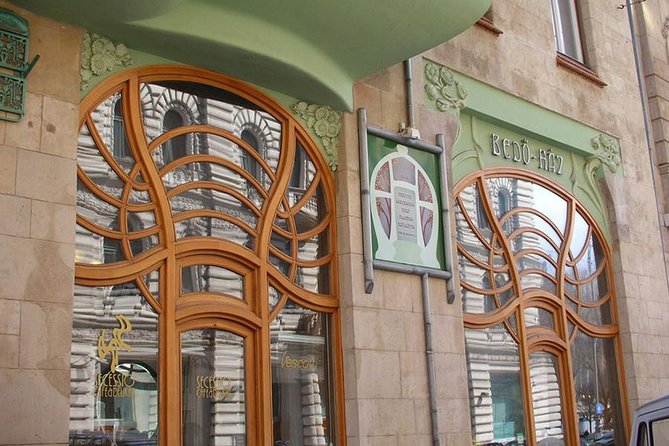
The Royal Postal Savings Bank is the architectural high point for many people on this route. It was designed by Ödön Lechner, the Hungarian architect most closely associated with the country’s distinctive Art Nouveau.
The stop lasts around 20 minutes and carries no listed admission fee. The guide discusses the entrance hall and the building’s design elements, helping you see how Lechner moved beyond standard European formulas.
Lechner is often called the Gaudi of Hungary, a comparison that points to his playful, inventive approach. You will hear about his place in Hungarian architecture and the way his work helped shape Budapest. The exact comparison matters less than the lesson behind it: Lechner sought a style that felt Hungarian rather than simply copied from Paris, Vienna, or another major European center.
This is where a guide’s explanation has real value. Without context, a decorated bank can seem like an eccentric old building. With context, you begin to see the choices in the roofline, ornament, surfaces, and entrance as part of a larger effort to create a national architectural language.
The 20-minute stop is not enough for an exhaustive study, but it gives you a strong framework. If Lechner catches your interest, make a note of his name and look for more of his buildings during the rest of your time in Budapest.
A completely different kind of day out around Budapest:
- Budapest: City Highlights Cruise with Welcome Drink
★ 4.6 · 35,610 reviews - Budapest: Unlimited Prosecco, Beer and Aperol Spritz Cruise
★ 4.8 · 25,310 reviews - Budapest: Széchenyi Spa Day Ticket with Optional Upgrades
★ 4.3 · 23,911 reviews - Budapest: Nighttime or Daytime Sightseeing Cruise
★ 4.2 · 21,062 reviews
Thonet House and the Zsolnay tile connection
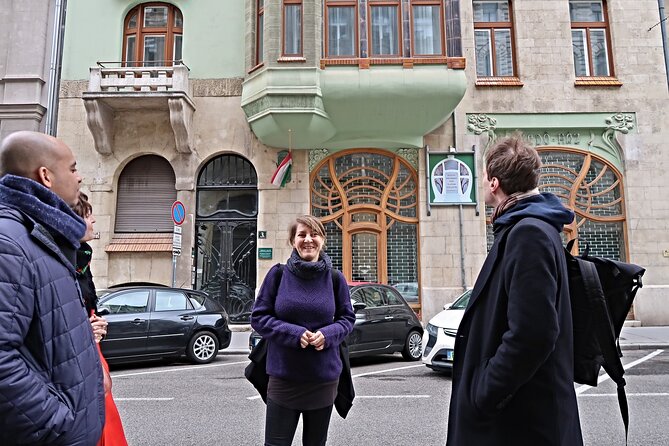
At Thonet House, the subject shifts from the architect’s overall design to the materials that made Hungarian Art Nouveau so recognizable. The building is a stopping point for discussing ceramic tiles on facades, an important feature of the local style.
The tiles connect to the Zsolnay porcelain and ceramics factory in Pécs, a city in southern Hungary. This is one of the most useful pieces of background on the tour because it explains how decoration was not just painted onto a wall. Specially made ceramics could protect a facade while also giving it color, texture, and patterns that ordinary building materials could not provide.
You will spend about 20 minutes here. The stop is especially rewarding if you like close visual details. Look beyond the overall shape of the building and study the surface. Tiles can make a facade feel more like a piece of craftwork than a plain structural wall.
I also appreciate the way this stop broadens the story. The tour is not only about famous architects. It shows how factories, materials, and technical skill helped make an artistic movement possible. Pécs may be outside your Budapest plans, but its ceramic production appears here as an essential part of the capital’s appearance.
The limitation is that a 20-minute stop cannot explain every Zsolnay technique or every building connected to the factory. Think of this as a practical introduction, one that gives you a sharper eye for ceramic decoration across Hungary.
Kazinczy Street Synagogue: Art Nouveau with a religious purpose
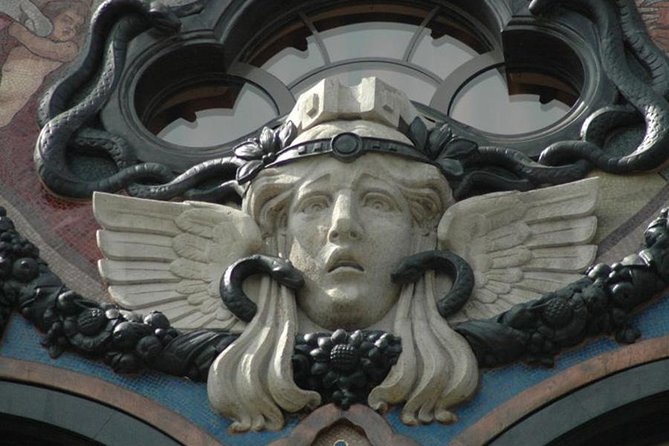
The tour ends at the Orthodox Synagogue on Kazinczy Street, at numbers 29 to 31. This is a fine final stop because it changes the mood and setting. Instead of finishing with another commercial palace or bank, you see Art Nouveau used in a religious building.
The synagogue is decorated in Art Nouveau style, and the tour normally includes an interior visit except on Saturdays. Admission is not included, and there may be an additional charge if the site is open on the day of your tour. Check this point before you set your budget.
You should also remember that synagogue access can involve practical limits. The supplied information confirms the Saturday exception and possible extra cost, but it does not promise identical access on every date. If seeing the interior is important to you, ask the operator about the conditions for your chosen day.
The interior visit, when available, gives the walk a worthwhile finish. You can compare the synagogue’s decorative approach with the secular buildings earlier in the day. The same broad movement can look different when applied to worship, community identity, and religious space.
The tour ends here rather than returning to the starting cafe. That is convenient if you plan to continue exploring the Jewish Quarter. It also means you should know where you are heading next, especially if you have a timed reservation elsewhere.
What the small group changes
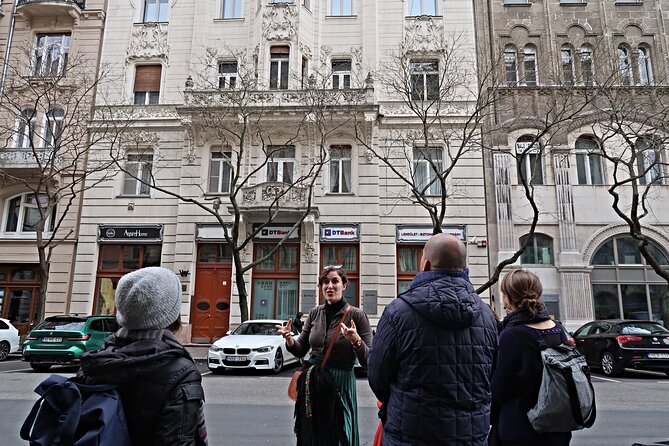
The advertised format is small, but the information gives two different maximums: one description says six people, while the additional details say eight. Either size is still far more personal than a large city walking tour, yet the difference matters if you are booking for a quiet, discussion-heavy experience.
A small group lets you ask about a building that catches your eye. One review described a guide who was willing to go anywhere in the city that the group wanted to learn more about. Do not treat that as a guarantee of a custom route, but it does suggest that questions and individual interests are welcomed.
Another useful point came from the meeting arrangement. The starting cafe can be busy, so do not stroll in at the last moment expecting to spot the guide instantly. A few extra minutes at the meeting point can prevent a stressful start.
The experience is offered in English. The guide’s role is not just to keep time but to explain architecture in a way that makes the streets more legible. The strongest praise has focused on the guide’s command of architecture and history, along with the ability to add stories to beautiful buildings.
Is $126.16 a fair price?
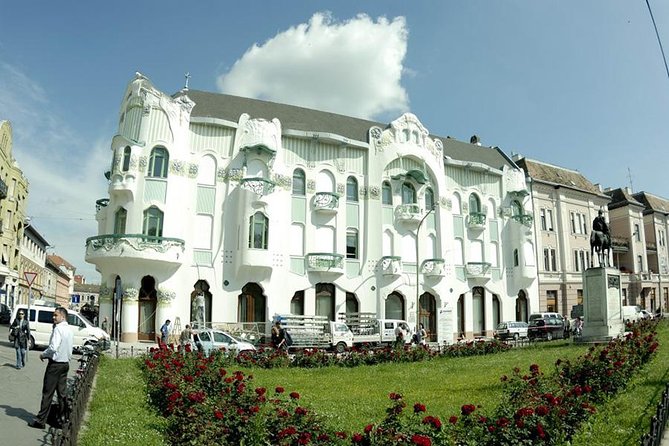
At $126.16 per person, this is not a bargain walking tour. The price becomes easier to justify if you care about architecture, prefer a small group, and want an historian guide rather than a general city orientation.
You are paying for about three hours of focused attention on one subject. You are also paying for a route that connects buildings, designers, materials, and cultural purpose. That is more specialized than a standard highlights tour, but it is less broad. You will not cover all of Budapest’s major sights.
The value drops if you mainly want exterior photographs and already know the basics of Art Nouveau. In that case, you could visit several of these buildings independently and spend nothing on admission at the listed stops. You would, however, miss the organized explanation of Lechner, Zsolnay ceramics, and the relationship between the buildings.
Public transport passes are extra, as are food and drinks. Possible synagogue admission is also extra. Add these costs before booking, since the headline price is not the final expense.
Group discounts may improve the calculation for families or friends booking together. The tour is also free to cancel up to 24 hours before the start time, which gives you some flexibility. Cancellations or changes made inside that window are not refunded or accepted.
Who will enjoy this walk most?
I would choose this tour if you like buildings but want help reading them. It suits visitors who have already seen Budapest’s basic sights and want a more focused subject, as well as first-time visitors who prefer architecture to a broad checklist of attractions.
It is a good match for:
- People interested in Art Nouveau, design, or urban history
- Visitors who want to learn about Ödön Lechner
- Couples or small groups who value conversation with a guide
- Anyone curious about Hungarian ceramics and Zsolnay tiles
- Walkers who can manage a moderate amount of time on their feet
I would be more cautious if you have limited mobility, dislike public transport, or want guaranteed entry to every building. The tour information says most people can participate, but it does not promise step-free access or detailed accessibility arrangements.
It is also not the best choice for someone seeking a food tour, a general Budapest overview, or a long list of interior visits. The emphasis is architecture, observation, and explanation.
Practical advice for a better morning or afternoon
Wear shoes you can walk and stand in comfortably. Look upward often, but stay aware of city traffic and other pedestrians. Many of the best details may be above eye level, especially on roofs and upper facades.
Bring a little extra money for public transport and the possible synagogue charge. Food and drinks are not included, so plan a snack or meal before or after the walk rather than expecting a cafe break during the three hours.
Keep the starting address, Madal Cafe, clearly visible on your phone. Since the meeting place may be crowded, arriving early is the simplest way to avoid confusion.
If you are especially interested in interiors, ask at the beginning how much access is expected at Gresham Palace and the synagogue. The synagogue visit is normally available except on Saturdays, but the information also notes that an added cost may apply if it is open on your tour day.
Finally, check the group size when you book. The smaller the group, the more useful the guide’s architectural explanations and personal questions are likely to be.
Should you book the Budapest Art Nouveau Walking Tour?
Book it if you want a focused, guide-led look at Budapest’s decorative architecture and you are comfortable paying a premium for a small group. The route has a clear story: grand palace, inventive bank, ceramic facade, and Art Nouveau synagogue. The guide’s historical and architectural focus is the main reason to choose it.
Skip it if you want a cheap stroll, broad sightseeing, or guaranteed access to several interiors. For the right audience, the price buys more than a walk between pretty buildings. It gives you the tools to notice what makes Budapest’s Art Nouveau local, inventive, and worth looking up for.
FAQ
How long is the Budapest Art Nouveau Walking Tour?
The tour lasts approximately three hours.
What buildings are visited?
The route includes Gresham Palace, the Royal Postal Savings Bank, Thonet House, and the Orthodox Synagogue on Kazinczy Street.
Is public transportation included?
No. Some public transport is used during the tour, but you must pay for your own transportation passes.
Is synagogue admission included?
No. Admission is not included, and an additional cost may apply if the Orthodox Synagogue is open on the day of your tour. The interior is visited except on Saturdays.
Where does the tour start and finish?
The tour starts at Madal Cafe, Alkotmány u. 4, 1054 Budapest, and finishes at the Budapest Orthodox Synagogue at Kazinczy u. 29 to 31, 1075 Budapest.
How large is the group?
The tour is described as a small-group experience. One description gives a maximum of six people, while the additional details give a maximum of eight, so confirm the current limit when booking.
Just added around Budapest
- Lake Balaton and Herend Guided Tour★ 4.7 · 3 reviews
- Audio visual multi-sensory chefs journey dinner experience★ 5.0 · 3 reviews
- Tapolca Cave Lake and Tihany/ Balaton private tour from Budapest★ 4.5 · 3 reviews
- Hollókő Ethnographic Village: Day Tour from Budapest★ 3.7 · 3 reviews
- Budapest Art Nouveau Walking Tour★ 5.0 · 3 reviews
- SzentEndre-SaintAndrew City Privately Shopping and Picturesque★ 4.5 · 3 reviews
- Budapest Drinks and Piano Show Cruise★ 4.5 · 3 reviews
- Horseshow on the Hungarian Puszta, private tour from Budapest with entry!★ 5.0 · 3 reviews
Walking Tours, compared.
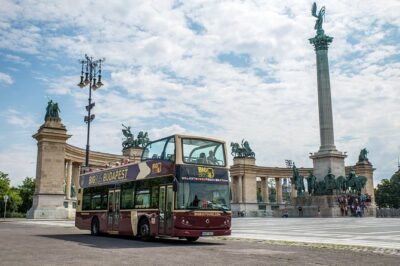
Big Bus Budapest Hop-On Hop-Off Bus and Walking Tour
What we thought →
Budapest City Landmarks Walking Tour in 2 Hours
What we thought →
3-Hour Orientation Walking Tour of Buda and Pest
What we thought →
Budapest Historical Sightseeing – Free Walking Tour
What we thought →
Budapest All in One Small Group Walking Tour with Strudel Stop
What we thought →Browse the lists this tour appears in