
Reviewed · BUDA CASTLE & CASTLE DISTRICT
Buda Castle Walking Tour: A Kingdom of Many Nations
Castle Hill tells Budapest’s story in stone. This three-hour walk makes the old quarter meaningful by linking royal power, Turkish rule, Habsburg influence, war, and modern Hungary. I especially like the maximum six-person booking size, which gives your guide room to adjust the pace and answer questions, and the excellent route from the palace to Matthias Church, Fisherman’s Bastion, and Vienna Gate. The main catch is cost: at $126.15 per person, you also pay separately for several entrance tickets.
This is not a tour inside a single preserved medieval castle. Buda Castle District is an old town area, rebuilt in large part after heavy World War II damage. That distinction matters, but it does not lessen the appeal. With a strong guide such as Kata, Peter, Gregory, Marianna, Veronica, or Runa, the streets become a clear lesson in how Hungary was shaped by many rulers.
In This Review
- Key points to know before booking
- Why Castle Hill deserves a guided walk
- Starting at the royal palace
- Sándor Palace and modern Hungary
- Matthias Church: beautiful, rebuilt, and extra cost
- Fisherman’s Bastion and Budapest’s best views
- Ending at Vienna Gate
- Guides are the heart of the experience
- What three hours feels like
- Is $126.15 a fair price?
- Who should book this walk?
- Should you book the Buda Castle Walking Tour?
- FAQ
- How long does the Buda Castle Walking Tour last?
- What sites are included on the route?
- Are admission tickets included?
- Where does the tour start?
- Where does the tour finish?
- How large is the group?
- Is the tour offered in English?
- Is hotel pickup included?
Key points to know before booking

- A small group keeps the walk personal: Bookings are limited to six people, with the overall activity capped at eight.
- The route covers the heart of Castle Hill: You see the royal palace, Sándor Palace, Matthias Church, Fisherman’s Bastion, and Vienna Gate.
- History is the main attraction: The story moves from King Béla IV and the Mongol invasion to King Matthias, Ottoman rule, Habsburg power, World War II, and modern Hungary.
- Church and bastion tickets cost extra: Entrance fees are not included, so add them to the tour price.
- The best guide makes a major difference: Past departures have featured Kata, Peter, Gregory, Marianna, Veronica, Judith, Katie, Runa, Henk, and Susana.
- The walk ends with a fine view: Vienna Gate looks toward Óbuda, while Fisherman’s Bastion opens across the Danube to Pest, Margaret Island, and Gellért Hill.
Why Castle Hill deserves a guided walk
Buda Castle District is Budapest’s oldest quarter, and it feels quite different from the city streets across the Danube. Narrow lanes, cobbled surfaces, Gothic details, Baroque façades, colored roof tiles, and formal government buildings fill the hilltop.
The setting is attractive on its own, but the past is complicated. Castle Hill has been rebuilt, occupied, damaged, and repurposed many times. Without context, you may simply see a grand palace, a church with a striking roof, and a series of scenic terraces. With a guide, you can connect those sights to the kings, invaders, religious changes, and political shifts that shaped them.
That is where this tour earns its keep. A guide can explain why the palace looks eclectic instead of purely medieval, why Matthias Church is a nineteenth-century reconstruction, and why Fisherman’s Bastion is more architectural fantasy than military fortress.
The tour is also small enough to feel like a conversation rather than a speech. Past groups have sometimes had only two people, while others had four. Guides were able to adjust the pace, answer detailed questions, and shape the discussion around family background, architecture, politics, or Hungarian culture.
More Buda Castle and Castle District walks:
- Budapest: Buda Castle Cave Tour
★ 4.7 · 5,677 reviews - Budapest: Buda Castle District Vampires and Myths Night Tour
★ 4.6 · 3,830 reviews - Budapest: Buda Castle Walk with Saint Stephen’s Hall
★ 4.5 · 3,012 reviews
Starting at the royal palace
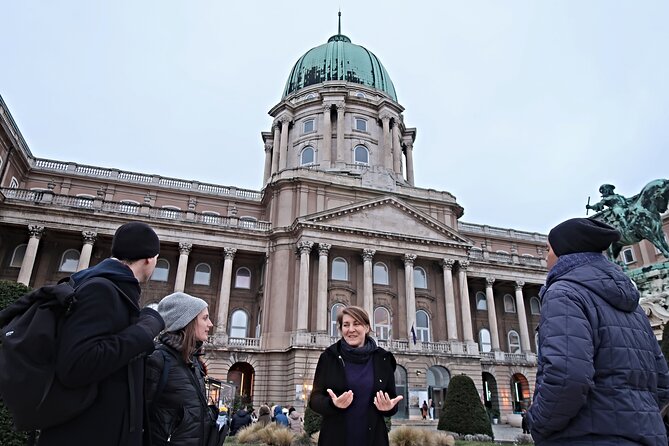
The walk begins near Országh u. 31, at the northern end of the Castle District. From there, the route heads toward the palace, the massive complex at the southern tip of the hill.
The first important idea is that Buda Castle is not one untouched medieval building. King Béla IV began a fortress on Castle Hill around 1250 after Mongol forces devastated Hungary. Later rulers altered the site repeatedly. King Matthias turned it into one of Europe’s most celebrated Renaissance courts in the late fifteenth century.
Then came more than 150 years of Ottoman rule, followed by Habsburg control. Fire, war, political change, and rebuilding left the palace with its current eclectic appearance, much of it shaped after World War II.
A good guide will help you read the building as a record of changing power. The palace served as a fortress, royal residence, administrative center, and political symbol. The tour discusses these changing functions rather than treating the complex as a single frozen monument.
One point to keep clear: the palace portion is primarily an exterior visit. The tour does not promise entry into the palace museums or an extensive interior visit. If you want museum time, plan that separately.
The palace stop is listed as about two hours, while the more focused palace explanation is about 15 minutes. That suggests the first part of the walk gives you time to explore the larger Castle District around the complex, not two hours inside a palace building.
Sándor Palace and modern Hungary
A short stop at Sándor Palace adds a useful modern chapter. Built in Neoclassical style in 1806 for Count Vincent Sándor, an aristocrat and philosopher of the Austro-Hungarian Empire, it has been the official residence of Hungary’s president and the home of the Office of the President since 2003.
The stop lasts only about five minutes, so do not expect a full palace visit. Its value comes from the contrast. Castle Hill is not only a medieval quarter or a tourist district. It remains part of Hungary’s working political center.
Your guide can place the building within the wider story of aristocratic power, imperial Hungary, and the modern republic. That brief connection helps prevent the tour from becoming a string of old façades with disconnected dates.
Matthias Church: beautiful, rebuilt, and extra cost
Matthias Church is one of the visual highlights of the walk. Its colored roof and tall steeple draw you across the square, while the interior is known for elaborate decoration.
The building you see today is a carefully executed Neo-Gothic reconstruction from the late nineteenth century. Calling it a reconstruction fantasy is useful because it sets realistic expectations. This is not a perfectly preserved medieval interior. It is a later interpretation of the church’s earlier forms, shaped by nineteenth-century ideas about the Middle Ages.
The church also carries royal importance. It served as a coronation site for Hungarian kings, giving the building political weight as well as religious meaning. A guide can explain how the church fits into the story of the kingdom, Ottoman rule, and later national identity.
Admission is not included. If you want to go inside, budget for the separate ticket. That extra charge is easy to overlook because the tour price is already substantial. Still, I think entry is worthwhile if the church is open and your schedule allows it. The exterior is impressive, but the decorated interior gives the guide’s historical explanation more substance.
Several guides have received especially warm praise for the way they handle this stop. Kata was noted for making the past understandable and connecting it to present-day Hungary. Veronica was praised for making the whole route engaging, particularly where the rebuilt nature of the district might otherwise disappoint. One departure included a guided visit inside Matthias Church, which was considered worth the additional cost.
More walking tours:
- Big Bus Budapest Hop-On Hop-Off Bus and Walking Tour
★ 3.5 · 2,206 reviews - Budapest: Buda Castle District Walking Tour
★ 4.6 · 2,108 reviews - Budapest City Landmarks Walking Tour in 2 Hours
★ 5.0 · 2,048 reviews - 3-Hour Orientation Walking Tour of Buda and Pest
★ 4.8 · 1,834 reviews
Fisherman’s Bastion and Budapest’s best views

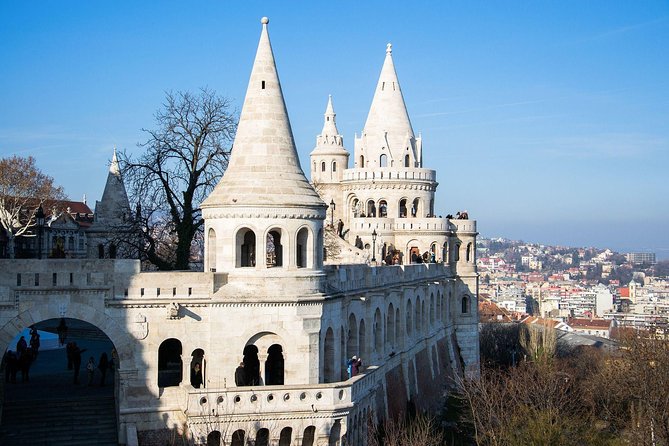
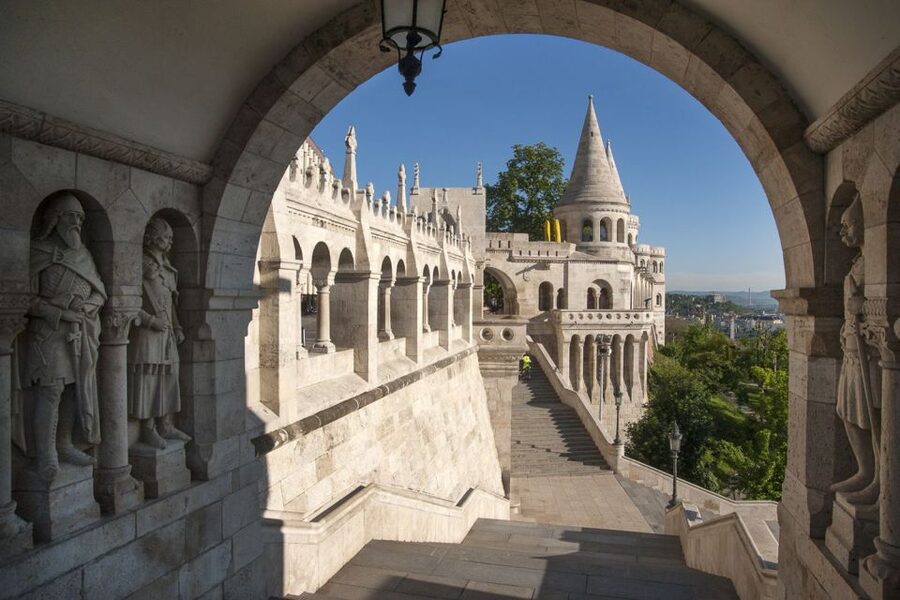
Fisherman’s Bastion is the tour’s main viewpoint. Built from 1895 to 1902, it uses Neo-Gothic and Neo-Romanesque forms to create an architectural fantasy of towers, arches, and terraces.
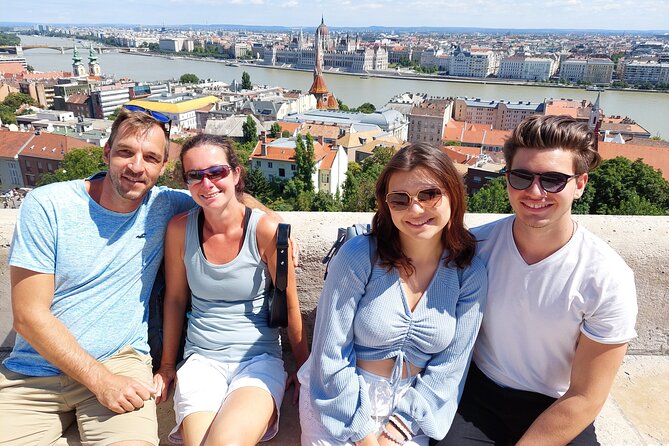
Its seven towers represent the seven Magyar tribes that settled in the Carpathian Basin at the end of the ninth century. That symbolism gives the structure a national story, but the setting is just as important. From the terrace, you can look over the Danube toward Pest, Margaret Island, and Gellért Hill.
This is a good place to pause and let the geography settle in. Budapest is easier to understand when you can see both sides of the river. Castle Hill occupies the Buda side, while the flatter Pest side spreads beyond the Danube. The view also helps explain why this hill was valuable for defense and royal authority.
Fisherman’s Bastion tickets are separate, so ask your guide which areas require payment during your visit. The tour includes the stop, but not the admission fee.
The bastion can be the busiest part of the route, especially around the church and popular photo points. The small group helps you stay connected to your guide, but it does not make the site private. If scenic views matter to you, an assigned morning or afternoon departure may affect the light and atmosphere, though the exact departure time depends on the day.
Ending at Vienna Gate

The route ends at Vienna Gate, on the northern side of the district. From here, you can see toward Óbuda, or Old Buda, where the Romans founded the city known as Aquincum.
This ending works well because it widens the story beyond the royal quarter. You finish not with another ornate building, but with a view toward one of the oldest parts of the city. It also gives you a useful sense of how Castle Hill fits into Budapest’s larger geography.
The end point is simply listed as Budapest rather than a named hotel or transit station. Before setting out, confirm the final meeting details and note that hotel pickup and drop-off are not included. The starting point is near public transportation, but you will need to make your own way there.
Guides are the heart of the experience

The strongest reason to choose this walk is the guide. The tour has featured a broad team of English-speaking guides, including Peter, Judith, Gregory, Kata, Marianna, Veronica, Katie, Runa, Henk, and Susana.
Several qualities appear again and again in the feedback. Guides are praised for explaining Hungarian history clearly, adapting to the group’s interests, answering questions patiently, and adding personal stories. One guide who grew up in the Buda District even showed the group a family connection to the area through his grandmother’s house.
That kind of local connection is valuable. You get more than a list of kings and construction dates. You may hear about daily life, the way buildings were used, or how Hungary experienced the Soviet period. Marianna, for example, was especially appreciated for personal memories connected with life under Soviet rule.
Guide assignments can change, so you should not book on the assumption that one particular person will lead your departure. Still, the consistent praise for the guide team is a strong sign that the company treats interpretation as the main product, not an afterthought.
What three hours feels like
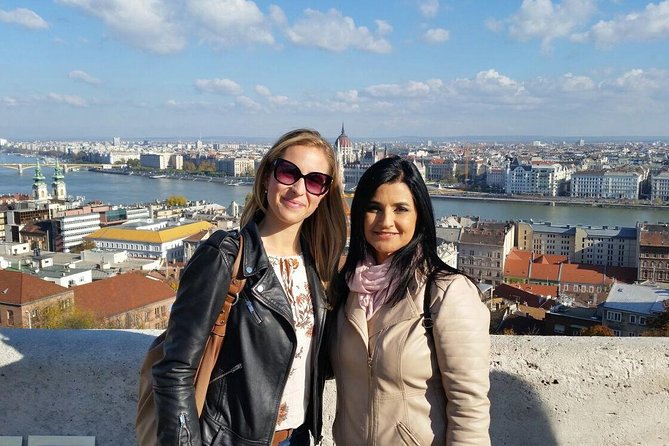
Three hours is enough time to cover the major sights without turning the outing into an all-day commitment. You will walk through a historic district, pause at the palace, stop at Sándor Palace, visit the church area, take in the bastion views, and finish at Vienna Gate.
This is an active walking experience. Castle Hill has narrow streets and cobbled surfaces, and the route includes several outdoor stops. Wear shoes that are comfortable on uneven pavement and be ready to spend much of the time standing.
The small group helps the pace. A guide can slow down for questions or move along when the group has had enough architecture for one afternoon. Families with Hungarian roots may find the historical background especially rewarding, while first-time visitors to Budapest can use the walk to understand the city before exploring on their own.
A practical tip from the feedback is to consider taking a general Budapest tour before this one. One past participant found that a broader city introduction first made the Castle District walk easier to place. That is sensible advice if you are new to Budapest. If you already know the main city sights, this tour works well as a focused half-day visit.
Is $126.15 a fair price?
At $126.15 per person, this is not a bargain sightseeing walk. The price reflects the professional guide and very small group, but it does not include food, drinks, hotel transfers, or entrance tickets to Buda Castle attractions, Matthias Church, and Fisherman’s Bastion.
The value depends on what you want from Castle Hill. If you only need directions and a few photo stops, the price is hard to justify. You can walk through the district independently and pay admission on your own.
I see better value if you care about context and conversation. The district contains layers that are easy to miss, especially the difference between medieval remains, nineteenth-century rebuilding, postwar reconstruction, and modern government use. A good guide can also save you from spending your limited Budapest time trying to decode the area alone.
The group limit is the strongest practical argument for the cost. A six-person booking cap, with no more than eight people overall, is far more personal than a large coach excursion. If the tour has only two or four people, you may get an almost private experience without paying a full private-tour price.
Group discounts may be available, but the supplied details do not specify the discount amount. Check the total before booking, then add the church and bastion admission fees to your budget.
Who should book this walk?
I would recommend it to you if you want a clear introduction to Buda Castle District, care about Hungarian history, or prefer a small group over a large organized tour. It is also a good fit if you enjoy asking questions and want a guide who can adjust the discussion to your interests.
Families with Hungarian heritage may find the political and cultural background especially meaningful. The same is true for anyone interested in monarchy, Ottoman rule, Habsburg Central Europe, World War II reconstruction, or the Soviet era.
You may want to skip it if you have already spent substantial time in the district with a private guide, or if your main goal is entering museums rather than walking among the buildings. The tour is centered on the district’s streets, exteriors, viewpoints, and guided interpretation.
Book with the ticket costs in mind. Free cancellation is available if you cancel at least 24 hours before the local start time. Cancellations or changes made inside that window are not refunded or accepted.
Should you book the Buda Castle Walking Tour?
Book this tour if you want the Castle District to make sense, not just look pretty. The palace, Matthias Church, and Fisherman’s Bastion provide the scenery, but the guide explains why the area has been rebuilt so many times and how Hungary’s many rulers left their mark.
The high rating and 97 percent recommendation fit the tour’s strongest qualities: excellent guides, a genuinely small group, a logical route, and strong views. The price and extra admission fees are the main drawbacks.
For a first or second visit to Budapest, I think this is a smart choice if your budget allows. Choose it for the history and personal guidance, then treat the Fisherman’s Bastion view as a very fine bonus.
FAQ
How long does the Buda Castle Walking Tour last?
The guided walk lasts approximately three hours.
What sites are included on the route?
The route includes Buda Castle, Sándor Palace, Matthias Church, Fisherman’s Bastion, and Vienna Gate.
Are admission tickets included?
No. Tickets for Buda Castle, Matthias Church, and Fisherman’s Bastion are not included in the tour price.
Where does the tour start?
The meeting point is Budapest, Országház u. 31, 1014 Hungary.
Where does the tour finish?
The walk ends at Vienna Gate in Budapest.
How large is the group?
A booking can include a maximum of six people, and the overall activity has a maximum of eight participants.
Is the tour offered in English?
Yes. The experience is offered in English.
Is hotel pickup included?
No. Hotel pickup and drop-off are not included. Food and drinks are also excluded unless specifically stated.
Just added around Budapest
- Lake Balaton and Herend Guided Tour★ 4.7 · 3 reviews
- Audio visual multi-sensory chefs journey dinner experience★ 5.0 · 3 reviews
- Hollókő Ethnographic Village: Day Tour from Budapest★ 3.7 · 3 reviews
- Tapolca Cave Lake and Tihany/ Balaton private tour from Budapest★ 4.5 · 3 reviews
- Budapest Art Nouveau Walking Tour★ 5.0 · 3 reviews
- SzentEndre-SaintAndrew City Privately Shopping and Picturesque★ 4.5 · 3 reviews
- Budapest Drinks and Piano Show Cruise★ 4.5 · 3 reviews
- Horseshow on the Hungarian Puszta, private tour from Budapest with entry!★ 5.0 · 3 reviews
Buda Castle & Castle District, compared.
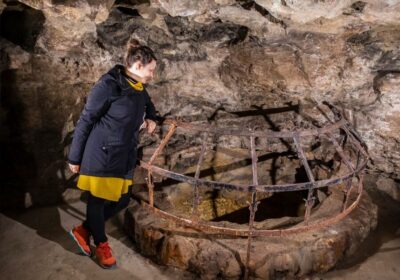

Buda Castle District Vampires and Myths Night Tour
What we thought →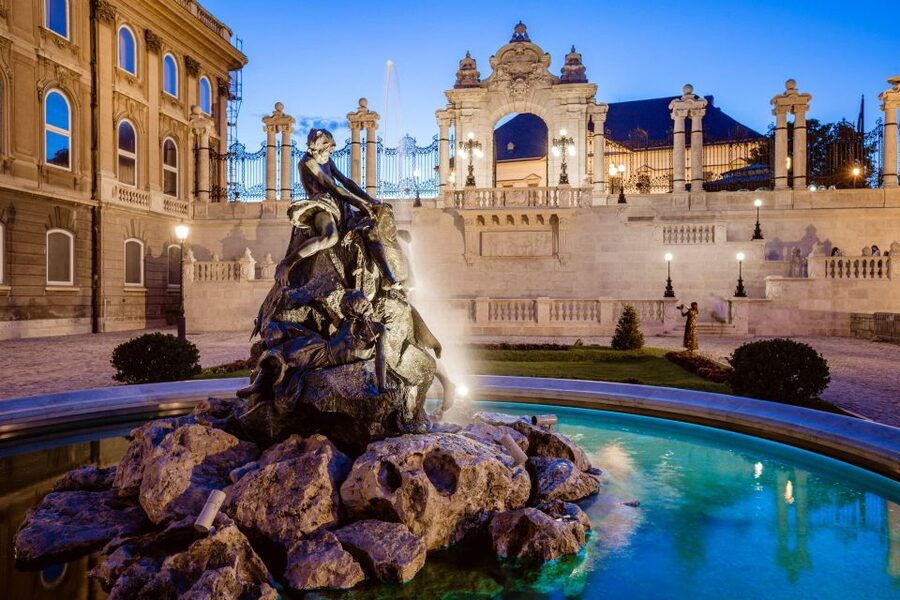
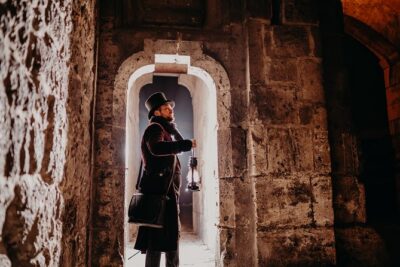
Buda Castle District Dark History, Legends and Vampire Night Tour
What we thought →
Buda Castle District Walking Tour with a Historian
What we thought →

Walking tour in the Buda Castle incl. Fisherman’s Bastion
What we thought →Browse the lists this tour appears in