
Reviewed · WALKING TOURS
Alternative Budapest Walking Tour
Budapest has a clever side door. This small-group walking tour takes you past murals, ruin bars, cafés, galleries, design shops, and music spaces that explain how modern Budapest keeps changing. I like the personal feel, with no more than 10 people, and I like that the tour looks at present-day art, nightlife, and local life instead of repeating the usual monument list.
The guide is the real key here. Past guides including Raymond, Petra, Anna, Bella, Antonia, and Krisztián have been praised for friendly conversation, useful local tips, and clear explanations. My main caution is the $67 price, which feels high for a 2.5-hour walking tour, especially since food, drinks, and entrance fees are extra.
In This Review
- Key Points At A Glance
- Why This Tour Shows A Different Budapest
- Starting At The Lutheran Church
- The Jewish Quarter And Its Changing Streets
- Reading Budapest’s Murals And Graffiti
- Cafés, Design Shops, And Creative Workspaces
- Ruin Bars And Community Spaces
- Music, Fashion, And Alternative Culture
- The Guide Makes Or Breaks The Experience
- How Much Walking And What To Wear
- Is $67 A Fair Price?
- Who Should Book This Walk?
- Final Verdict: Book It For The City Behind The Sights
- FAQ
- How long does the Alternative Budapest Walking Tour last?
- What language is the tour conducted in?
- How large is the group?
- Where does the tour meet?
- Are food and drinks included?
- Is the tour suitable for wheelchair users?
Key Points At A Glance
- The Jewish Quarter is the main stage: See how an old district became one of Budapest’s leading areas for cafés, bars, street art, and independent culture.
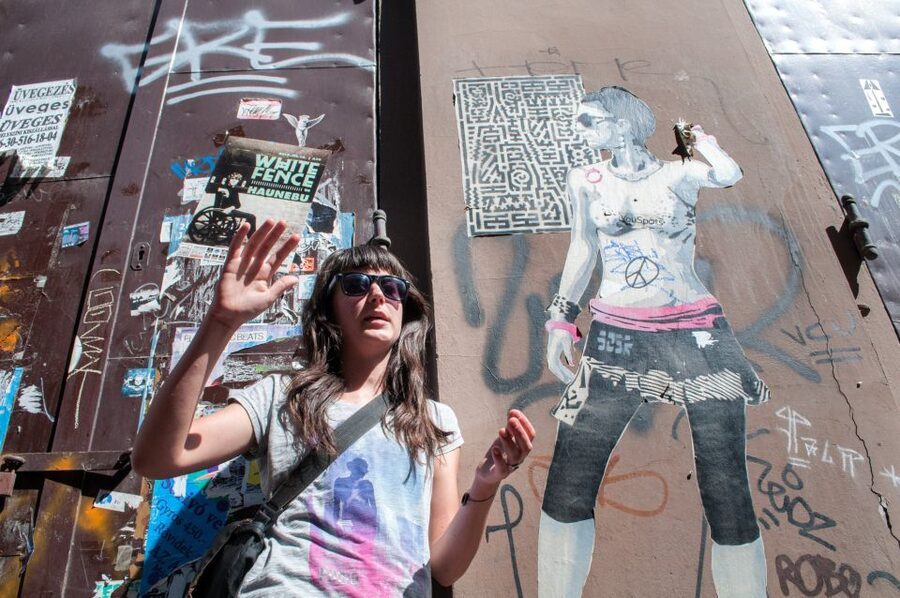
- Street art comes with context: You learn about local graffiti writers, murals, political ideas, and the meaning behind marks that can otherwise look like decoration.
- The route can change: This is an ever-changing tour, so exact cafés, galleries, studios, and bars may differ from one departure to another.
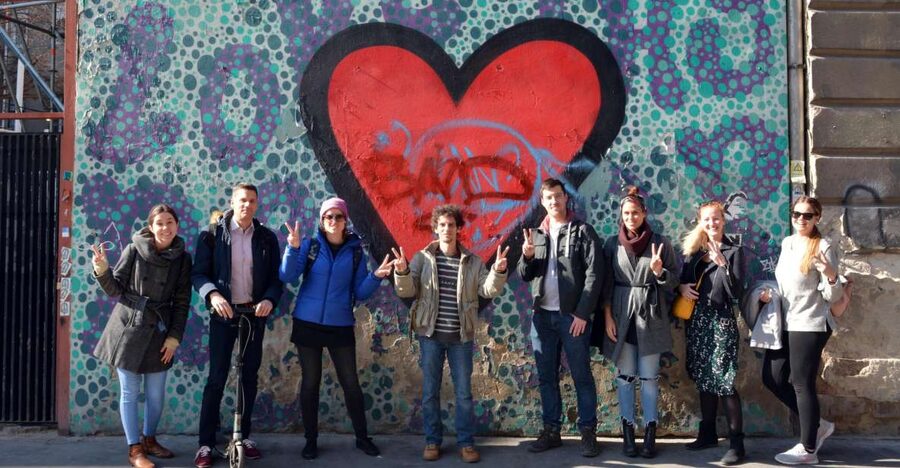
- Small groups improve the conversation: With a maximum of 10 participants, you can ask about nightlife, food, design, music, and places to visit later.
- Ruin bars are more than drinking spots: The tour connects them with community projects, workshops, galleries, and the reuse of old buildings.
- Comfort matters: Wear good shoes and weather-appropriate clothing. The tour is not suitable for wheelchair users or people with mobility impairments.
Why This Tour Shows A Different Budapest
Budapest is famous for grand architecture, thermal baths, the Danube, and hilltop views. Those sights deserve your time. Yet they do not fully explain the city you encounter after dark, especially in the old Jewish Quarter.
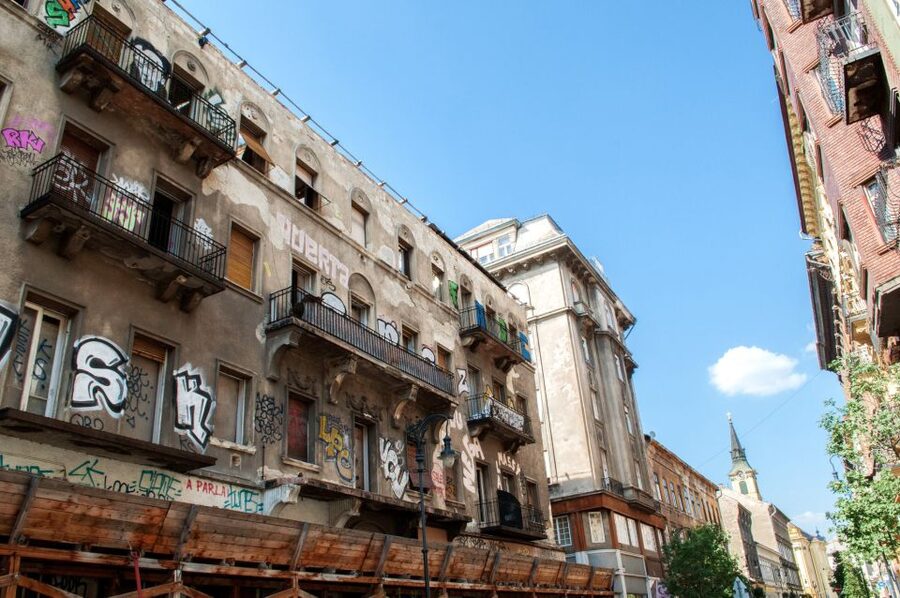
This tour focuses on the Budapest of street murals, independent shops, alternative music, and reused buildings. It is less concerned with polished façades and more interested in what happens when artists, café owners, musicians, and local groups take over neglected spaces.
That gives the walk a useful purpose. You are not simply collecting photographs. You are learning why certain parts of the city feel rough around the edges, why abandoned buildings became social spaces, and how young Budapest has reshaped parts of the seventh district.
The comparison with post-wall East Berlin appears in the tour description, and it makes sense as a broad point of reference. Uncared-for districts can become attractive to artists and small businesses because rents, spaces, and rules may allow experimentation. Budapest’s version is its own story, shaped by local politics, the city’s Jewish past, and the rise of ruin bars.
Do not book this as a replacement for a classic Budapest sightseeing walk. It is better as a second look at the city, or as an early activity that helps you decide where to spend the rest of your stay.
More walking tours:
- Budapest: Buda Castle Walk with Saint Stephen’s Hall
★ 4.5 · 3,012 reviews - Big Bus Budapest Hop-On Hop-Off Bus and Walking Tour
★ 3.5 · 2,206 reviews - Budapest: Buda Castle District Walking Tour
★ 4.6 · 2,108 reviews
Starting At The Lutheran Church
You meet the guide in front of the pale yellow Lutheran Church, on the church steps. That is a simple location, but allow a few minutes to identify the correct building and find the guide before the group leaves.
The tour is conducted in English. Since the group is capped at 10 people, introductions and questions should be manageable. That matters on a subject like street art, where the best moments often come from asking why a particular wall, slogan, shop, or building matters.
Past guide feedback gives a useful picture of the tone. Raymond, also called Ray, was praised for mixing background information with stories and casual conversation. Petra was remembered for enthusiasm and warmth, while Krisztián was noted for broad knowledge and flexibility. Those names are not a guarantee of your guide, but they show the sort of personal, conversational style the operator aims for.
The Jewish Quarter And Its Changing Streets
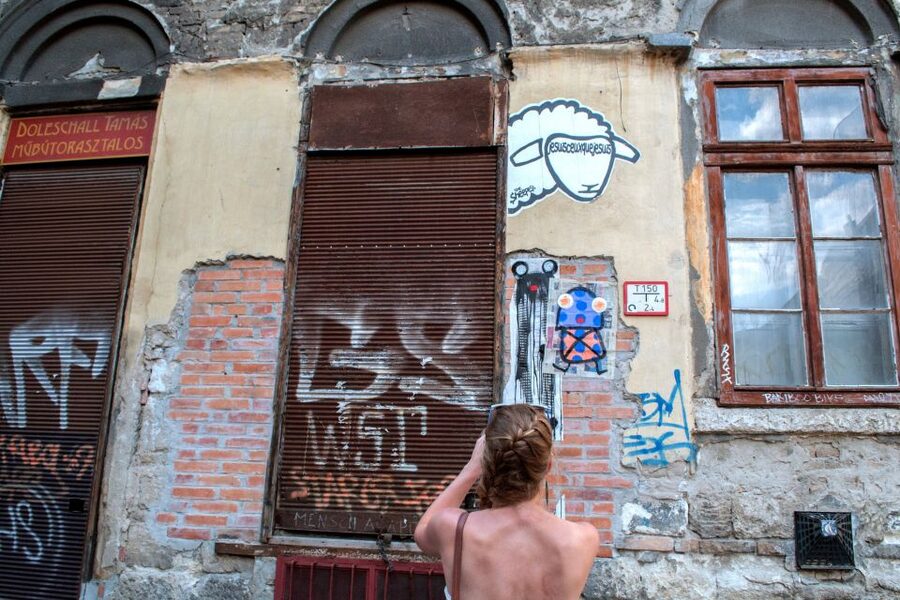
The Jewish Quarter is the heart of the experience. You explore streets where old buildings, new businesses, murals, cafés, and bars sit close together.
The area is not presented as a frozen historic district. Instead, you see how it has changed from a neglected part of town into a sought-after place for restaurants, cafés, nightlife, and creative work. That change brings energy, but it also raises questions about who benefits from redevelopment and how local life is affected. The guide can connect those larger issues with what you see on the street.
This is one of the strongest parts of the walk because the district combines several layers at once. You may encounter a former religious building, a painted wall, a design store, and a popular bar within a short distance. The guide helps you read those surroundings as part of one ongoing story rather than unrelated stops.
The tour also includes discussion of Budapest’s Jewish community. That makes the experience more than a hunt for fashionable venues. You gain context for the neighborhood’s past while seeing how its present identity has been shaped by art, nightlife, and cultural projects.
Reading Budapest’s Murals And Graffiti
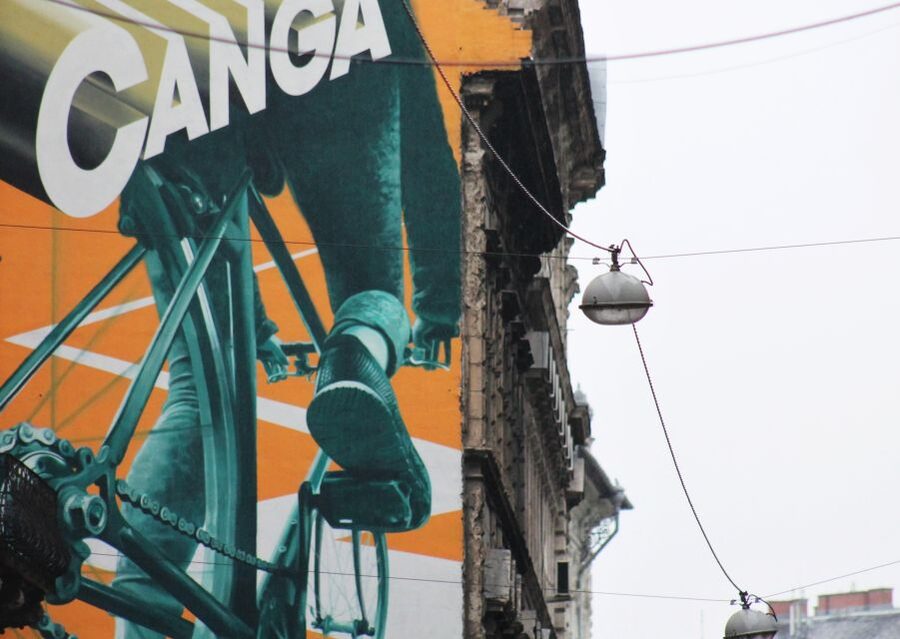
Street art can be easy to admire and easy to misunderstand. A large mural may look like a colorful backdrop, but the subject, location, and public response can matter as much as the image itself.
The guide introduces local graffiti writers and street artists and explains Budapest’s street art culture. One past participant specifically appreciated learning why paint appears on sidewalks and how Hungarians approach architecture differently. Details like that are valuable because they train you to notice smaller visual clues during the rest of your visit.
You might stop at murals, smaller works, painted surfaces, or unusual architectural details. The exact selection changes, since the art itself can be covered, removed, or replaced. That is part of the appeal, but it also means you should not expect a fixed checklist of famous works.
If you already follow street art closely, some images may not be new to you. A past participant with a strong interest in the subject found the route less revealing in that respect, though still appreciated the off-route neighborhoods and the guide’s local knowledge. For most visitors, the historical and social explanation will add more value than simply seeing the art.
A completely different kind of day out around Budapest:
- Budapest: City Highlights Cruise with Welcome Drink
★ 4.6 · 35,610 reviews - Budapest: Unlimited Prosecco, Beer and Aperol Spritz Cruise
★ 4.8 · 25,310 reviews - Budapest: Széchenyi Spa Day Ticket with Optional Upgrades
★ 4.3 · 23,911 reviews - Budapest: Nighttime or Daytime Sightseeing Cruise
★ 4.2 · 21,062 reviews
Cafés, Design Shops, And Creative Workspaces
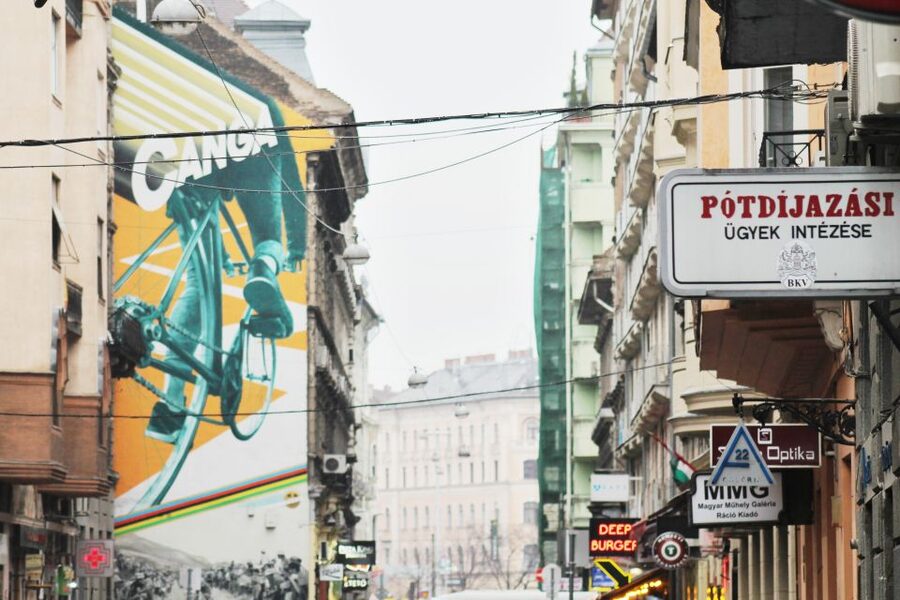
The tour looks for the places that make the district feel lived in: independent cafés, bookshop cafés, design stores, studios, galleries, and art collectives.
A stop at Printa, described as an eco-design shop and coffee spot, gives you an idea of the kind of place that may appear. It combines retail, design, and a café setting rather than fitting neatly into one category. Other departures have included stops at bookshop cafés and art and coffee collectives.
These visits are useful because they show how creative culture works at street level. You see where people buy locally designed goods, meet for coffee, display art, or work on small projects. You also receive practical suggestions for the rest of your visit, which can be more helpful than a generic list of attractions.
There is no food or drink included in the $67 price. If the group stops for coffee, beer, or another drink, you pay separately. That is worth remembering when judging the cost, though the option to sit down can be welcome after a couple of hours on foot.
Ruin Bars And Community Spaces
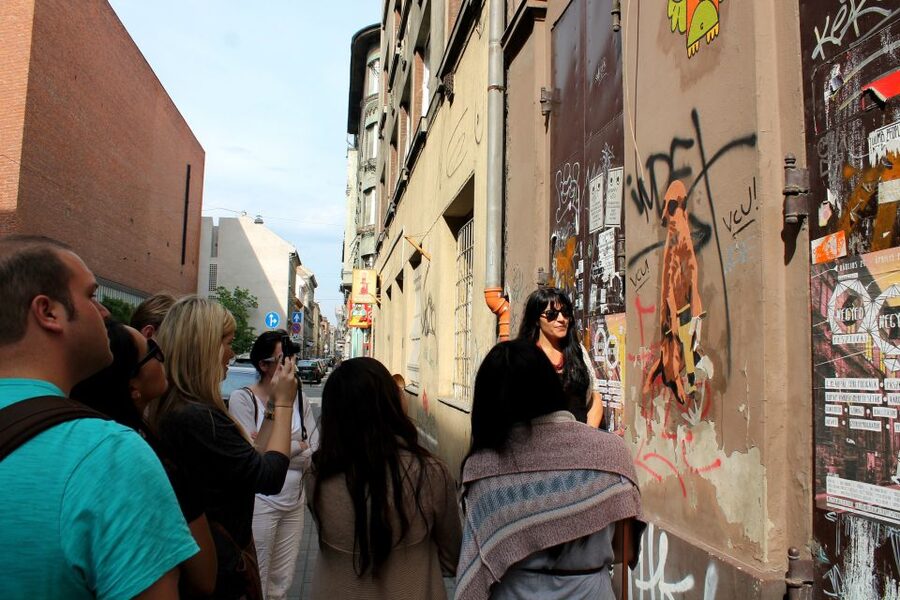
Ruin bars are a major reason many people choose this tour. The famous examples began in old, often neglected buildings, where mismatched furniture, courtyards, odd objects, and temporary interiors created a very different kind of nightlife.
Szimpla Kert is one possible highlight from past routes. It was described as a large, unusual complex of rooms around a courtyard, with a converted Trabant used as seating and a collection of objects that make every corner look different. It is easy to see why this place became a symbol of Budapest’s alternative scene.
The tour’s description also points to a ruin bar that functions as a community center, bike workshop, and analogue photography gallery. That wider view is important. Ruin bars are not only places to order a drink. They can also provide space for exhibitions, workshops, social projects, and informal gatherings.
Exact stops can change, and the tour does not promise an entrance to every venue. You should think of the bar visit as a way to understand the concept, not as a guaranteed night out. Some people may find the nightlife focus too narrow, while others will appreciate getting an early look at places to return to after dinner.
One useful tip is to schedule this tour near the beginning of your Budapest stay. The guide can point out bars, cafés, music venues, and stores that fit your interests, helping you make better choices later.
Music, Fashion, And Alternative Culture
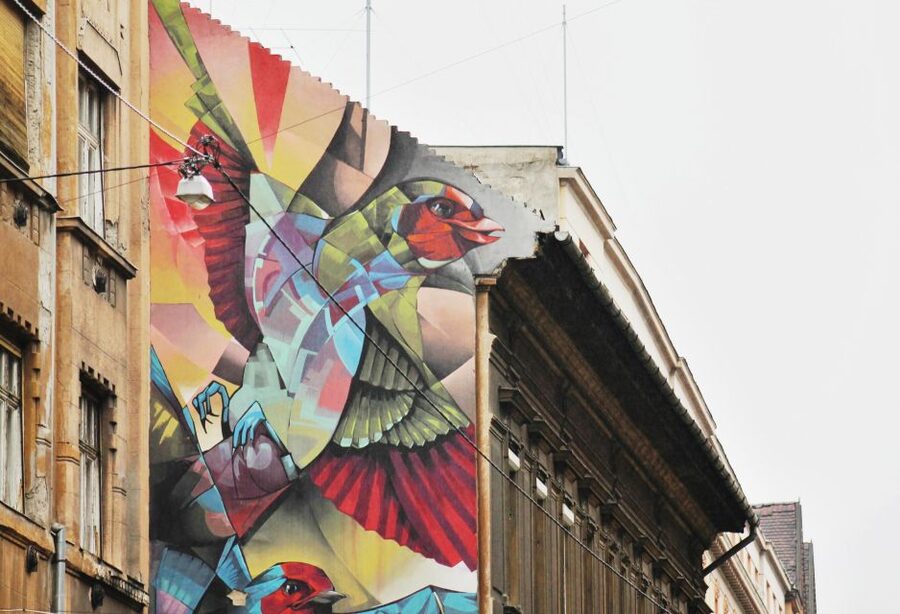
Budapest’s creative scene is not limited to walls and bars. The walk also reaches toward independent fashion, underground music, galleries, studios, and cultural centers.
Past departures have included a visit to, or a look at, the A38 ship bar and music venue, including a sound check. That specific stop may not be part of the current route, since the tour changes over time, but it shows the range of the experience. You might encounter a music space or hear about a venue that is difficult to find through standard sightseeing guides.
The same applies to fashion and design. Small stores and studios may not have grand signs or international fame. Their value is that they reveal what local makers are producing and what kind of work attracts Budapest’s creative crowd.
I would not book this expecting a formal gallery tour or a full history of Hungarian music. The strength is the connection between several scenes: art, nightlife, architecture, politics, design, and daily life.
The Guide Makes Or Breaks The Experience
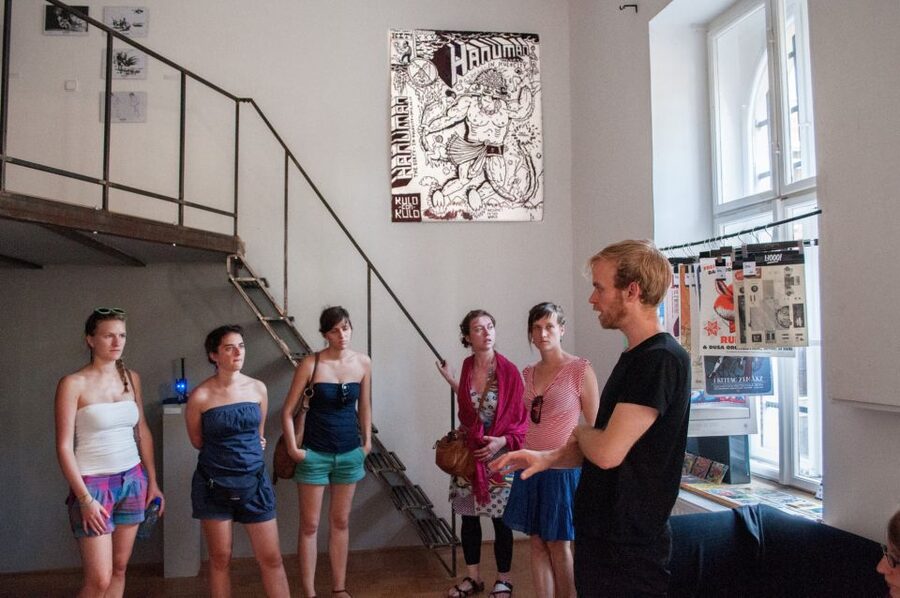
A walking tour about living culture depends heavily on the person leading it. Dates, walls, businesses, and nightlife spots change. A good guide must explain what is happening now without losing the historical thread.
That is where this tour has earned its strongest praise. Past participants repeatedly singled out guides by name. Raymond was described as friendly, clear, and easy to understand. Petra was praised for enthusiasm. Anna was remembered for adding stops and details beyond the basic route. Bella brought humor and warmth, while Antonia combined street art, history, local facts, and useful bar suggestions.
The best reports also describe time for conversation after the formal walk. Sitting together for coffee or a drink gave people more chances to ask about local life, politics, food, and nightlife. That informal exchange is a real benefit of a small group.
Guide quality can vary from one departure to the next, and no walking tour can promise the same personality every time. Still, the repeated pattern suggests that Absolute Tours puts real weight on personable, engaged guides rather than delivering a memorized speech.
How Much Walking And What To Wear
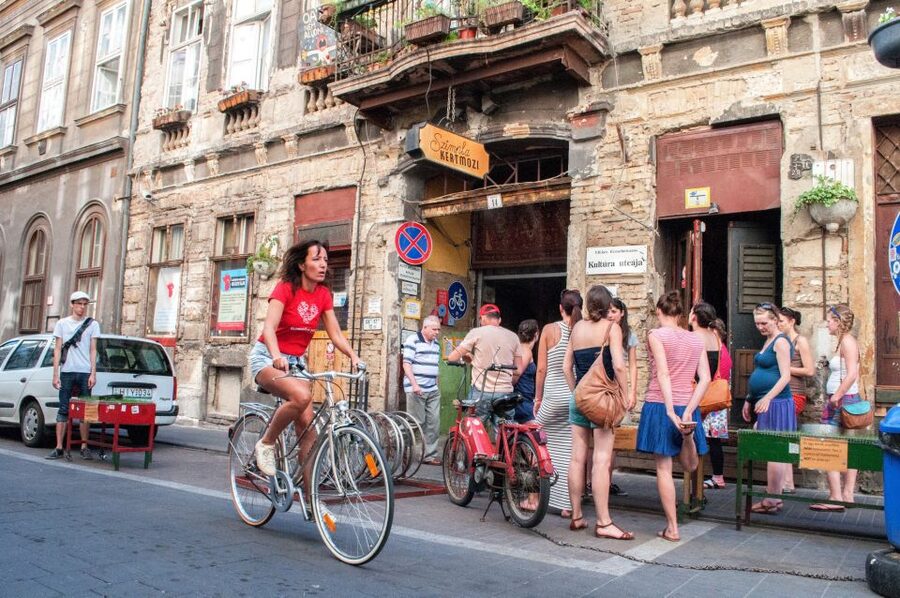
The tour lasts about 2.5 hours. The description also refers to it as a 3-hour walk, so check the confirmed starting time and length when you book. Either way, plan for a substantial period on foot.
Wear comfortable shoes and clothing suited to the forecast. Budapest weather can make a walking route feel very different. One past group continued in heavy cold with indoor stops, including a seated break for mulled wine or coffee. Another enjoyed the walk despite rain because the guide made room for indoor pauses.
Food and beverages are not included. Entrance fees are not included either, although the experience is primarily an outdoor walk with visits or stops at cultural venues rather than a package of paid attractions.
The tour is not suitable for wheelchair users or people with mobility impairments. The route includes city walking, and the information provided does not promise step-free access at cafés, bars, galleries, or other stops.
Is $67 A Fair Price?
At $67 per person, this is not a cheap orientation walk. You are paying for a small group, an English-speaking professional guide, local interpretation, and a route that aims beyond the standard center.
The value depends on how you use it. If you want a list of major monuments, you can find cheaper options. If you want to understand Budapest’s street art, Jewish Quarter, ruin bars, independent businesses, and current cultural life, the personal guidance is more difficult to replace.
The maximum group size of 10 helps justify the price. You can hear the guide, ask follow-up questions, and adjust the conversation toward your interests. A larger group would make small galleries, narrow streets, and informal discussions less comfortable.
Still, one past participant felt the tour was slightly overpriced. I think that is a fair concern. Since drinks and entrance fees cost extra, you should book it for the access and interpretation, not for included refreshments or paid attractions.
Free cancellation up to 24 hours before the tour and the option to reserve now and pay later reduce the financial risk. Those policies are helpful if your Budapest schedule is still moving around.
Who Should Book This Walk?
I would choose this tour if you have already seen, or plan to see, the classic Budapest sights and want something more current. It suits people interested in street art, photography, independent design, cafés, nightlife, music, urban change, and local politics.
It also works well for first-time visitors who want practical advice early in their stay. Several past participants wished they had taken it on their first day, since the guide’s suggestions helped shape later evenings.
You should think twice if your main interests are formal museums, grand churches, or detailed architectural history. The tour includes historical context, but it uses the past to explain today’s culture rather than making history the main subject.
It is also a poor fit if you have difficulty walking for 2.5 hours or need guaranteed wheelchair access. Comfortable footwear is not a minor suggestion here.
Final Verdict: Book It For The City Behind The Sights
I recommend the Alternative Budapest Walking Tour for curious visitors who want to see how Budapest’s creative districts work from the inside. The Jewish Quarter, street art, ruin bars, cafés, and design spaces create a useful picture of a city still reshaping itself.
The price is the main hurdle, and the changing route means no particular mural, café, or venue is guaranteed. But the small group, strong guide feedback, and chance to ask direct questions make this more personal than a standard sightseeing walk.
Book it early if you want nightlife and food advice for the rest of your stay. Skip it if you only want famous landmarks or need a fully accessible route.
FAQ
How long does the Alternative Budapest Walking Tour last?
The activity is listed as 2.5 hours. Its description also refers to a 3-hour walking tour, so check the confirmed schedule when booking.
What language is the tour conducted in?
The live tour guide speaks English.
How large is the group?
The tour is limited to 10 participants, creating a small-group setting with more room for questions.
Where does the tour meet?
Meet the guide on the steps in front of the pale yellow Lutheran Church. If you cannot find the guide, call the local partner for assistance.
Are food and drinks included?
No. Food and beverages are not included, and any coffee, beer, or other drink you order during the walk is paid for separately.
Is the tour suitable for wheelchair users?
No. The activity is not suitable for wheelchair users or people with mobility impairments. Comfortable shoes, comfortable clothing, and weather-appropriate clothing are recommended.
Just added around Budapest
- Lake Balaton and Herend Guided Tour★ 4.7 · 3 reviews
- Audio visual multi-sensory chefs journey dinner experience★ 5.0 · 3 reviews
- Hollókő Ethnographic Village: Day Tour from Budapest★ 3.7 · 3 reviews
- Tapolca Cave Lake and Tihany/ Balaton private tour from Budapest★ 4.5 · 3 reviews
- Budapest Art Nouveau Walking Tour★ 5.0 · 3 reviews
- SzentEndre-SaintAndrew City Privately Shopping and Picturesque★ 4.5 · 3 reviews
- Budapest Drinks and Piano Show Cruise★ 4.5 · 3 reviews
- Horseshow on the Hungarian Puszta, private tour from Budapest with entry!★ 5.0 · 3 reviews
Walking Tours, compared.
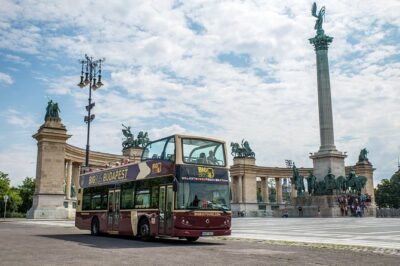
Big Bus Budapest Hop-On Hop-Off Bus and Walking Tour
What we thought →
Budapest City Landmarks Walking Tour in 2 Hours
What we thought →
3-Hour Orientation Walking Tour of Buda and Pest
What we thought →
Budapest Historical Sightseeing – Free Walking Tour
What we thought →
Budapest All in One Small Group Walking Tour with Strudel Stop
What we thought →Browse the lists this tour appears in