
Reviewed · BUDA CASTLE & CASTLE DISTRICT
2 Hours Buda Castle Walking Tour – Walk with a Historian
History hides in plain sight here. This two-hour walk connects Buda Castle’s grand landmarks with lesser-known corners, and I like the historian guide and the included visits to Matthias Church and the Synagogue-Museum. You get more than a quick look at Budapest’s famous hill.
The main consideration is pace. Two hours is enough for a focused introduction, but not enough for a slow visit to every corner of the castle district. The tour is also offered in English only, so you should be comfortable following detailed historical explanations in that language.
In This Review
- Key things to know before you book
- Why Buda Castle deserves a historian’s walk
- Starting at Bécsi kapu Square
- The Synagogue-Museum and the story of a larger synagogue
- Mary Magdalene Church and medieval remains
- Matthias Church, the visual centerpiece
- From the civilian quarter to the royal castle
- What the historian guide adds
- Is $49 a fair price?
- Who will enjoy this two-hour route
- Timing, meeting point, and booking flexibility
- Should you book the Buda Castle historian walk?
- FAQ
- How long is the Buda Castle walking tour?
- What language is the tour conducted in?
- Where does the tour meet?
- What attractions are included?
- Is a historian the tour guide?
- Is food included?
- How much does the tour cost?
- Can I cancel for a full refund?
Key things to know before you book
- The route begins in the civilian quarter: You start at Bécsi kapu Square, near the Lutheran Church of Buda Castle, rather than at the royal palace.
- A historian leads the walk: Kálmán Dániel, also referred to as Daniel, brings the district’s political, religious, and architectural stories together.
- Two important interiors are included: Your price covers entry to Matthias Church and the Buda Castle Synagogue-Museum.
- The route spans many centuries: You move from medieval remains and Ottoman-era traces to the modern story of Budapest.
- The walk ends at Buda Castle: The former seat of Hungarian kings provides a fitting finish after the quieter streets and monuments earlier in the route.
- A café stop is optional: Food and drinks are not included, but you may have the chance to pause at a local café.
Why Buda Castle deserves a historian’s walk
Buda Castle is not just one building or one viewpoint. It is a whole hilltop district where royal power, ordinary city life, religious change, war, rebuilding, and modern Budapest all meet.
That mix can be hard to read on your own. A church may look medieval, a street may appear perfectly calm, and a patch of masonry may seem like a small archaeological detail. With the right explanation, each one becomes part of a much larger story.
I like the way this tour approaches the district from the civilian quarter before reaching the royal center. That order matters. You begin with the part of the castle hill where everyday residents lived, then work toward the places connected with kings and national power.
The walk also promises both famous sights and spots that many local residents may pass without noticing. That is a useful balance. You get the essential Buda Castle experience, but the tour does not reduce the district to a postcard view of Matthias Church and the palace.
More Buda Castle and Castle District walks:
- Budapest: Buda Castle Cave Tour
★ 4.7 · 5,677 reviews - Budapest: Buda Castle District Vampires and Myths Night Tour
★ 4.6 · 3,830 reviews - Budapest: Buda Castle Walk with Saint Stephen’s Hall
★ 4.5 · 3,012 reviews
Starting at Bécsi kapu Square
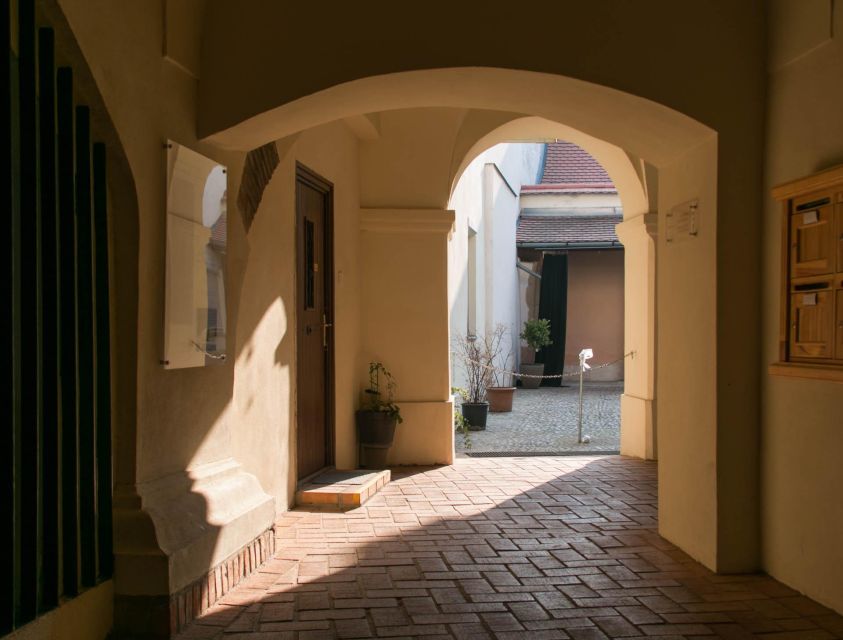
The meeting point is in front of the Lutheran Church of Buda Castle, described as the white church in front of the Castle Gate. This is a practical place to begin because it puts you near Bécsi kapu Square and the civilian quarter.
Give yourself enough time to find the church. The meeting instructions specifically point out its white appearance and its position by the Castle Gate, but historic districts can still be confusing when several churches, gates, and stone buildings are close together. If you have trouble locating the guide, you can phone the tour provider.
Starting here gives the opening of the walk a quieter character than beginning at the palace. You are introduced to the streets and buildings of the district before the royal monuments take over. That helps you see Buda Castle as a lived-in neighborhood, not just a collection of grand attractions.
The guide’s role is especially important at this stage. Streets rarely explain themselves. Names, façades, and small remnants can carry stories about the district’s past, and a field expert can connect these details to the wider history of Hungary.
The Synagogue-Museum and the story of a larger synagogue
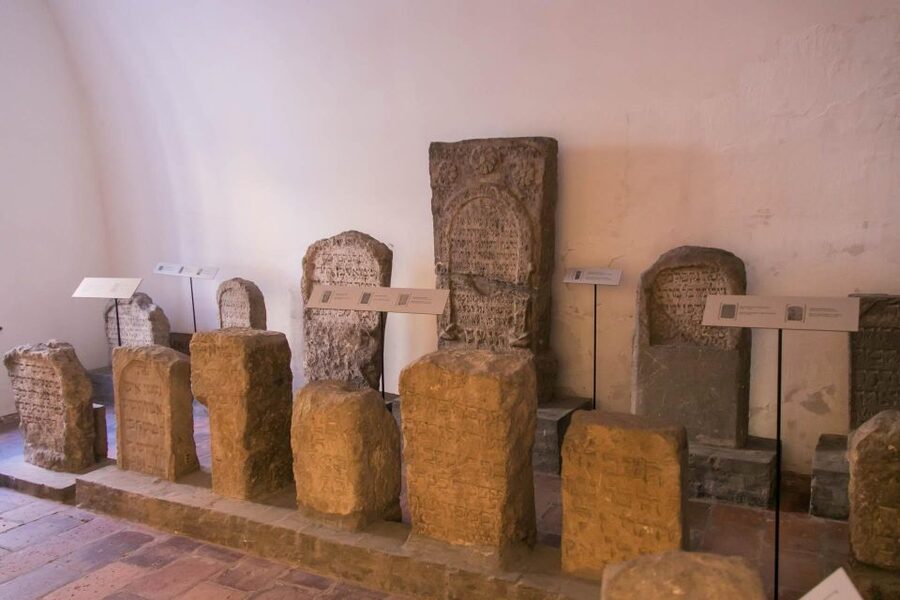
One of the most unusual stops is the small Buda Castle Synagogue-Museum. Entry is included, so you do not need to decide whether an additional museum fee fits your budget once you arrive.
The museum offers a way to understand the Jewish presence in the castle district. The tour also tells the story of a larger synagogue that once stood nearby. That contrast, between the small surviving museum and the lost larger building, gives the stop particular weight.
You should not expect a long museum visit. The entire tour lasts two hours, and several major stops are included. Instead, think of this as a focused visit that adds a religious and social layer to the castle district.
This is one of the places where a guide can add real value. Without context, a small synagogue museum may be easy to overlook beside the district’s famous churches and royal buildings. Dániel’s explanation helps place it within the changing story of Buda.
Mary Magdalene Church and medieval remains
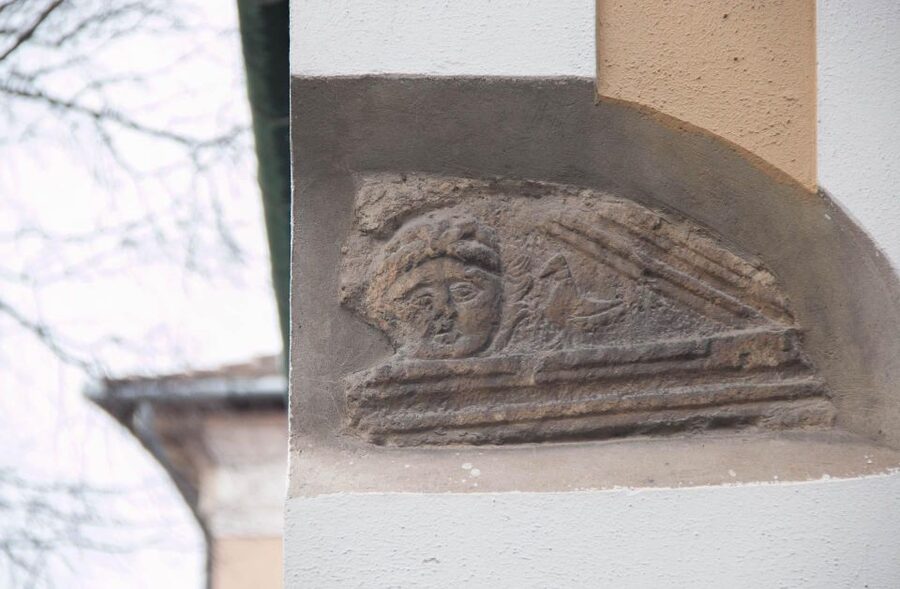
The route continues to the remains of the Church of Mary Magdalene. These ruins provide a sharp change from a fully preserved church interior.
The remains show how incomplete survival can still tell a story. A ruined church raises questions about what happened to the building, how the district changed, and why some monuments remain while others were lost or rebuilt. The tour uses this stop to bring the medieval past into the present without pretending that the district has survived untouched.
For you, this is likely a brief but memorable part of the walk. There is no indication that the tour spends a long period at the ruins, so keep your expectations realistic. The value comes from the explanation and from seeing the remains as part of the wider route, not from a large museum-style display.
I appreciate that the itinerary includes a place that is less instantly famous. It gives the walk some texture. You are not simply moving from one major attraction to another while ignoring the fragments that make Buda Castle distinctive.
More walking tours:
- Big Bus Budapest Hop-On Hop-Off Bus and Walking Tour
★ 3.5 · 2,206 reviews - Budapest: Buda Castle District Walking Tour
★ 4.6 · 2,108 reviews - Budapest City Landmarks Walking Tour in 2 Hours
★ 5.0 · 2,048 reviews - 3-Hour Orientation Walking Tour of Buda and Pest
★ 4.8 · 1,834 reviews
Matthias Church, the visual centerpiece
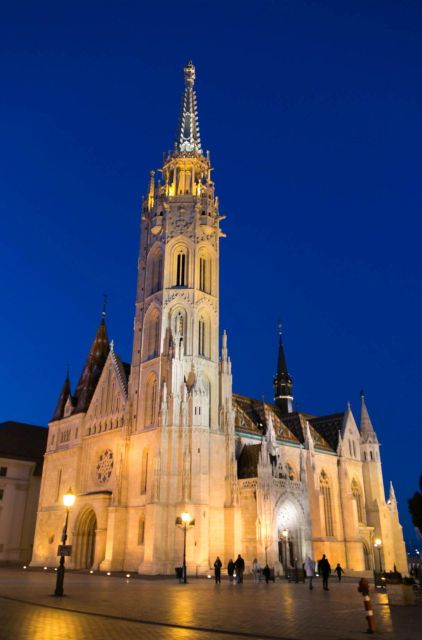
Matthias Church is the best-known interior visit on this walk, and admission is included in the $49 price. The church is one of the district’s major highlights, so the included entry makes the tour easier to budget.
The visit also gives the guide a chance to explain how the church fits into Hungarian history. The tour covers medieval and Ottoman periods along with more modern developments, and Matthias Church sits at the center of many of those changes.
You can expect this to be a more substantial stop than the exterior views and street stories. Still, the two-hour limit means the church visit forms one part of a larger narrative rather than a stand-alone guided tour of every detail.
I like the contrast between Matthias Church and the smaller synagogue museum. One is a major landmark that most people place high on their Budapest list. The other is easier to miss. Seeing both in one walk lets you compare the public face of the castle district with the quieter evidence of communities and institutions that once shaped it.
From the civilian quarter to the royal castle
After the church and the nearby sights, the walk moves toward Buda Castle itself. The castle was once the seat of the Hungarian kings, making it a natural ending point for a route that began among civilian streets.
The tour is not only about arriving at the palace. Along the way, you hear stories tied to the streets of the Buda Castle District and visit less-known points of interest. That is important because the connection between the ordinary quarter and the royal center is one of the tour’s main ideas.
You should keep in mind that the supplied details do not promise a full interior tour of every part of the palace complex. The stated inclusions specifically cover Matthias Church and the Jewish Synagogue-Museum. Buda Castle is described as the final point of the walking tour, so you should treat the castle portion as a guided exploration of the district and its royal setting rather than assume that every palace room is included.
That distinction matters when you compare this experience with a dedicated palace museum visit. This tour gives you context across the hill. It is not designed to replace a separate, longer visit to every castle collection.
What the historian guide adds
The tour is led by a field expert historian, and that is the central reason to choose it. A guide with a strong historical focus can explain how the same streets reflect several different eras rather than presenting each monument as an isolated sight.
The only named guide information available is Kálmán Dániel, also referred to as Daniel. A verified booking review praised Daniel for being very informative and for covering many interesting topics. That description fits the structure of the walk, which moves across religious, royal, architectural, and national history in a short period.
You should expect plenty of explanation. This is not a tour built mainly around quick photographs. If you prefer to hear why a place matters, how the district changed, and what happened to buildings that no longer survive, the guide-led format is a strong match.
On the other hand, you may find the pace and amount of information demanding if you prefer a relaxed wander with long pauses. Two hours passes quickly when the route includes several monuments, two entry visits, and street-level stories.
Is $49 a fair price?
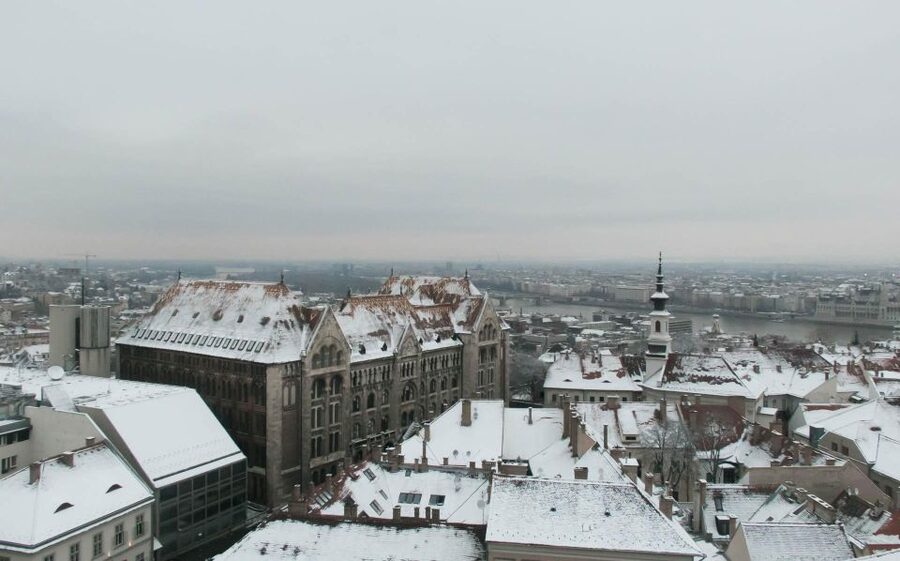
At $49 per person, the tour costs about $24.50 per hour before considering the value of the included admissions. The price includes a live English-speaking historian, entry to Matthias Church, entry to the Synagogue-Museum, and the walking route itself.
That is a reasonable package if you want historical interpretation rather than simply directions between sights. The biggest value comes from the guide’s ability to connect the stops. You are paying for the story that links the civilian quarter, synagogue, church remains, Matthias Church, and royal castle.
The price is less compelling if you plan to spend only a few minutes at each location or if you already know Buda Castle’s history well. In that case, you may prefer to walk independently and pay for only the places you choose to enter.
Food and drinks are not included. A local café stop is optional, so allow extra money if you want to pause for refreshments. Since the experience lasts two hours, this is not a meal-based excursion and should be planned as one part of your sightseeing day.
Who will enjoy this two-hour route
I would recommend this tour to you if you want a clear introduction to Buda Castle without giving up the less obvious details. It suits first-time visitors who want to understand the district before returning later for a slower visit.
It is also a good choice if you enjoy churches, ruins, museums, and city stories more than shopping or food stops. The route has a strong historical focus, so you should be ready to listen as well as walk.
Families with older children may find the changing locations helpful, though the provided information does not specify a child-focused format. Anyone who has trouble with a walking tour should confirm suitability before booking, since the experience is entirely described as a walk and no accessibility details are provided.
You should choose another option if you want a long palace interior visit, a food tour, or a tour in a language other than English. This experience is focused, guided, and history-heavy.
Timing, meeting point, and booking flexibility
The advertised duration is two hours, with starting times shown according to availability. Because the route includes several stops, arriving at the meeting point early is sensible.
Meet in front of the Lutheran Church of Buda Castle, the white church in front of the Castle Gate. If you are unsure of the location, the provider asks you to phone rather than wander around the hill looking for the group.
The tour offers free cancellation up to 24 hours before the start for a full refund. You can also reserve now and pay later, which is useful if your Budapest schedule is still changing.
The tour is conducted in English. No other language is listed, so do not assume that interpretation in another language will be available.
Should you book the Buda Castle historian walk?
Book it if you want the main Buda Castle sights placed in a wider story. The included Matthias Church and Synagogue-Museum visits, the stop at the Mary Magdalene Church remains, and the finish at the former royal seat give you a well-shaped two-hour introduction.
I especially like the route’s movement from the civilian quarter to the royal center. It gives you a better sense of how the district functioned across time, rather than treating the castle as one isolated attraction.
Skip it if you want a slow, unstructured stroll or a detailed palace interior tour. But if Daniel’s informative, topic-filled approach is what you are after, the perfect five rating from five reviews supports the idea that this is a well-regarded choice for a compact, history-led visit.
FAQ
How long is the Buda Castle walking tour?
The walking tour lasts two hours.
What language is the tour conducted in?
The live tour guide speaks English, and English is the only language listed.
Where does the tour meet?
Meet in front of the Lutheran Church of Buda Castle, described as the white church in front of the Castle Gate.
What attractions are included?
The tour includes entry to Matthias Church and the Buda Castle Synagogue-Museum. It also visits the remains of the Mary Magdalene Church and Buda Castle.
Is a historian the tour guide?
Yes. The experience includes a field expert historian guide. The provider is Kálmán Dániel, also referred to as Daniel.
Is food included?
No. Food and drinks at a local café are optional and are not included in the price.
How much does the tour cost?
The listed price is $49 per person.
Can I cancel for a full refund?
Yes. You can cancel up to 24 hours in advance for a full refund.
Just added around Budapest
- Lake Balaton and Herend Guided Tour★ 4.7 · 3 reviews
- Audio visual multi-sensory chefs journey dinner experience★ 5.0 · 3 reviews
- Hollókő Ethnographic Village: Day Tour from Budapest★ 3.7 · 3 reviews
- Tapolca Cave Lake and Tihany/ Balaton private tour from Budapest★ 4.5 · 3 reviews
- Budapest Art Nouveau Walking Tour★ 5.0 · 3 reviews
- SzentEndre-SaintAndrew City Privately Shopping and Picturesque★ 4.5 · 3 reviews
- Budapest Drinks and Piano Show Cruise★ 4.5 · 3 reviews
- Horseshow on the Hungarian Puszta, private tour from Budapest with entry!★ 5.0 · 3 reviews
Buda Castle & Castle District, compared.

Buda Castle District Vampires and Myths Night Tour
What we thought →
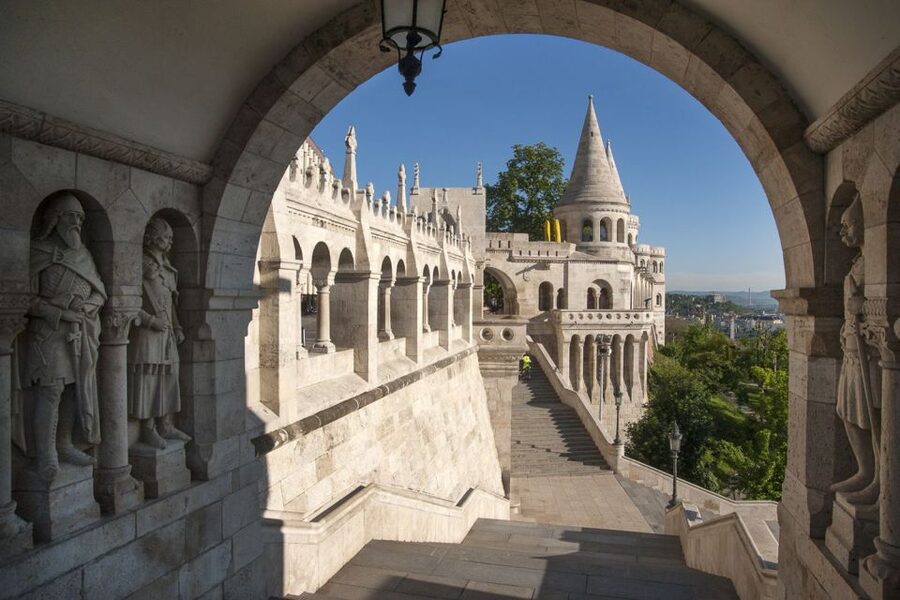
Buda Castle District Dark History, Legends and Vampire Night Tour
What we thought →
Buda Castle District Walking Tour with a Historian
What we thought →

Walking tour in the Buda Castle incl. Fisherman’s Bastion
What we thought →Browse the lists this tour appears in