Reviewed · TOURS
Explore Budapest from the Local’s Perspective – Public Transportation Tour
Budapest makes public transport part of the sightseeing. This three-hour private tour uses the city’s trams, metro, buses, and possibly a public boat to connect major sights with everyday Budapest. I like the included 24-hour transport pass, and I like that pickup starts at your accommodation rather than at an awkward central meeting point. The main tradeoff is its brisk pace: you see many places, but most stops are short and focused on orientation rather than full museum visits.
This is a smart first-day choice if you want to understand Budapest quickly. The guide explains how to use the system, shares history along the way, and can adjust the route to suit your interests. The price of $118.58 per person makes the most sense for a private group that wants personal help, not for someone seeking a cheap sightseeing ride.
In This Review
- Key points at a glance
- Why Budapest works so well by public transport
- Andrássy Avenue and Heroes’ Square
- City Park’s castles, museums, and ice rink
- Margaret Bridge and the great ring-road trams
- Nyugati, Deák Ferenc tér, and Elizabeth Square
- Buda Castle and the choice of route
- Gellért Square, the thermal baths, and Liberty Bridge
- Kálvin Square and the final transport lesson
- What the $118.58 price includes
- Who should book this Budapest tour?
- Should you book it?
- FAQ
- How long does the Budapest public transportation tour last?
- Is hotel or accommodation pickup included?
- Is this a private tour?
- What transport ticket is included?
- Is food included?
- Can the itinerary be changed?
Key points at a glance
- Five ways to move through Budapest: Expect a hands-on introduction to the city’s public transport, with the possibility of a public boat ride as part of the route.
- A private tour from your accommodation: Pickup is offered, and only your group takes part.
- A 24-hour pass is included: You can keep using Budapest transport after the tour ends.
- Major sights without museum time: Heroes’ Square, Margaret Bridge, Buda Castle, Liberty Bridge, and Gellért Hill area all feature in the route.
- Useful help beyond sightseeing: The guide can assist with transport planning, including airport departure arrangements and getting to a specific destination.
- A flexible three-hour introduction: The route can be adjusted, though minor changes may happen to keep the tour moving.
Why Budapest works so well by public transport
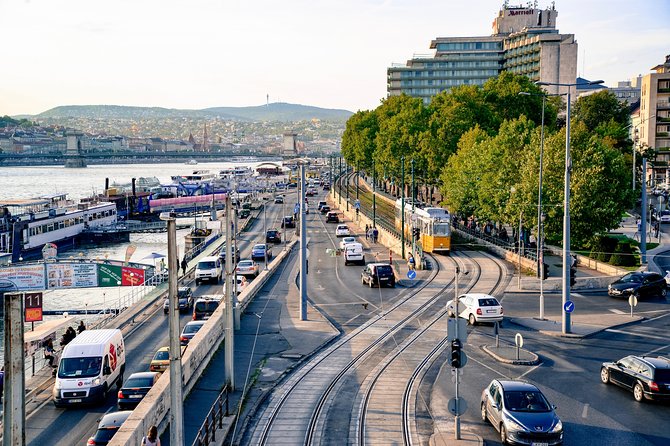
Budapest is unusually easy to understand once you learn its transport pattern. The Danube divides Buda from Pest, the ring roads organize the central city, and the metro, tram, bus, and boat network tie the main districts together.
This tour uses that structure as its classroom. Instead of sitting in a vehicle while a guide points out buildings, you change modes and learn how Budapest actually functions. You may ride the metro, travel by tram, cross a bridge on foot, and use other public transport during the three-hour route. One particularly useful part is learning how to move between sights without relying on taxis.
The guide also provides a Rider’s Booklet, a route map, a notebook, and a souvenir pen. The practical items are simple, but the map and transport manual can be handy for the rest of your stay. The 24-hour pass matters most. It gives you freedom after the tour, allowing you to revisit a district or make an evening trip without buying another ticket each time.
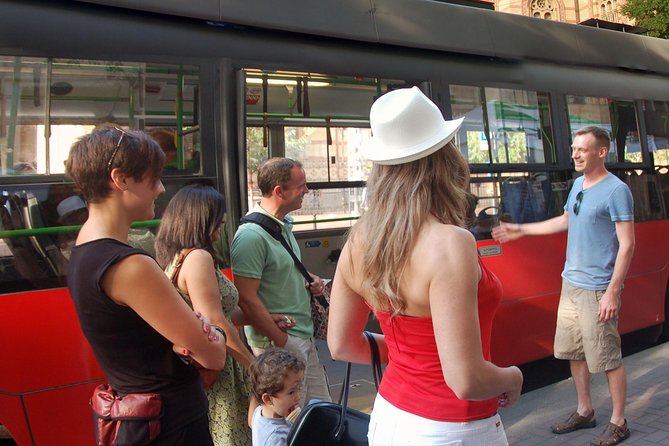
The tour is private, so the pace can be shaped around your group. Families, first-time visitors, and anyone nervous about Budapest’s ticketing system may find that personal attention worth paying for. Children must be accompanied by an adult, and service animals are allowed.
Other Budapest days people book alongside this one:
- Budapest: City Highlights Cruise with Welcome Drink
★ 4.6 · 35,610 reviews - Budapest: Unlimited Prosecco, Beer and Aperol Spritz Cruise
★ 4.8 · 25,310 reviews - Budapest: Széchenyi Spa Day Ticket with Optional Upgrades
★ 4.3 · 23,911 reviews
Andrássy Avenue and Heroes’ Square
The route begins with Andrássy Avenue, one of Budapest’s grandest streets. It dates from 1872 and is lined with Neo-Renaissance mansions, townhouses, cafés, restaurants, theaters, embassies, and high-end shops. The avenue became a UNESCO World Heritage Site in 2002.
You get a useful first look at the city here: Budapest is not only about imperial buildings and river views. Andrássy Avenue also shows its polished, urban side. Depending on your interests, the guide may focus on architecture, shopping, or the transport links running beneath and along the boulevard.
Heroes’ Square is the first timed stop, with about 15 minutes. The broad square is dominated by a monument to important Hungarian national leaders and the Seven Chieftains of the Magyars. At its center is the Memorial Stone of Heroes, which is often mistakenly called the Tomb of the Unknown Soldier.
Fifteen minutes is enough for a clear explanation and photographs. It is not enough for a slow study of every statue, so you should treat this as a strong introduction rather than a full history lesson. The square is also a good place to understand Hungary’s national story before seeing the royal district in Buda.
City Park’s castles, museums, and ice rink
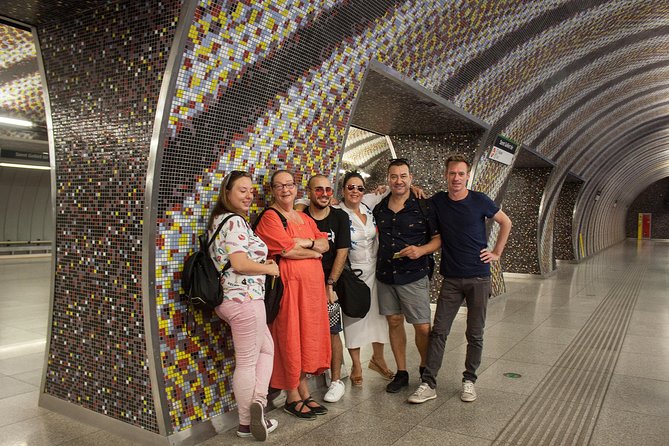
The nearby City Park gives the tour a change of mood. Vajdahunyad Castle was built for the 1896 Millennial Exhibition, marking 1,000 years since the Hungarian conquest of the Carpathian Basin in 895. Its designer, Ignác Alpár, combined copies of landmark buildings from across the historic Kingdom of Hungary, including Hunyad Castle in Transylvania.
That mixture makes the castle fun to look at, but it can also confuse you if you expect one consistent architectural style. The guide can help explain why the building looks like several castles joined together. Today it houses the Museum of Hungarian Agriculture, described as the largest agricultural museum in Europe, though the tour does not include museum admission or dedicated time inside.
The Museum of Fine Arts and Budapest Hall of Art face one another at Heroes’ Square. The Fine Arts Museum holds international art from across Europe, with more than 100,000 pieces. The Hall of Art presents temporary contemporary exhibitions and includes a bookshop, library, and Műcsarnok Café overlooking the square.
These stops are best appreciated from outside unless you arrange a personalized itinerary with extra time. The tour gives you a strong sense of the cultural quarter, but you should plan a separate museum visit if art is central to your Budapest plans.
The City Park Ice Rink is another notable landmark. Opened in 1870, it is one of Europe’s oldest and largest public ice rinks. The tour does not include skating, but the site adds a pleasant everyday detail to the grand monuments nearby.
Margaret Bridge and the great ring-road trams
The route then reaches Jászai Mari tér, a public transport hub at the eastern foot of Margaret Bridge. The square is named for Mari Jászai, one of Hungary’s most influential actors.
You spend about 10 minutes here, enough to see how people transfer between routes and how the square connects central Pest with the bridge. It is less about a single monument and more about watching the city operate.
Margaret Bridge receives a short five-minute stop. This three-way bridge crosses the Danube and provides access to Margaret Island. It is the second-northernmost and second-oldest public bridge in Budapest.
The bridge itself is more than a crossing. It gives you a sense of Budapest’s geography, with Buda, Pest, and Margaret Island meeting in one view. The route also uses the big ring road, Nagykörút, where tram lines 4 and 6 carry huge numbers of passengers. They run at intervals of up to 15 minutes, and during rush hour they can arrive every two minutes.
This is one of the tour’s most useful lessons. A tram ride along the ring road shows you how quickly you can cover central Budapest, and it is far more connected to local life than a sightseeing loop. Keep your expectations realistic, though. A busy tram can mean standing room and a less relaxed ride.
A completely different kind of day out around Budapest:
- Budapest: Nighttime or Daytime Sightseeing Cruise
★ 4.2 · 21,062 reviews - Budapest: 1-Hour Evening Sightseeing Cruise with Drink
★ 4.5 · 8,330 reviews - Budapest Danube Cruise and Dinner Options, Live Music and Dance
★ 4.5 · 7,428 reviews - Budapest: Historic Cruise with Welcome Drink
★ 4.7 · 6,512 reviews
Nyugati, Deák Ferenc tér, and Elizabeth Square
Budapest Western Railway Station, known locally as Nyugati, receives about 10 minutes. It is one of the city’s three main railway terminals and sits beside tram lines 4 and 6 and the M3 metro line.
The station area is a major meeting point, with restaurants, bars, and varied shops nearby. The stop helps connect Budapest’s sightseeing map with its practical one. If you plan a train trip later, the guide can help you recognize the station and understand which transport routes serve it.
Deák Ferenc Square is another 10-minute stop. Three metro lines meet beneath the square, while trams 47 and 49 and several buses also serve the area. For a first-time visitor, this is the city’s most useful transport junction to understand.
The square is named for Ferenc Deák, known as the Wise Man of the Nation. More important for your trip, it is a central transfer point. Once you know Deák Ferenc tér, you have a much easier time reaching many parts of Budapest.
Nearby Elizabeth Square gets about five minutes. It is a popular gathering place, especially for young people, and the grassy area stays active into the evening. This stop provides a glimpse of Budapest’s social side rather than another grand historical monument.
Buda Castle and the choice of route
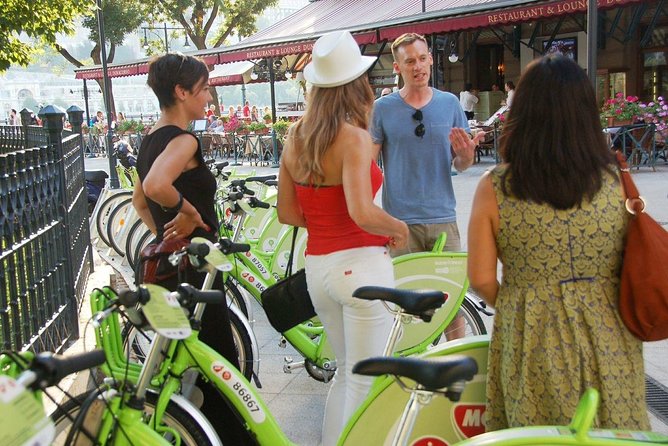
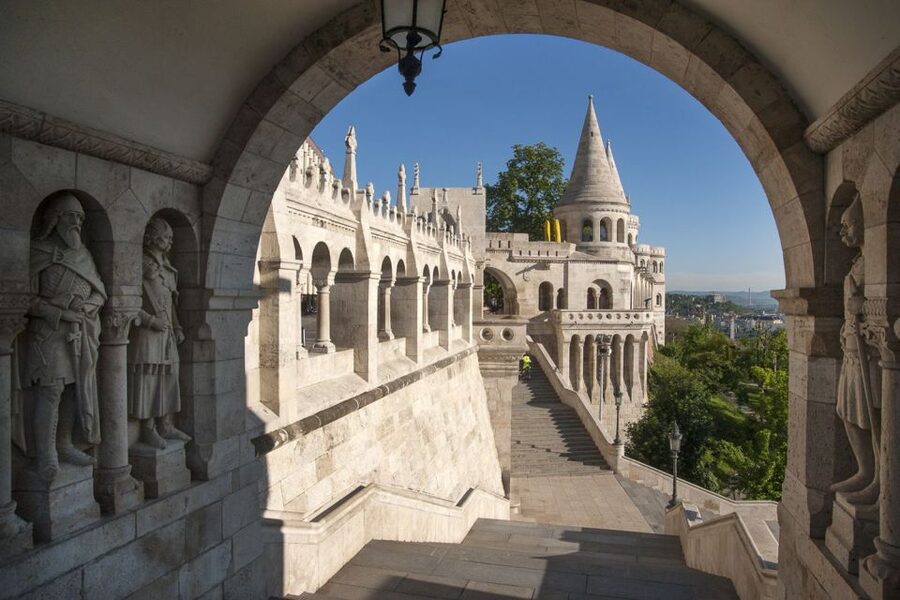
The Buda Castle area is allotted about 45 minutes, making it the longest stop. That is sensible. The hilltop district needs time for its views, buildings, and winding streets, even if this visit is only an introduction.
The tour information offers a Buda Castle option in place of Gellért Hill, with travel by funicular. This is an important choice to clarify before or during the tour. Buda Castle gives you royal history and elevated views over the Danube, while Gellért Hill is known primarily as a panorama point.
Because the itinerary can be personalized, you can tell the guide which setting matters more to you. The tour does not promise entry to every castle building, so think of this as a guided orientation to the castle district, not a full palace museum visit.
The funicular option also adds a memorable transport experience. It is especially useful for anyone who wants the tour to include a classic Budapest ride rather than only modern metro and tram travel. Ask about the route in advance if Buda Castle is your top priority, since the outline allows changes.
Gellért Square, the thermal baths, and Liberty Bridge
Another section of the route reaches Szent Gellért Square, with about 10 minutes. The square is known for its water-themed design, including wave-shaped benches and a small fountain and pond near the underground station.
The nearby Gellért Thermal Baths are part of the famous Hotel Gellért complex. The bath house is an important Budapest landmark, but this experience does not include food, drinks, or a bathing session. You should plan a separate visit if you want to use the pools.
Gellért Hill rises 235 meters above the Danube and is described as the capital’s best panorama point. It is named for Bishop Gellért, who came from Italy around the year 1000 to help convert Hungarians to Christianity. According to the traditional story, resisting pagans later rolled him down the hill in a barrel into the Danube.
The route includes a five-minute walk across Liberty Bridge, also called Szabadság híd. This is one of Budapest’s most attractive bridges, and crossing it brings you to the foot of Gellért Hill.
Five minutes is enough to cross and take in the structure, but not enough for a full climb up Gellért Hill. This is another point where the route choice matters. If you want the best view from the summit, ask whether the itinerary can be adjusted. If you want to keep the transport focus, the bridge and square may be the better use of time.
Kálvin Square and the final transport lesson
The final listed stop is Kálvin Square, with about 10 minutes. It is named after John Calvin and is marked by the large Reformed Church nearby. The square also connects with tram, bus, and trolleybus routes, and the Hungarian National Museum is close at hand.
Ending here makes practical sense. You finish with another transport hub and can continue on your own using the 24-hour pass. The guide can also help you plan a specific onward trip. One of the strongest details from the experience is that the guide has helped with airport departure planning and with reaching a particular destination beyond the standard route.
That kind of assistance may be worth more than another monument. If you are staying only a few days, knowing how to get to the airport or a distant neighborhood can save time and reduce stress.
What the $118.58 price includes
At $118.58 per person, this is not a budget transport lesson. The value depends heavily on your group size and how much you want personal guidance.
You receive:
- A local English-speaking guide
- Pickup from your accommodation
- A 24-hour public transport pass
- A route map
- A Rider’s Booklet
- A notebook and souvenir pen
The private format is the key. Your group does not share the tour with strangers, and the route can be adjusted to your interests. A family or small group may find the cost reasonable when the guide’s time, pickup, transport pass, and planning help are considered together.
Food and drinks are not included, but that is not a serious weakness for a three-hour city orientation. You can eat independently before or after the tour. The bigger consideration is pace. You cover a large portion of Budapest, so the experience favors breadth and practical knowledge over long stops.
The tour has a five-star rating from nine reviews, and the strongest praise centers on the guide’s ability to explain both the city and the transport system. One review specifically describes the experience as much more than a transport tour, with historical information, several types of public transport, a public boat ride, and help with airport plans. Another highlights the fun of learning basic Hungarian words while riding trains and trams.
The guide’s name appears in one provider response as Miklós. The available information does not clearly confirm that he leads every departure, so I would not book on the assumption that you will certainly have him.
Who should book this Budapest tour?
I would recommend it most strongly for first-time visitors who want to get their bearings fast, families who prefer a private pace, and anyone uneasy about using unfamiliar transport. It also suits you if you like seeing ordinary city life along with major sights.
It is less suitable if you want lengthy time inside museums, a full guided visit to Buda Castle, or a dedicated climb of Gellért Hill. The route passes many attractions, but most stops are brief and admission is not included.
Pickup from your accommodation makes the start simple. You need to provide the address when booking. Confirmation is provided at booking, and most people can participate. Free cancellation is available if you cancel at least 24 hours before the start time. Changes or cancellations inside that window are not accepted for a refund.
Should you book it?
Book this tour if you want Budapest explained through the way it actually works. The combination of a private guide, a 24-hour pass, major landmarks, and practical route advice gives you more than a standard panorama outing.
I would skip it if your priority is entering museums or spending a full morning at one historic site. For everyone else, especially a first visit, this is a useful and good-humored introduction to Budapest. You finish with a better map in your head, a transport pass in your pocket, and the confidence to keep exploring on your own.
FAQ
How long does the Budapest public transportation tour last?
The tour lasts approximately three hours.
Is hotel or accommodation pickup included?
Yes. The guide meets each group at its accommodation. You need to provide the address in the special requirements section when booking.
Is this a private tour?
Yes. Only your group participates in the activity.
What transport ticket is included?
A 24-hour pass for Budapest’s public transportation system is included. It can be used for any means of transportation covered by the pass.
Is food included?
No. Food and drinks are not included in the tour price.
Can the itinerary be changed?
Yes. The route is a basic outline and may be adjusted to personalize the experience. Minor changes can also be made to keep the tour running smoothly.
Just added around Budapest
- Lake Balaton and Herend Guided Tour★ 4.7 · 3 reviews
- Audio visual multi-sensory chefs journey dinner experience★ 5.0 · 3 reviews
- Hollókő Ethnographic Village: Day Tour from Budapest★ 3.7 · 3 reviews
- Tapolca Cave Lake and Tihany/ Balaton private tour from Budapest★ 4.5 · 3 reviews
- Budapest Art Nouveau Walking Tour★ 5.0 · 3 reviews
- SzentEndre-SaintAndrew City Privately Shopping and Picturesque★ 4.5 · 3 reviews
- Budapest Drinks and Piano Show Cruise★ 4.5 · 3 reviews
- Horseshow on the Hungarian Puszta, private tour from Budapest with entry!★ 5.0 · 3 reviews
Tours, compared.
City Sightseeing Hop-On Hop-Off Bus Tour & Extras
What we thought →
Buda Castle District Vampires and Myths Night Tour
What we thought →
Big Bus Hop-On Hop-Off Tour & Danube River Cruise
What we thought →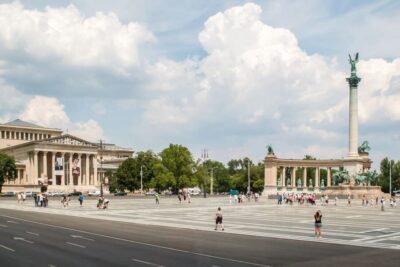
Big Bus Budapest Hop-On Hop-Off Bus and Walking Tour
What we thought →