
Reviewed · WINE TOURS
Evening Wine, Cheese, & Charcuterie Tasting in Budapest
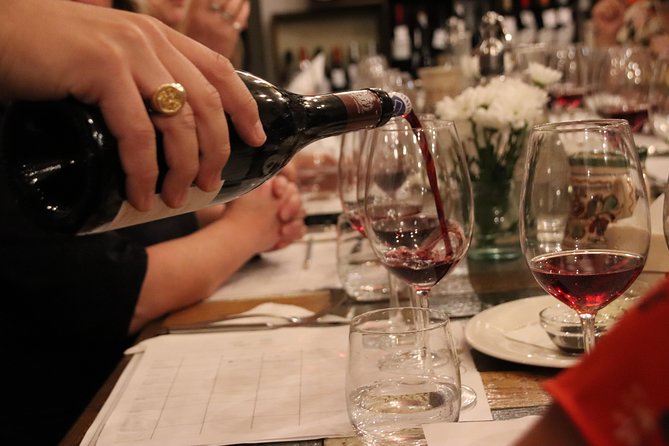
Hungarian wine deserves your attention. This two-hour Budapest tasting makes an unfamiliar wine country easy to understand, with eight samples, local cheese and charcuterie, and a friendly sommelier-led lesson at Taste Hungary. I especially like the direct-from-producer wines and the relaxed cellar setting, where the talk stays useful rather than fussy. At $65 per person, it is a fair splurge, though the tasting is non-refundable, so you should be certain about your date before booking.
The 6:00 pm start also works nicely for an evening out. You can arrive, taste through Hungary’s main styles, and still have time for dinner afterward. The one drawback is that the food is a light pairing, not a full meal, and a single less-warm guide could affect the mood, though the overall experience has been remarkably consistent.
In This Review
- Key points to know before booking
- Why Hungarian wine is worth two hours of your Budapest time
- Arriving at Tasting Table Cellar at 6:00 pm
- Eight glasses that tell Hungary’s wine story
- Cheese and charcuterie that actually help
- The sommelier’s style makes or breaks the night
- What the evening teaches about Hungarian regions
- Is $65 a good value?
- Who will enjoy this tasting most?
- Practical details that matter
- Should you book the Budapest wine tasting?
- FAQ
- How long does the Hungarian wine tasting last?
- What time does the tasting begin?
- Where does the tasting take place?
- How many wines are included?
- Is the tasting available in English?
- Is there a minimum age?
Key points to know before booking
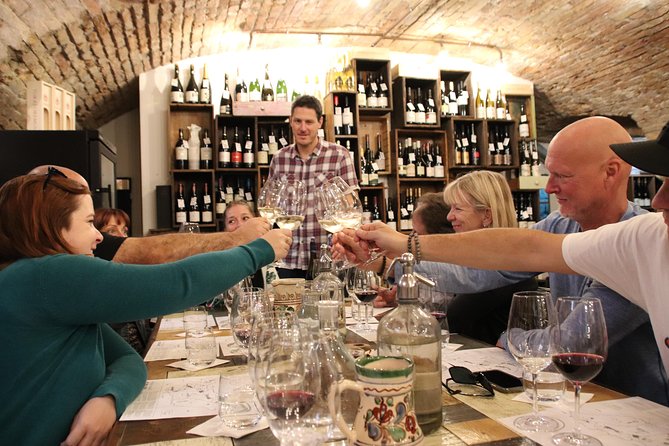
- Eight Hungarian wines in two hours: Expect a broad introduction, usually moving from sparkling wine through whites and reds to sweet Tokaj.
- The sommelier makes the subject approachable: Guides such as Tomas, Thomas, Bolasz, and John have been praised for clear explanations and an easy manner.
- Local food makes the tasting more useful: Cheese, cured meats, and other small pairings help you judge how each wine works with food.
- A small-group cellar setting encourages conversation: The maximum group size is 24, and smaller sessions can be especially comfortable for solo visitors.
- Tokaj provides the memorable finish: The final sweet wine introduces one of Hungary’s most famous wine regions and styles.
- Taste Hungary is central and simple to reach: The meeting point is Tasting Table Cellar, Bródy Sándor u. 9, near public transportation.
Why Hungarian wine is worth two hours of your Budapest time
Hungary is not the first country most people name when discussing European wine. That is exactly why this tasting is useful. You may arrive knowing Tokaj, perhaps Egri Bikavér, and not much else. In two hours, you get a working map of the country’s wine regions, grapes, styles, and recent direction.
I like tastings that give you a story rather than eight unrelated glasses. This one is designed to connect the wines to place and tradition. You hear how Hungarian wine developed, what makes the major regions different, and which grape varieties are important today.
The lesson is aimed at curious drinkers, not only serious wine hobbyists. You do not need to know how to swirl a glass properly or identify twelve kinds of fruit. The guides explain aromas, flavors, and regional traits in plain English. Several guides have been praised for avoiding wine snobbery and keeping the facts understandable.
That matters because Hungarian grapes can be new territory. You are not simply comparing another Sauvignon Blanc with another Cabernet Sauvignon. The point is to notice the local character and to learn what to look for when you later see Hungarian wine on a menu or shop shelf.
More wine tastings:
- Countryside Half-day Gastro-Wine Tour from Budapest Meal & pickup
★ 5.0 · 1,450 reviews - Budapest Centre Food Tour with 10+ Tastings, Wine & Street Food
★ 5.0 · 810 reviews - Budapest: Wine, Cheese, and Charcuterie Tasting
★ 4.9 · 647 reviews
Arriving at Tasting Table Cellar at 6:00 pm
The experience begins at Tasting Table Cellar by Taste Hungary, at Bródy Sándor u. 9 in Budapest’s 1088 postal district. It ends at the same place, so you do not need to arrange a ride back from an unfamiliar part of town.
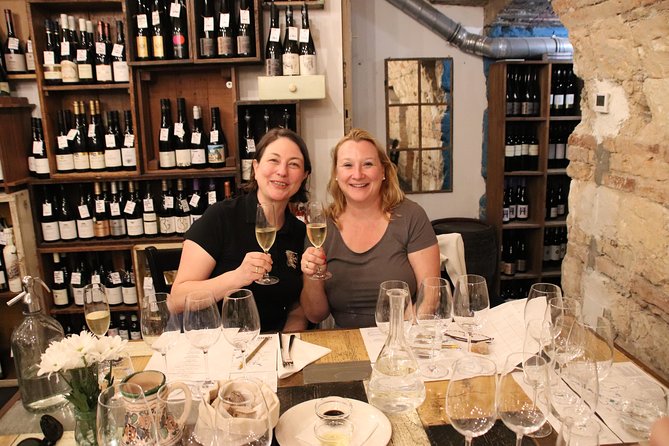
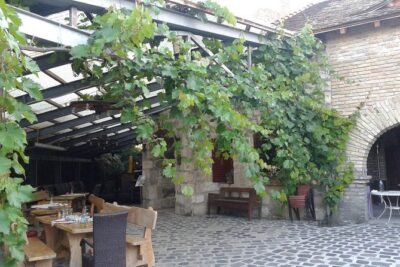
The cellar setting is one of the evening’s nicest features. It gives the tasting a calm, intimate feel without turning it into a formal lecture. You sit with the group, receive mineral water, and settle into a shared-table atmosphere where conversation comes naturally.
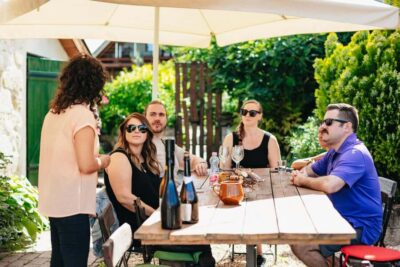
The maximum group size is 24, but the social feel can be more personal when the actual attendance is smaller. One session had a group of eight, which allowed plenty of conversation without making the evening feel crowded. If you are traveling alone, this setup is a real advantage. The shared table gives you an easy way to meet people from different countries without having to force small talk.
Couples fit naturally into the evening, but you will not feel out of place alone. The tasting works well as a social activity because everyone already has a simple subject to discuss: the wine in front of them.
Eight glasses that tell Hungary’s wine story
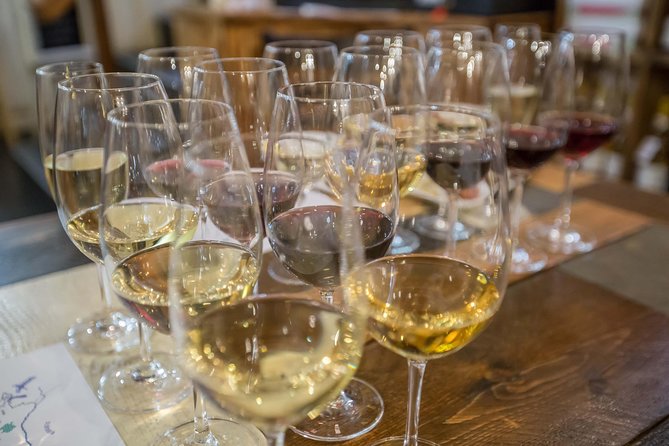
The main event is a flight of eight Hungarian wines. The precise selection can change, but the stated format gives you a broad sample rather than a narrow focus on one region or grape.
A typical progression includes a welcoming sparkling wine, several whites, several reds, and a sweet Tokaj wine at the end. One tasting included six wines beyond the opening fizz and closing Tokaj. Another described three whites and three reds between those two bookends.
That sequence is smart. Sparkling wine starts the evening with energy, while the whites let you focus on freshness, acidity, and lighter styles. The reds then bring more weight and texture. Tokaj closes the lineup with a completely different experience: sweetness balanced by the qualities that make the region famous.
Each wine is included for a reason, rather than simply filling a quota. Taste Hungary buys directly from producers it has worked with over the years, including small producers you might not otherwise encounter. That direct connection gives the tasting a stronger sense of place and helps explain why a particular bottle belongs in the lineup.
I appreciate that the wines are not presented as museum pieces. You are encouraged to taste, compare, ask questions, and decide what you like. The guide explains the notes and aromas, but the tone remains friendly. One especially well-liked approach was to stick to useful facts instead of piling on elaborate descriptions.
Cheese and charcuterie that actually help
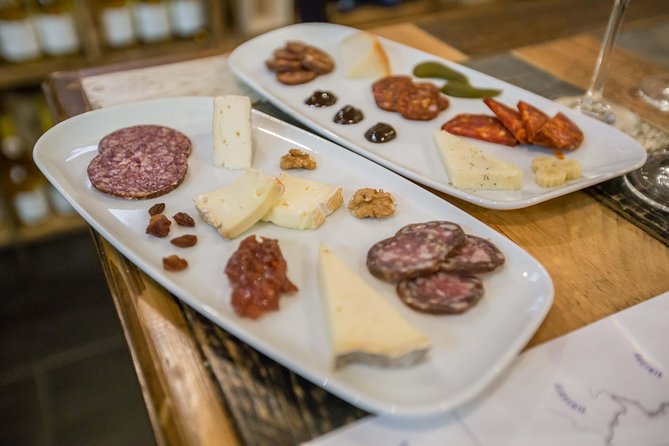
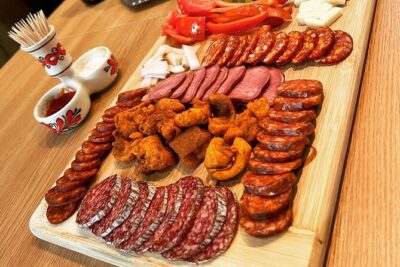
The food is more than decoration beside the glasses. You receive light pairings with the wines, including a cheese and charcuterie board with local specialties.
The food is generally served in a practical way for comparison. One account described separate farmer-style boards for white and red wines. Another noted two individual tasting plates, one for each part of the lineup. These pairings give you a chance to see how the same wine changes when tasted with cheese or cured meat.
That is valuable for anyone who drinks wine with meals. A wine that seems sharp on its own may work well with food. A red that feels heavy by itself may become more balanced beside charcuterie. You learn by tasting the combination, not just by hearing an explanation.
The quality of the cheese and meats has been a frequent strength. Still, keep your expectations in the right place. This is a light food pairing, not dinner. If you are hungry, plan a meal before or after the tasting. The 6:00 pm start makes it easy to treat the session as the first part of your evening.
A few more trips worth weighing up before you book
- Hungarian Wine Tasting (with Cheese and Charcuterie) in Budapest
★ 5.0 · 531 reviews - Budapest Private Tuk Tuk Tour with Wine Tasting and Cheese Platter
★ 4.5 · 35 reviews
The sommelier’s style makes or breaks the night
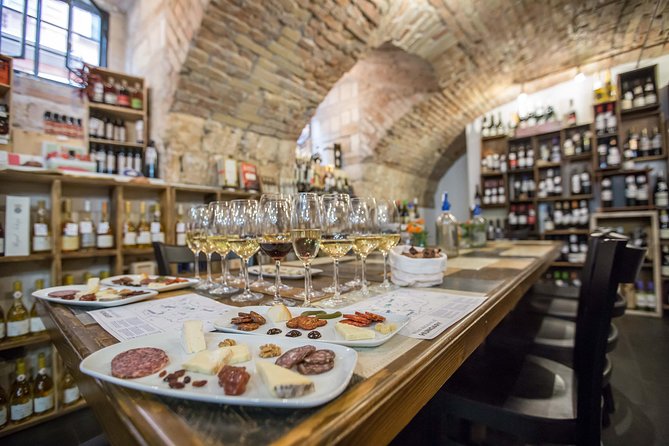
A good wine tasting guide must know the subject and read the room. This experience has received strong praise for both, with Tomas appearing several times as an especially effective host. Other sessions were led by Thomas, Bolasz, and John, each described as clear, friendly, entertaining, or genuine.
Tomas was particularly praised for linking wine to Hungarian grapes, regions, and history without making the subject feel complicated. Bolasz was described as well-informed but not overbearing. Another guide, from South Africa, kept the evening open and light while still supplying useful facts.
That range of guide styles is worth noting. The exact personality you get can vary. One session received a lower assessment because the guide seemed tired and complained about the number of tastings that day. It was an isolated negative impression in an otherwise very strong record, but it is a fair reminder that live guiding is part of the product.
The overall rating is 4.9 from 121 assessments, with 98 percent recommending the experience. Those figures suggest that the usual standard is high, but no hosted activity is completely immune to an off night.
The best part of the format is that you are not expected to sit silently. You can ask about grapes, regions, food matches, or bottles to seek out later. You may also find yourself comparing impressions with people from the United States, Britain, Australia, Germany, and elsewhere.
What the evening teaches about Hungarian regions
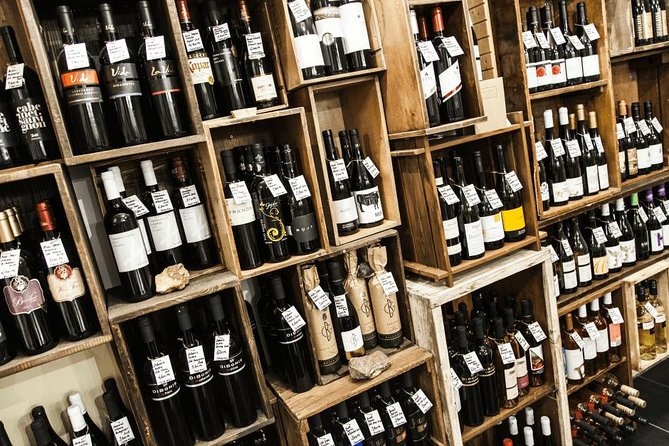
The session offers a broad introduction rather than a full technical course. You hear about Hungary’s major wine areas and the traits associated with them, then taste examples that give those ideas some meaning.
The regional discussion is one of the main reasons to book early in your Budapest stay. Afterward, restaurant wine lists become less intimidating. You have heard the names, tasted several styles, and gained enough context to make a choice beyond simply ordering the cheapest Hungarian bottle.
Tokaj receives special attention because the final glass is a sweet wine from one of the world’s great sweet-wine areas. Ending with Tokaj is not just a sugary finale. It shows another side of Hungarian wine and gives the evening a clear climax.
The tasting also places Hungary in the wider wine world. You can judge the country’s wines against familiar styles from France, Italy, Spain, or Australia. The point is not to claim that Hungarian wine is better than those countries’ wines. The useful lesson is that Hungary offers quality and variety at prices that can be surprisingly modest.
Is $65 a good value?
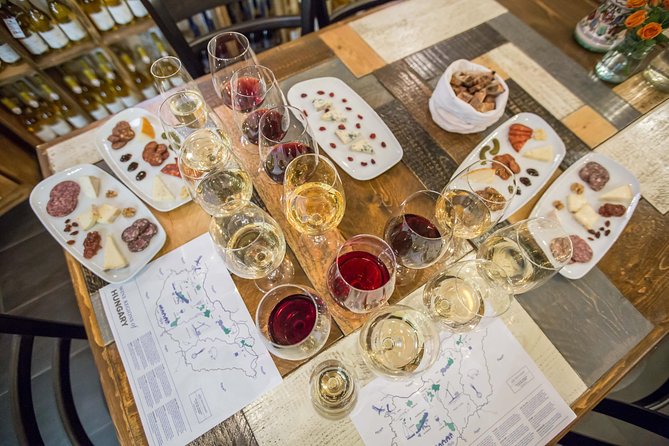
At $65, this is not the cheapest way to drink wine in Budapest. It is also not merely eight bar pours. You are paying for a professional guide, eight samples, food alongside them, mineral water, and two hours of structured explanation in a dedicated venue.
I see the price as reasonable if you want an introduction rather than random sampling. Buying eight separate glasses, ordering suitable food, and learning the regional background on your own could easily become costly, and you would lose the guided comparisons.
The direct producer connection adds value, too. You are tasting bottles selected for their quality and their role in explaining Hungarian wine, including wines from small producers. If you find a favorite, Taste Hungary also has a shop with bottles available to buy. Bring room in your luggage if you are serious about taking something home.
The value is lower if you are seeking a full dinner, a winery visit outside Budapest, or a highly technical master class. This is a city-based introduction with generous pours, snacks, and conversation. For most wine-curious visitors, that is a sensible balance.
Who will enjoy this tasting most?
I would recommend it to:
- Wine drinkers who want to understand Hungary beyond Tokaj
- Couples looking for a relaxed evening activity
- Solo visitors who enjoy meeting people at a shared table
- Beginners who want clear explanations without formal wine language
- Experienced wine drinkers interested in lesser-known grapes and producers
- Anyone planning to buy Hungarian wine during the rest of a Budapest visit
You do not need to be a wine expert. In fact, beginners may gain the most because the evening builds a simple foundation from the first glass onward.
It is less suitable if you need a full meal, dislike group activities, or want to visit vineyards in the countryside. It is also not suitable for anyone under 18, since the minimum age is 18.
Tell Taste Hungary about dietary requirements when you book. The supplied details do not promise a specific alternative menu, so do not wait until you arrive to raise the issue.
Practical details that matter
The tasting is offered in English and includes a mobile ticket. Confirmation is sent at booking, and the venue is near public transportation.
Plan to arrive with enough time to find Bródy Sándor u. 9 without rushing. The scheduled start is 6:00 pm, and the session lasts about two hours. Since it returns to the meeting point, you can easily continue with dinner or evening plans nearby afterward.
The group can reach 24 people. Smaller groups may feel more personal, while a full session will naturally have less time for individual questions. The format still gives you a built-in social setting, which is helpful if you are on your own.
The experience cannot be refunded or changed after booking. If the minimum number is not met and Taste Hungary cancels, you are offered another date or experience, or a full refund. Given the firm policy, I would book only once your Budapest schedule is settled.
Should you book the Budapest wine tasting?
I would book this experience if you want a friendly, efficient introduction to Hungarian wine and you enjoy learning around a shared table. The combination of eight wines, quality cheese and charcuterie, direct-from-producer bottles, and a closing Tokaj makes the evening feel purposeful rather than generic.
Book it early in your stay if possible. You will leave with useful names, styles, and regional clues that can improve your later meals and wine purchases.
Skip it if your priority is a substantial dinner or a countryside winery excursion. For everyone else, $65 buys a well-paced evening with real local focus, and the chance to discover a wine country that many Budapest visitors overlook.
FAQ
How long does the Hungarian wine tasting last?
The experience lasts approximately two hours.
What time does the tasting begin?
The scheduled start time is 6:00 pm.
Where does the tasting take place?
It begins at Tasting Table Cellar by Taste Hungary, Bródy Sándor u. 9, 1088 Budapest, Hungary.
How many wines are included?
Eight Hungarian wine tastings are included, along with light food pairings and mineral water.
Is the tasting available in English?
Yes. The experience is offered in English.
Is there a minimum age?
Yes. Participants must be at least 18 years old.
More Food and Drink Tours
- Budapest: Unlimited Prosecco, Beer and Aperol Spritz Cruise
★ 4.8 · 25,310 reviews - Budapest: Unlimited Prosecco, Beer & Aperol Spritz Cruise
★ 4.5 · 3,371 reviews - From Budapest: Etyek Wine Tasting Tour with 3-Course Meal
★ 4.8 · 557 reviews - Budapest: Guided Foodie Walking Tour with Food and Drinks
★ 4.9 · 453 reviews
Just added around Budapest
- Lake Balaton and Herend Guided Tour★ 4.7 · 3 reviews
- Audio visual multi-sensory chefs journey dinner experience★ 5.0 · 3 reviews
- Hollókő Ethnographic Village: Day Tour from Budapest★ 3.7 · 3 reviews
- Tapolca Cave Lake and Tihany/ Balaton private tour from Budapest★ 4.5 · 3 reviews
- Budapest Art Nouveau Walking Tour★ 5.0 · 3 reviews
- SzentEndre-SaintAndrew City Privately Shopping and Picturesque★ 4.5 · 3 reviews
- Budapest Drinks and Piano Show Cruise★ 4.5 · 3 reviews
- Horseshow on the Hungarian Puszta, private tour from Budapest with entry!★ 5.0 · 3 reviews
Wine Tours, compared.
Countryside Half-day Gastro-Wine Tour from Budapest Meal & pickup
What we thought →Budapest Centre Food Tour with 10+ Tastings, Wine & Street Food
What we thought →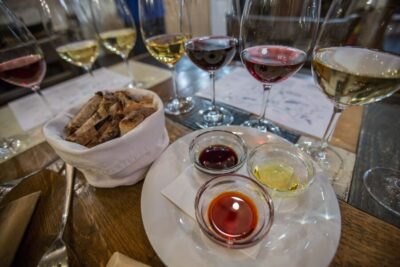
Budapest Cooking Class & Market Tour with Local Guide & Wines
What we thought →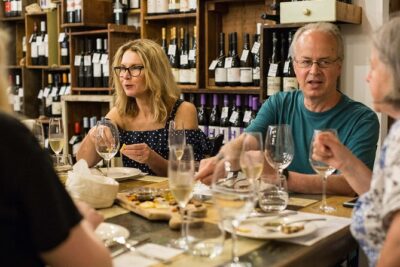
Hungarian Wine Tasting (with Cheese and Charcuterie) in Budapest
What we thought →
Budapest Food Tour: Market to Tavern with 14+ Tasters & Wines
What we thought →
Browse the lists this tour appears in