Reviewed · TOURS
Café Wandering: An Excursion through Budapest’s Belle Epoque
Budapest’s cafés tell the city’s story. This three-hour walk links grand coffee houses, striking architecture, and the writers and artists who made café culture part of daily life. I especially like the small group of eight and the chance to study details such as Asian motifs, lavish interiors, and the curious blend of art and public life. The main consideration is that coffees, cakes, and other refreshments cost extra, and the route description names a few stops that may not all fit into the listed itinerary.
I also like the art historian guides, who include professors, doctoral students, historians, journalists, art critics, and published authors. The tour has received five-star ratings, including praise for its informative style and for a guide named Kota. At $123 per person, it is not a bargain walk, but it can make sense if you care about architecture, café culture, and context more than simply checking off sights.
In This Review
- Key points to know before you book
- Why Budapest’s café culture deserves a walking tour
- Gerbeaud Café and the first taste of Imperial Budapest
- Taking the tram to Central Cafe 1887
- Café Astoria and the grand European coffee house
- Művész Coffee House and the artist’s side of Budapest
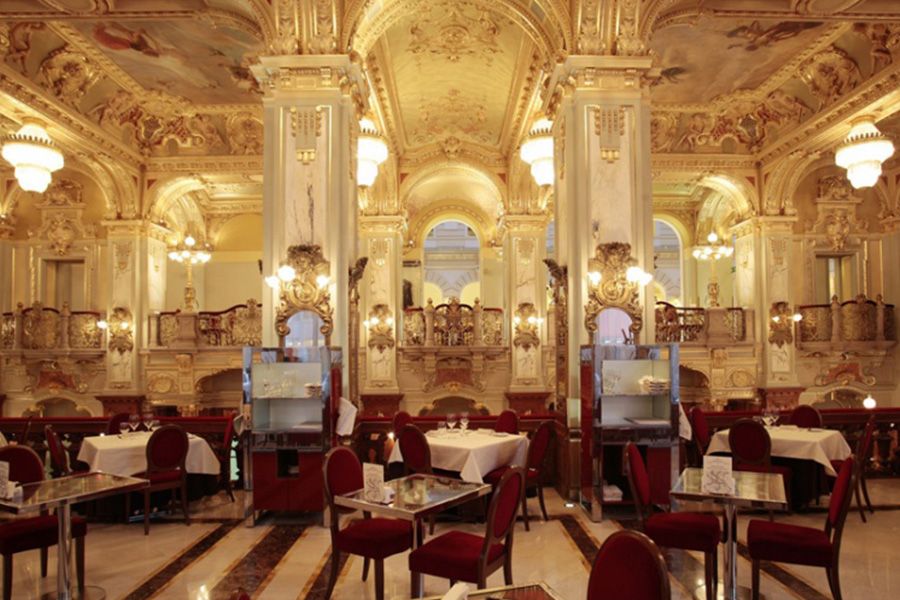
- New York Palace Café and a lavish final interior
- The Art Nouveau Kazinczy Street Synagogue option
- What the guide adds to the $123 price
- Who will enjoy this café and architecture walk
- Practical advice for making the most of it
- Should you book Café Wandering?
- FAQ
- Where does the tour begin?
- How long does Café Wandering last?
- What language is the tour conducted in?
- How many people are in the group?
- Are coffee, cake, and other refreshments included?
- Can I cancel for a full refund?
Key points to know before you book
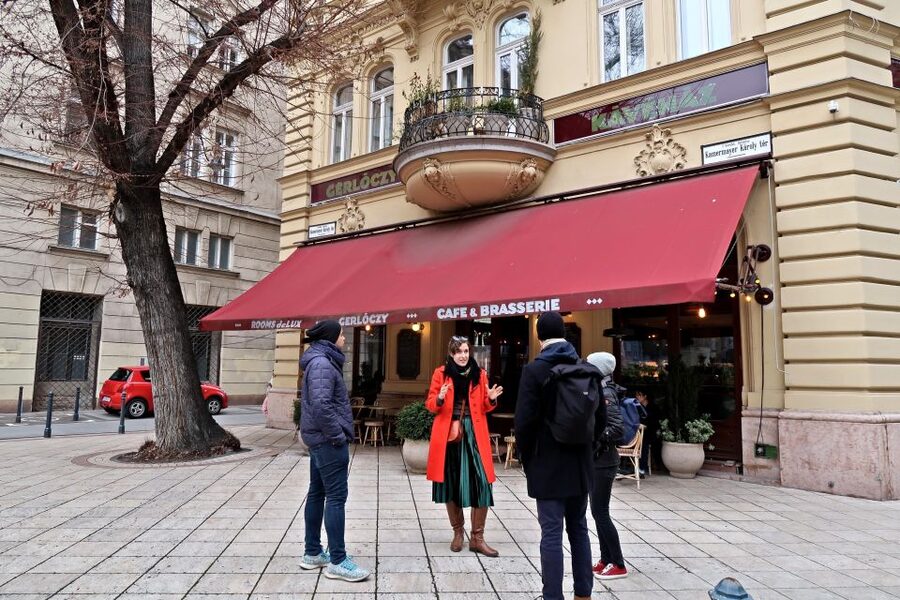
- Gerbeaud begins the story at Vörösmarty Square: This famous café offers an early look at Imperial Budapest and more than a century of social life.
- The Central Cafe shows café culture at full strength: Its decor, food, desserts, and drinks help explain how central coffee houses were to 19th-century city life.
- You will study several different design styles: The route includes grand European interiors, Asian-inspired details, Art Nouveau touches, and old film-house architecture.
- The group is limited to eight people: That size should make it easier to hear the guide and ask about small architectural details.
- Refreshments are optional and extra: You can order coffee, cake, or another drink, but those purchases are not part of the $123 price.
- The route information includes both café stops and a synagogue finale: Ask for the exact stop list when booking, since the detailed description mentions Urania and the Kazinczy Street Synagogue, while the shorter itinerary lists Művész and New York Palace Café.
Why Budapest’s café culture deserves a walking tour
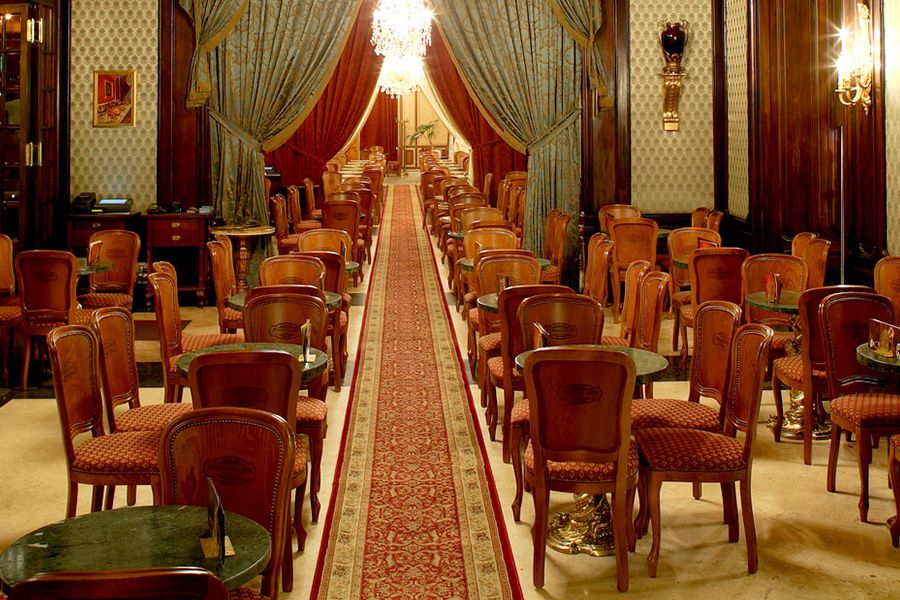
Budapest’s historic coffee houses were more than places to drink caffeine. During the Habsburg period, they served as meeting rooms, workspaces, discussion halls, and informal cultural clubs. Writers could spend hours there, artists could meet collaborators, and intellectuals could address large audiences.
That is the useful idea behind this tour. You are not simply looking at ornate ceilings and polished walls. You are being asked to see the café as a working part of the city’s cultural life. The guide connects decoration with the people who used these rooms and with the period when Budapest enjoyed major economic and artistic growth.
I find that approach far more satisfying than a walk that treats architecture like a collection of pretty façades. You will still see beautiful buildings, but you will also get a reason to care about them.
The tour is conducted in English and lasts three hours. Since the group is capped at eight, it has a more personal feel than a large coach excursion. You begin at Cafe Gerbeaud at Budapest Vörösmarty tér 7 to 8, in the center of the city, then continue on foot and by tram.
Other Budapest days people book alongside this one:
- Budapest: City Highlights Cruise with Welcome Drink
★ 4.6 · 35,610 reviews - Budapest: Unlimited Prosecco, Beer and Aperol Spritz Cruise
★ 4.8 · 25,310 reviews - Budapest: Széchenyi Spa Day Ticket with Optional Upgrades
★ 4.3 · 23,911 reviews
Gerbeaud Café and the first taste of Imperial Budapest
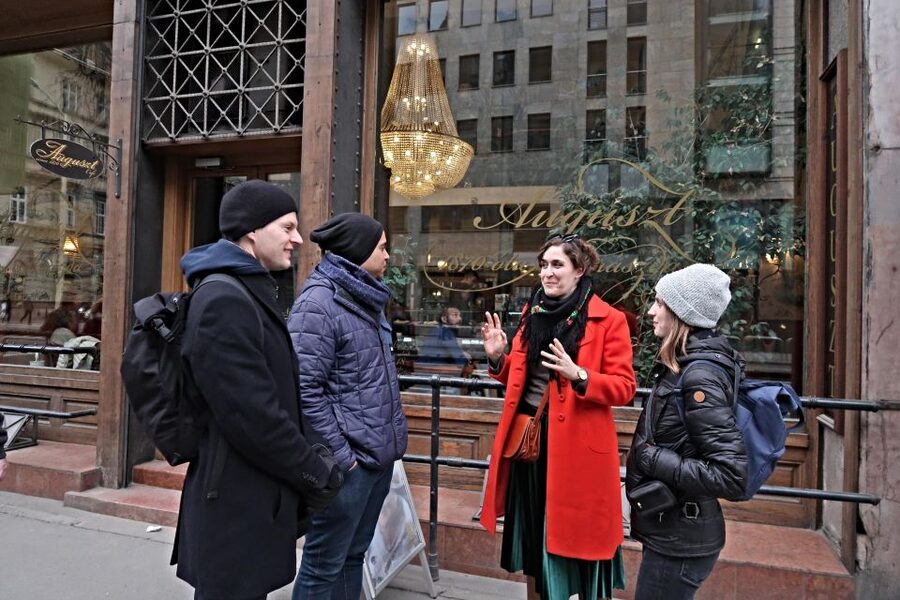
The meeting point is Cafe Gerbeaud on Vörösmarty Square. That is a convenient start because the square sits in the heart of central Budapest and gives the group a clear, easy-to-find gathering point.
Gerbeaud is the first café stop, and it sets the tone. Its interior is described as exquisite, with more than 100 years of history. During the late 19th century, it served as a social hub for both local people and visitors. The important point is not just the age of the room. It is the sense that this was a place where the city’s public life happened over coffee, pastries, and conversation.
Your guide begins explaining the atmosphere of Imperial Budapest here. Look closely at how the room presents itself. A grand café interior was designed to make an ordinary drink feel like part of a larger social occasion. The room, the service, the desserts, and the company all mattered.
You can order something at the cafés, but the cost is not included. That gives you a choice. If you want the full café experience, buy a coffee or cake. If you would rather focus on the guide and the architecture, you can treat the stops as visual visits instead.
Taking the tram to Central Cafe 1887
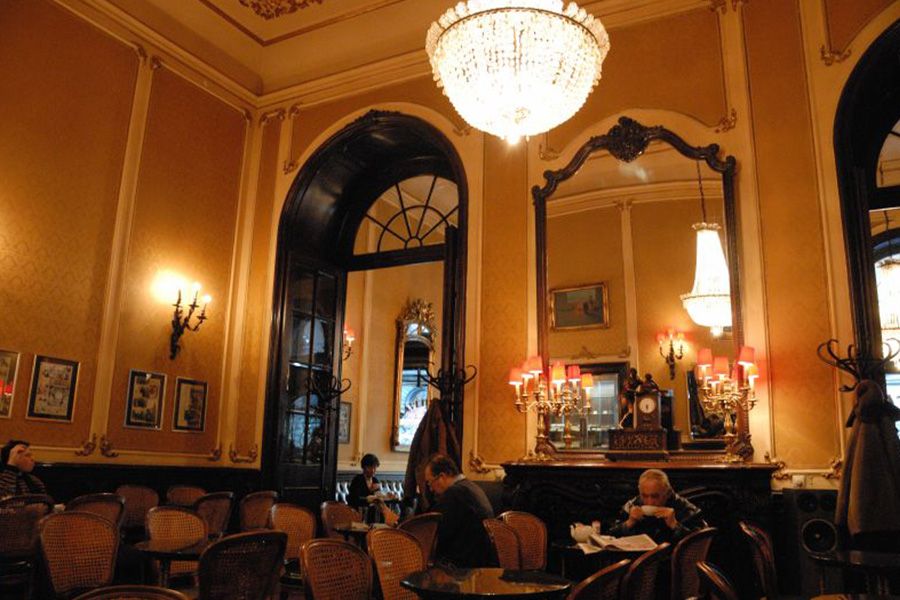
From Gerbeaud, the tour uses a tram along the Danube before reaching Central Cafe and Restaurant 1887. The short ride is a useful change of pace. You are not walking every minute of the three hours, and the route gains a connection to the city beyond the café interiors.
Central Cafe is presented as a particularly strong example of café house culture during the height of the Habsburg Empire’s economic and cultural power. The room, meals, desserts, and drinks all contribute to the sense of a past social world.
I like this stop because it treats café culture as a complete experience. The design matters, but so do the rituals around eating and drinking. A café was not only a room with attractive furniture. It was a place where people lingered, read, argued, wrote, and met.
The price of a drink here is something to keep in mind. At $123, you are paying for the guided interpretation, not for a package of refreshments. That distinction is important. This tour suits you best if you value the expert explanation and small-group setting. It is less suitable if you expect an inexpensive café crawl with food included.
Café Astoria and the grand European coffee house
The next major stop is Café Astoria, described as more than a century old and filled with the grandeur associated with classic European coffee houses. Its appeal is visual, but the guide also uses it to show how café design expressed the confidence of the period.
This is the kind of place where you should slow down and compare it with Gerbeaud and Central Cafe. The tour is strongest when you notice that these cafés are not identical. Each offers a different version of old Budapest: one may feel more refined, another more formal, and another more connected to everyday intellectual life.
The detailed route says you will make another short walk after Astoria to the Urania Cafe on Rákóczi Street. Urania houses the city’s oldest film theater and is known for lectures delivered by prominent intellectuals before large audiences. That gives the stop a different character from the traditional coffee houses.
Urania matters because it links café culture with public education and film. It was not only about private conversation around a small table. Intellectual life could also move toward the stage, the lecture hall, and the cinema.
There is a route detail worth clarifying before you reserve. The shorter itinerary lists Művész Coffee House and New York Palace Café, while the longer description includes Urania and mentions finishing at the Art Nouveau orthodox Kazinczy Street Synagogue. These may reflect variations in the walk, but the supplied details do not explain the difference. Ask the provider which stops are scheduled for your date.
A completely different kind of day out around Budapest:
- Budapest: Nighttime or Daytime Sightseeing Cruise
★ 4.2 · 21,062 reviews - Budapest: 1-Hour Evening Sightseeing Cruise with Drink
★ 4.5 · 8,330 reviews - Budapest Danube Cruise and Dinner Options, Live Music and Dance
★ 4.5 · 7,428 reviews - Budapest: Historic Cruise with Welcome Drink
★ 4.7 · 6,512 reviews
Művész Coffee House and the artist’s side of Budapest
Művész Coffee House, also called the Artist Cafe, appears in the listed itinerary as another visit. The name points toward the artistic side of Budapest’s café tradition, where painters, writers, actors, and other creative figures met in public rooms rather than private clubs.
Because the exact commentary for this stop is not specified, I would treat it as a place to compare atmosphere and design with the earlier cafés. Listen for the guide’s explanation of who used the room and how it fits into Budapest’s wider café network.
This stop is also a good reminder that the appeal of the experience is not limited to famous palace interiors. A café walk works best when you see several levels of the tradition: the grand, the formal, the artistic, and the intellectual.
New York Palace Café and a lavish final interior
The listed itinerary ends with a guided tour of New York Palace Café. Even without a detailed description of the commentary, its inclusion signals another grand interior and another chance to compare the city’s café styles.
The tour’s focus on exquisite and lavish walls means you should pay attention to the surfaces around you, not only to the tables where you might sit. The design details are part of the lesson. The program specifically calls attention to Asian motifs and other elements employed by the designers, so this is a chance to look for how Budapest’s architects borrowed, adapted, and combined ideas from different places.
That detail gives the walk some depth. Belle Epoque design was not a single neat style. Designers played with references, ornament, and imported visual ideas. An art historian can point out patterns that you might otherwise see as decorative noise.
New York Palace can also be a high point for anyone who enjoys interiors more than street monuments. You are inside the architecture, surrounded by the room’s proportions and decoration, rather than viewing a façade for five minutes before moving on.
The Art Nouveau Kazinczy Street Synagogue option
The longer description says the walk concludes at the fascinating Art Nouveau orthodox Kazinczy Street Synagogue. This is not a café, but it broadens the tour’s architectural range and shows how the city’s Belle Epoque design appeared in religious buildings as well as public cafés.
The mention of Asian motifs is especially relevant here, since the tour asks you to examine design elements across the places visited. The synagogue finale would give the walk a change of mood after the café interiors and would add religious architecture to the story.
Again, confirm the final route. The available information names the synagogue as the conclusion, but the shorter stop list names New York Palace Café instead. You should not assume both are guaranteed within three hours. A quick question to Insight Cities before booking will help you know exactly what you are paying for.
What the guide adds to the $123 price
The guide is the main reason to consider this experience. A three-hour walk through cafés is easy to arrange on your own, but understanding why the interiors matter is harder. The guide supplies the historical and artistic framework, and the listed guides come from serious academic and publishing backgrounds.
That does not mean every minute will suit every person. If you prefer to move quickly, take exterior photographs, and explore independently, $123 may feel high. You are paying for a focused specialist walk, not a general introduction to Budapest.
For someone interested in architecture, literature, film, design, or the Habsburg era, the price is easier to justify. The group limit of eight also matters. It gives the guide a better chance to respond to individual questions, and you are less likely to lose the explanation in a crowd.
The refreshments are a separate expense, so set your budget with that in mind. You might choose one memorable coffee or cake rather than ordering at every stop. Since the cafés are part of the subject, though, skipping every purchase could leave you with a slightly incomplete sense of the experience.
Who will enjoy this café and architecture walk
I would recommend this tour to you if you like buildings with a story behind them. It is also a strong choice if you want to understand Budapest’s literary and artistic life without committing to a full museum day.
The experience should suit:
- Architecture fans who enjoy comparing interiors and design details.
- History-minded visitors interested in Imperial Budapest and the Habsburg period.
- Café lovers who want context, not only coffee and cake.
- First-time visitors looking for a structured introduction to central Budapest.
- Repeat visitors who have already seen the main sights and want a more specialized subject.
It may not suit you if you want a relaxed, food-focused crawl. The cafés are settings for the tour, but the guide’s interpretation is the main product. You should also be comfortable with a three-hour program that includes walking, a tram ride, and several indoor stops.
The English-language format is clear from the booking information. If you need another language, this experience is not presented as a suitable option.
Practical advice for making the most of it
Arrive at Cafe Gerbeaud on Vörösmarty Square with enough time to find the meeting point. The address is Budapest Vörösmarty tér 7 to 8, postal code 1051.
Wear shoes you can use comfortably for a city walk. The distance is not given, but the program includes movement between cafés and a tram journey along the Danube. Three hours can pass quickly when the group is stopping, listening, and examining interiors.
Bring questions. Ask about the writers, artists, and intellectuals connected with the cafés, and ask the guide to point out the Asian design references. The small group is one of the tour’s better features, so use it.
You should also confirm the exact route before paying. Ask whether your departure includes Urania Cafe, Művész Coffee House, New York Palace Café, and Kazinczy Street Synagogue, since the detailed route and the short itinerary do not match perfectly.
Free cancellation is available up to 24 hours before the tour for a full refund, and you can reserve now and pay later. Those terms make it easier to fit the walk into a changing Budapest schedule.
Should you book Café Wandering?
Book this experience if you want expert-led architecture and café culture, not just a list of pretty coffee houses. The five-star rating record includes praise for its informative quality, and Kota is specifically praised as an excellent guide. That personal recommendation is useful, especially for a tour where the quality of the explanation shapes the whole experience.
At $123 per person, the walk is best viewed as a specialist cultural tour. I would choose it for a strong interest in Belle Epoque Budapest, design, writers, and the social role of cafés. I would skip it if you mainly want coffee, cake, and free time at a low price.
Before booking, confirm the final route and decide how much you want to spend on refreshments. If those details work for you, the small group and art historian guide offer a thoughtful way to see Budapest through its interiors, ideas, and café tables.
FAQ
Where does the tour begin?
The tour begins at Cafe Gerbeaud, Budapest Vörösmarty tér 7 to 8, 1051.
How long does Café Wandering last?
The guided walk lasts three hours.
What language is the tour conducted in?
The tour is conducted in English with a live guide.
How many people are in the group?
The group is limited to eight participants.
Are coffee, cake, and other refreshments included?
No. Any coffees, cakes, drinks, or other refreshments you choose at the cafés cost extra.
Can I cancel for a full refund?
Yes. You can cancel up to 24 hours in advance for a full refund. You can also reserve now and pay later.
Just added around Budapest
- Lake Balaton and Herend Guided Tour★ 4.7 · 3 reviews
- Audio visual multi-sensory chefs journey dinner experience★ 5.0 · 3 reviews
- Hollókő Ethnographic Village: Day Tour from Budapest★ 3.7 · 3 reviews
- Tapolca Cave Lake and Tihany/ Balaton private tour from Budapest★ 4.5 · 3 reviews
- Budapest Art Nouveau Walking Tour★ 5.0 · 3 reviews
- SzentEndre-SaintAndrew City Privately Shopping and Picturesque★ 4.5 · 3 reviews
- Budapest Drinks and Piano Show Cruise★ 4.5 · 3 reviews
- Horseshow on the Hungarian Puszta, private tour from Budapest with entry!★ 5.0 · 3 reviews
Tours, compared.
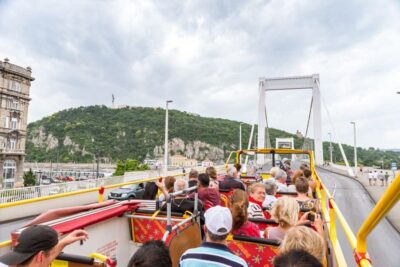
City Sightseeing Hop-On Hop-Off Bus Tour & Extras
What we thought →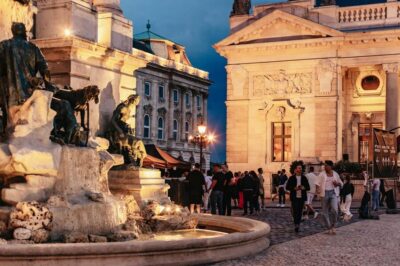
Buda Castle District Vampires and Myths Night Tour
What we thought →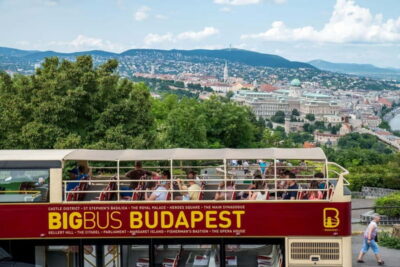
Big Bus Hop-On Hop-Off Tour & Danube River Cruise
What we thought →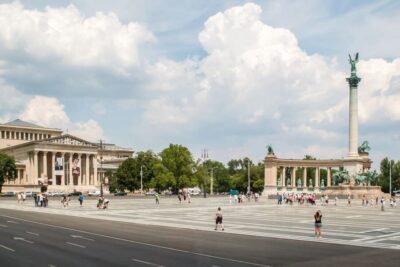
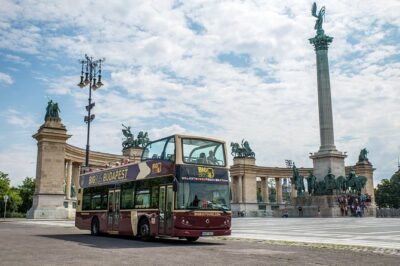
Big Bus Budapest Hop-On Hop-Off Bus and Walking Tour
What we thought →