Reviewed · TOURS
Budapest: Virtual Reality Tour in 8 Languages
History gets a high-tech makeover here. This Budapest VR tour combines a guided walk through the Buda Castle District with virtual scenes of medieval construction, wartime destruction, and the 1956 Hungarian Revolution. I like the way it connects real streets with the events that shaped them, and I like the bird’s-eye city view that helps you get your bearings.
The tour is also practical for international visitors, with live guidance in English or Hungarian and audio narration in eight languages. The main consideration is the headset itself: this experience is not suitable for people with epilepsy, migraines, heart problems, mobility impairments, or a fear of heights, and the walking route includes a light hike.
In This Review
- Key points at a glance
- Starting beside Chain Bridge
- How the six virtual reality stops work
- Seeing the medieval castle take shape
- Watching Budapest’s battles and destruction
- The 1956 Hungarian Revolution through VR
- The bird’s-eye view over Budapest
- What the walking sections add
- Is $39 a fair price?
- Language choices and the role of the guide
- Who should book this Budapest experience?
- Practical advice before you go
- Should you book the Budapest VR Tour?
- FAQ
- Where does the Budapest VR tour start?
- Where does the tour finish?
- How long does the tour last?
- Which languages are available?
- What historical periods does the VR tour cover?
- What should I bring?
- Is the tour suitable for people with mobility impairments?
- Can I cancel the booking?
Key points at a glance
- Six VR stops in the Buda Castle District: You pause at several points to see different moments in Budapest’s past through the headset.
- Medieval castle construction: The technology shows the Royal Palace and castle area during the Middle Ages, not just as they appear today.
- World War II and 1956: The virtual scenes cover both the destruction of the war and the Hungarian Revolution.
- Eight audio languages: Choose from English, Chinese, German, Hungarian, Spanish, Russian, Italian, and French.
- A short but active walking tour: The advertised duration is 1.5 hours, while the detailed route description calls it roughly two hours, so allow a little flexibility.
- Easy Buda-side meeting point: You meet at Lánchíd u. 23, close to Chain Bridge and Clark Ádám Square, then return there at the end.
Starting beside Chain Bridge
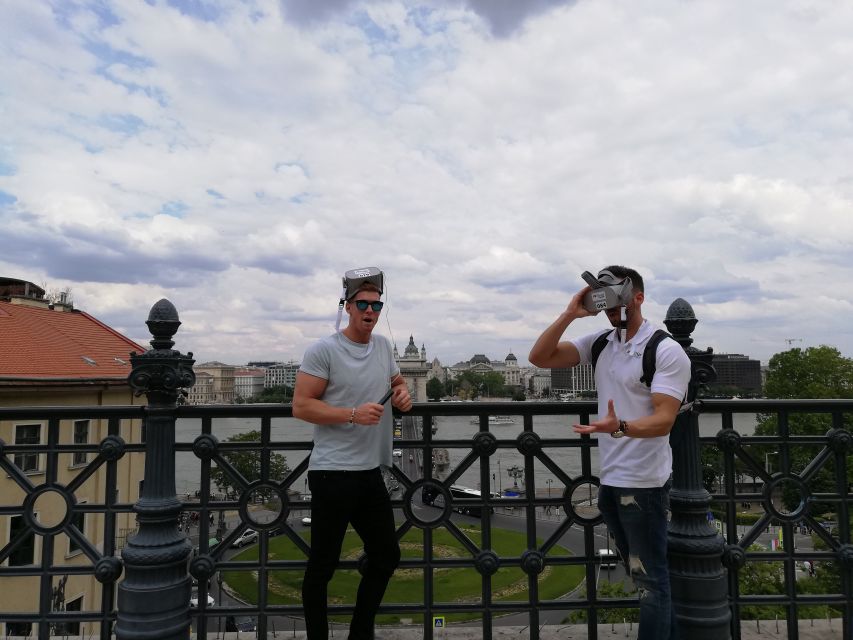
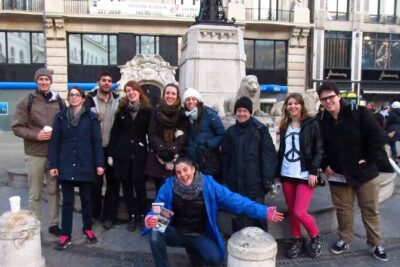
Your tour begins on the Buda side of the Danube at Lánchíd u. 23. Look for the VR Tour flags facing the street. This is close to Clark Ádám Square and the Buda end of Chain Bridge, so the starting point is easy to pair with time around the river.
Arrive 15 minutes early. You need time to find the flags, meet the guide, and receive the equipment without holding up the departure. Bring a passport, ID card, or a €200 deposit for the headset. The deposit requirement is worth planning for, especially if you prefer to carry only a small amount of cash while sightseeing.
The guide leads the group from the meeting point into the Castle District. This is not a bus tour, and you should wear comfortable shoes. The route includes a light hike, so sturdy footwear matters more than fashionable footwear here.
The experience includes a sterile virtual reality headset. A hygienic mask is available on request. That small detail is useful because the headset sits directly on your face, and you may feel more comfortable knowing the equipment has been cleaned for use.
Other Budapest days people book alongside this one:
- Budapest: City Highlights Cruise with Welcome Drink
★ 4.6 · 35,610 reviews - Budapest: Unlimited Prosecco, Beer and Aperol Spritz Cruise
★ 4.8 · 25,310 reviews - Budapest: Széchenyi Spa Day Ticket with Optional Upgrades
★ 4.3 · 23,911 reviews
How the six virtual reality stops work
The tour uses six stops around the city, with walking between them. At each location, you put on the headset and view a virtual scene connected to the place around you. An audio guide explains what you are seeing and why the event matters in Hungarian history.
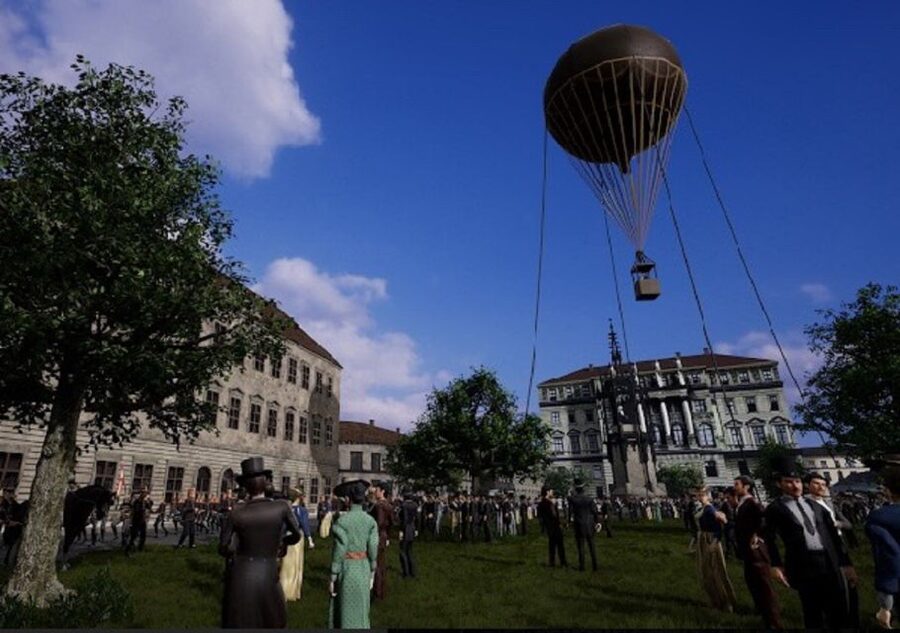
This format has a real advantage. A standard walking tour can point toward a palace wall and tell you what once occupied the site. Here, the headset gives you a visual reconstruction of earlier buildings and events. You still see the real Budapest around you, but the technology adds a missing layer.
The guide handles the movement between stops and helps you get around the Castle District. That support matters because the headset sessions are only part of the activity. The walking sections connect the scenes, give you time to ask questions, and keep the experience from becoming a series of disconnected video clips.
The tour has live guides in English and Hungarian. The audio narration adds Chinese, German, Spanish, Russian, Italian, and French. If you book in a language other than English or Hungarian, the guide may not provide live commentary in that language, but the recorded audio covers the historic content.
Seeing the medieval castle take shape
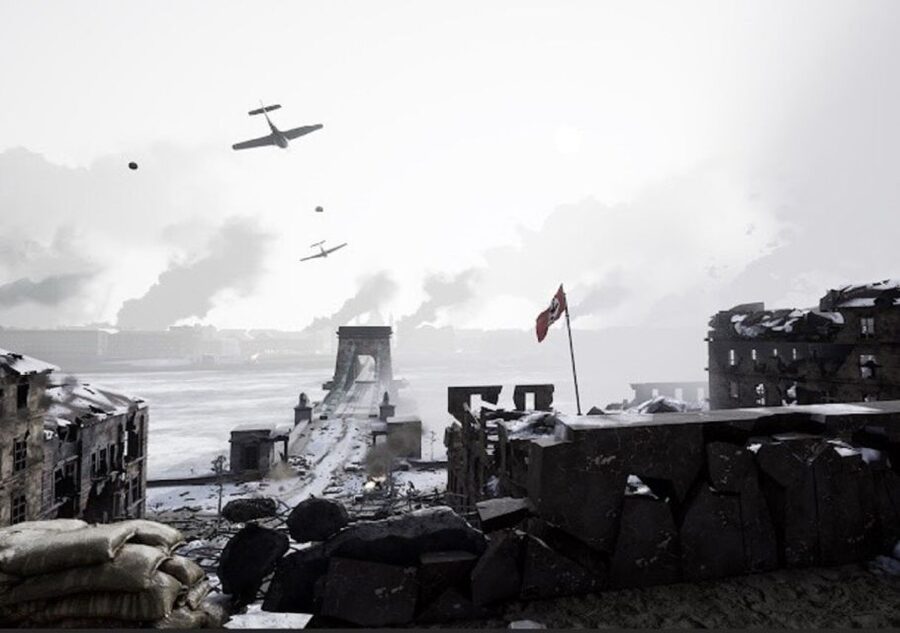
One of the strongest parts of the experience is the return to the Middle Ages, when the castle was being built. The present-day Castle District can make it difficult to picture the original construction process. Stone walls, later additions, restorations, and modern city life all overlap.
The VR display gives you a clearer sense of the castle as a working medieval project. You can watch the site develop rather than viewing the finished monument as if it appeared all at once. That visual change is useful for anyone who finds architectural history hard to follow from dates and plaques alone.
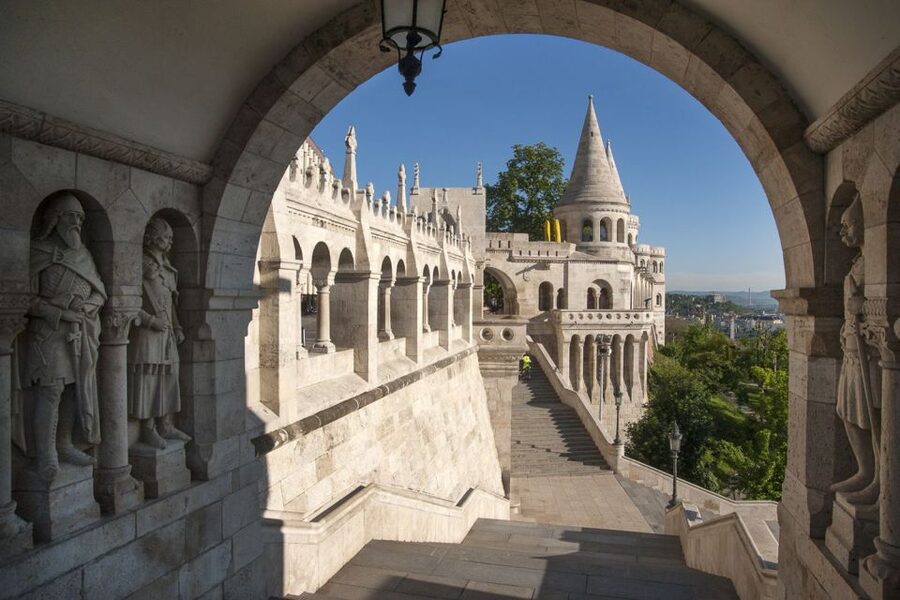
The Buda Castle and Royal Palace are the obvious stars of this section. The real buildings give the experience a strong setting, while the virtual reconstruction supplies movement and scale. I especially like this pairing because you are not watching history in an unrelated room. You are standing near the place being discussed.
Do not expect a long museum-style explanation at every stop. The format is designed for short, memorable scenes supported by audio and a guide. If you want detailed architectural analysis, you may need a separate visit to the Castle District museums or palace grounds.
Watching Budapest’s battles and destruction
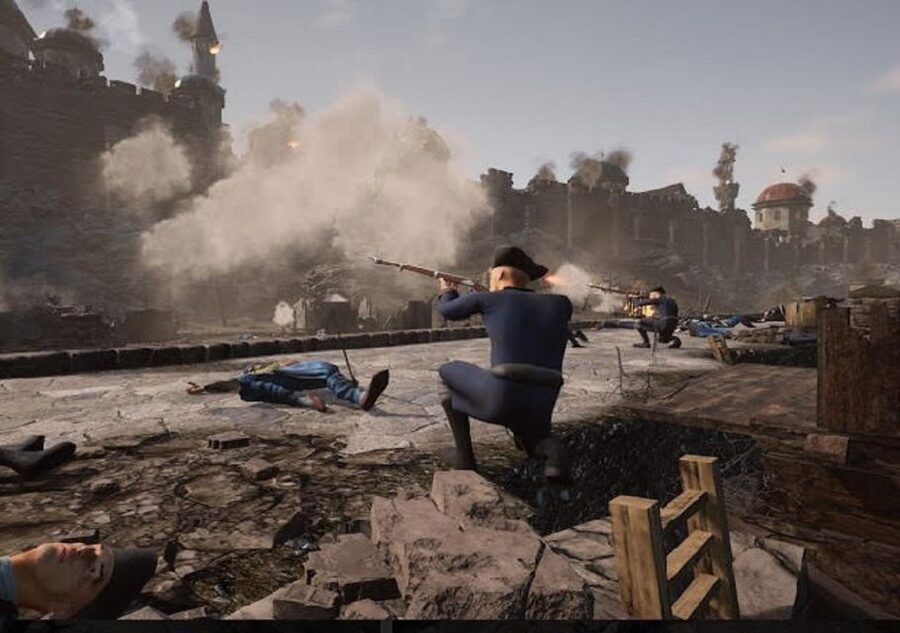
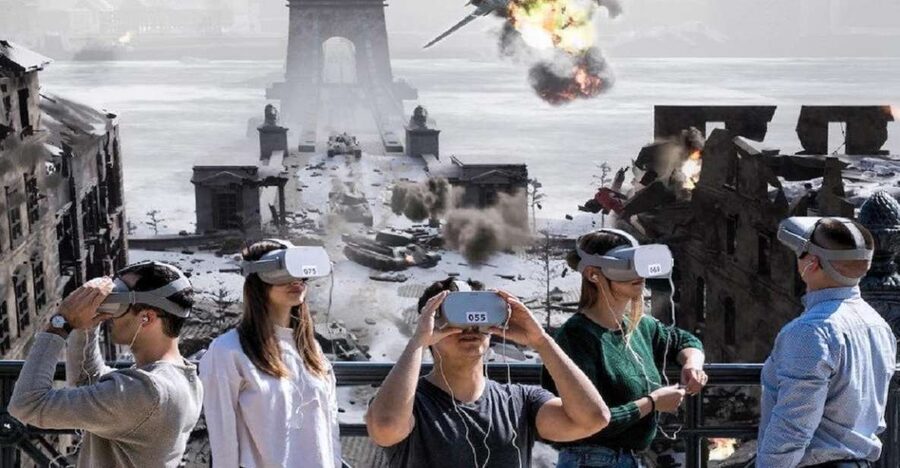
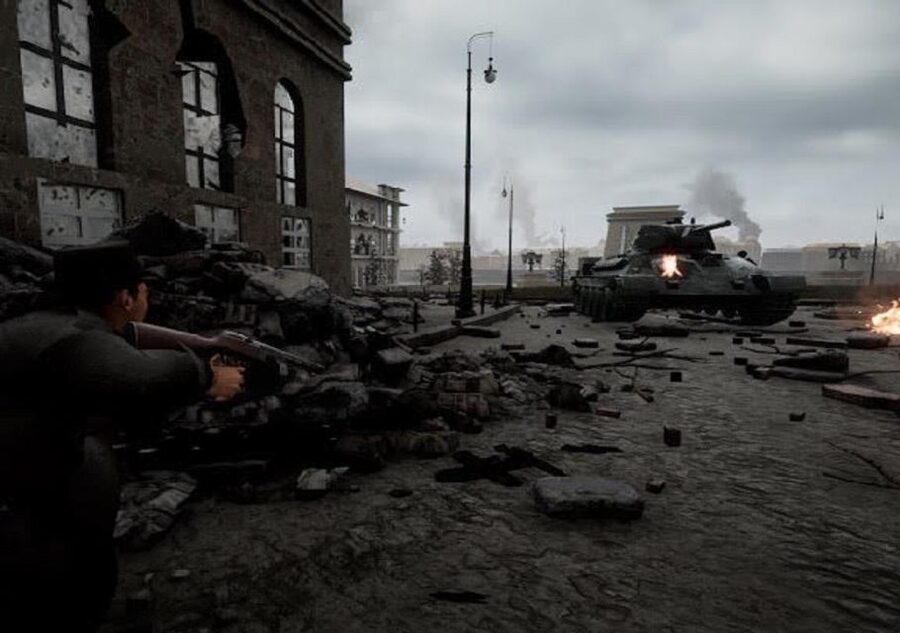
The tour then moves into darker chapters. The VR scenes show battles and the destruction caused during World War II. This is where the technology can make history feel immediate, but it also requires some emotional readiness.
The point is not simple spectacle. The audio narration places the destruction within the story of Budapest, helping you understand how the city’s buildings and public spaces were affected. Seeing a familiar area before and during devastation can explain why the present-day city contains so many repaired, rebuilt, or changed structures.
The scenes may appeal to you if you learn best through images. A spoken account of wartime damage can be hard to picture, while a virtual reconstruction gives you a visual reference. At the same time, people who dislike simulated violence or disaster may find this part uncomfortable.
The headset can also make the images feel more personal than a photograph on a wall. If you suffer from migraines, epilepsy, or discomfort with virtual reality, take the health warnings seriously. This is not an experience to book casually if headsets or rapid visual scenes cause problems for you.
A completely different kind of day out around Budapest:
- Budapest: Nighttime or Daytime Sightseeing Cruise
★ 4.2 · 21,062 reviews - Budapest: 1-Hour Evening Sightseeing Cruise with Drink
★ 4.5 · 8,330 reviews - Budapest Danube Cruise and Dinner Options, Live Music and Dance
★ 4.5 · 7,428 reviews - Budapest: Historic Cruise with Welcome Drink
★ 4.7 · 6,512 reviews
The 1956 Hungarian Revolution through VR
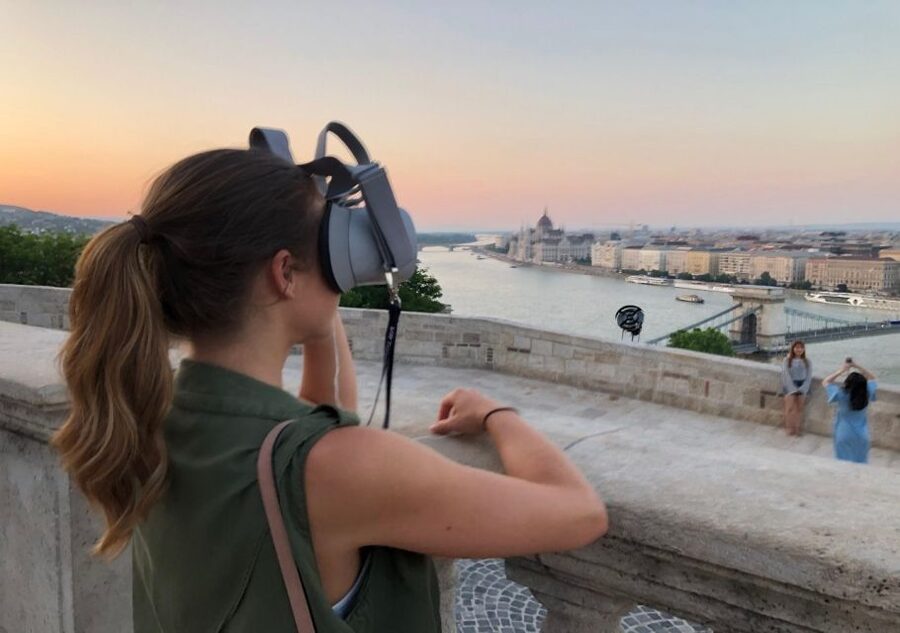
Another stop looks at the Hungarian Revolution of 1956. The uprising is an important part of modern Hungarian identity, and the tour uses virtual scenes to show how the event unfolded.
The value here is context. The revolution can seem like a distant date if you only encounter it in a timeline. The audio guide gives the event a setting and sequence, while the VR display shows the tension and action in a way that a short written label cannot.
This section also gives the tour a useful historical range. You are not seeing only medieval Budapest or only famous royal buildings. The experience moves from castle construction to war, then to a major political event of the 20th century.
You should think of this as an introduction rather than a complete study of 1956. The tour lasts about 1.5 hours according to the activity details, with the route description allowing roughly two hours. Six stops cannot explain every cause, faction, and consequence in depth. What it can do is give you a strong visual framework and suggest what you may want to learn more about later.
The bird’s-eye view over Budapest
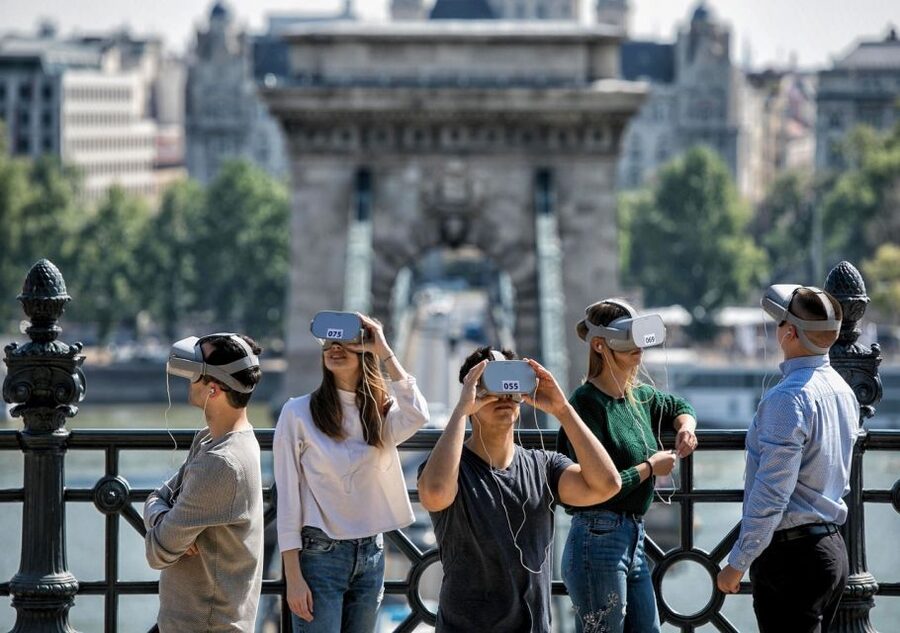
The bird’s-eye VR scene is one of the most useful features for first-time visitors. Budapest is spread across both sides of the Danube, and the relationship between Buda’s hills, the river, the bridges, and Pest can take time to understand from street level.
A virtual view from above helps you connect the places you may have already seen or plan to visit. It gives the city a sense of shape rather than leaving you with isolated landmarks. The viewpoint also adds a change of pace after the more event-focused scenes.
The height element explains one of the safety restrictions. The activity is not suitable for people who are afraid of heights. Even a virtual high view can be unpleasant if you are sensitive to that sensation.
I would not book this solely for the aerial scene, since it is one part of a six-stop route. But it adds useful orientation, especially early in a Budapest visit. You may find the rest of your sightseeing easier once the city’s layout makes more sense.
What the walking sections add
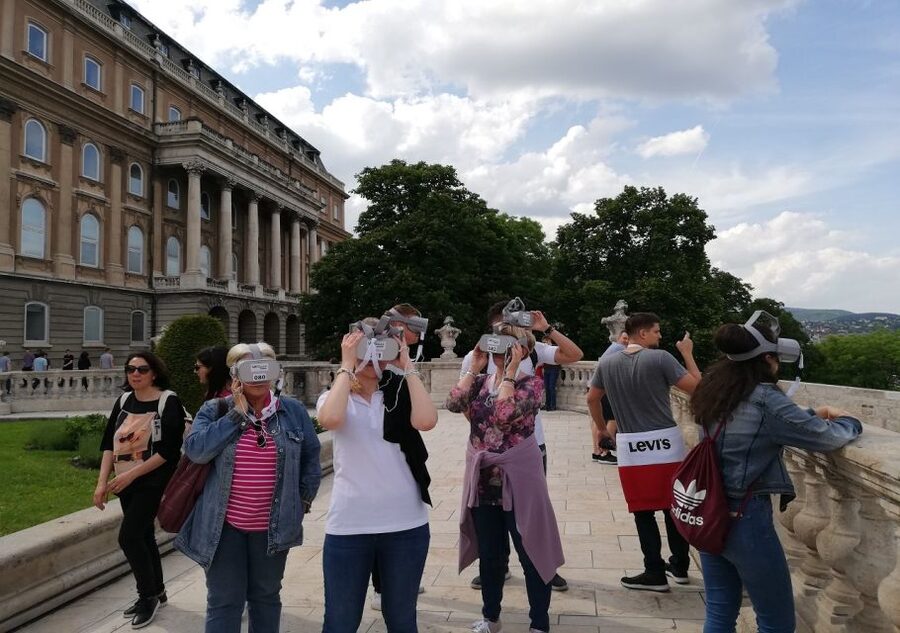
The walking between stops is not dead time. It lets you shift from the headset back to the actual Castle District, compare the virtual scenes with the modern streets, and listen to the guide’s cultural context.
That said, you need to be comfortable walking on an active sightseeing route. The activity is listed as unsuitable for people with mobility impairments, and the light hike means this is not a fully accessible, flat urban stroll. The guide helps with navigation, but the route still requires you to move through the district on foot.
Bring water during hot summer tours. The headset, walking, and warm weather can make the activity tiring. The advice to bring a drink is simple but important, especially because the tour includes repeated stops rather than one short viewing.
The tour ends back at the original meeting point. That makes planning easier. You do not need to arrange transport from an unfamiliar part of the city, and you can continue from Clark Ádám Square or cross Chain Bridge afterward.
Is $39 a fair price?
At $39 per person, this is more expensive than a basic self-guided walk and less than a full-day private sightseeing experience. The value depends on how much you want the VR element.
You are paying for the headset, a sterile piece of equipment, a guide, six historical displays, multilingual audio, and a structured route through one of Budapest’s most important areas. For someone who enjoys technology and wants history presented visually, that combination can justify the price.
The cost is less convincing if you mainly want a conventional Castle District tour. You could explore the area independently for far less, though you would not get the virtual reconstructions or the same guided sequence of historical events.
The strong rating of 4.6 out of 5 from 32 ratings supports the idea that the main product works as intended. The most praised points are the unusual format, the quality of the VR scenes, and the fun way the tour presents Hungarian history. One particularly useful reaction described the experience as a unique glimpse into Budapest’s past, while another praised the way it made history enjoyable for a couple and called the VR quality impressive.
Those comments point to the tour’s best audience: people who want history with movement, images, and a little technology. It is especially suitable if you are sightseeing with a partner, older children who can manage the equipment, or friends who usually lose interest during traditional historical talks.
Language choices and the role of the guide
You should check the language setup before booking. The live tour guide speaks English or Hungarian. The audio guide is available in eight languages: English, Chinese, German, Hungarian, Spanish, Russian, Italian, and French.
The guide’s main job is to lead the walking route and help you move between stops. The audio narration handles much of the detailed explanation during the VR displays. This division lets you focus on the images without trying to watch a screen and follow a long live speech at the same time.
If you prefer asking questions throughout a tour, English or Hungarian is the better choice. If you need one of the other audio languages, you will still receive the historical narration, but your interaction with the live guide may be more limited.
Who should book this Budapest experience?
I would recommend the tour to you if you meet most of these points:
- You want to see Buda Castle while learning how the area changed over time.
- You enjoy technology and visual storytelling.
- You prefer a guided route to finding six locations on your own.
- You can manage a light hike and about 1.5 to two hours on your feet.
- You are comfortable wearing a VR headset.
- You want audio narration in one of eight listed languages.
I would skip it if you have migraines, epilepsy, heart problems, mobility limitations, or a strong fear of heights. I would also choose a conventional walking tour if you want long conversations about architecture, politics, or local daily life rather than short VR scenes.
Families should consider the headset and health restrictions carefully. The information provided does not give a minimum age, so you should confirm age requirements before booking for children.
Practical advice before you go
Arrive 15 minutes early at Lánchíd u. 23 and look for the VR Tour flags facing the street. Wear comfortable shoes and carry water in summer.
Bring your passport or ID card, or be prepared to leave €200 as a headset deposit. A hygienic mask is available if you request one, and the headset is described as sterile.
Allow more time than the bare 1.5-hour duration if your schedule is tight. The detailed route description refers to roughly two hours, so avoid booking a meal or timed attraction immediately afterward.
Free cancellation is available up to 24 hours before the tour for a full refund. You can also reserve now and pay later, which helps if your Budapest schedule is still changing.
Should you book the Budapest VR Tour?
Book this tour if you want a lively, visual introduction to Budapest’s past and like the idea of standing in the Castle District while seeing earlier versions of it through a headset. The medieval construction scenes, World War II destruction, 1956 Revolution, and bird’s-eye view give the experience a useful range, and the multilingual audio makes it accessible to many international visitors.
Skip it if virtual reality causes health problems, if you dislike simulated battles, or if you want a slow, detailed architecture tour. For the right person, $39 is a fair price for the unusual format and guided structure. For everyone else, Budapest’s streets and monuments are still worth exploring without the headset.
FAQ
Where does the Budapest VR tour start?
The tour starts at Budapest, Lánchíd u. 23, 1013 Hungary, on the Buda side near Chain Bridge and Clark Ádám Square. Look for the VR Tour flags facing the street.
Where does the tour finish?
The activity ends back at the original meeting point on Lánchíd u. 23.
How long does the tour last?
The listed duration is 1.5 hours. The detailed route description refers to roughly two hours, so allow some flexibility in your schedule.
Which languages are available?
The live guide speaks English and Hungarian. The audio guide is available in English, Chinese, German, Hungarian, Spanish, Russian, Italian, and French.
What historical periods does the VR tour cover?
The tour includes the medieval construction of the castle, battles and destruction during World War II, and the Hungarian Revolution of 1956. It also includes a bird’s-eye view over Budapest.
What should I bring?
Bring comfortable shoes, a passport or ID card, and something to drink during hot summer tours. You may also use €200 as a deposit for the VR headset instead of presenting identification.
Is the tour suitable for people with mobility impairments?
No. The activity is listed as unsuitable for people with mobility impairments and includes a light hike.
Can I cancel the booking?
Yes. You can cancel up to 24 hours before the tour for a full refund. Reserve now and pay later is also available.
Just added around Budapest
- Lake Balaton and Herend Guided Tour★ 4.7 · 3 reviews
- Audio visual multi-sensory chefs journey dinner experience★ 5.0 · 3 reviews
- Tapolca Cave Lake and Tihany/ Balaton private tour from Budapest★ 4.5 · 3 reviews
- Hollókő Ethnographic Village: Day Tour from Budapest★ 3.7 · 3 reviews
- Budapest Art Nouveau Walking Tour★ 5.0 · 3 reviews
- SzentEndre-SaintAndrew City Privately Shopping and Picturesque★ 4.5 · 3 reviews
- Budapest Drinks and Piano Show Cruise★ 4.5 · 3 reviews
- Horseshow on the Hungarian Puszta, private tour from Budapest with entry!★ 5.0 · 3 reviews
Tours, compared.
City Sightseeing Hop-On Hop-Off Bus Tour & Extras
What we thought →
Buda Castle District Vampires and Myths Night Tour
What we thought →
Big Bus Hop-On Hop-Off Tour & Danube River Cruise
What we thought →

Big Bus Budapest Hop-On Hop-Off Bus and Walking Tour
What we thought →