
Reviewed · WINE TOURS
Budapest: Hungarian Wine & Food Tasting Experience
Hungary in nine glasses. This two-hour tasting at Budapest’s Gastro Cellar offers a smart introduction to local wine, moving from four whites and four reds to one dessert wine, with Hungarian meats and cheeses along the way. I especially like the wide regional range, from Tokaj to Villány, and the fact that the food is served as part of the tasting rather than left as an afterthought. The main consideration is simple: this is an adults-only event, and pregnant women cannot take part.
I also like the live English explanation of the wines, including their background, winemaking methods, and local stories. At $65 per person, the experience is not a bargain cellar stop, but nine wines, nine food pairings, entry to the venue and showroom, and a guide make it a reasonable choice for an evening built around Hungarian food and drink.
In This Review
- Key things to know before you book
- Why this Budapest tasting is worth your evening
- Starting at the Palinka Museum Budapest
- Four white wines, four reds, and one dessert pour
- Meats, cheeses, nuts, dried fruit, and honey
- The stories behind Hungarian wine
- Is $65 a fair price?
- Who will enjoy this most?
- Practical advice for making the most of it
- Cancellation and booking flexibility
- Should you book this Hungarian wine tasting?
- FAQ
- How long does the Hungarian wine tasting last?
- How many wines are included?
- What food is served with the wine?
- Where does the experience begin and end?
- Is the tasting offered in English?
- Who cannot take part?
Key things to know before you book
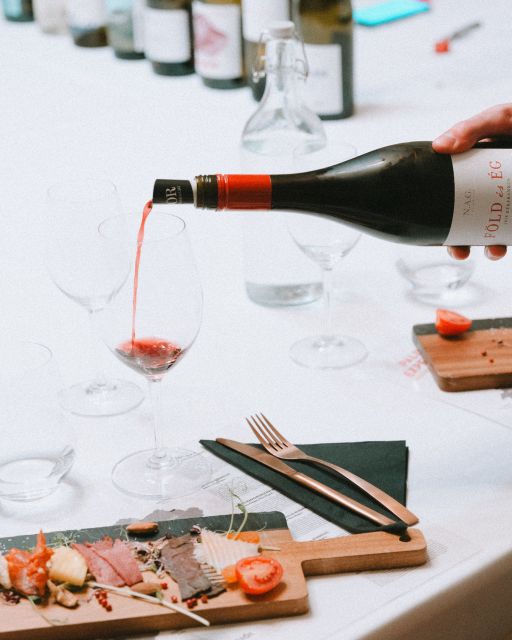
- Nine wines in two hours: The tasting includes four white wines, four reds, and one dessert wine.
- A broad Hungarian pour: The selection reaches from Tokaj wines to the Kadarka wines of Villány.
- Food comes with every stage: Expect five meat pairings and four cheese pairings, plus nuts, dried fruit, and honey.
- English guidance throughout: A live guide explains the wines, their production, and the stories behind them.
- Easy central meeting point: You check in with staff at the Palinka Museum Budapest, then finish back at the same meeting point.
- Adults only: The experience is not suitable for children under 18 or pregnant women.
Why this Budapest tasting is worth your evening
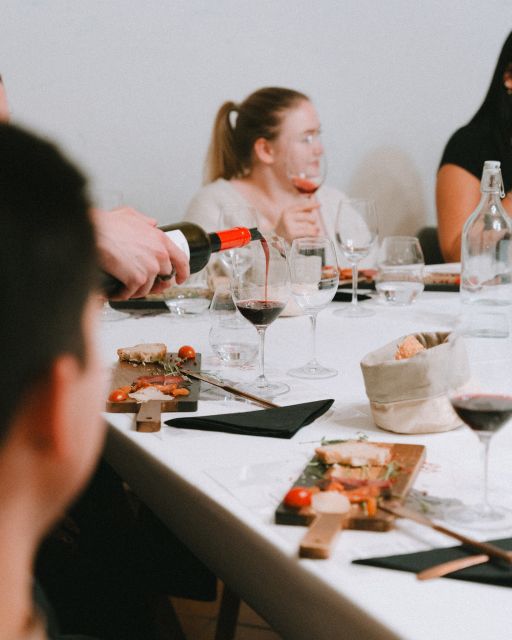
Budapest is famous for its thermal baths, grand cafés, and ruin bars, but wine gives you another way to understand Hungary. This tasting is designed for people who want more than a glass ordered at dinner. You get a guided look at several wine styles, served with foods that help show how Hungarian flavors work together.
The format also suits a short city break. In two hours, you can sample nine wines without giving up an entire afternoon or evening. You do not need to arrange transport between vineyards, learn regional maps on your own, or decide what to order from a long and unfamiliar list.
I see this as a useful first taste of Hungary’s wine culture rather than a substitute for visiting a wine region. The setting is in Budapest, and the wines arrive in a structured sequence. That makes the event practical, though it also means you are sampling the country through a showroom-style experience instead of walking among vineyards.
More wine tastings:
- Countryside Half-day Gastro-Wine Tour from Budapest Meal & pickup
★ 5.0 · 1,450 reviews - Budapest Centre Food Tour with 10+ Tastings, Wine & Street Food
★ 5.0 · 810 reviews - Budapest: Wine, Cheese, and Charcuterie Tasting
★ 4.9 · 647 reviews
Starting at the Palinka Museum Budapest
Your meeting point is the Palinka Museum Budapest. Check in with the staff there before the tasting begins, and the activity ends back at this same meeting point. That return to the starting place matters if you are planning dinner, a concert, or an evening walk afterward.
The meeting arrangement also gives the tasting a clear beginning. You are not expected to search for a private cellar or find a guide somewhere in a large complex. Still, check the exact starting time when you book, since the experience runs at scheduled times rather than as an open-ended drop-in.
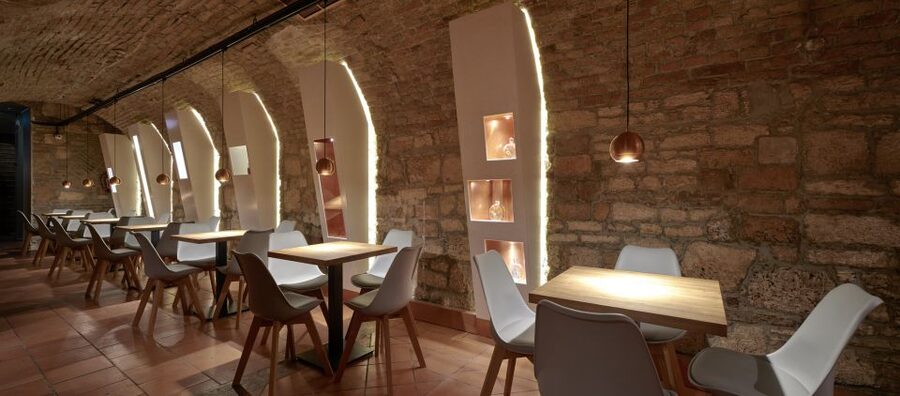
The supplied information does not give a precise room layout, group size, or seating plan. I would not assume a small private tasting or a particular table arrangement. What is clear is that entry to the venue and showroom is included, along with the guide and the complete tasting.
Four white wines, four reds, and one dessert pour
The wine order covers three broad parts of Hungarian wine culture. You taste four whites, four reds, and a final dessert wine. That balance makes the event useful for comparing styles instead of treating Hungarian wine as one single category.
The white wine portion should appeal to anyone who wants to learn about Hungary beyond its famous sweet wines. The red section then shifts the mood toward fuller, darker flavors, including the Kadarka wines associated with Villány. The final dessert wine gives the tasting a natural finish and offers a clear contrast with both the whites and reds.
The named regional markers are important. Tokaj is one of Hungary’s best-known wine areas, especially for sweet wines, while Villány is strongly linked with red wine. The tasting does not present a single regional specialty. It gives you a countrywide sample, using well-known names as guideposts.
You should not expect every wine to suit your taste. Nine pours make personal favorites likely, but they also make a few less appealing glasses almost certain. That is part of the value of a guided tasting: you can compare wines side by side and learn why one style works better for you than another.
The supplied details do not state the pour size or the exact wine labels. I would therefore avoid booking this if you need specific vintages, producers, or a guaranteed bottle list. Think of it as a guided selection that may change, not a fixed menu of named bottles.
Meats, cheeses, nuts, dried fruit, and honey
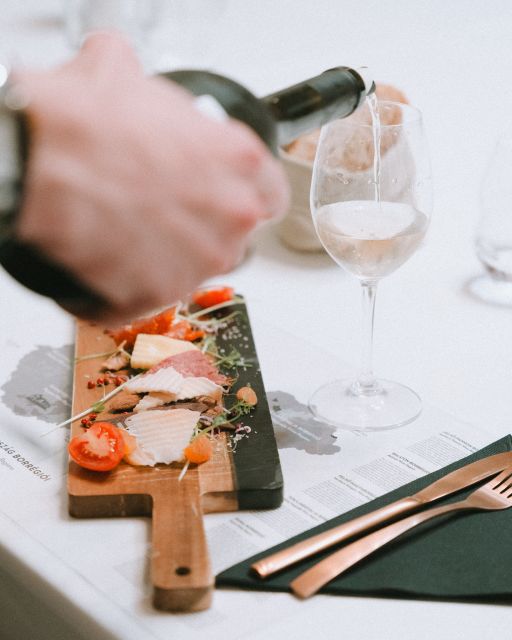
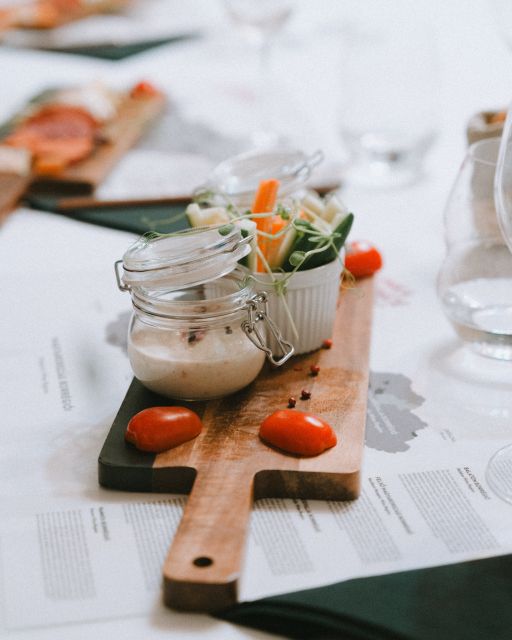
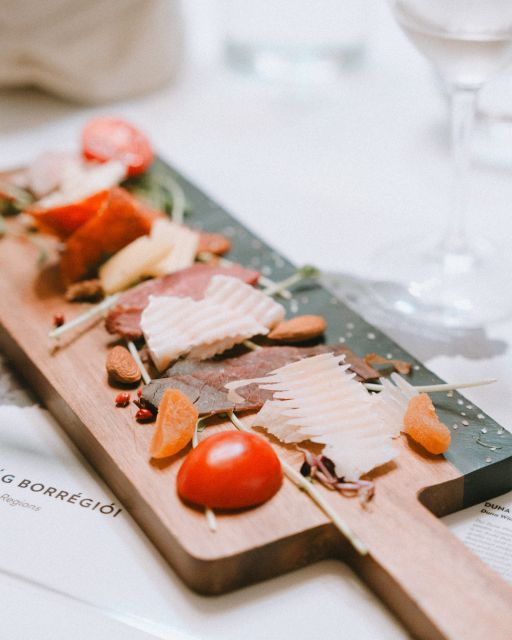
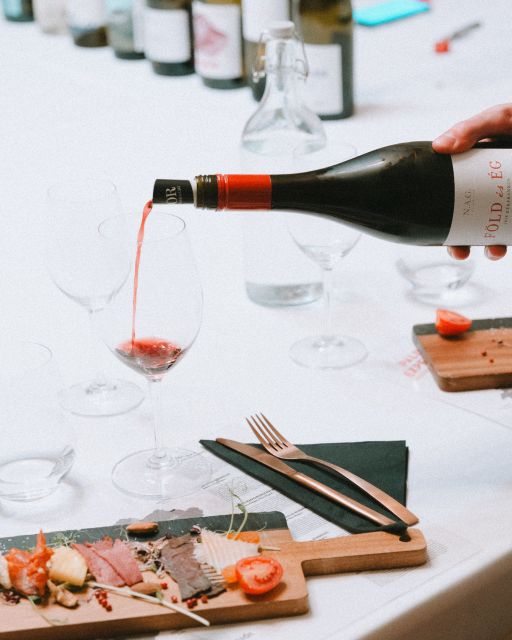
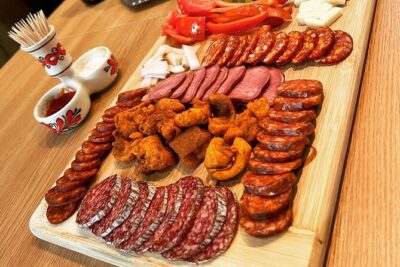
Food is a major part of the experience. The tasting includes nine food pairings, with five meat selections and four cheeses, accompanied by nuts, dried fruits, and honey. This is more useful than a bowl of generic snacks because the food is meant to show how wine changes when tasted with salt, fat, sweetness, and texture.
The cured meats should work especially well with the red wines. Their savory character can soften the sharper edge of a young red, while the cheeses offer a different test. A mild cheese may let a white wine speak clearly, while a stronger cheese can make the same wine seem lighter or more restrained.
The nuts, dried fruit, and honey are particularly helpful with the dessert wine. Sweet wines need food with enough sweetness to avoid tasting flat or harsh. These additions also give the tasting a distinctly Central European feel without turning the event into a full meal.
Do not confuse the board with dinner. The information describes charcuterie, cheese, and accompanying ingredients, not a sit-down Hungarian feast. You should arrive ready to taste and snack, but not expect a replacement for lunch or dinner.
The nine pairings also give the two-hour session a steady rhythm. Each wine has a small food match, and the guide can explain why the combination works. If you are new to wine tasting, this structure removes much of the guesswork.
More food tours:
- Budapest: Unlimited Prosecco, Beer and Aperol Spritz Cruise
★ 4.8 · 25,310 reviews - Budapest: Unlimited Prosecco, Beer & Aperol Spritz Cruise
★ 4.5 · 3,371 reviews - From Budapest: Etyek Wine Tasting Tour with 3-Course Meal
★ 4.8 · 557 reviews - Hungarian Wine Tasting (with Cheese and Charcuterie) in Budapest
★ 5.0 · 531 reviews
The stories behind Hungarian wine
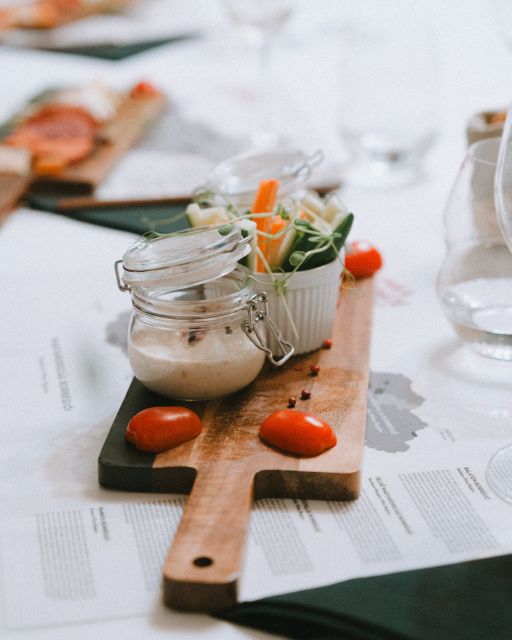
A good tasting is not just a series of glasses. The guide also discusses wine history, production methods, and the stories connected with the bottles being served. That spoken context helps you remember the regions and styles after the event ends.
The experience is conducted in English, which makes it accessible to English-speaking visitors who want more than a self-guided tasting. The information does not name the individual guide, so you should not book expecting a particular host. The important point is that a live guide is included rather than an audio track or printed notes alone.
I would pay attention to the regional comparisons. Tokaj and Villány give you two useful anchors, one associated with celebrated sweet wines and the other with robust reds. Even if the tasting includes wines from additional areas, these references help organize what you are drinking.
The talk also makes the tasting a better choice for curious beginners. You do not need to know the difference between Hungarian grapes before arriving. You can simply notice what you like, ask questions, and use the explanations to put those impressions into words.
Wine experts may find the event less satisfying if they want technical detail about every producer, vintage, or vineyard parcel. Since the exact wine list is not provided, the level of detail may depend on the selected wines and the guide’s presentation. For most visitors, the broad introduction is likely the stronger point.
Is $65 a fair price?
At $65 per person, this is best judged as a complete evening activity rather than as nine inexpensive samples. The fee includes nine Hungarian wines, nine food pairings, entry to the venue and showroom, and a live English guide. Those inclusions make the price easier to justify for someone who wants a planned cultural experience in central Budapest.
The value is strongest if you would otherwise spend money on several glasses of wine and separate snacks. Here, the wine and food are matched, and the explanations give you something you would not receive from an ordinary bar order.
The value is weaker if you drink very little, dislike guided activities, or want a full meal. You may not feel that you are receiving $65 worth of food if you arrive hungry. Likewise, someone who already knows Hungarian wine might prefer buying a bottle at a wine bar and setting their own pace.
I would also factor in the two-hour length. It is long enough to cover nine wines, but short enough to fit around other Budapest plans. You are paying for focus and organization, not a long leisurely afternoon.
The five-star rating from five submitted ratings gives the experience an encouraging early record, but it is a small sample. I would treat that as a positive signal, not proof that every visitor will have the same preferences. The most likely success factors are your interest in Hungarian wine, comfort with tasting nine pours, and appetite for a guided format.
Who will enjoy this most?

This tasting suits couples, solo visitors, and small groups looking for an adult evening in Budapest. It is especially useful for first-time visitors who want a basic map of Hungarian wine without traveling outside the capital.
Food-focused visitors should appreciate the pairings. The meat, cheese, nuts, dried fruit, and honey make the session more than a technical wine lecture. You get a chance to notice how local ingredients shape the experience in the glass.
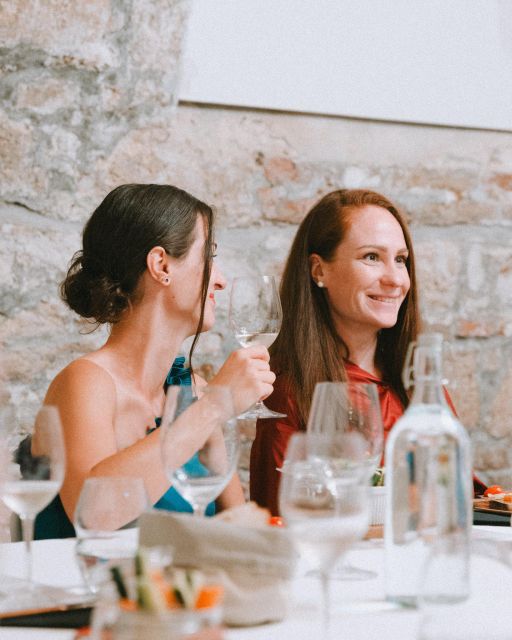
It also works well for anyone planning a special evening but wanting something quieter than a bar crawl. The mood is built around tasting and conversation, with a clear two-hour schedule. The supplied details do not promise music, entertainment beyond the live speech, or a particular type of ambience, so book it for the wine and food rather than for a show.
This is not suitable for children under 18, and pregnant women cannot participate. Since the event includes nine wines, it is also a poor match for anyone who wants to avoid alcohol entirely.
Practical advice for making the most of it
Check the starting time carefully and arrive at the Palinka Museum Budapest with enough time to find the staff. The exact schedule depends on availability, so do not build a tight connection immediately afterward.
Go in with an open mind about grape varieties and wine styles. The experience highlights Tokaj and Villány, but the final selection may include more than those two regional references. Since exact labels are not provided, think of the tasting as an introduction rather than a bottle-specific lesson.
You might want to eat a light meal beforehand. The charcuterie and cheese board adds substance, but the activity is described as a tasting, not a dinner. Arriving neither full nor hungry will make it easier to notice the differences among the wines.
Take mental notes about what you enjoy. You may prefer the four whites, favor the reds, or remember the dessert wine most clearly. The guide’s explanations are useful, but your own taste is the best souvenir.
The two-hour limit is helpful. Nine wines can become tiring if rushed or overextended, and this format keeps the session contained. You get a solid introduction without surrendering the rest of your Budapest evening.
Cancellation and booking flexibility
You can cancel up to 24 hours in advance for a full refund. The reserve-now, pay-later option also lets you hold a place without paying at the time of booking, which is useful when your Budapest schedule is still changing.
Because the meeting point and return point are the same, you can plan the activity without arranging separate transport. The experience takes place in central Budapest, though the supplied information does not provide a full street address or directions, so check the booking details before setting out.
Should you book this Hungarian wine tasting?
Book it if you want a well-organized introduction to Hungarian wine, enjoy guided food pairings, and can comfortably spend two hours with nine alcoholic pours. The range from Tokaj to Villány, the balance of white, red, and dessert wines, and the five meat and four cheese pairings give you a useful first look at the country’s table culture.
Skip it if you want a full dinner, a vineyard visit, or a fixed list of rare bottles and vintages. At $65, the experience earns its price through variety, food, venue entry, and explanation rather than sheer quantity.
For most adults with an interest in local food and drink, I think it is a sensible Budapest evening choice. You leave with a better idea of which Hungarian wine styles deserve another glass, and that is a practical souvenir to carry into the rest of your trip.
FAQ
How long does the Hungarian wine tasting last?
The experience lasts two hours. Starting times depend on availability when you book.
How many wines are included?
You receive nine Hungarian wines: four white wines, four red wines, and one dessert wine.
What food is served with the wine?
The tasting includes nine food pairings: five meat pairings and four cheese pairings, along with nuts, dried fruits, and honey.
Where does the experience begin and end?
You check in with staff at the Palinka Museum Budapest. The activity ends back at the meeting point.
Is the tasting offered in English?
Yes. The experience includes a live English-speaking guide.
Who cannot take part?
The tasting is not suitable for children under 18 or pregnant women.
Just added around Budapest
- Lake Balaton and Herend Guided Tour★ 4.7 · 3 reviews
- Audio visual multi-sensory chefs journey dinner experience★ 5.0 · 3 reviews
- Hollókő Ethnographic Village: Day Tour from Budapest★ 3.7 · 3 reviews
- Tapolca Cave Lake and Tihany/ Balaton private tour from Budapest★ 4.5 · 3 reviews
- Budapest Art Nouveau Walking Tour★ 5.0 · 3 reviews
- SzentEndre-SaintAndrew City Privately Shopping and Picturesque★ 4.5 · 3 reviews
- Budapest Drinks and Piano Show Cruise★ 4.5 · 3 reviews
- Horseshow on the Hungarian Puszta, private tour from Budapest with entry!★ 5.0 · 3 reviews
Wine Tours, compared.
Countryside Half-day Gastro-Wine Tour from Budapest Meal & pickup
What we thought →Budapest Centre Food Tour with 10+ Tastings, Wine & Street Food
What we thought →
Budapest Cooking Class & Market Tour with Local Guide & Wines
What we thought →
Hungarian Wine Tasting (with Cheese and Charcuterie) in Budapest
What we thought →
Budapest Food Tour: Market to Tavern with 14+ Tasters & Wines
What we thought →
Browse the lists this tour appears in