
Reviewed · CITY TOURS
Budapest: Guided City Walking Tour in Buda and Pest
Budapest reveals itself in layers. This three-hour walk links Pest’s grand city center with Buda Castle, so you get a useful first look at both halves of the city rather than spending your morning in just one district. I especially like the route’s mix of famous sights and less obvious details, plus the practical advice Gábor Glasner shares along the way.
I also like that the tour includes a short public transport ride between Pest and Buda, saving your legs for Castle Hill. The main consideration is clear: this tour is in German, and three hours is a brisk amount of time for two sides of Budapest.
In This Review
- Key points to know before you book
- Starting beside St Stephen’s Basilica
- Pest’s grand buildings and Art Nouveau details
- Freedom Square and the route to Parliament
- The short public transport ride to Buda
- Matthias Church and Fisherman’s Bastion
- Through the historic center and former government district
- Finishing around Budapest’s old Royal Castle
- What Gábor’s guiding style adds
- The restaurant guide and money-saving advice
- Is $34 a fair price?
- Who should book this Budapest walk?
- FAQ
- Where does the tour start?
- Where does the tour end?
- How long does the walking tour last?
- What language is the tour conducted in?
- Which main sights are included?
- What is included after the tour?
Key points to know before you book
- Two halves of Budapest in three hours: Begin at St Stephen’s Basilica, walk through central Pest, then continue into the Buda Castle district.
- Strong city-center route: See Art Nouveau palaces, Freedom Square, the Danube, and the Parliament building from a good photo point.
- Personal guidance from Gábor Glasner: His approach includes local tips and details away from the standard sightseeing script.
- Castle Hill highlights: Visit Matthias Church, Fisherman’s Bastion, the old government district, and the Royal Castle area.
- Useful extras after the walk: You receive digital copies of the Insider Budapest Restaurantguide and Budapester Sparfuchs.
- Best for German speakers: The tour is led in German, with a small-group feel possible when bookings are light.
Starting beside St Stephen’s Basilica
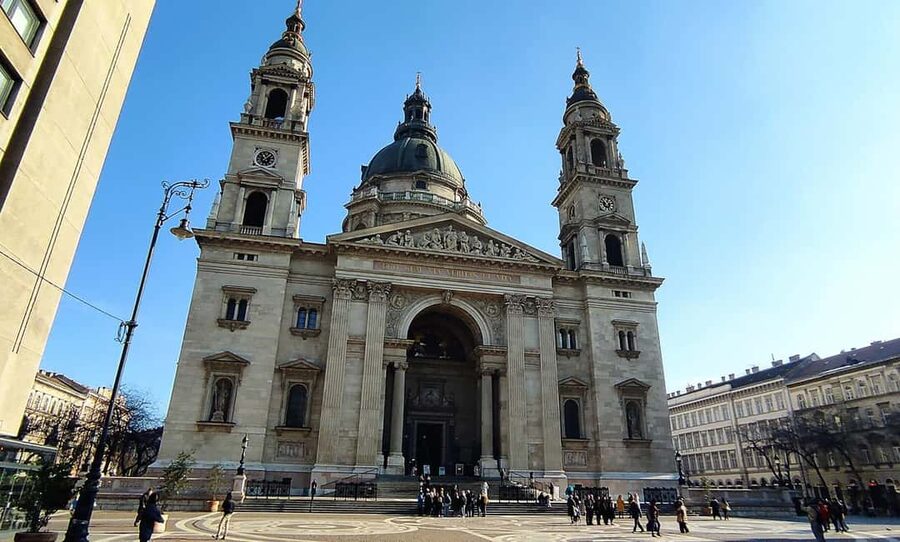
The tour begins at Szent István tér, in front of the California Coffee Company opposite St Stephen’s Basilica. Look for Gábor wearing a badge marked Budapest mit Gabor. That detail matters in a busy city square, where a clear meeting point can save a few minutes of wandering.
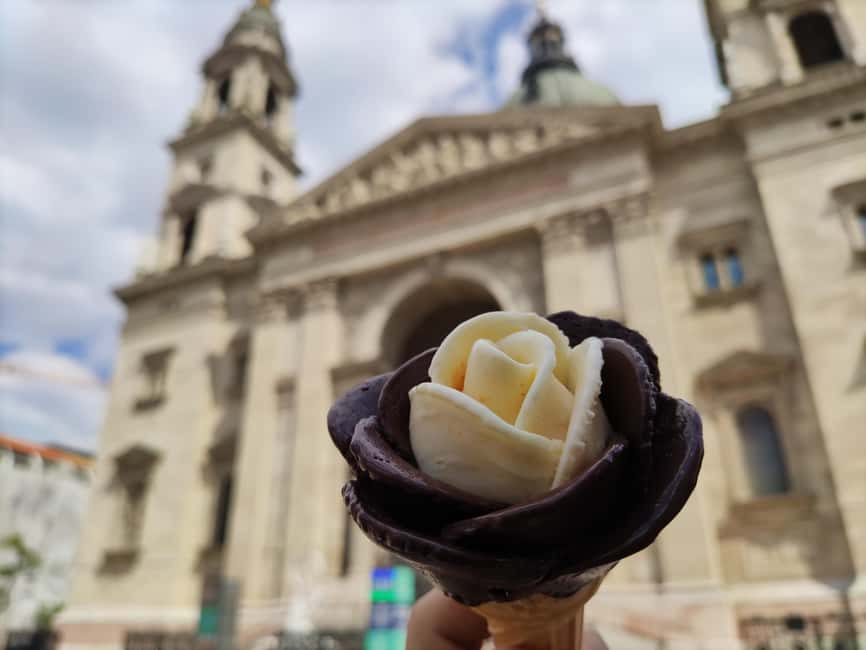
St Stephen’s Basilica makes a useful starting place. It gives you an immediate sense of Budapest’s scale and architectural ambition, then sends you into the city center on foot. You do not simply stop for a photograph and move on. The route uses the basilica as a doorway into Pest, where late nineteenth-century Budapest comes into focus through its public buildings and urban design.
Wear shoes that can handle several hours of pavement and uneven surfaces. Bring water and a camera, and dress for walking rather than for a formal visit to a church or palace. The tour ends back at the original meeting point, which makes it easier to plan the rest of your day.
More walking tours:
- Budapest: Buda Castle Walk with Saint Stephen’s Hall
★ 4.5 · 3,012 reviews - Big Bus Budapest Hop-On Hop-Off Bus and Walking Tour
★ 3.5 · 2,206 reviews - Budapest: Buda Castle District Walking Tour
★ 4.6 · 2,108 reviews
Pest’s grand buildings and Art Nouveau details
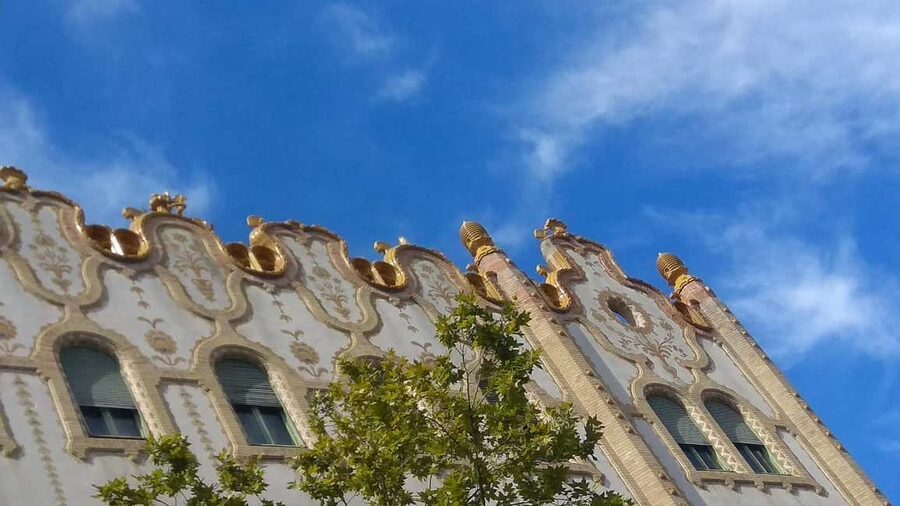
The first walking section crosses central Pest. This is where the tour earns its keep for visitors who want more than a checklist of famous monuments. You see imposing buildings connected with the National Bank and Postal Savings Bank, along with Art Nouveau palaces from the end of the nineteenth century.
Budapest can sometimes feel like an open-air architecture book, but a guide helps you read the pages. The facades are not just pretty backdrops. They reflect the period when Budapest was developing into a major European capital, with banks, government offices, and public institutions giving the city a new sense of confidence.
Art Nouveau rewards a slower pace. Look up for decorative details, unusual lines, and ornament that is easy to miss when you are hurrying between major sights. Gábor’s focus on information away from the usual tourist track should appeal to you if you enjoy hearing why a building matters, not only learning its name.
The drawback is that this part is primarily an exterior city walk. If you want extensive interior visits, museum admissions, or a detailed tour inside every major building, this is not that kind of experience. The value comes from seeing how the buildings fit together across the city center.
Freedom Square and the route to Parliament
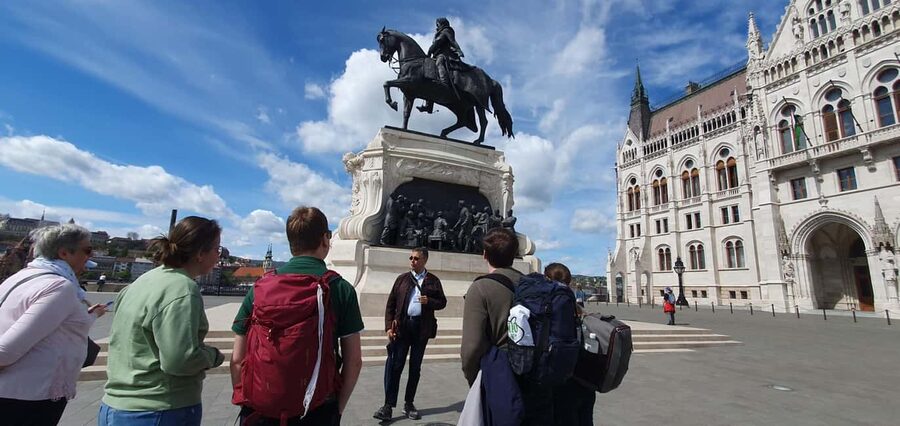
The walk continues to Freedom Square, one of Pest’s important civic spaces. The square provides a change of mood after the architectural concentration of the central streets. It also helps explain how Budapest’s public life is tied to its monuments, institutions, and open spaces.
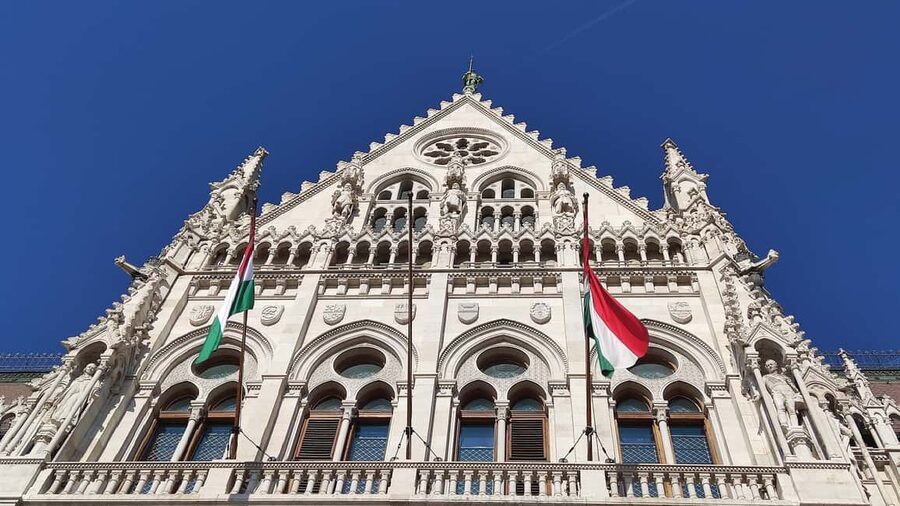
From here, the group reaches the Parliament building and the Danube. The tour includes time for a picture of Parliament, so you should have your camera ready. This is one of Budapest’s most recognizable views, and seeing the building in relation to the river gives it more impact than viewing a picture on a phone screen.
It is worth keeping your expectations sensible. The route promises a look at Parliament and a photo opportunity, not a guided interior visit. You will not be spending the morning inside the building or touring its chambers. For a first orientation, though, the riverside stop gives you one of the city’s essential views without using up the entire tour.
The Danube also marks the route’s transition. You have been walking through Pest’s urban core, then you shift toward Buda and its hilltop historic district. That change is one of the best features of the itinerary because it lets you compare the two sides of Budapest within a single outing.
The short public transport ride to Buda
After the Pest section, you take a short public transport journey to continue in Buda. The ride breaks up the walking and makes the route more practical than a long trek between districts. It also shows you how the two parts of the city connect in ordinary daily life.
The information provided does not specify which public transport service is used or whether a transport ticket is included, so you should check the current details when booking. The important point is that this is not a fully continuous walk from Pest to Castle Hill. You get a change of pace before the next uphill and historic section.
That shift matters physically. Three hours is manageable for many people, but you are still combining city walking, a transport connection, and Castle District sightseeing. Comfortable clothing and shoes are not minor suggestions here. They can make the difference between enjoying the final hour and quietly wishing for a bench.
A few more trips worth weighing up before you book
- Budapest: Parliament Building Entry Ticket and Audio Guide
★ 4.5 · 3,844 reviews - Budapest: Opera House Guided Tour
★ 4.6 · 1,533 reviews - Budapest Small-Group Guided Tour on MonsteRoller e-Scooter
★ 5.0 · 1,517 reviews - Budapest: Guided Tour of the Parliament Building in Spanish
★ 4.6 · 1,240 reviews
Matthias Church and Fisherman’s Bastion
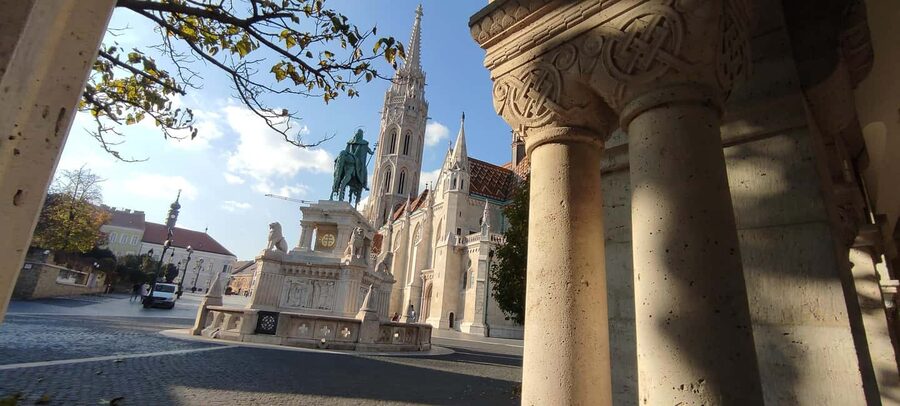
In the Buda Castle district, the route begins with Matthias Church and Fisherman’s Bastion. These are among the area’s best-known landmarks, and they provide a strong contrast with Pest’s banks, palaces, and government buildings.
Matthias Church brings a more historic and ceremonial feel to the tour. Its importance is not only visual. It sits within the old Castle District, where the surrounding streets and buildings help you understand Buda as a medieval and royal center rather than simply a scenic hill above the river.
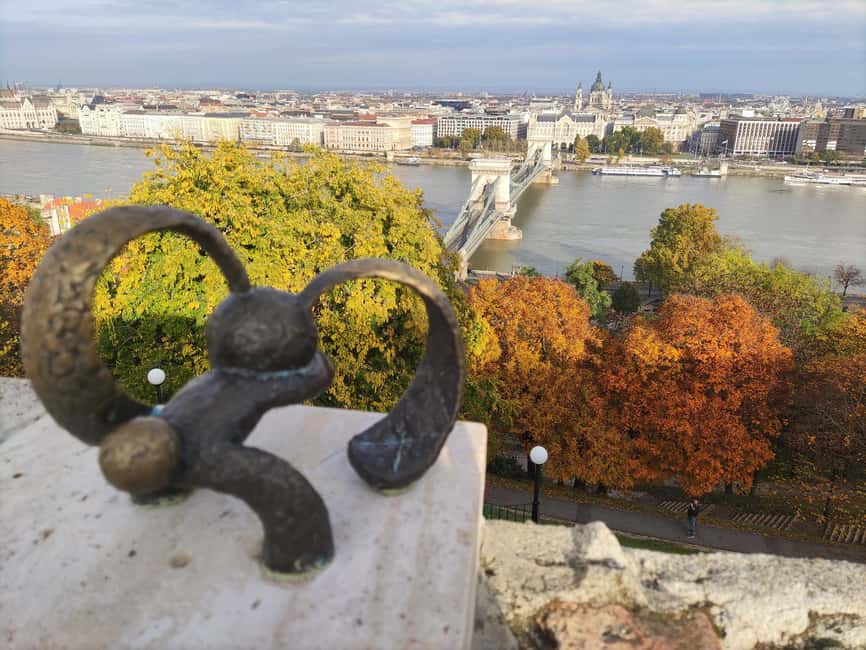
Fisherman’s Bastion is the obvious place to appreciate the city from above. You can expect attractive views across Pest, including the Parliament area you have just visited from street level. The route makes this especially satisfying because you see Parliament first beside the Danube, then view the riverfront from the Buda side.
The timing is helpful. By visiting both sides in one trip, you can connect the sights in your memory instead of treating them as separate stops. Parliament is no longer just a grand riverside building. From Buda, it becomes part of a wider view of Pest and the Danube.
As with the earlier stops, expect an outside-focused visit. The experience includes Matthias Church and Fisherman’s Bastion as places on the walking route, but the supplied details do not promise a church interior tour or special admission. If you want to enter every landmark, ask for clarification before booking.
Through the historic center and former government district

The Buda section continues through the historic center toward the former government district. This is a good part of the route for people who prefer streets and context to a rapid run between photo stops.
The former government area adds another layer to Budapest’s story. Instead of seeing Castle Hill only as a royal site, you get a sense of its later administrative role. Gábor’s local perspective is useful here because historical districts can otherwise blur together. A guide can point out which areas belonged to royal life, civic administration, or everyday city use.
This is also where the tour’s smaller scale may matter. One booking produced a private walk for a couple because they were the only people booked at that time. That gave them room to ask many questions and created a more personal atmosphere. You cannot count on having a private tour, but a light booking may make the experience feel more flexible.
The supplied information does not give a maximum group size, so do not book on the assumption that every departure will be private. Still, the presence of a named guide and a local, question-friendly approach makes this more personal than a purely recorded sightseeing route.
Finishing around Budapest’s old Royal Castle
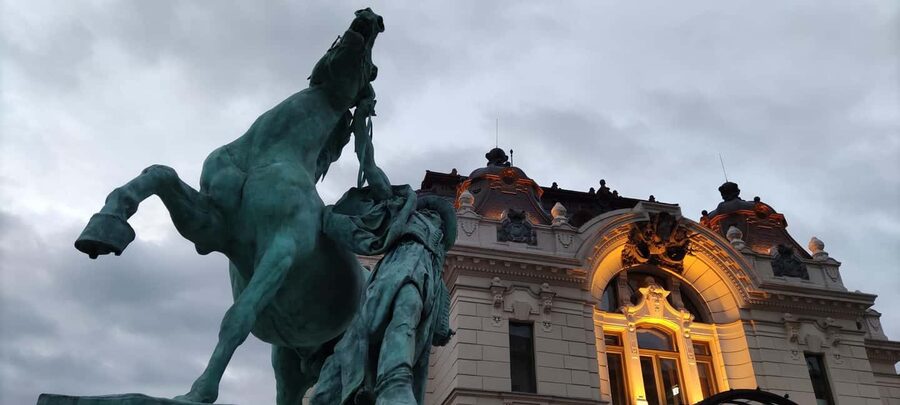
The final major section circles the old Royal Castle. This gives the tour a fitting finish, moving from the working city of Pest to Buda’s former seat of royal power.
The Royal Castle area is broad enough that a guided walk helps you use your time well. You can expect an overview of the old castle setting rather than a long museum visit. The emphasis is on walking through the district, understanding its place in Budapest, and seeing how the castle area relates to Matthias Church, Fisherman’s Bastion, and the former government district.
I like the order of the route. You start with the city’s public and financial face, reach the Danube and Parliament, then climb into the historic district. That sequence gives you a visual and historical contrast without making you repeat the same streets.
You then return to the original meeting point. Since the activity ends where it began, you can use the tour as a morning orientation before choosing your next stop, or as an afternoon introduction before dinner. The exact starting times vary, so check availability when planning your day.
What Gábor’s guiding style adds
Gábor Glasner is the named guide, and the tour is identified by the badge Budapest mit Gabor. His strongest role appears to be interpretation and personal advice rather than simply leading the group from one landmark to the next.
The most useful detail from the feedback is the emphasis on information away from the main tourist route. That might mean smaller architectural details, local background, or practical advice about how to spend the rest of your stay. You should feel free to ask questions, especially if the group is small.
One private departure allowed a couple to ask many questions and collect tips about Budapest. That points to a guide who can adapt when the group is intimate. If you prefer a fixed script with little conversation, this may feel slower than you want. If you like to connect the sights with restaurant choices, neighborhood advice, and everyday city knowledge, the format should suit you well.
The tour is conducted in German. This is not a minor note buried in the booking details. You need enough German to follow explanations about architecture, history, and local recommendations. English-speaking visitors should choose another tour unless the provider confirms a different language for their date.
The restaurant guide and money-saving advice
At the end, you receive digital copies of two useful resources: the Insider Budapest Restaurantguide and the Budapester Sparfuchs. The restaurant guide covers dozens of restaurants, cafés, street food places, and bars.
That adds value beyond the three-hour walk. A city tour can introduce you to Budapest, but the best payoff often comes later, when you use good food advice for the rest of your visit. The guide may help you avoid choosing a restaurant only because it sits beside a major sight.
The Budapester Sparfuchs focuses on ways to save money in Budapest. The description presents it as a source of advice that could save hundreds of euros, though you should treat that as a possible benefit rather than a guarantee. Its usefulness depends on how long you stay and how much you spend.
Because both resources are digital, you can keep them on your phone after the tour. Make sure you have a way to access digital files during the trip. The provided details do not explain how they are delivered, so check that point if the guides are an important reason for booking.
Is $34 a fair price?
At $34 per person, the price is reasonable if you want one guide to connect Pest and Buda in a single three-hour route. You are paying for a live German-speaking guide, a structured itinerary, local context, and two digital city resources.
The value is strongest for a first visit. Instead of arranging separate walks around St Stephen’s Basilica, Parliament, and Castle Hill, you get a broad introduction in one session. The tour also saves you from guessing how to combine the two sides of the city.
The price is less appealing if you only want photographs or already know Budapest well. You may prefer to explore at your own speed, spend longer inside Matthias Church, or devote a full afternoon to the castle area. This tour is an orientation, not a private history seminar or a series of admission-based visits.
Free cancellation is available up to 24 hours before the tour for a full refund, and you can reserve now and pay later. Those terms make it easier to hold a place while your Budapest plans are still taking shape.
Who should book this Budapest walk?
I would recommend this experience to a German-speaking first-time visitor who wants a clear overview of Budapest. It suits people who like architecture, city history, famous viewpoints, and practical food advice in the same outing.
It is also a good match if you value personal contact with a local guide. Gábor’s approach includes tips and details beyond the standard sightseeing points, and a small departure can become especially conversational.
You should think twice if you dislike walking, want extensive interior visits, or need an English-language tour. The three-hour schedule covers a lot, and the route is designed to show you several districts rather than give one monument a slow, detailed treatment.
Bring comfortable shoes, water, a camera, and clothing suited to the weather. Most importantly, book it only if German is the right language for you. If that fits, the tour gives you a practical first map of Budapest, from Pest’s Art Nouveau streets to Buda’s castle heights.
FAQ
Where does the tour start?
Meet the guide at Szent István tér, at the entrance of the California Coffee Company opposite St Stephen’s Basilica. The guide wears a badge marked Budapest mit Gabor.
Where does the tour end?
The activity ends back at the original meeting point near St Stephen’s Basilica.
How long does the walking tour last?
The tour lasts three hours. Starting times depend on availability.
What language is the tour conducted in?
The tour is conducted in German, with a German-speaking live guide.
Which main sights are included?
The route includes St Stephen’s Basilica, central Pest, Art Nouveau palaces, Freedom Square, the Parliament building from the outside, the Danube, Matthias Church, Fisherman’s Bastion, the former government district, and the old Royal Castle area.
What is included after the tour?
You receive digital copies of the Insider Budapest Restaurantguide and the Budapester Sparfuchs, which offers advice for saving money in Budapest.
Just added around Budapest
- Lake Balaton and Herend Guided Tour★ 4.7 · 3 reviews
- Audio visual multi-sensory chefs journey dinner experience★ 5.0 · 3 reviews
- Hollókő Ethnographic Village: Day Tour from Budapest★ 3.7 · 3 reviews
- Tapolca Cave Lake and Tihany/ Balaton private tour from Budapest★ 4.5 · 3 reviews
- Budapest Art Nouveau Walking Tour★ 5.0 · 3 reviews
- SzentEndre-SaintAndrew City Privately Shopping and Picturesque★ 4.5 · 3 reviews
- Budapest Drinks and Piano Show Cruise★ 4.5 · 3 reviews
- Horseshow on the Hungarian Puszta, private tour from Budapest with entry!★ 5.0 · 3 reviews
City Tours, compared.
City Sightseeing Hop-On Hop-Off Bus Tour & Extras
What we thought →
Budapest City Landmarks Walking Tour in 2 Hours
What we thought →

Hungarian Chimney Cake Workshop in the City Center
What we thought →
Browse the lists this tour appears in