

Reviewed · BUDA CASTLE & CASTLE DISTRICT
Buda Castle’s Secrets with a Historian
History gets personal on Castle Hill. Buda Castle’s Secrets with a Historian combines Budapest’s best views with clear stories about Hungarian kings, Habsburg power, war, and Communism. I especially like the small-group format and the included visit to Matthias Church, where the guide explains the building’s unusual design and legends. The main drawback is that several attractions, including Fisherman’s Bastion and parts of Buda Castle, require separate admission.
This 2.5-hour walk costs $65.31 per person and is conducted in English. Guides such as Petra, Monika, Judit, Raymond, Gabor, Suzannah, and Barbara have been praised for making difficult history easy to follow. The route covers a lot, but the pace is relaxed enough for questions, photographs, and, on some tours, a coffee and strudel break.
In This Review
- Key points to know before booking
- Why Castle Hill deserves a guided walk
- Starting at the Holy Trinity Column
- Fisherman’s Bastion: more than a fine viewpoint
- Inside Matthias Church
- National Archives and the marks of war
- Sándor Palace and the working government district
- The Funicular’s upper station and the Pest panorama
- Prince Eugene’s statue and Habsburg power
- Buda Castle and the Royal Palace terrace
- Finishing with King Matthias
- Guides, group size, and the human touch
- Price, pace, and practical value
- Who should book this Castle Hill walk?
- Should you book it?
- FAQ
- How long does Buda Castle’s Secrets with a Historian last?
- What language is the tour offered in?
- Where does the tour begin?
- Where does the tour end?
- Is admission to Matthias Church included?
- Are other attraction tickets included?
- How many people can join the tour?
- How much walking is involved?
- Can I cancel for a full refund?
Key points to know before booking
- Matthias Church admission is included, giving you time inside one of Budapest’s most striking churches.
- The tour explains the real purpose of Fisherman’s Bastion, not just its postcard views.
- History reaches beyond medieval kings, with discussion of Habsburg rule, both world wars, and the Communist period.
- Groups are intended to be intimate, with the main description citing up to 10 people, although the additional information lists a maximum of 15.
- The walk ends at the Fountain of King Matthias, near the Royal Palace and its broad Danube views.
- A moderate fitness level is needed, since the route follows cobbled streets and alleyways across Castle Hill.
Why Castle Hill deserves a guided walk
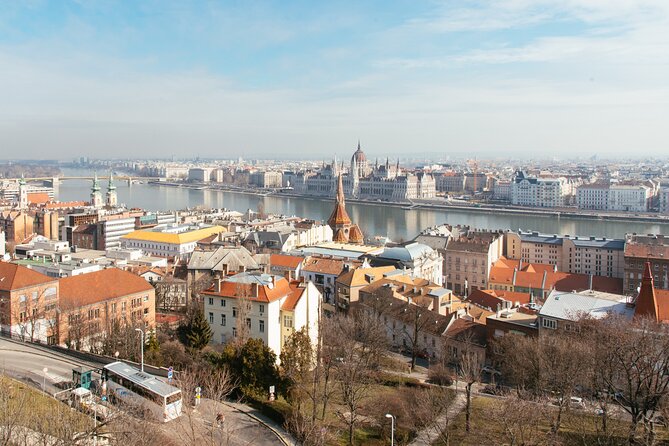
Buda Castle District can look simple on a map. In practice, it is a layered collection of churches, royal buildings, government offices, statues, rebuilt streets, and viewpoints. A casual stroll gives you the scenery, but it can leave you wondering what was original, what was rebuilt, and why the area mattered so much.
That is where a historian guide earns the fee. The tour connects individual buildings to larger changes in Hungarian life. You move from medieval Buda to Ottoman-era conflict, Habsburg rule, the destruction of World War II, and the Communist period. Instead of treating the castle as a pretty backdrop, the guide explains how power shifted through the district.
I also like the scale of the walk. At around two and a half hours, it is long enough to give Castle Hill a proper look without taking an entire day. Small groups make it easier to hear the guide and ask questions. Some departures have been as small as two or five people, which can feel close to a private walk.
The tour is especially useful early in your Budapest visit. You will get practical orientation to the Buda side, learn which buildings deserve a return visit, and receive suggestions for further sightseeing. If you already know the district well, the historical detail may still add a new layer.
More Buda Castle and Castle District walks:
- Budapest: Buda Castle Cave Tour
★ 4.7 · 5,677 reviews - Budapest: Buda Castle District Vampires and Myths Night Tour
★ 4.6 · 3,830 reviews - Budapest: Buda Castle Walk with Saint Stephen’s Hall
★ 4.5 · 3,012 reviews
Starting at the Holy Trinity Column
The meeting point is the Holy Trinity Statue on Szentháromság Street, in front of the grand buildings of the Castle District. The opening half hour is used to set the scene for Budapest and Hungary.
This is a smart place to begin. The column itself is a useful starting marker, but the real value comes from the surrounding architecture. Your guide introduces the district before leading you toward the main sights, so the castle does not feel like a string of unrelated photo stops.
Expect an explanation of how Buda and Pest developed as separate parts of the city and how Castle Hill became a center of authority. A good guide will also help you read the buildings around the square, rather than simply point out names and dates.
Judit has been praised for sending clear meeting instructions in advance, including directions from different types of public transportation. That kind of preparation matters here because the Castle District has several possible approaches and the tour begins at a precise statue, not at a broad landmark.
Fisherman’s Bastion: more than a fine viewpoint
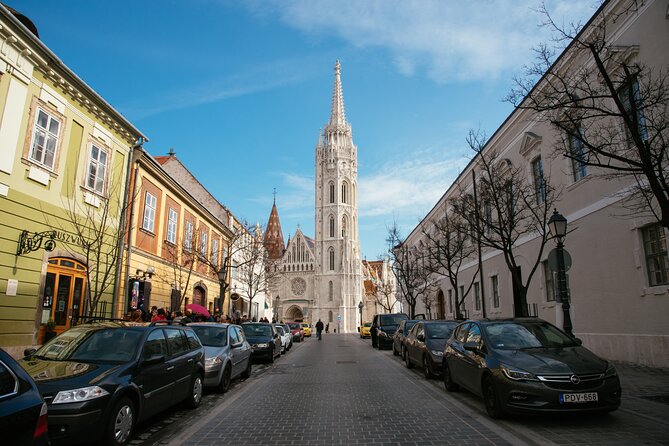
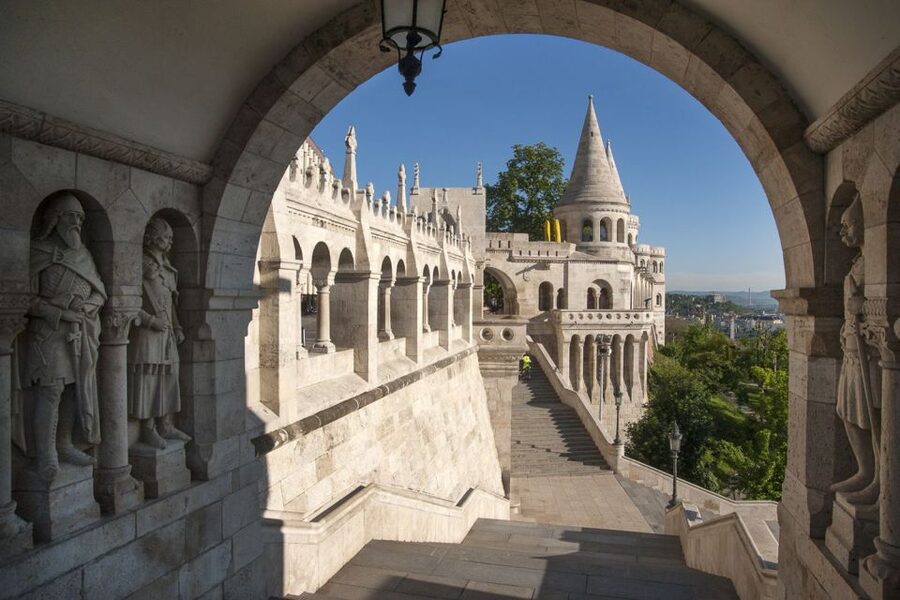
The next stop is Fisherman’s Bastion, with about 20 minutes set aside for the visit. Most people know it for its white stone towers and views over the Danube, Parliament, and Pest. The guide adds an important correction to the usual postcard version by explaining its true function and story.
This is one of the tour’s strongest moments for first-time visitors. Fisherman’s Bastion can seem like a decorative medieval fortress, but its purpose and later form are more complicated. Hearing the background helps you understand why the structure looks theatrical and why it occupies such an important position beside Matthias Church.
Admission to Fisherman’s Bastion is not included. That is worth checking before you go, since access rules and paid sections can affect what you enter. The guide can still explain the site and show you the public areas, but you should budget separately if you want every section.
The 20-minute stop is enough for orientation and photographs, but not an extended visit. If the views are a major reason you came to Castle Hill, return later on your own, perhaps at a quieter time of day. During the tour, keep one ear on the guide. The historical explanation is more useful than simply collecting another panorama.
Inside Matthias Church
Matthias Church receives roughly 30 minutes, and the entrance ticket is included. This is the only clearly specified interior admission on the route, so it gives the tour a valuable change of pace after the outdoor viewpoints.
The church is often considered one of Budapest’s most beautiful religious buildings. Inside, the guide explains its legends, royal connections, and unusual columns and decoration. The interior does not follow the plain, uniform look many people expect from a European church, and the guide’s explanation helps make sense of those differences.
The church also gives the history a human scale. Royal ceremonies, religious change, and the shifting fortunes of Buda are easier to understand when you are standing inside the building rather than hearing about them from a street corner.
Allow yourself time to look up and around, even while listening. The tour allocates 30 minutes, which is a reasonable introduction but not a long independent visit. Services, maintenance, or other church activity could affect the exact experience, though no fixed disruption is given in the tour details.
One memorable possibility is live music. On one departure, an organist happened to play several tunes during the visit. That cannot be promised, but it shows why an interior stop can feel more rewarding than a walk made entirely of exterior commentary.
A completely different kind of day out around Budapest:
- Budapest: City Highlights Cruise with Welcome Drink
★ 4.6 · 35,610 reviews - Budapest: Unlimited Prosecco, Beer and Aperol Spritz Cruise
★ 4.8 · 25,310 reviews - Budapest: Széchenyi Spa Day Ticket with Optional Upgrades
★ 4.3 · 23,911 reviews - Budapest: Nighttime or Daytime Sightseeing Cruise
★ 4.2 · 21,062 reviews
National Archives and the marks of war
The route passes the National Archives, a striking building with visible bullet holes from World War II. This is a brief pass-by rather than a full museum visit, but it adds a physical reminder of the district’s recent past.
Castle Hill is often presented through kings, churches, and grand views. The bullet holes interrupt that polished picture. They point to the violence that damaged Buda and Budapest, and they help explain why the district contains so much reconstruction.
Do not expect a long stop or an interior visit here. The value is in seeing a small, concrete trace of wartime damage while the guide places it in the wider story of the castle. If you are interested in twentieth-century Europe, pay close attention during this portion.
Sándor Palace and the working government district
From the medieval core, the walk continues along cobbled streets and narrow lanes toward Sándor Palace. About 20 minutes is set aside for this section.
Sándor Palace is the office of the Hungarian president, so the tour shows you a part of Castle Hill that is not simply preserved for sightseeing. The guide explains the building’s role and the political importance of the surrounding area.
This section works well because it links old Buda with present-day Hungary. The district is not only a museum quarter. Government offices still operate here, and the route helps you notice that daily civic life continues among the historic buildings.
The palace ticket is not included, and the tour does not promise an interior visit. Think of this as an exterior and street-level explanation. The cobbles are part of the atmosphere, but they also mean comfortable walking shoes are sensible.
The Funicular’s upper station and the Pest panorama
The stop at the Buda Hill Funicular lasts about 10 minutes and focuses on the view from the upper station. From this high point, you can look toward Parliament and the Pest side of Budapest.
The tour does not list a funicular ride as included. The stop is about the elevated viewpoint, not a guaranteed trip up or down. A separate ticket is not included, so ask the guide if you are considering riding it after the walk.
This is a short stop, but it helps you read the city. The guide can point out major landmarks across the river and give you a sense of how Buda’s hilltop position contrasts with Pest’s flatter urban side.
Bring your camera, but do not let the view take all your attention. The tour’s best panoramas come with explanations about the city’s layout, bridges, and political centers. You can always return for more photographs once the walk ends.
Prince Eugene’s statue and Habsburg power
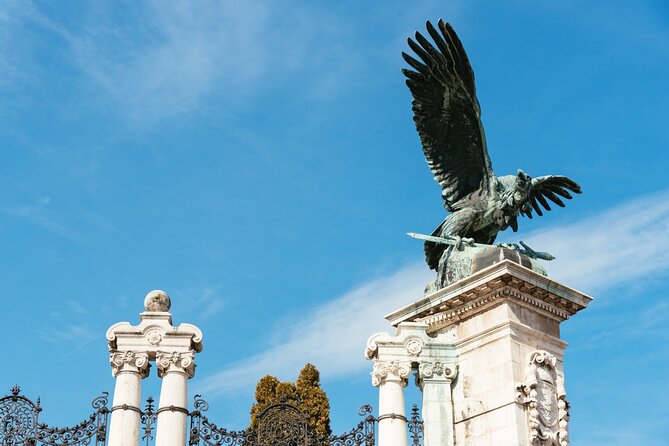
The equestrian statue of Prince Eugene of Savoy receives about 10 minutes. Here the guide discusses the military campaign that shaped European history for centuries and explains the Habsburg connection with Hungary.
This is a useful stop for understanding why Hungarian history can feel politically complicated. The relationship between Hungary and the Habsburgs involved military partnership, imperial control, resistance, and competing ideas of loyalty. A short explanation at the statue makes those tensions easier to follow.
The statue also provides a strong visual pause. Rather than treating it as another heroic monument, the guide uses it to ask whose victories were celebrated and how Hungary fit into a larger European power struggle.
There is no admission fee. The short timing means the guide needs to keep the explanation focused, but several guides have been praised for answering questions and adding personal perspective without turning the walk into a lecture.
Buda Castle and the Royal Palace terrace
The Royal Palace is the largest visual prize on the route. The tour spends about 20 minutes around Buda Castle, the former seat of Hungarian kings and emperors.
From the palace terrace, you can look toward Margaret Island, Parliament, Chain Bridge, St. Stephen’s Basilica, the Budapest Eye, and Elizabeth Bridge. This is the point where the geography of Budapest comes together. After walking through the district’s lanes, you finally see how the castle sits above the river and how the major landmarks relate to one another.
The palace itself now includes cultural institutions, but the tour does not include admission to those interiors. The supplied details specifically identify the Royal Palace and its terrace as part of the route, while noting that admission is not included. If you want to visit a museum inside, plan that separately and allow extra time.
The 20-minute visit is best viewed as an introduction. I would not choose this tour expecting a full museum tour or a lengthy palace visit. I would choose it to understand the site, enjoy the terrace, and decide if you want to return for more.
Finishing with King Matthias
The final stop is the Fountain of King Matthias, with about 10 minutes devoted to the monument and its stories. The guide explains why Matthias is a favorite king for many Hungarians and shares the legends connected with him.
Ending here makes sense. King Matthias brings the route back to the medieval rulers who helped shape Buda’s royal identity, while the fountain provides a memorable final meeting point near the palace area.
The stop also gives the tour a more personal ending. Instead of finishing with a broad political summary, you hear about a figure who remains popular in Hungarian memory. The fountain is free to view, and the tour usually ends at Szent György Street, close to the Royal Palace.
Guides, group size, and the human touch
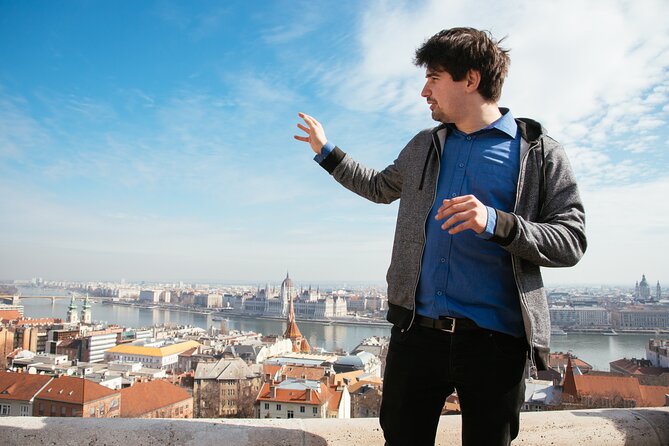
The strongest praise consistently goes to the guides’ delivery. Petra is described as friendly, fun, and easy to understand. Monika is praised for a relaxed pace and an interactive approach. Judit has been singled out for clear communication, strong presentation, and an ability to explain history in an accessible way.
Raymond, also called Rajmund, is praised for humor, personal views on Hungarian historical figures, and answers to many questions. Gabor is noted for making historical information relatable. Suzannah and Barbara have also received warm praise for clear, engaging explanations.
Names matter here because a historian-led walk depends heavily on the person leading it. The company uses several guides, so your exact style may vary. The consistent pattern is a conversational approach rather than a memorized speech.
A small group improves the experience. You can hear better, ask follow-up questions, and pause for pictures without losing the guide. The tour highlights groups of up to 10, while the additional conditions state a maximum of 15. Confirm the expected group size when booking if that detail is important to you.
Some guides have included a short café break, with coffee, tea, cappuccino, or Hungarian pastry such as strudel. This is not listed as a formal inclusion, and you should not assume it is part of every departure. Still, a break can be welcome in cold weather or after several hours on cobbles.
Price, pace, and practical value
At $65.31 per person, this is not the cheapest way to see Castle Hill. It becomes better value if you want context, an English-speaking historian, a small group, and entry to Matthias Church without arranging each piece yourself.
The price does not cover every paid attraction. Fisherman’s Bastion, Sándor Palace, the Funicular, and Buda Castle are listed without included admission. The tour is therefore best for people who want a guided framework, not a package covering every interior.
The walk requires moderate physical fitness. You will follow cobbled streets and alleyways around Castle Hill, and the route covers many stops in 2.5 hours. Wear shoes with good support and keep the pace in mind if you have mobility concerns.
Children must be accompanied by an adult. Service animals are allowed, and the meeting area is near public transportation. Your mobile ticket is confirmed at booking, and free cancellation is available up to 24 hours before the start time.
The tour is often booked well ahead, with an average booking time of about 35 days. That suggests planning ahead is sensible, especially if you want a particular day or a smaller group.
Who should book this Castle Hill walk?
I recommend it most strongly to first-time visitors who want to understand Budapest rather than simply photograph it. It is also a good choice for history lovers, couples, families with older children, and anyone who prefers a measured walking tour to a large bus group.
You will get the most from it if you enjoy questions about royal power, military campaigns, religion, war, and political change. The guides do not limit the story to the Middle Ages, so the tour also suits anyone curious about twentieth-century Hungary.
I would be less enthusiastic if your main goal is extensive palace interiors. The tour includes Matthias Church, but most of the other major stops are exterior visits, viewpoints, or pass-bys. In that case, pair this walk with a separate visit to the museums or paid attractions.
Should you book it?
Book this tour if you want a compact, history-focused introduction to Castle Hill with a strong chance of lively conversation and a small group. The included Matthias Church visit, broad city views, and explanations of Habsburg and wartime history give it more substance than a simple sightseeing stroll.
Skip it if you prefer to explore alone, dislike walking on cobbles, or want admission to every major building included in one price. For most first-time visitors, though, $65.31 is a fair exchange for two and a half hours of orientation, storytelling, and access to a guide who can turn a beautiful but confusing district into a place you understand.
FAQ
How long does Buda Castle’s Secrets with a Historian last?
The tour lasts approximately 2 hours and 30 minutes.
What language is the tour offered in?
The tour is offered in English.
Where does the tour begin?
It begins at the Holy Trinity Statue on Szentháromság Street in Budapest’s Castle District.
Where does the tour end?
It usually ends at the Fountain of King Matthias on Szent György Street, near the Royal Palace.
Is admission to Matthias Church included?
Yes. The entrance ticket to Matthias Church is included.
Are other attraction tickets included?
No. Admission to Fisherman’s Bastion, Sándor Palace, the Buda Hill Funicular, and Buda Castle is not included in the tour price.
How many people can join the tour?
The main tour description refers to an intimate group of up to 10 people. The additional information gives a maximum of 15 participants.
How much walking is involved?
You should have a moderate level of physical fitness. The route follows cobbled streets and alleyways through the Castle District.
Can I cancel for a full refund?
Yes. You can cancel at least 24 hours before the start time for a full refund. Changes or cancellations made less than 24 hours in advance are not accepted for a refund.
Just added around Budapest
- Lake Balaton and Herend Guided Tour★ 4.7 · 3 reviews
- Audio visual multi-sensory chefs journey dinner experience★ 5.0 · 3 reviews
- Hollókő Ethnographic Village: Day Tour from Budapest★ 3.7 · 3 reviews
- Tapolca Cave Lake and Tihany/ Balaton private tour from Budapest★ 4.5 · 3 reviews
- Budapest Art Nouveau Walking Tour★ 5.0 · 3 reviews
- SzentEndre-SaintAndrew City Privately Shopping and Picturesque★ 4.5 · 3 reviews
- Hungary today: a no-taboo conversation★ 5.0 · 3 reviews
- Budapest Drinks and Piano Show Cruise★ 4.5 · 3 reviews
Buda Castle & Castle District, compared.

Buda Castle District Vampires and Myths Night Tour
What we thought →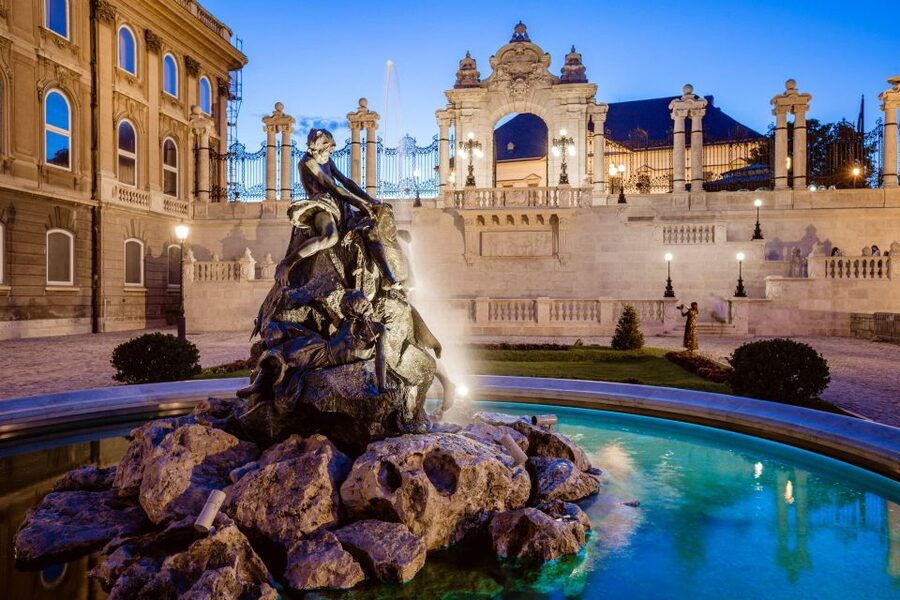
Buda Castle District Dark History, Legends and Vampire Night Tour
What we thought →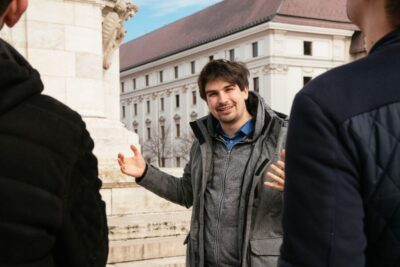
Buda Castle District Walking Tour with a Historian
What we thought →

Walking tour in the Buda Castle incl. Fisherman’s Bastion
What we thought →Browse the lists this tour appears in