
Reviewed · WINE TOURS
8-Tier Hungarian Wine Tasting in a Cozy Downtown Wine Bar
Hungary’s wine story deserves a seat at the table. At Bortodoor, a cozy downtown wine bar, you spend two hours tasting eight Hungarian wines with an engaging sommelier and a generous local charcuterie board. I like the clear progression from sparkling wine through whites, a light red, and fuller reds. I also like the relaxed teaching style, which works for curious beginners without boring experienced wine drinkers. The only caution is that the evening can easily stretch beyond two hours, so you should not schedule a tight dinner reservation afterward.
The tasting costs $55 per person, including the wine, food, guidance, and a takeaway page for notes and Hungarian wine regions. That is strong value in Budapest, especially when the session may turn into a friendly evening of conversation and extra drinks afterward. Just remember that transportation is not included, and the activity is for adults 18 and older.
In This Review
- Key reasons to consider Bortodoor
- Entering Bortodoor in central Budapest
- The first glass: sparkling wine and a friendly start
- Three white wines and Hungary’s regional character
- The light red creates a useful bridge
- Three reds, with room for personal taste
- Hungarian cheese, meat, bread, and wine pairings
- Why the social setting adds value
- Two hours on paper, often longer in practice
- Is $55 a good price?
- Who should book this tasting?
- Should you book Bortodoor?
- FAQ
- Where does the Hungarian wine tasting take place?
- How long does the experience last?
- How many wines are included?
- Is the tasting conducted in English?
- What food is included?
- Is transportation included?
- Can children attend?
- What happens if I need to cancel?
- Do I have to pay when I book?
Key reasons to consider Bortodoor
- Eight wines in a useful order: You taste one sparkling wine, three whites, one light red, and three reds.
- Small-producer focus: The bottles come from local Hungarian producers connected with the wine bar.
- Guides who make the lesson social: Hosts including Sally, Smike, Suze, Sues, Mike, Miki, and Shmike are praised for warmth, humor, and clear explanations.
- Food that does real work: Hungarian cheeses, meats, breads, olives, and other snacks help you see how wine changes with food.
- A central, easy-to-spot venue: Look for the large white circular sign outside Bortodoor.
- A good solo activity: The shared table setting can lead to conversation with people from several countries.
Entering Bortodoor in central Budapest
Bortodoor is a downtown wine bar in Budapest, so this is an easy experience to add to a city break. The meeting point is the bar itself. Look for the large white circular sign outside the door, a useful detail when you are arriving in an unfamiliar part of the city.
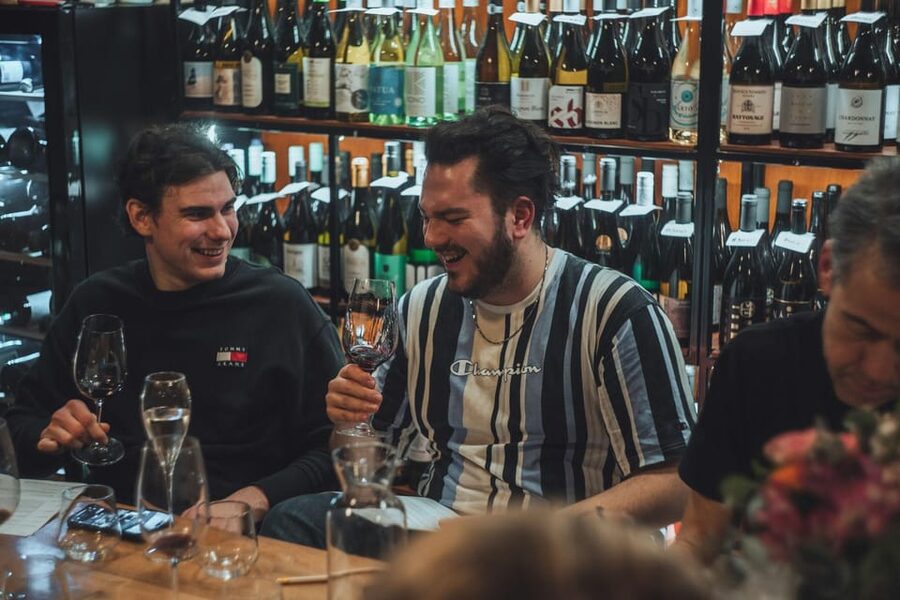
The room is described as warm, intimate, stylish, and comfortable. It is not presented as a formal tasting room where you sit silently while someone recites tasting notes. The mood is casual, and the staff aim to make wine feel approachable rather than clubby.
That tone matters. Hungarian wine can be unfamiliar to many international visitors, and the first few minutes of a tasting can feel intimidating if everyone seems to know the difference between every grape and growing area. Here, you can ask basic questions, admit that you prefer one glass to another, and still take part fully.
The bar may also have live music, especially on some evenings. A Saturday tasting included music, and other evenings featured performances as part of the atmosphere. This is a pleasant bonus, but it should not be treated as a guaranteed part of every booking.
More wine tastings:
- Countryside Half-day Gastro-Wine Tour from Budapest Meal & pickup
★ 5.0 · 1,450 reviews - Budapest Centre Food Tour with 10+ Tastings, Wine & Street Food
★ 5.0 · 810 reviews - Budapest: Wine, Cheese, and Charcuterie Tasting
★ 4.9 · 647 reviews
The first glass: sparkling wine and a friendly start
The tasting begins with a glass of sparkling wine. This is a smart opening because it gives the group a light, familiar starting point before the more regional discussion begins.
Your sommelier introduces the wine and sets out the basic method of tasting. You receive a takeaway note page with information about Hungarian wine regions, a short wine-tasting guide, and room for your own impressions. I like this practical touch. It gives you something to refer to later, when a bottle you enjoyed becomes a serious candidate for your next restaurant order.
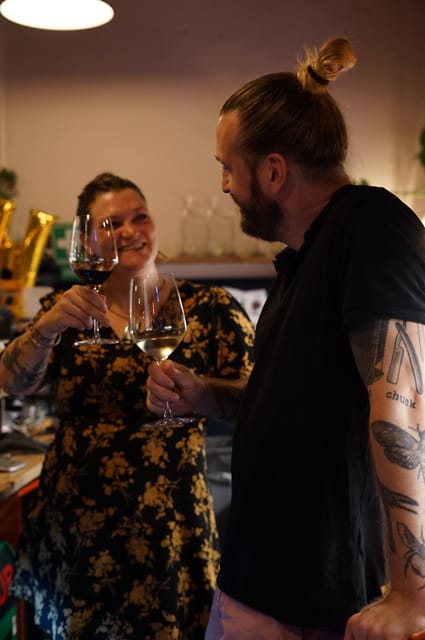
The hosts use conversation and questions rather than turning the session into a lecture. Sally is repeatedly praised for making people comfortable while explaining wine production, grapes, and regional differences. Smike, Suze, Mike, Miki, and other members of the team are also described as warm, funny, and deeply enthusiastic about Hungarian wine.
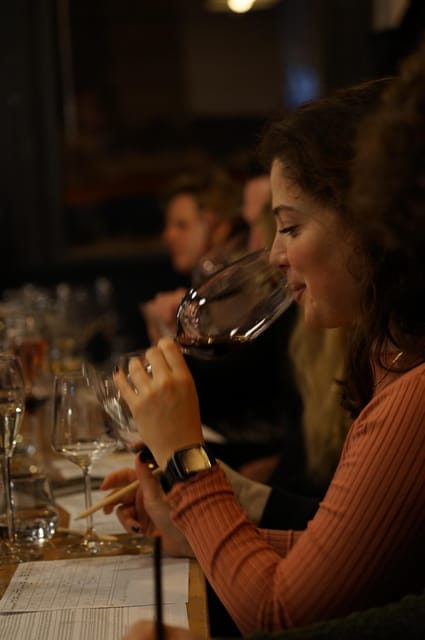
You will likely learn more if you participate. Smell the wine, take a sip, try it with food, and compare your reaction with the person beside you. You do not need polished vocabulary. Saying that a wine feels fresh, heavy, dry, fruity, or simply not to your taste is enough to get the discussion going.
Three white wines and Hungary’s regional character
After the sparkling wine, the tasting moves through three whites. This is one of the most useful parts for people who know little about Hungary’s wine regions, since the selection is meant to show different styles rather than serve three nearly identical bottles.
The sommelier places each wine in its regional and cultural setting. The discussion can include how local conditions affect flavor, how winemaking changed over time, and what makes one Hungarian region different from another. Several sessions have included explanations of Hungary’s wine culture from the Ottoman period through imperial rule, the communist era, and modern production.
That historical context is valuable because it explains why Hungary’s wine traditions are not just a collection of grape names. Wine has been shaped by politics, borders, changing markets, and local customs. You get a better sense of the country when the drink in your glass connects to those forces.
Tokaj is likely to attract particular attention. One tasting called the Tokaj wine the highlight, though the exact bottle selection can change. Tokaj is one of Hungary’s best-known wine areas, and tasting it alongside other white styles helps you understand that Hungarian wine is not limited to one famous name.
The staff source wines directly from small local producers they work with. That gives the selection a local focus and makes the tasting more useful than a generic international wine flight. You are not simply checking off familiar supermarket labels. You are getting an introduction to bottles chosen to represent Hungarian regions and styles.
The light red creates a useful bridge
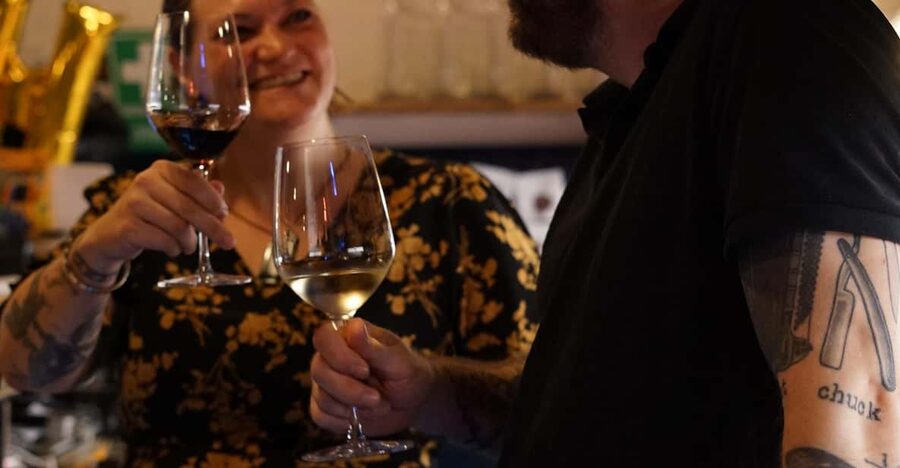
The fourth wine is a light red. This middle step gives the tasting a natural change of pace between the whites and the three fuller reds that follow.
I find this sort of progression helpful because it lets you notice how body, fruit, acidity, and tannin change from glass to glass. If you normally drink white wine but want to explore reds, a lighter style can be less of a shock than jumping straight to a powerful bottle.
This is also where the food becomes especially useful. Taste the wine on its own, then try it with a piece of meat, cheese, or bread. The same wine can seem softer, sharper, fruitier, or more balanced once food enters the picture.
The guides encourage different ways of tasting, rather than insisting that there is one correct answer. One host led the group through several approaches to tasting, helping people notice how their impressions changed. That makes the activity feel practical. You leave with a method you can use at a restaurant or wine shop, not just a list of bottles you may forget.
More bar nights:
- Budapest: Unlimited Prosecco, Beer and Aperol Spritz Cruise
★ 4.8 · 25,310 reviews - Budapest: Unlimited Prosecco, Beer & Aperol Spritz Cruise
★ 4.5 · 3,371 reviews - Budapest: Bar Crawl with a Local Guide
★ 4.9 · 1,112 reviews - Budapest: Ruin Bar Pub Crawl with Entry Tickets
★ 4.7 · 1,028 reviews
Three reds, with room for personal taste
The final three wines are reds. By this point, you have sampled a broad range: one sparkling wine, three whites, one light red, and three reds. The selection is designed to show Hungary’s variety, and not every wine will suit every palate. That is a strength, not a flaw.
A good tasting should give you a few discoveries and a few clear preferences. Some people will favor the whites, others will remember a red, and one bottle may become the evening’s favorite. The point is not to like everything. The point is to understand what you like and why.
The guide supplies background on the grapes, place, and winemaking behind each bottle. The explanations are praised for being detailed without becoming stiff. Mike was described as one of the strongest wine guides a regular wine-tasting participant had encountered, while another session praised the host for giving honest opinions without dismissing winemakers or people with different tastes.
That attitude makes a difference. Wine instruction can become precious very quickly. At Bortodoor, the tone appears to be more direct: ask a question, compare reactions, and decide for yourself. You can be a serious wine enthusiast or someone who normally orders whatever is cheapest on the menu.
Hungarian cheese, meat, bread, and wine pairings
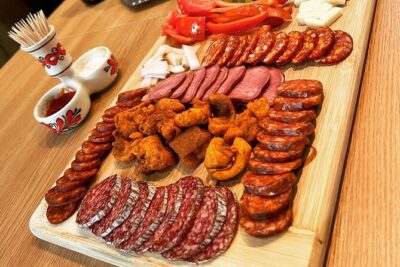
The included food is not an afterthought. You receive an artisanal board with local Hungarian cheeses, meats, breads, and other snacks. Some descriptions also mention olives, and the portions are frequently described as generous.
The board helps justify the price, but its bigger value is educational. A dry white may work differently with cheese than with bread. A red may feel rounder beside cured meat. You can test the pairing instead of relying on a verbal explanation.
The food also keeps the two-hour session comfortable. Eight wines can be a lot to taste in one sitting, and the board gives you something to eat as the glasses arrive. If you have a dietary requirement, tell the bar in advance. The experience can accommodate such requests when they are shared ahead of time, but the supplied information does not specify every alternative available.
I would not treat the board as a full dinner replacement for everyone. It is substantial finger food and a useful match for the wines, but your appetite may vary. It works especially well before dinner, as long as you allow enough time afterward.
Why the social setting adds value
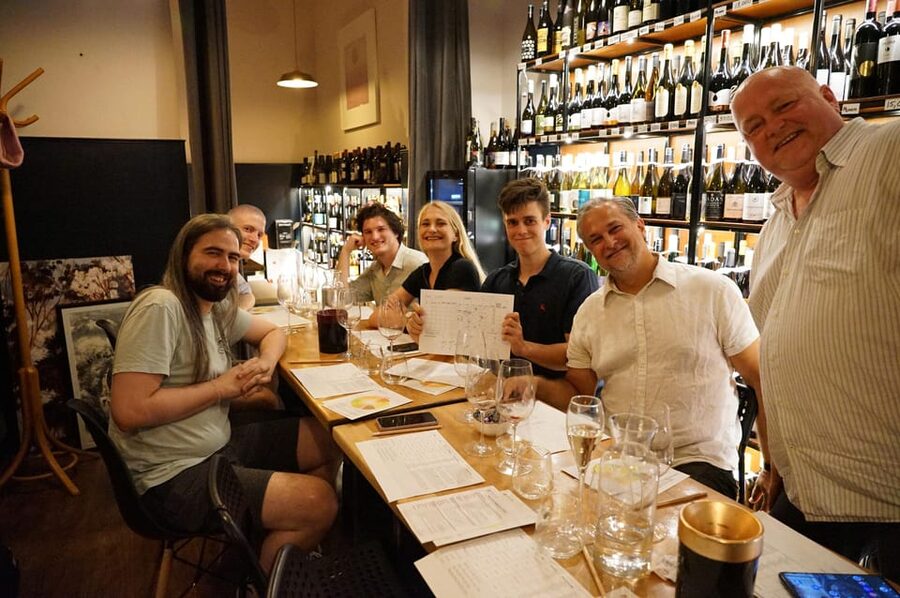
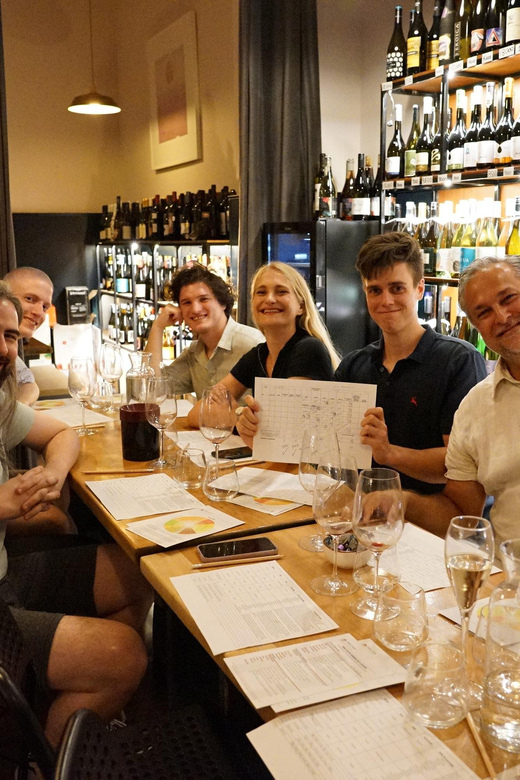
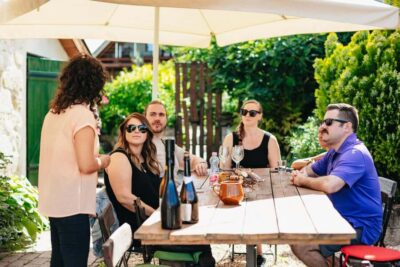
The tasting is built around a shared experience. You may be seated with couples, solo visitors, or people from several countries. A group of eight was described in one session, but the available information does not promise one fixed group size for every date.
That social element is one of Bortodoor’s strongest features. People often continue talking after the official tasting ends, sometimes staying for additional wine and live music. A solo visitor can join without needing to arrange a private group, while couples can meet other people without losing the intimacy of an evening out.
The atmosphere is not guaranteed to be identical every night. One evening may feel quiet and intimate, while another may become lively as the bar fills. That is part of the appeal, but it also means you should choose this experience for conversation and shared energy, not for complete silence.
If you prefer a private tasting with only your own party, this may not be the right format. If you enjoy learning in a friendly group, it is a strong choice. The guides are clearly central to the experience, and names that appear often include Sally and Smike, with Suze, Sues, Mike, Miki, and Shmike also leading sessions.
Two hours on paper, often longer in practice
The scheduled duration is 120 minutes. That is enough time to discuss eight wines without rushing, particularly because the tasting includes food and conversation.
In practice, you should plan more than two hours if your schedule allows. People often stay afterward for another glass or bottle, continue talking with the group, or listen to music. Several evenings lasted much longer than planned because the mood stayed relaxed.
This is a benefit if you want an easy evening with no hard exit. It becomes a drawback if you have theater tickets, a dinner reservation, or a train to catch. I would leave at least an extra hour after the stated end time, and more if you know you enjoy lingering over wine.
The pace may also feel slightly slow to someone who wants a quick flight. One participant preferred less time between wines. Most people appear to appreciate the pauses, since they allow for questions, food, and conversation, but this is not a rapid tasting where you rush through eight pours in under an hour.
Is $55 a good price?
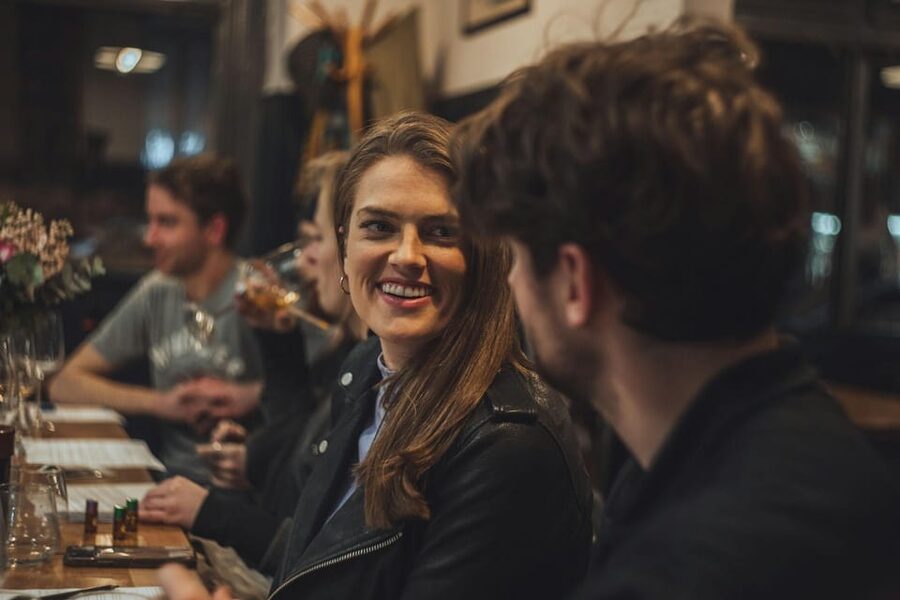
At $55 per person, the value is strong for a two-hour guided tasting in central Budapest. You receive eight wines, a charcuterie board, an English-speaking sommelier, and a written page for regional information and personal notes.
The value improves if you are new to Hungarian wine. You are paying not only for the liquid in the glasses, but also for a structured introduction to the country’s wine regions and styles. The guidance can help you recognize bottles you may want to seek out later.
It is also good value for an evening activity. You get food, social interaction, and a comfortable downtown setting in one package. Some people choose to return later for another glass or to buy wine to take away, though those additional purchases are not included in the $55 price.
The price will feel less compelling if you dislike group activities, rarely drink wine, or want a full meal. The tasting is aimed at adults who want to sample and learn. It is not suitable for children under 18, and transportation is not included.
Who should book this tasting?
I would recommend Bortodoor to you if you want a first look at Hungarian wine without committing to a day trip outside Budapest. It is also a good choice for solo visitors, couples, birthday celebrations, and people who enjoy meeting others over food and drink.
You do not need a strong wine background. The hosts are praised for explaining things clearly and making room for basic questions. Beginners can learn how to taste, while experienced drinkers can compare styles and ask more specific questions about regions and producers.
I would be more cautious if you need a tightly timed evening. The formal session lasts two hours, but the easygoing setting encourages people to stay longer. I would also think twice if you want a private or highly formal tasting.
Book with an open mind. Hungary may not be the first country you associate with wine, and that is exactly why this experience works. You may discover a Tokaj, white, or red that changes what you look for once you return home.
Should you book Bortodoor?
Yes, if you want an approachable and social introduction to Hungarian wine in Budapest. The strongest reasons are the eight-wine range, the generous local food, and the hosts, particularly Sally and Smike, whose warmth and wine knowledge receive repeated praise.
The experience offers more than eight small pours. It gives you a way to understand Hungarian regions, taste different styles in a sensible order, and meet people in a relaxed bar. I would book it early in an evening with no fixed plans afterward, then stay for another glass if the atmosphere suits you.
Skip it only if you do not drink alcohol, need a private session, or have no flexibility beyond the advertised two hours. For most adult visitors interested in local food and drink, $55 is a fair price for a useful, friendly evening.
FAQ
Where does the Hungarian wine tasting take place?
The tasting takes place at Bortodoor, a wine bar in central Budapest. A large white circular sign is outside the door.
How long does the experience last?
The scheduled duration is two hours, or 120 minutes. You may want to allow extra time because the relaxed atmosphere often encourages people to remain afterward.
How many wines are included?
Eight Hungarian wines are included. The selection consists of one sparkling wine, three whites, one light red, and three reds.
Is the tasting conducted in English?
Yes. The experience includes a live guide, and English is the stated language.
What food is included?
You receive an artisanal charcuterie board with local Hungarian cheeses, meats, and breads. Other tasting descriptions also include snacks and olives.
Is transportation included?
No. Transportation is not included, so you must make your own way to Bortodoor.
Can children attend?
No. The activity is not suitable for children under 18.
What happens if I need to cancel?
You can cancel up to 24 hours in advance for a full refund.
Do I have to pay when I book?
No. A reserve-now, pay-later option is available, so you can hold a place without paying immediately.
More Food and Drink Tours
- From Budapest: Etyek Wine Tasting Tour with 3-Course Meal
★ 4.8 · 557 reviews - Hungarian Wine Tasting (with Cheese and Charcuterie) in Budapest
★ 5.0 · 531 reviews - Budapest: Guided Foodie Walking Tour with Food and Drinks
★ 4.9 · 453 reviews - Budapest Food Tour: Market to Tavern with 14+ Tasters & Wines
★ 5.0 · 434 reviews
Just added around Budapest
- Lake Balaton and Herend Guided Tour★ 4.7 · 3 reviews
- Audio visual multi-sensory chefs journey dinner experience★ 5.0 · 3 reviews
- Hollókő Ethnographic Village: Day Tour from Budapest★ 3.7 · 3 reviews
- Tapolca Cave Lake and Tihany/ Balaton private tour from Budapest★ 4.5 · 3 reviews
- Budapest Art Nouveau Walking Tour★ 5.0 · 3 reviews
- SzentEndre-SaintAndrew City Privately Shopping and Picturesque★ 4.5 · 3 reviews
- Budapest Drinks and Piano Show Cruise★ 4.5 · 3 reviews
- Horseshow on the Hungarian Puszta, private tour from Budapest with entry!★ 5.0 · 3 reviews
Wine Tours, compared.
Countryside Half-day Gastro-Wine Tour from Budapest Meal & pickup
What we thought →Budapest Centre Food Tour with 10+ Tastings, Wine & Street Food
What we thought →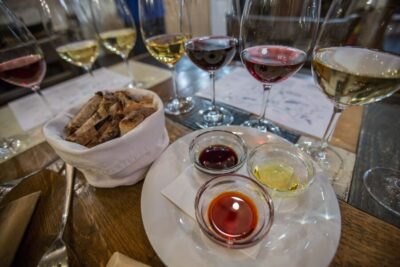
Budapest Cooking Class & Market Tour with Local Guide & Wines
What we thought →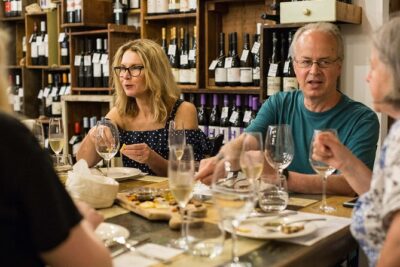
Hungarian Wine Tasting (with Cheese and Charcuterie) in Budapest
What we thought →
Budapest Food Tour: Market to Tavern with 14+ Tasters & Wines
What we thought →
Browse the lists this tour appears in