
Reviewed · HISTORICAL TOURS
7 Days Balkan tour to historic Croatia and Bosnia Herzegovina
Seven days, four countries, countless old stones. This fast-moving coach tour links Zagreb, Dubrovnik, Mostar, and Sarajevo in one compact trip, with a final stop in Pécs before returning to Budapest. I like the strong mix of Roman ruins, medieval towns, religious landmarks, and dramatic natural scenery. I also like that hotels, daily coach transport, a tour manager, and six breakfasts are included.
The tradeoff is pace. You cover long distances and cross several borders, so some stops receive only about an hour. Admission tickets are often extra, and the standard hotel level is three stars or better, not luxury. Still, at $1,160.11 per person, this can be a practical way to see a large slice of the Balkans without arranging every transfer yourself.
In This Review
- Key points before you book
- What kind of trip is this?
- Day 1: Zagreb’s churches and central squares
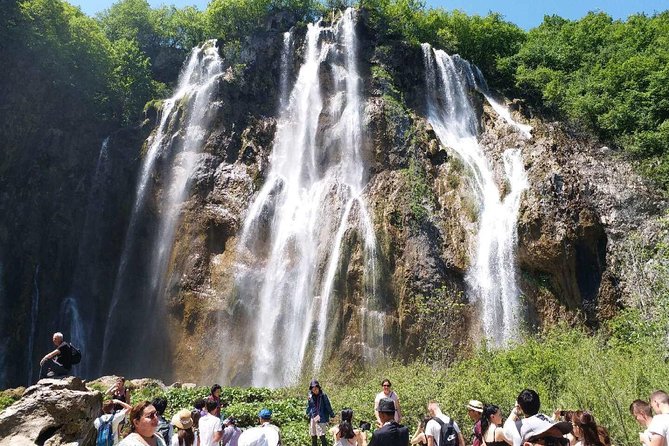
- Day 2: Four hours at Plitvice Lakes
- Day 3: Zadar’s waterfront and Split’s Roman core
- Day 4: Dubrovnik, stone walls, and Adriatic views
- Day 5: Počitelj, Blagaj, and Mostar
- Day 6: Sarajevo and the route back into Croatia
- Day 7: Pécs and the return to Budapest
- What the $1,160 price really covers
- Hotels, luggage, and group arrangements
- What I like, and what gives me pause
- Should you book this Balkan tour?
- FAQ
- Where does the tour begin?
- Where does the tour end?
- What accommodation is included?
- Are meals included?
- Is transportation included?
- How large can the group be?
- What luggage can I bring?
Key points before you book
- Plitvice Lakes gives you four hours: This is the tour’s best chance for a longer nature walk among 16 linked lakes and waterfalls.
- Dubrovnik gets the headline treatment: You see the Old Town, Rector’s Palace, Franciscan Monastery, and other major sights, with optional cable-car time.
- Bosnia adds real cultural range: Počitelj, Blagaj, Mostar, and Sarajevo bring Ottoman, Islamic, Christian, and Austro-European influences into the same trip.
- The group can include English and Chinese speakers: goEUgo may combine both groups when numbers are low, with one bilingual tour leader.
- Hotels are practical rather than fancy: Rooms have private facilities, and the minimum standard is three stars.
- The trip ends where it begins: You depart from Budapest Keleti station at 8:30 a.m. and return to the same meeting point on Day 7.
What kind of trip is this?
This is a sightseeing circuit, not a slow coastal holiday. You move from Hungary into Croatia, down the Adriatic side, across Bosnia and Herzegovina, back into Croatia, and then north to Hungary. The reward is variety. In one week, you can see Gothic churches, Roman palace walls, mountain lakes, Ottoman-era towns, war-marked cities, and a Hungarian cathedral square.
I would choose this tour if you value coverage and convenience over long stays in each place. The coach handles the complicated overland connections, while the tour manager keeps the group moving. You will not need to rent a car, compare border crossings, or book separate hotels in Zagreb, Zadar, Neum, Sarajevo, and the Croatian stop on the return journey.
The maximum group size is 30 people. That is large enough for a coach tour but not enormous. Expect some waiting when people board the bus, especially after free time. The supplied experiences received a five-star rating, but the sample is only three reviews, so I would treat that as encouraging rather than final proof.
One useful detail comes from the strongest praise. Tour manager Kenny speaks fluent Mandarin and English, and his storytelling, humor, and care for the group were singled out as major strengths. Local guides also joined in several cities, giving the sightseeing more depth than a coach ride with only highway commentary.
More history-led tours:
- Budapest: Historic Cruise with Welcome Drink
★ 4.7 · 6,512 reviews - Budapest Historical Sightseeing – Free Walking Tour
★ 5.0 · 1,302 reviews - Buda Castle District Dark History, Legends and Vampire Night Tour
★ 4.5 · 1,240 reviews
Day 1: Zagreb’s churches and central squares
The first morning begins at Budapest-Keleti station at 8:30 a.m. You drive to Zagreb, Croatia’s capital, then spend roughly three hours visiting three central sights. The schedule lists about one hour at each, although actual timing can vary with traffic, group movement, and border conditions.
Start with Zagreb Cathedral, one of the city’s major Gothic landmarks. Its decorative detail gives you an immediate sense of the capital’s religious and architectural character. Admission is not included, so you should expect to view the exterior unless the tour manager confirms an inside visit and ticket arrangements.
Next comes Ban Josip Jelačić Square, Zagreb’s main central meeting place. It is a useful orientation point, surrounded by historic buildings and connected to the city’s older streets. You will have a chance to get your bearings, take photographs, and listen to the guide’s introduction to Zagreb.
St. Mark’s Church brings the day’s most recognizable detail: its colorful tiled roof. The church sits in the Upper Town, an area known for old streets and Gothic architecture. With only about an hour listed for the stop, you should not expect a slow neighborhood walk or a long museum visit.
You spend the night in Zagreb or a nearby city at a three-star minimum hotel. Since hotel details are supplied only 24 to 48 hours before check-in, you may not know the exact location until shortly before the stay. That is normal for a group circuit, but it makes independent evening plans harder.
Day 2: Four hours at Plitvice Lakes
Plitvice Lakes National Park is one of the tour’s strongest choices. The park contains 16 lakes joined by waterfalls, wooden walkways, and hiking trails. Travertine barriers create the natural pools, while mineral-rich water reflects the surrounding trees and produces the pale, silvery color described in the tour material.
You receive about four hours here, which is far more useful than the short city stops on other days. I like that the visit is guided, since the paths and water features can otherwise blur together. You can focus on the changing views instead of worrying about which trail connects to the next section.
Wear firm shoes and bring water. The supplied details do not specify the exact route or walking distance, so do not assume the visit is flat or effortless. Walkways, trails, and park terrain require a reasonable level of mobility, even though most participants can take part in the overall tour.
The park admission is shown as free in the stop details, while the general conditions say optional activities and attraction tickets are not included. Ask the tour manager what is covered on your departure date, especially if a boat, train, or special park service forms part of the route.
Your overnight stay is in Zadar or nearby. This positioning makes sense because Zadar is the focus of the next morning, but it also means the day is mostly nature rather than city culture. If lakes and forests are high on your list, this is a welcome change of rhythm.
Day 3: Zadar’s waterfront and Split’s Roman core
Zadar gives you a short but memorable morning. The old city keeps narrow medieval streets and religious buildings, creating a compact historic center that is easy to explore on foot. You have about one hour, so stay alert to the meeting time and avoid wandering too far from the group.
The Sea Organ is Zadar’s unusual modern landmark. Waves push air through pipes beneath the waterfront steps, creating changing sounds. It is a simple idea, but a good reminder that this tour is not only about old churches and palace walls.
The nearby Sun Salutation uses solar energy for a light display. The combination of sea, sound, and light gives Zadar a more contemporary edge than its medieval streets suggest. Admission to the Sea Organ stop is not included, though the attraction itself is viewed from the waterfront.
Later, you continue to Split and visit the Peristyle of Diocletian’s Palace. Built in the fourth century, the palace complex is more than a detached ruin. It forms part of the living city, with streets and buildings occupying the old Roman structure.
The Peristyle is the key visual stop, with its columns and grand open space. The listed visit lasts about one hour, so you will get an introduction and a look at the central remains rather than a full archaeological study. Admission is not included.
You then continue toward Neum or a nearby town for the night. This is a long transport day, and the border crossing into Bosnia can affect the schedule. Keep your passport accessible, and do not pack it deep in the luggage.
A completely different kind of day out around Budapest:
- Budapest: City Highlights Cruise with Welcome Drink
★ 4.6 · 35,610 reviews - Budapest: Unlimited Prosecco, Beer and Aperol Spritz Cruise
★ 4.8 · 25,310 reviews - Budapest: Széchenyi Spa Day Ticket with Optional Upgrades
★ 4.3 · 23,911 reviews - Budapest: Nighttime or Daytime Sightseeing Cruise
★ 4.2 · 21,062 reviews
Day 4: Dubrovnik, stone walls, and Adriatic views
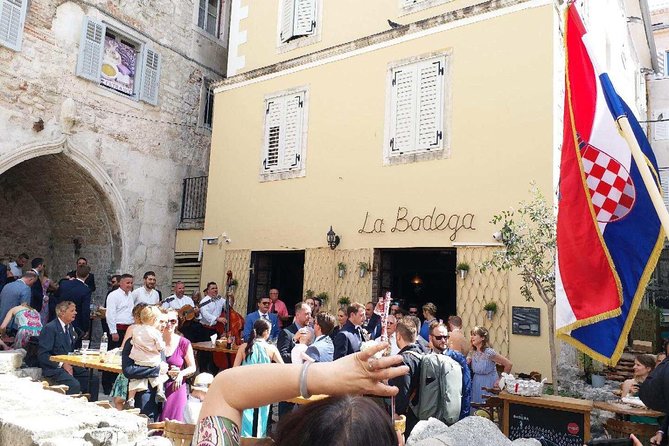
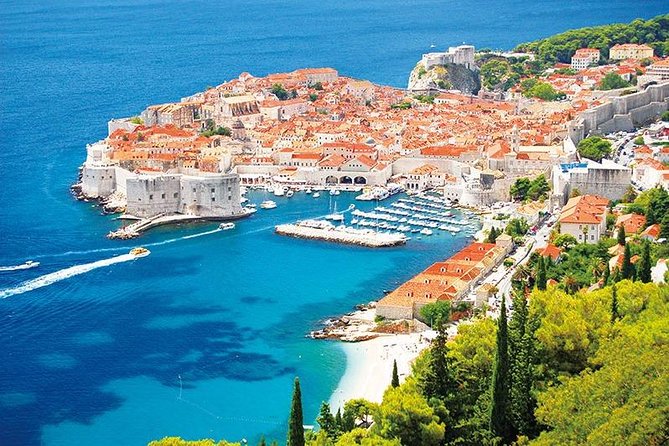
Dubrovnik is the emotional center of the trip. Its fortified Old Town, stone lanes, defensive towers, and sea views make it instantly impressive, even on a short visit. The program gives the city roughly two hours in total, divided among several listed sights.
You visit the Old Town first, then see the Rector’s Palace and the Franciscan Church and Monastery. The Rector’s Palace reflects Dubrovnik’s former civic power, while the Franciscan complex adds a religious and architectural layer. You should have time for a guided look and some free movement, but not enough for every museum or wall section.
The city walls and defensive structures are part of the experience, but wall admission is not included. A cable car up the mountain is also optional and costs extra. The ride can provide the broadest view of Dubrovnik, yet the short schedule means you should ask early whether there is enough time to fit it in.
Game of Thrones references and animation connections may interest some visitors, but the real reason to focus here is the city itself. Look past the screen associations and notice the defensive design, polished limestone, steep streets, and relationship between the old city and the water.
Dubrovnik can be crowded, though crowd levels are not specified for this departure. The practical point is simple: keep the group meeting time in mind, wear comfortable shoes, and save shopping or a leisurely meal for another visit. This stop rewards an early decision about priorities.
Day 5: Počitelj, Blagaj, and Mostar
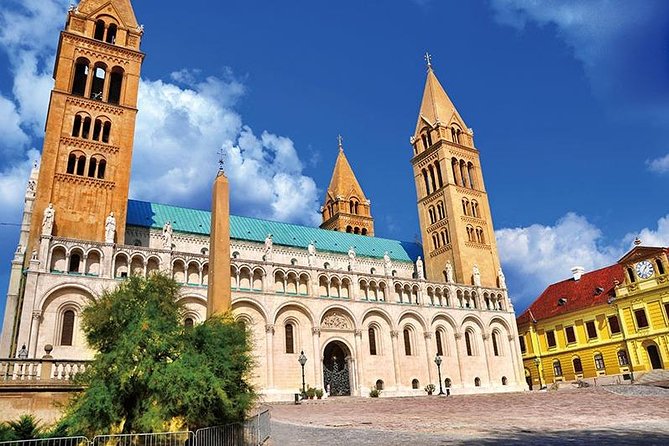
Day 5 is the Bosnia and Herzegovina highlight. You begin at Počitelj, a stepped medieval fortress village built into a hillside. Its stone lanes and elevated position make it visually striking, but the terrain is not designed for careless footwear.
The visit lasts about one hour. You can expect a compact introduction to the village and time for photographs, but climbing higher sections may reduce the time available elsewhere. Admission is listed as free.
Next comes Blagaj, known for the Dervish Monastery beside a high cliff and clear streams. This stop brings a different atmosphere from Počitelj. Instead of fortress walls and hilltop views, you get water, rock, and a religious site shaped by the surrounding setting.
The Dervish Monastery is a functioning religious place, so dress and behavior should be respectful. The tour data does not say that interior admission is included, so ask before assuming you can enter.
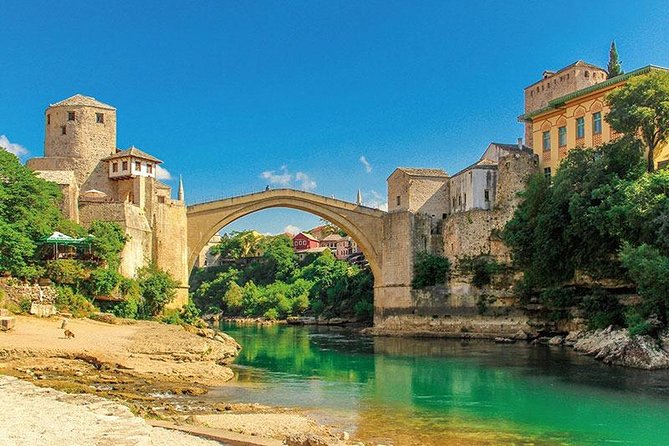
Mostar follows, with the Old Bridge area as the central attraction. The bridge crosses the Neretva River and connects the two sides of the old city. The surrounding streets carry Ottoman-era influence, small shops, stone buildings, and viewpoints toward the river.
You have about an hour for Mostar and another hour listed for the Old Bridge area. That sounds generous on paper, but the two entries may represent overlapping sightseeing time rather than two separate long visits. Use the time for the bridge, the river views, and a short walk through the old center.
The Old Bridge area has emotional weight as well as beauty. The bridge was destroyed during the 1990s conflict and later reconstructed, so the restored structure is tied to both loss and renewal. A local guide can help explain this without turning the stop into a hurried history lecture.
You spend the night in Sarajevo or nearby. Breakfast is included the next morning, but meals beyond the six listed breakfasts are your responsibility.
Day 6: Sarajevo and the route back into Croatia
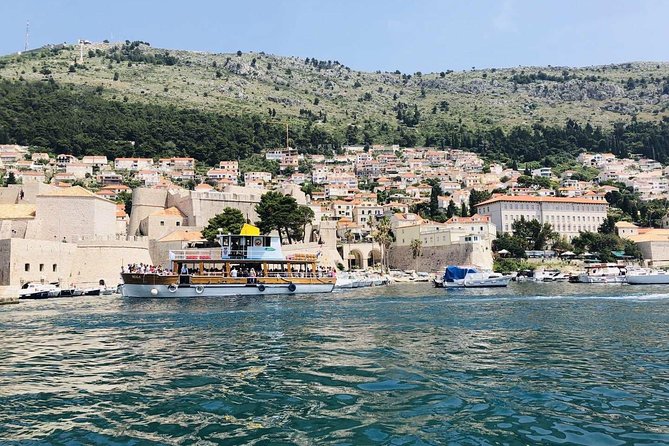
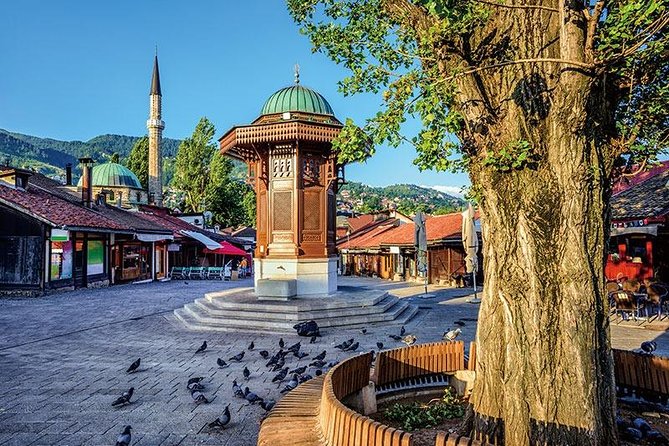
Sarajevo gives you the tour’s clearest meeting point between different faiths and cultures. The Old Town carries Ottoman and European influences, while newer sections show the city’s later growth and rebuilding. The listed sightseeing time is about one hour, so expect a focused orientation rather than a full museum day.
At the Latin Bridge, you see the place connected with the assassination of Archduke Franz Ferdinand, the event that helped trigger the First World War. The bridge is modest in size, but its importance is much larger than its physical scale.
The Sarajevo Meeting of Cultures Line marks a change between architectural and cultural zones in the Old Town. It is easy to miss if you rush, so pay attention to the pavement and listen for the guide’s explanation.
The city’s more recent past also matters. Sarajevo suffered heavily during the 1990s war, and the tour description points to its rebirth and changing modern architecture. You should approach the city with respect rather than treating it as only a photogenic old quarter.
After Sarajevo, you cross back into Croatia and overnight in Vinkovci or nearby. The return route is long, and this is one of the days where the coach connection is especially valuable. It would be difficult to combine these border crossings and hotel changes independently without giving up time elsewhere.
Day 7: Pécs and the return to Budapest
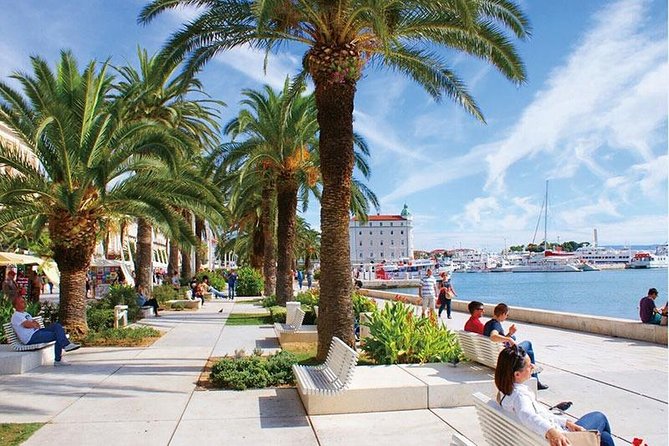
The final morning brings you to Pécs in southern Hungary. Located between the Danube and Drava regions, the city has a long cultural history and is known for Turkish remains, museums, music, opera, and ballet.
The main stop is Pécs Cathedral on Szent István Square. The cathedral rises over the central square and gives the visit a clear visual focus. You have about one hour for Pécs, so treat this as a final taste rather than a complete city tour.
The cathedral and square provide a calm finish after several intense sightseeing days. Admission is not included, so check whether your group will enter or view the building from outside.
You then drive back to Budapest in the afternoon and finish at the original meeting point. An optional post-tour hotel can be arranged in Budapest or nearby, but accommodation before the tour and on the final night is not included in the standard price.
What the $1,160 price really covers
At $1,160.11 per person, the value depends on how much you would otherwise pay for transport and hotel coordination. Six nights of three-star minimum accommodation, daily air-conditioned coach travel, a professional driver, tour management, and six breakfasts are included.
That is a fair package for a route with several international borders and widely separated cities. You are paying for the convenience of having the coach move with you, not for luxury hotels or a relaxed schedule.
Budget extra for:
- Attraction tickets not included in the stops
- Optional cable-car rides and other activities
- Lunches and dinners
- Personal expenses
- Gratuities of €10 per person per day, collected in cash by the tour manager
The required gratuity adds €70 per person for seven days. It is worth including that amount in your mental price before deciding.
Hotels, luggage, and group arrangements
The hotels are comfortable three-star properties or better, with private facilities. You may be placed in Zagreb, Zadar, Neum, Sarajevo, Vinkovci, or nearby towns rather than in the city center.
A standard twin room is arranged by default. A double bed can be requested, but three-person groups should not expect a triple room. One twin room can hold two adults and one child aged 2 to 11, with the child sharing rather than receiving a separate bed.
Each person may bring one piece of luggage up to 30 kilograms and one small carry-on. That limit is generous for a week, but you will want a compact bag because you change hotels often.
The group may combine English and Chinese speakers if numbers are low. One tour leader can speak both languages. This arrangement could add a cultural dimension to the coach, but the pace of bilingual explanations may not suit people who want uninterrupted English commentary.
What I like, and what gives me pause
I like the range of places. Plitvice changes the mood from cities, Mostar adds Bosnia’s Ottoman character, Sarajevo supplies modern historical context, and Pécs prevents the trip from feeling like a simple Croatia loop.
I also like the human side described by the strongest feedback. Kenny’s humor, bilingual storytelling, and care for the group helped turn a surprise language mix into a positive experience. Local guides in several cities added another useful layer.
The main concern is time. One-hour stops are enough for highlights, not depth. Dubrovnik, Mostar, Sarajevo, Split, and Zadar each deserve more time than this schedule allows. Border delays can make a tight day even tighter.
You should also read the booking confirmation carefully. Confirmation is normally issued at booking, but bookings made within seven days of departure may take up to 48 hours. The operator requires an official tour voucher, and the downloadable platform ticket is not treated as final confirmation.
You are responsible for passport, visa, health, insurance, and entry requirements. Your passport must be valid for at least six months, and passenger details including name, contact number, gender, birth date, and nationality are required.
Should you book this Balkan tour?
Book it if you want a high-coverage, low-planning trip through Croatia, Bosnia and Herzegovina, and southern Hungary. It suits first-time visitors to the region, couples and friends who prefer organized transport, and anyone who would rather spend a week sightseeing than arranging five hotels and several cross-border drives.
Skip it if you want long meals, slow mornings, or several nights in each city. You will see the great hits, but you will often leave just as a place begins to feel familiar.
For the best experience, pack light, carry your passport during border days, budget for the €10 daily gratuity and extra admissions, and choose your priorities before each short stop. With realistic expectations, this is a strong introduction to the Balkans and a good value for the amount of ground covered.
FAQ
Where does the tour begin?
The tour begins at Budapest-Keleti station, Budapest, Kerepesi út 2-4, 1087 Hungary. The scheduled start time is 8:30 a.m.
Where does the tour end?
The activity ends back at the original meeting point in Budapest.
What accommodation is included?
Accommodation is included in a comfortable three-star minimum hotel, in a twin, double, or single room with private facilities.
Are meals included?
Six breakfasts are included. Other meals are not specified as included.
Is transportation included?
Yes. Daily transportation is provided in modern air-conditioned coaches with a professional coach driver.
How large can the group be?
The tour can have a maximum of 30 participants. English and Chinese speaking groups may be combined when numbers are low.
What luggage can I bring?
Each person may bring one piece of luggage weighing no more than 30 kilograms and one small hand-carry item such as a purse, backpack, or camera bag.
Just added around Budapest
- Lake Balaton and Herend Guided Tour★ 4.7 · 3 reviews
- Audio visual multi-sensory chefs journey dinner experience★ 5.0 · 3 reviews
- Hollókő Ethnographic Village: Day Tour from Budapest★ 3.7 · 3 reviews
- Tapolca Cave Lake and Tihany/ Balaton private tour from Budapest★ 4.5 · 3 reviews
- Budapest Art Nouveau Walking Tour★ 5.0 · 3 reviews
- SzentEndre-SaintAndrew City Privately Shopping and Picturesque★ 4.5 · 3 reviews
- Budapest Drinks and Piano Show Cruise★ 4.5 · 3 reviews
- Horseshow on the Hungarian Puszta, private tour from Budapest with entry!★ 5.0 · 3 reviews
Historical Tours, compared.
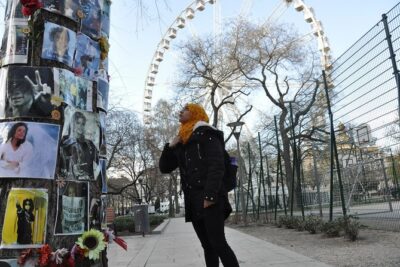
Budapest Historical Sightseeing – Free Walking Tour
What we thought →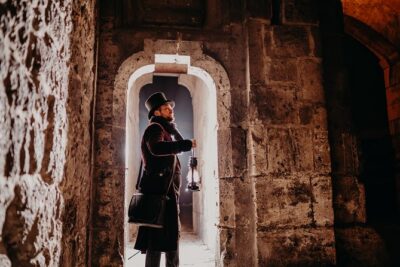
Buda Castle District Dark History, Legends and Vampire Night Tour
What we thought →
BloodThirsty Hungary: Walking tour & Dark Historical Stories
What we thought →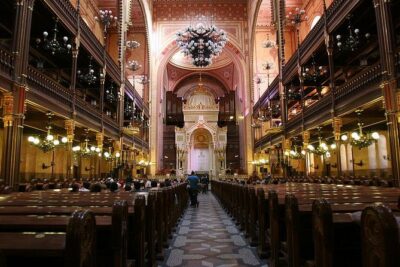
Budapest Jewish Heritage Memorial Walking Tour & Synagogue Entry
What we thought →
Jewish Heritage Guided Tour with Synagogue Ticket
What we thought →
Budapest Historic Downtown Bicycle Tour in small groups
What we thought →
Historic Downtown ride on E-Bicycles Buda & Pest
What we thought →Browse the lists this tour appears in