
Reviewed · AUDIO TOURS
Self Guided Tour In Budapest With 100 Captivating Audio Stories
Budapest rewards curious wanderers. This browser-based audio tour links 100-plus location stories to the city’s castles, bridges, squares, museums, and neighborhoods, letting you choose what deserves your time. I like the freedom to start and stop anywhere, and I like the low price of $3.62, which makes it an easy add-on to a Budapest visit. The main drawback is that you need mobile internet, your own headphones, and a charged smartphone throughout.
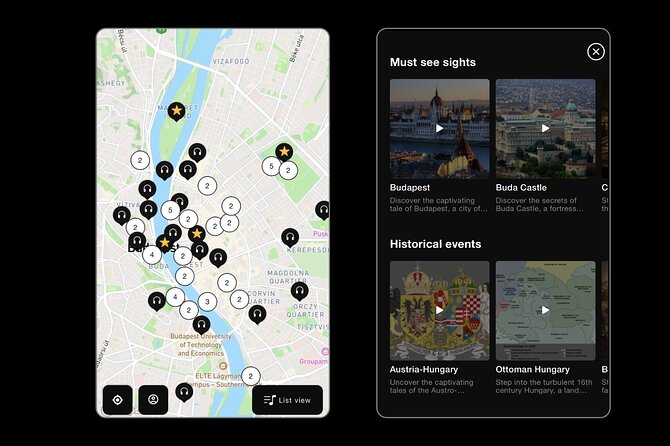
You are not joining a guide or following a fixed group. Instead, the web app uses a map to help you find nearby stories in English. You can spend an hour around the Danube, build a longer city walk, or keep the guide open for up to eight hours. Just remember that the experience provides audio storytelling, not museum entry, transport, or an in-person guide.
In This Review
- Key points to know before you go
- How this Budapest audio guide works
- Buda Castle, Fisherman’s Bastion, and the hilltop stories
- The Danube bridges and riverside memorials
- Parliament, squares, and the political center
- Heroes’ Square, City Park, and Margaret Island
- Markets, music, libraries, and city interiors
- Railway stations and unexpected city stories
- St. Stephen’s Basilica and the value of $3.62
- Practical ways to get more from the route
- Should you book this Budapest audio tour?
- FAQ
- How much does the self-guided Budapest audio tour cost?
- How long does the experience last?
- Is the tour guided in person?
- What do I need to use the audio guide?
- Does the guide work offline?
- Is admission to the sights included?
Key points to know before you go

- Over 100 stories across Budapest: Choose major sights such as Buda Castle, Parliament, Heroes’ Square, and Fisherman’s Bastion, or seek out less expected places such as railway stations, libraries, bridges, and university buildings.
- No download required: A link activates the guide in your browser, so you can begin quickly without installing a separate app.
- You set the pace: Start and stop whenever you like, select nearby stories, or shape your own route around a theme.
- Very low cost: At $3.62 per person, the guide costs less than many short walking tours, though its value depends on how much you enjoy independent sightseeing.
- Bring your own equipment: You need a smartphone with internet access and headphones. Offline access is not included.
- A useful church-booking lesson: An available experience note praises fast online booking for St. Stephen’s Basilica, but that admission arrangement is separate from this audio guide.
How this Budapest audio guide works
The format is simple. You receive a link, open the web app in your browser, view the map, and select a story connected to your location. The guide is offered in English, with audio narration and soundscapes built around sights, events, and famous people.
This setup suits you if you dislike rigid tours. You can listen to one ten-minute story, pause for lunch, and return later. You can also make a longer outing by connecting several nearby stops.
The flexibility comes with trade-offs. Since there is no physical guide, nobody will adjust the route for weather, explain a confusing street corner, or answer follow-up questions. The app also does not work offline, so you should plan for mobile data and keep your battery in good shape.
The tour is private in the practical sense that only your group uses it. You are still walking through public Budapest, but you will not be sharing a scheduled guide or headset with strangers. Most people can take part, and service animals are allowed. The experience is not recommended if you have a hearing impairment.
A few more trips worth weighing up before you book
- Budapest: Parliament Building Entry Ticket and Audio Guide
★ 4.5 · 3,844 reviews - Budapest Danube Cruise with Drink, Audio Guide, Margaret Island
★ 4.5 · 1,036 reviews - Budapest: Danube River Sightseeing Cruise with Audio Guide
★ 4.1 · 1,002 reviews
Buda Castle, Fisherman’s Bastion, and the hilltop stories
Buda Castle is one of the strongest starting points. The audio story focuses on battles, royalty, and the fortress’s long role in Budapest’s political life. You can allow about 20 minutes for this stop, although the castle district itself deserves much longer if you want to walk around without rushing.
Nearby, the National Széchényi Library offers a royal connection of a different kind. Its story points toward Hungarian books, culture, and the castle’s role as a center of national memory. The National Archives adds another historical angle, with stories linked to centuries of Hungarian records and official documents.
The Semmelweis Museum of Medical History gives the route a more personal subject. Its story connects to medical breakthroughs and the institution founded in 1769. This is a good example of how the guide can move beyond the familiar postcard sights and show you how Budapest’s past also lives in science and public life.
Fisherman’s Bastion supplies the views and medieval atmosphere. The story leans into folklore and the fortress setting, while the nearby Gül Baba’s Tomb takes you into Budapest’s Ottoman-era past and spiritual traditions. Gül Baba’s tomb sits on steep Mecset Street, so you should expect a climb rather than a flat stroll.
Gellért Hill and the Citadella continue the hilltop section. Their stories cover history, folklore, the Liberty Statue, and the city views from above. Gellért Hill Cave adds an unusual underground subject, though the available information describes the story rather than promising cave admission. Treat it as an outside audio stop unless you independently confirm opening details.
The Danube bridges and riverside memorials
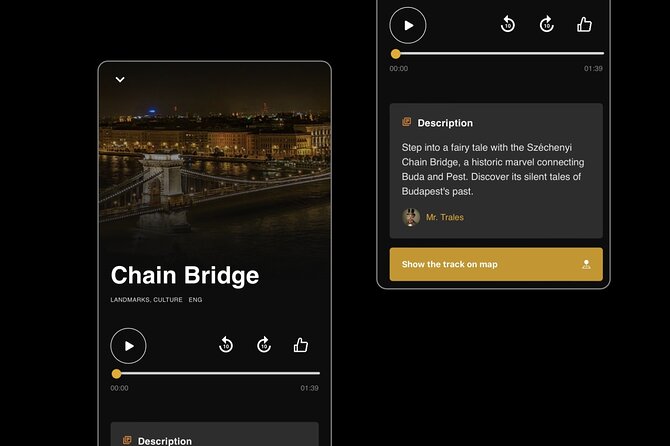
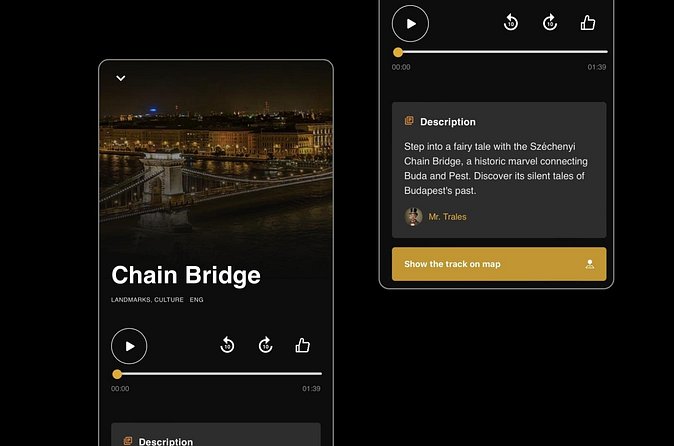
Budapest’s bridges are ideal for a self-guided format because you can listen while moving between Buda and Pest. The Széchenyi Chain Bridge receives two entries in the route information, one connected to the lion statues and another describing the bridge itself. You do not need to treat these as two separate visits. They are best understood as two story points about the same landmark.
The bridge story focuses on its role connecting Buda and Pest and on the quiet traces of the city’s past. The lion-statue story gives you a shorter ten-minute stop, useful if you are crossing with limited time. The bridge itself is free to view, but traffic, crowds, and weather can affect how pleasant the crossing feels.
Margaret Bridge has its own story and an unusual engineering detail: its 165-degree design. That fact gives you a reason to pause and look at the structure instead of using the bridge only as a route across the river.
The Danube Promenade shifts attention from engineering to city life. The story refers to the grand hotels and the changing character of the riverside. Nearby, Shoes on the Danube Bank brings a serious, emotional pause. This memorial tells the story behind the shoes left along the water, and it deserves quiet attention rather than a quick photograph.
Liberty Bridge offers another change of mood. Its Art Nouveau design and myths give the crossing a lighter architectural focus. Elisabeth Bridge, meanwhile, carries a story of tragedy and rebuilding. Together, the bridges show why Budapest is best explored at street level, where major history meets ordinary movement across the river.
Parliament, squares, and the political center
The Hungarian Parliament Building is one of the most important location stories in the guide. The audio focuses on the building as a symbol of Hungary’s past and present. You can pair it with Kossuth Lajos Square, described as the heart of Budapest’s civic life, and Liberty Square, where political memory and the Hungarian National Bank connect.
The Hungarian Academy of Sciences adds an intellectual layer. Founded in 1825, it represents the city’s long interest in research and learning. The Hungarian National Bank Headquarters turns toward money, national identity, and changes in currency. These stops work well together if you want a route about institutions rather than monuments.
Vörösmarty Square offers a broader look at urban change. Its story follows the square’s changing identity since 1812, making it a useful place to think about how public spaces change with the city around them.
Deák Ferenc Square is less about one grand building and more about movement. Several transport lines meet here, so it is a practical place to connect different parts of your day. Batthyány Square gives you another view of power and public life, with a story about the way past and present meet along the river.
The Parliament stop and these squares are among the easiest locations to combine. You can select only the stories that interest you, rather than spending a full morning on political history if your priority is architecture, food, or the hills.
A completely different kind of day out around Budapest:
- Budapest: City Highlights Cruise with Welcome Drink
★ 4.6 · 35,610 reviews - Budapest: Unlimited Prosecco, Beer and Aperol Spritz Cruise
★ 4.8 · 25,310 reviews - Budapest: Széchenyi Spa Day Ticket with Optional Upgrades
★ 4.3 · 23,911 reviews - Budapest: Nighttime or Daytime Sightseeing Cruise
★ 4.2 · 21,062 reviews
Heroes’ Square, City Park, and Margaret Island

Heroes’ Square is built around the Millennium Monument, created to mark the 1,000th anniversary of the Magyar conquest of the Carpathian Basin. The story centers on the figures who shaped Hungarian history. The Museum of Fine Arts and the Palace of Art frame the square, giving you an easy chance to add art and architecture to the same stop.
The listed listening time is about ten minutes. That is enough for the audio story, not enough to explore every nearby attraction. If you are planning museum visits, keep the audio guide as one part of a longer City Park outing.
City Park covers about 302 acres and provides a change from Budapest’s dense central streets. The story focuses on the park’s past and its role as a green public space. Nearby, the City Park Ice Rink and Boating Lake receives its own story about seasonal leisure and the way the area changes through the year.
Millenáris takes the guide in a different direction. Its story recalls Budapest’s former velodrome and its 412-meter track. This is the sort of stop you might otherwise pass without knowing why it matters, and it shows the value of having a map with short local stories.
Margaret Island blends nature and history. The guide promises stories about the island’s past and character, with around 20 minutes suggested for the stop. Since the island is a destination rather than a single monument, you should give yourself extra time if you want to walk beyond the audio point.
Markets, music, libraries, and city interiors
The Central Market Hall is a strong stop for combining architecture with daily life. Its story presents the Great Market Hall as a center of food and culture, as well as an example of ambitious city planning. The audio adds context before you browse the stalls, though it does not replace time to look around for yourself.
The Franz Liszt Academy of Music brings Budapest’s musical tradition into the route. Its story covers the institution, its famous figures, and its place in the city’s cultural life. The listing does not include a concert or interior admission, so consider the audio a nearby introduction rather than a ticket.
The Metropolitan Ervin Szabó Library is one of the more atmospheric subjects. A former palace now serves as a library, and the story focuses on that unusual change of purpose. It is a memorable stop for anyone who likes grand interiors, books, and buildings with a second life.
The Great Synagogue on Dohány Street receives a ten-minute story about its scale, design, and place in Jewish Budapest. The wording points you toward Europe’s largest synagogue, but the audio guide itself does not include admission. If you plan to enter, you will need to arrange that separately.
The Corvinus University story covers the institution’s past and academic community. It may appeal most if you enjoy learning how a city’s schools and public buildings fit into its identity. The Hungarian National Archives and National Széchényi Library provide similar institutional themes around records and culture.
Railway stations and unexpected city stories
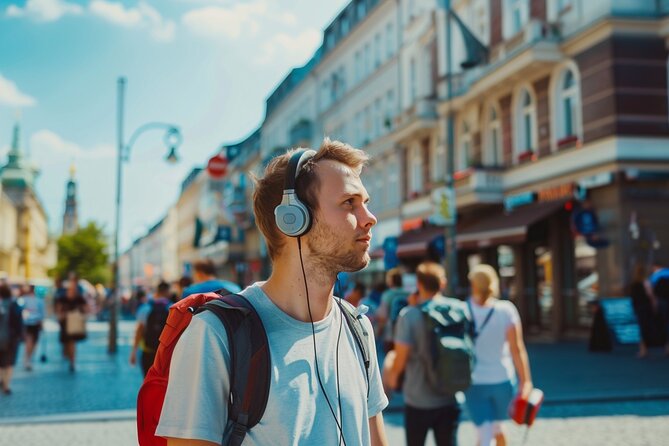
Budapest’s railway stations make excellent audio subjects because their architecture is easy to miss when you are focused on catching a train. Keleti Station receives a story about railway history and its grand design. Nyugati Railway Station’s Royal Waiting Room is linked to the creators of the Eiffel Tower, giving you a particularly striking architectural detail to watch for.
Westend follows a different urban story, centered on the rise and fall of an iconic shopping center. It is less traditional than a castle or basilica, but that is precisely why it can add variety to your route.
Újlipótváros also moves away from the classic sightseeing circuit. Its story looks at the neighborhood’s mix of older history and modern character. If you want a break from monuments, this is the sort of stop that helps you notice how Budapest functions as a living city.
These locations also show why you should not try to force all 100 stories into one day. The official duration range is about one to eight hours, and the stops are spread across Budapest. Choose a district or theme instead of chasing every pin.
St. Stephen’s Basilica and the value of $3.62
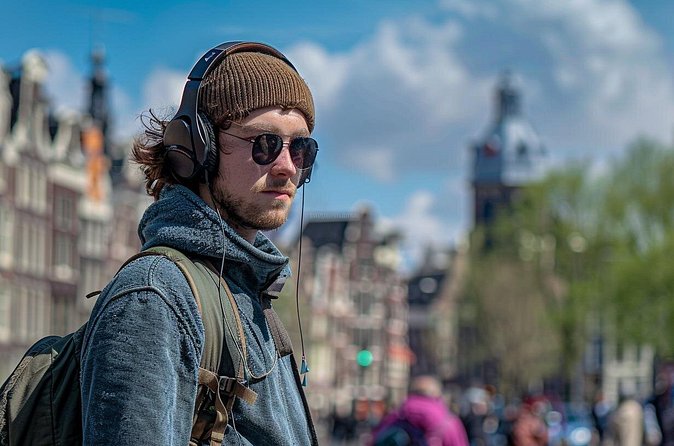
St. Stephen’s Basilica is one of the essential central stops. Its story covers the building’s history, art, and viewpoints. The audio portion takes about ten minutes, but the church itself may require additional time if you plan to enter.
One useful note connected to this location concerns online ticket booking. A visitor saved time by booking admission online instead of waiting at the ticket office and wished they had also booked the tower because time ran short. The lesson is simple: use this audio guide for the story, but check entry and tower tickets separately if you want to visit inside.
At $3.62 per person, the guide offers excellent value if you use several stories. One or two stops still cost very little, and the private format avoids the price of a full group tour. The value is not in exclusive access. It is in choice, independence, and the chance to hear context at places you might otherwise pass.
The low price also explains what you should not expect. You are not paying for an expert guide beside you, a reserved entrance, transport, or offline files. Think of it as a flexible city companion, not a full sightseeing package.
Practical ways to get more from the route
Start with a charged phone and headphones. Because the guide requires internet access and does not offer offline use, confirm that your mobile connection will work in Budapest before you set out.
Pick one area at a time. A Buda route could include Buda Castle, the National Széchényi Library, the Archives, Fisherman’s Bastion, Gül Baba’s Tomb, and Gellért Hill. A Pest route could connect Parliament, Kossuth Square, Liberty Square, St. Stephen’s Basilica, Deák Ferenc Square, and Vörösmarty Square.
Use the ten-minute stories as prompts, not strict schedules. The guide gives you a compact explanation, then you decide if the building deserves a longer look. This works especially well at the Market Hall, City Park, Margaret Island, and the railway stations.
You can start and stop at any point, which makes the guide useful during a broader Budapest day. Listen to one story on the way to lunch, pause while you eat, and resume near the next sight. The map lets you keep control instead of following a fixed procession.
The English-only format is worth noting. If you want another language or prefer written material, this will not meet that need. And if audio is difficult for you, the experience is not a good match.
Should you book this Budapest audio tour?
I would book it if you want a cheap, flexible introduction to Budapest and enjoy making your own route. It is especially useful for independent visitors who want more context than a guidebook caption but do not want to spend several hours with a scheduled group.
I would skip it if you need offline access, personal explanations, included admissions, or a carefully planned walking route. The guide gives you many choices, but you must do the choosing.
For most visitors, the price makes the decision easy. Use it selectively, focus on one or two districts, and treat the stories as a companion to your own exploring. That approach gives you the best value and leaves room for Budapest’s unexpected moments.
FAQ
How much does the self-guided Budapest audio tour cost?
The price is $3.62 per person.
How long does the experience last?
The approximate duration ranges from one to eight hours, depending on how many stories you choose and how long you spend at each location.
Is the tour guided in person?
No. This is an outside, self-guided audio experience. There is no physical guide accompanying you.
What do I need to use the audio guide?
You need your own smartphone with internet access and headphones. The guide opens through a browser, and no download is required.
Does the guide work offline?
No. Offline access is not included, so you need an internet connection while using it.
Is admission to the sights included?
No admission tickets are included. The listed stops are outside audio locations, and you should arrange any museum, church, tower, or other entry separately.
Just added around Budapest
- Lake Balaton and Herend Guided Tour★ 4.7 · 3 reviews
- Audio visual multi-sensory chefs journey dinner experience★ 5.0 · 3 reviews
- Hollókő Ethnographic Village: Day Tour from Budapest★ 3.7 · 3 reviews
- Tapolca Cave Lake and Tihany/ Balaton private tour from Budapest★ 4.5 · 3 reviews
- Budapest Art Nouveau Walking Tour★ 5.0 · 3 reviews
- SzentEndre-SaintAndrew City Privately Shopping and Picturesque★ 4.5 · 3 reviews
- Budapest Drinks and Piano Show Cruise★ 4.5 · 3 reviews
- Horseshow on the Hungarian Puszta, private tour from Budapest with entry!★ 5.0 · 3 reviews
Audio Tours, compared.

Parliament Building Entry Ticket and Audio Guide
What we thought →
Budapest Danube Cruise with Drink, Audio Guide, Margaret Island
What we thought →
Danube River Sightseeing Cruise with Audio Guide
What we thought →

Budapest River Cruise with 1 Free Tokaj Frizzante and Audio Guide
What we thought →
Budapest Paddle Steamer Danube Cruise with Tokaj & Audio Guide
What we thought →
Budapest Audio Guide Cruise with Day, Sunset and Night Options
What we thought →
Sightseeing Cruise on the Danube with Audio Guide in Budapest
What we thought →Browse the lists this tour appears in