Reviewed · TICKETS
Budapest: Memento Park Ticket
Communist statues rarely get a second life. At Budapest’s Memento Park, giant monuments once used to promote socialism have been gathered outside the city, creating an unusual open-air history lesson. I like the huge scale of the monuments and the chance to see Hungary’s past without a polished museum filter. I also like the included film about the former political secret service, which adds human detail to the stone and concrete.
The main drawback is location. Memento Park is outside central Budapest, and you must arrange your own transportation. The gravel paths may also be difficult for wheelchair users. Still, at $10 per person, this is a good-value stop for anyone curious about the Cold War, political art, or the parts of Budapest that do not fit the postcard view.
In This Review
- Key points to know before visiting
- Why Memento Park belongs on a Budapest history list
- Arriving at Balatoni út and Szabadkai utca
- Stalin’s Grandstand sets the tone
- The outdoor statues: workers, soldiers, and liberation
- The Most Cheerful Barrack and The Life of an Agent
- Stalin’s Boots, storage rooms, and art
- The Trabant: a playful symbol of daily life
- Is the $10 ticket good value?
- Who will enjoy Memento Park most?
- Practical visit advice
- Should you book Memento Park?
- FAQ
- Where is Memento Park located?
- How much does admission cost?
- How long is the ticket valid?
- Is transportation included?
- Is a guided tour included?
- Is Memento Park suitable for wheelchair users?
- What does admission include?
Key points to know before visiting
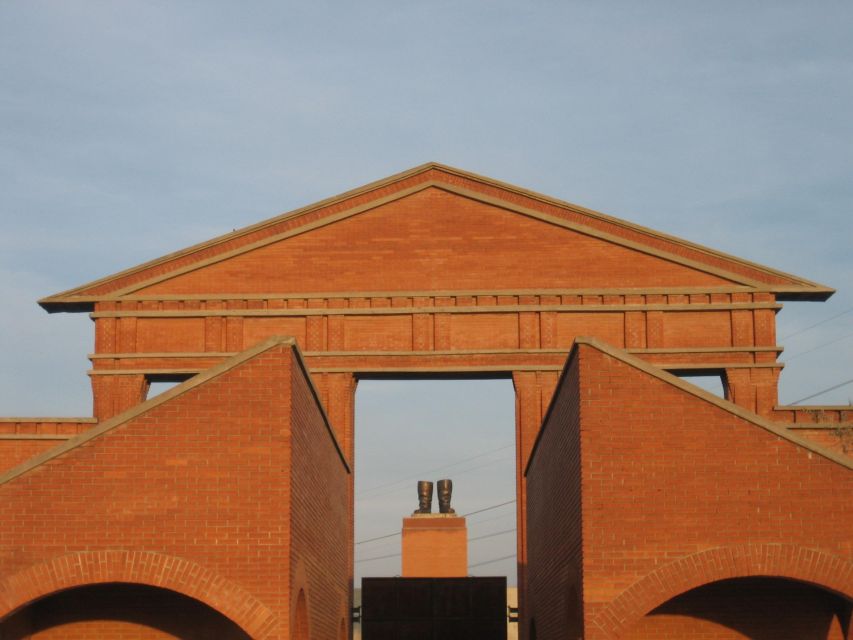
- Stalin’s Grandstand greets you at the entrance: This replica recalls the platform used by party and state leaders during Socialist holiday parades.
- The statues were removed from Budapest’s streets: They were gathered here after the end of the communist era instead of being destroyed or forgotten.
- The Most Cheerful Barrack adds film and photographs: You can watch The Life of an Agent and see material about the former political secret service.
- Stalin’s Boots area combines history and art: A storage showroom and art exhibition offer more context beyond the outdoor statues.
- The Trabant is the park’s playful photo stop: You can sit inside the original car, once a familiar symbol of everyday life behind the Iron Curtain.
- Transport takes planning: Bring your voucher to the entrance at Balatoni út and Szabadkai utca in Budapest’s 1223 district.
Why Memento Park belongs on a Budapest history list
Budapest is filled with grand buildings, thermal baths, and elegant cafés. Memento Park offers something less comfortable and, for many people, more revealing: the visual language of a dictatorship.
The monuments were once placed in public spaces across Budapest. They were meant to shape how people saw the state, the labor movement, the Soviet Union, and the idea of liberation. After communism ended, the statues were removed from the city’s streets and brought together here. Their new setting changes their meaning.
You are no longer walking past a statue in a square where a political ceremony might take place. You are looking at it as a historical object. That distance lets you notice the stiff gestures, oversized figures, heroic poses, and repeated symbols of workers and soldiers.
I like that Memento Park does not require you to treat the monuments as beautiful. Some are impressive because of their size. Others are interesting because they reveal how public art can serve political power. The park asks you to look closely, then decide what the statues say about the period that produced them.
This is not simply a collection of old sculptures. It is a place about memory. Hungary did not erase the communist era from public view completely. Instead, many of its most recognizable monuments were moved here, where you can examine them with the benefit of time.
A few more trips worth weighing up before you book
- Budapest: Széchenyi Spa Day Ticket with Optional Upgrades
★ 4.3 · 23,911 reviews - Budapest: Parliament Building Entry Ticket and Audio Guide
★ 4.5 · 3,844 reviews - Budapest: Full-Day Gellért Spa Ticket
★ 4.2 · 3,340 reviews
Arriving at Balatoni út and Szabadkai utca
The official entrance is at the corner of Balatoni út and Szabadkai utca, in Budapest’s 1223 district. Since transportation is not included, your visit begins with figuring out how to reach this outer part of the city.
That matters because Memento Park is not a casual walk from the central sights. You should check the route on the day of your visit, especially if roadworks or closures are affecting public transport. A specific warning from the provided information notes that buses 101E and 150 did not stop near the park during roadworks, so old directions may not always be reliable.
Once you arrive, present your voucher at the entrance. The ticket is valid for one day, and the visit is designed to be self-guided. There is no guide included, so you can set your own pace and spend more time with the sculptures that catch your eye.
The setting also makes practical planning worthwhile. Bring water and allow enough time for the outdoor paths, the exhibitions, and the film. A café would make a longer visit easier, but the supplied information specifically notes the lack of a café for lunch and drinks. Plan refreshments before you arrive.
Stalin’s Grandstand sets the tone
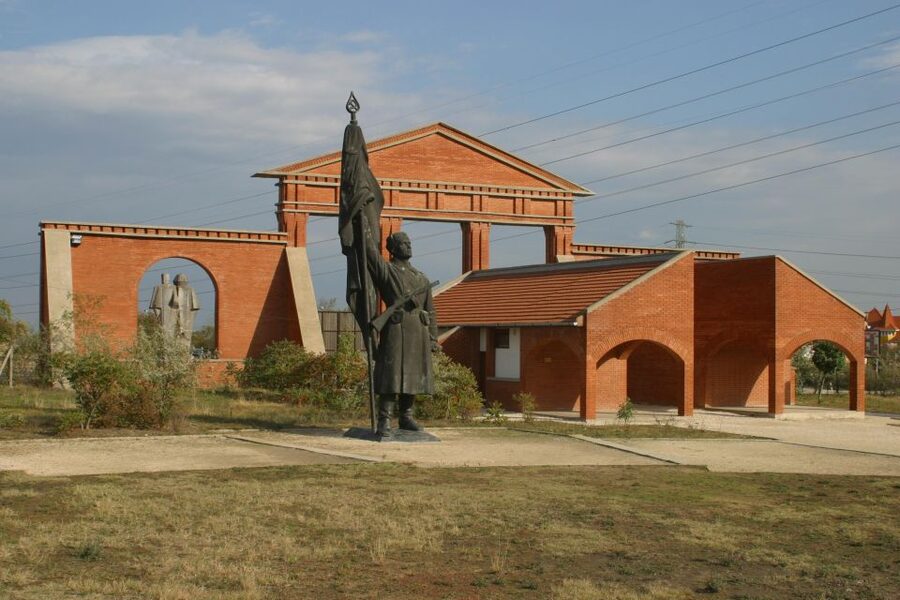
The first major feature is Stalin’s Grandstand, a replica of the platform that once stood in the former Parade Square. Socialist holidays were celebrated there by leaders of the party and state, with public ceremonies designed to display unity and power.
The grandstand is an effective opening because it gives you the right frame for everything that follows. This was not neutral public decoration. The architecture and ceremony worked together. Leaders stood above the crowd, while banners, soldiers, workers, and statues helped turn political ideas into a public show.
The original Stalin monument connected with this setting has a particularly striking story. After the end of the communist era, Stalin’s statue was removed, leaving only the boots on the platform. The park’s Stalin’s Boots area keeps that image alive as a symbol of the statue’s fall.
Even without a guide, you can read the space as a lesson in changing power. A grand platform once meant authority. Today, it is a historical exhibit that invites questions about how quickly public symbols can lose their force.
The grandstand also provides more than a photo opportunity. It helps you understand why the park is arranged as it is. You are not merely looking at isolated statues. You are seeing pieces of a former political system placed together, away from the streets where they once carried official meaning.
The outdoor statues: workers, soldiers, and liberation
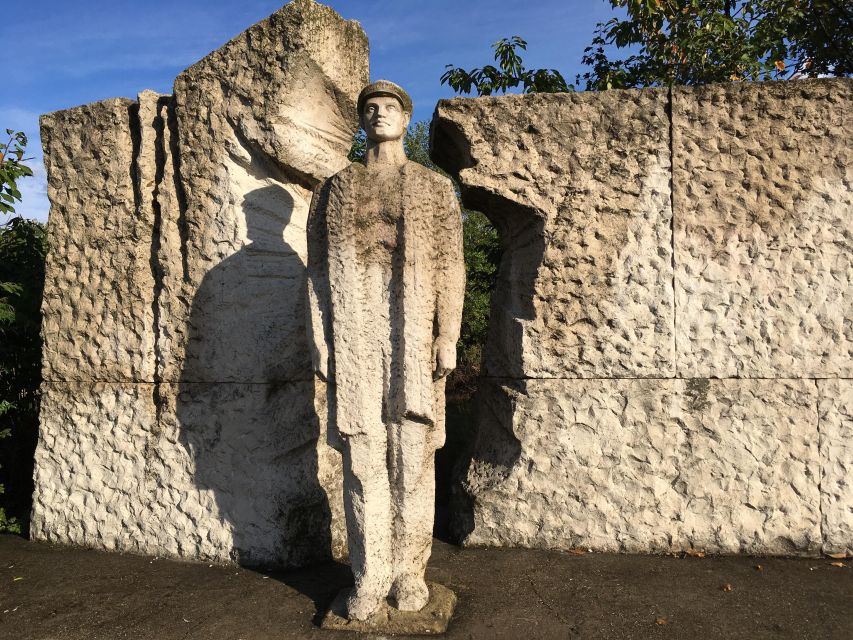
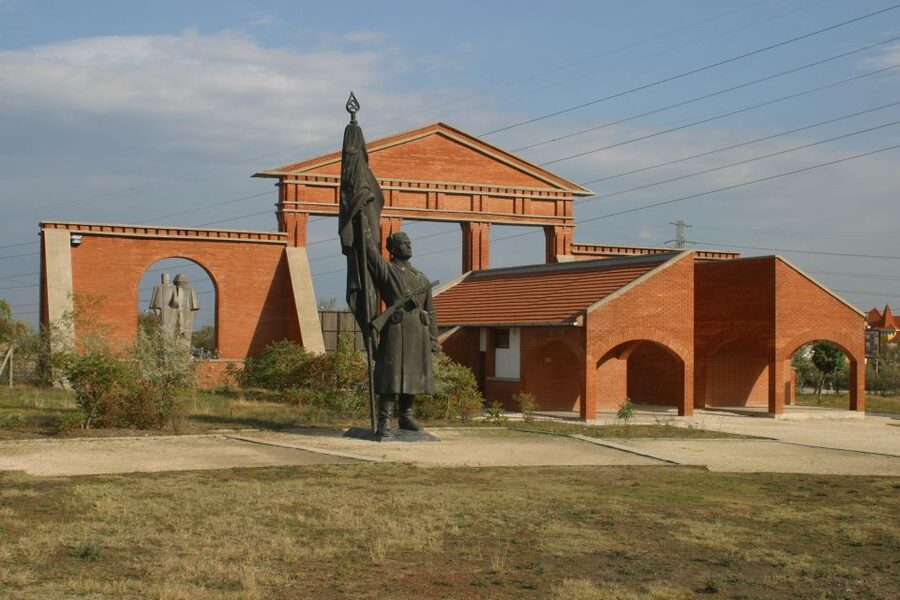
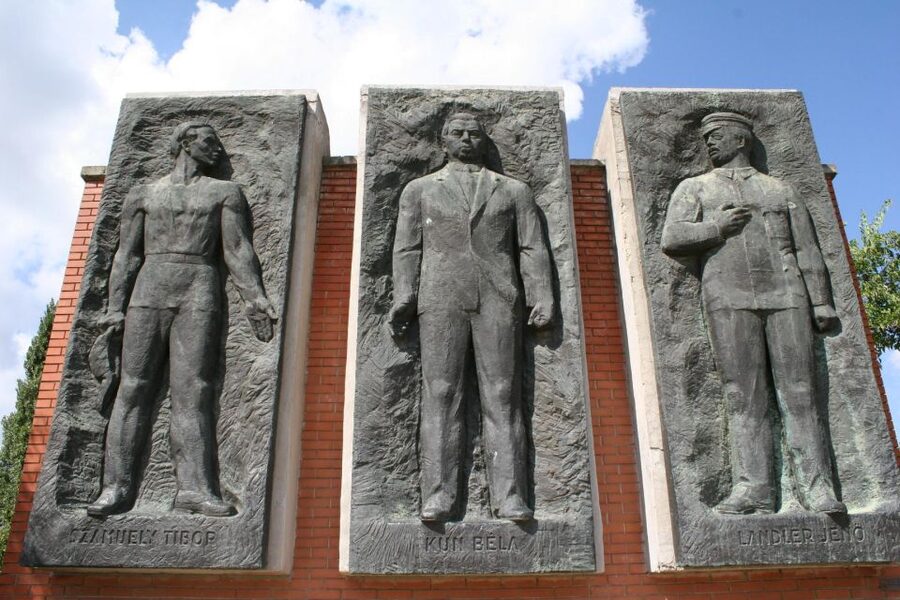
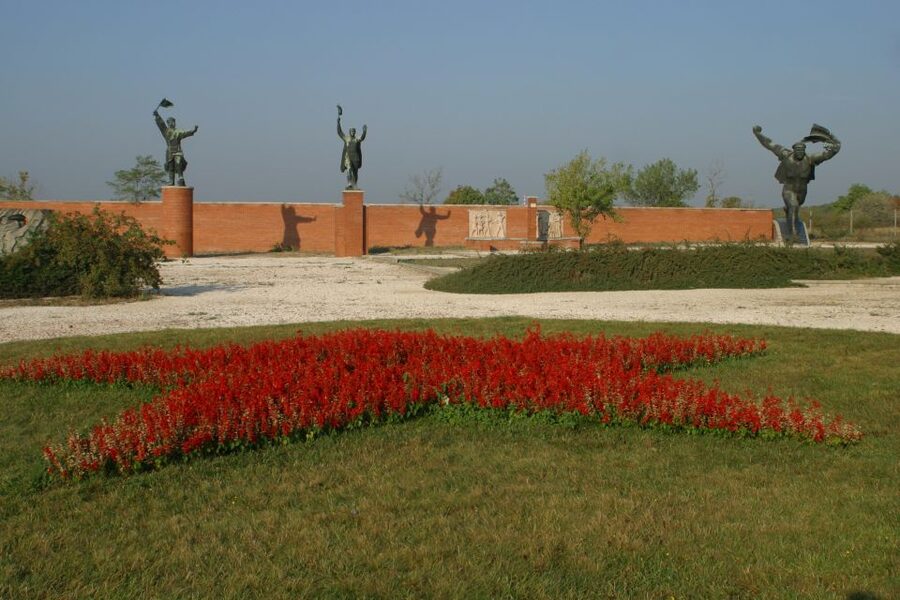
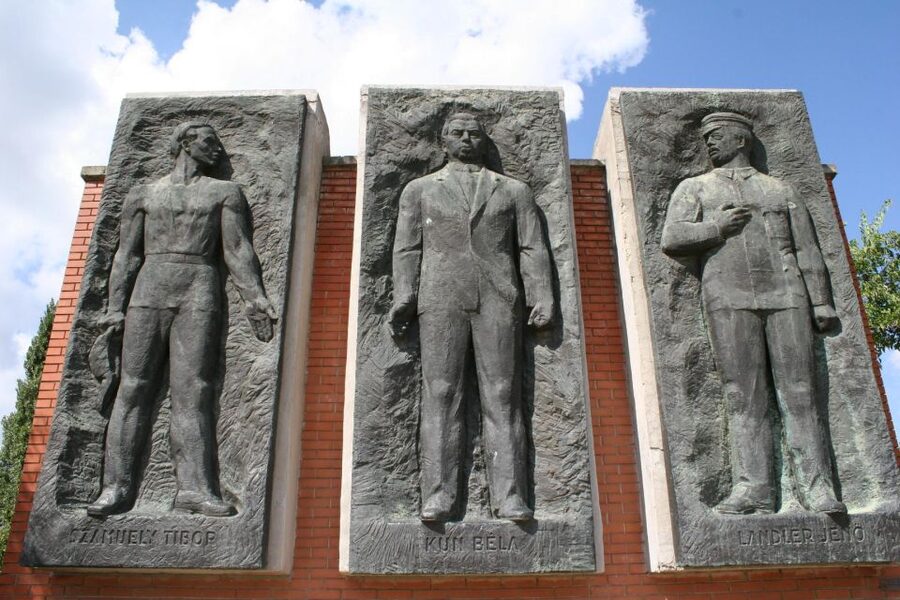
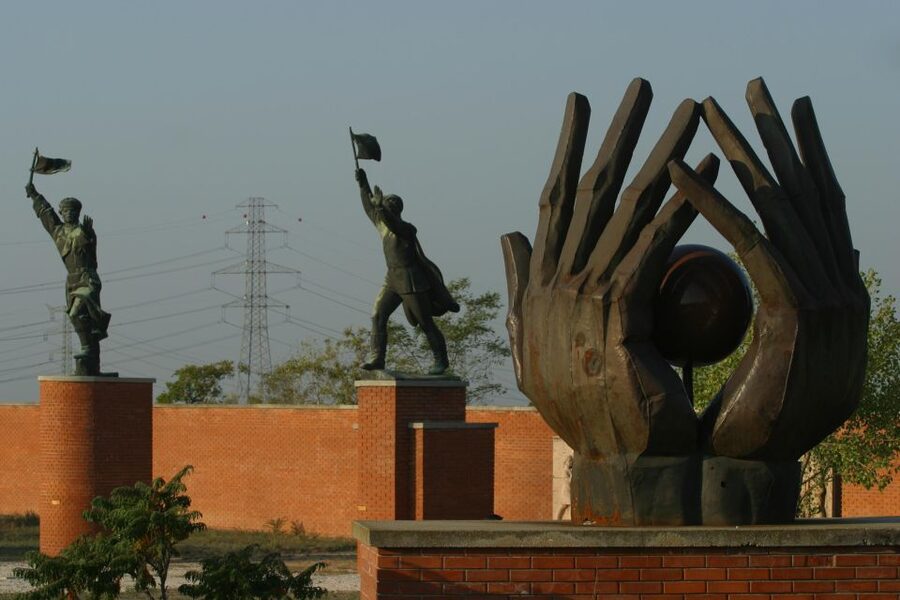
The heart of the park is its collection of gigantic monuments from Hungary’s communist dictatorship. They include allegorical monuments of liberation, statues of important figures from the labor movement, and soldiers of the Red Army.
The scale is part of the experience. These are not small gallery pieces. They were made to dominate public space and to make political ideas feel permanent. You may find the repeated poses and symbols striking: muscular figures, raised arms, military forms, and group scenes that present history as a simple march toward a promised future.
That simplicity is useful to question. Political monuments often leave little room for uncertainty. Heroes are presented as heroes. Enemies are implied or omitted. History becomes a staged image rather than a debate.
I would take time to walk slowly rather than rush from one statue to the next. Look at the faces, the direction of the figures’ gazes, and who is placed in front or above others. Notice how the same broad themes repeat across the park. The repetition itself tells you something about propaganda.
The park is also not solemn every second. You can pose beside Lenin or the Soviet Red Army soldiers, and the setting allows a certain amount of humor. That lighter mood does not cancel the darker history. It shows how these once-feared symbols have changed when removed from their original setting.
For some people, the statues will feel repetitive. If you are not interested in political history or twentieth-century European history, the outdoor section may not hold your attention for long. The park works best when you treat the sculptures as evidence, not just as unusual photo backgrounds.
A completely different kind of day out around Budapest:
- Budapest: City Highlights Cruise with Welcome Drink
★ 4.6 · 35,610 reviews - Budapest: Unlimited Prosecco, Beer and Aperol Spritz Cruise
★ 4.8 · 25,310 reviews - Budapest: Nighttime or Daytime Sightseeing Cruise
★ 4.2 · 21,062 reviews - Budapest: 1-Hour Evening Sightseeing Cruise with Drink
★ 4.5 · 8,330 reviews
The Most Cheerful Barrack and The Life of an Agent
The park’s indoor material helps fill in the gaps left by the monuments. At The Most Cheerful Barrack, admission includes a photo exhibition and a screening of The Life of an Agent, a documentary about the former political secret service.
This section is important because monuments show what the state wanted people to see. A film about secret-service work points toward the less visible side of that system. It gives the visit a more personal and uneasy dimension, moving beyond uniforms, slogans, and heroic poses.
The title is provocative, but the value is not just in the film’s name. You get a chance to consider how surveillance and political control affected everyday life. The outdoor statues explain official public messages. The documentary helps you think about what might have happened behind those messages.
I recommend fitting the film into your timing rather than treating it as an optional extra. Since the ticket covers both the outdoor collection and the screening, it adds real value to the $10 admission. It also gives you a break from the gravel paths and the summer heat.
The photo exhibition works in the same way. It offers historical background that can make the statues easier to understand. Without context, a giant soldier or worker may seem like a strange leftover. With photographs and film, you can connect the object to the political world that created it.
Stalin’s Boots, storage rooms, and art
The area under Stalin’s Boots includes a storage showroom and an art exhibition. This is a useful part of the park for anyone who wants more than the open-air collection.
The storage showroom suggests how carefully these objects have been kept and presented after their removal from public life. Their current placement is not accidental. The park turns them into material for study, discussion, and memory.
The art exhibition adds another layer. Communist-era monuments were official works, but the way they are displayed today can be considered a form of historical interpretation. You are seeing not only what the state commissioned, but also how later generations chose to preserve and explain it.
The name Stalin’s Boots gives the area a sharp visual focus. A missing statue can sometimes say more than a complete one. The empty space above the boots recalls the collapse of a political image that once aimed to look unshakable.
I find this part especially useful for understanding the park’s tone. Memento Park is not trying to restore the old monuments to honor. It is not simply mocking them, either. It presents them as powerful objects from a difficult period, then lets you examine the gap between their original purpose and their current role.
The Trabant: a playful symbol of daily life
The original Trabant is one of the park’s most popular photo points. You can sit inside the car and take pictures, which gives the visit a welcome change of pace.
The Trabant matters because it is not a heroic monument. It connects the political era to ordinary life. While the statues represent the grand claims of the state, the car points toward the practical world of families, travel, shortages, and everyday routines.
You do not need to be a car enthusiast to enjoy this stop. The Trabant gives you a physical object that feels more approachable than a towering political sculpture. Sitting inside it can help turn an abstract period into something more tangible.
It is also a good choice if you are visiting with children or with someone who does not want a purely serious history stop. The photo opportunity adds humor without taking away from the setting. I would still encourage you to look at the car as part of the story, not just as a prop.
Is the $10 ticket good value?
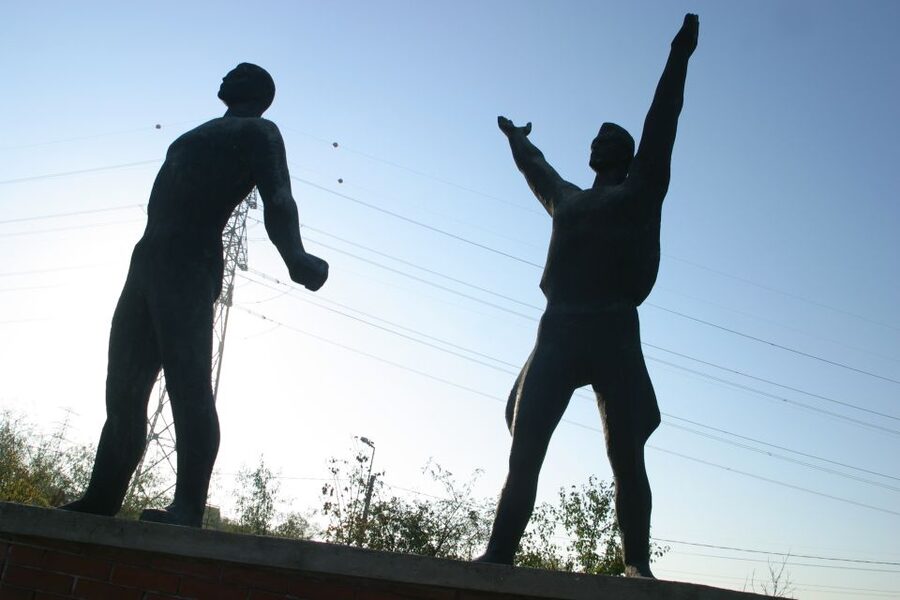
At $10, the admission is reasonably priced for the amount included. You get access to the outdoor statue collection, the photo exhibition, the documentary, the storage showroom, the art exhibition, and the Trabant.
The value improves if you spend time with the film and indoor exhibits. If you only walk past the statues quickly, the ticket may feel less impressive. This is a place where an unhurried visit pays off.
The ticket does not include transportation or a guided tour. That keeps the price low, but it means you must provide your own context and handle the route yourself. A printed guide or careful reading of the available information can help you get more from the visit.
Flexible booking also helps with Budapest’s changing plans. You can cancel up to 24 hours in advance for a full refund, and the reserve-now, pay-later option lets you hold a place without paying immediately. Check the available starting times because the ticket is valid for one day, not an unlimited period across several dates.
Who will enjoy Memento Park most?
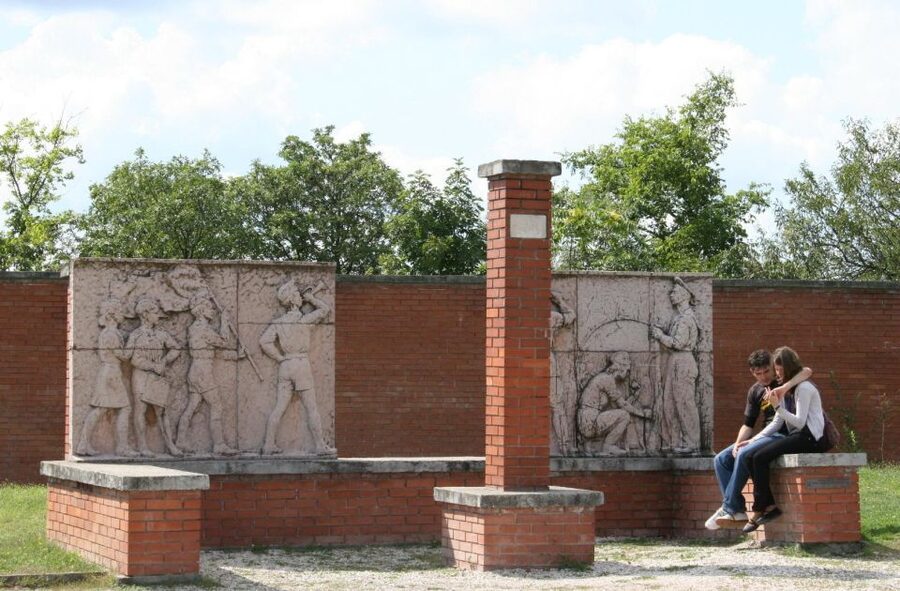
I would recommend this experience to you if you enjoy:
- Cold War and twentieth-century European history
- Political art and public monuments
- Unusual museums away from central Budapest
- Documentary film and photographic exhibits
- Serious history mixed with a few playful photo stops
- Self-guided visits at your own pace
You do not need a specialist background. The statues are visually bold enough to make an impression on their own, while the exhibits add context for anyone who wants to know more.
I would be more cautious if you have limited time in Budapest or want a central attraction that is easy to reach on foot. The trip requires planning, and the park’s gravel paths may not suit wheelchair users. You should also plan food and drinks before arriving because a café is not provided.
Practical visit advice
Wear comfortable shoes for gravel paths and allow enough time to watch the documentary. The park is open for a full-day ticket, but you do not need to spend an entire day there to get value from it.
Check transport details shortly before setting out. Roadworks can change bus stops and make older directions confusing. The warning about buses 101E and 150 not stopping near the park is a good reason to confirm your route rather than relying on a printed plan from an earlier visit.
Keep your voucher ready for the entrance at Balatoni út and Szabadkai utca. Since the experience is self-guided, you can begin with the grandstand, follow the outdoor monuments, then move indoors for the film and exhibitions. Or you can start with the film if you prefer background before seeing the statues.
I would save the Trabant for a final photo, when you have already absorbed the more serious sections. It gives you a lighter ending and a reminder that this history involved ordinary objects and ordinary people, not only political leaders.
Should you book Memento Park?
Book it if you want to understand Budapest beyond its imperial buildings and handsome boulevards. The park offers a rare look at how communist power represented itself, and it preserves those symbols in a setting where you can question them.
The best reasons to go are the monumental scale, Stalin’s Grandstand, and the included documentary The Life of an Agent. The main cautions are the outer location, self-guided format, gravel paths, and lack of an on-site café.
At $10, I consider it a smart choice for history-minded visitors who are willing to plan the transport. If your interests stop at central Budapest’s classic sights, you may find the trip too specialized. But if you want a direct, visual, and sometimes oddly funny lesson in Hungary’s recent past, Memento Park earns its place on your schedule.
FAQ
Where is Memento Park located?
Memento Park is at the corner of Balatoni út and Szabadkai utca, 1223 Budapest, Hungary.
How much does admission cost?
Admission costs $10 per person.
How long is the ticket valid?
The ticket is valid for one day. You should check availability for the available starting times.
Is transportation included?
No. You must arrange your own transportation to Memento Park.
Is a guided tour included?
No. The ticket provides admission, but a guided tour is not included.
Is Memento Park suitable for wheelchair users?
The park paths are covered with gravel and may not be suitable for wheelchair users. The experience is listed as unsuitable for wheelchair users.
What does admission include?
Admission includes the outdoor park, the photo exhibition and film at The Most Cheerful Barrack, the storage showroom and art exhibition under Stalin’s Boots, and access to the original Trabant for photos.
Just added around Budapest
- Lake Balaton and Herend Guided Tour★ 4.7 · 3 reviews
- Audio visual multi-sensory chefs journey dinner experience★ 5.0 · 3 reviews
- Hollókő Ethnographic Village: Day Tour from Budapest★ 3.7 · 3 reviews
- Tapolca Cave Lake and Tihany/ Balaton private tour from Budapest★ 4.5 · 3 reviews
- Budapest Art Nouveau Walking Tour★ 5.0 · 3 reviews
- SzentEndre-SaintAndrew City Privately Shopping and Picturesque★ 4.5 · 3 reviews
- Horseshow on the Hungarian Puszta, private tour from Budapest with entry!★ 5.0 · 3 reviews
- Hungary today: a no-taboo conversation★ 5.0 · 3 reviews
Tickets, compared.
Széchenyi Spa Day Ticket with Optional Upgrades
What we thought →
Parliament Building Entry Ticket and Audio Guide
What we thought →


Sparty – The Ultimate Late-Night Spa Party Ticket
What we thought →