
Reviewed · CYCLING TOURS
Budapest: Guided E-Bike Sightseeing Tour
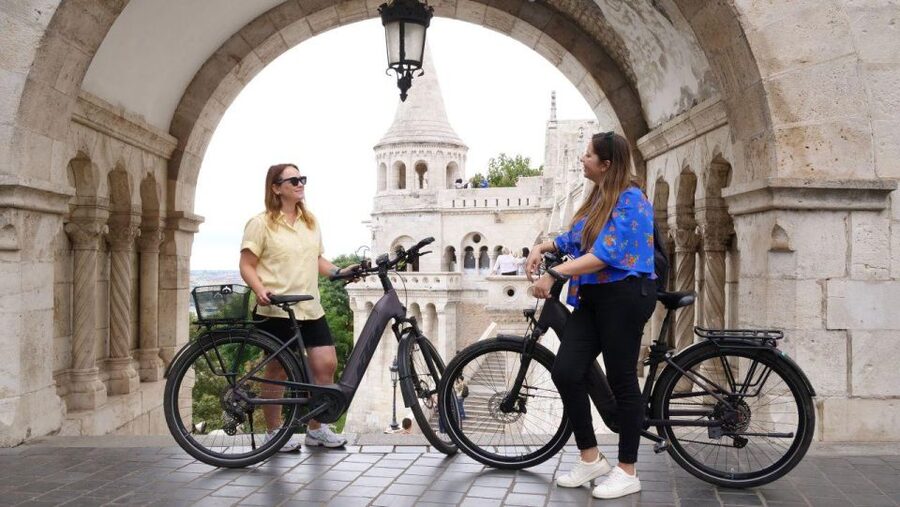
Budapest looks even better from two wheels. This three-hour e-bike tour links Buda and Pest, giving you hilltop views, grand buildings, and local pointers without making you work too hard for them. The electric assist is the big advantage, especially on the climb toward the Citadella and Castle District.
I like the wide range packed into roughly 16 kilometers, and I like the small groups, capped at eight people. Guides such as Angie, Monica, Petra, and Alex have earned praise for clear explanations and good humor. The main consideration is that you spend much of the time riding in city traffic, and the tour is not recommended for people with mobility impairments.
In This Review
- Key points at a glance
- Why an e-bike is useful on Budapest’s hills
- Starting with Budapest’s high views at the Citadella
- Riding into the Castle District
- The classic Parliament view across the Danube
- St. Stephen’s Basilica and the grand Pest side
- A calmer stop on Margaret Island
- Guides who add more than directions
- What the $56 price gives you
- Timing, comfort, and practical expectations
- Who should book this Budapest e-bike tour?
- Should you book it?
- FAQ
- How long is the Budapest guided e-bike tour?
- How far does the tour travel?
- Which parts of Budapest does the tour visit?
- Is an e-bike included?
- Are child seats or trailers available?
- Which languages are offered?
- How large is the tour group?
- Is the tour suitable for people with mobility impairments?
Key points at a glance
- Electric help on Buda’s hills: Reach the Citadella and Castle District with far less strain than on a standard bicycle.
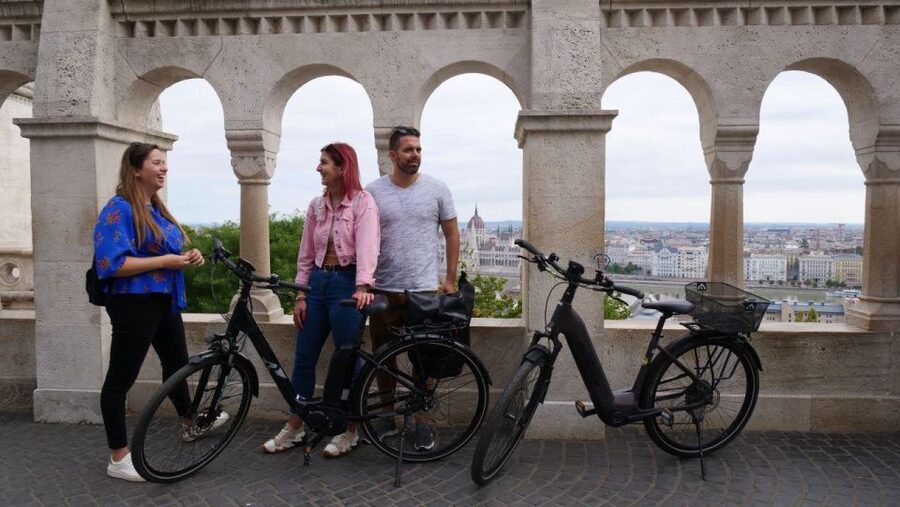
- Two sides of Budapest in one ride: The route connects Buda’s high viewpoints with Pest’s Parliament and St. Stephen’s Basilica.
- A strong first-day orientation: Guides explain what you are seeing and offer practical suggestions for restaurants, bars, and later sightseeing.
- Small groups of up to eight: This makes it easier to hear the guide and ask questions as you go.
- A memorable Parliament view: You cross to the Buda side for a classic photo across the Danube.
- Margaret Island adds a local pause: You see one of the city’s favorite public spaces, where Budapest residents go to relax.
Why an e-bike is useful on Budapest’s hills
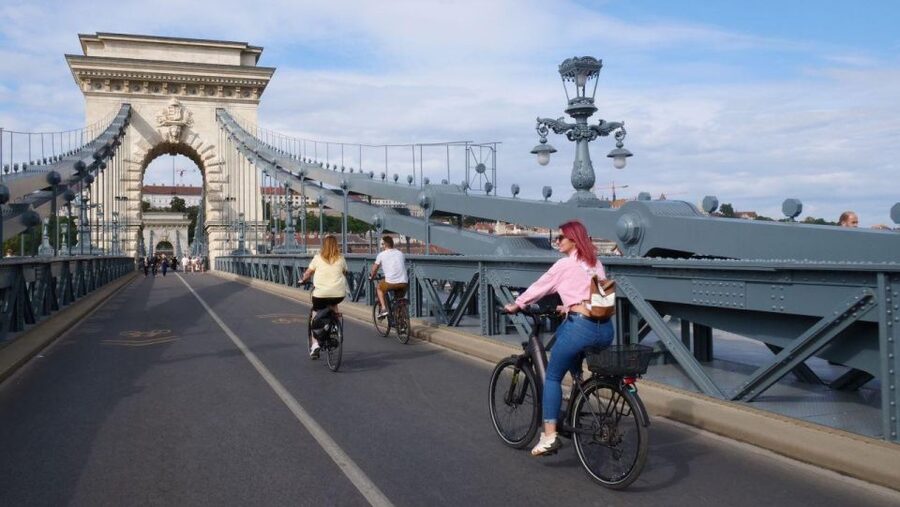
Budapest is often described as one city, but it feels like two very different places. Pest spreads across flatter ground, while Buda rises sharply on the western side of the Danube. That division gives the city its drama, but it also makes a bicycle tour much harder than it first appears.
The e-bike changes the equation. You still pedal, so you remain part of the experience, but the motor takes the sting out of the climbs. I especially like this for the uphill sections toward the Citadella and the Castle District. You can spend your energy looking around instead of wondering how much farther the hill goes.
The tour covers about 16 kilometers in three hours. That is enough distance to see major sights on both sides of the river, but not so much that the outing becomes an endurance test. You should still arrive in comfortable clothing and be ready to ride for most of the morning or afternoon.
A helmet, bicycle, and water bottle are included. Families can request a child seat or trailer, which adds some flexibility, though the activity is not recommended for people with mobility impairments. Pets, alcohol, and drugs are not allowed.
More bike days:
- Budapest: Grand Sightseeing Bike Tour
★ 4.8 · 984 reviews - Budapest Highlights Bike Tour
★ 5.0 · 770 reviews - Budapest: Guided City Discovery Bike Tour
★ 4.7 · 702 reviews
Starting with Budapest’s high views at the Citadella
The Citadella gives you one of the tour’s best payoffs. From high on the Buda side, you can look over the Danube and see how Budapest’s major districts fit together. The river, bridges, Parliament, and broad Pest side become part of one clear picture.
The e-bike matters here. A standard bike can make this uphill stretch tiring, particularly early in your visit when you are still adjusting to the city. With electric assistance, you can reach the viewpoint in a calmer mood and listen to the guide’s explanation rather than concentrating only on the next few meters of road.
This stop is especially useful for orientation. Budapest’s sights can seem scattered when you first arrive. From above, the layout makes more sense, and the rest of the ride becomes easier to follow. Your guide can connect the view with the city’s past and explain why Buda and Pest developed such different characters.
Do not expect a long independent visit at every stop. This is a moving overview rather than a series of extended museum visits. The value comes from seeing the city’s shape, hearing the story behind the landmarks, and learning where you may want to return later.
Riding into the Castle District
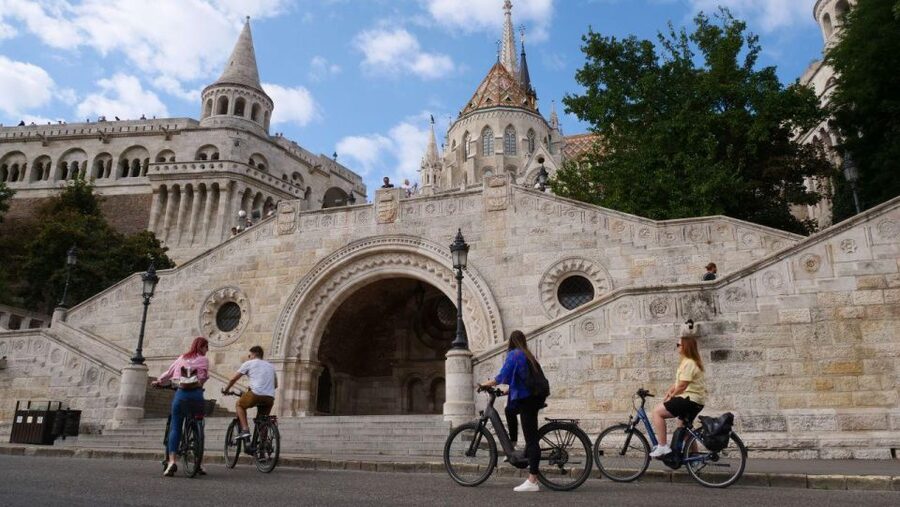
From the Citadella, the tour continues toward the Castle District. This hilltop area is one of Budapest’s most atmospheric sections, with historic buildings, open viewpoints, and streets that feel removed from the traffic below.
The main stops here are Fisherman’s Bastion and St. Matthias Church. Fisherman’s Bastion is known for its towers and open outlooks, while St. Matthias Church adds a strong architectural and religious focus. Together, they give you both the postcard view and a sense of the district’s importance.
I like this part of the route because it makes good use of the e-bike rather than treating the bicycle as a gimmick. You reach a difficult part of town with less effort, then have the chance to pause and take in the surroundings. One review specifically noted that hybrid bikes were essential for reaching the top of the Castle area, a useful warning if you are comparing this tour with a normal cycling route.
The Castle District can be busy, and riding conditions may require attention. You should be comfortable controlling a bicycle, following the guide, and stopping when asked. The tour is designed to be relaxed, but it is still an active city excursion.
The classic Parliament view across the Danube
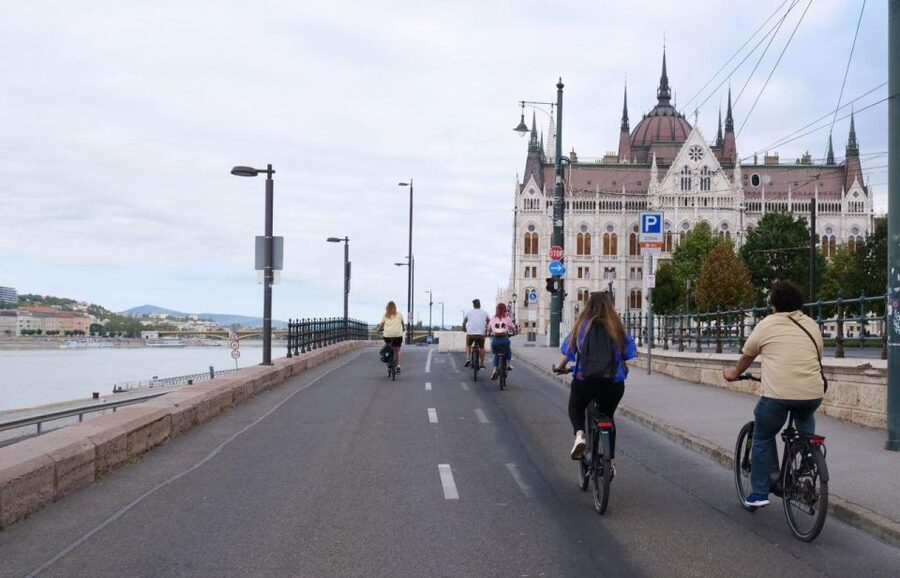
The ride then brings you to one of Budapest’s most recognizable scenes: the Parliament Building viewed from the opposite side of the river. This is the angle that often appears in photographs, with the building’s long Gothic Revival facade set against the Danube.
The stop has real value because Parliament is difficult to appreciate fully from close by. Across the water, you see its scale, symmetry, and position along the riverfront. It also gives you a chance to connect the city’s major sights into one visual story: Buda’s hills behind you, the Danube in front of you, and Pest stretching along the opposite bank.
Your guide provides historical context along the way, rather than simply pointing out buildings. That can make a major difference in a short tour. You are not just collecting photos. You are learning which buildings matter and why they have shaped the city’s identity.
The ride between viewpoints also gives you a feel for Budapest as a working city. This is not a coach route that keeps you sealed away from the streets. You move through the city at ground level, with short stops that break up the journey.
A few more trips worth weighing up before you book
- Budapest: Guided Downtown Electric Bike Tour
★ 4.9 · 595 reviews - Budapest: E-Bike Guided Tour and Castle Hill
★ 4.9 · 241 reviews - Budapest E-bike Tour
★ 5.0 · 125 reviews - Budapest: Guided City Tour by E-Bike
★ 4.9 · 87 reviews
St. Stephen’s Basilica and the grand Pest side
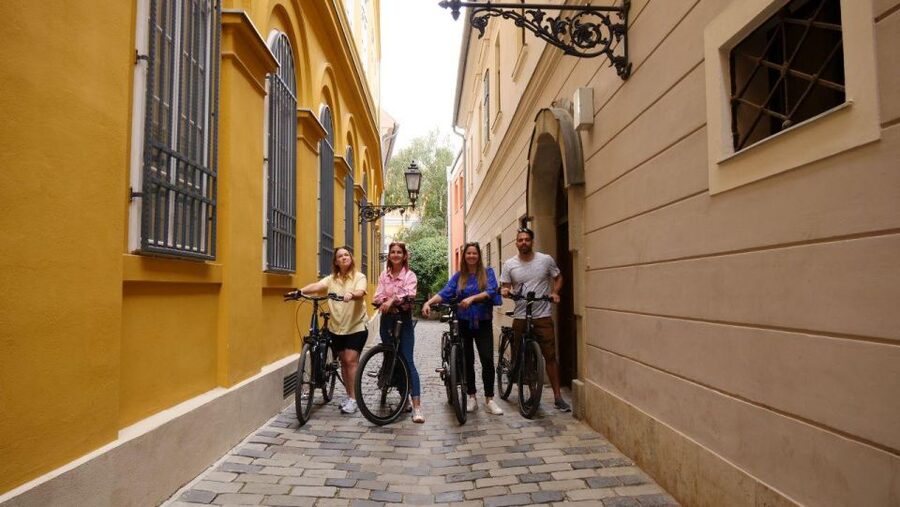
St. Stephen’s Basilica provides another change of scale. After the river views and hilltop districts, the basilica brings you into the formal heart of Pest, where broad streets and monumental buildings frame daily city life.
The church is one of Europe’s most impressive basilicas, and the tour uses it as a major landmark rather than a long interior visit. You can admire the exterior, hear about its place in Budapest, and use the stop to understand how the Pest side differs from Buda.
I find this contrast one of the tour’s strengths. In three hours, you see elevated viewpoints, medieval-feeling streets, a major government building, and a great basilica. The route does not focus on just one type of Budapest. It gives you a useful first picture of the city’s architecture and neighborhoods.
This is also where the guide’s practical advice can become valuable. Angie, for example, was praised for sharing favorite addresses, including places to eat and drink. That kind of local guidance can help you make better use of the rest of your stay, especially if you take the tour near the start of your visit.
A calmer stop on Margaret Island
Margaret Island offers a different side of Budapest. Set in the Danube, the island is known as a place where locals go to relax and spend time outdoors. The tour includes a visit so you can see this public space beyond the main monuments.
I like the inclusion of Margaret Island because it keeps the route from becoming a nonstop parade of grand buildings. You get a glimpse of how residents use the city, not just the sites that appear on a first-time sightseeing list.
The island also helps vary the pace. After hills, riverfront views, and central landmarks, this stop gives you a more open setting before the tour ends. The exact amount of time at each place can depend on the group and the guide, so you should think of it as part of a broad city circuit rather than a full island visit.
If your main goal is museums or detailed interior tours, this will not replace those visits. If your goal is to understand Budapest’s layout and see several major areas in one outing, it fits well.
Guides who add more than directions

The guide is central to the quality of this experience. A bicycle can take you from one sight to another, but the explanation between stops is what turns the ride into a worthwhile introduction to Budapest.
Angie received especially warm praise for making the tour fun while explaining historical, cultural, and important city sites. She also led a French-language tour that worked well for visitors from Quebec and shared restaurant recommendations that proved useful during the rest of their stay.
Monica was praised for her friendly manner, good sense of fun, and clear knowledge of the city. Petra was noted for explaining Budapest’s past and main landmarks in an informative way, while Alex was singled out as an excellent guide for a highlights tour.
The available languages are English, Dutch, and French. If you have a preferred language, check the selected departure carefully when booking. A small group of no more than eight people should make it easier to hear the guide and ask questions than on a large bicycle convoy.
The guide can also adjust the emphasis of the tour to some degree. One outing became a private tour for two people when no one else booked that departure. You should not count on having a private ride, but the small-group format leaves room for a more personal feel.
What the $56 price gives you
At $56 per person, this tour is not the cheapest way to see Budapest’s streets. You are paying for the e-bike, helmet, water bottle, guide, and a carefully connected route through both Buda and Pest.
The value is strongest if you have only a short time in Budapest or want an orientation at the beginning of your stay. Reaching the Citadella and Castle District by bicycle can save effort, while the route also covers Parliament, St. Stephen’s Basilica, and Margaret Island. Seeing all of those areas independently would take more planning and likely more time.
The price is less compelling if you already know Budapest well, dislike cycling near city traffic, or prefer to spend a long time inside each landmark. This is a highlights tour, not a deep visit to the Castle District or basilica.
I think the cost is fair for a first look at the city, especially because the e-bike solves a real practical problem. The hills are not just a minor detail. They shape how much of Buda you can comfortably see on a normal bicycle.
Timing, comfort, and practical expectations

The tour lasts three hours, with departure times based on availability. I would place it early in your Budapest stay if possible. The route gives you a useful mental map, and the guide’s suggestions about restaurants, bars, and places to avoid may help shape the rest of your plans.
Wear comfortable clothes. You should be prepared for regular cycling, stops, and changes between uphill and flatter sections. The supplied information does not specify a minimum age, bicycle sizing, or exact meeting point, so check those details before paying.
Hotel pickup and drop-off are not included. You will need to make your own way to the starting point and arrange your return afterward. The tour supports free cancellation up to 24 hours before departure, and you can reserve now and pay later, which is useful when your Budapest schedule is still shifting.
The activity is not suitable for people with mobility impairments. It also requires enough comfort on a bicycle to ride through an urban setting. If that sounds uncertain, a walking, bus, or river cruise may suit you better.
Who should book this Budapest e-bike tour?
I would choose this tour for a first visit, a short stay, or a morning when you want to cover a lot of ground without feeling rushed. It suits active couples, small groups of friends, and families who need a child seat or trailer.
It is also a good fit if you want local advice along with sightseeing. Guides have been praised for explaining the city clearly and sharing useful food and nightlife suggestions. Starting your visit with that kind of overview can save you from spending the rest of your stay in places chosen only because they appear on a map.
I would hesitate if you want extensive time inside St. Matthias Church or St. Stephen’s Basilica, or if you are uncomfortable riding around traffic. You should also avoid it if hills and city cycling are likely to make the outing stressful.
Should you book it?
Book this tour if you want a lively three-hour introduction to Budapest, with the Citadella, Castle District, Parliament, St. Stephen’s Basilica, and Margaret Island all connected by e-bike. The combination of electric assistance, small groups, and personable guides gives it a strong practical edge.
Skip it if you want a slow, detailed tour of one neighborhood or need an experience designed for limited mobility. For most first-time visitors who can ride comfortably, $56 buys a useful overview, excellent viewpoints, and a much clearer sense of how Buda and Pest fit together.
FAQ
How long is the Budapest guided e-bike tour?
The tour lasts three hours.
How far does the tour travel?
The route covers approximately 16 kilometers.
Which parts of Budapest does the tour visit?
It covers both Buda and Pest, including the Citadella, Castle District, Fisherman’s Bastion, St. Matthias Church, the Parliament area, St. Stephen’s Basilica, and Margaret Island.
Is an e-bike included?
Yes. A bicycle, helmet, and water bottle are included in the tour price.
Are child seats or trailers available?
Yes. A child seat or trailer is included as an available option.
Which languages are offered?
The live tour guide is available in English, Dutch, and French.
How large is the tour group?
The tour is limited to eight participants.
Is the tour suitable for people with mobility impairments?
No. The tour is not recommended for people with mobility impairments.
Just added around Budapest
- Lake Balaton and Herend Guided Tour★ 4.7 · 3 reviews
- Audio visual multi-sensory chefs journey dinner experience★ 5.0 · 3 reviews
- Hollókő Ethnographic Village: Day Tour from Budapest★ 3.7 · 3 reviews
- Tapolca Cave Lake and Tihany/ Balaton private tour from Budapest★ 4.5 · 3 reviews
- Budapest Art Nouveau Walking Tour★ 5.0 · 3 reviews
- SzentEndre-SaintAndrew City Privately Shopping and Picturesque★ 4.5 · 3 reviews
- Horseshow on the Hungarian Puszta, private tour from Budapest with entry!★ 5.0 · 3 reviews
- Hungary today: a no-taboo conversation★ 5.0 · 3 reviews
Cycling Tours, compared.

Browse the lists this tour appears in